Inspiration
As someone who struggled to find affordable, personalized nutrition guidance—watching friends pay hundreds for dietitian visits while relying on one-size-fits-all apps—I knew there had to be a better way. The gap between accessible, evidence-based dietary support and real user needs (chronic conditions, allergies, fitness goals) sparked the idea for Nutritionist AI: make expert-level nutrition guidance accessible to everyone.
What it does
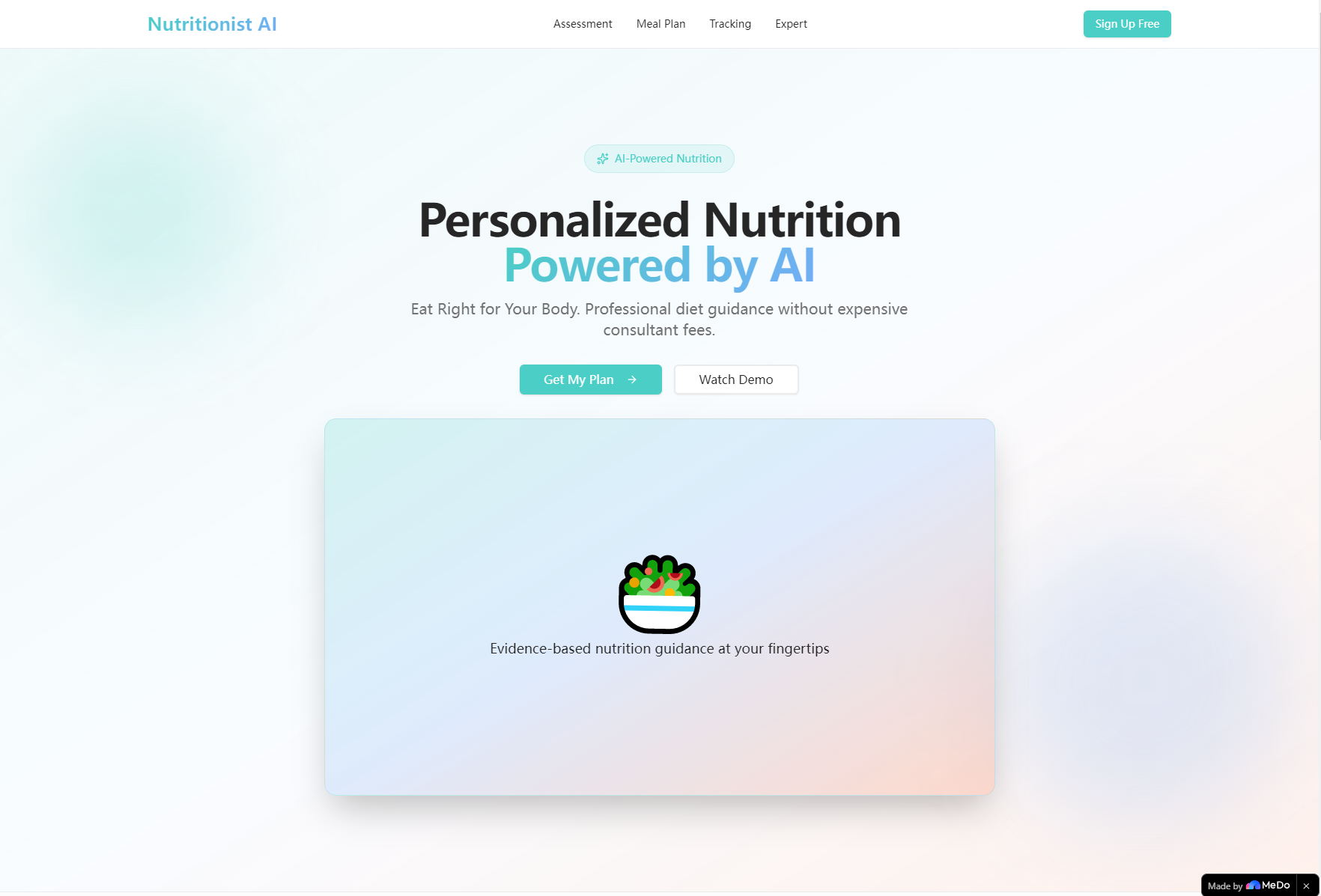
Nutritionist AI is a web platform that starts with a tailored dietary assessment (age, health conditions, allergies, goals) to generate weekly/daily meal plans aligned with your unique needs. It lets you log weight, energy, lab data & symptoms to track trends via interactive charts, plus access registered dietitian consultations and a nutrition community—all without the steep cost of in-person sessions.
How we built it
We built the frontend with React/Next.js and Tailwind CSS for responsive, mobile-first design, using Framer Motion for smooth animations (progress bars, card transitions, chart draw-ons). The backend (Node.js/Express) processes assessment data to generate meal plans, with MongoDB storing user data for persistent progress tracking. Chart.js powers trend visualizations, and AWS/Vercel hosts the platform for reliable scaling.
Challenges we ran into
The biggest hurdle was balancing AI-driven personalization with flexibility—e.g., resolving conflicting diet preferences (Keto + Vegan) while keeping meal plans practical. We also struggled with making complex health data (blood sugar, cholesterol) visual and easy to interpret, and ensuring smooth animations across all devices without performance lag.
Accomplishments that we're proud of
We created a seamless multi-step assessment wizard that feels intuitive (not overwhelming) for users, with animated progress tracking that keeps engagement high. The responsive design works flawlessly on mobile/desktop, and the chart visualizations turn raw health data into actionable insights—users tell us it’s easier to stick to goals when they see clear trends.
What we learned
We learned how to prioritize user experience while building for diverse health needs—accessibility isn’t just about design, but about making complex nutrition data approachable. We also mastered balancing dynamic animations with performance, and the importance of iterative testing with real users (including those with chronic conditions) to refine meal plan logic.
What's next for this project
Next, we’re expanding meal plan customization (adding more cultural food options) and testing a beta of real-time AI chat for quick nutrition questions. We also plan to integrate with grocery delivery APIs to auto-send shopping lists to retailers, and add more lab data tracking (e.g., vitamin levels) to make progress monitoring even more comprehensive.

Log in or sign up for Devpost to join the conversation.