Inspiration
There are so many apps out there that track your meals, but they often don't work for people who struggle with access to healthy and affordable food. FoodPrint is creating a meal-tracking app that is designed with people who struggle with food security in mind. By using the app, anonymous data can be collected to help researchers learn about community-specific gaps in food security and nutrition.
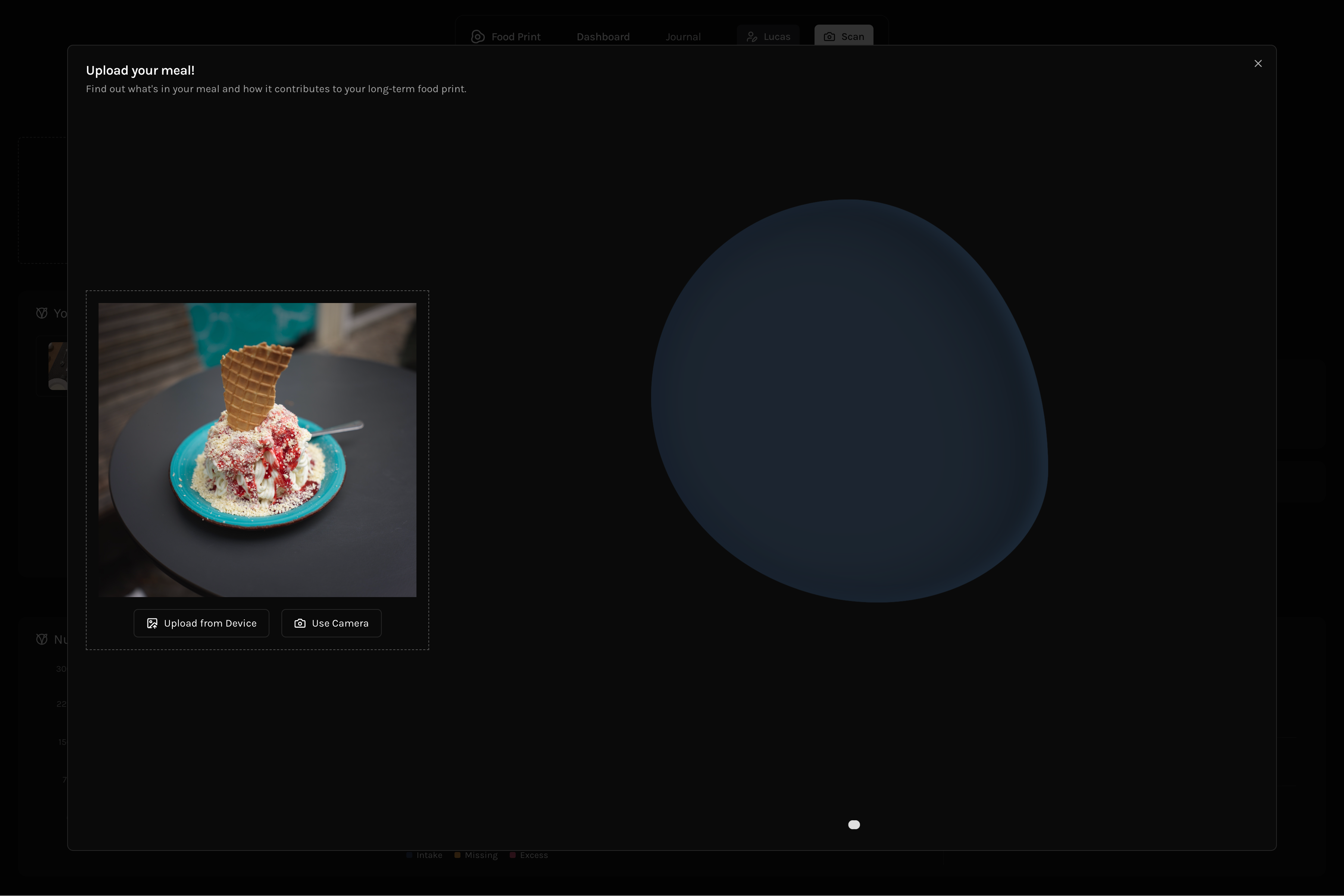
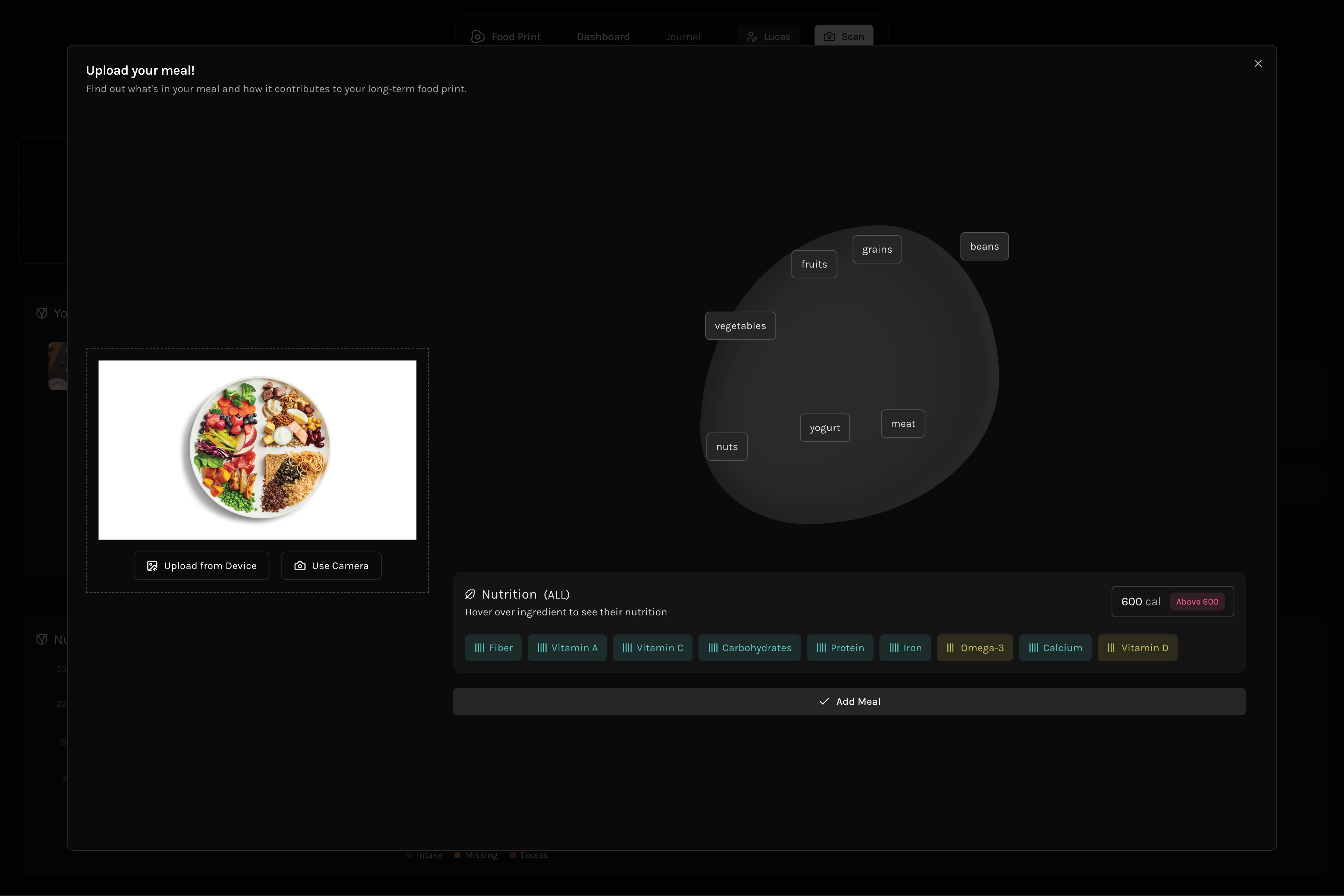
By taking a picture of your food, FoodPrint assesses its nutritional content and tells you what’s in it in real time as well as easy and affordable ways to improve your nutritional intake. With FoodPrint, it is not just people taking care of their own health but, collectively across potentially diverse populations, rich data is being gathered to help better understand and improve public health – something that’s especially useful for highlighting the nutrition challenges of at-risk communities.
Every meal you enter is not just a personal learning experience about how to eat better, but it also helps your community address food insecurity.
What it does
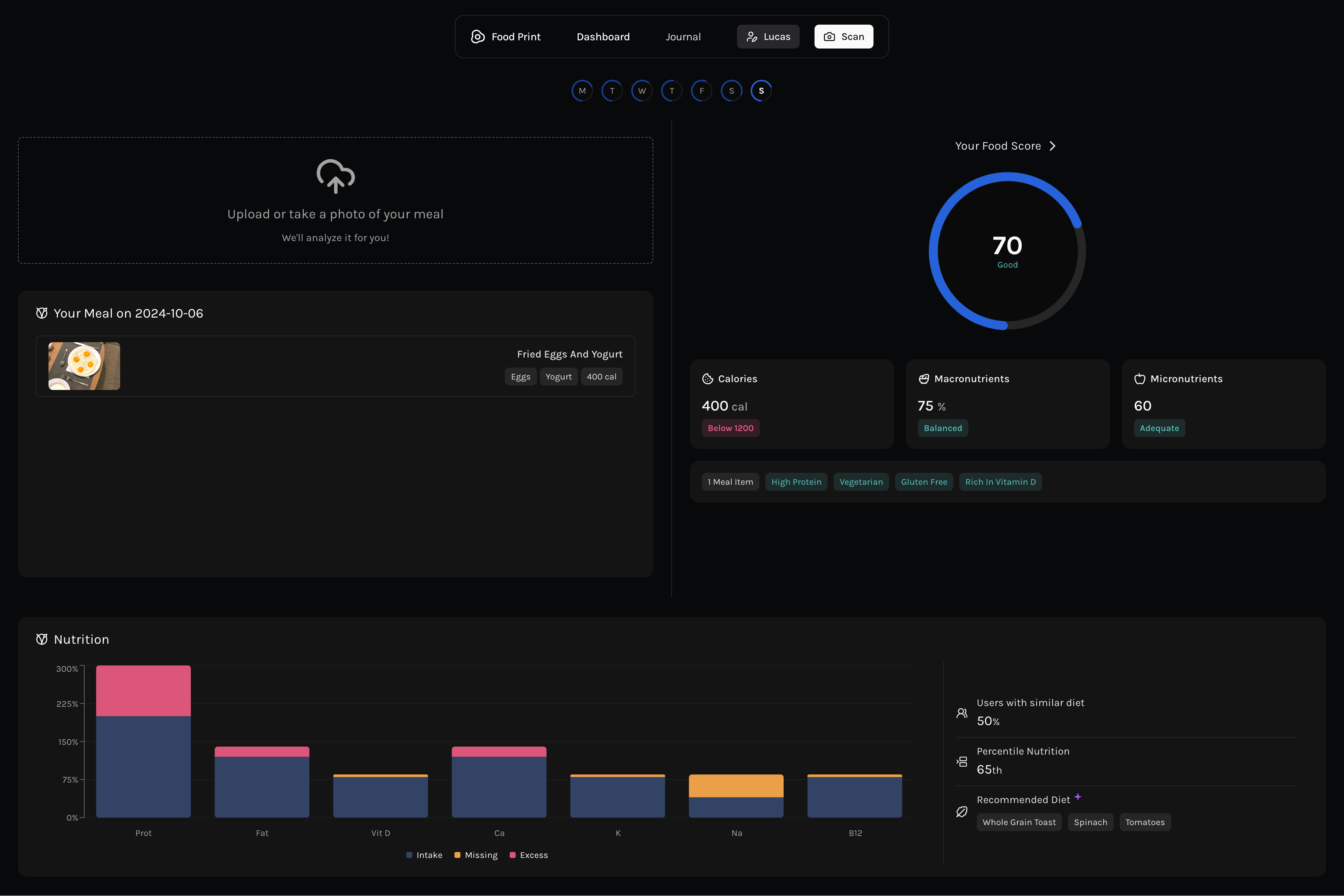
FoodPrint is an app that allows users to take a picture of their meal, analyzes its nutritional content, and provides suggestions on how to improve the biggest gaps in nutrition using affordable and accessible ingredients. It is designed for people in food deserts in mind, who have limited access to fresh and affordable ingredients. Through the anonymous collection of these photos, it contributes to data on the types of foods consumed and largest areas where nutrition is lacking in local communities. The data from this app contributes to valuable insights for researchers working to address food insecurity in areas lacking local and community-specific context.
How we built it
User Interface Design: Designed a user-friendly mobile app interface with screens for food scanning, meal calendar viewing and preferences/allergies input. Created a camera interface for users to take pictures of food.
User Personal Information: Developed a user profile system within the app. Allowed users to input their dietary preferences and allergies, storing this information for future recommendations.
Image Recognition: Using the image recognition from Open AI to extract the ingredients out of the food picture
Nutrition Data Processing: Processed and cleaned the extracted ingredients into different kinds of nutrition. Identified and categorized nutrition types and provide the list of the nutrition.
Database Integration: Store and manage food calendar data, user profiles, and recommendation data in a database.
Recommendation Engine: Implemented a recommendation engine that factors in user preferences and allergies. Using AI, the algorithm we built will suggest users taking some nutritional and affordable meal based on their preference and food history (calendar). Depending on complexity, integrated machine learning models that learn user preferences over time.
Integration Testing: Test the integration of different components to ensure that the food recognition, user preferences, and recommendations work together.
Challenges we ran into
One challenge we ran into was coordinating our time well and delegating tasks early on was something important to do.
Accomplishments that we're proud of
Implemented an image recognition system that identifies ingredients from images. Developed a user profile system to keep track of long-term dietary habits and changes. Designed a user-friendly mobile app interface to enhance the overall user experience. We are proud of the team-building and how we grew as a team.
What we learned
We learned that it's important to have a clear vision about the project for everyone on the team before moving forward.
What's next for Food Print
There are many ways that we can expand FoodPrint. Some directions we were thinking about are working with food banks to show where ingredients can be found and working with research organizations or non-profits to perform more in-depth analysis of the research data to better understand the conditions of food security in communities. A potential expansion for FoodPrint includes enabling family members to share and view each other’s dietary data, fostering better awareness of their family members' nutritional habits and conditions. This feature could help families support each other in making healthier choices. Additionally, users across different communities would be able to learn from one another’s dietary patterns, offering insights into various cultural eating habits and solutions to food insecurity.
Built With
- a-hungry-dan
- cloudflare
- css
- docker
- go
- html
- next.js
- openai
- postgresql
- react.js
- rest-apis
- tailwind
- typescript


Log in or sign up for Devpost to join the conversation.