-
-
welcome screen
-
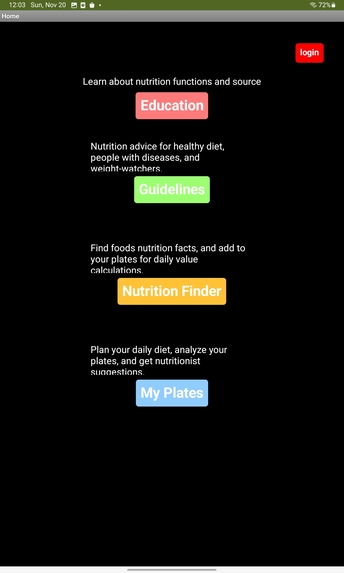
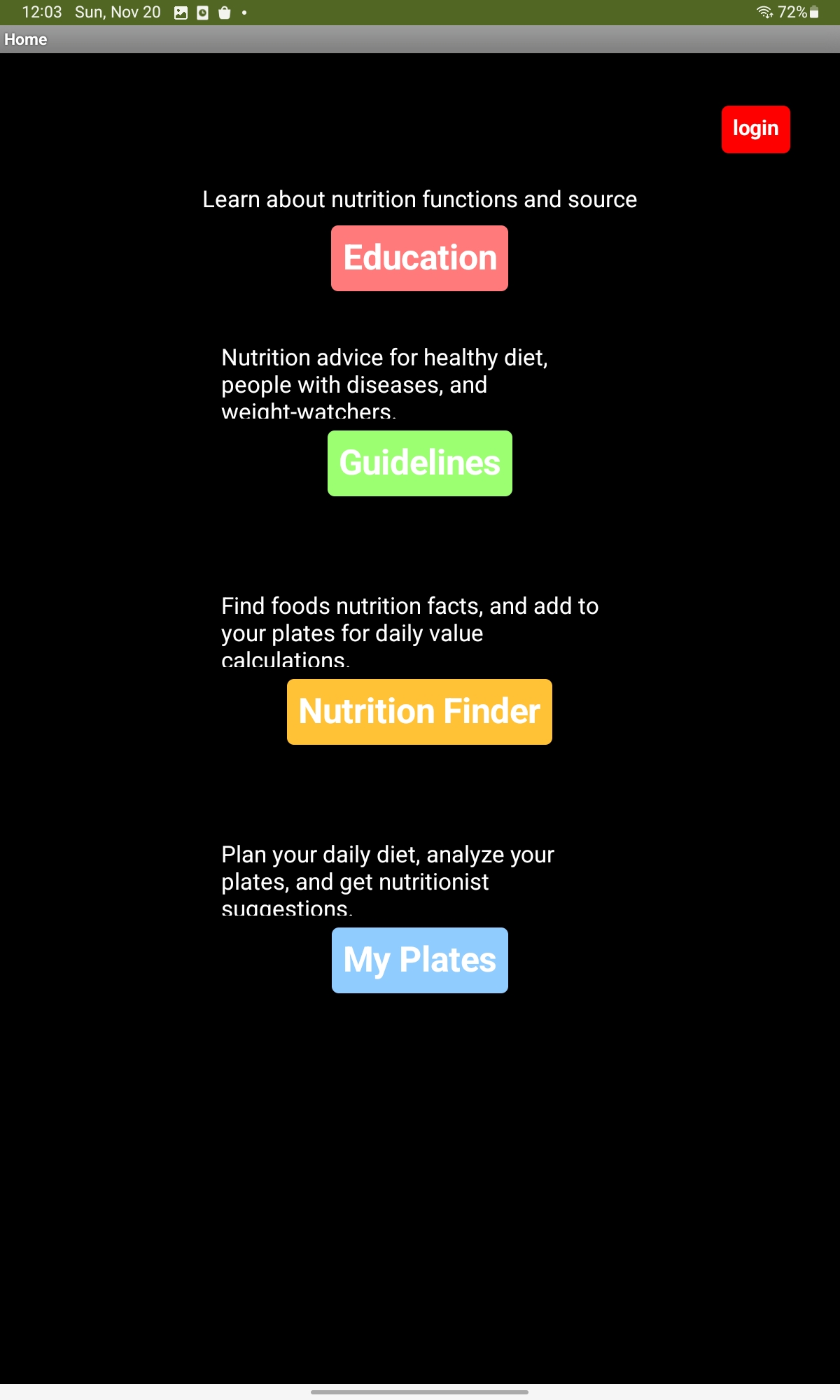
home screen
-
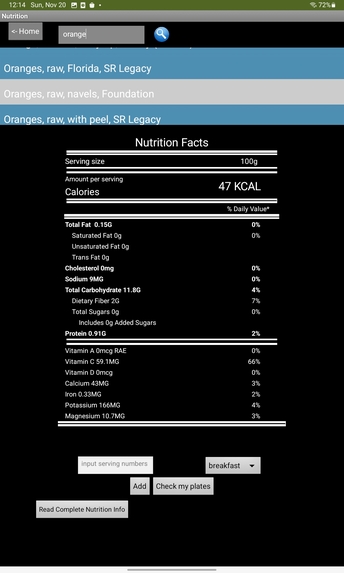
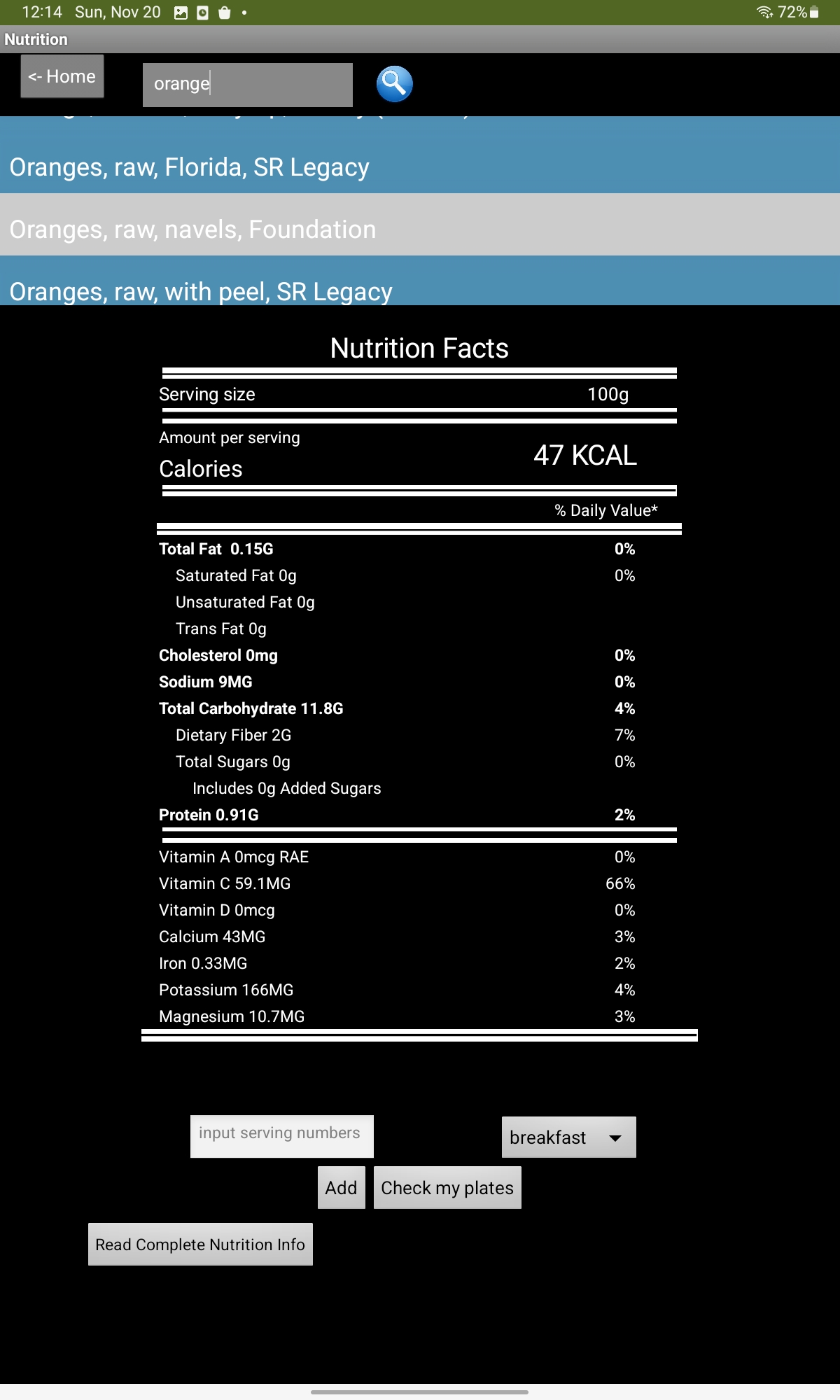
nutrition finder
-
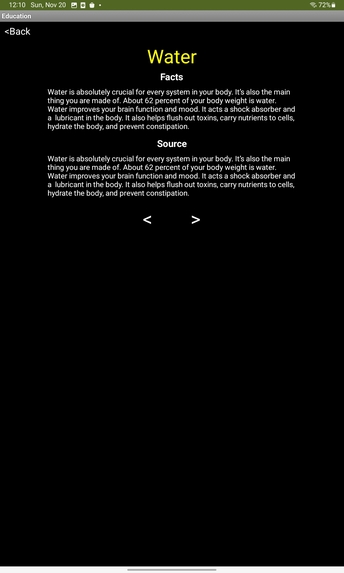
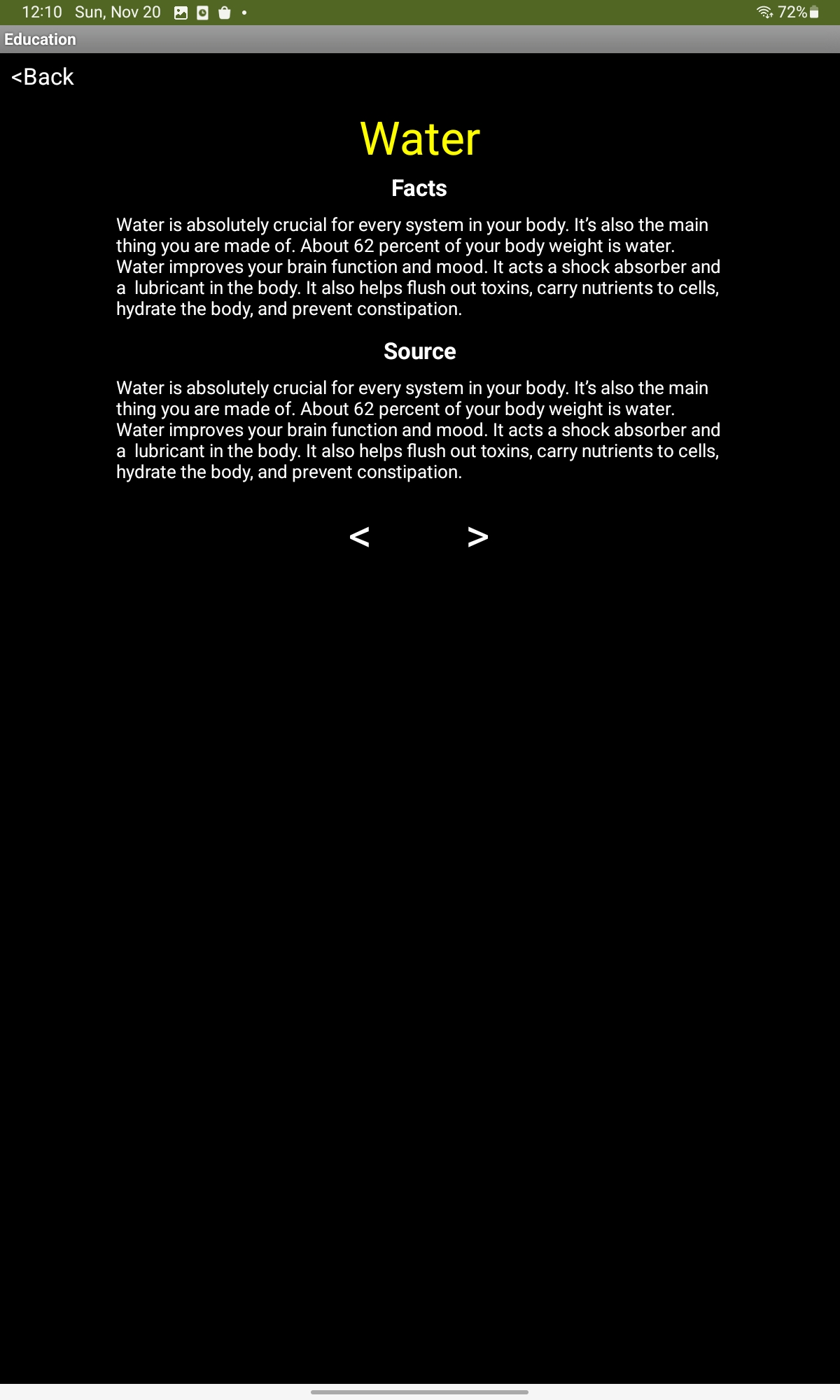
education
-
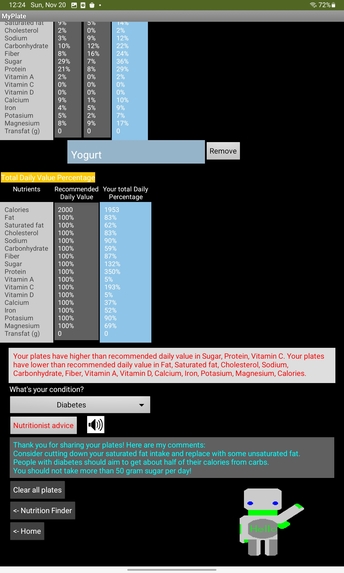
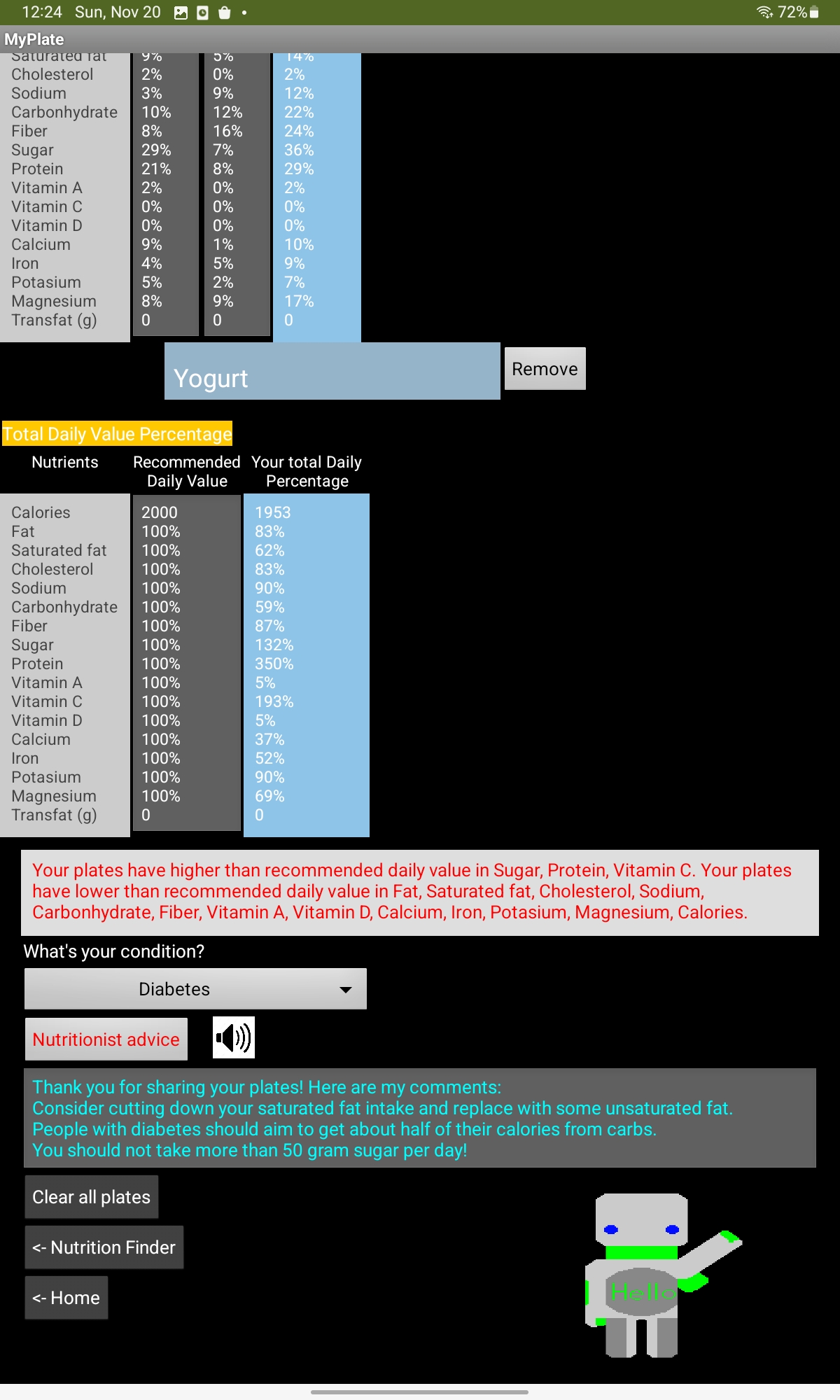
my plate
-
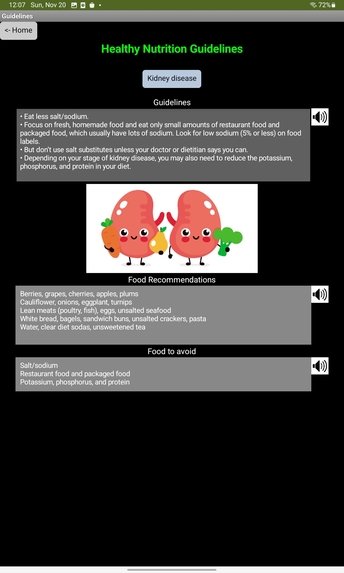
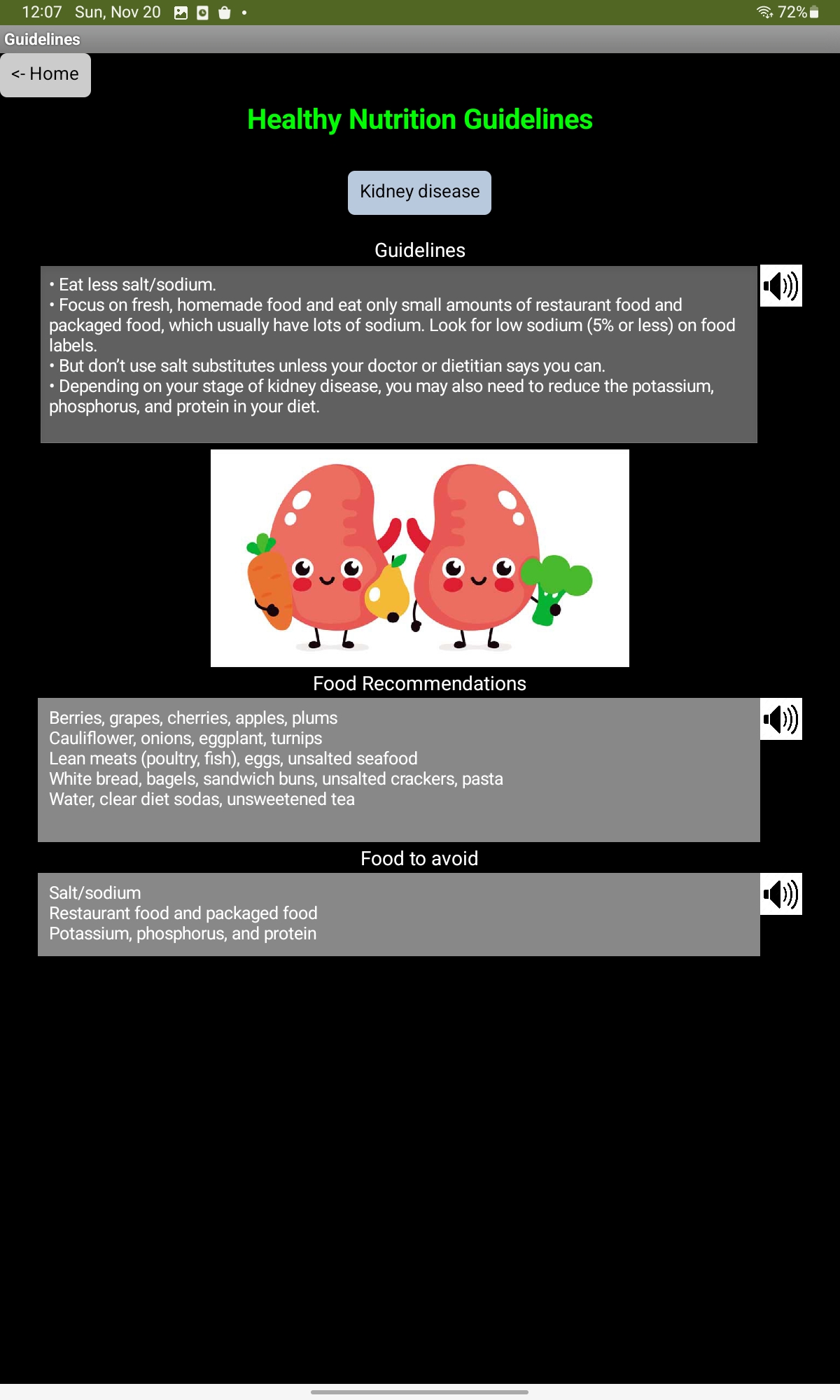
guidlines
Inspiration
A while ago, my dad got kidney disease. He needed to change his diet to help his recovery. However, he ate the wrong foods multiple times. He tried to reach a nutritionist but they are extremely busy so he could not even get an appointment. At almost the same time, my grandma got a stroke, and she also needed specialized nutrition to help her recover. Unfortunately, she couldn’t get an appointment with a nutritionist either. They needed nutrition guidance to help their health. They could not get the help they needed. We searched around, we found that nutrition plays a crucial role in the management of a variety of chronic diseases. However, with the increasing awareness of the importance of nutrition in population health, the demand for nutritionists also largely increased. People need to wait for several weeks or even a few months to get an appointment with a nutritionist. We decided to develop the Nutrition Atlas to help my dad, grandma, and thousands of others like them.
What it does
Our Nutrition Atlas app is designed to help people improve their nutrition. There is information on the source and function of each nutrient. It provides nutrition guidelines for 10 different health conditions, including healthy diet, weight watchers, and patients with 8 most common diseases in the United States. It let you search for foods in the USDA food database and easily find out the nutrition facts of the food. It allows you to plan your meal plates of the day by adding or deleting the food on each plate with its serving number, calculating the total daily value of each nutrient, and comparing them with FDA-recommended daily values. The app also gives you AI-based personalized nutritionist advice based on your health conditions.
How we built it
We used MIT appinventor.
Challenges we ran into
We had difficulty extracting information from the USDA database. The USDA database is the most complete database of the foods in the US market. It is a great data source for our app. However, it includes a lot more information than nutrition facts like the trade channels, analytical methods, etc. The data structure is also complicated. Some are strings, some are lists, some are dictionaries, and some are numbers. There were lists in dictionaries, dictionaries in dictionaries, and the dictionaries were in a bigger list. Reading and extracting the specific info we need for our app is a big challenge. We made a multilayer tree structure diagram to figure out the data structures and used debug to check step by step to make sure that we got the correct information for each food.
Accomplishments that we're proud of
We can efficiently search for food information on the FDA api, and give nutritionist advice based on your diet and health conditions. We have plate nutrient calculation, and personalized feedback.
What we learned
We learned a lot of new things in MIT App Inventor 2 and many things about nutrition. A lot of the knowledge was from researching for the app.
What's next for Nutrition Atlas
First, we would like to make a game to educate children about nutrition and teach them how to read a nutrition label. For example, we would give the user a nutrition guide on how to help the patients manage their diseases and have the user plan the patient’s diet. For every patient the user helps correctly, he/she gets exp and coins. Second, we would like to expand the health condition library so the app can benefit more patients. Third, we would also like to add an image recognition function so that the user can add food to their plates by taking a picture of the food’s nutrition label or by taking a picture of the real food. Fourth, we hope that we can make the app more powerful in nutrition management. We can record the users’ daily diets and also let them record their weight, blood pressure, glucose reading, or some other measuring or testing results. We can then plot graphs to find out the correlation between diet nutrition and body reaction, for example, what nutrition intake would raise your glucose reading, or what nutrition intake could lower your blood pressure. Based on these findings, the AI Nutritionist can give more optimized and personalized advice. Fifth, we would like to build a discussion panel letting people discuss diet plans or share menus. We also hope that some nutritionists can join the society and use our app to help more patients.

Log in or sign up for Devpost to join the conversation.