-
-
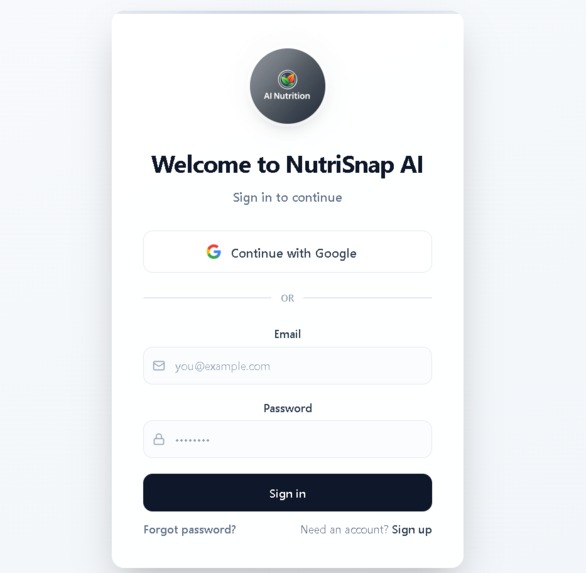
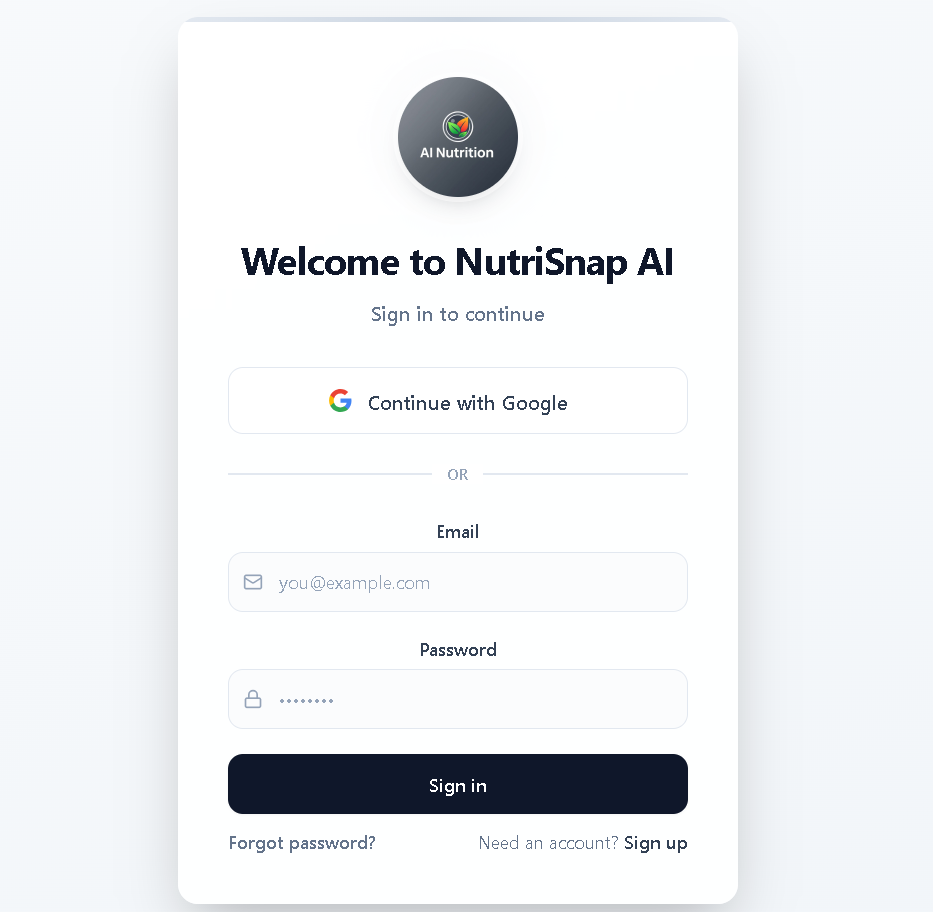
Login/SignUp Screen
-
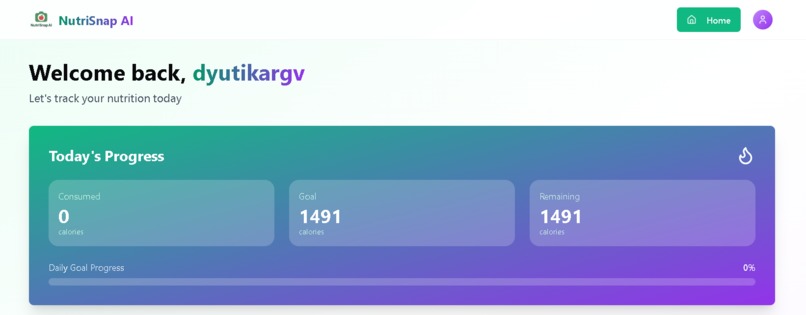
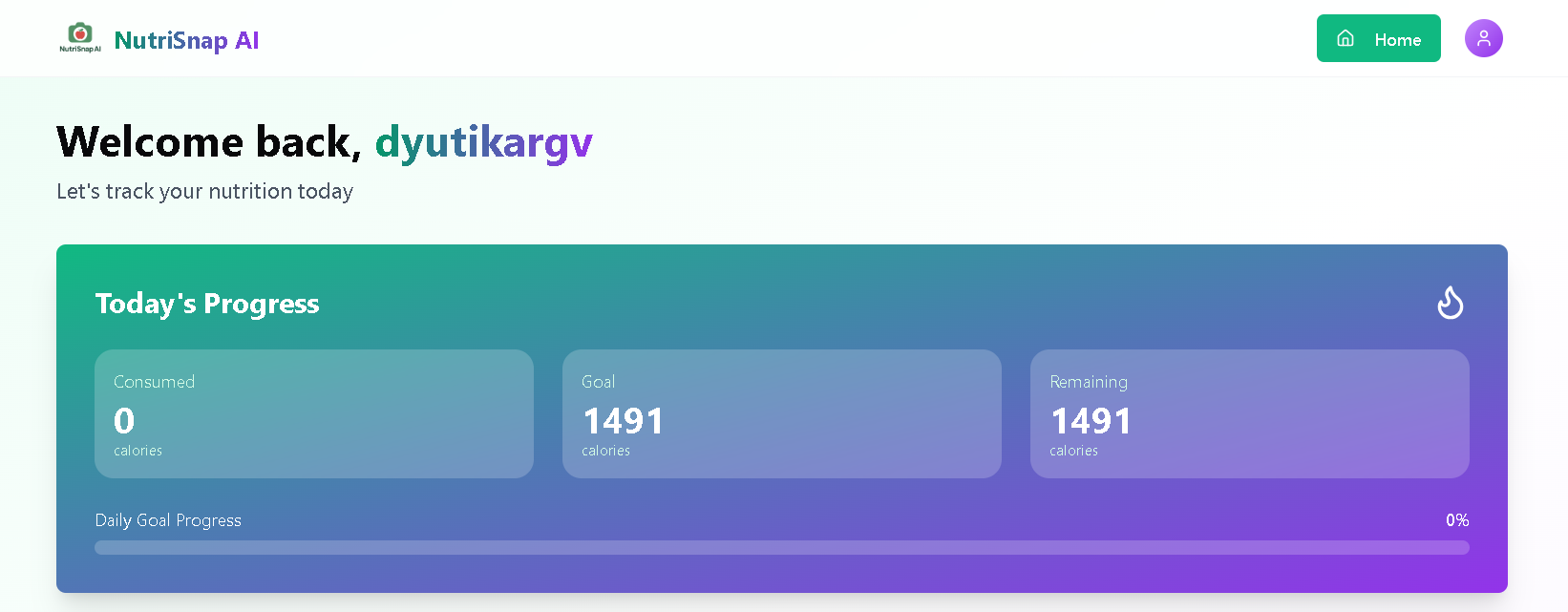
Dashboard
-
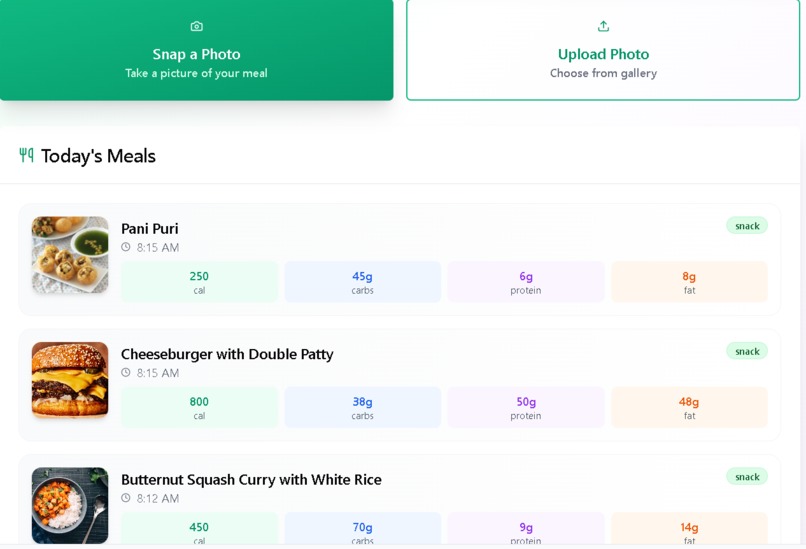
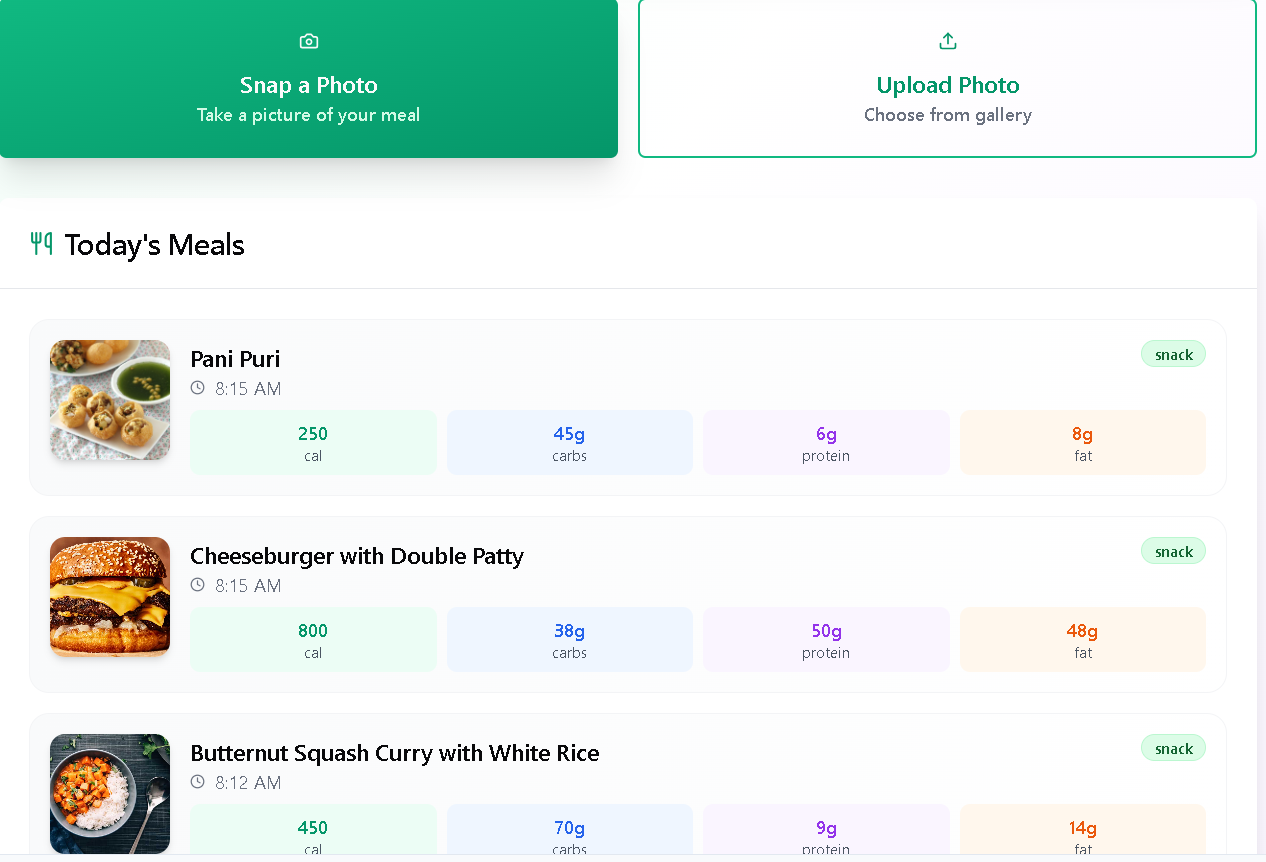
Meal Logging
-
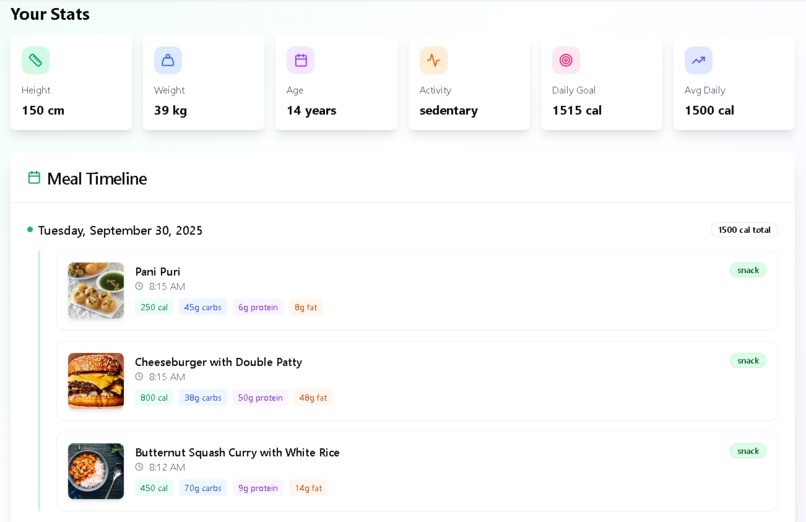
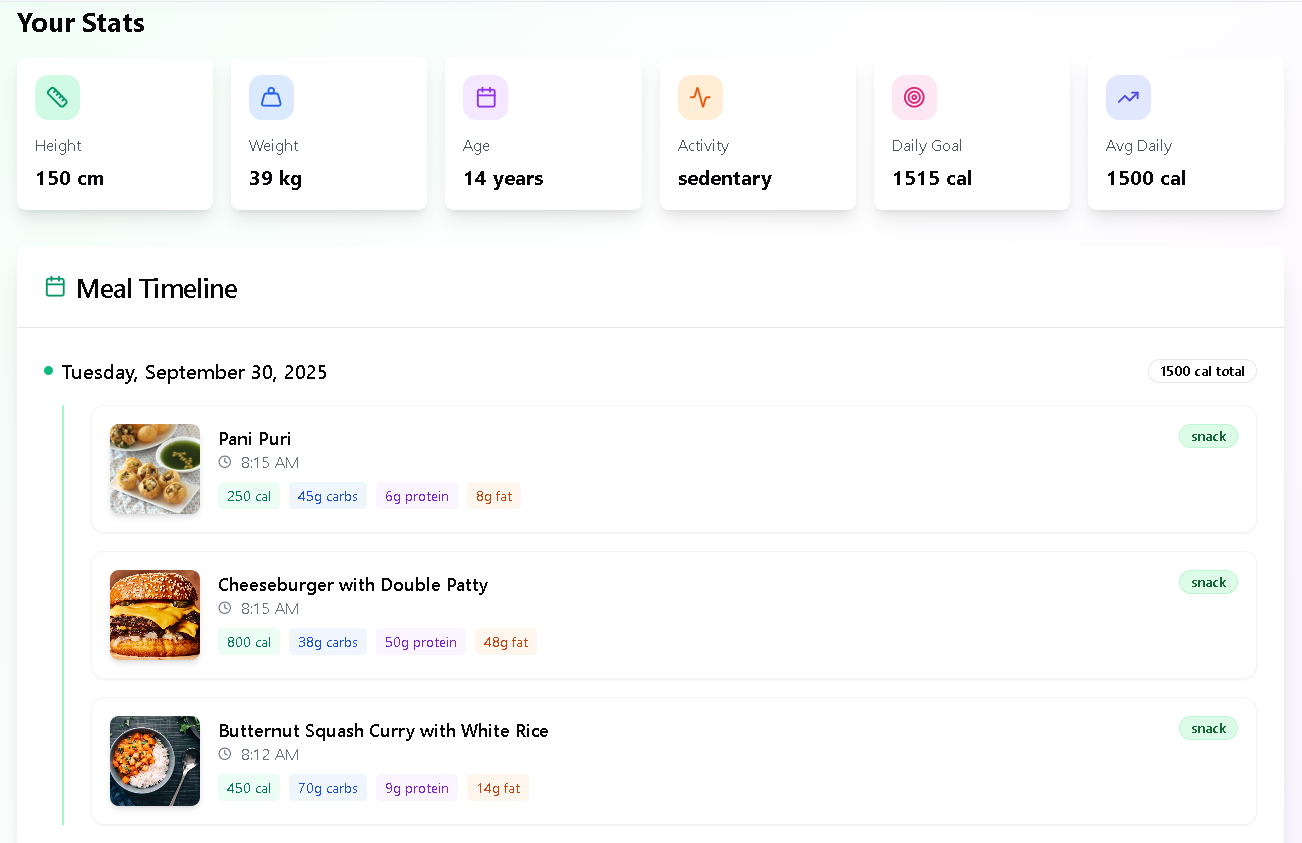
Profile section
Inspiration
In India, thalis are daily staples of millions of families — but involuntarily in unbalanced ways. Too much oil, less protein, and practically no nutritional consciousness. This silently fuels diabetes, obesity, and child malnutrition. Majority of such nutrition apps suggest Western-type salads and quinoa bowls that do not match local culture. We embarked to build a product that is aware of our kitchens, our plates, our languages.
What it does
NutriSnap AI is a web application that allows users to monitor and make sense of their nutrition in an easy-to-understand visual format:
- They input a photo of a dish, and a computer automatically recognizes it.
- Estimates of calorie and macronutrient (carbohydrates, proteins, fats) content are given by.
- Upon registration, a user's customized daily calorie restriction is determined through BMR (Basal Metabolic Rate) and activity status.
- All scans are saved into a personalized timeline of calories/macros against a clock and daily goal progress.
- All user details are encrypted and kept confidential under their ID.
How we built it
- Frontend: Designed a responsive signup page, photo upload page, and nutrition timeline page.
- Central Logic: Incorporated food identification and nutrition approximation using an AI-powered backend workflow designed for Indian cuisine.
- Backend: Built-in user login and secure data storage, calorie objectives and eating records stored per user account.
Challenges we ran into
- Identifying mixed Indian thali pictures containing various foods on a single plate.
- Keeping nutrition estimates constant in diverse Indian recipes.
- Designing a timeline UI that is both simple and engaging.
- Facilitating an easy setup of calorie-goals from BMR calculations.
Accomplishments that we're proud of
- Built a working MVP that integrates images of plates to AI-backed nutritional information.
- Automatic daily calorie setting through BMR, so tailored from day zero.
- Created a date-based journal system that makes it easy to keep track of nutrition. Shown how NutriSnap AI could be an India-first nutrition guide that is culturally appropriate, scaleable, and applicable to real-life situations.
What we learned
- Technical: Proper prompt design and backend workflows are crucial to regular food recognition.
- Consumer Understanding: Personalized calorie targets are more interesting than unlabelled defaults.
- Product Insight: Basic timelines and diaries make users think about their eating and keep them disciplined.
What's next for NutriSnap
- Healthier alternatives of Indian-diet compatible foods.
- Local menu recommendations in healthy diets.
- Offline guides to cheap healthy eating.
- Voice-assistant access for low-literacy users.
- Offline database of Indian daily foods.
- Multi-user tracking family plans.
- Interoperability across wearables to view real-time activity and nutritional information.
- Collaborations with school networks, Anganwadis, and NGOs for adoption by community.


Log in or sign up for Devpost to join the conversation.