-
-
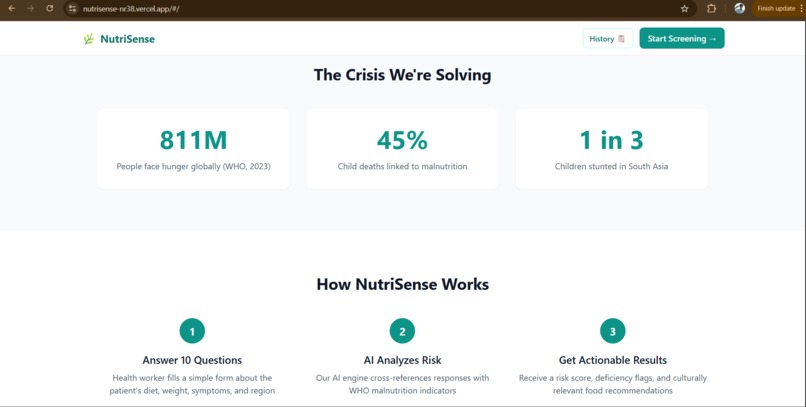
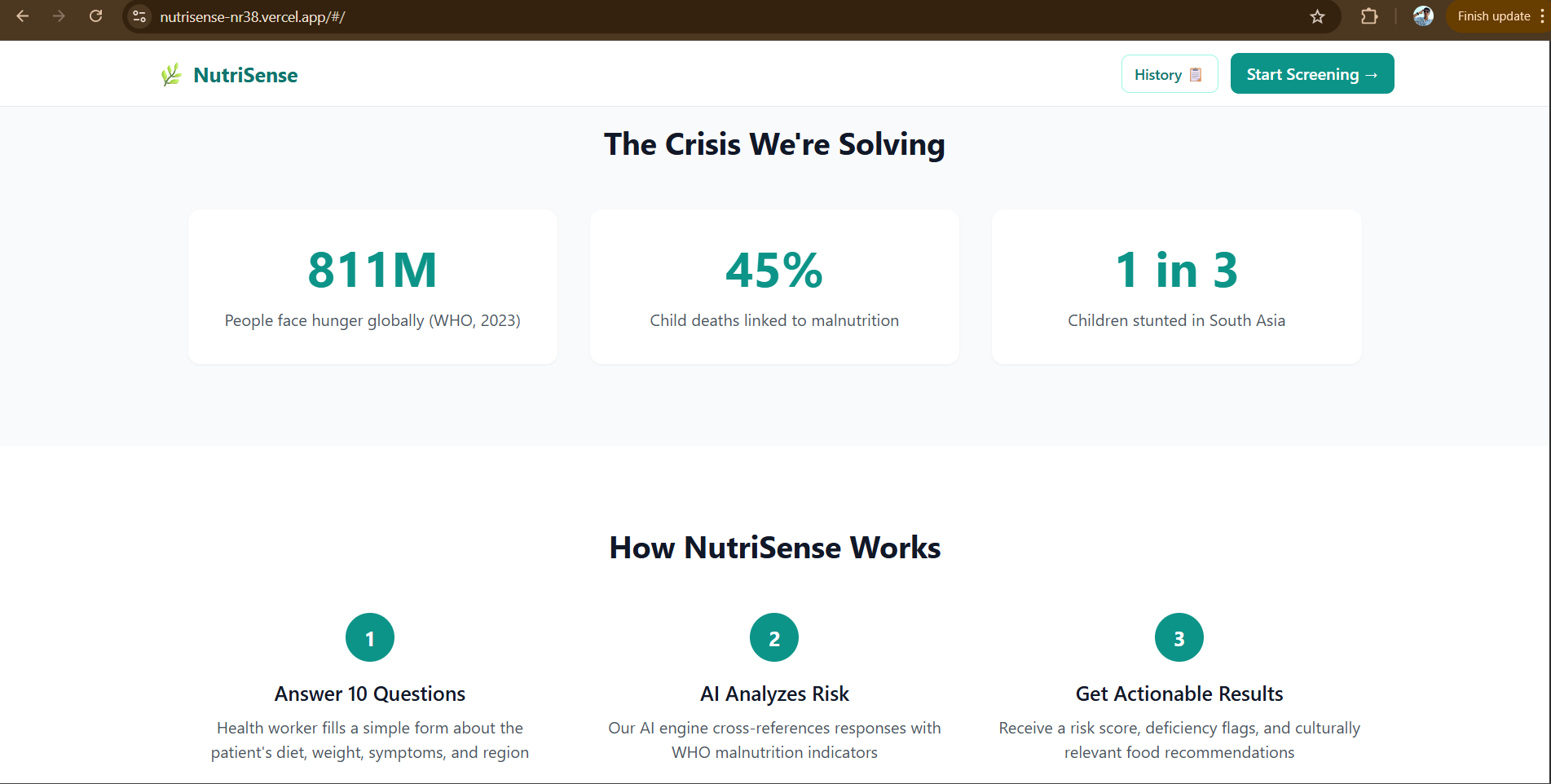
Landing Page
-
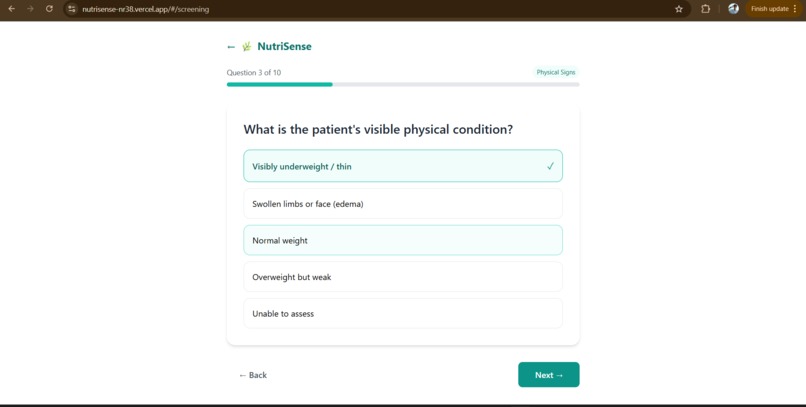
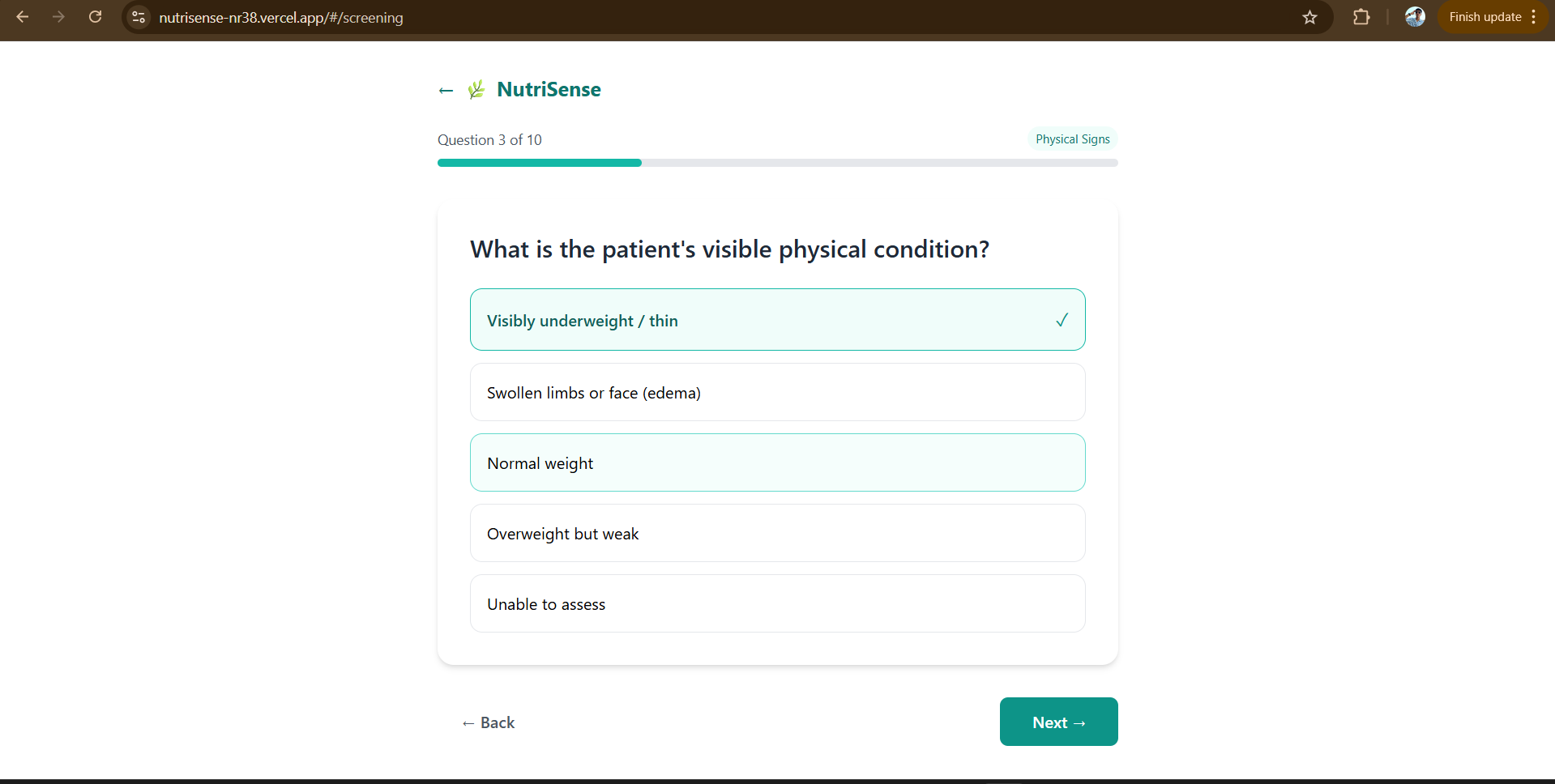
Screening questions
-
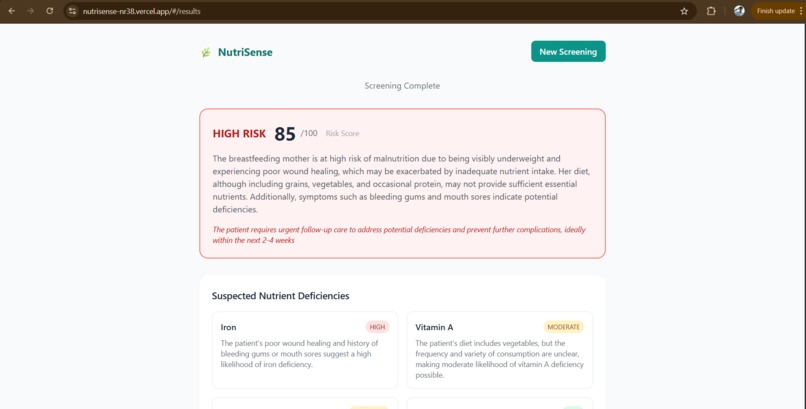
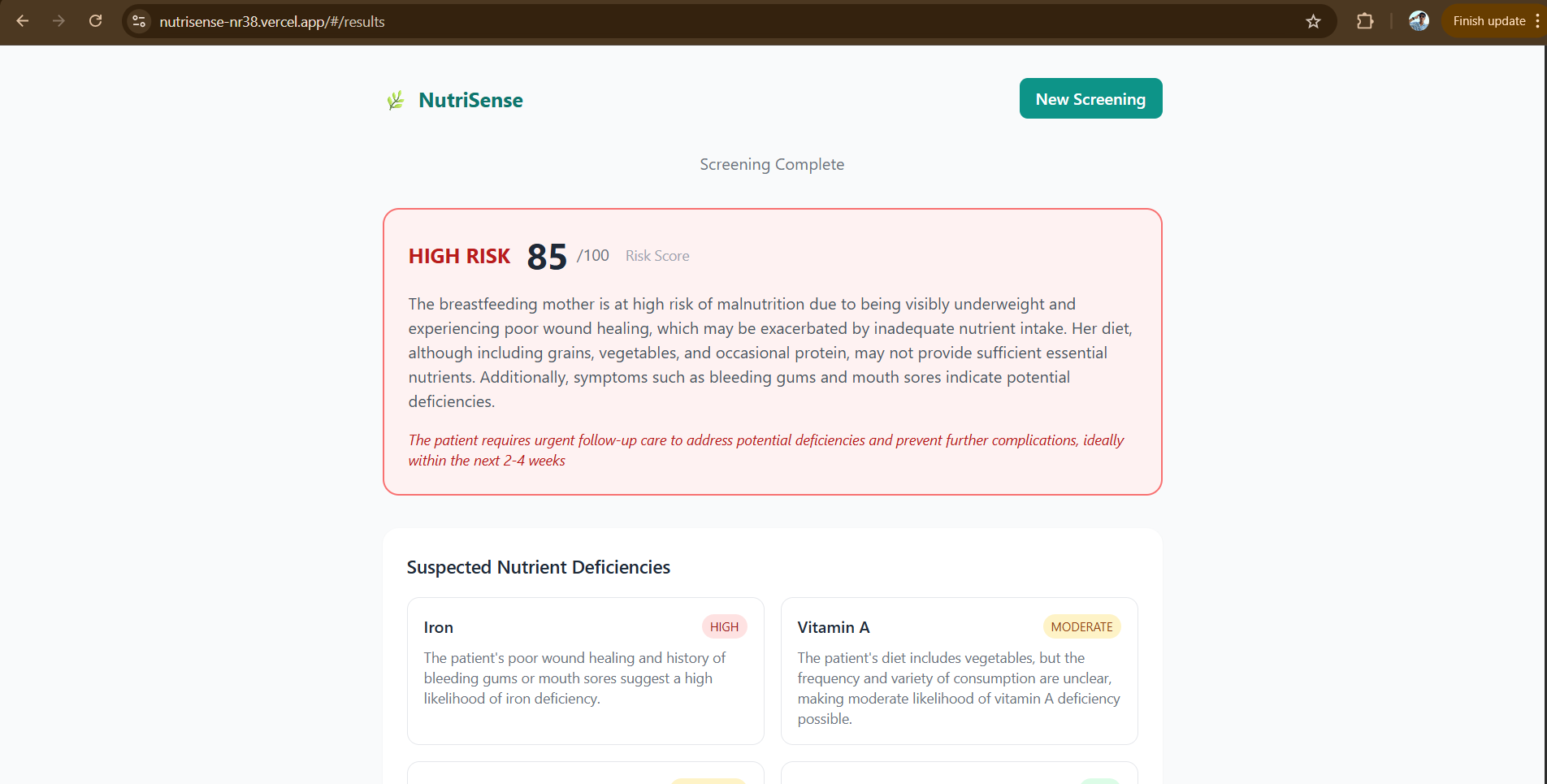
Result
-
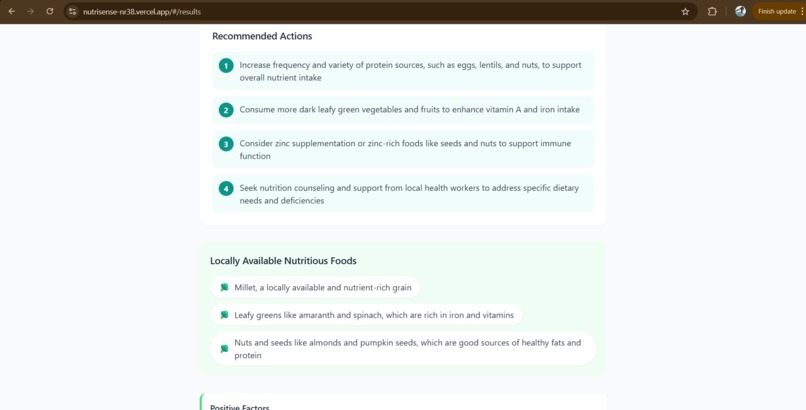
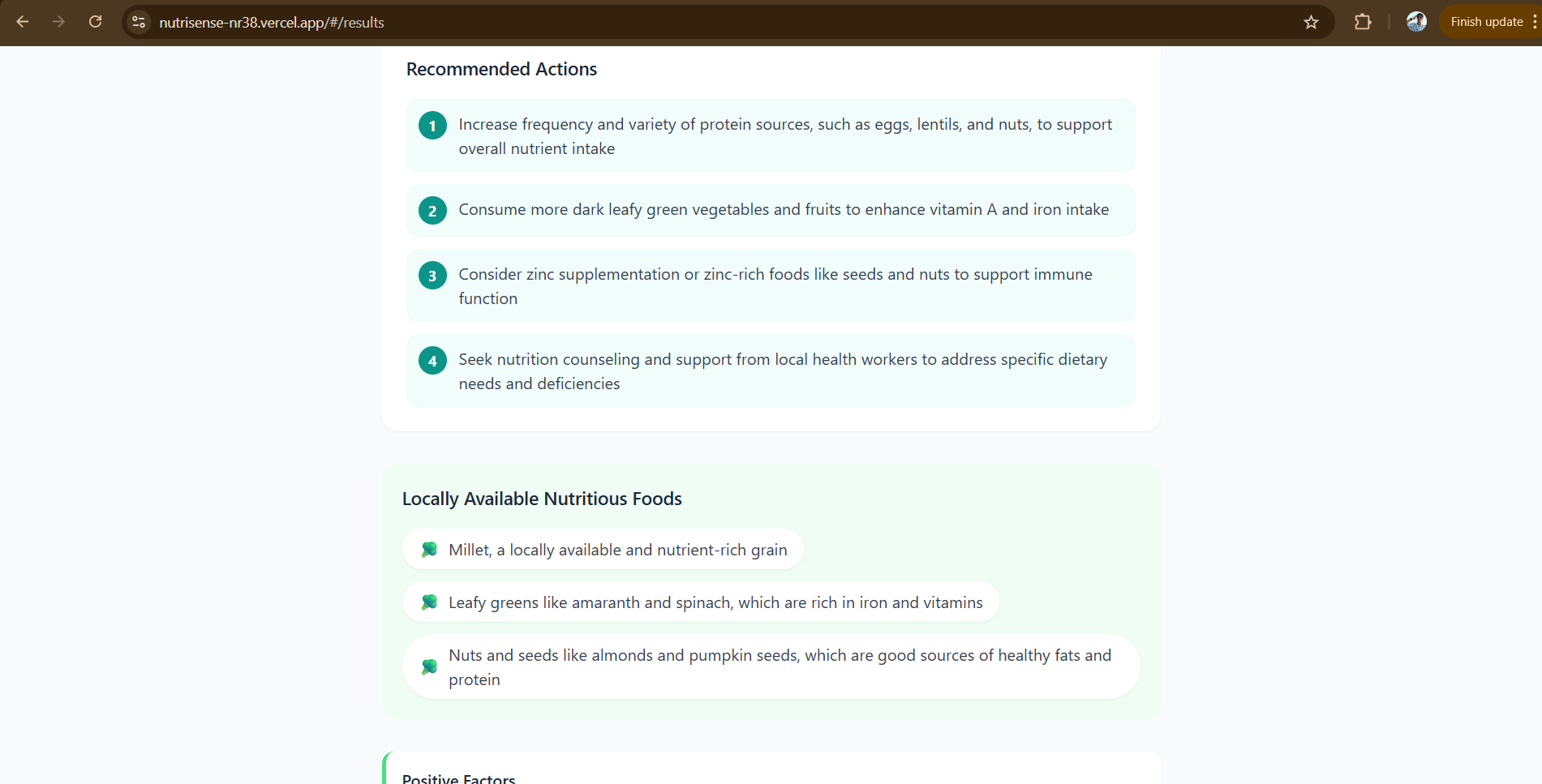
Action plan to solve
Inspiration
811 million people face food insecurity. 45% of child deaths are linked to malnutrition. Community health workers visit millions of homes every year but have no digital tools to screen for it. We built NutriSense to change that.
What it does
NutriSense lets community health workers screen patients for malnutrition risk in under 2 minutes. Answer 10 simple questions → get an AI-powered risk score, nutrient deficiency flags, actionable recommendations, and locally available food suggestions. All past screenings are saved in a history dashboard on the device. Works offline. Free forever.
How we built it
React + Vite frontend, Tailwind CSS for UI, Groq API with LLaMA 3.3-70B for AI inference, structured JSON prompting for consistent outputs, localStorage for offline patient history, deployed on Vercel.
Challenges we ran into
Designing a prompt that returns consistent, structured JSON from the AI every time. Making the app genuinely useful for low-connectivity rural areas, offline-first PWA design with zero server dependency.
Accomplishments that we're proud of
The AI gives region-specific food recommendations, it suggested mung beans and fortified atta for an urban slum patient in India. That level of contextual accuracy from a simple 10-question form exceeded our expectations.
What we learned
How to design AI prompts for structured medical outputs. How to build offline-first PWAs. How real the gap is between existing health tech and what community health workers actually need on the ground.
What's next for NutriSense
WhatsApp/SMS integration for feature phone users, multilingual support (Hindi, Swahili, Hausa), and a pilot with ASHA worker networks in rural India.

Log in or sign up for Devpost to join the conversation.