-
-
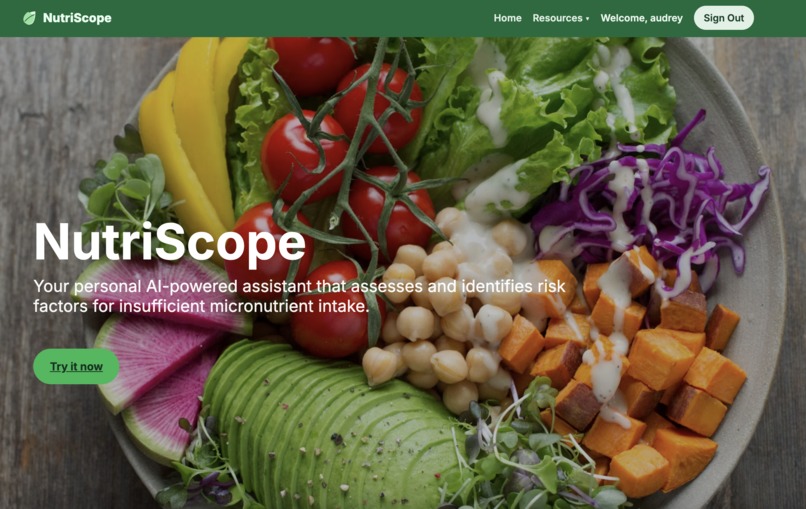
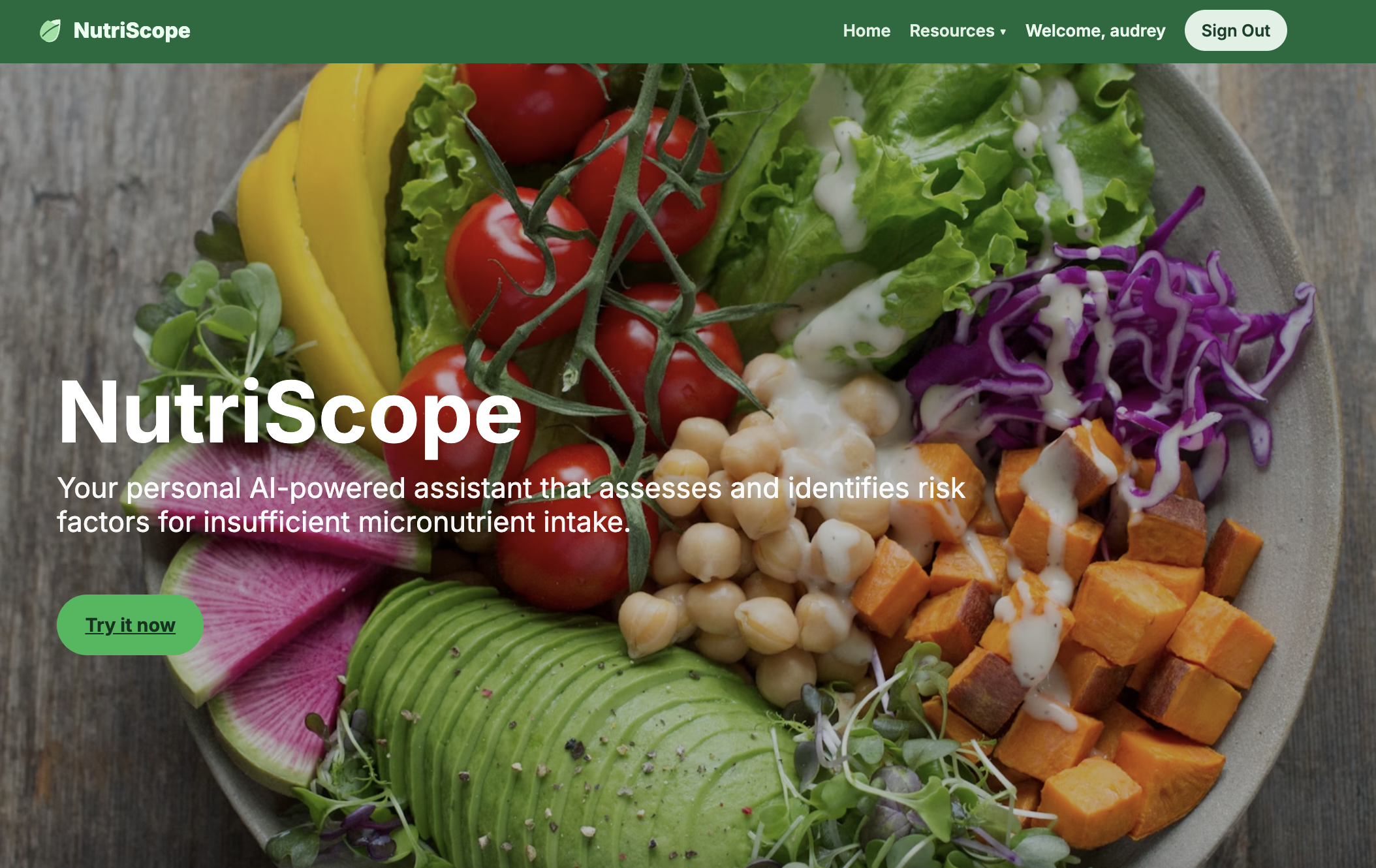
Home page (NutriScope)
-
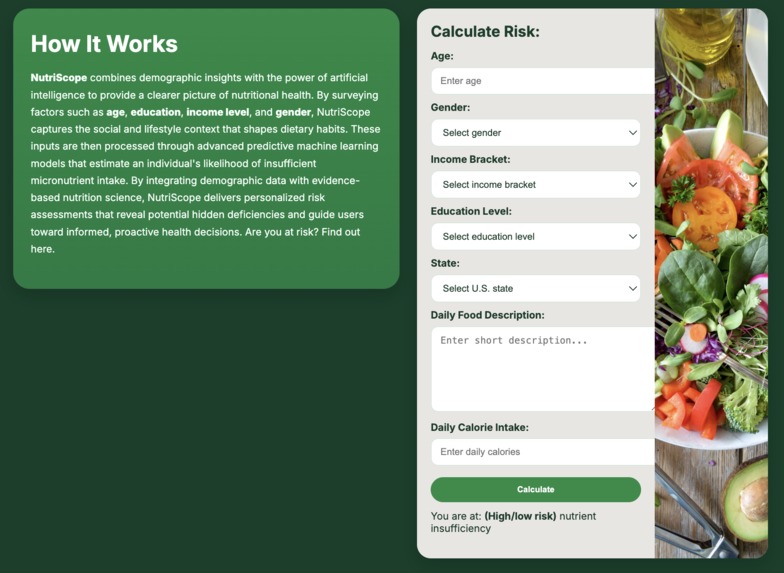
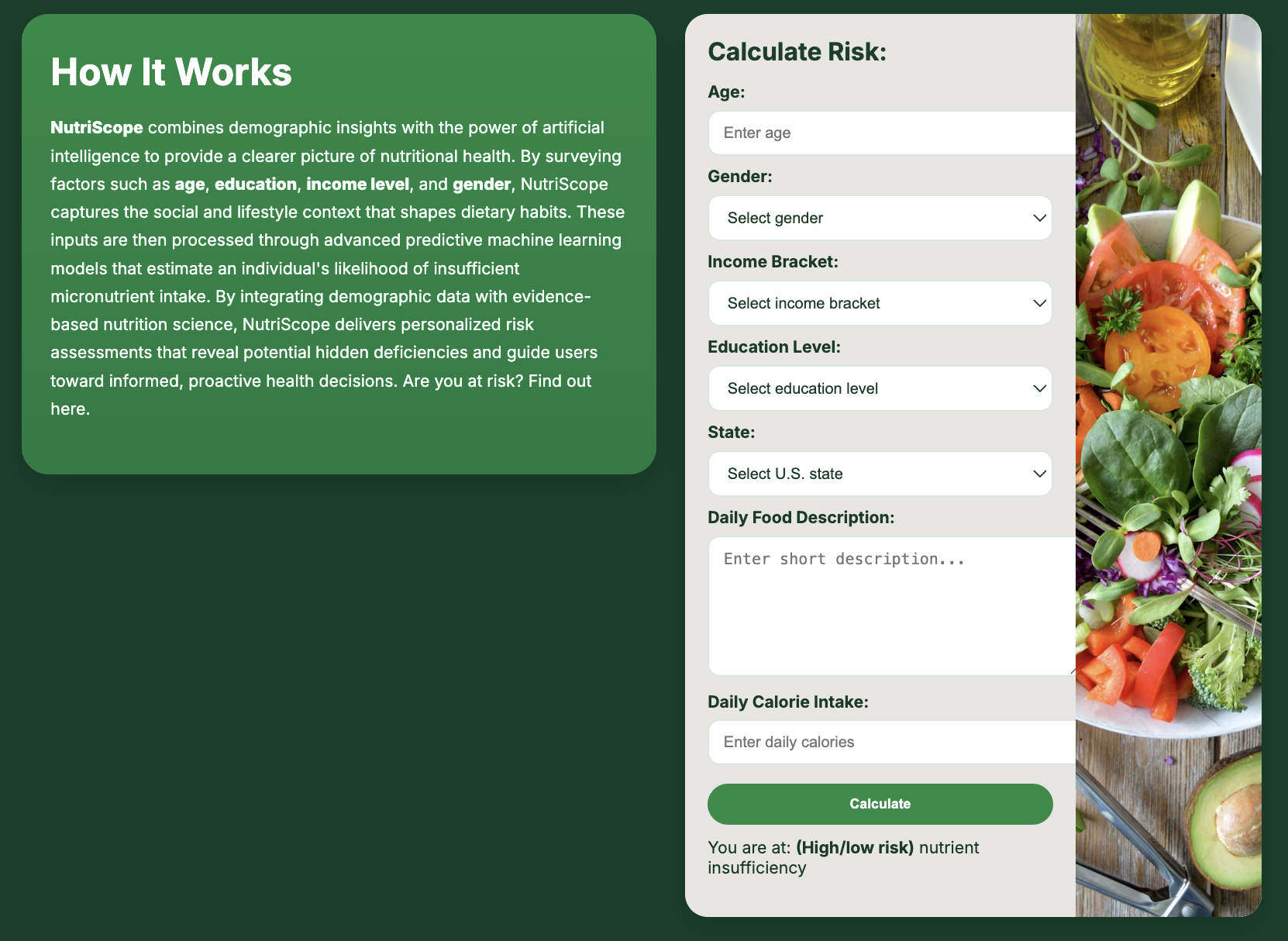
Risk assessment user survey
-
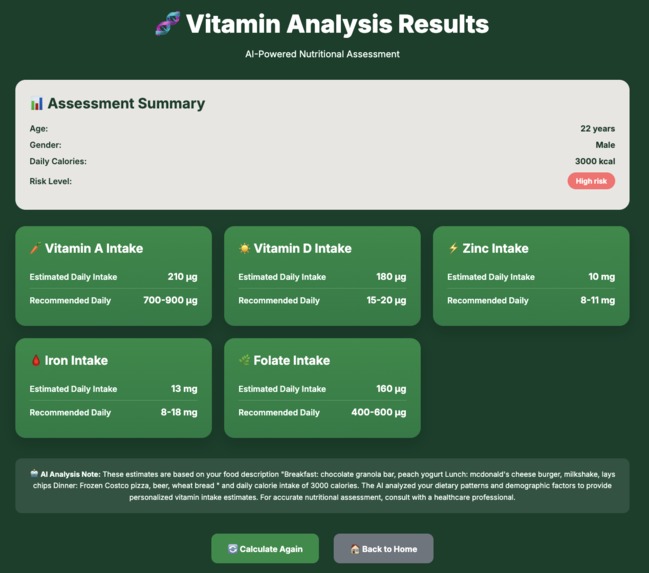
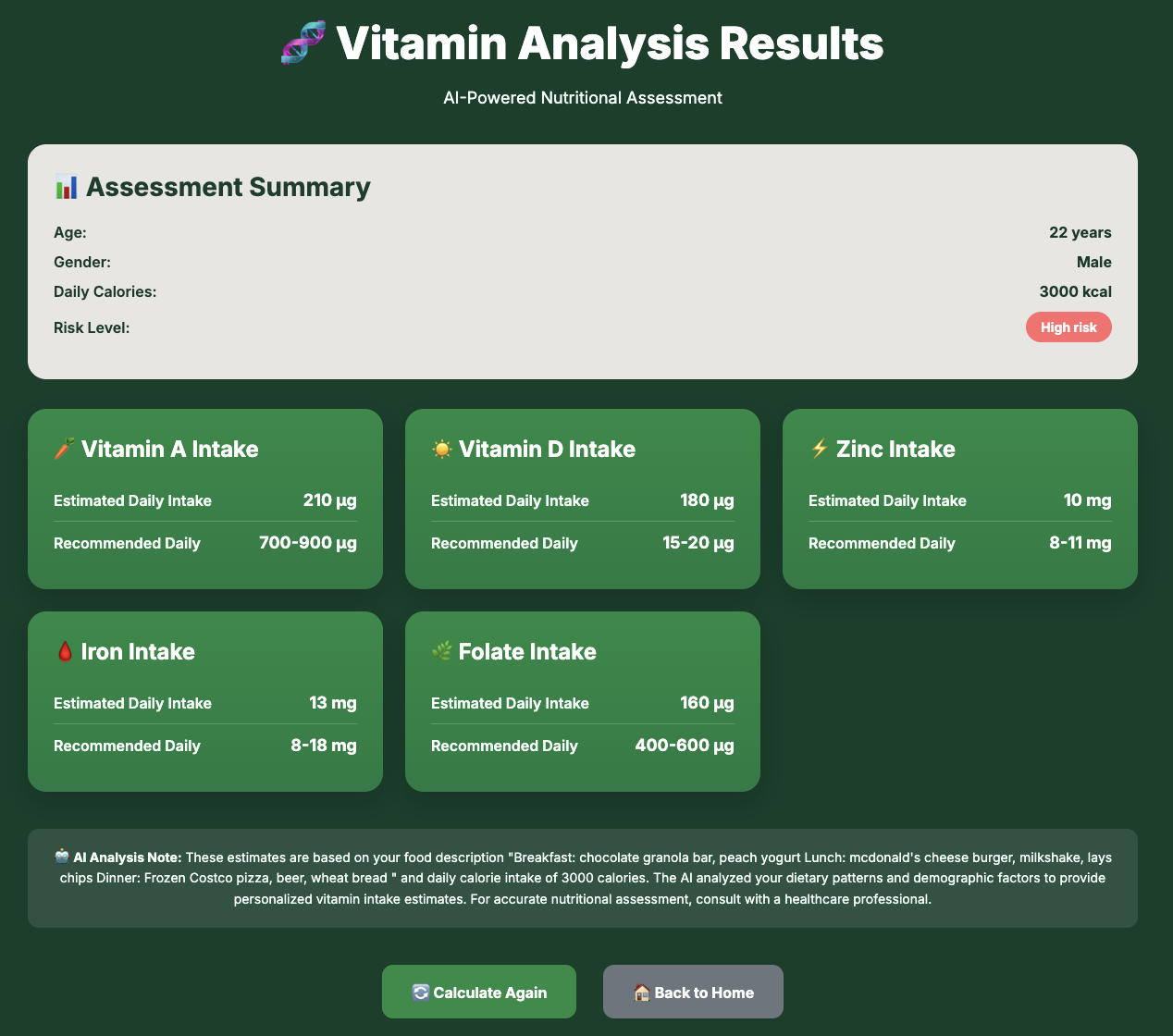
Micronutrient intake estimate and risk analysis result
-
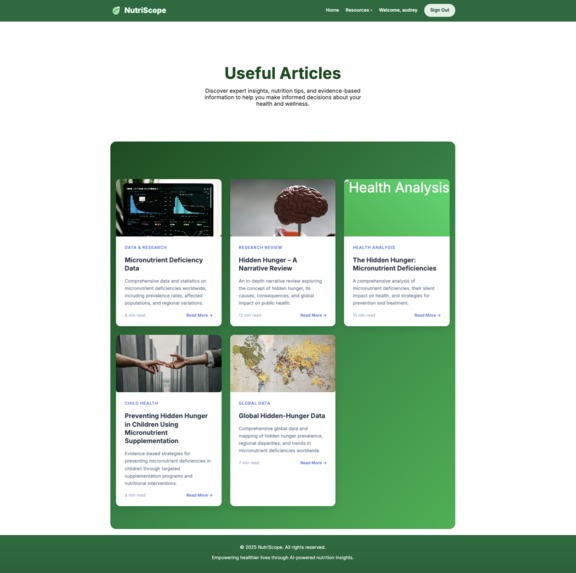
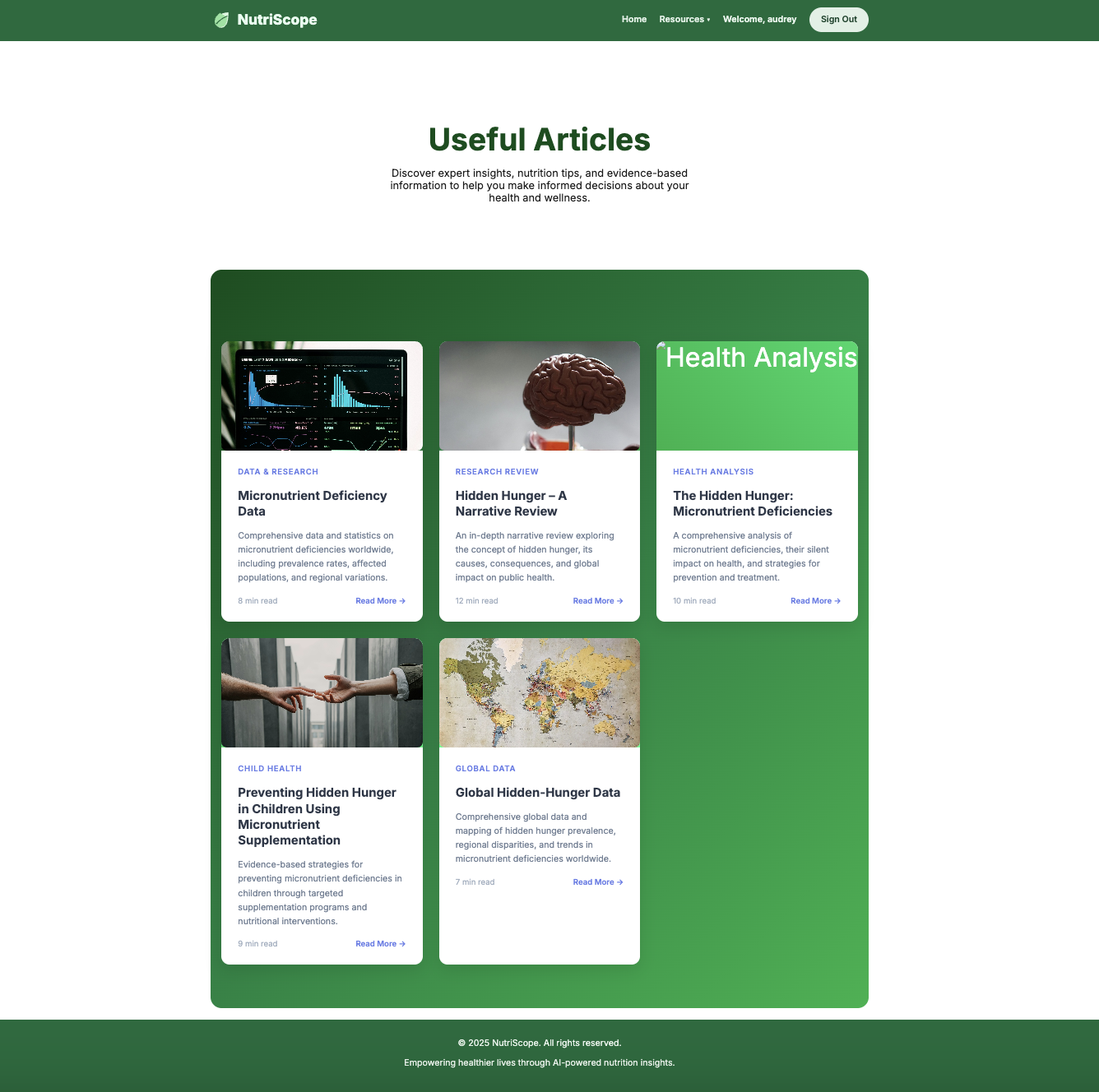
Hidden-hunger nutrient literacy
Inspiration
Hidden hunger, which is micronutrient deficiency without visible signs, affects billions worldwide. During TurBioHacks, our team was inspired by the challenge of making nutrition gaps visible, accessible, and actionable. With so many diets lacking key vitamins and minerals, especially Vitamin A, Folate, and Zinc, we wanted to create a tool that could help individuals and policymakers identify risk factors early and make informed decisions.
What it does
NutriScope is a web application that allows users to input simple demographic and dietary information such as age, gender, income, education level, and daily intake of key nutrients. Using machine learning models, the app predicts the user’s risk of hidden hunger and highlights which nutrient deficiencies are most influential. Beyond personalized feedback, the tool can also visualize community level trends, supporting larger scale public health initiatives.
How we built it
We collected and cleaned dietary and demographic datasets, then tested different models such as Logistic Regression, Random Forest, Gradient Boosting, and Neural Networks. Feature importance analysis revealed that Vitamin A, Folate, and Zinc intake were the strongest predictors of hidden hunger risk. We integrated these insights into a streamlined web application, pairing back end prediction models with a front end interface designed for accessibility. Visualizations, including heatmaps and nutrient breakdowns, make the results both clear and engaging.
Challenges we ran into
- Handling and cleaning datasets and ensuring the models produced reliable predictions.
- Deciding how to balance scientific depth with simplicity so non technical users could benefit.
- Integrating data visualization tools into a lightweight, hackathon friendly web app.
- Translating raw machine learning outputs into meaningful and actionable insights for users.
Accomplishments that we're proud of
- Successfully identifying Vitamin A, Folate, and Zinc as the top predictors of hidden hunger, validating global research in a data driven way.
- Creating an interactive tool that does not just predict outcomes but also educates users about nutrition gaps clusters and locational risks
- Building a model pipeline from raw data to deployed web app within the hackathon timeframe.
- Designing visuals such as heatmaps and nutrient trends that make the science behind hidden hunger accessible to anyone.
What we learned
- How to apply machine learning to real world public health issues.
- The importance of clear data visualization when explaining complex models.
- How small improvements in diet such as fortification or supplementation can make huge differences in preventing deficiencies.
What's next for NutriScope
We see NutriScope growing in two directions:
1. Personal Impact: Expanding the tool into a mobile app with more tailored dietary guidance and connections to local health resources.
2. Community Impact: Scaling the platform to help policymakers identify vulnerable populations and track nutrient deficiencies at a regional or national level.
Long term, we envision NutriScope as both a personal nutrition assistant and a public health ally in the global fight against hidden hunger.


Log in or sign up for Devpost to join the conversation.