-
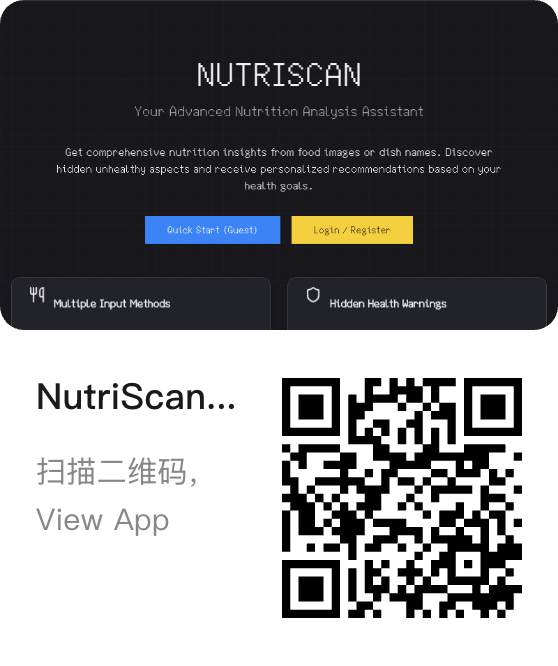
link to app!
-
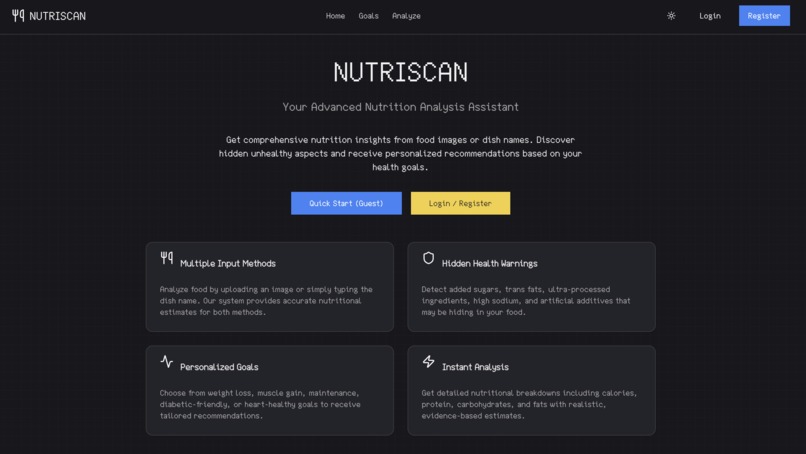
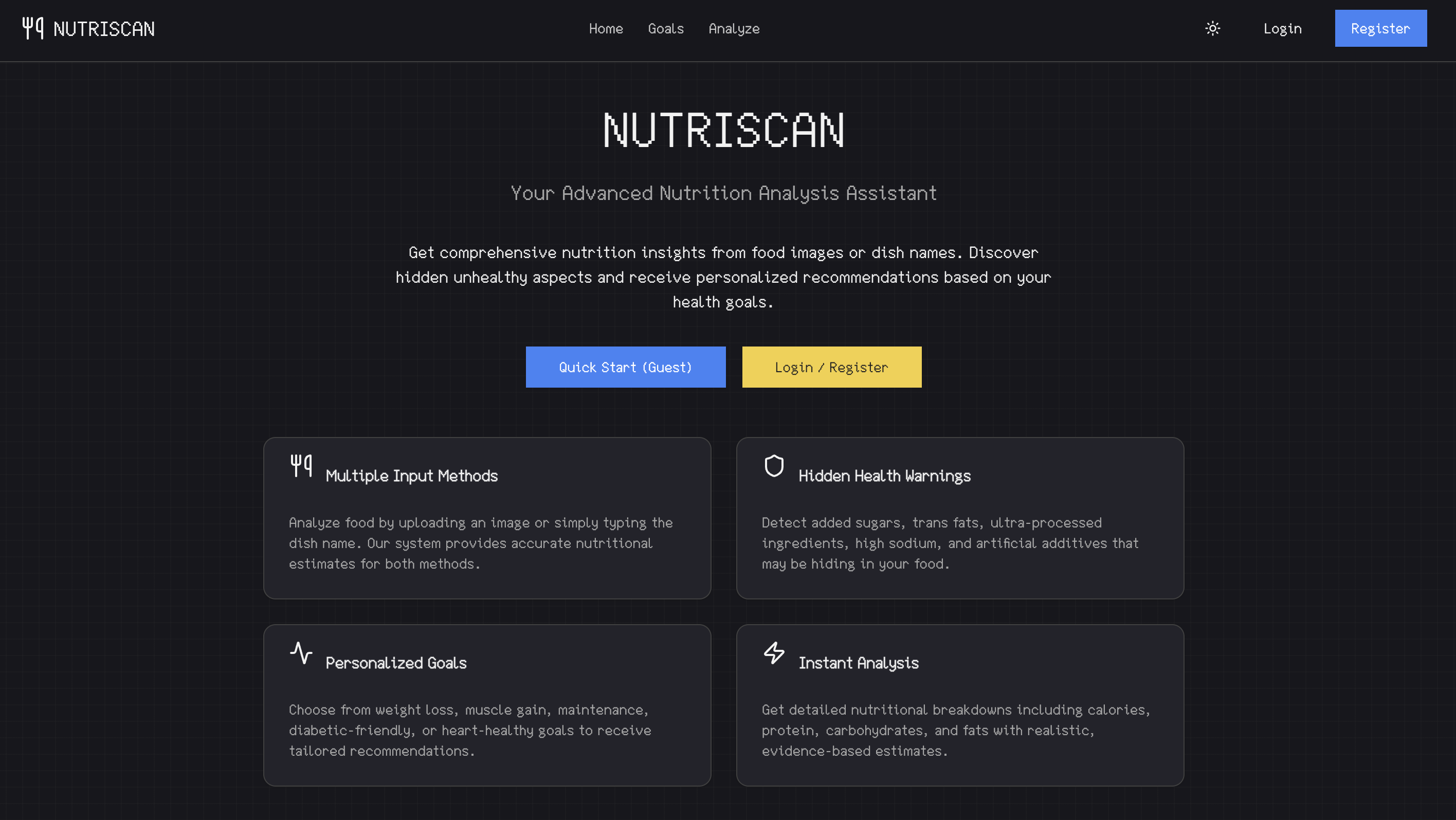
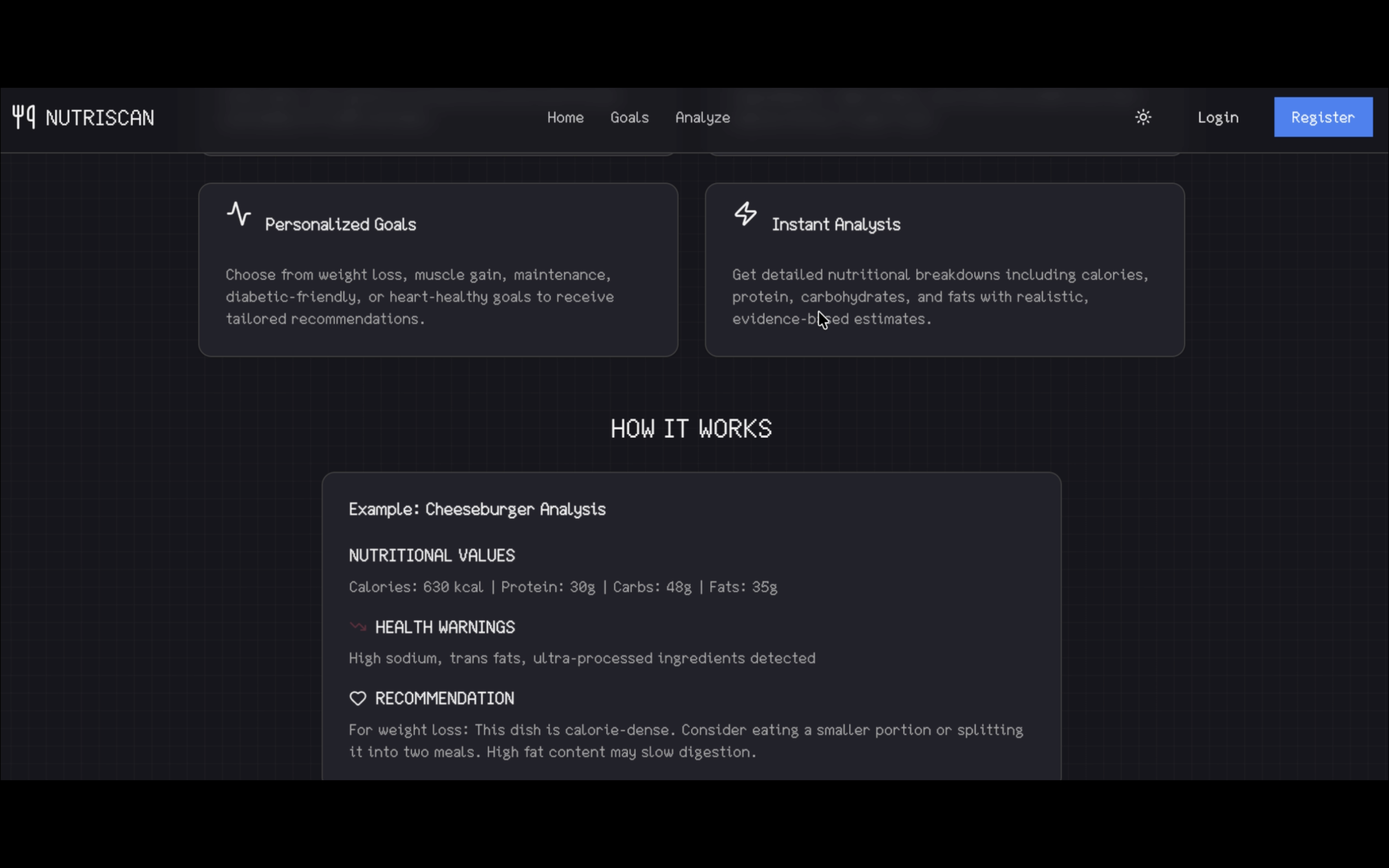
Home page
-
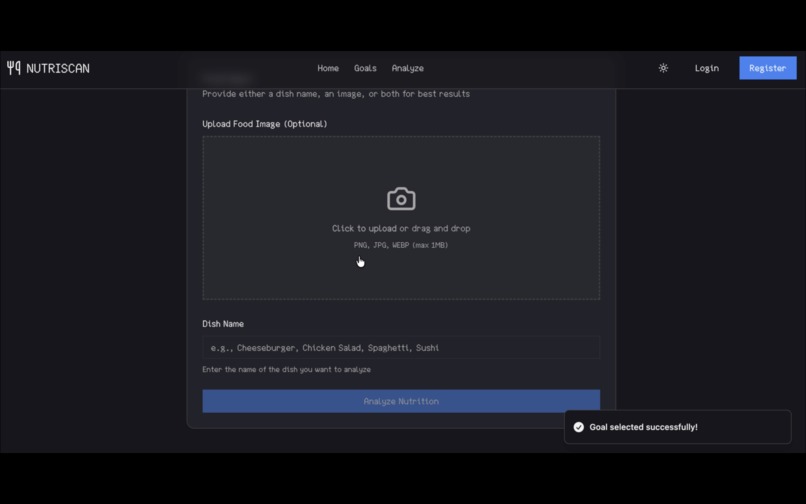
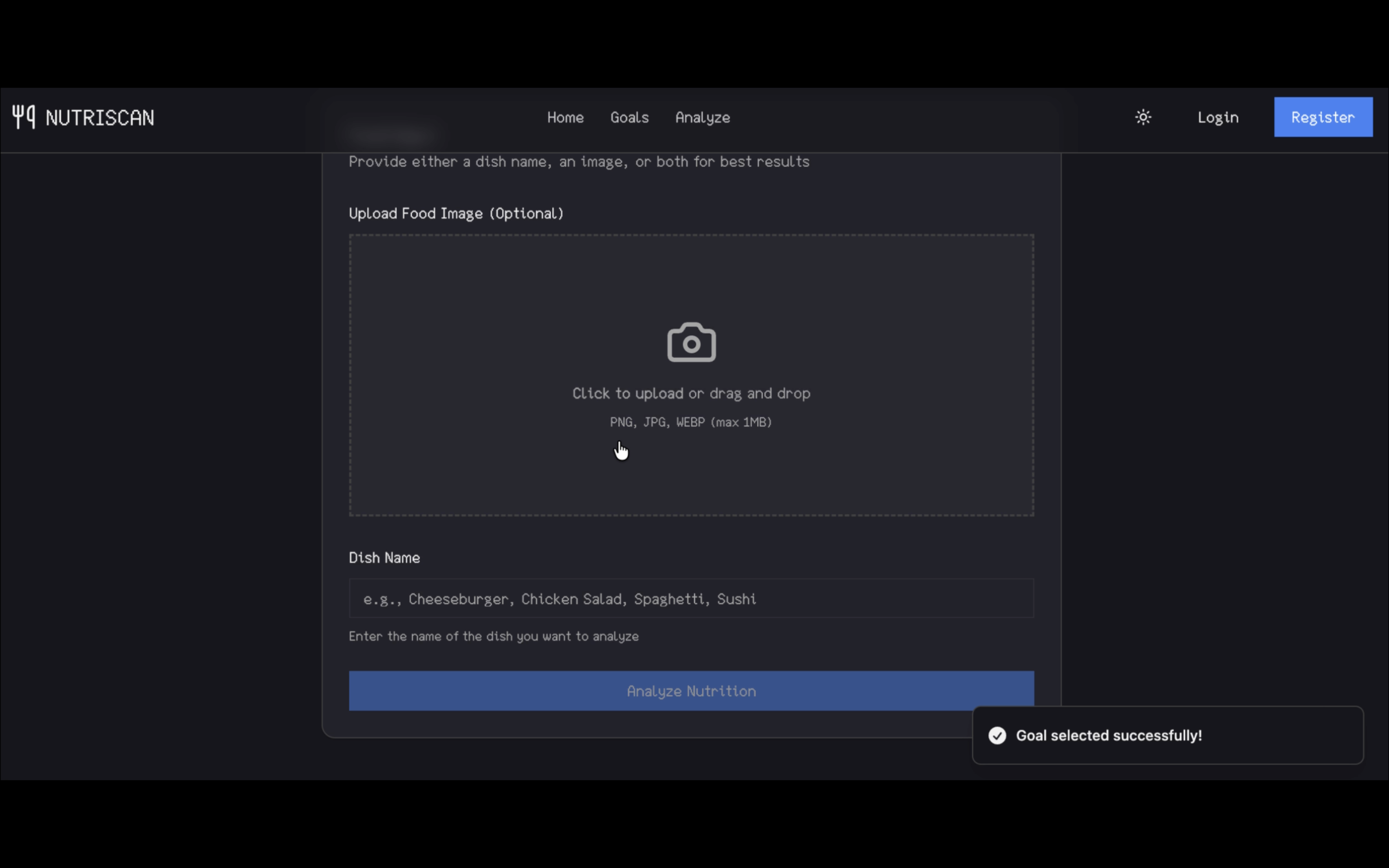
Analysis page
-
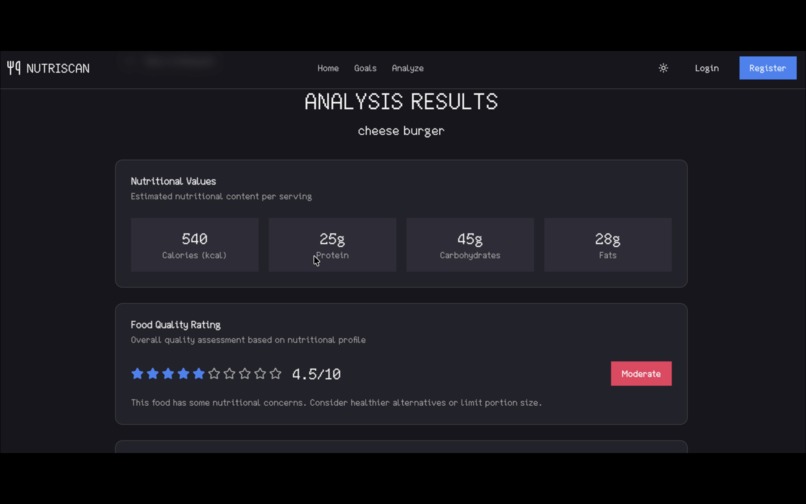
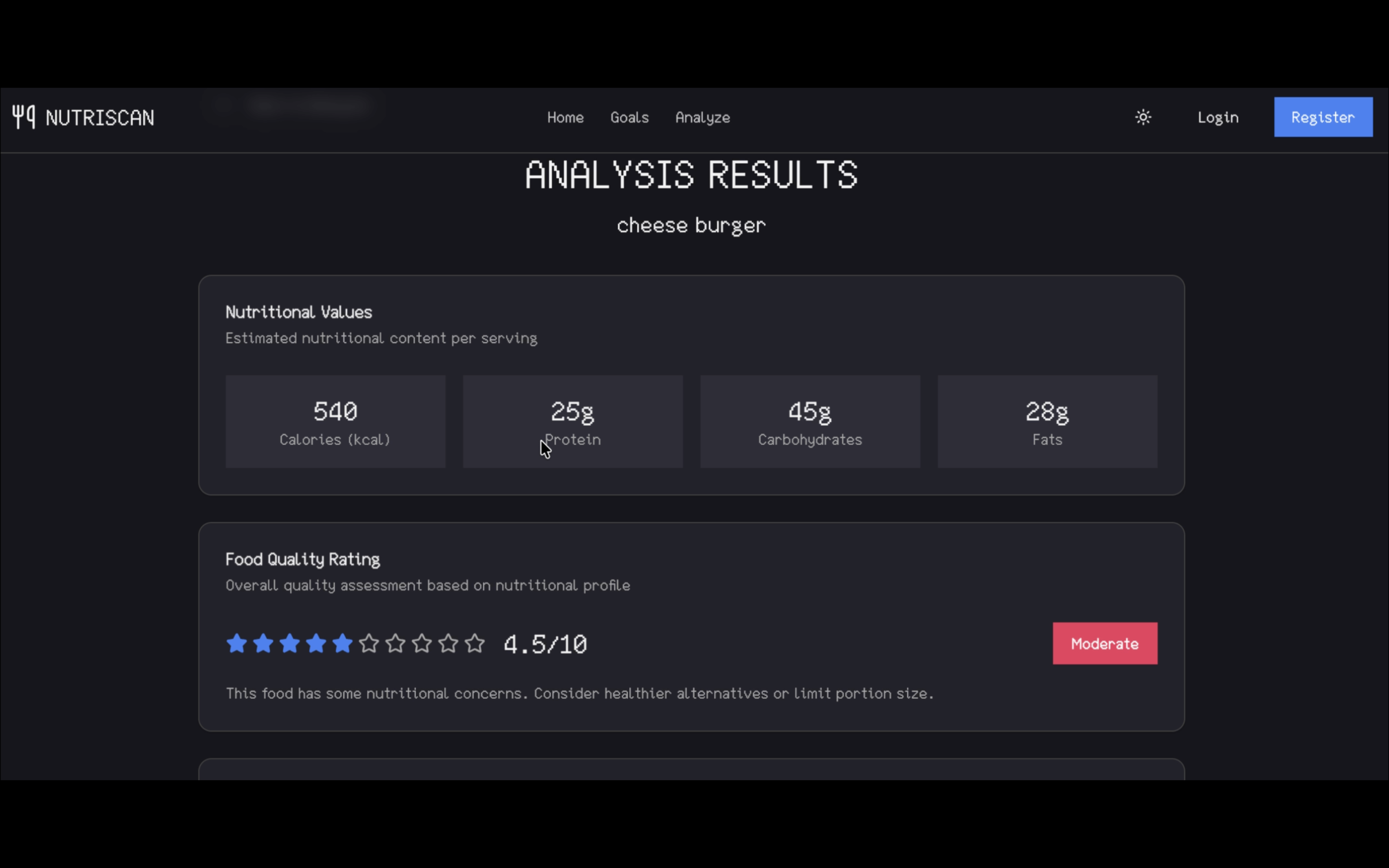
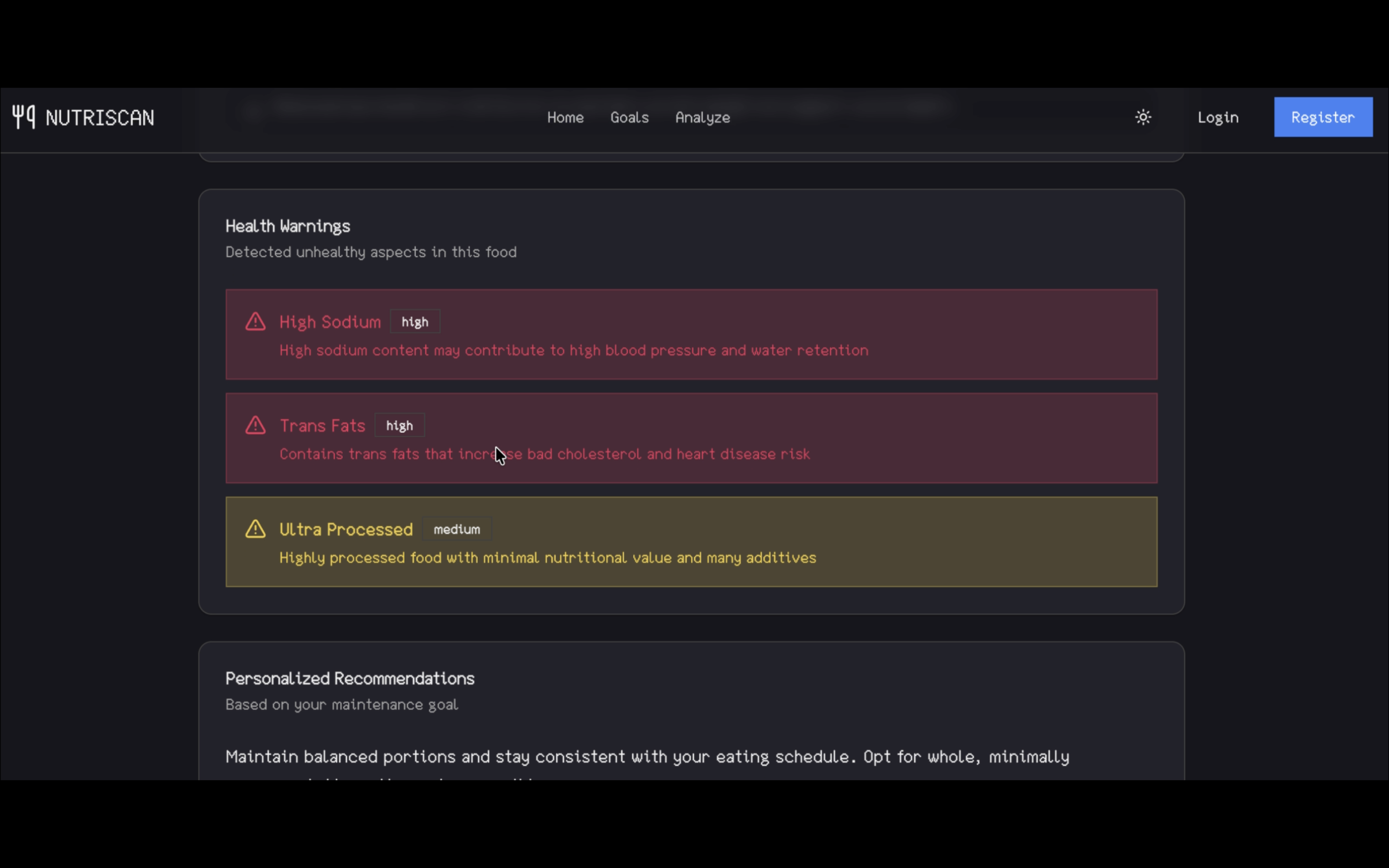
Result page
-
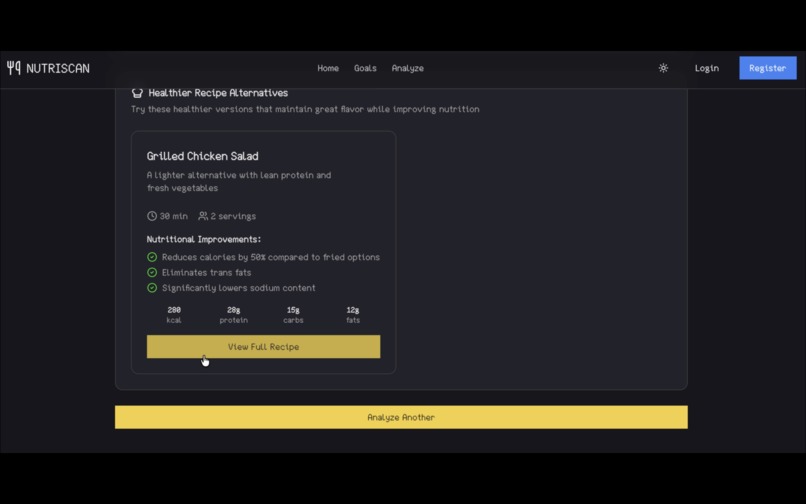
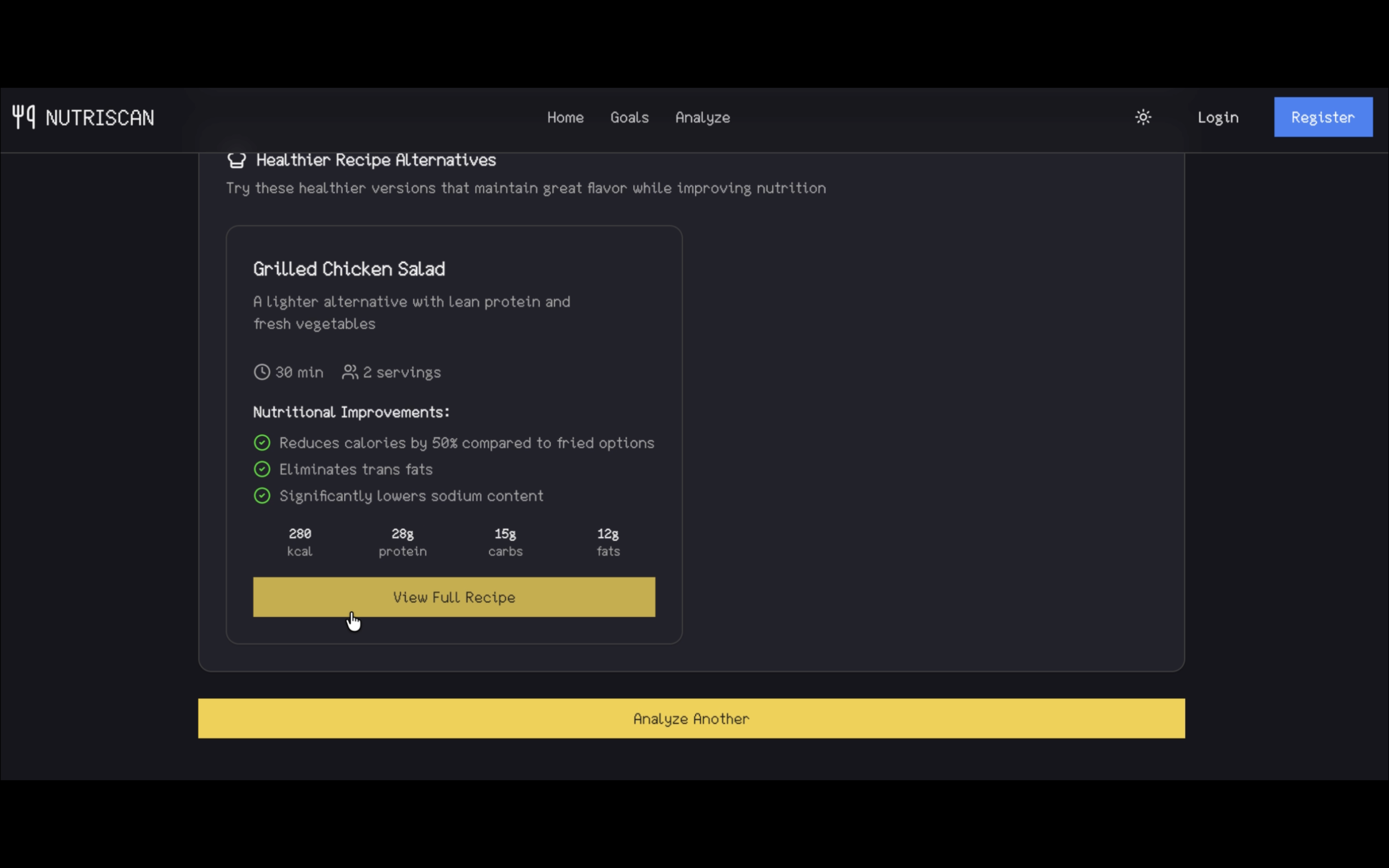
Alternative Receipe
-
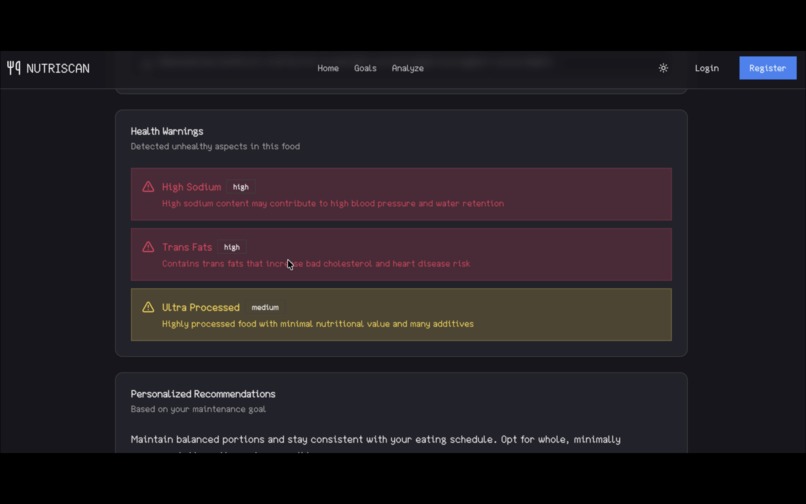
result
-
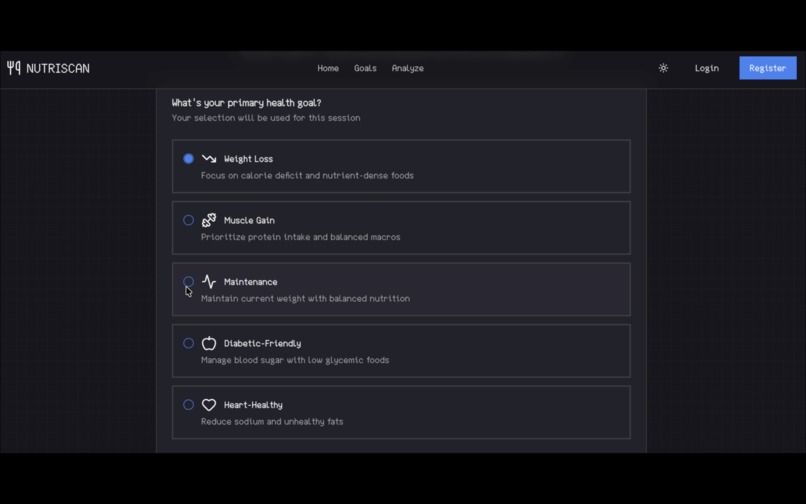
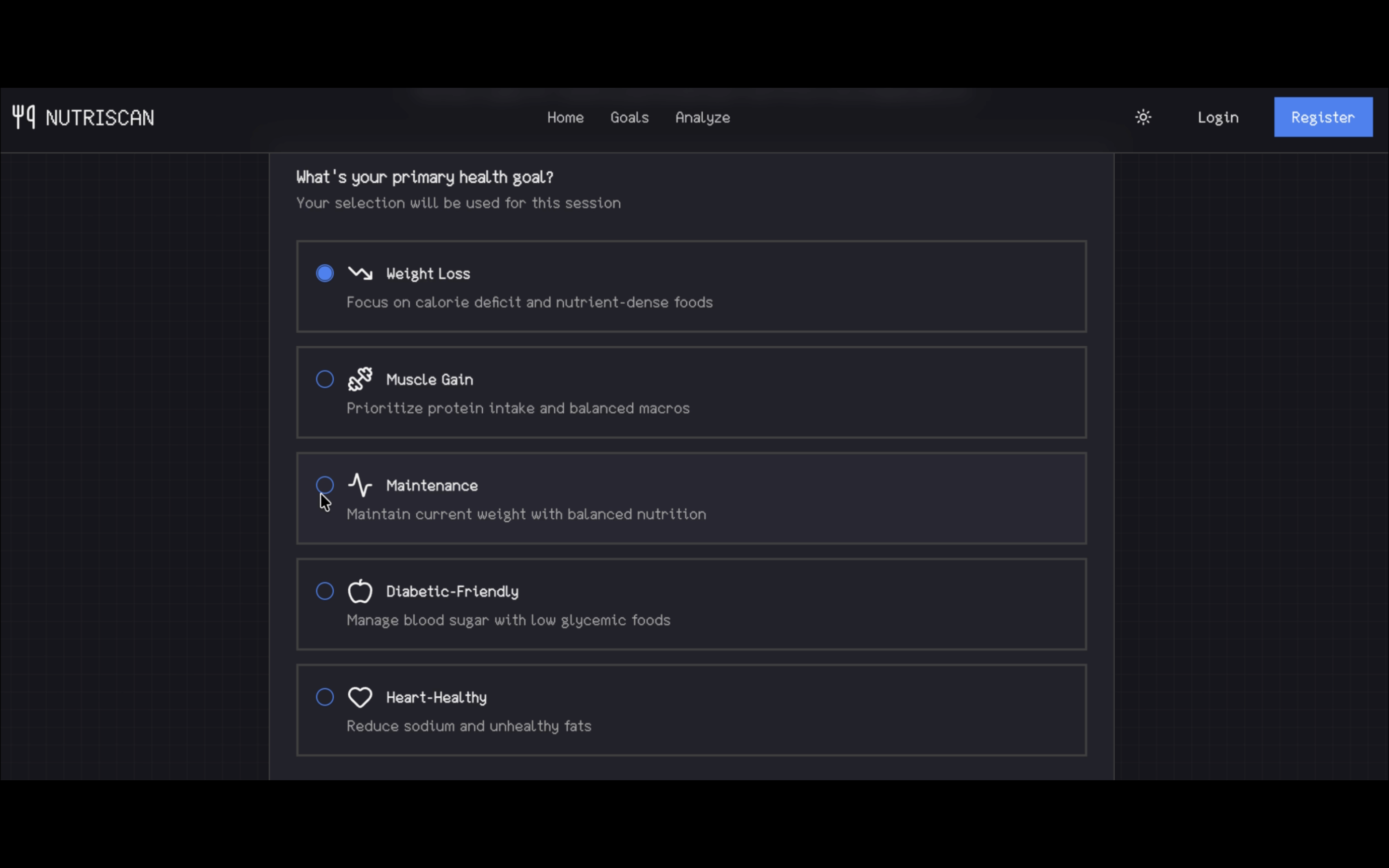
Goals page
-
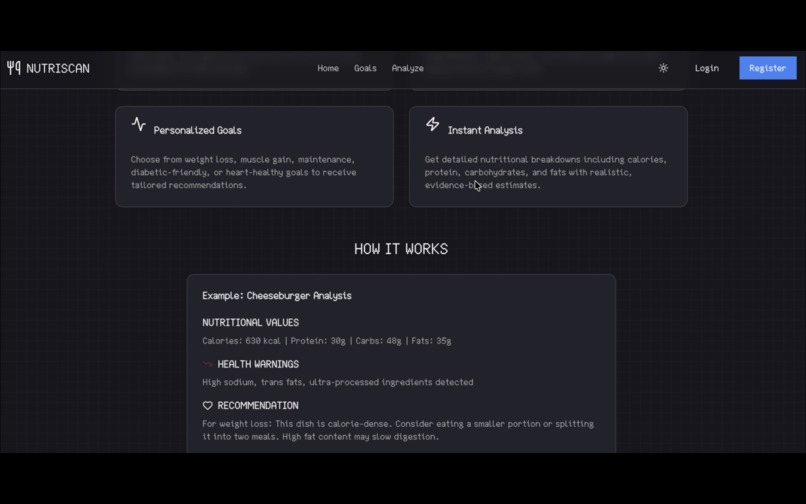
home page 2
NutriScan is not just a calorie counter — it’s a decision-making assistant for food.
Using MeDo, I was able to:
~ design a realistic nutrition intelligence system ~ implement structured, scalable outputs ~ and build a polished, user-focused application
This project showcases how AI can be used not just for automation, but for meaningful, personalized health insights.
About
I built NutriScan, an advanced nutrition analysis web application that helps users understand what they’re actually eating — beyond just calories.
The core problem I wanted to solve is that most people either:
- don’t track nutrition at all, or
- rely on apps that provide generic or incomplete insights
NutriScan bridges that gap by allowing users to input either a dish name or a food image (processed into description) and receive a detailed nutritional analysis, including:
- Calories, protein, carbohydrates, and fats
- Hidden health risks such as added sugars, trans fats, high sodium, and ultra-processed ingredients
- Personalized recommendations based on user goals (weight loss, muscle gain, maintenance, diabetic- friendly, heart-healthy)
Additionally, the app goes a step further by suggesting healthier recipe alternatives. For example:
- High sodium dish → suggests low-sodium preparation methods
- High sugar dessert → recommends natural sweetener swaps
- Processed meals → suggests cleaner, whole-food versions
This transforms the app from just an analyzer into a practical decision-making assistant.
How I Used MeDo
I used MeDo as a co-builder and system designer, not just for generating code. I structured interactions around clear modules:
- Nutrition analysis logic
- Structured JSON outputs
- UI/UX system design
Backend API flow (FastAPI + frontend integration) Instead of one-shot prompts, I iteratively refined:
Prompt engineering for realistic nutrition estimation
Detection logic for hidden unhealthy components
Context-aware recommendation generation I also used MeDo to simulate real-world uncertainty, ensuring outputs remain practical and not overly optimistic.
Best Part MeDo Generated
The most impressive component is the intelligent nutrition + recommendation engine. It:
- Converts vague dish inputs into realistic nutritional estimates
- Detects non-obvious risks (like hidden sodium or processed ingredients)
- Provides specific, contextual insights instead of generic advice
- Suggests healthier alternatives and recipe modifications tailored to the dish
For example:
“High sodium due to processed sauce — consider a homemade version using herbs and lemon instead of salt.”
This level of actionable feedback makes the system genuinely useful.
Advanced Features & Extensions
📷 Image-based input (via preprocessed vision descriptions) 🧠 Structured JSON outputs for scalability 🎯 Goal-based recommendation engine 🍽️ Healthier recipe alternatives & ingredient swaps 💾 User system with saved history tracking
                                                 "Your plate has trust issues now" ......
                                                            THANK YOU ~_~
Built With
- llm
- medo
- supabase


Log in or sign up for Devpost to join the conversation.