-
-
NUTRALYF
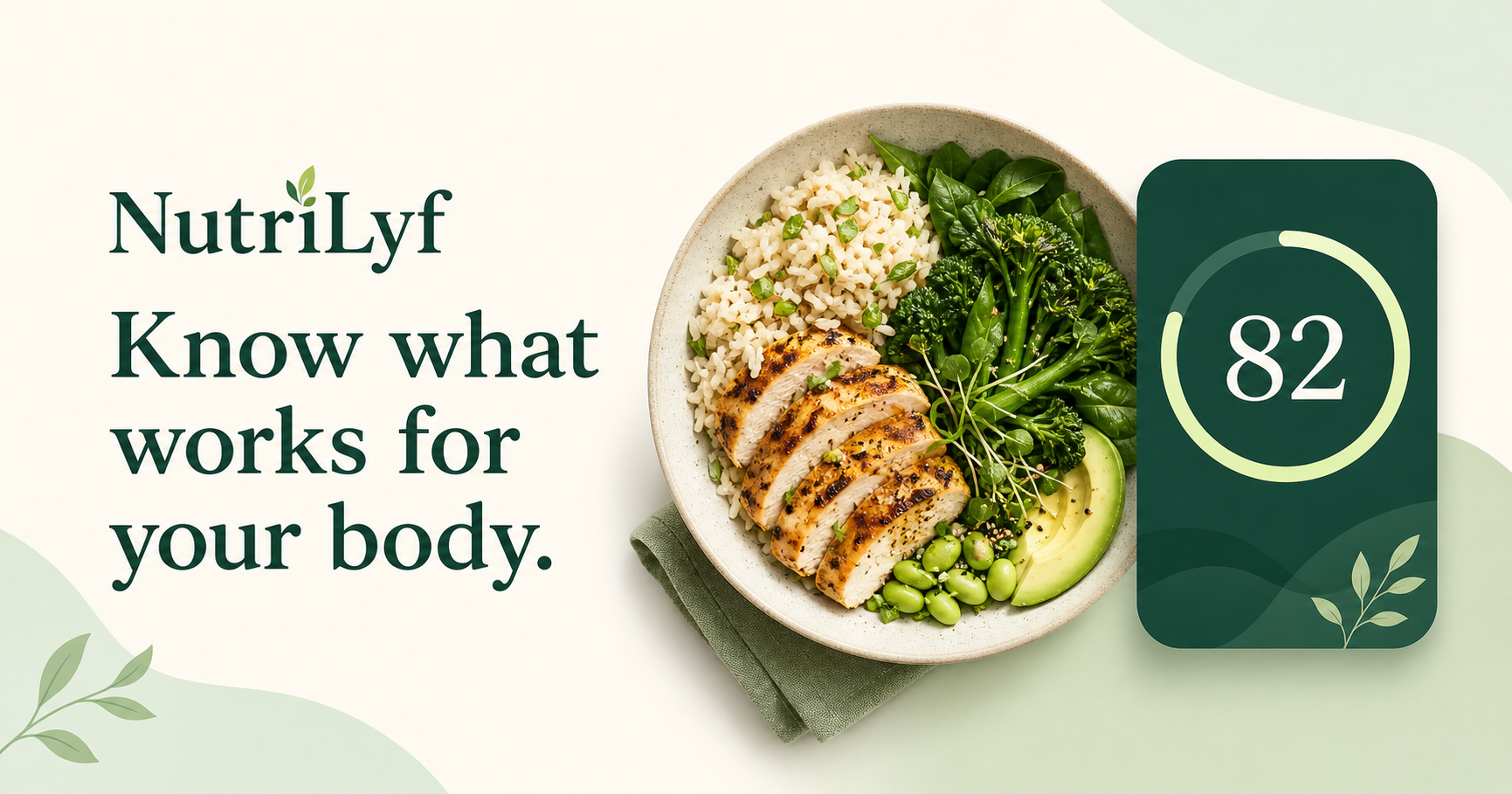
Being someone who has been in and out of diets for very long I have had lot of difficulty in easily tracking my diet and staying on course . Most nutrition applications either count calories or offer generic definitions of “healthy.” Real decisions are more personal: a food that works for one person may conflict with another person’s diet, blood-glucose goals, sodium needs or gluten sensitivity. NutriLyf was created to close that context gap .
NutriLyf analyzes a meal or food-label photograph with GPT-5.6, presents its initial identification, and asks the customer to confirm or correct the exact dish or product name. For meals, the customer can also clarify portion size, preparation, added fats, sauces and the amount eaten. GPT-5.6 then performs a second, personalized analysis.
The result uses three simple outcomes—Fits well, Works with changes or Better occasionally—and explains calories, macros, sodium, fibre, diet compatibility, condition-specific considerations, portion guidance and practical changes. Label analysis explains readable ingredients and additives without alarmist claims. Keto customers receive macro tracking, while Mediterranean and DASH customers receive gentler compatibility suggestions.
NutriLyf is a mobile-first TypeScript and React application built with Next.js-compatible routing and deployed as a Cloudflare-compatible OpenAI Site. Its server endpoint calls the OpenAI Responses API with GPT-5.6 vision and a strict structured-output schema. The OpenAI key stays server-side. Images are resized in the browser before analysis, while preferences, energy targets, streaks and saved results remain device-local for the prototype.
Codex helped turn the product brief into a working application, refine the interaction model, implement and debug the API integration, create structured AI responses, test the application and publish successive versions. GPT-5.6 provides visual identification, nutrition estimation, ingredient interpretation and profile-aware guidance.
the difficult part was making the low friction pic based food detection part of the app more reliable ,as real life pics differ a lot from edited images on the net which the ai easily detects , to overcome it we added human loop which could rectify the mistakes and give suggestion in few targeted answers , following which the ai made a re run and mostly the predictions were better this time. this kept the app low effort as designed but improved the authenticity of the results
being a completely non technical person I learned that idea is the only limit for creation of a product
I learned to how take a project from ideation to completion using ai and how to steer the model to get appropriate outcomes
Future work includes authenticated profiles, encrypted history, clinician-configurable targets, regional food databases, barcode lookup, comparative product scanning and evaluation against dietitian-reviewed test cases.
Built With
- api
- codex
- gpt-5.6
- next.js
- openai
- react
- responses

Log in or sign up for Devpost to join the conversation.