Inspiration
The idea of Nutrilink came from a simple but powerful observation: While millions struggle with hunger, vast amount of perfectly good food are wasted every day. We wanted to build a system that doesn't just list food, but actively ensure it reaches the right people before it expires.
What it does
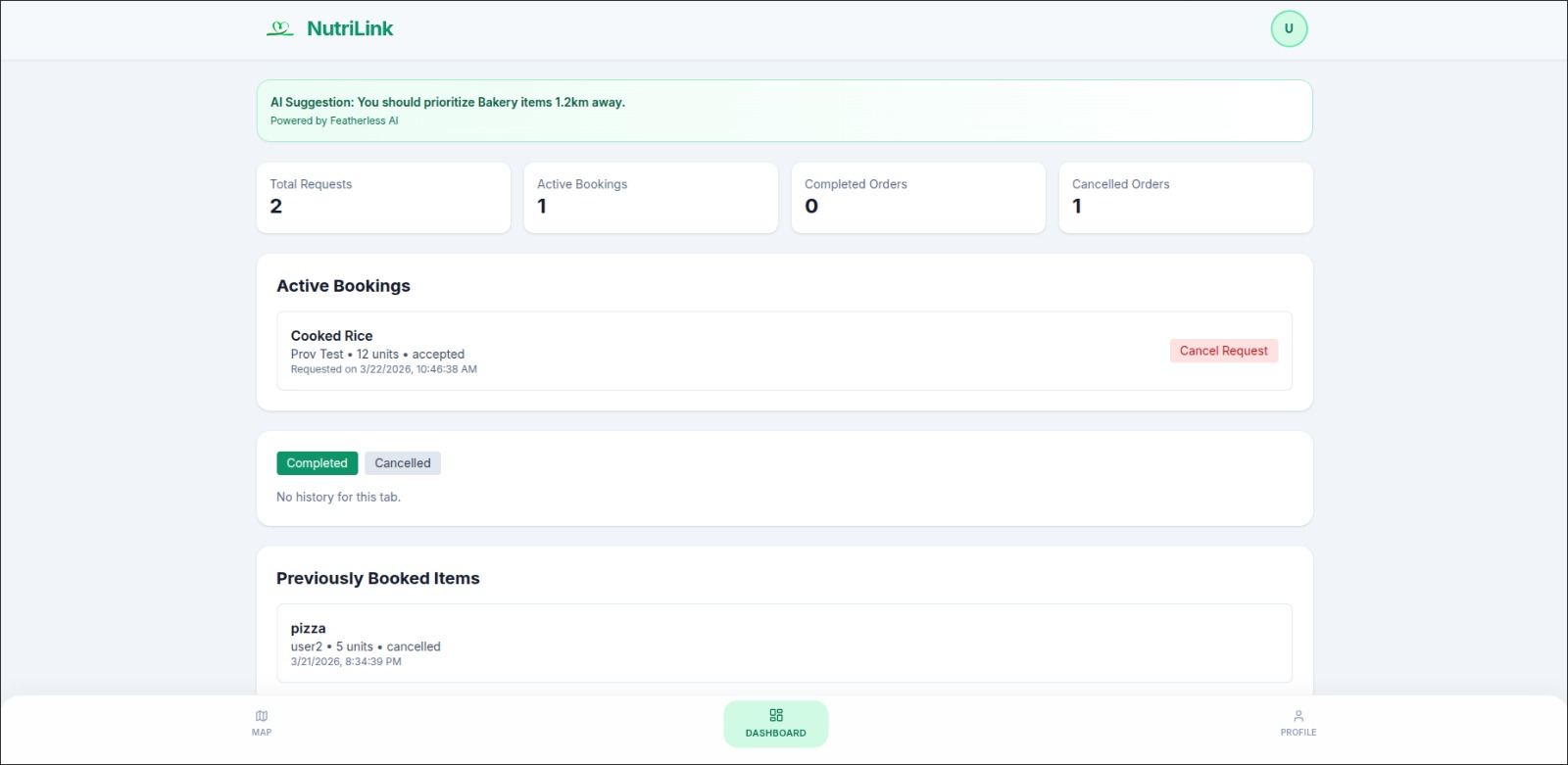
Nutrilink is designed as a real-time, geo-based platform with strong frontend and backend integration and AI driven insights. It connects NGO with food provider efficiently.
How we built it
NutriLink is designed as a real-time, geo-based platform with strong frontend-backend integration and AI-driven intelligence.
- Frontend: Built using React + TypeScript Tailwind CSS for a clean, modern UI Framer Motion for smooth animations Google Maps API for real-time visualization
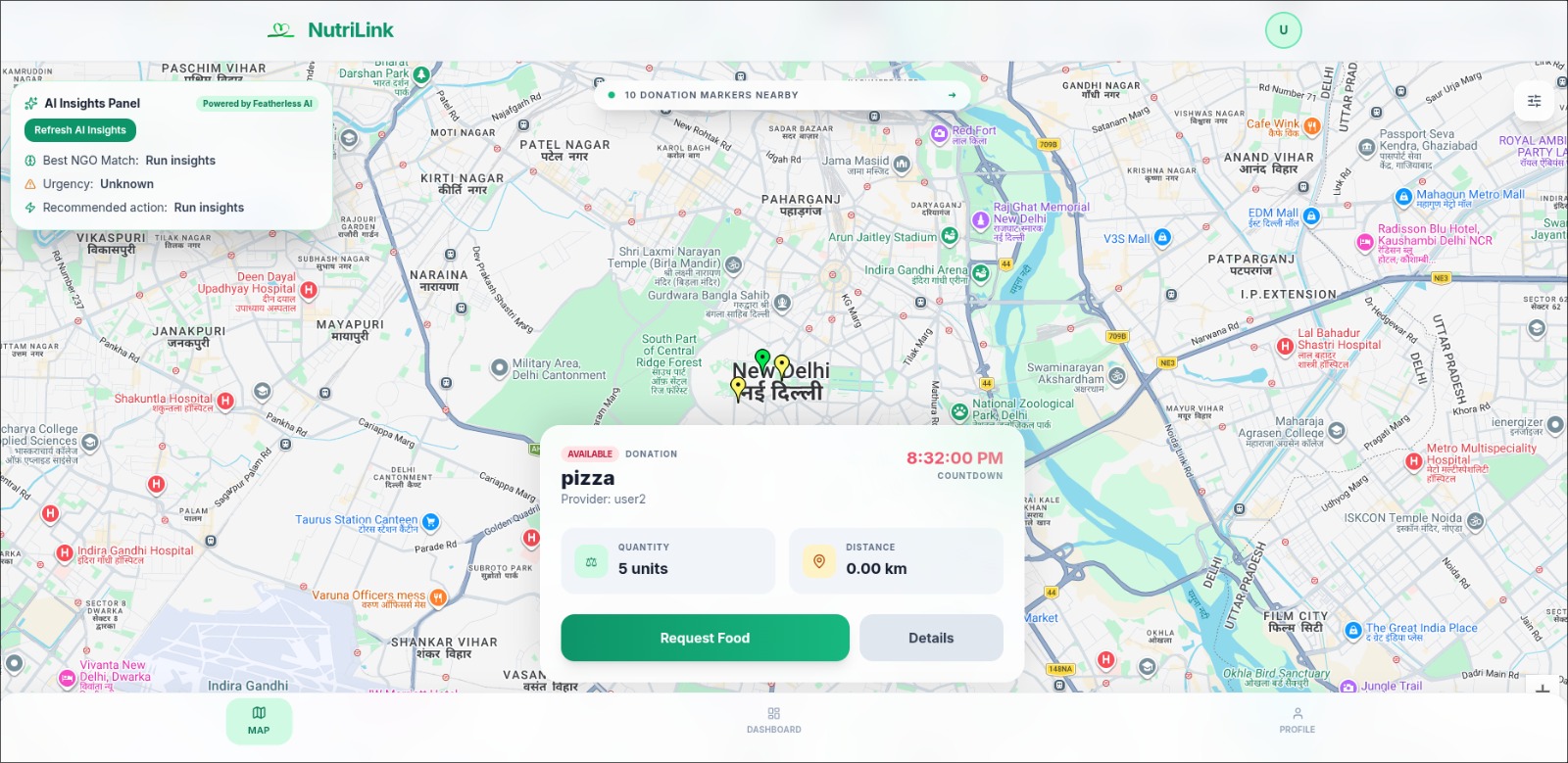
The core interface is a map-first experience, where users can instantly see nearby food availability and interact with it.
- Backend: Built with Node.js + Express REST APIs for: fetching nearby food listings managing requests handling user interactions Filtering logic (distance, status) is handled server-side
Challenges we ran into
- Real-Time Data Handling
Ensuring the UI stays in sync with backend updates without lag or inconsistency.
- Map Integration
Replacing static UI with a fully interactive map while maintaining performance and responsiveness.
- Meaningful AI Usage
It was challenging to ensure AI:
- actually improves decision-making
- is visible and understandable to users
- UI Complexity
Early designs became cluttered. We had to:
- simplify layouts
- maintain visual hierarchy
- focus on what truly matters
- Frontend–Backend Alignment
Ensuring:
- no duplicated logic
- backend remains the single source of truth
- frontend stays clean and reactive
Accomplishments that we're proud of
- Built a fully functional, real-time map-based platform that connects food providers and NGOs seamlessly
- Successfully integrated Featherless AI in a meaningful and visible way (not just as a backend feature)
- Designed a clean, intuitive UI that handles complex data (maps, filters, dashboards) without overwhelming users
- Implemented end-to-end flow: listing → discovery → request → tracking
- Ensured strong frontend–backend alignment, with backend as the single source of truth
- Transformed a real-world problem into a practical, scalable solution
What We Learned
- How to design and build a geo-based real-time system from scratch
- Importance of clear data flow between frontend and backend
- How to integrate AI in a way that is useful, visible, and explainable
- Balancing aesthetics with usability — avoiding overdesign while keeping it engaging
- Working with maps, geospatial calculations, and performance constraints
- Breaking down a complex problem into modular, scalable components
What’s Next for NutriLink
- Real-time updates using WebSockets for instant synchronization
- Route optimization for NGOs to pick up multiple donations efficiently
- Mobile app for wider accessibility
- Smart notifications for urgent food pickups
- Enhanced impact analytics (meals served, CO₂ saved, etc.)
- More advanced AI models for prediction, matching, and decision-making
- Scaling the platform to support larger regions and organizations

Log in or sign up for Devpost to join the conversation.