-
-
WorkFlow
-
WorkFlow
-
WorkFlow
-
WorkFlow
-
WorkFlow
-
WorkFlow
-
WorkFlow
Inspiration
Eating healthy outside is fundamentally broken. Restaurants optimize for taste and profit, not nutrition, and users are left guessing what fits their goals. Existing solutions like calorie-tracking apps require manual input and are unusable in real-time situations. We saw a clear gap: people don’t need more data—they need better decisions at the exact moment they order food.
What it does
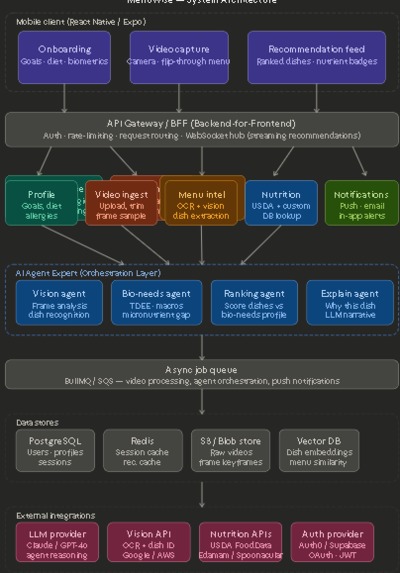
Our app turns any restaurant menu into a personalized nutrition assistant. Users scan menus using their phone, and the app instantly recommends dishes aligned with their goals—fat loss, muscle gain, or overall health—while respecting dietary preferences. It removes guesswork and enables real-time, goal-driven food decisions.
How we built it
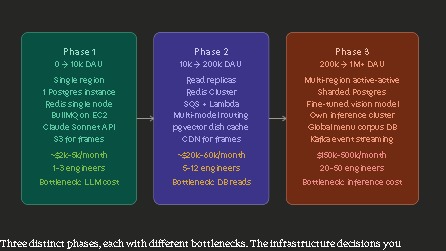
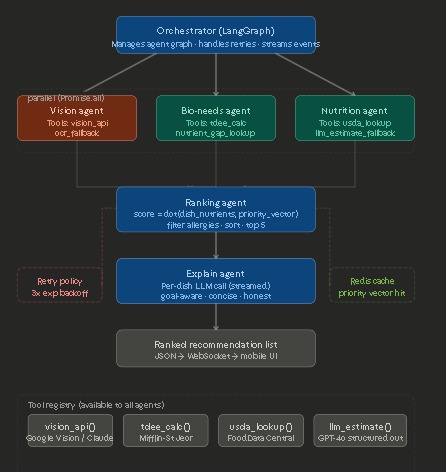
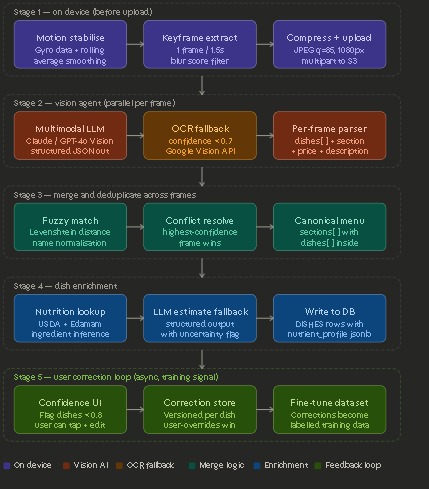
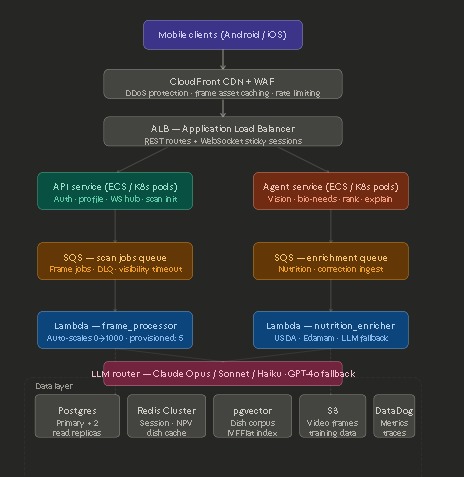
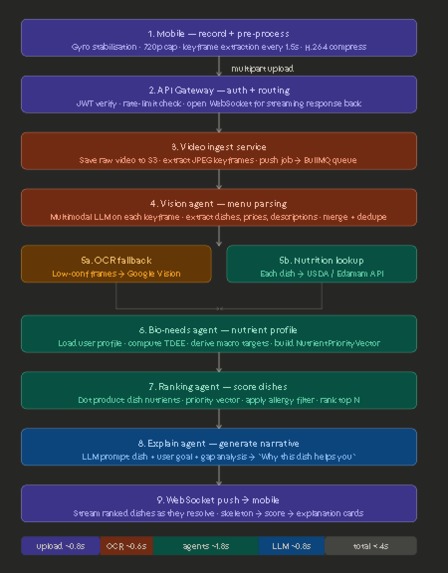
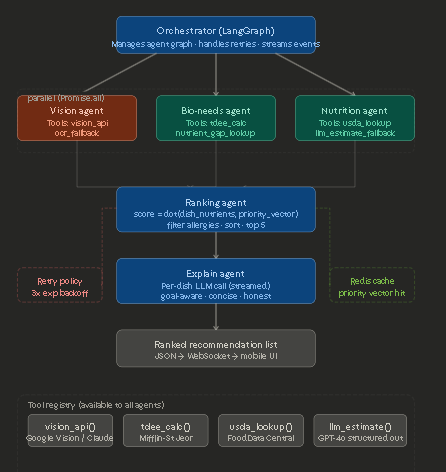
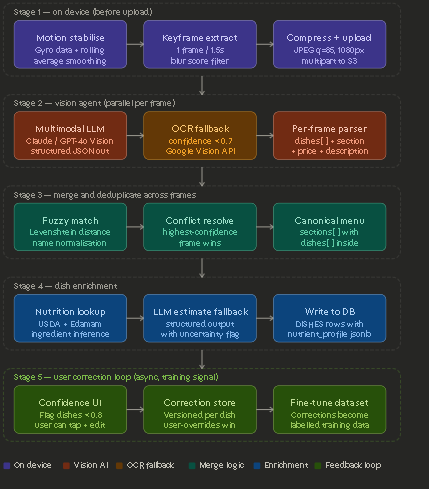
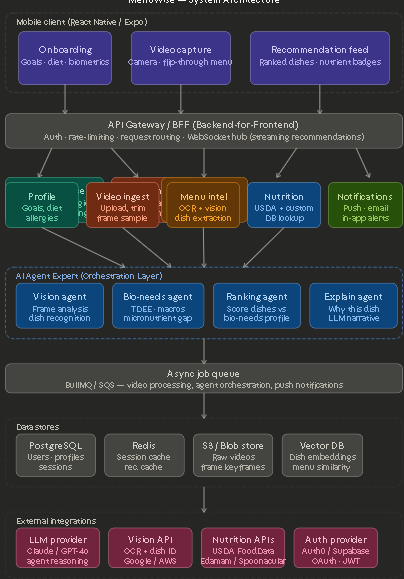
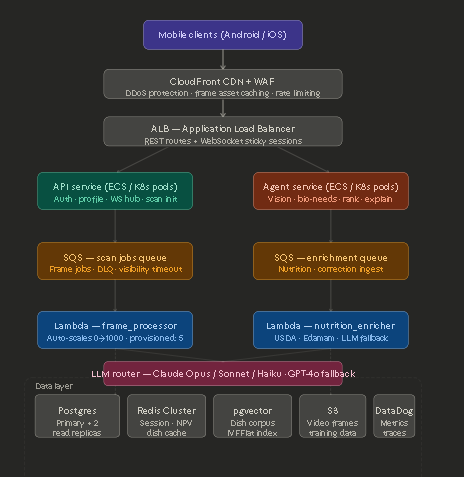
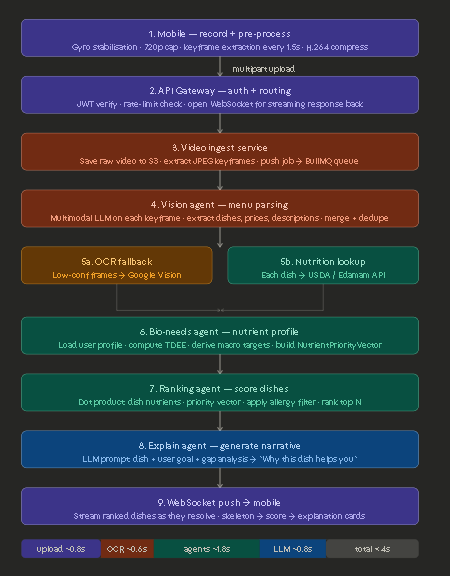
We built a mobile-first application with a computer vision pipeline to extract menu items from live camera input. The backend uses a nutrition intelligence engine that maps dishes to estimated macro and micronutrient profiles. A rule-based + AI-driven recommendation system matches this data against user profiles, which include goals, preferences, and basic health inputs. The system returns ranked recommendations in real time.
Challenges we ran into
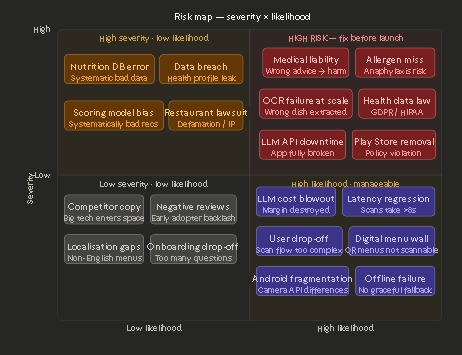
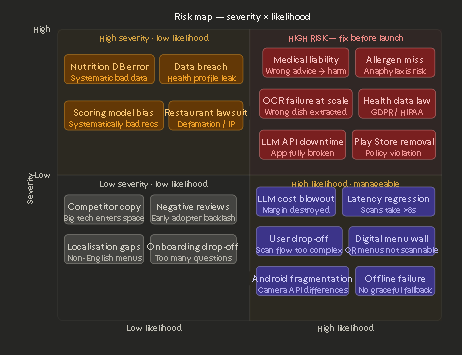
Menu parsing is messy—different formats, fonts, and languages break naive OCR approaches. Nutritional mapping is another hard problem since restaurant dishes don’t have standardized data. We had to rely on approximations and heuristic models, which introduces accuracy trade-offs. Personalization was also tricky—we needed it to be meaningful without requiring excessive user input.
Accomplishments that we're proud of
We built a system that works in real-time, which most competitors fail to do. The ability to scan a menu and get actionable recommendations within seconds is a strong UX win. We also created a flexible recommendation engine that can adapt to different goals and dietary constraints without overcomplicating the user experience.
What we learned
Good UX beats raw intelligence. Users don’t care how advanced your AI is—they care if it gives fast, useful answers. We also learned that perfect nutritional accuracy is unrealistic in this context; speed and usability matter more than precision. Finally, integrating AI into real-world workflows requires heavy fallback logic, not just models.
What's next for Untitled
We plan to improve recommendation accuracy by integrating restaurant APIs and structured menu datasets. We also want to add feedback loops so the system learns from user choices over time. Long term, we aim to expand beyond restaurants into a broader “decision layer” for daily nutrition, potentially integrating with wearables and health platforms.
Bonus Blog Post
Building this application started with a simple frustration—making healthy choices at restaurants is harder than it should be. Menus are designed for taste, not transparency, and most people don’t have the time or knowledge to evaluate what actually fits their health goals in real time. We wanted to bridge that gap.
The initial idea sounded straightforward: scan a menu and recommend better options. The reality was very different. One of the biggest technical hurdles was handling inconsistent menu data. Unlike structured datasets, menus vary wildly in format, naming, and detail. Extracting meaningful dish names using OCR was only the first step—mapping those dishes to reliable nutritional estimates was far more complex.
Another challenge was designing the recommendation logic. We didn’t want generic “healthy” suggestions. Instead, we built a system that adapts to individual goals like weight loss or muscle gain. This required balancing multiple factors such as calories, macronutrients, and dietary preferences, while still keeping the output simple and actionable.
We also explored integrating an intelligent agent layer to simulate personalized decision-making. While not perfect, it allowed us to move beyond static rules and experiment with more adaptive recommendations.
This project pushed us to think beyond just building features. It forced us to focus on real-world usability, imperfect data, and delivering value within seconds. The result is a system that doesn’t just analyze food—but helps users make better decisions when it actually matters.
Built With
- plpgsql
- superbase
- typescript


Log in or sign up for Devpost to join the conversation.