-
-
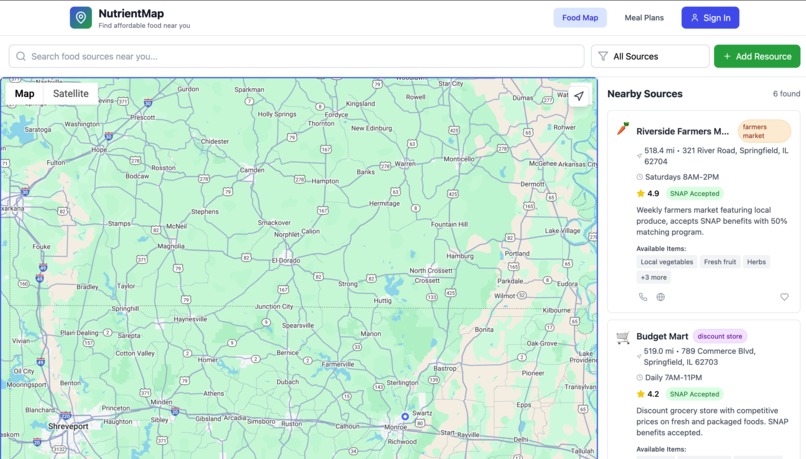
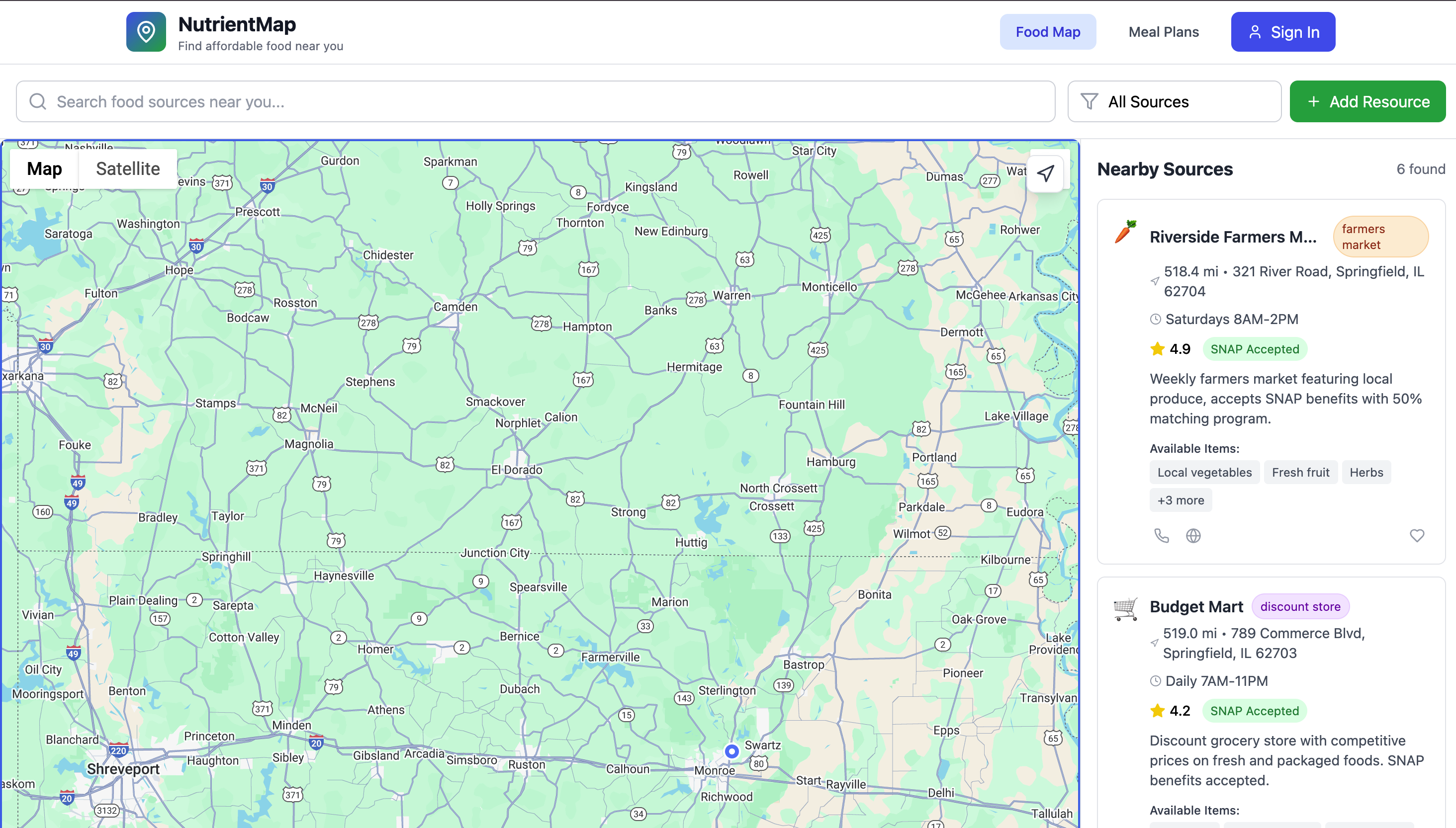
MAP
-
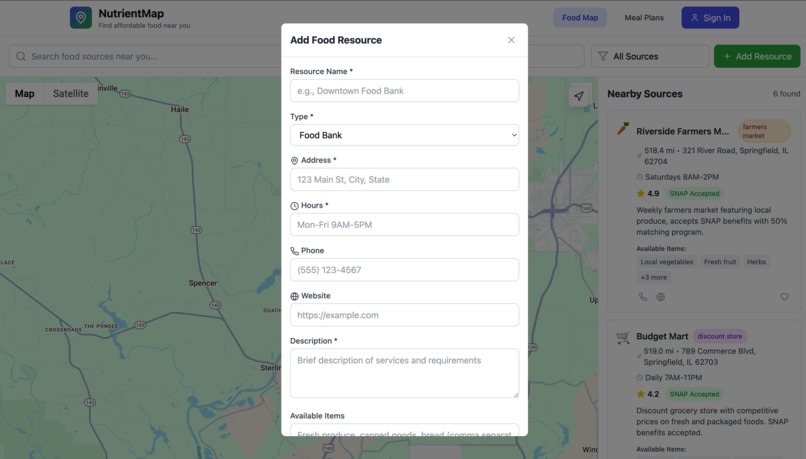
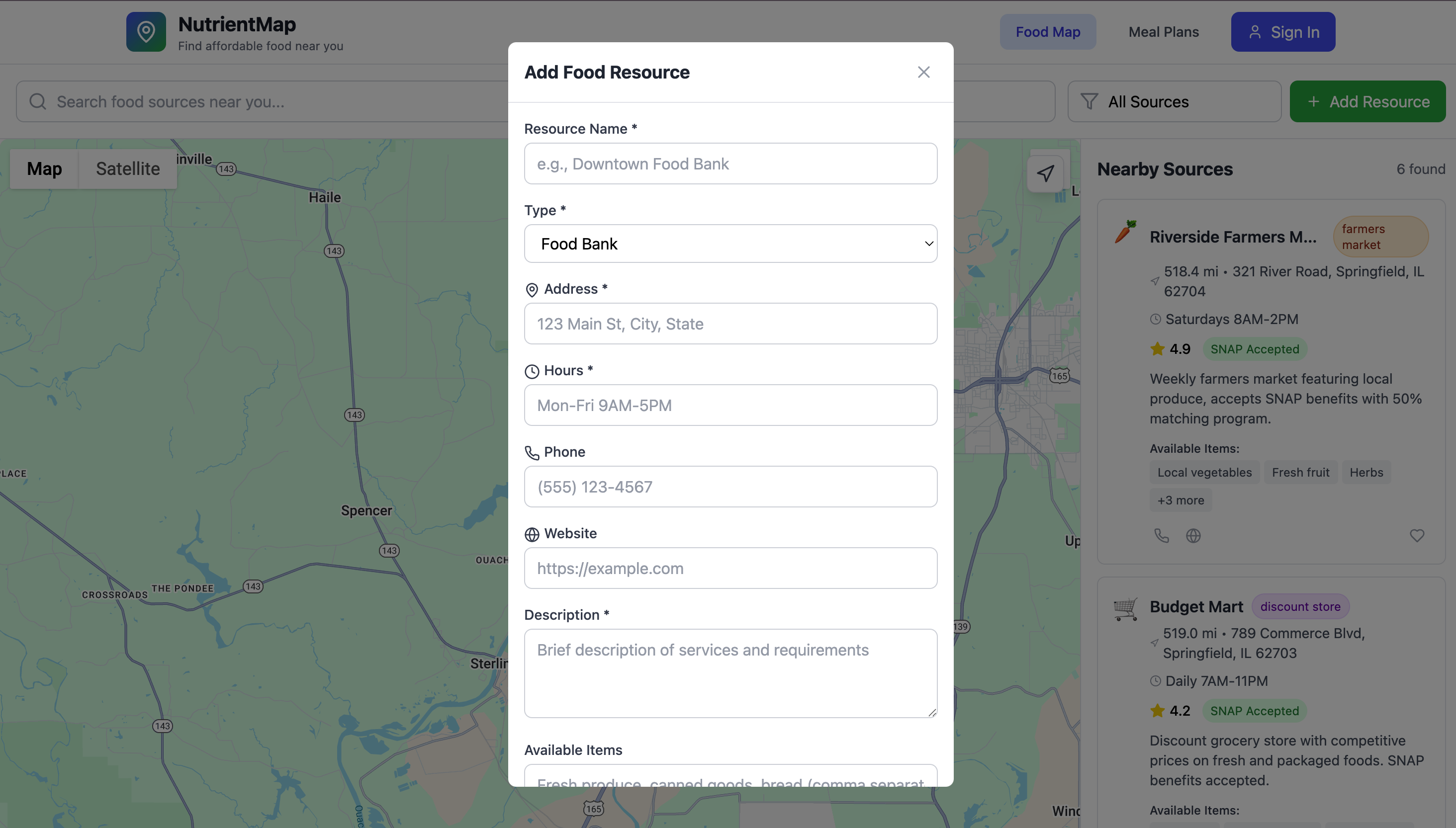
Add Resources
-
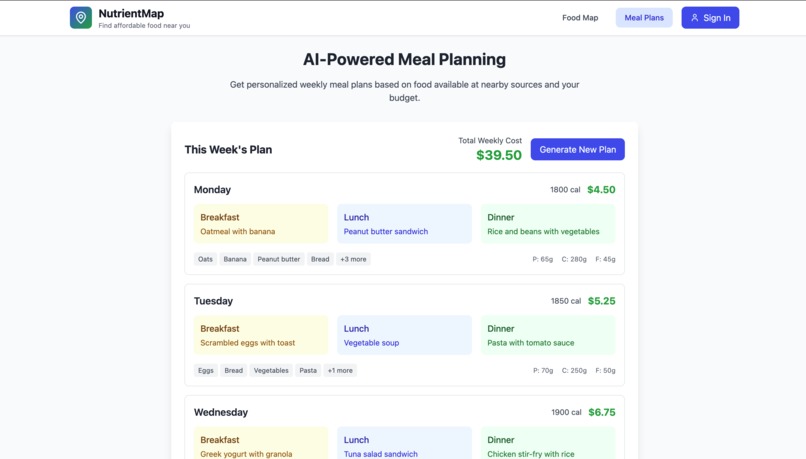
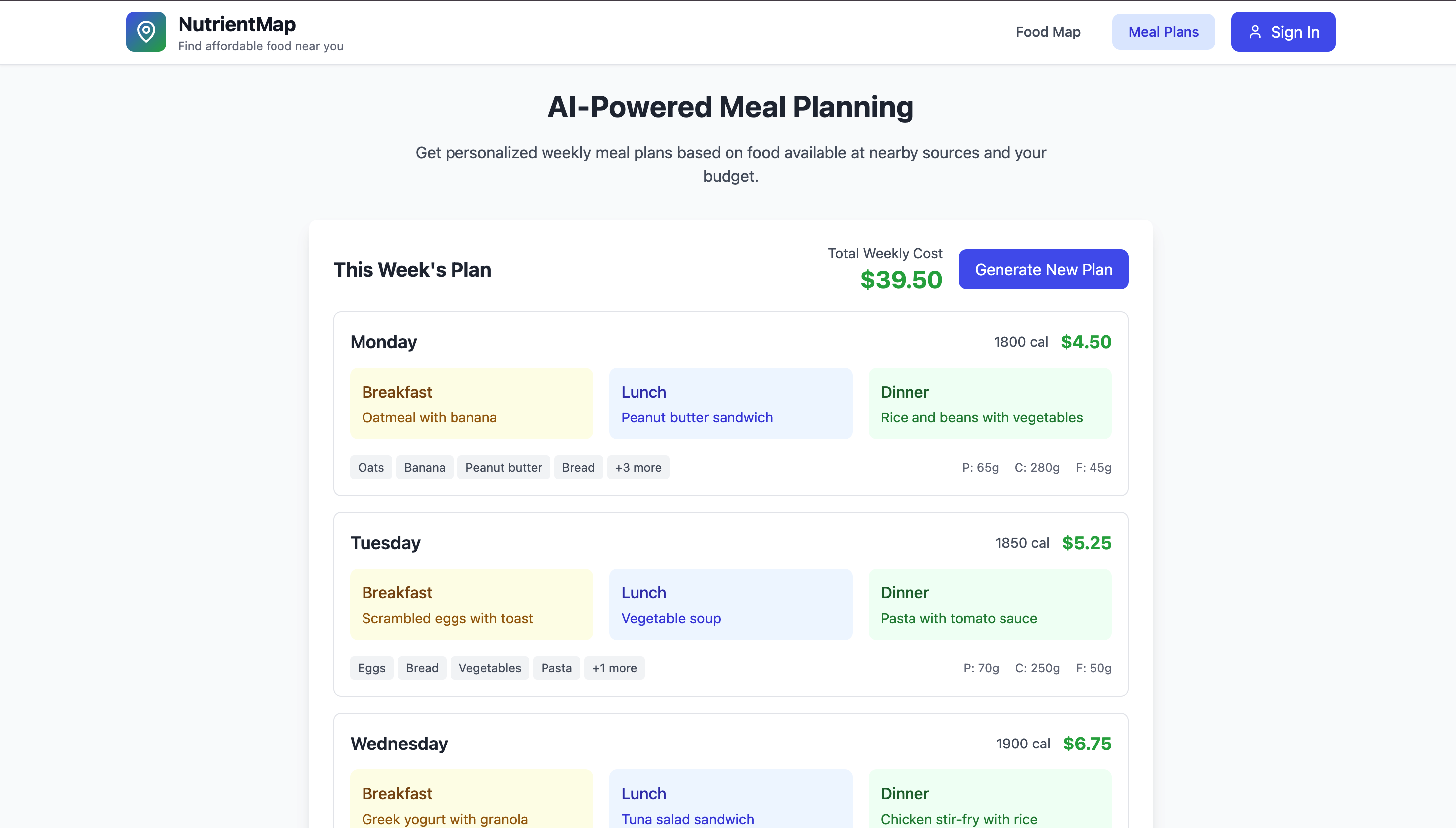
AI-Powered Meal Planning
-
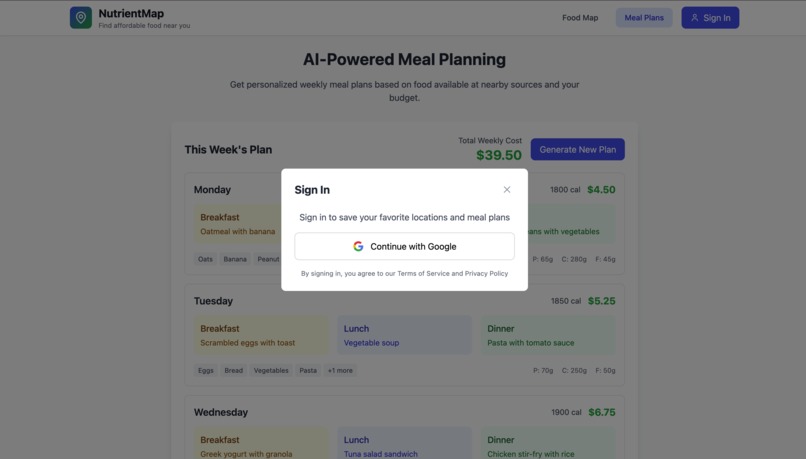
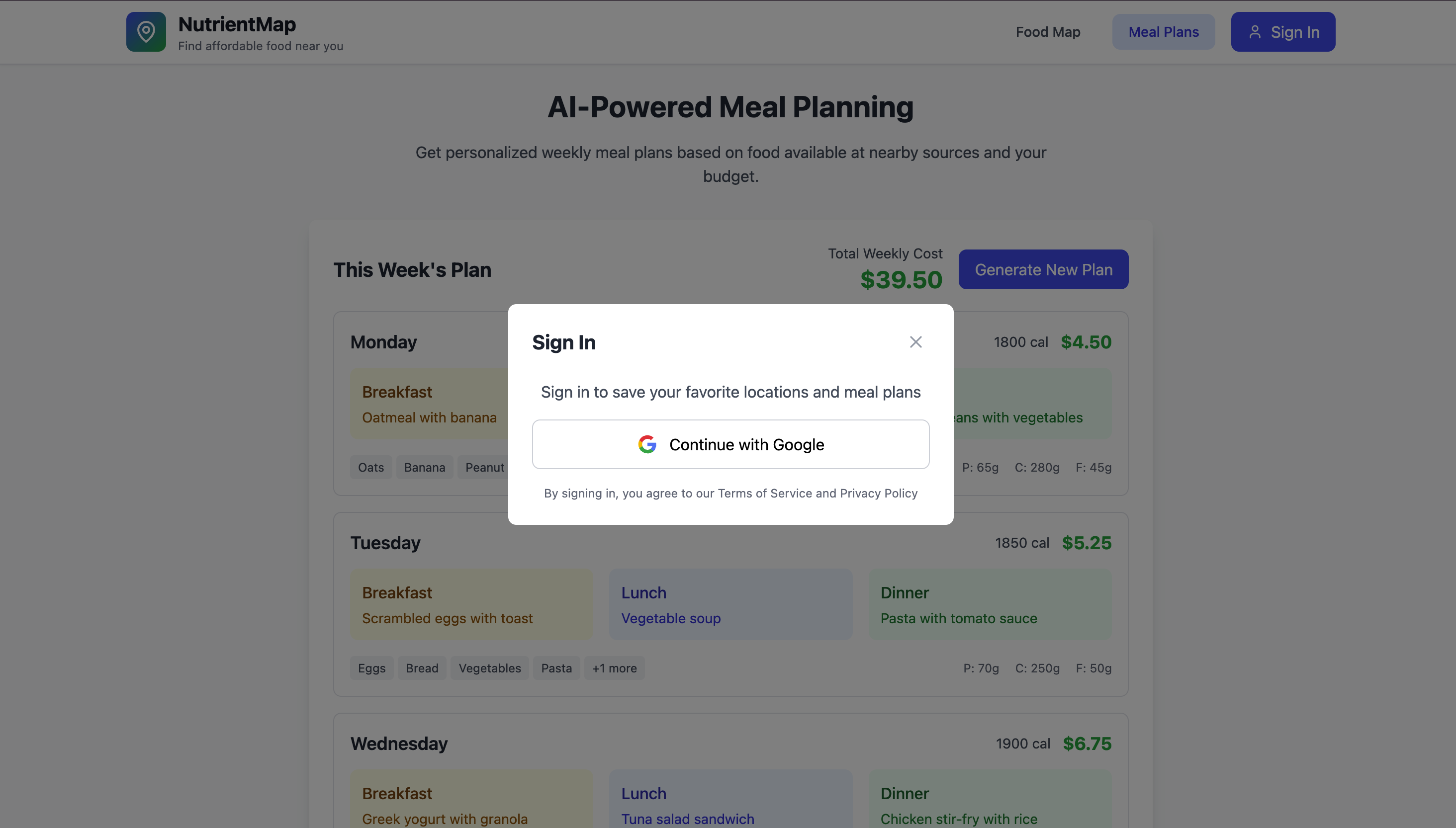
Login System
🥦 NutrientMap – Fighting Food Scarcity with Maps, AI, and Community
A digital bridge between those who have food and those who need it most.
🌵 Inspiration
Every day, millions of people live in “food deserts” — places where nutritious, affordable food is difficult to obtain. These aren’t just remote areas; they exist in cities, towns, and neighborhoods where families rely on gas station snacks and fast food for daily meals because no one ever mapped what help is nearby.
We started this project with a question:
What if finding healthy food was as easy as finding the nearest coffee shop?
Through discussions with students, volunteers, and people who’ve lived through food insecurity, we realized that the biggest barrier isn't always food supply, but awareness and access. There are hundreds of food pantries, community fridges, and local farms — but people simply don't know they exist, when they’re open, or what they offer.
NutrientMap is our first step toward solving that.
💡 What It Does
NutrientMap is a web application that helps individuals:
- 🗺️ Discover local food support resources (pantries, food banks, fridges, markets)
- 🔍 Search and filter these based on hours, type, or SNAP acceptance
- ➕ Add new resources to keep the map alive and community-driven
- 🧠 Use AI-powered meal planning based on their budget and nearby available food
- ⭐ Save favorites and meal plans with authentication (Google login)
- 📱 Access all features on mobile or desktop with a clean, simple interface
The result?
A tool that doesn't just point to food — it helps you plan your week around it.
🔨 How We Built It
- Frontend: React + TypeScript + Tailwind CSS
- Mapping & Geolocation: Google Maps API + custom geocoder logic
- Backend: Supabase (auth, storage, data)
- AI Meal Planning: OpenAI GPT model for generating realistic, affordable meals
- Hosting: Vercel (deployed and live)
We created sample data including real and dummy locations to ensure it’s functional even in demo mode.
🧠 Understanding the Problem – Why We Care
Scarcity isn’t always about empty shelves — it’s about information gaps, time constraints, and mobility issues.
Imagine:
- A single mom with no car trying to find a pantry that’s still open after work
- A college student skipping meals because they don’t know there's free food one block away
- A family on SNAP unsure how to stretch their benefits across healthy meals
These are not edge cases — they are common.
And software can help.
But not generic tools.
Context-aware, community-informed, purpose-driven tools.
That’s what we’re building with NutrientMap.
🧗 Challenges We Ran Into
- Designing for real-world unpredictability: some food sources are inconsistent
- Balancing simplicity with features — too much complexity could overwhelm users
- Creating meaningful AI prompts that respect budget, nutrition, and availability
- Ensuring accurate address-to-location mapping with poor or partial user submissions
- Making a project that is easy enough to use on a smartphone with limited data
🏆 Accomplishments That We're Proud Of
- Turned a big social issue into a working tech solution in under a week
- Seamlessly blended maps, AI, and community contributions
- Built with scale in mind — local today, global tomorrow
- Developed an app that can help reduce food waste and improve nutritional access
- Made it usable even in demo mode, so the concept can travel anywhere
📚 What We Learned
- The value of co-designing with empathy — real people’s problems shape better software
- How to balance UX, data integrity, and AI generation
- That food insecurity is not just a third-world problem — it exists in our backyards
- That tech for good starts by listening before building
- How to prioritize impact over complexity
🔮 What’s Next for NutrientMap
We don’t want this to be a hackathon project that ends when the event does. Here's what we're planning:
- 📡 Partner with local nonprofits to bring verified, real-time pantry data into the platform
- 🤝 Enable community moderators to help validate user-submitted locations
- 📦 Add inventory updates — so users know what's available before they go
- 🍱 Allow users to customize meal plans by dietary needs (vegetarian, diabetic, etc.)
- 🗣️ Add multilingual support for underserved communities
- 🧑🤝🧑 Launch in a real food desert as a pilot — with outreach, flyers, and field-testing
- 🧭 Build an offline-first version that works with low connectivity and caches local maps
Built With
- googlemapapi
- supabase
- typescript
- vercel

Log in or sign up for Devpost to join the conversation.