-
-
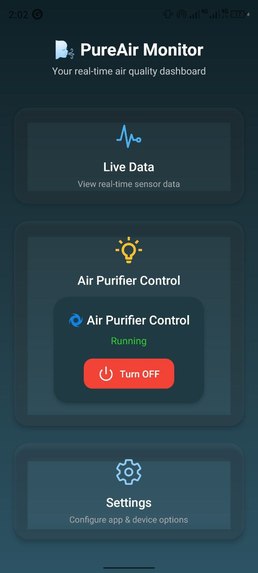
home scrren
-
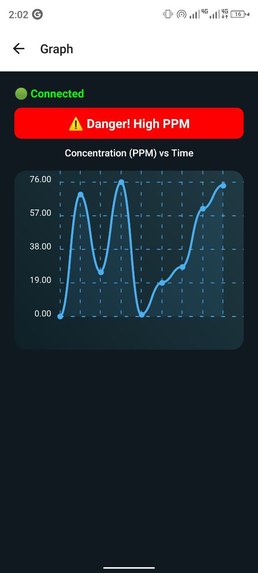
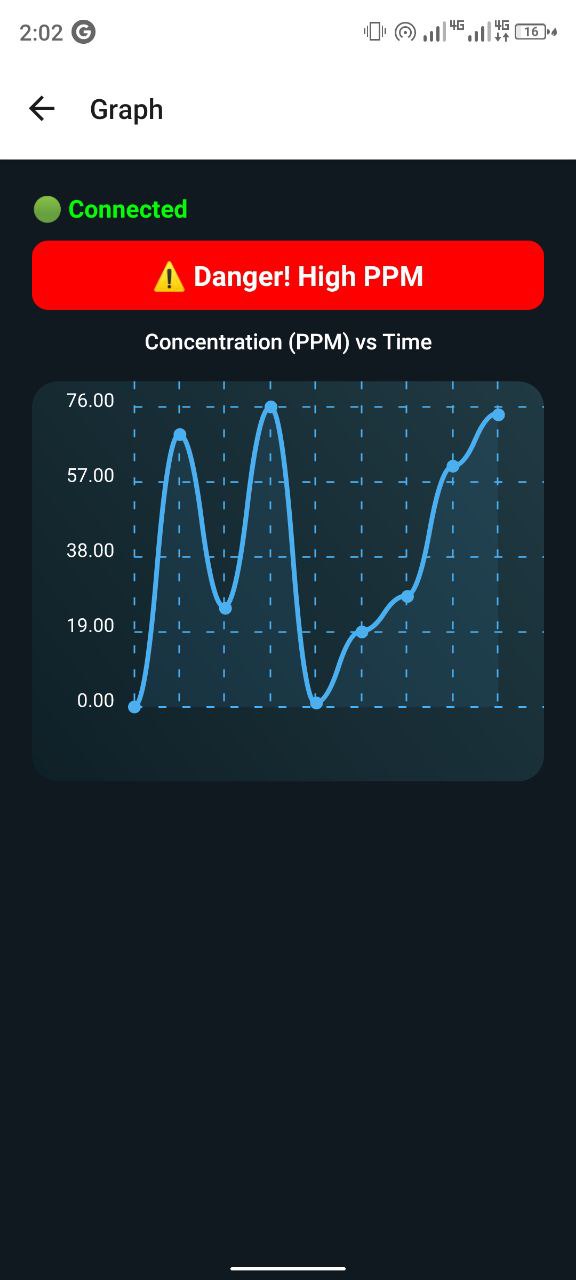
real time data
-
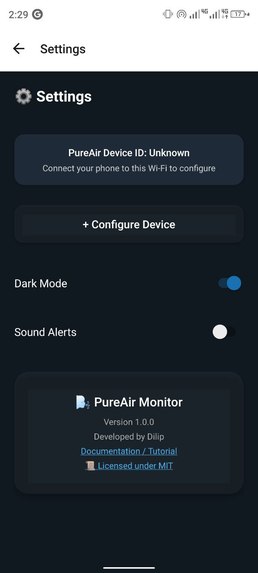
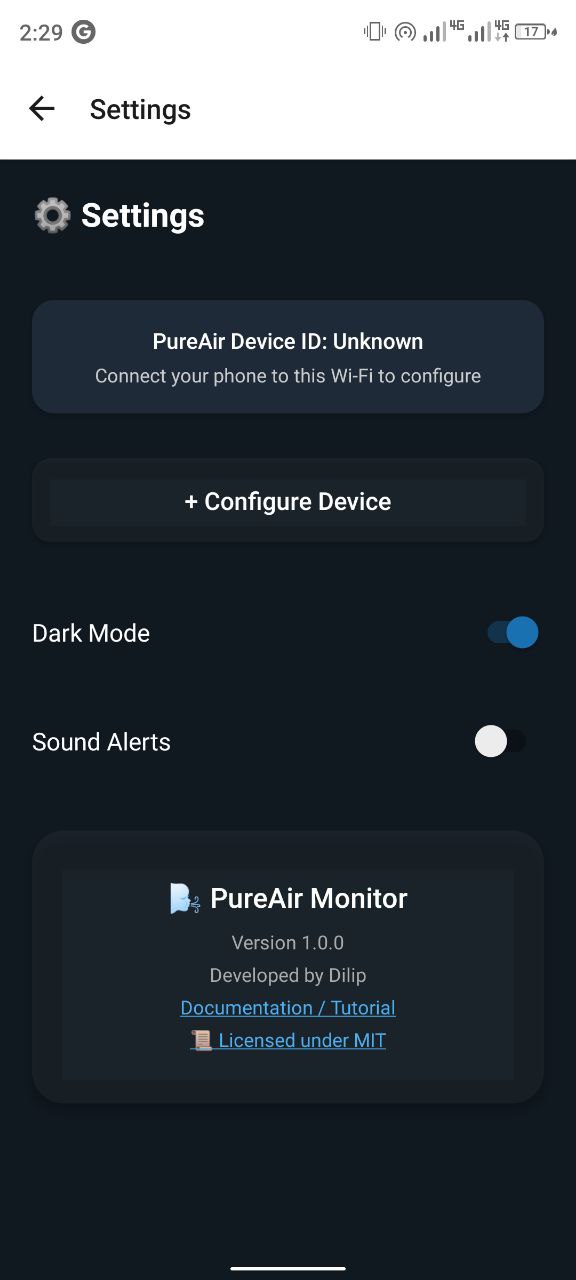
settings screen
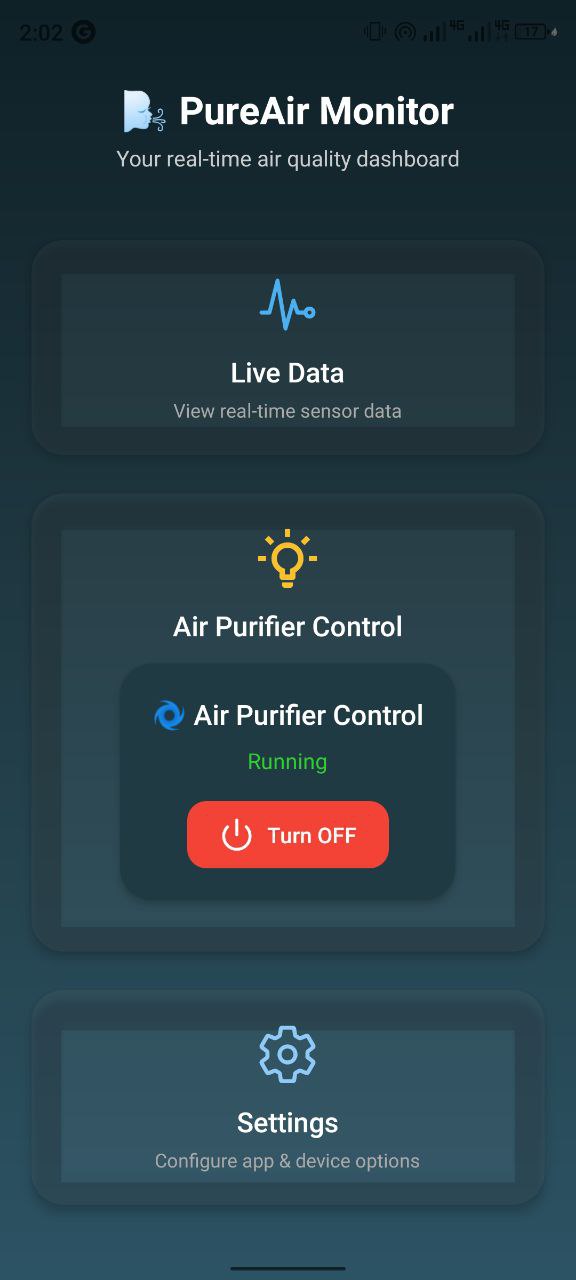
Pure Air 🌬️
Pure Air addresses the challenge of monitoring and controlling indoor air quality. Many indoor environments suffer from poor air conditions, and manual control of air purifiers can be inconvenient. This project provides a real-time IoT system to monitor air quality, visualize trends, and automate alerts—allowing users to respond quickly to unsafe conditions.
What I Built 💡
I developed a complete IoT platform connected to a mobile app that:
- 📊 Generates and streams simulated air quality data (PPM) to mimic real sensors.
- 📈 Displays live graphs of air quality over time inside a React Native Expo app.
- 🔌 Allows users to remotely turn an air purifier ON or OFF.
- 🚨 Sends notifications and sound alerts when air quality drops below a predefined threshold.
- ☁️ Uses ESP12F (simulated) with Wi-Fi to publish data via MQTT to a HiveMQ Cloud broker.
- 🔄 A Node.js backend manages WebSocket connections to the app for real-time updates.
- 📡 Retained MQTT topics ensure the purifier’s state and device online/offline status stay synchronized even if devices disconnect.
Challenges ⚡
- Real-time updates: Managing WebSocket updates efficiently while keeping chart rendering smooth.
- MQTT reliability: Ensuring commands and state updates remain synchronized between device and app.
- User experience: Designing a simple and intuitive mobile interface for monitoring and control.
Accomplishments 🏆
- ✅ Implemented real-time air quality simulation with MQTT, HiveMQ, and WebSocket updates.
- ✅ Built a React Native Expo app showing live graphs, alerts, and device control.
- ✅ Developed a backend to synchronize device state and ensure reliable MQTT communication.
- ✅ Integrated sound and vibration alerts when air quality becomes unsafe.
- ✅ Created a scalable cloud-first architecture capable of supporting multiple devices and sensors.
- ✅ Demonstrated a full IoT → Cloud → Mobile pipeline, even without physical sensors.
What I Learned 📚
Through Pure Air, I gained hands-on experience in:
- IoT communication using MQTT + HiveMQ Cloud
- Managing real-time data streams with WebSockets
- Mobile development with React Native + Expo
- Designing scalable, event-driven IoT architectures
- Simulating hardware data for rapid prototyping in hackathons 🚀
What’s Next 🔮
- Multiple device support: Connect and control multiple purifiers across different rooms.
- Enhanced alerts: Push notifications, SMS, or email for critical air quality events.
- Analytics dashboard: Long-term insights to help users track and improve air quality.
- Smart home integration: Support Alexa, Google Home, and other assistants for voice-controlled operation.
- Hardware integration: Replace simulated data with real sensors (e.g., MQ135, PMS5003) for live deployments.
⚡ Note: For this hackathon demo, I simulated air quality sensor readings (randomized values) to focus on building the end-to-end IoT ecosystem—from data generation → cloud → mobile visualization → control. The system is hardware-ready and can directly integrate with real sensors in the future.
Built With
- esp12f
- expo.io
- hivecloud
- mqtt
- node.js
- react-native

Log in or sign up for Devpost to join the conversation.