Inspiration
Across the United States, millions of people struggle with a hidden contradiction: they are surrounded by food, yet still lack proper nutrition.
Low-income and diverse communities face limited access to affordable, healthy, and culturally relevant food, while ultra-processed options remain cheap and convenient. Programs like SNAP and WIC provide support, but users often lack personalized guidance on how to actually make healthier choices within their budget.
We realized something important: The problem isn’t just access to food it’s decision-making under constraints.
People don’t need more information. They need actionable, real-time guidance that fits their budget, culture, and lifestyle.
That’s why we built NutriCart AI.
What it does
NutriCart AI is an AI-powered nutrition assistant that helps users make smarter food decisions in real time not in theory, but in their daily lives.
Users can:
- Ask for a budget-based grocery plan (e.g., “$50 for a week”)
- Get store-specific recommendations based on nearby availability
- Receive a complete grocery list + meal plan tailored to their diet and culture
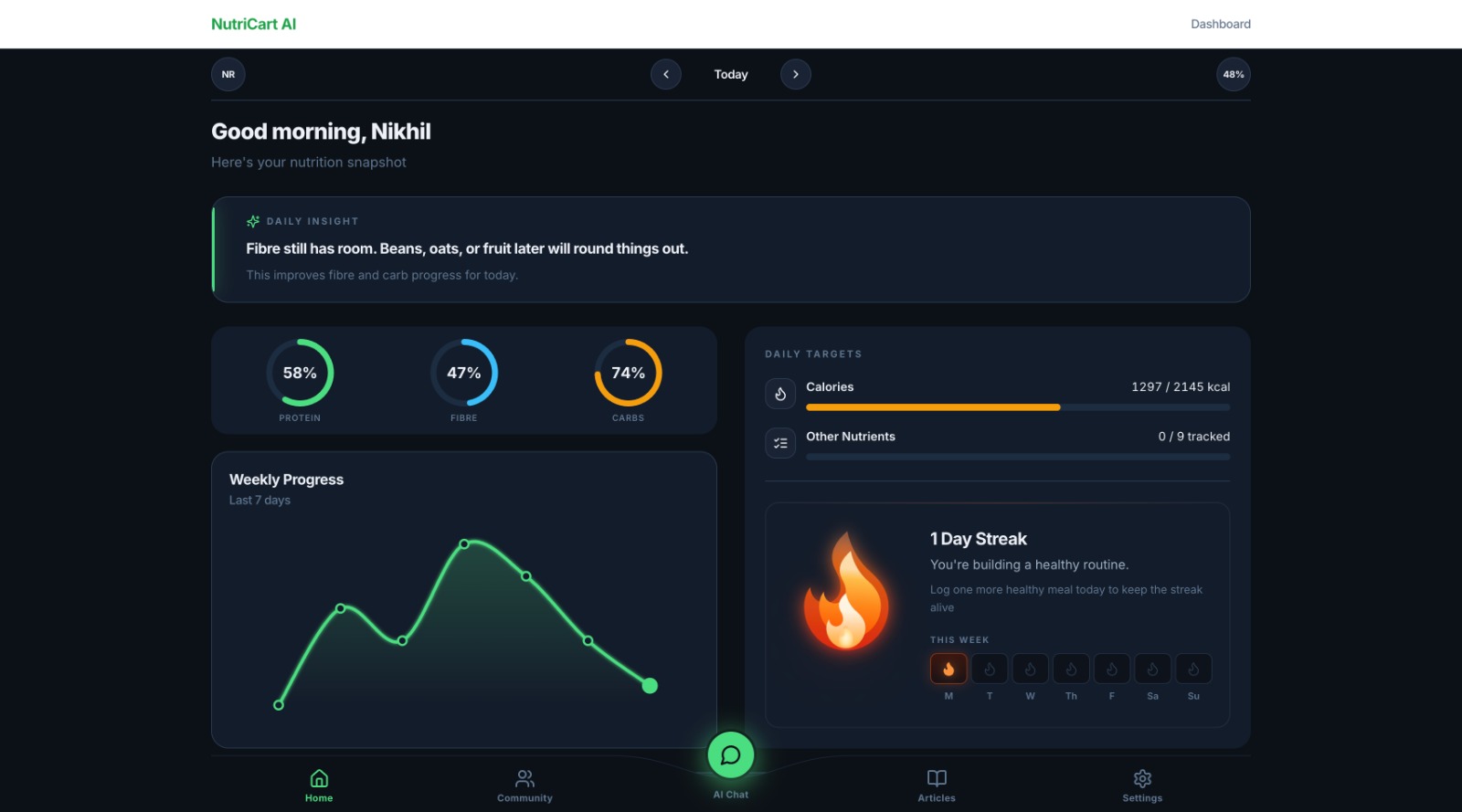
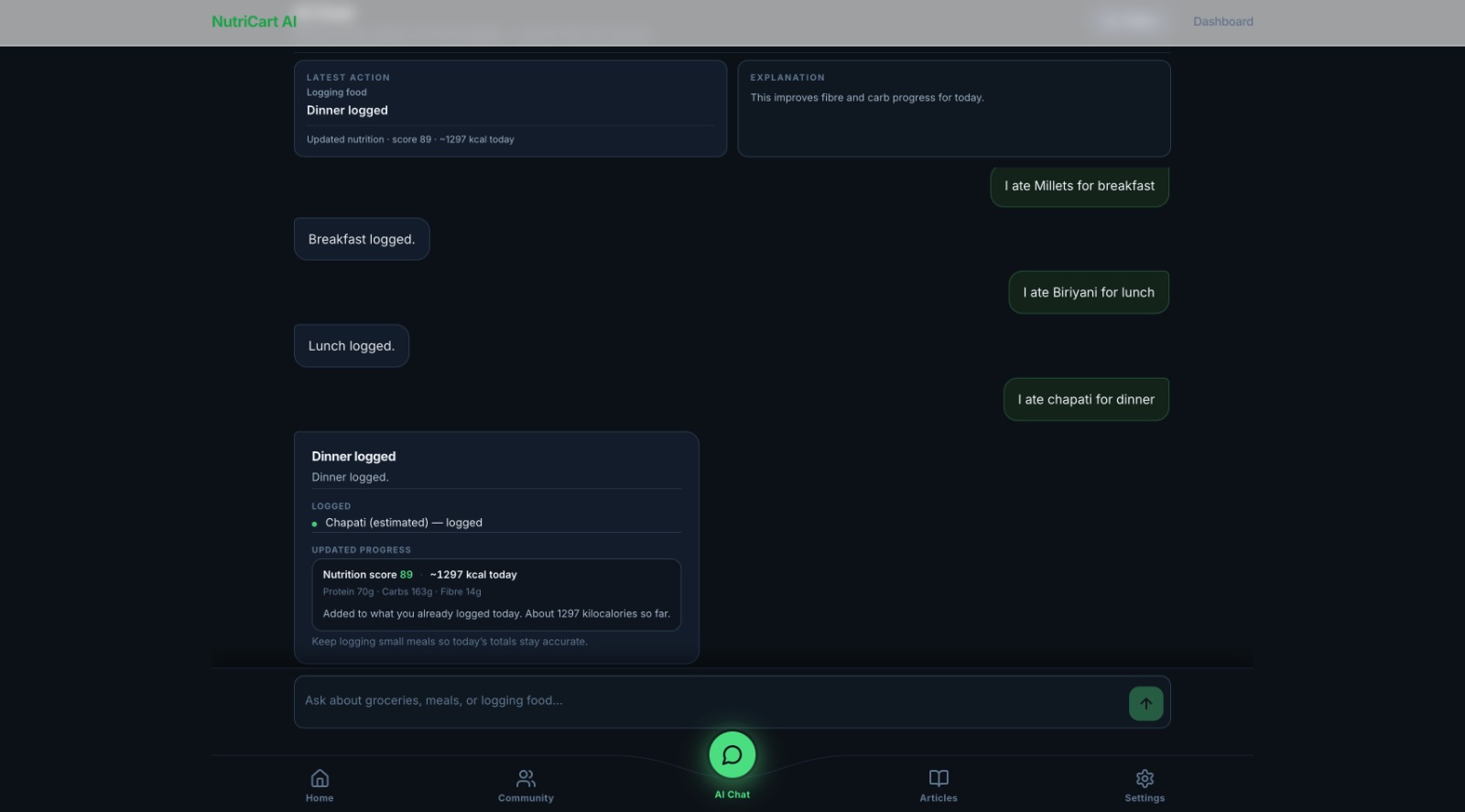
- Log meals and track macros + micronutrients automatically
- View real-time nutrition progress and health insights
- Discover personalized nutrition improvements based on what they eat
- Stay consistent with habit tracking and streaks
- The key difference: Instead of generic diet advice, NutriCart gives practical, localized, and affordable solutions.
How we built it
We designed NutriCart AI as a full-stack, AI-powered system: Frontend: Next.js (mobile-first, real-time dashboard UI) Backend: FastAPI (handles chat, planning, and nutrition logic) AI Layer: Google Gemini LLM for understanding user intent (meal planning, food logging, recommendations) Structured prompts + schema-based outputs to ensure reliable responses Nutrition Engine: Real-time macro & micronutrient calculations Derived health scoring system Data Layer: Session-based user state for food logs, nutrition tracking, and progress Location Intelligence: Store recommendations based on geographic data (mock + API-ready architecture)
Challenges we ran into
- Making AI responses consistent and structured (not random text)
- Syncing real-time data across chat, dashboard, and planner
- Designing a system that balances: affordability , nutrition quality, cultural food preferences
- Avoiding unrealistic outputs (e.g., sending users to multiple stores)
- Ensuring all nutrition values are mathematically correct, not placeholders
Accomplishments that we're proud of
- Built a system that turns AI into real life decision making, not just suggestions
- Integrated LLM reasoning with structured outputs for reliability
- Designed a scalable approach for location-aware food planning
- Solved a real-world problem aligned with FAO’s nutrition equity mission
What we learned
- AI is powerful, but needs structure and constraints to be useful
- People care about health but only if it’s affordable and practical
- Real impact comes from combining: AI intelligence real-world context (budget, location) human habits
- Nutrition isn’t just about macros micronutrients and consistency matter more
- Simplicity wins: users want clear, actionable steps, not complexity ## What's next for NutriCart AI
- Integrate live grocery store APIs for real-time pricing & availability
- Expand nutrition engine with verified food databases
- Launch a fully production-ready mobile app
- Partner with: SNAP/WIC ecosystems local grocery stores health organizations
- Introduce AI-driven long-term health insights & recommendations

Log in or sign up for Devpost to join the conversation.