-
-
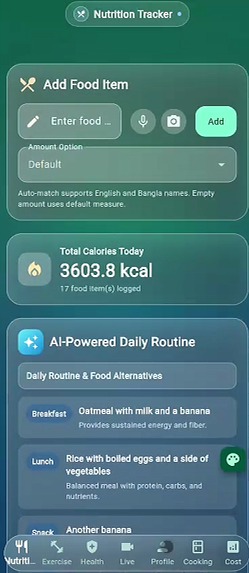
after login
-
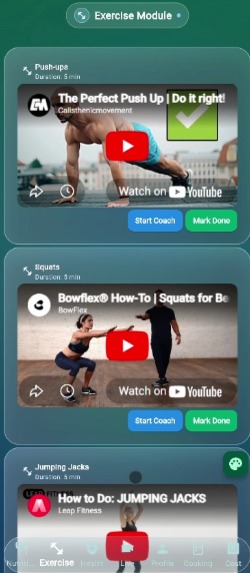
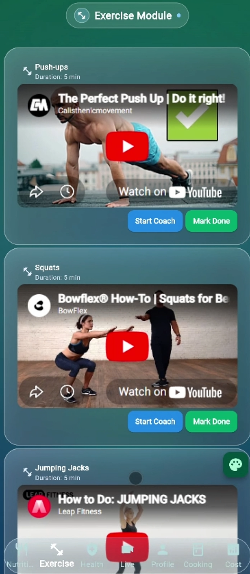
excercise tab
-
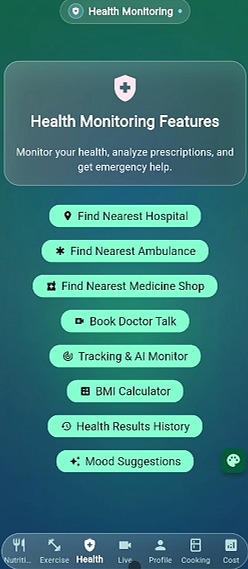
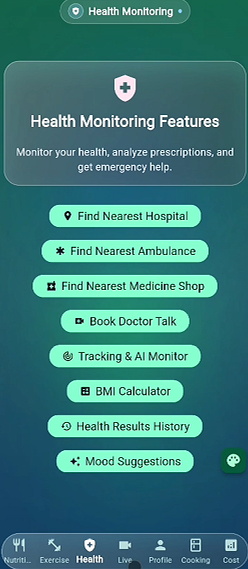
mutiple action tab
-
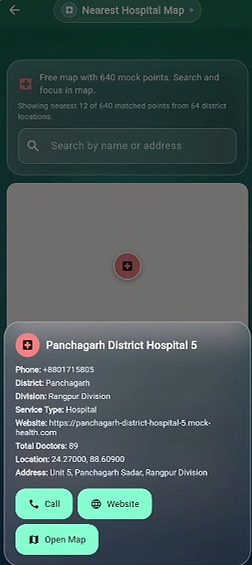
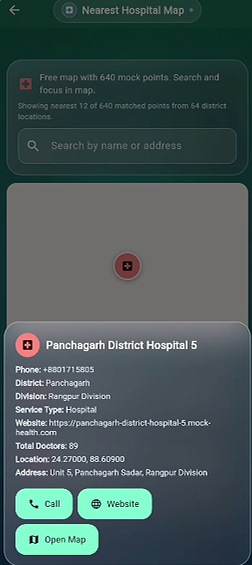
find nearest hospital
-
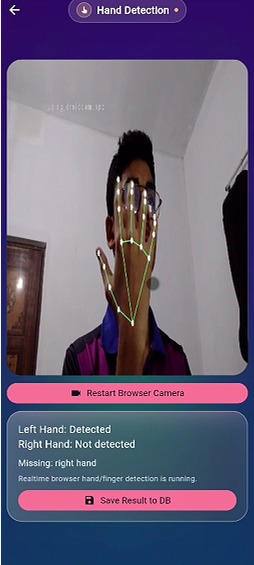
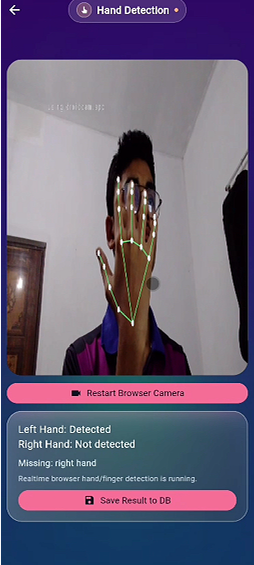
hand detection all are ok or paralised or authism problem have or not detection
-
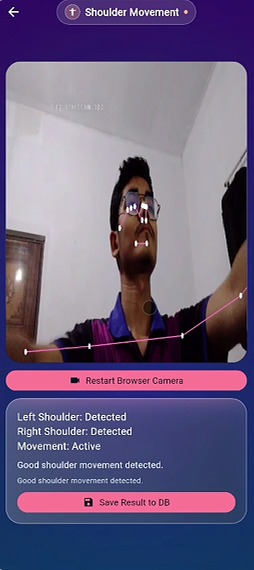
live pushup test
-
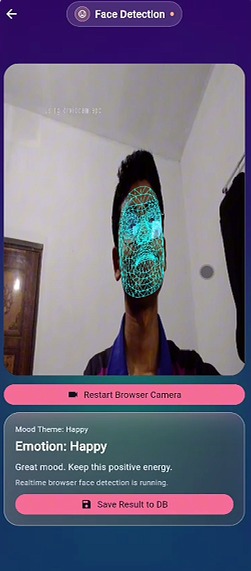
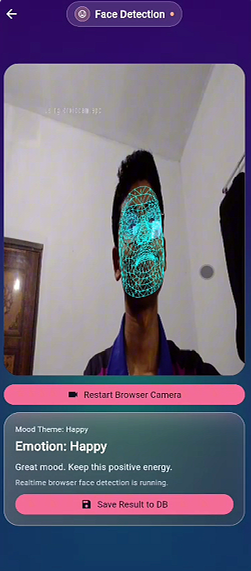
face detection nad mental health detection
-
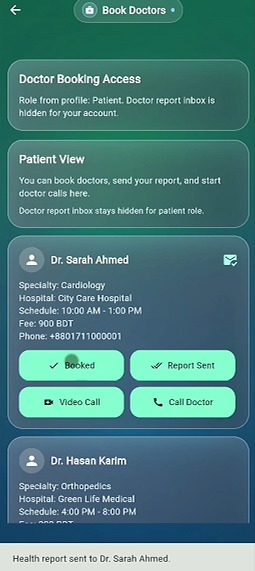
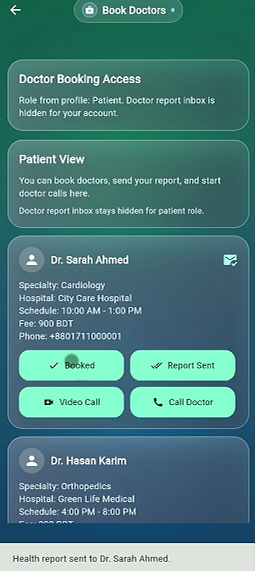
book a doctor video call
-
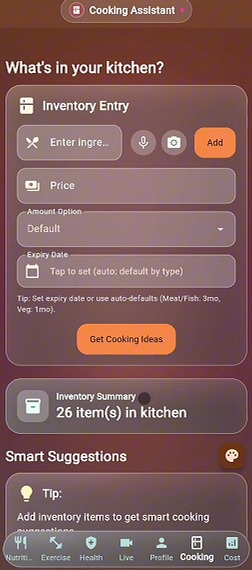
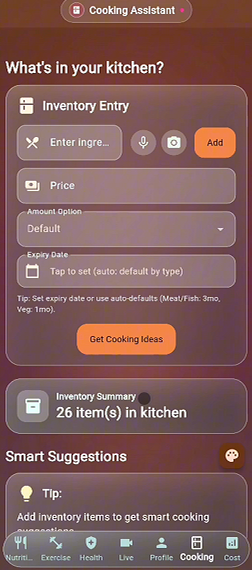
cooking entry
-
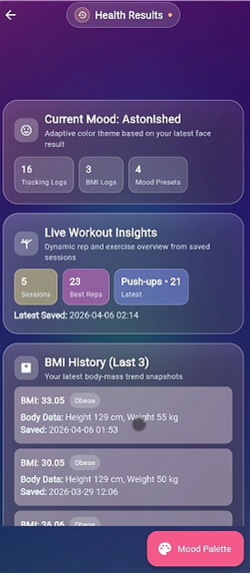
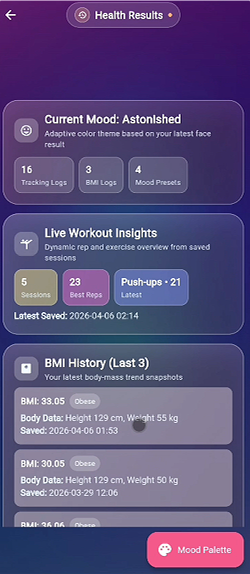
health report
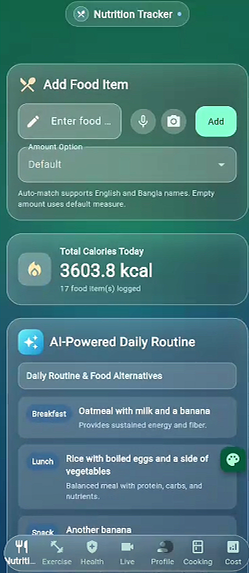
NutriCare – AI-Powered Nutrition & Health Fitness Ecosystem
Inspiration
Bangladesh Health & Youth Crisis :
Bangladesh is facing a serious crisis: “1 in 3 unemployed people is a graduate” → leading to frustration, mental stress, and migration. Healthcare is also under pressure with only 0.8 doctors per 1,000 people (vs WHO 2.3), meaning 1 doctor serves 1,200–1,500+ people, especially worse in rural areas.
At the same time, the country faces a double burden: ~13–14M people have Diabetes, Cardiovascular disease causes ~30% of deaths, ~25–30% adults are overweight, while ~28% children suffer from Malnutrition (~22% underweight). Many are “thin but unhealthy” with hidden nutrient deficiencies, and malnourished mothers lead to weak child development and long-term health risks.
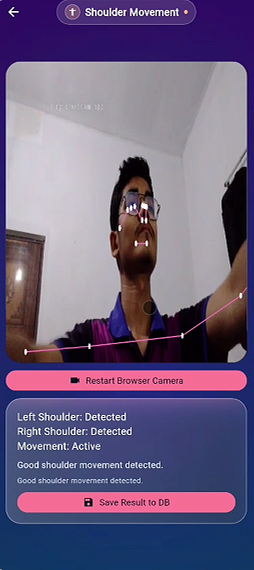
to tackle this, built NutriCare — an all-in-one AI-powered health ecosystem that combines: • Nutrition tracking & smart diet suggestions • Real-time exercise tracking with AI form analysis • Health monitoring & personalized insights • Doctor booking & telemedicine • Emergency health response & nearby services • Cost analysis & accessibility-focused features • Face detection for early mental stress/emotion signals • Shoulder detection for paralysis patients to exercise from home • Live AI workout tracking with real-time feedback • Smart nutrition + grocery + cooking guidance Goal: Make healthcare accessible, preventive, and intelligent — especially for underserved people in Bangladesh.
This is more than just an app — it's a step toward solving real health challenges in Bangladesh.
This is not only a Bangladesh problem — it reflects the reality across many low-income and developing regions including South Asia, Africa, and underserved communities worldwide, where public healthcare systems are overwhelmed, medical insurance is limited, and millions cannot access personalized treatment.
In many countries, governments and hospitals simply do not have enough doctors, infrastructure, or resources to provide continuous care for every patient. That is why early detection, preventive healthcare, and AI-powered personalized guidance are becoming critical.
We believe AI can help bridge this healthcare gap.
NutriCare aims to become more than just a project — we want to build a scalable healthcare startup that can improve millions of lives by providing affordable, intelligent, and accessible healthcare support.
From diabetes and cardiovascular disease to malnutrition, mental stress, obesity, and rehabilitation support, NutriCare focuses on prevention before conditions become life-threatening.
Our vision is to use AI to reduce healthcare inequality, improve quality of life, lower social and economic burdens caused by chronic diseases, and give people a healthier future regardless of income or location.
What We Learned
During development, we learned that building real-time health and fitness AI systems is far more complex than simple app development. We explored:
- Real-time pose detection using AI landmark systems
- Form analysis through body-angle calculations
- Camera-based computer vision pipelines
- State management for scalable cross-platform apps
- Real-world mobile optimization challenges
- Healthcare workflow design for patients and doctors
- Data synchronization between frontend and backend systems
One major lesson was that AI systems behave differently across devices. For example, Samsung devices handled pose detection differently from some other Android devices. We solved this by implementing fallback detection systems, normalized coordinate processing, confidence filtering, and adaptive compatibility modes.
We also learned how difficult preventive healthcare accessibility is in developing regions. Technology alone is not enough; affordability, usability, and accessibility are equally important.
How We Built the Project
We built NutriCare as a cross-platform ecosystem using Flutter for mobile and web support. The frontend uses Provider-based state management with modular architecture for scalability.
The AI exercise tracking system uses Google ML Kit and MediaPipe-based computer vision pipelines to analyze body movement in real time. The application processes body landmarks, calculates exercise angles, evaluates posture alignment, and automatically counts repetitions.
We also implemented:
- Nutrition tracking and calorie analysis
- Personalized meal recommendations
- Doctor booking workflows
- Emergency healthcare services
- Nearby hospital mapping
- Health analytics dashboards
- Community challenges and gamification systems
The backend was developed using Node.js and Express.js with Supabase PostgreSQL integration for scalable cloud storage and authentication.
Challenges We Faced
One of the biggest challenges was building stable real-time AI tracking on mobile devices. Pose detection pipelines produced inconsistent behavior across different phones due to differences in camera processing and hardware acceleration.
Initially, our rep-counting system overcounted exercises because multiple detection states triggered simultaneously. We solved this using cooldown throttling, phase-reset logic, and normalized coordinate systems.
Another major challenge was ensuring the platform remains lightweight and accessible for users without high-end devices or wearables. We optimized fallback systems and reduced dependence on expensive external hardware.
Healthcare-related features also introduced challenges around responsible AI design. Instead of making unsafe medical claims, we focused on preventive wellness monitoring, AI-assisted recommendations, and accessibility-focused healthcare support.
Future Vision
Our long-term vision is to make NutriCare a low-cost preventive healthcare ecosystem powered primarily by smartphones. Future planned features include:
- Smartphone-camera-based heart-rate estimation
- AI-assisted wellness monitoring
- Preventive risk analysis
- AI-supported anemia and thalassemia screening research
- Telemedicine video consultations
- Wearable integrations
- Predictive healthcare analytics
- Personalized chronic disease management
We believe smartphones can become accessible health assistants for underserved populations worldwide.
Built With
Frontend
- Flutter
- Dart
- Provider
- Material Design 3
Backend
- Node.js
- Express.js
- REST API Architecture
Database & Cloud
- Supabase
- PostgreSQL
- Netlify
- Render
AI & Computer Vision
- Google ML Kit
- MediaPipe
- Pose Detection
- Face Detection
- Real-time Landmark Processing
APIs & Services
- Google Maps
- YouTube Integration
- Geolocation Services
Development Tools
- Git
- GitHub
- Android Studio
- VS Code


Log in or sign up for Devpost to join the conversation.