-
-
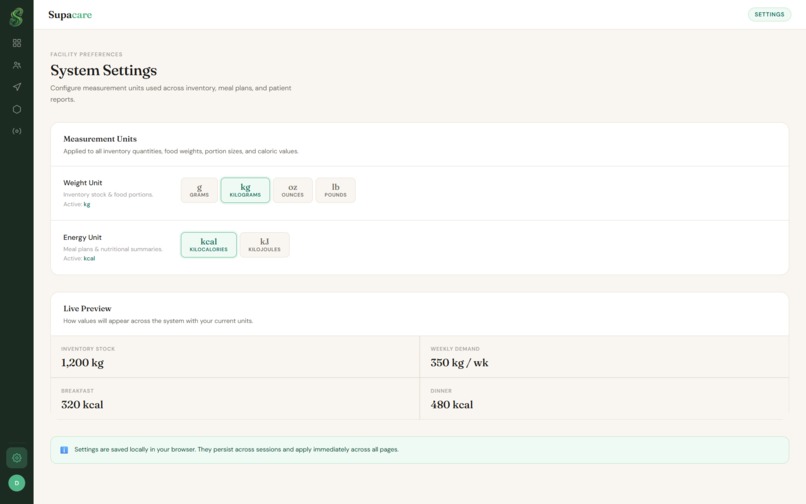
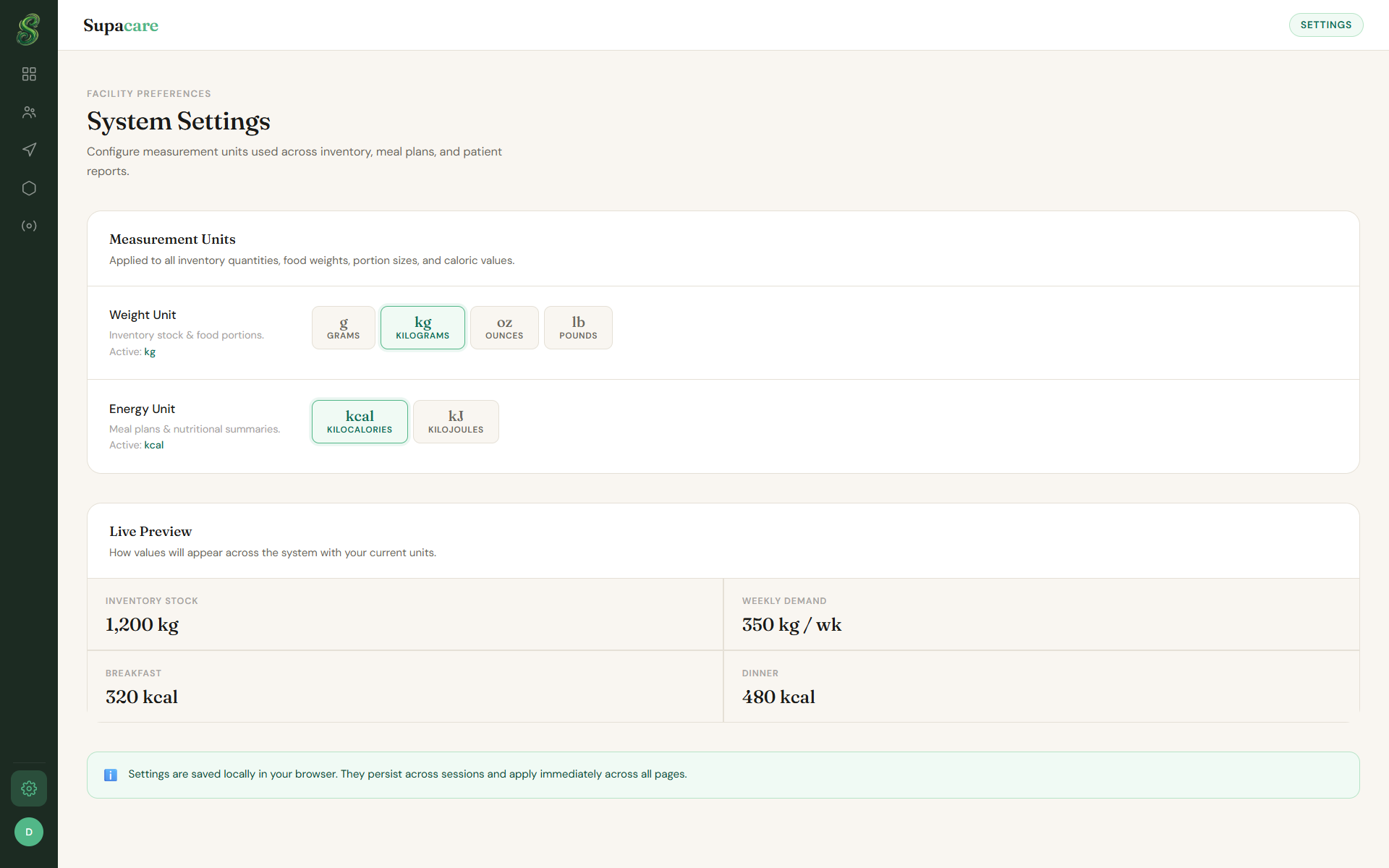
Dashboard settings
-
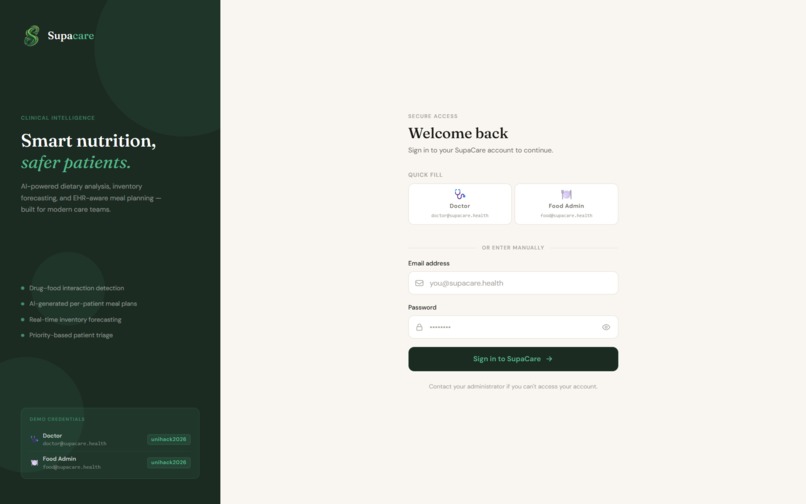
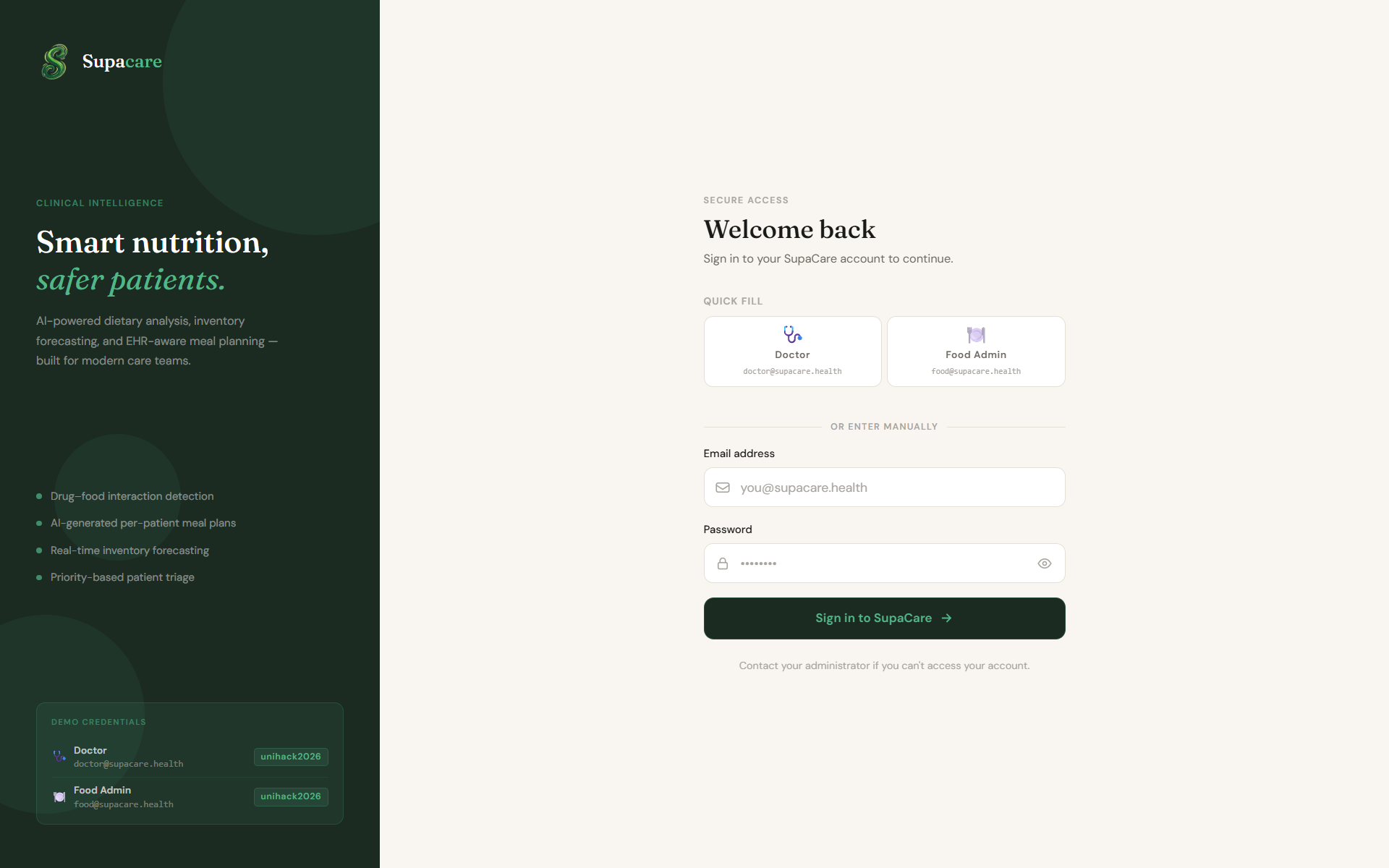
Sign-in page
-
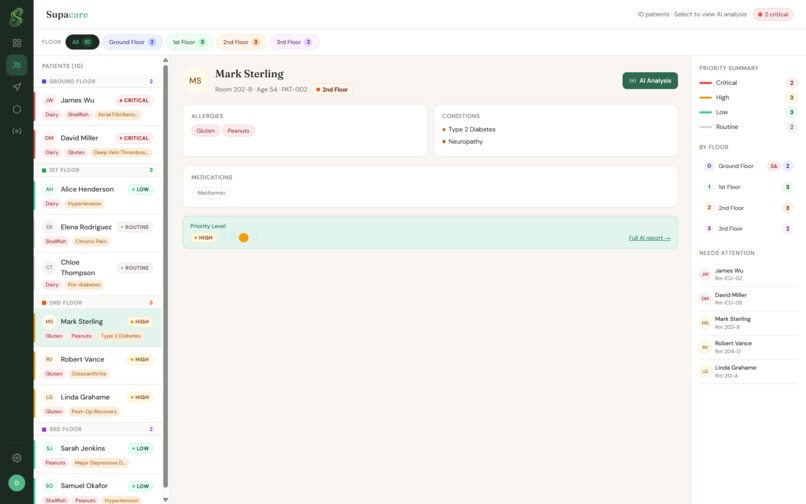
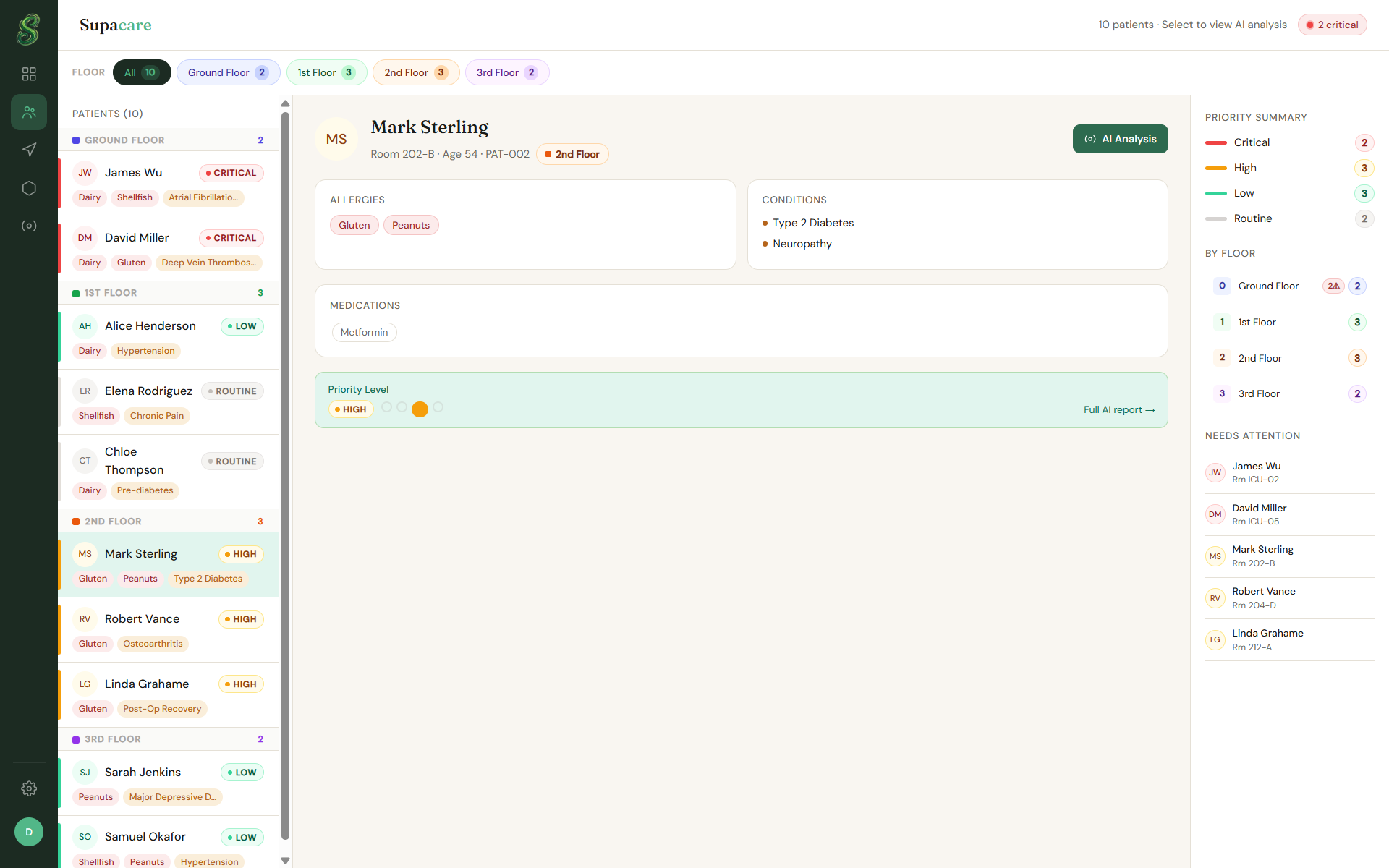
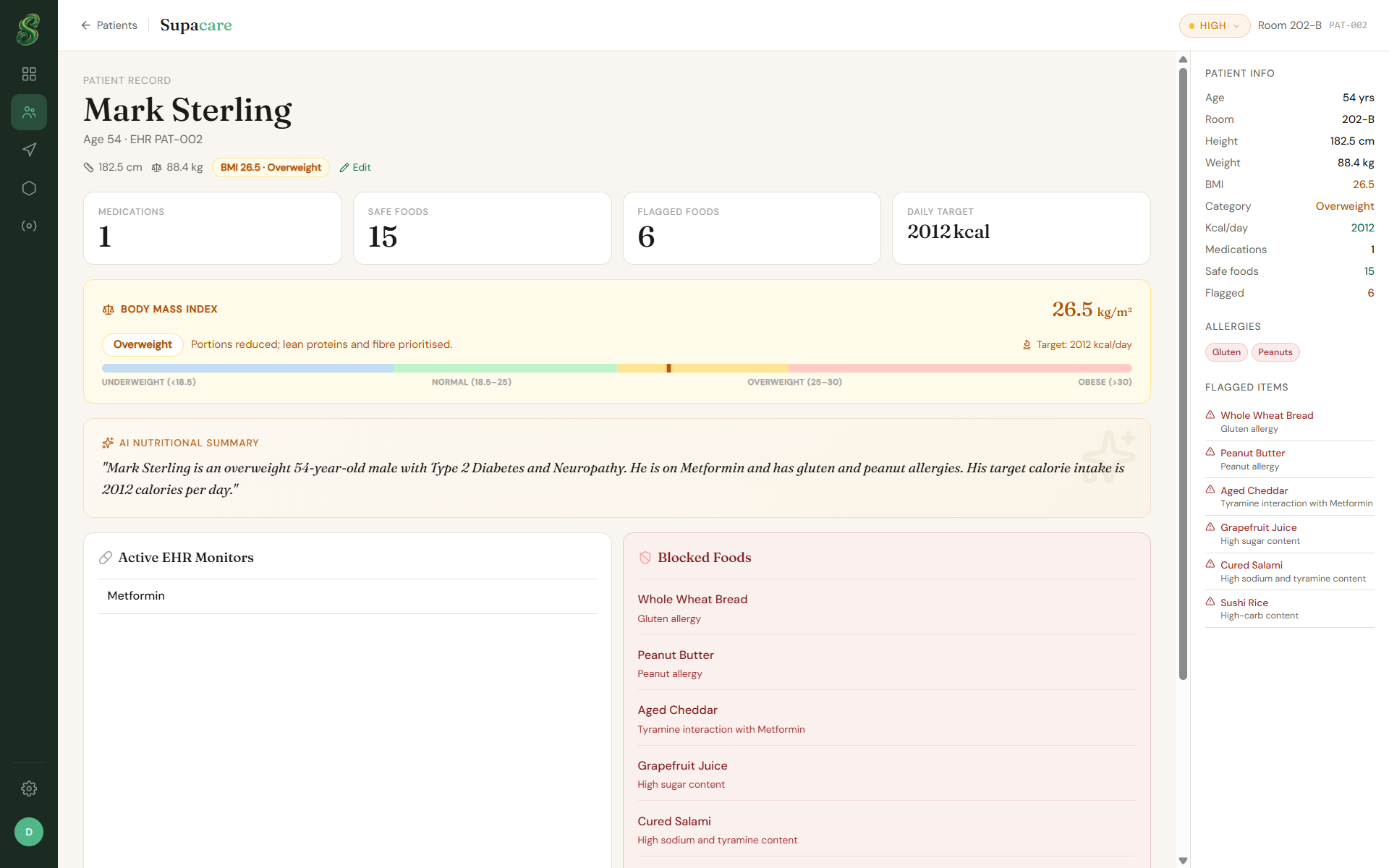
Patient brief information
-
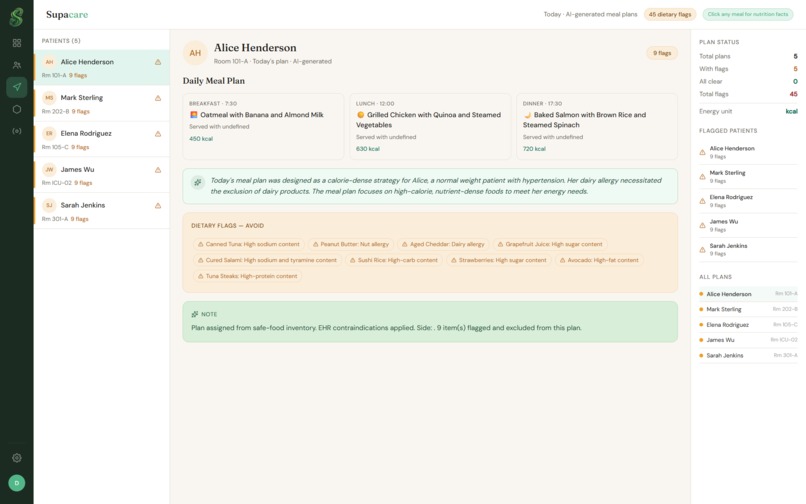
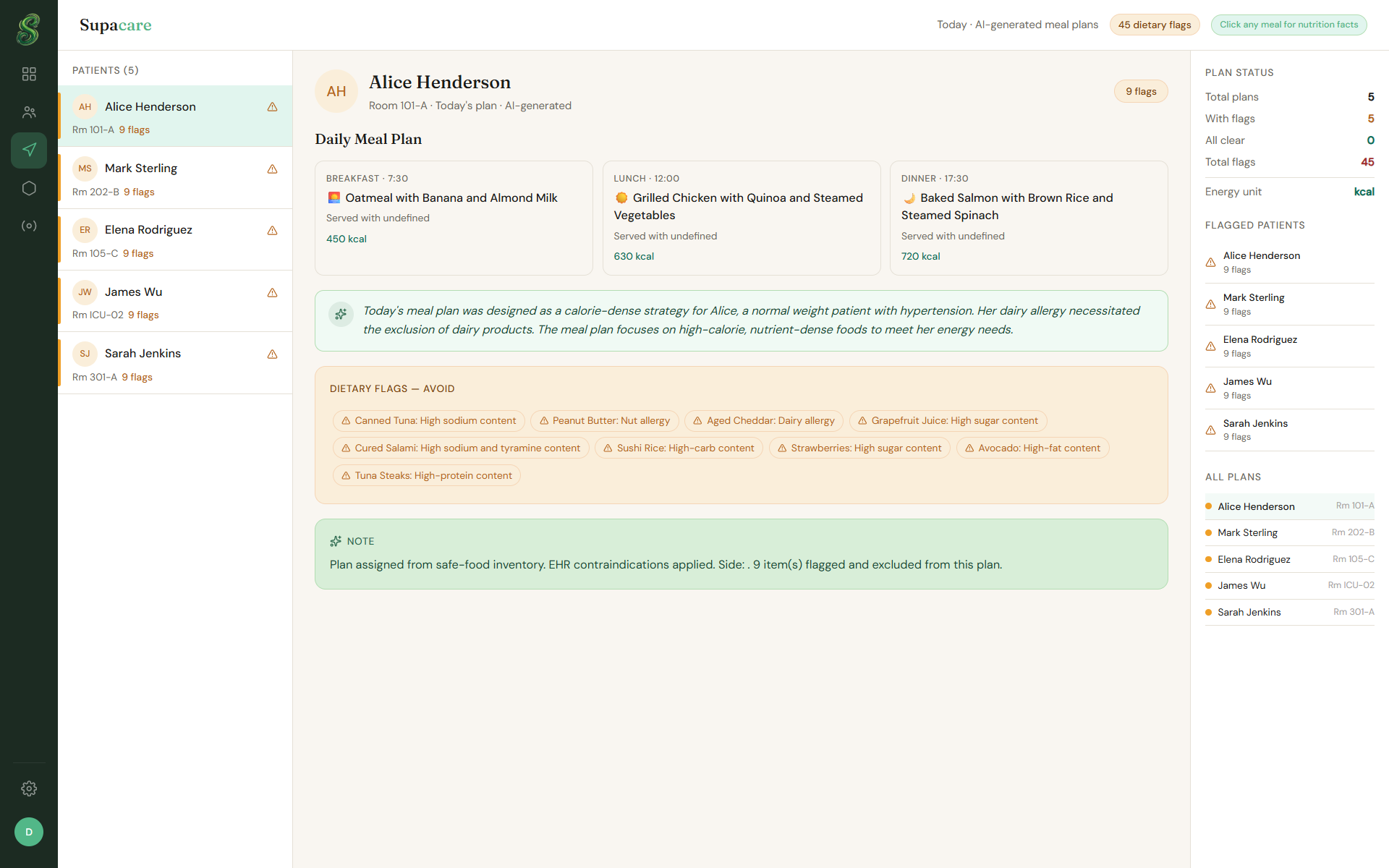
Patient meal plan
-
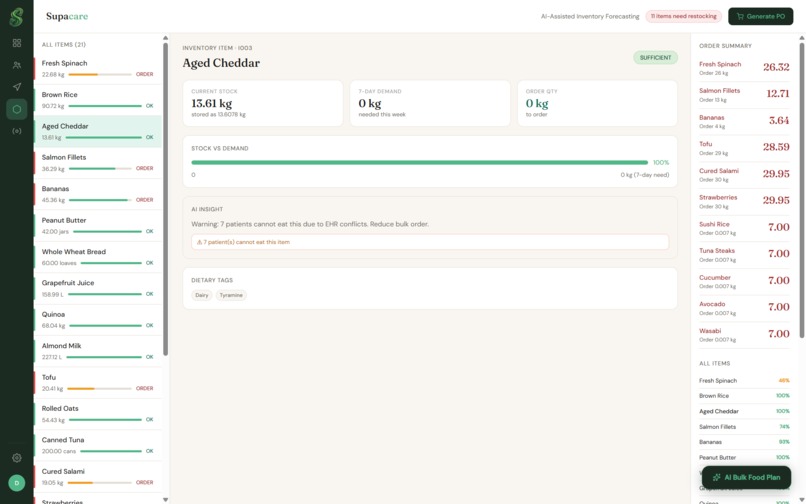
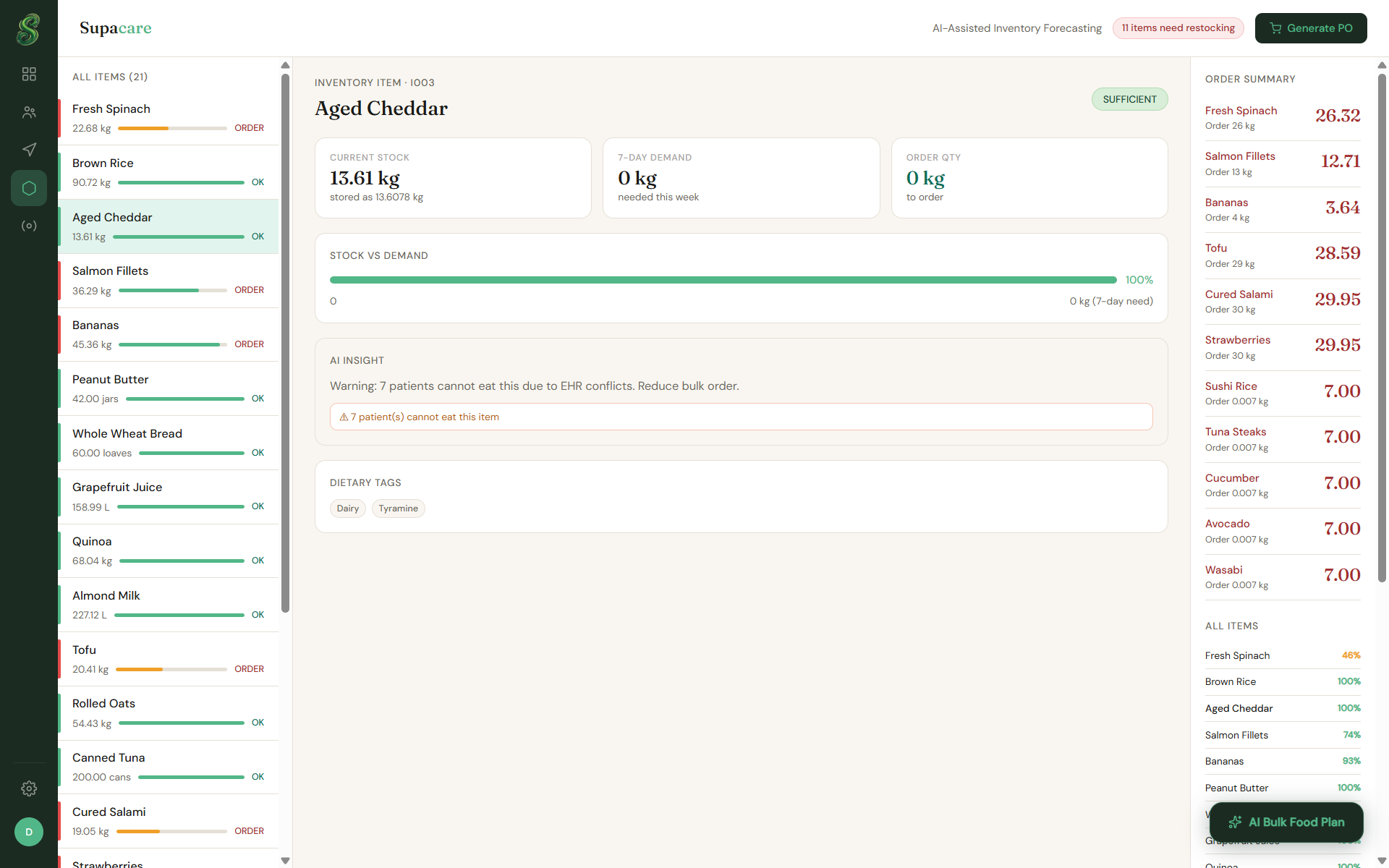
Food stocks
-
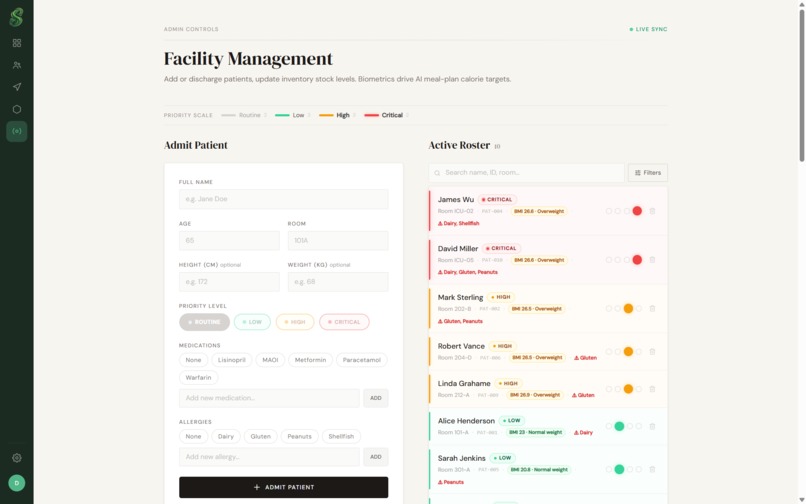
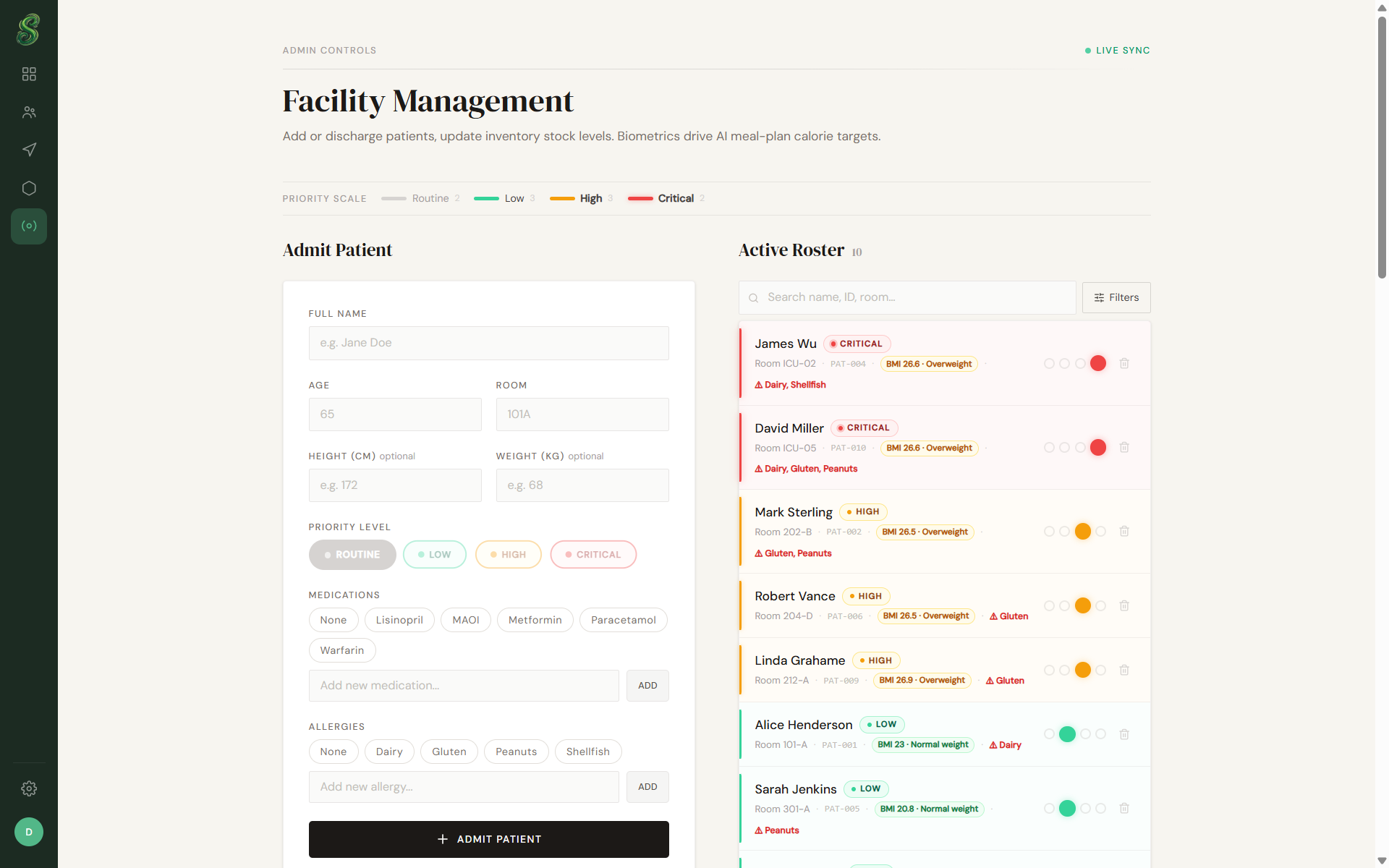
Food stocks & patient management
-
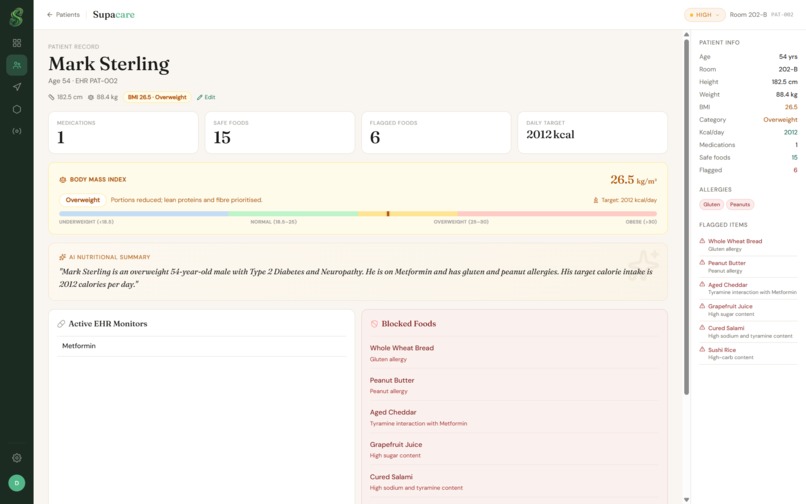
Patient detail information
-
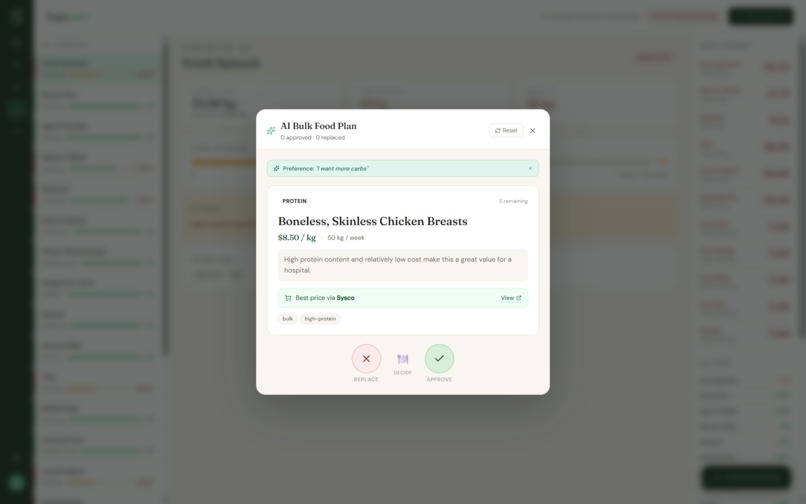
Weekly meal prep AI
-
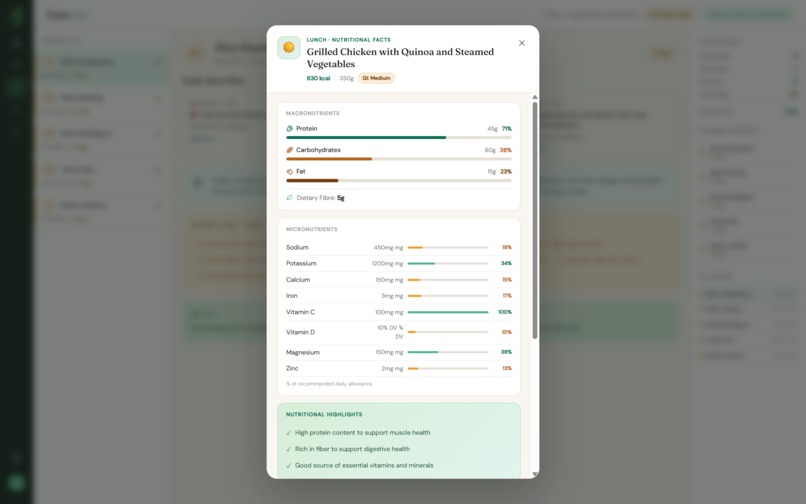
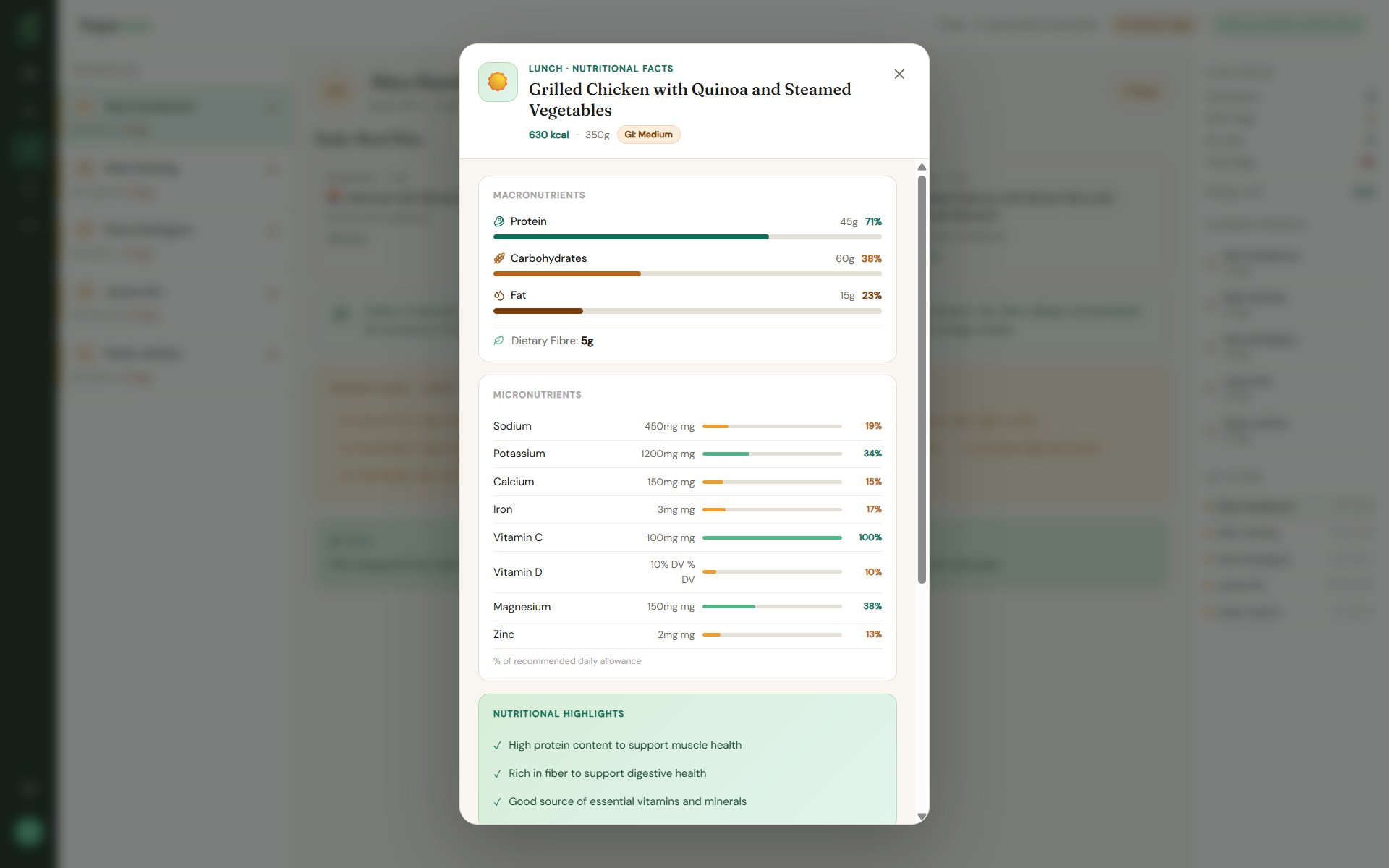
Meal nutritional facts
-
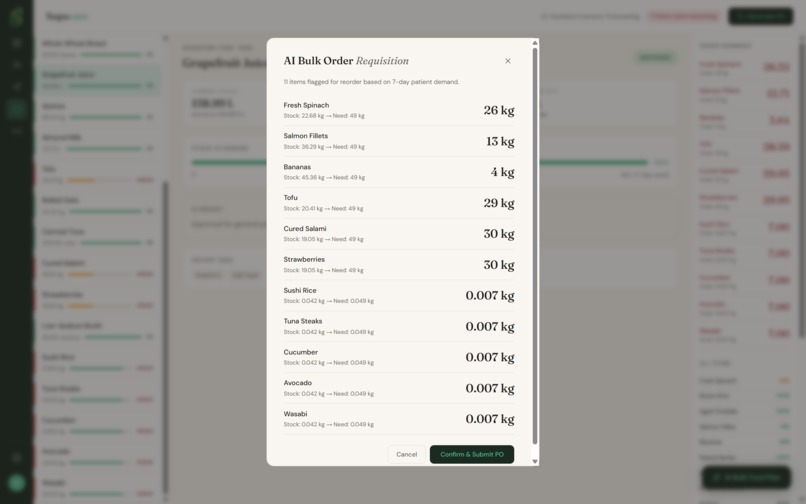
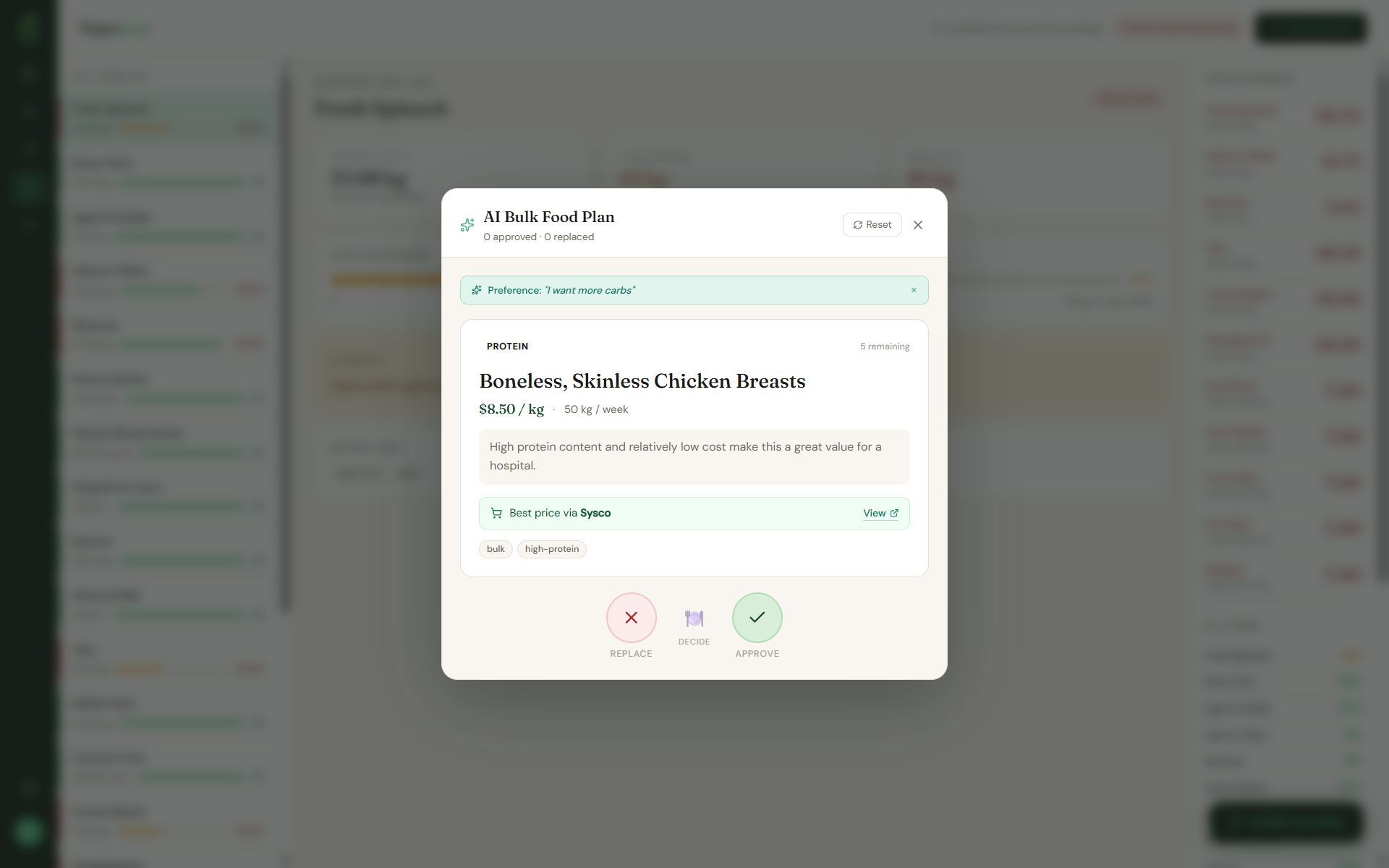
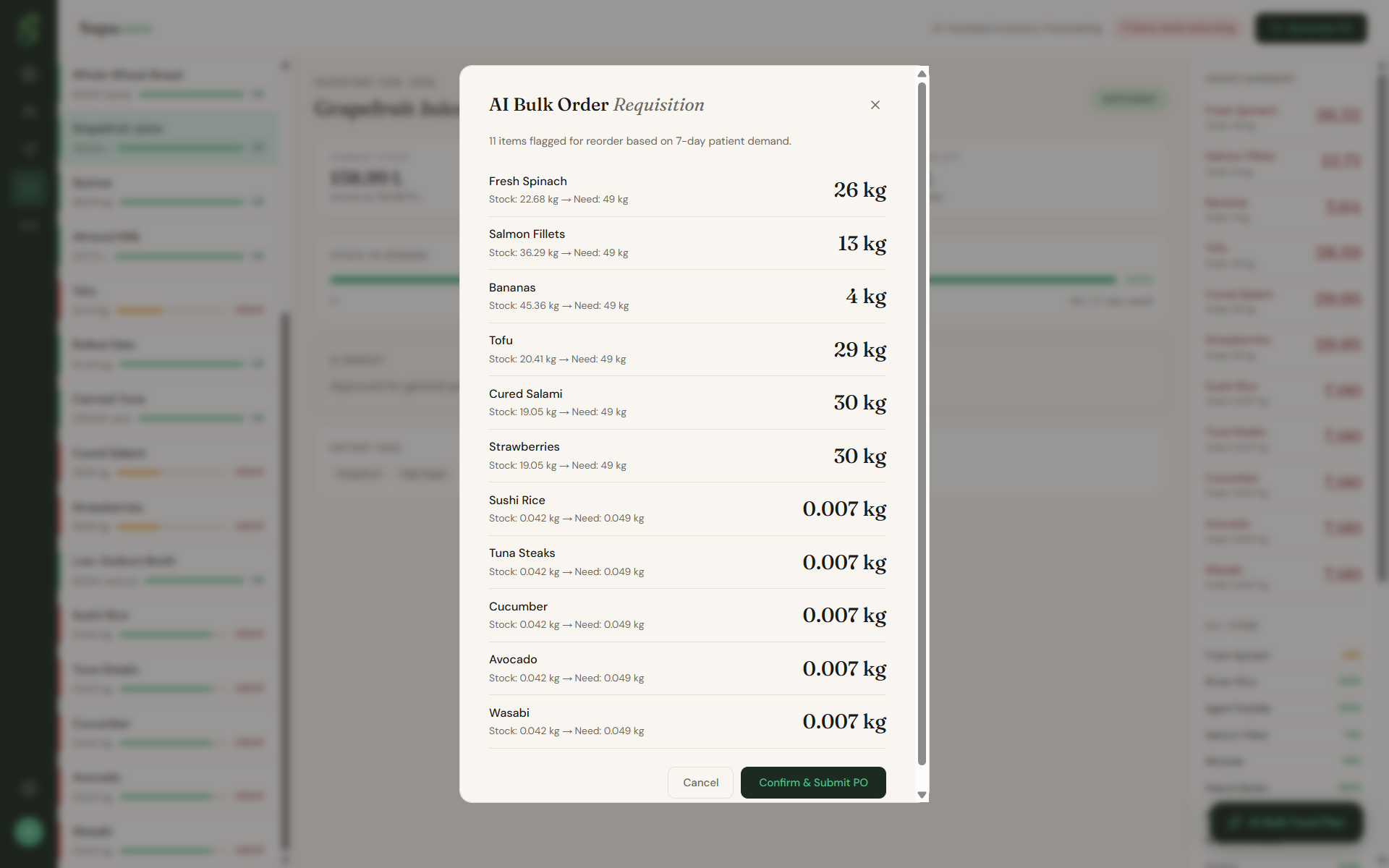
Stocks bulk-ordering
-
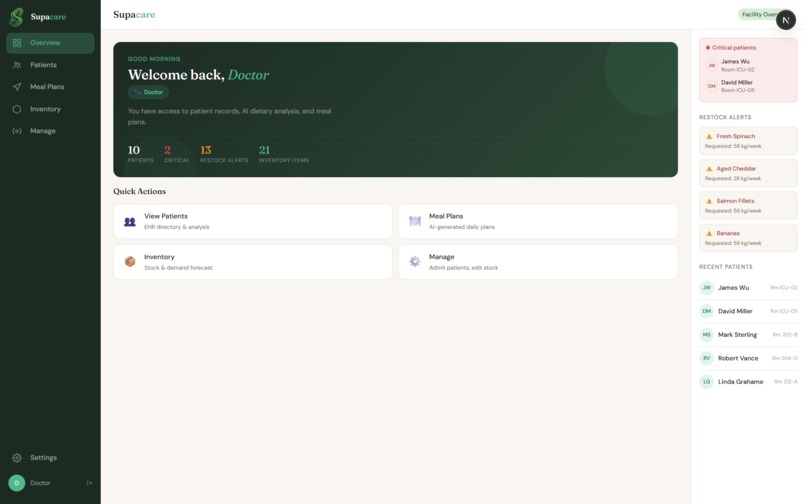
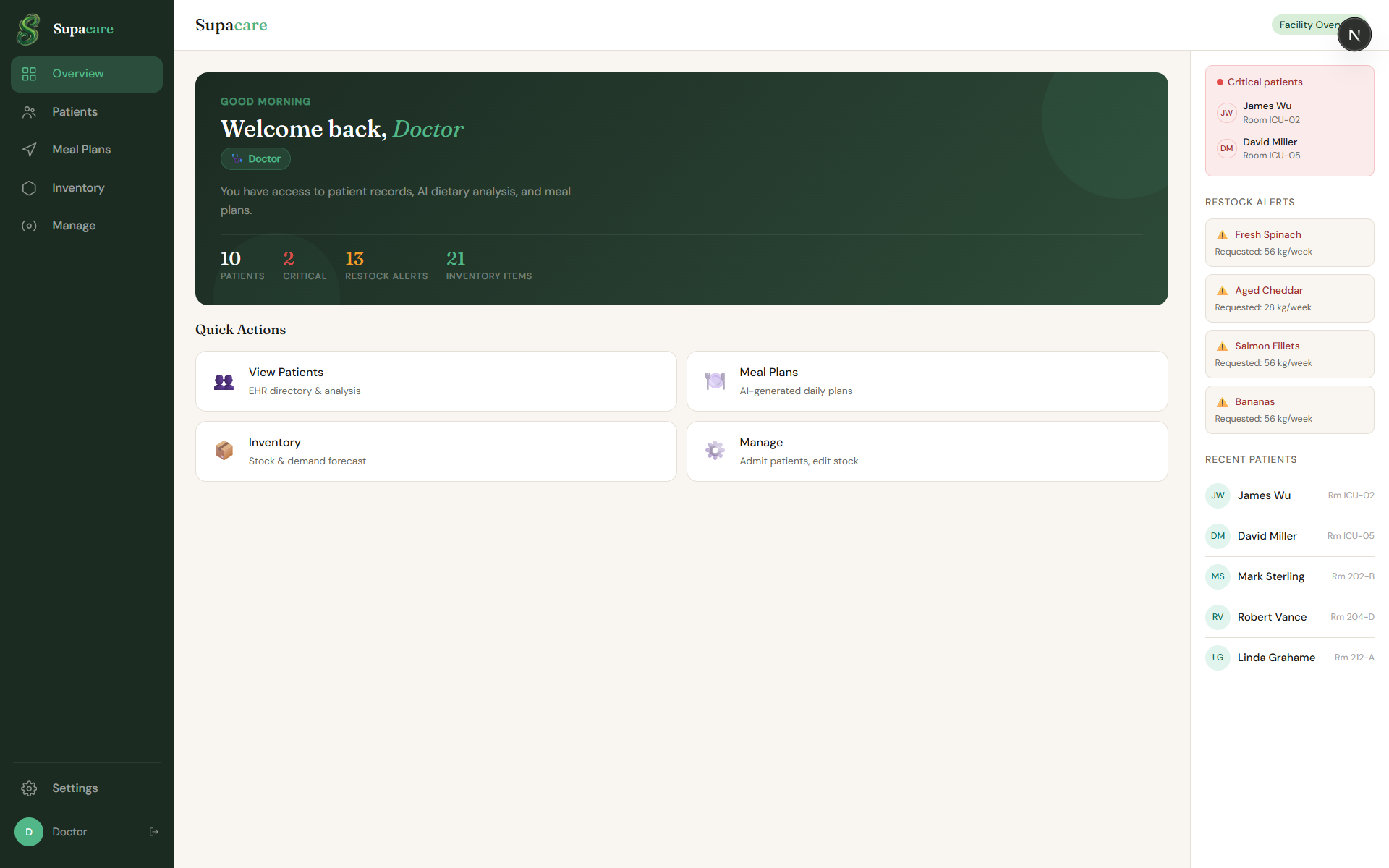
Main dashboard
Inspiration
Hospital kitchens are stretched thin. Nurses are overwhelmed. And yet, every patient has different allergies, dietary restrictions, and medical conditions that must be accounted for at every single meal, three times a day, across entire building.
The result? Nutrition planning gets deprioritised. Meals get generalised. And patients who depend on specific dietary care can slip through the cracks.
We built Supacare to fix that, making hospital food planning smarter, safer, and less of a burden on already-stretched teams.
What it does
Supacare is an AI-powered meal planning platform built for the realities of busy hospitals and small nursing homes.
Personalised meal planning: Staff input a patient's allergies, dietary restrictions, and medical conditions, and instantly receive a safe, personalised meal plan. No guesswork, no manual cross-referencing.
Bulk cooking with targeted modifications: Rather than generating entirely separate meals for every patient, Supacare produces bulk-friendly base meals a cook can prepare at scale. While clearly flagging the small modifications each patient needs. A ward of 30 patients might all share the same base chicken soup, but Supacare ensures the kitchen knows exactly who needs low-sodium, who needs a thickened consistency, and who needs the noodles swapped out entirely.
Inventory-aware planning: Supacare connects meal planning to what's actually available on-site. The AI generates meal plans based on current stock and continuously analyses usage patterns to recommend what to restock or reduce. Helping facilities cut waste and avoid shortages.
Patient prioritisation: Doctors can pin high-priority patients so their meal plans are always immediately accessible, ensuring the most critical cases are never buried in a long list.
How we built it
| Layer | Tech |
|---|---|
| Frontend | React (Next.js) |
| Backend & Database | Express & Supabase (postgresql) |
| AI / LLM | Groq API with Llama model |
| Reverse Proxy & Deployment | Nginx, Cloudflare, Docker |
The core AI pipeline takes structured patient data, conditions, restrictions, and allergies. The system then generates clinically-aware meal plans in seconds. Inventory state is injected at query time so the AI only recommends meals that can actually be prepared with current stock. The bulk-meal-with-modifications model was designed deliberately so kitchen output stays practical at scale without sacrificing individual patient care.
Challenges we ran into
Model limits vs. real-world data volume: Patient profiles can include conditions, allergies, dietary restrictions, and inventory context all at once. Many LLM APIs have strict token and rate limits (RPM, TPM, RPD, TPD), so we had to carefully structure prompts and compress context to stay within limits while still providing enough information for accurate meal planning.
Ensuring medical reliability in AI output: LLMs can sometimes hallucinate or overlook critical dietary constraints. In a healthcare setting, that’s unacceptable. We addressed this by structuring the inputs, validating outputs, and designing guardrails so the model consistently respects hard restrictions such as severe allergies or diet requirements. Relying purely on model knowledge also risked outdated or incorrect dietary recommendations. To improve reliability, we implemented a retrieval-based approach (RAG) so the AI can reference trusted nutritional guidelines and structured hospital data when generating plans.
Accomplishments that we're proud of
- Built a fully working end-to-end system. From patient intake to kitchen instructions, during a single hackathon
- The bulk-meal-with-modifications model genuinely solves a real operational pain point that existing tools ignore
- All four core features shipped and working: meal plan generation, inventory management, bulk cooking flags, and patient prioritisation
What we learned
- Prompt design for safety-critical domains is a discipline of its own, small wording changes have outsized effects on output reliability
- Healthcare workflows have very different UX needs than consumer apps. Clarity and speed matter more than anything else
- Inventory-aware AI planning is underexplored and surprisingly powerful as a concept
What's next for Supacare
- EHR integration: Pull patient data directly from electronic health records to eliminate manual data entry
- Dietitian review layer: Let registered dietitians approve AI-generated plans before they reach the kitchen
- Nutritional analytics: Track ward-level intake over time and surface trends for clinical review
- Multilingual kitchen output: Generate modification instructions in the kitchen staff's preferred language


Log in or sign up for Devpost to join the conversation.