-
-
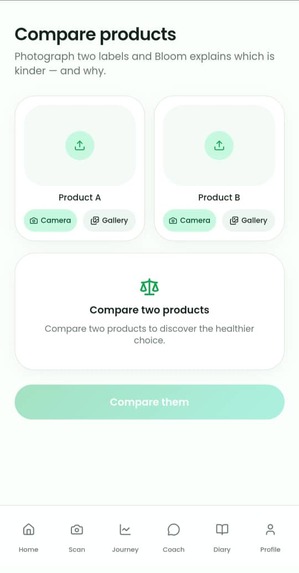
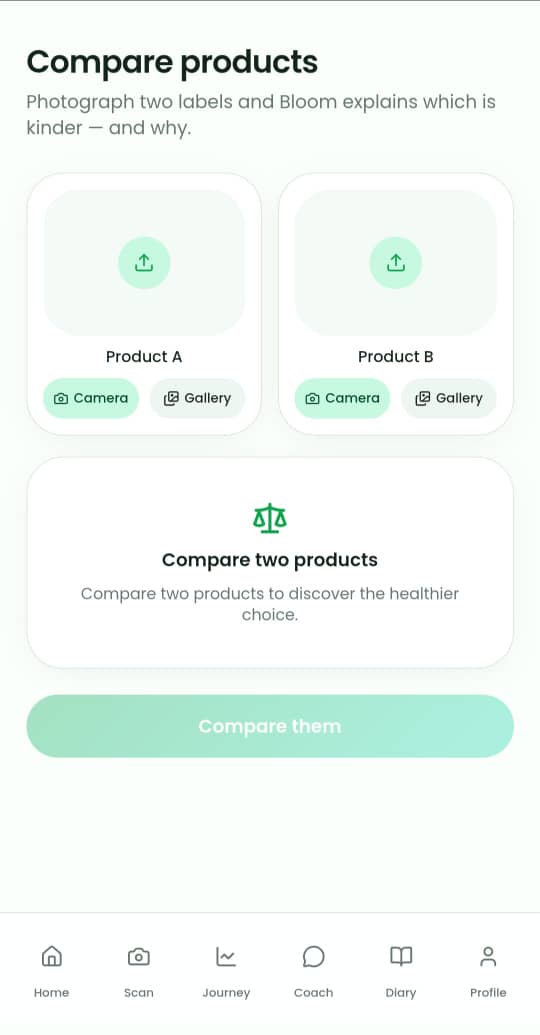
Meal Comparison
-
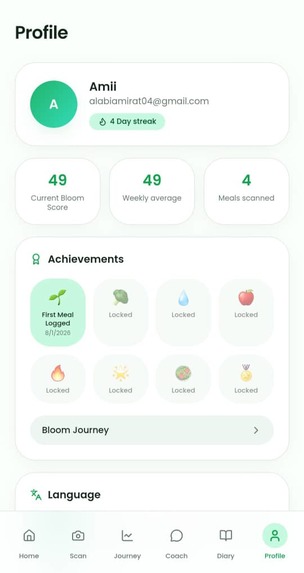
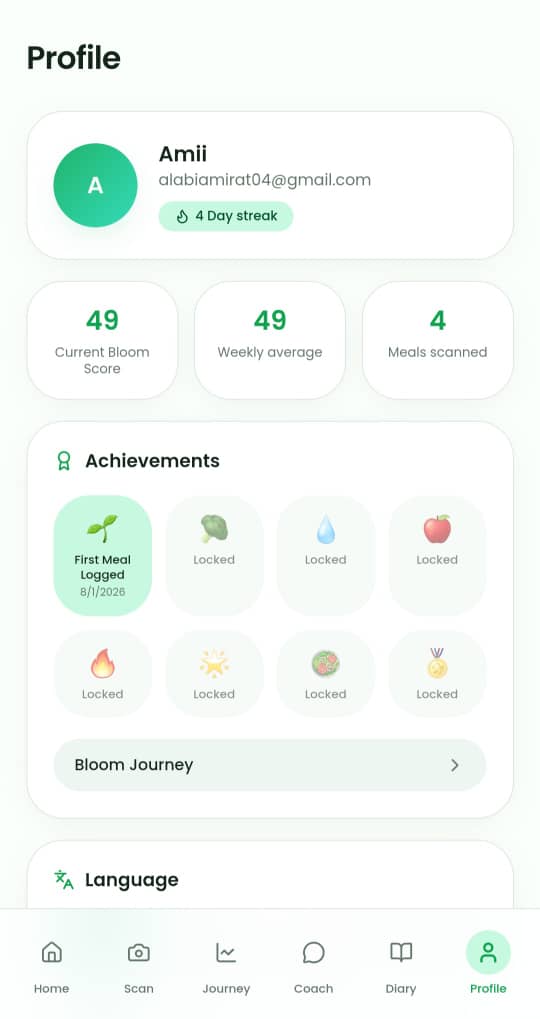
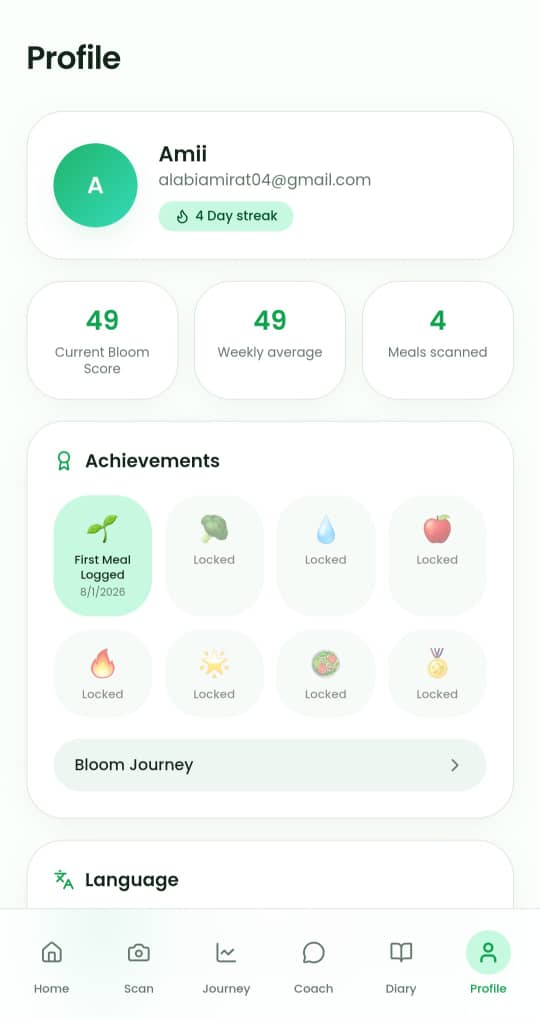
Profile and Achievements
-
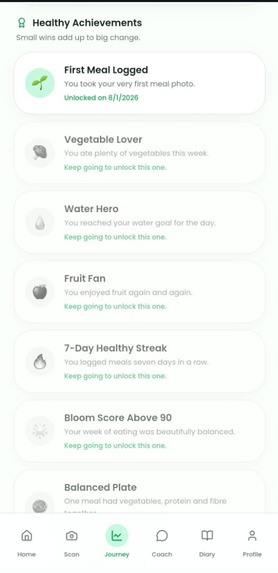
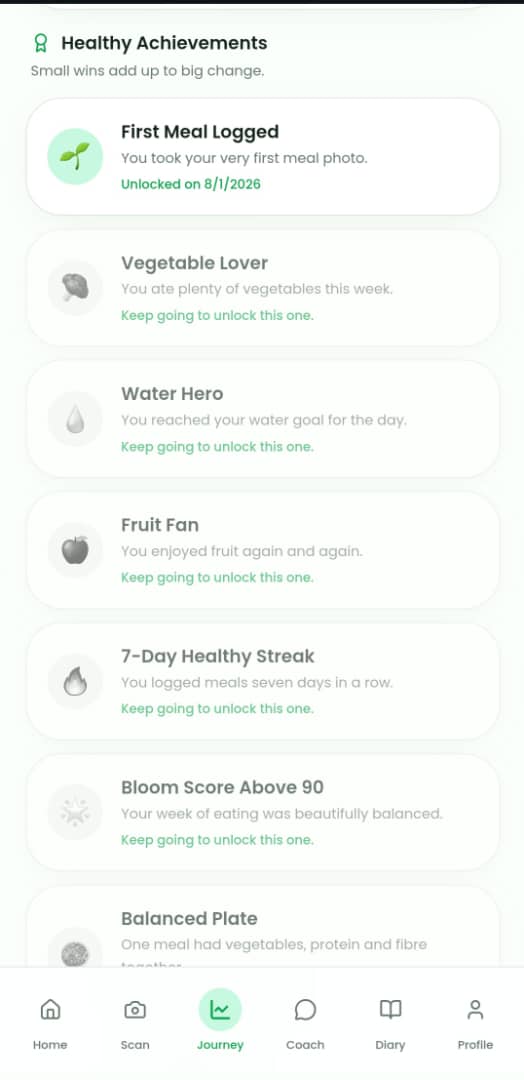
Healthy Achievements
-
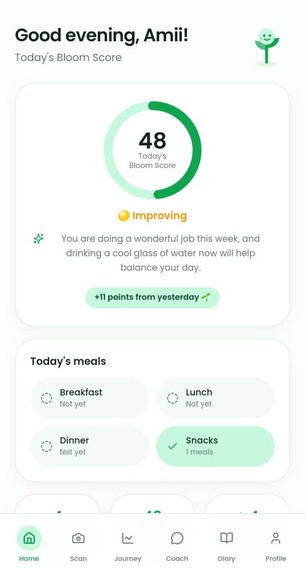
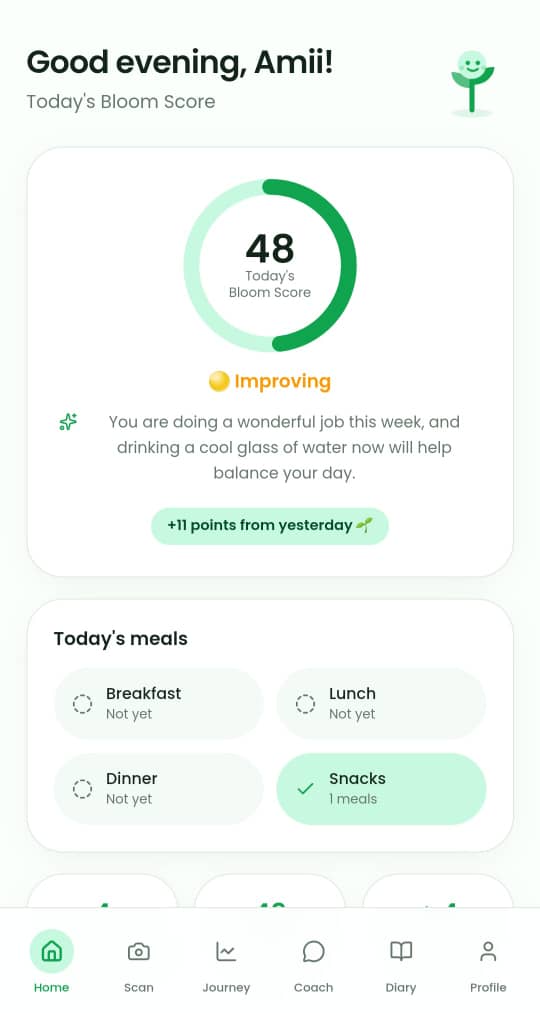
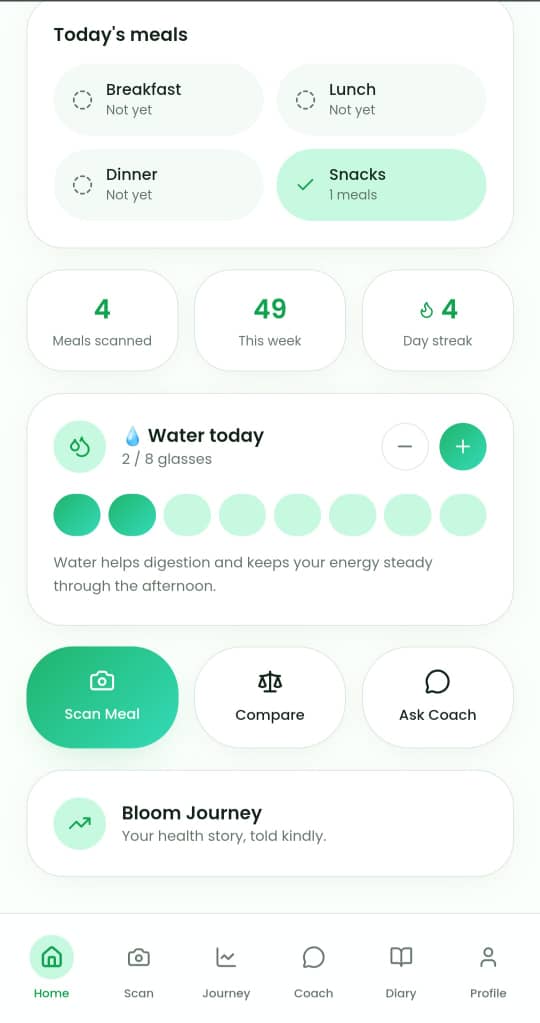
Home Dashboard
-
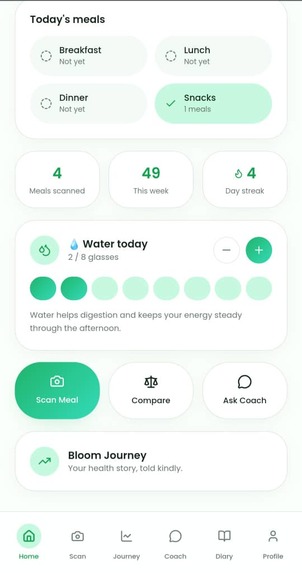
Home Dashboard
-
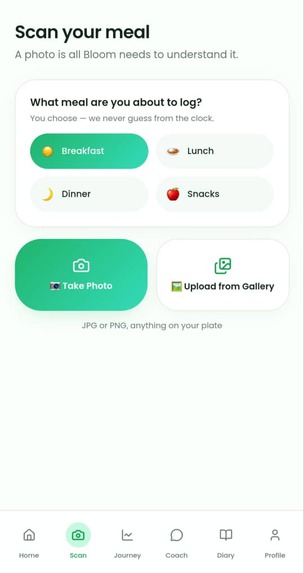
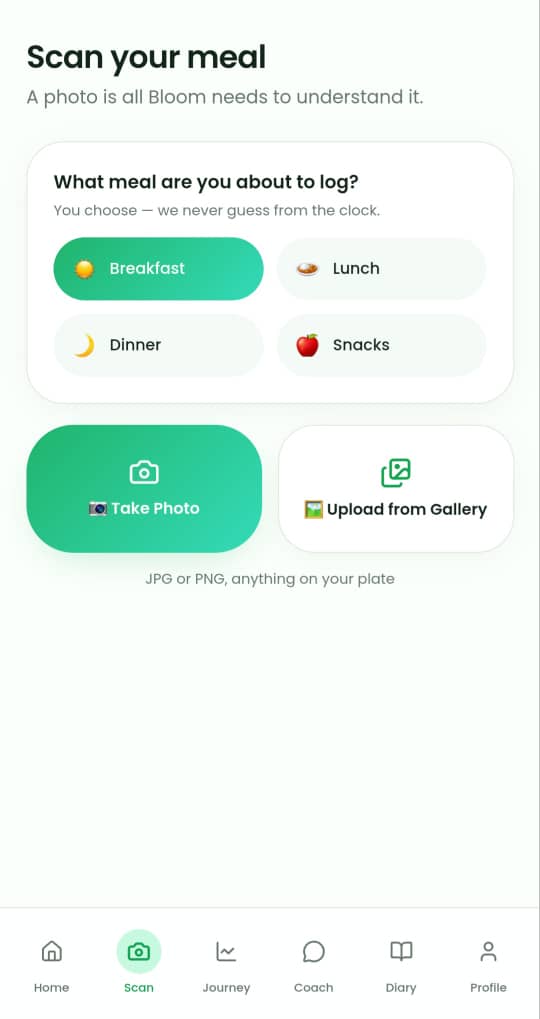
AI Meal scanner
-
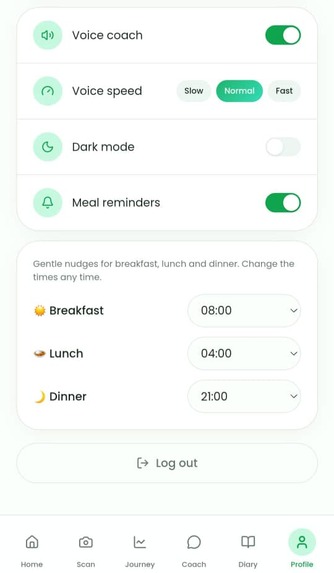
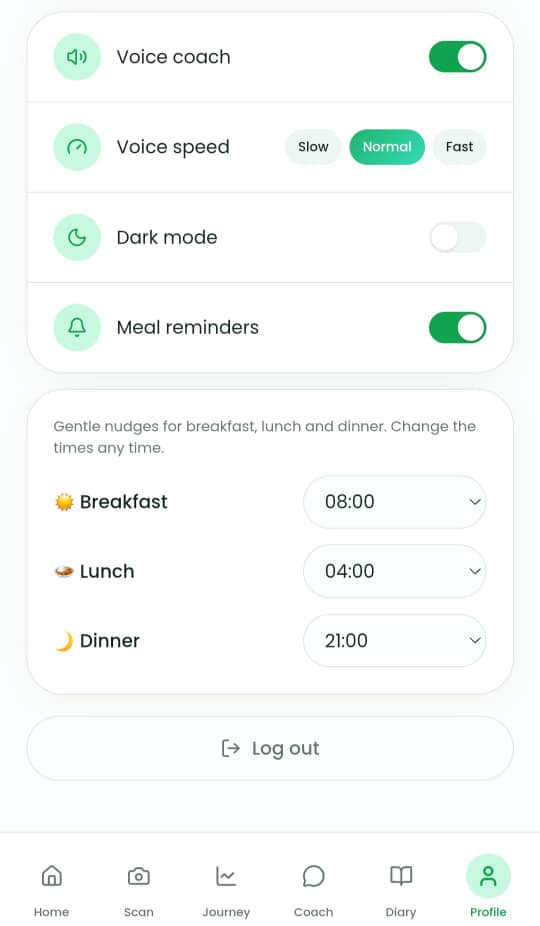
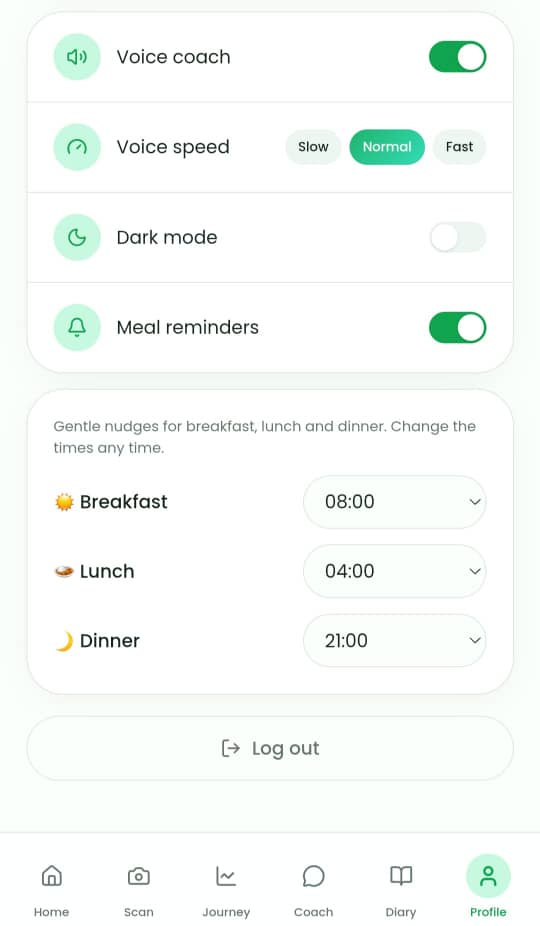
Settings and meal reminders
-
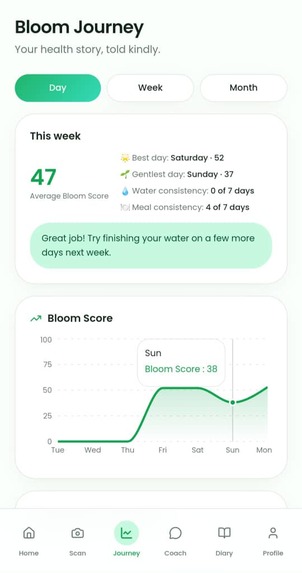
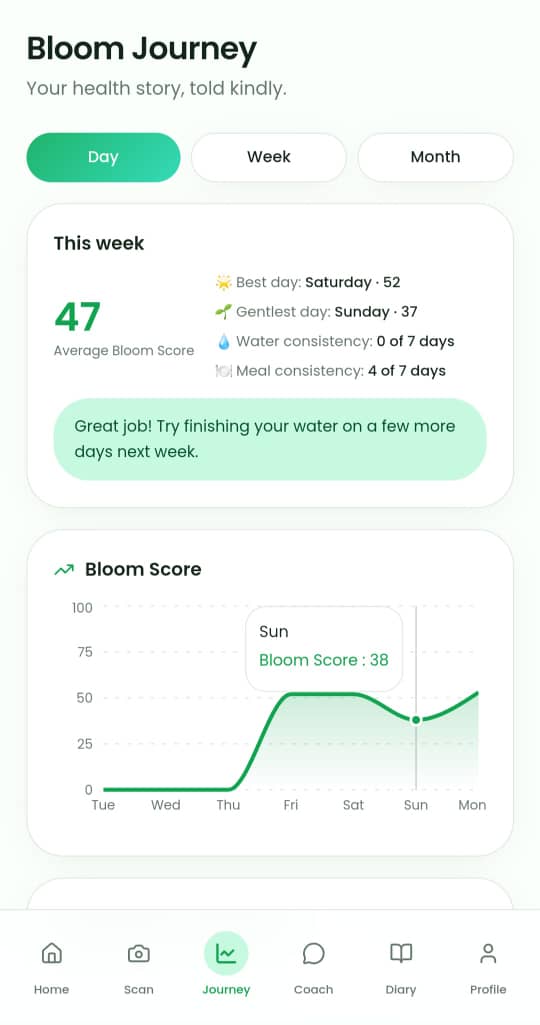
Weekly boom reports
-
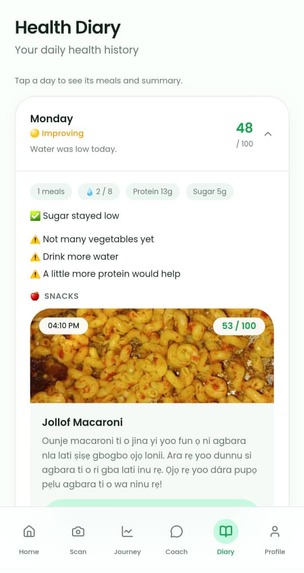
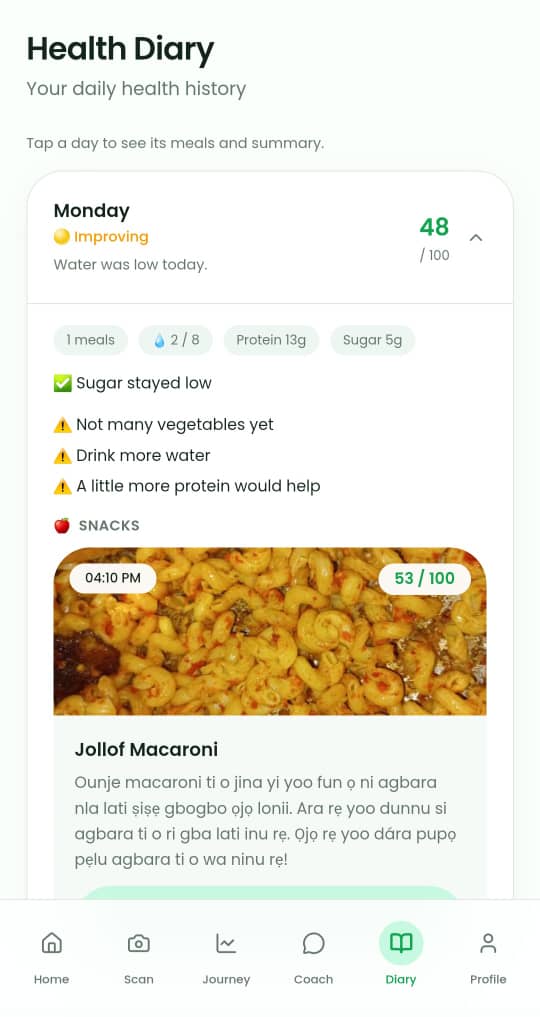
Health Diary
-
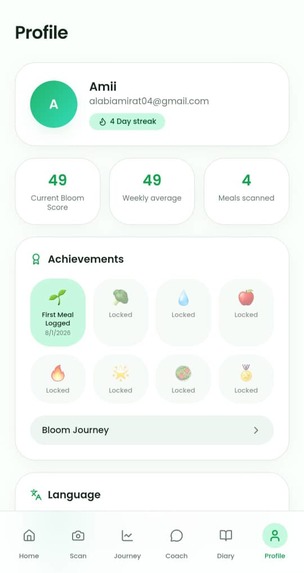
Profile and Achievements
-
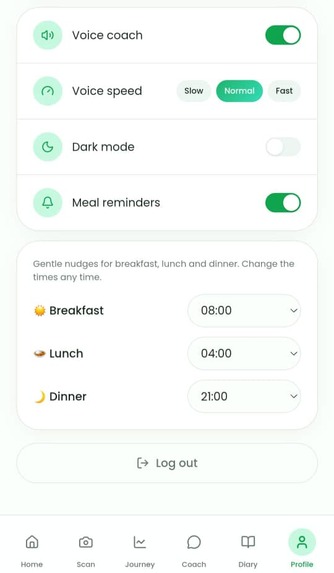
Settings and meal reminders
-
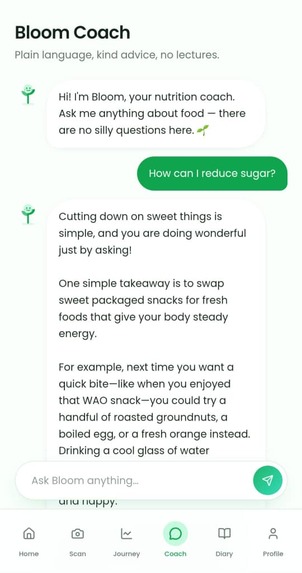
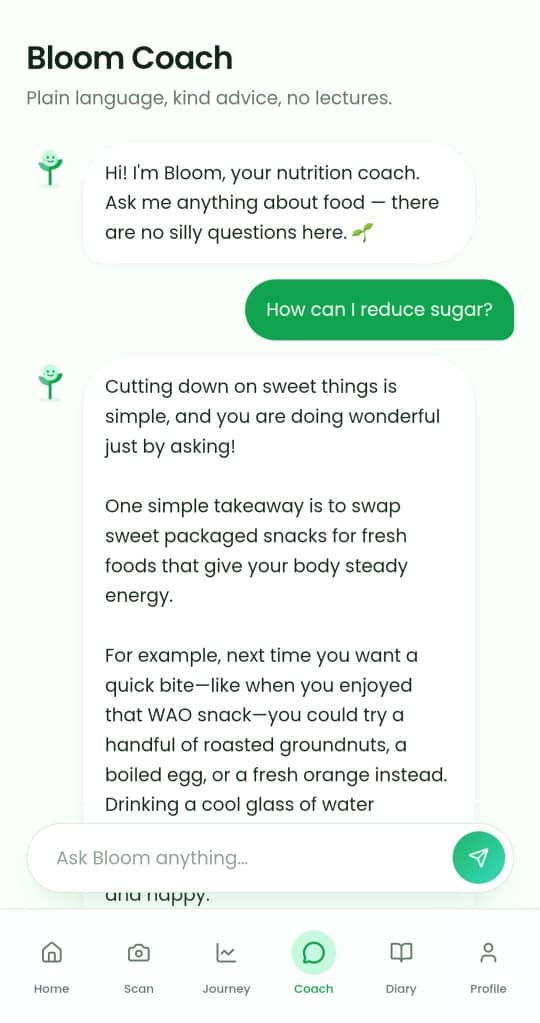
AI Nutrition Coach
Healthy eating has become more difficult than ever. Many people want to make healthier food choices, but nutrition labels are confusing, health information is often filled with technical words, and it can be hard to know which option is actually better.
I also realized that many nutrition apps are designed for people who already understand health terms and mainly support international users. They rarely consider local communities or people who prefer to communicate in their native language.
That inspired me to build NutriBloom, an AI nutrition companion that makes healthy eating simple, practical, and accessible for everyone.
What it does
NutriBloom uses AI to recognize meals and food products from images. It explains what the user is eating in simple everyday language, gives each meal a Bloom Score out of 100, and offers easy suggestions for healthier choices.
Users can compare two food products before buying them to see which option is healthier. The app also tracks daily meals, calculates a daily Bloom Score, shows weekly progress, and helps users build healthier eating habits over time.
To make the app more accessible, NutriBloom supports English, Yoruba, Hausa, Igbo, Arabic, French, and Spanish. This allows more people, especially in my local community, to understand their nutrition in a language they are comfortable with.
How I built it
I designed the user experience to be simple and beginner friendly. I built the application using modern AI tools and carefully improved it through multiple versions based on testing and feedback.
During development, I focused on making the interface clean, the explanations easy to understand, and the experience enjoyable for users of different ages and backgrounds.
Challenges I ran into
One of the biggest challenges was making AI responses accurate while keeping the explanations simple enough for everyone to understand.
I also spent a lot of time improving the user experience by refining meal tracking, adding multilingual support, improving the daily Bloom Score system, and making the app feel more like a real health companion than just another nutrition scanner.
Accomplishments I'm proud of
I'm proud that NutriBloom evolved from an idea into a working application that can recognize meals, compare products, calculate daily nutrition scores, and communicate in multiple languages.
I'm especially proud that I built something designed to help everyday people, not just health experts. My goal was to make healthy eating feel less confusing and more achievable.
What I learned
This project taught me that building an AI application is about much more than writing prompts. It requires continuous testing, improving the user experience, solving real problems, and thinking from the user's perspective.
I also learned how important accessibility is when designing technology that people from different backgrounds can use.
What's next for NutriBloom
I plan to make NutriBloom even smarter by improving food recognition accuracy, expanding language support with more natural voice pronunciation, personalizing recommendations based on health goals, and adding features such as barcode scanning, wearable device integration, and long-term nutrition insights.
My vision is for NutriBloom to become an AI nutrition companion that helps people everywhere build healthier habits one meal at a time.
Built With
- accessibility
- application
- artificial
- assistant
- css
- css3
- food
- healthtech
- healthy
- html5
- image
- intelligence
- javascript
- living
- multilingual
- nutrition
- react
- recognition
- tailwind
- typescript
- vite
- voice
- web

Log in or sign up for Devpost to join the conversation.