NutriBeli: Stop Guessing. Start Knowing.
Overview
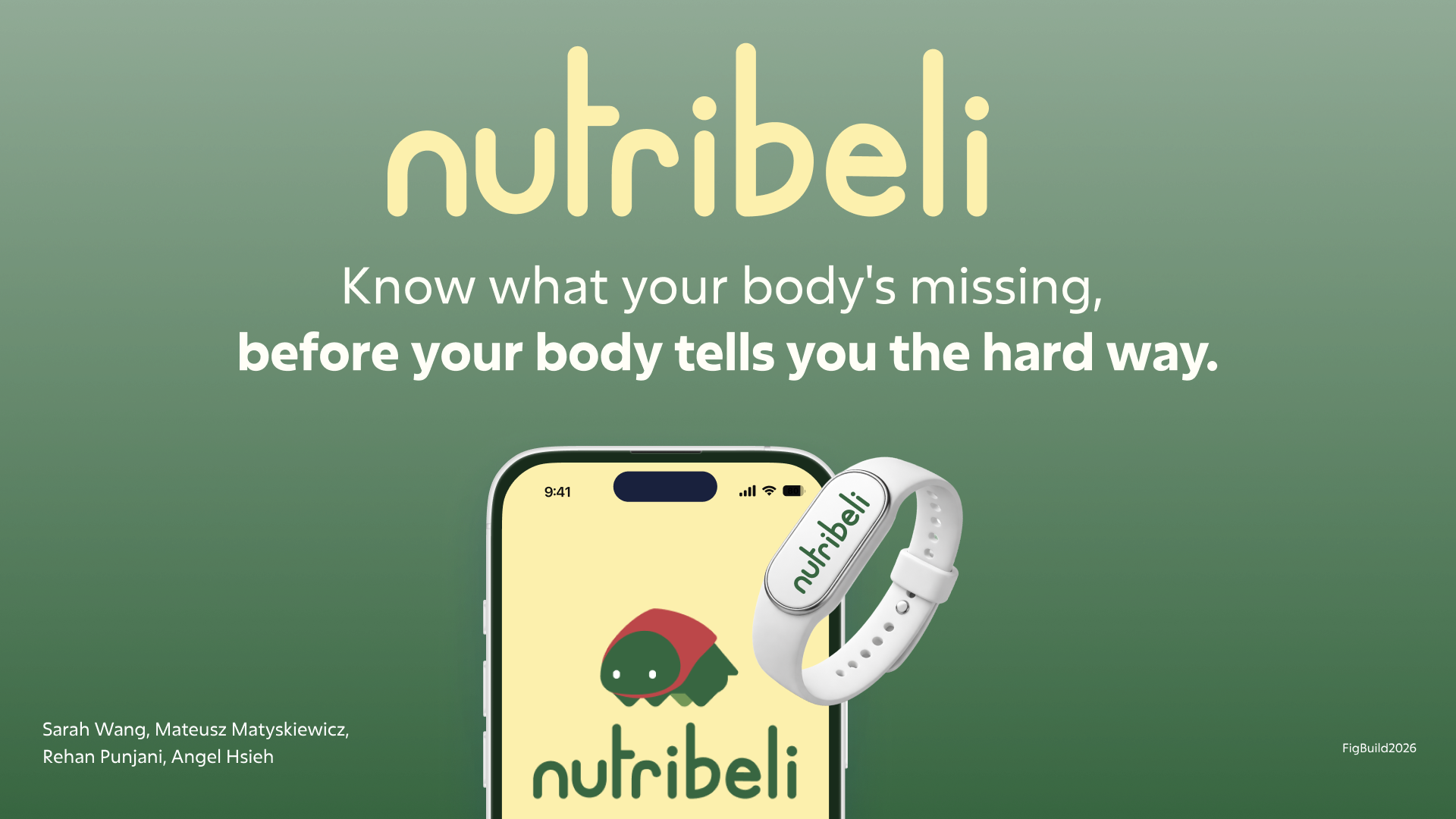
NutriBeli is a speculative wearable health platform that translates your body's internal signals into clear, actionable nutritional guidance. Combining a passive biosensor wristband with an intelligent companion app, NutriBeli eliminates the guesswork and friction of traditional nutrition tracking — giving you the one insight that matters most, right when you need it.
At its core, NutriBeli continuously tracks over 26 vitamins and minerals in real time, identifies what your body is missing, and immediately pairs that insight with personalised food recommendations to fix it. Not supplements. Not generic advice. Specific, tailored meals and ingredients matched to your deficiencies, your preferences, and your life.
One in four people globally are iron deficient. Most have no idea. They just know they are tired.
NutriBeli exists because the gap between feeling off and knowing why — and knowing exactly what to eat to feel better — is entirely solvable with the right technology.
Inspiration
It started with a feeling most of us know but rarely question. That low-grade exhaustion that follows you through the day. The brain fog you chalk up to a bad sleep. The general sense of running at half capacity that you eventually just accept as normal.
We started asking why. Not philosophically — literally. Why do so many people feel consistently off without any obvious cause? The answer kept coming back to the same place: nutrition. Specifically, the nutrients people are silently missing without ever knowing it. One in four people are iron deficient globally. Most have no idea. They just know they are tired.
The deeper we looked, the more we realised the problem was not a lack of caring. It was a lack of legibility. Your body is constantly generating data about its own nutritional state — through interoception, the sense your body uses to signal its internal condition. But that signal is blunt. Vague. Easy to misread or dismiss. Nobody had built a way to translate it into something actionable.
That became our starting point. What if you could actually read what your body was trying to tell you?
What We Learned
We learned that nutrition is one of the most underleveraged spaces in wearable technology. Fitness trackers have become extraordinarily sophisticated at monitoring cardiovascular and physical metrics — but they almost entirely ignore what fuels those metrics in the first place.
We also learned how much friction matters. The reason existing nutrition apps fail is not that people do not care about their health. It is that manual logging is tedious, inconsistent, and easy to abandon. The moment you make tracking effortless, the entire value proposition changes.
Perhaps most importantly, we learned about interoception — the body's internal sense of its own physiological state. It is one of over 22 recognized human senses, and it is the sense NutriBeli is designed to extend. Your body already knows something is wrong. We are just giving you a way to read it clearly.
How We Built It
NutriBeli is a speculative design project built around a core insight: the best health tool is one you never have to think about.
The product has two components working as one system.
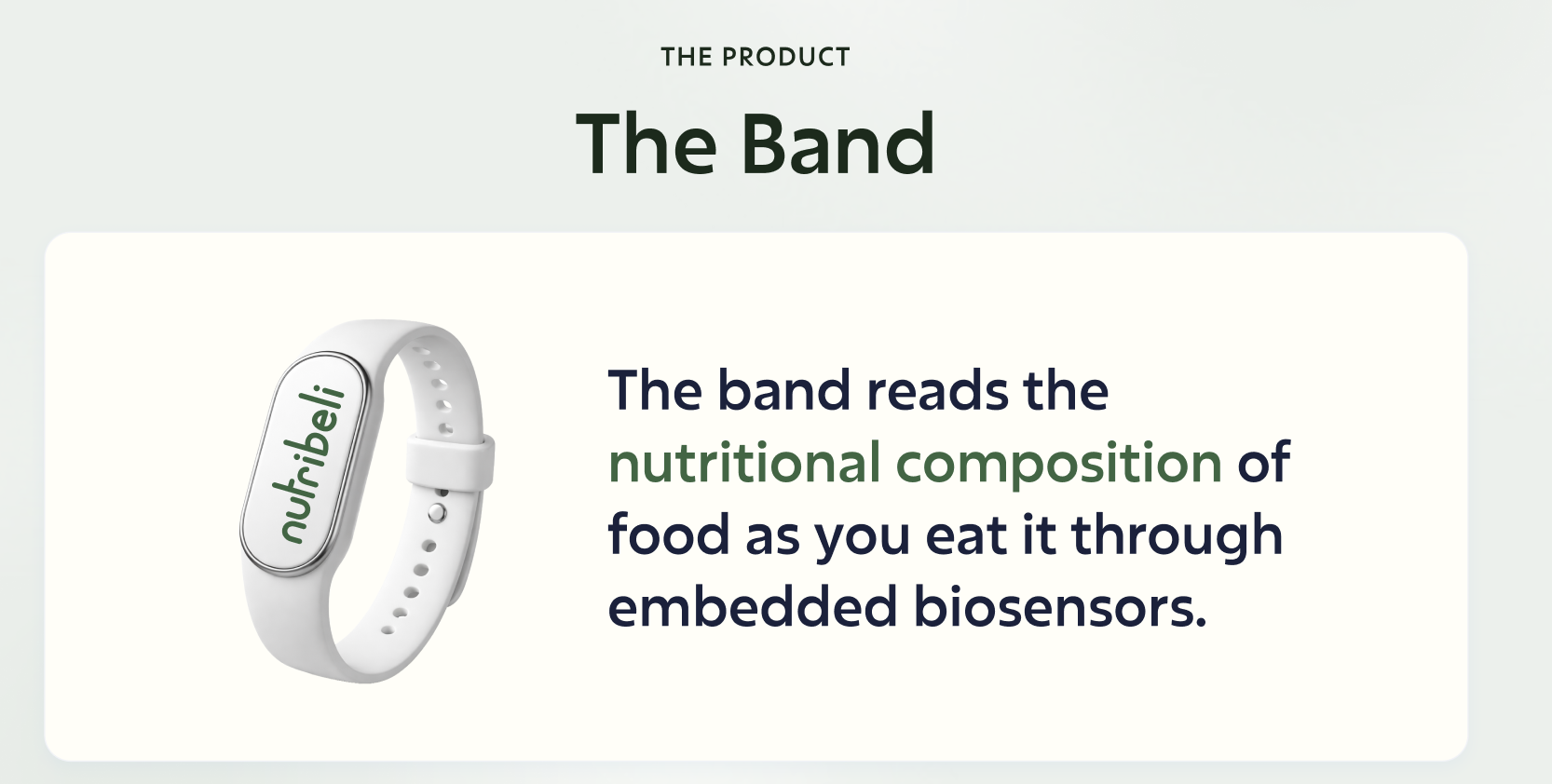
The wristband sits passively on the wrist and uses biosensors to detect nutritional compounds from food as it is consumed. No scanning. No photographing. No input of any kind. It runs continuously in the background and syncs data to the companion app in real time.
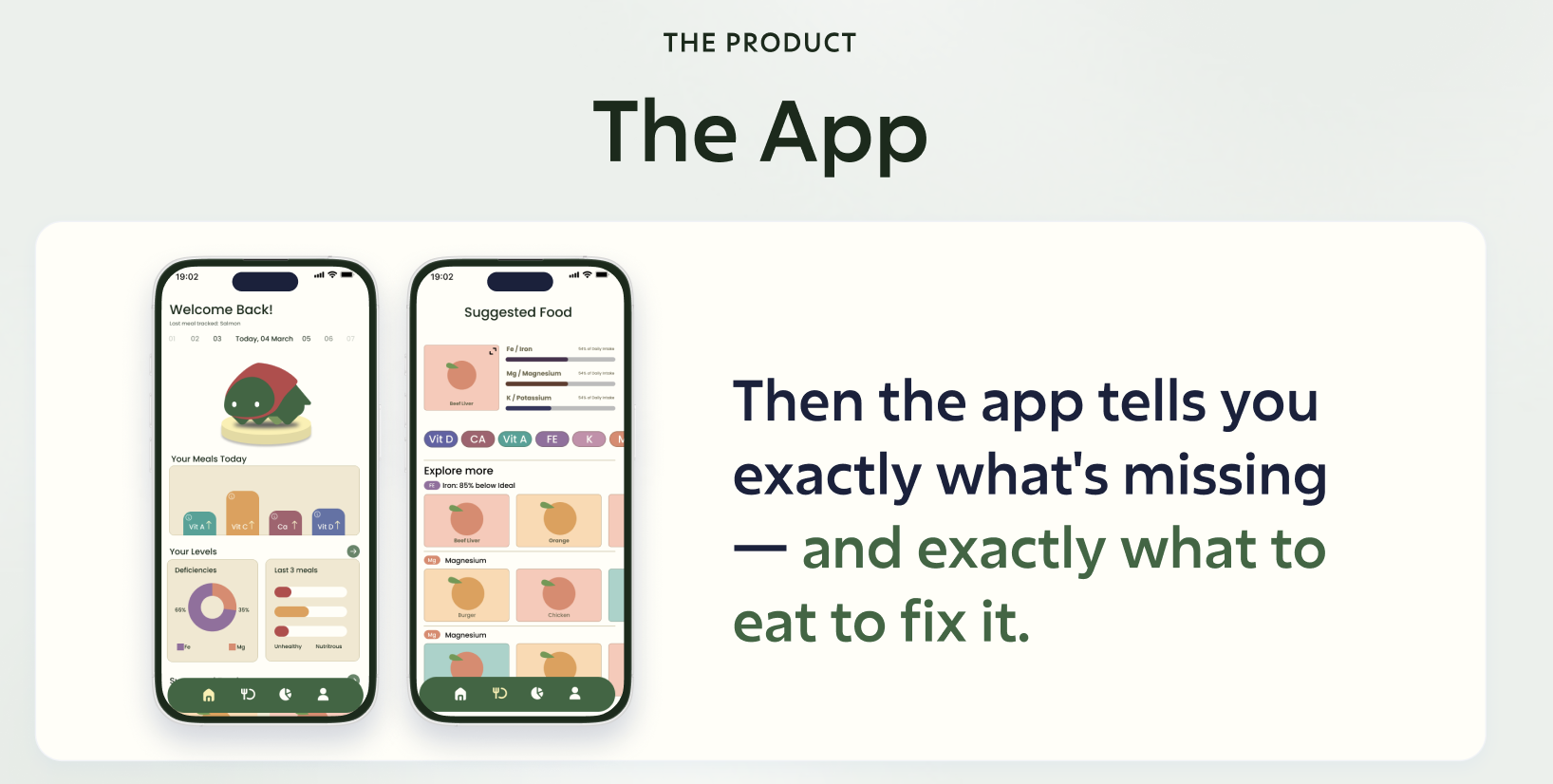
The companion app is where all user interaction happens. We designed it around Beli — a warm, encouraging in-app companion who surfaces insights without overwhelming the user. The core philosophy of the app is one priority insight per day. Not twenty-six nutrient bars demanding attention. The one thing that matters most right now, explained simply, with a clear action attached.
We designed the full user flow covering the home dashboard, analytics views, food recommendations, allergy and preference logging, and the expanded food detail screen. Every screen was designed around the principle that more data should never mean more noise.
Challenges
Designing for a sense people do not know they have. Interoception is not a familiar concept to most users. We had to find a way to introduce the idea without it feeling abstract or clinical. The solution was storytelling — grounding the concept in a character, Rey, whose experience of undiagnosed iron deficiency is immediately relatable. The concept lands before we ever name the science behind it.
Balancing depth with simplicity. Nutrition data is genuinely complex. There are over twenty-six vitamins and minerals to track, each with different daily targets, interactions, and symptom profiles. Showing all of it at once would be overwhelming and counterproductive. We had to make deliberate decisions about what to surface, when, and how — designing Beli as a filter rather than a firehose.
Designing for vulnerability. NutriBeli is not just for healthy people optimizing performance. It is for people who are genuinely unwell and do not know why. That required a different tone, a different set of safeguards, and a different relationship between the product and the user. Beli had to feel supportive without feeling clinical. Informative without feeling alarming. That balance was the hardest design problem we faced — and the most important one to get right.
Built With
- figma


Log in or sign up for Devpost to join the conversation.