-
-
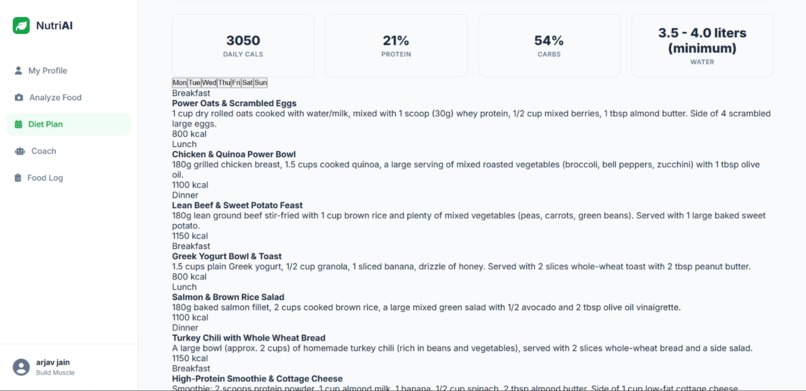
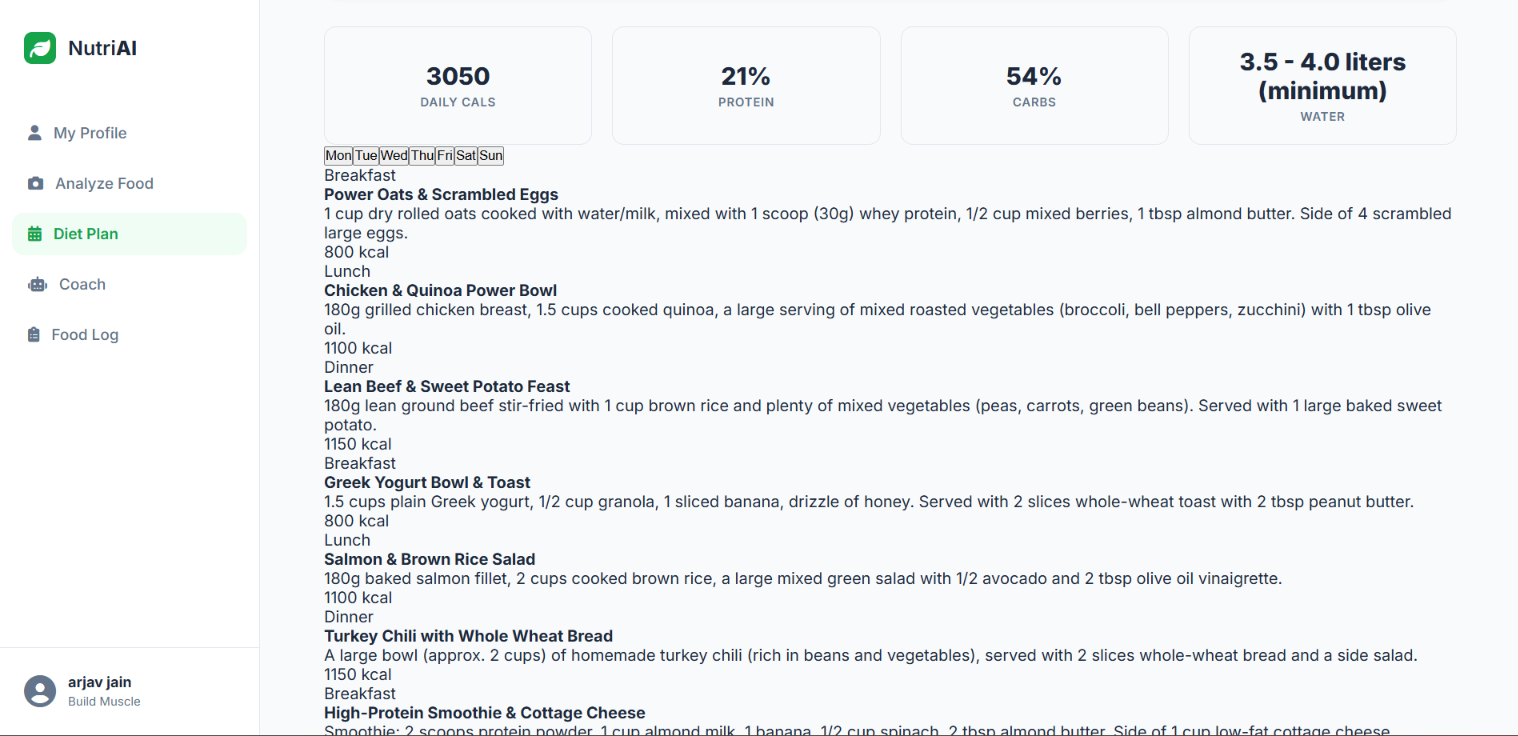
diet plan based on body
-
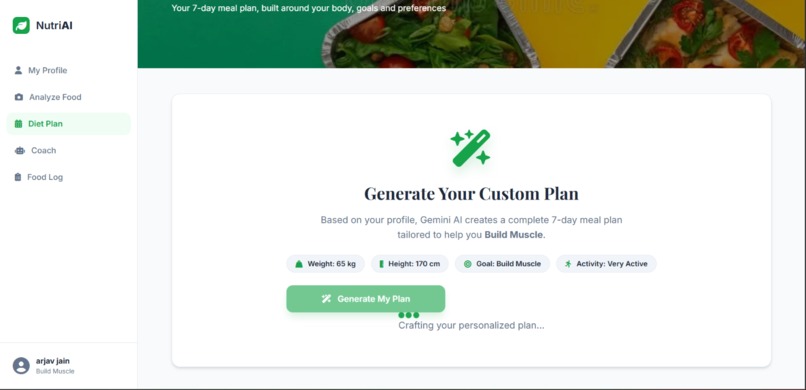
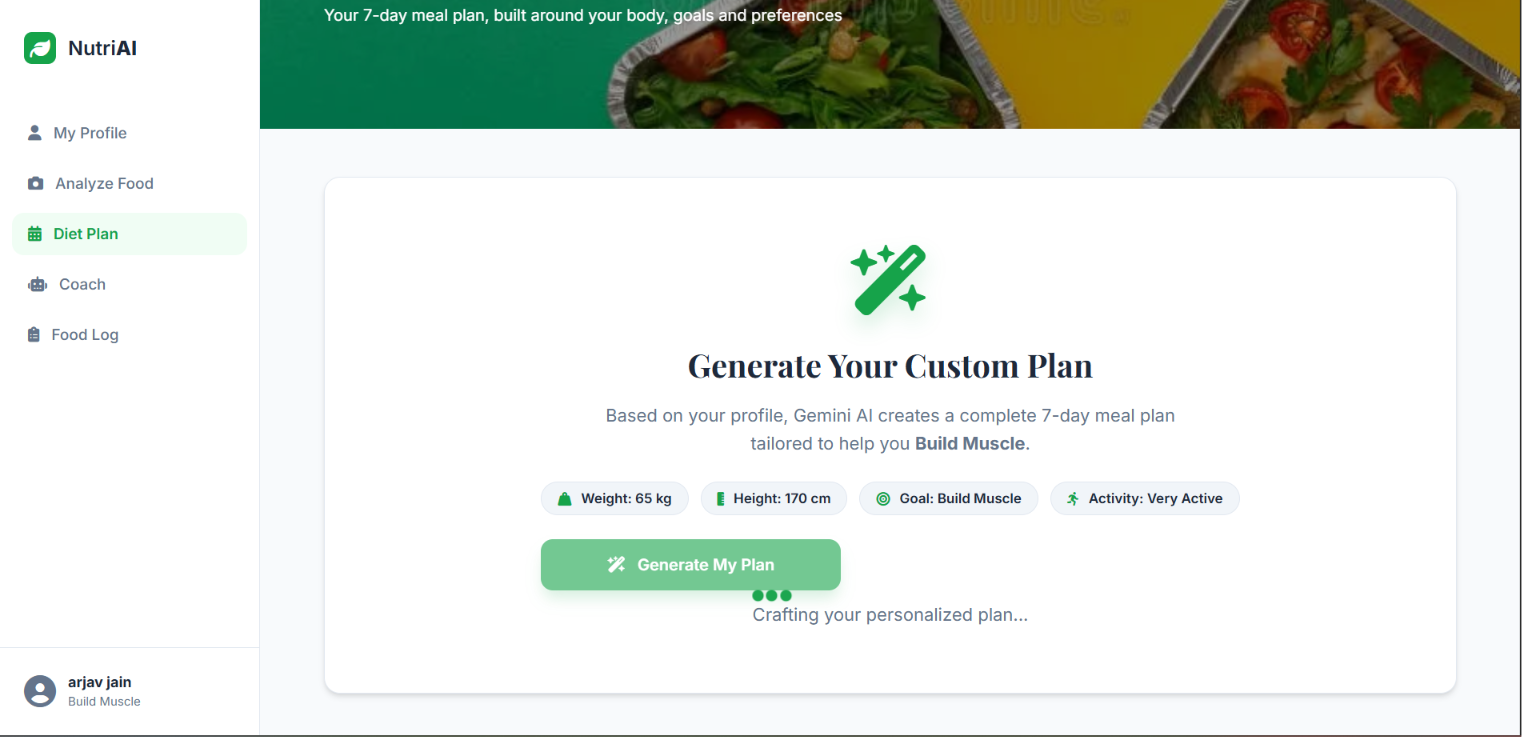
Personalized Diet Plan Your 7-day meal plan, built around your body, goals and preferences
-
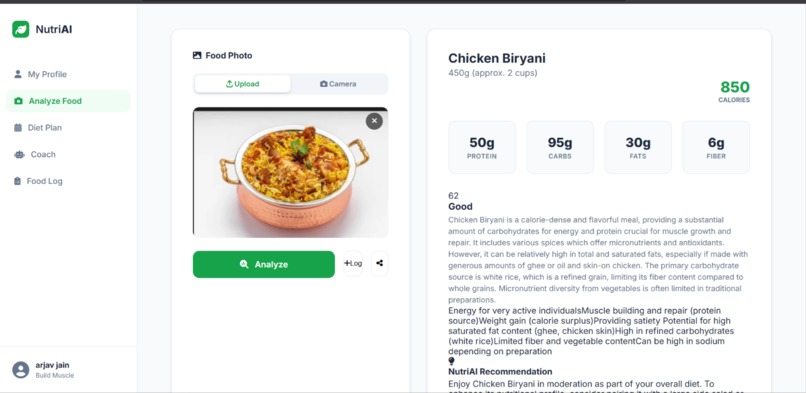
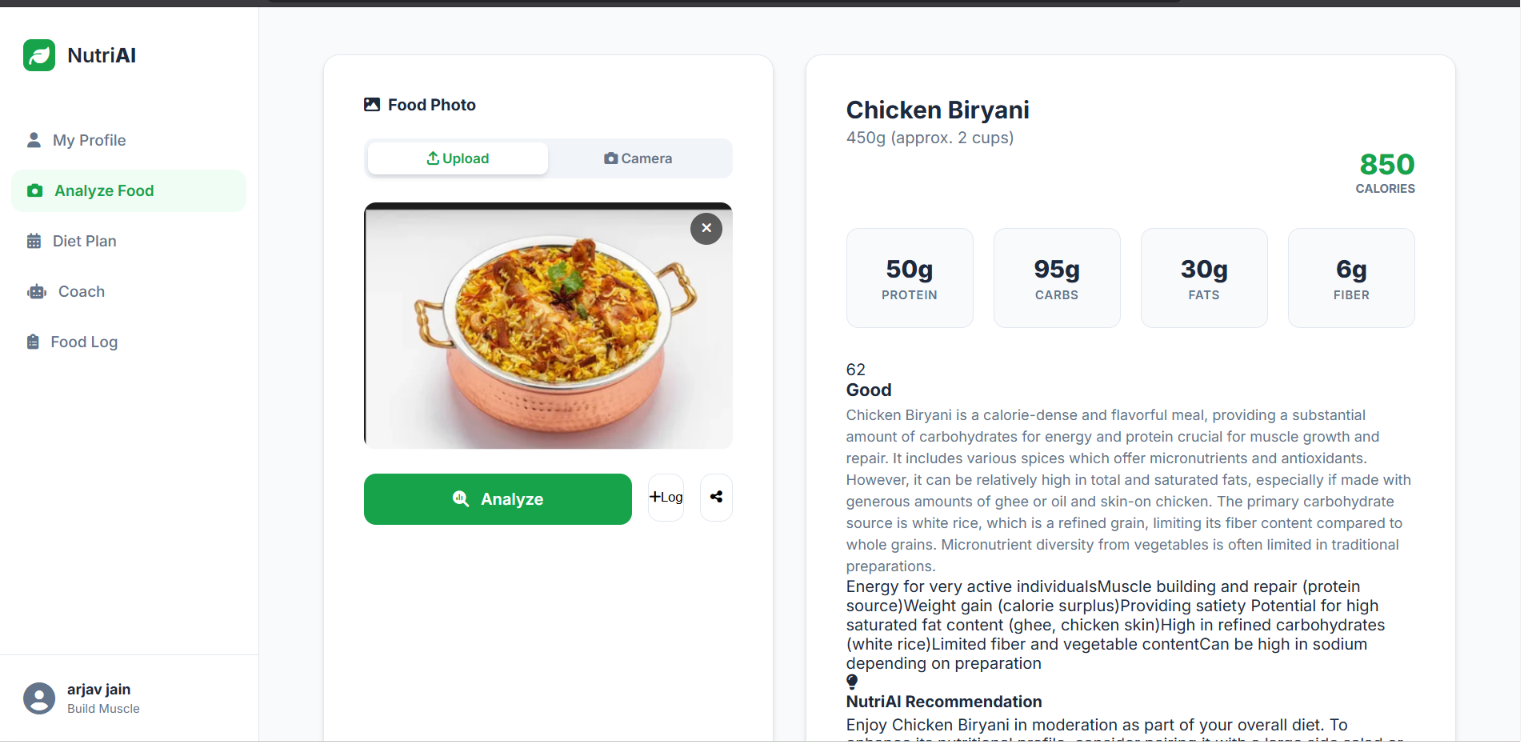
Food Nutrition Analyzer Upload or scan any meal — get instant, AI-powered nutritional insights
-
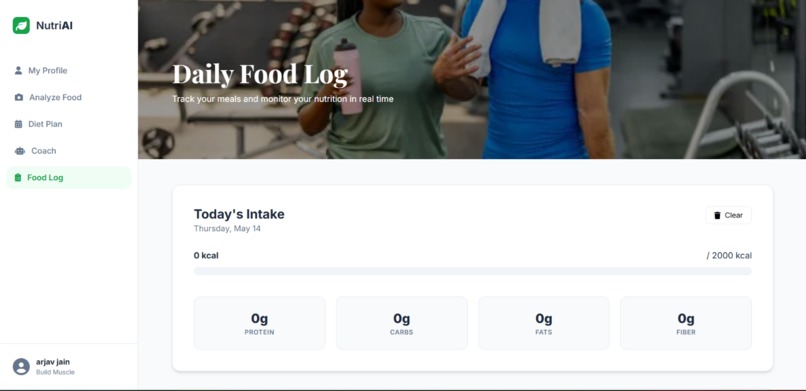
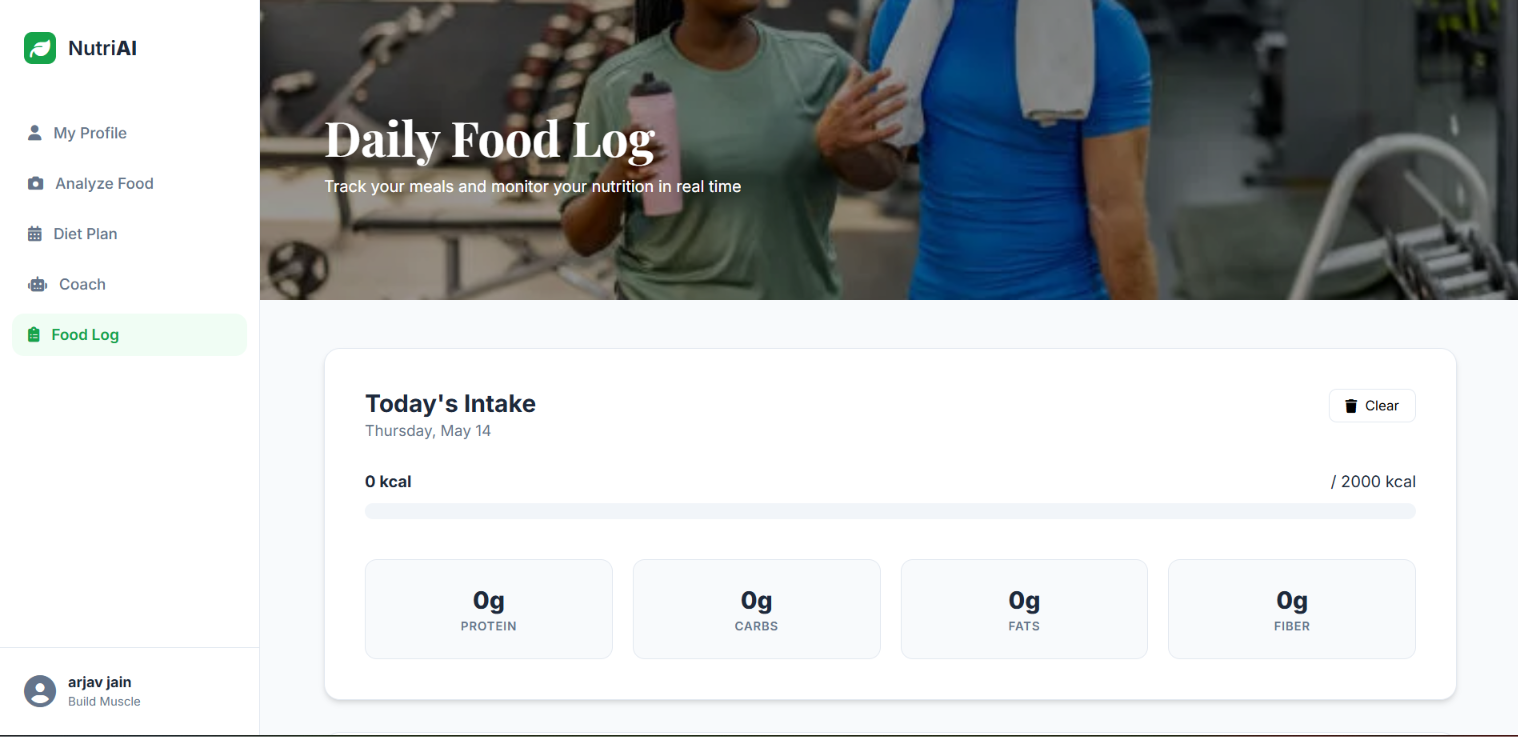
Daily Food Log Track your meals and monitor your nutrition in real time
-
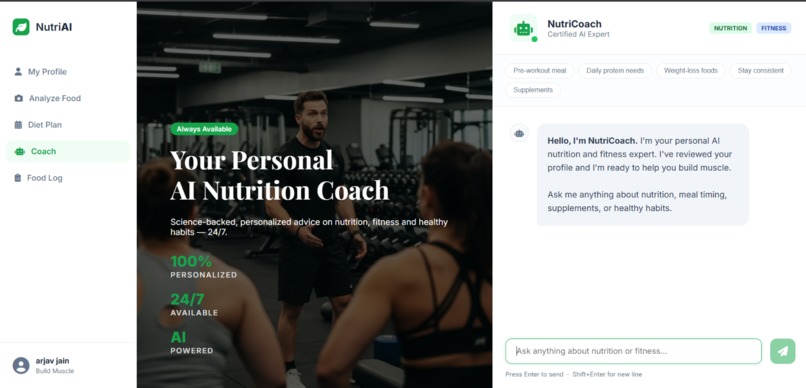
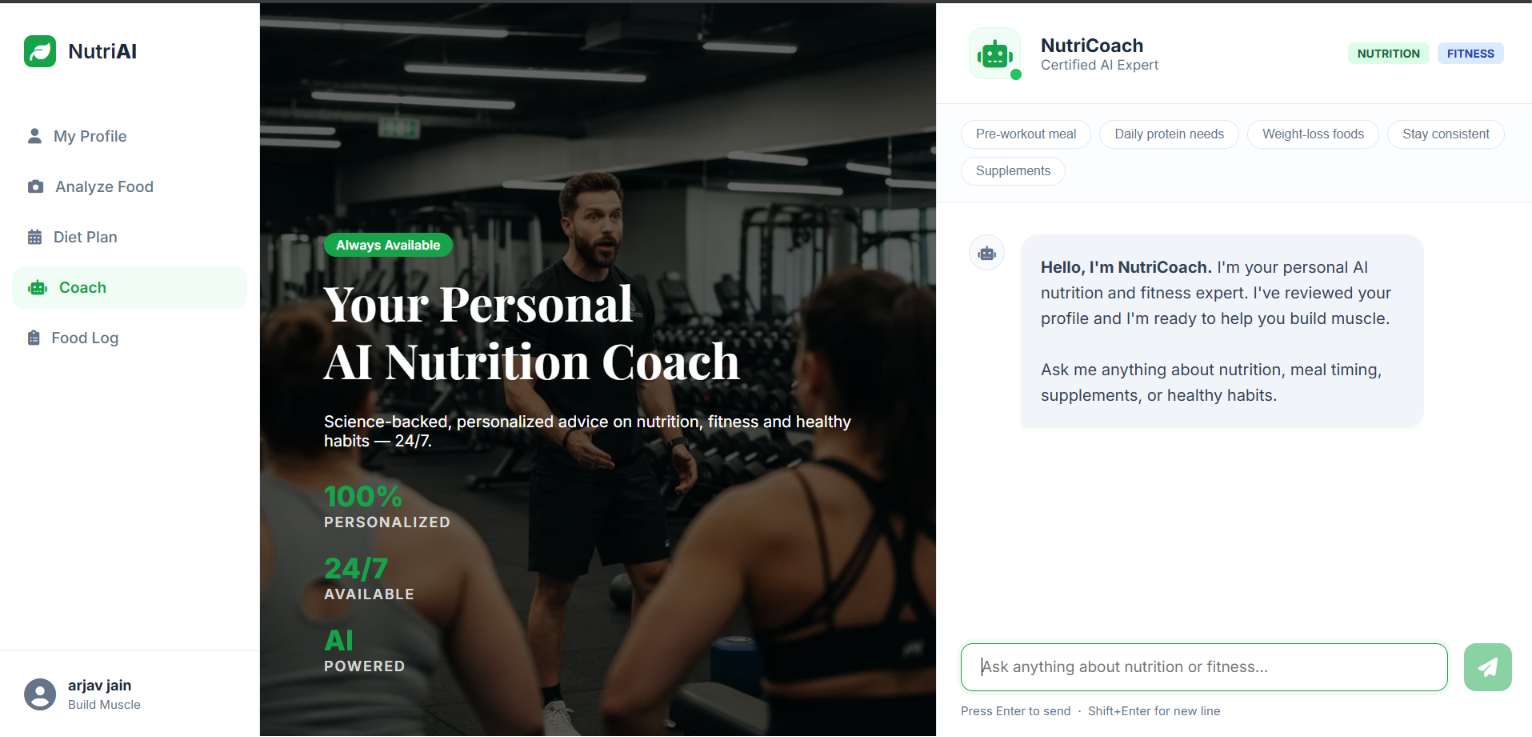
Your Personal AI Nutrition Coach Science-backed, personalized advice on nutrition, fitness and healthy habits — 24/7.
-
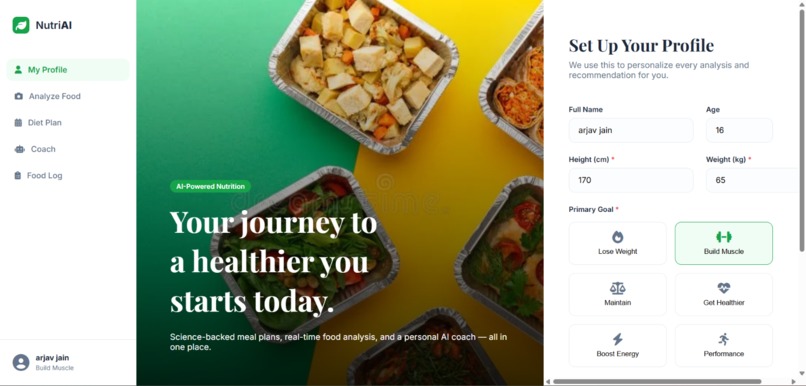
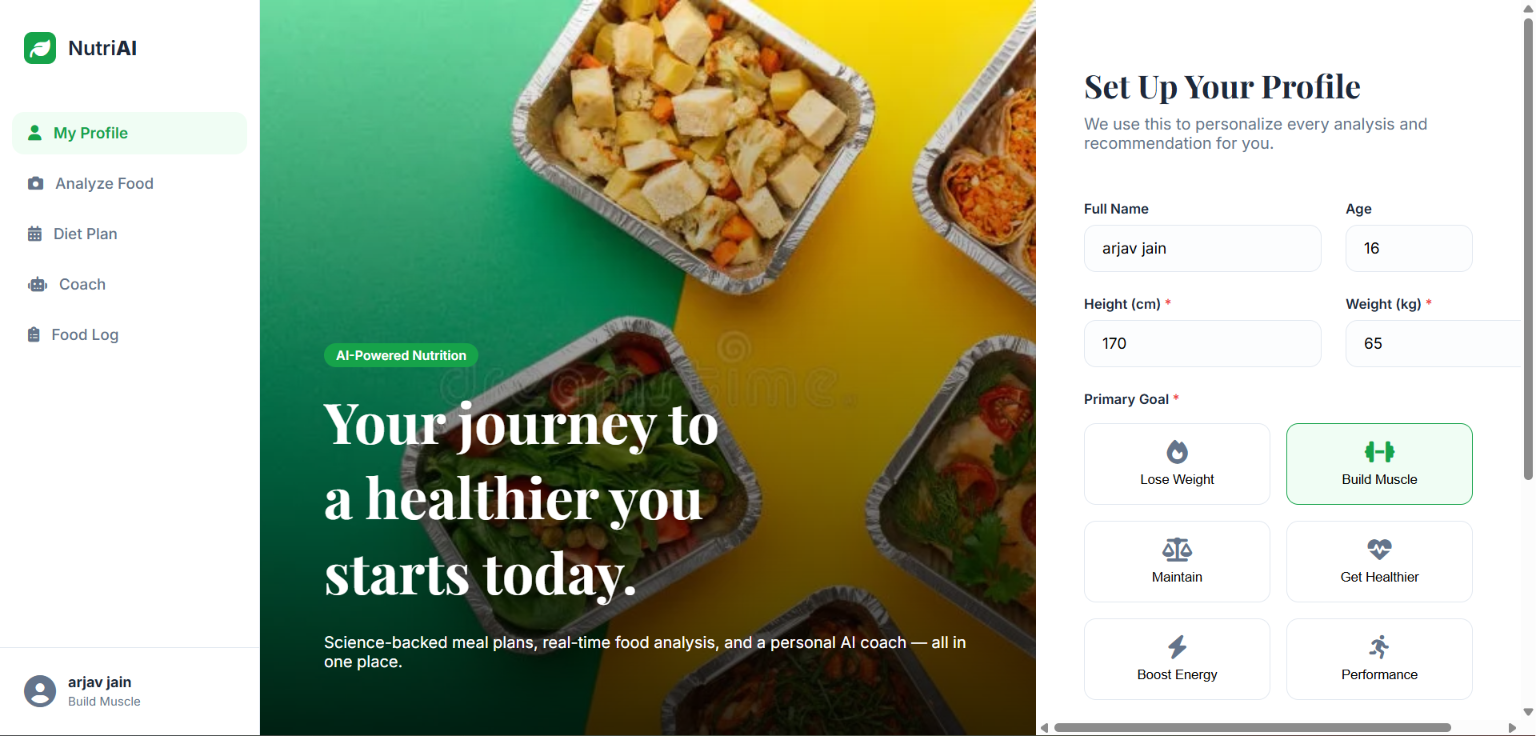
profile page
NutriAI — Precision Nutrition at Scale
Redefining how we see, eat, and live.
NutriAI is an AI-powered nutrition assistant that simplifies food tracking using Multimodal AI. Instead of manually logging meals, users can upload a food image and receive instant nutritional analysis, calorie estimation, and personalized health insights.
Powered by Google Gemini 2.5 Flash, NutriAI acts like a “Nutritionist in Your Pocket” by understanding both the meal and the user behind it.
Features
- AI-powered food recognition from uploaded images
- Real-time calorie and macronutrient estimation
- Personalized recommendations based on fitness goals
- BMI and BMR calculation
- Persistent food logging system
- Modern responsive dashboard UI
- Context-aware nutrition analysis
Tech Stack
Frontend
- HTML5
- CSS3
- Vanilla JavaScript
Backend
- Node.js
- Express.js
- Multer
AI Integration
- Google Gemini 2.5 Flash API
Nutritional Science
Body Mass Index (BMI)
BMI = \frac{weight,(kg)}{height,(m)^2}
Used to estimate body composition and adjust calorie recommendations.
Basal Metabolic Rate (BMR)
BMR = (10 \times weight_{kg}) + (6.25 \times height_{cm}) - (5 \times age) + 5
Calculated using the Mifflin-St Jeor Equation to estimate daily calorie needs.
Project Architecture
AI Layer
Google Gemini handles:
- Food image understanding
- Portion estimation
- Nutritional analysis
- Personalized recommendations
Backend Layer
The Express server:
- Processes image uploads
- Handles API requests
- Manages user data
- Connects frontend with AI services
Frontend Layer
The frontend focuses on:
- Fast interactions
- Responsive layouts
- Smooth animations
- Premium user experience
Challenges Faced
Multimodal Context Synchronization
One major challenge was ensuring the AI understood both:
- the uploaded meal image
- the user's fitness goals
This was solved using a context-aware prompting system.
UI Optimization
Creating a premium UI with smooth animations while maintaining performance required optimization of:
- CSS rendering
- asset loading
- animation performance
State Management
Synchronizing:
- local storage
- food logs
- AI responses
required a custom lightweight state management system.
What I Learned
Through NutriAI, I gained practical experience with:
- Multimodal Large Language Models (MLLMs)
- Google Gemini API integration
- AI-powered product engineering
- Real-time image processing
- Full-stack application development
- Modern UI/UX design principles
.
Built With
- api
- awesome
- css3
- dotenv
- express.js
- font
- github
- html5
- javascript
- localstorage
- marked.js
- multer
- node.js
- render

Log in or sign up for Devpost to join the conversation.