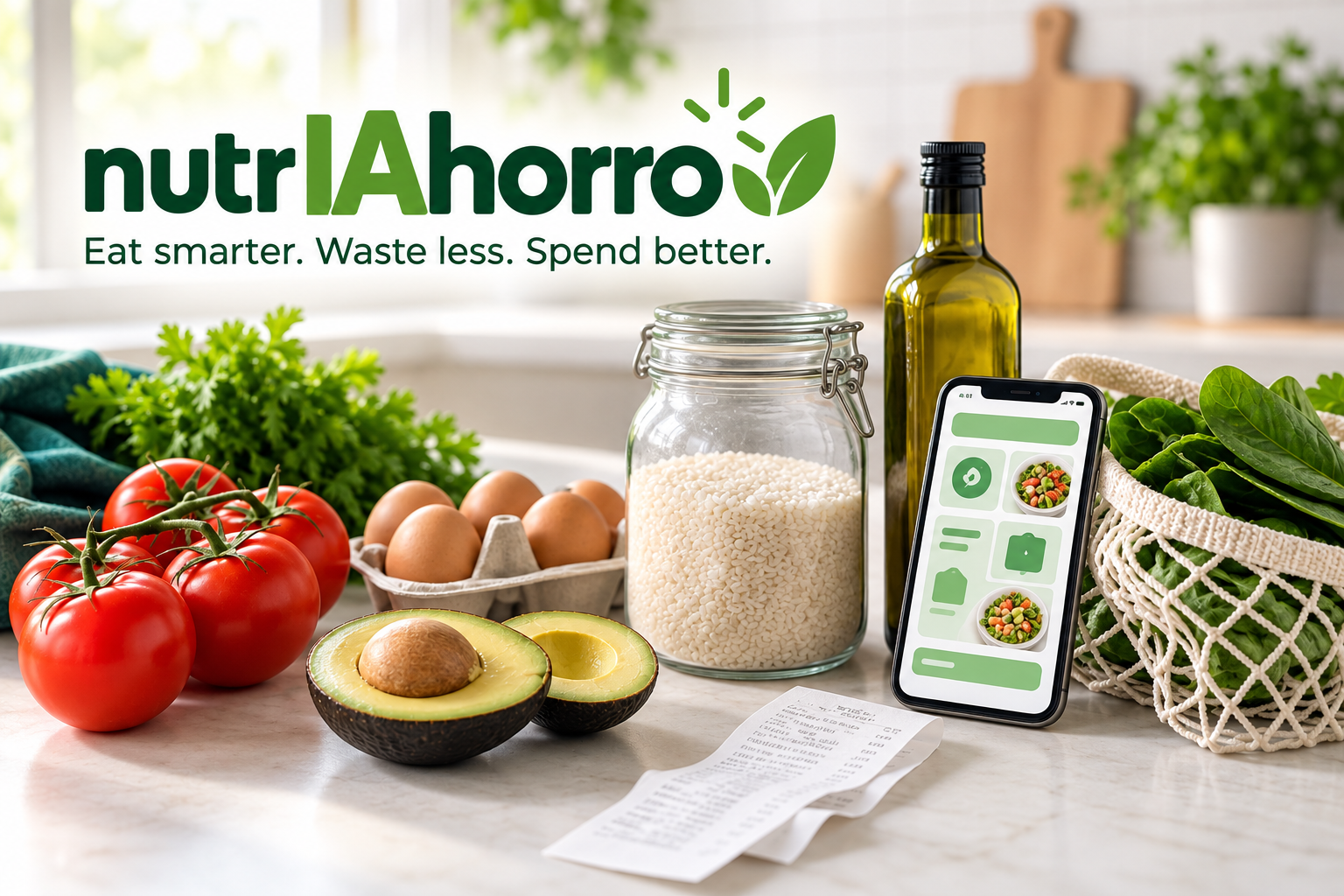
Inspiration
Every day, people lose food, money, and time because pantry tracking, nutrition planning, recipes, and supermarket comparison live in separate places. A promotion can also stop being a good deal when distance and transportation costs are considered.
We wanted to create one everyday agent that understands what a person has at home, what should be consumed first, what fits their goals and schedule, and what the next useful action should be.
What it does
nutrIAhorro turns everyday food decisions into one connected workflow.
A user can upload a grocery receipt or add products manually. Receipt results are reviewed before they change the pantry. The agent stores quantities and purchase dates, detects low stock, and identifies food that should be consumed soon.
The user defines general wellness goals, activity level, exercise, available cooking time, preferences, and transportation method. nutrIAhorro calculates editable calorie and macronutrient references and recommends feasible meals using the ingredients already available.
Every recipe displays calories, protein, carbohydrates, and fat. When the user confirms a cooked meal, the agent records the complete nutritional intake and deducts the exact ingredient quantities from the pantry in the same action.
nutrIAhorro also prepares smart shopping lists and compares nearby supermarkets using product prices, distance, and the estimated cost of walking, cycling, driving, or riding a motorcycle. This means that the lowest shelf price is not automatically treated as the smartest purchase.
Why it is an agent
nutrIAhorro is more than a chatbot. The decision layer is built with Strands Agents SDK.
Based on the person's request, the agent chooses among six focused tools:
- Retrieve the user profile and goals.
- Inspect the current pantry.
- Read daily calorie and macro progress.
- Suggest feasible meals.
- Compare nearby shopping options.
- Register a cooked meal after confirmation.
These tools work with shared structured memory. The agent understands the request, selects the appropriate tools, combines their results, explains its recommendation, asks for confirmation before important changes, and remembers the updated state for the next conversation.
How we built it
The agent was implemented in Python with Strands Agents SDK and FastAPI. Its model layer is provider-configurable and includes an Amazon Bedrock configuration.
The web experience was built with React, TypeScript, vinext, and a Cloudflare-ready architecture for structured memory and receipt files. The public demo includes a clearly identified deterministic continuity mode so judges can experience the complete workflow without private credentials or paid model calls.
The project includes automated tests for agent tools, confirmation requirements, pantry deductions, nutrition updates, and shopping comparisons.
Challenges
The most important challenge was deciding when automation should act and when the person should remain in control.
Receipt extraction requires review before products enter the pantry. Cooking a meal requires confirmation before nutrition and inventory change. The system rejects a meal if there is not enough stock instead of inventing ingredients.
We also separated fictional demonstration prices from live supermarket claims and included transportation costs so shopping recommendations remain realistic.
Accomplishments
- A complete experience instead of a chat-only prototype.
- Persistent pantry memory with separate purchase batches.
- Human-reviewed receipt processing.
- Calories and all three macronutrients for every recipe.
- Atomic meal registration and pantry deduction.
- Expiration and low-stock priorities.
- Shopping comparison based on price, distance, and transportation.
- Six functional Strands agent tools.
- A responsive public experience for desktop and mobile.
- A privacy-conscious design with no credentials or personal information in the repository.
What we learned
An everyday agent becomes valuable when it reduces decisions instead of generating more content. Combining food already owned, nutritional goals, available time, distance, and transportation turns a generic recipe into a practical next action.
What's next
We plan to add consent-based live supermarket catalogs, household profiles, configurable reminders, barcode scanning, and user-controlled data export and deletion.
Responsible use
nutrIAhorro provides general wellness and meal-planning information. It does not diagnose conditions, prescribe medical diets, or replace professional medical or nutritional care.
Supermarket prices and receipt contents shown in the Maldonado prototype are fictional demonstration data. AWS promotional credits and AgentCore are not used or claimed in this submission.## Inspiration
Built With
- agents
- amazon
- cloudflare
- fastapi
- github
- python
- strands
- typescript


Log in or sign up for Devpost to join the conversation.