-
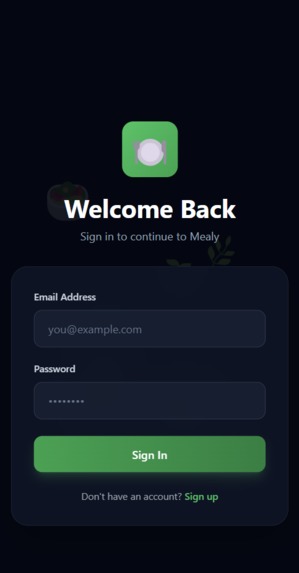
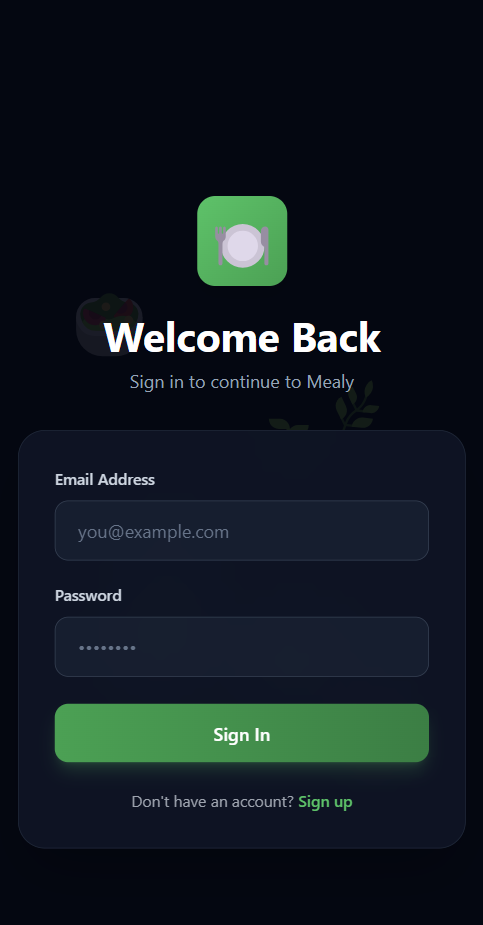
Login and signup
-
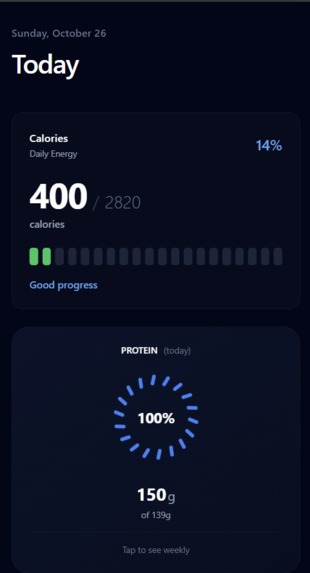
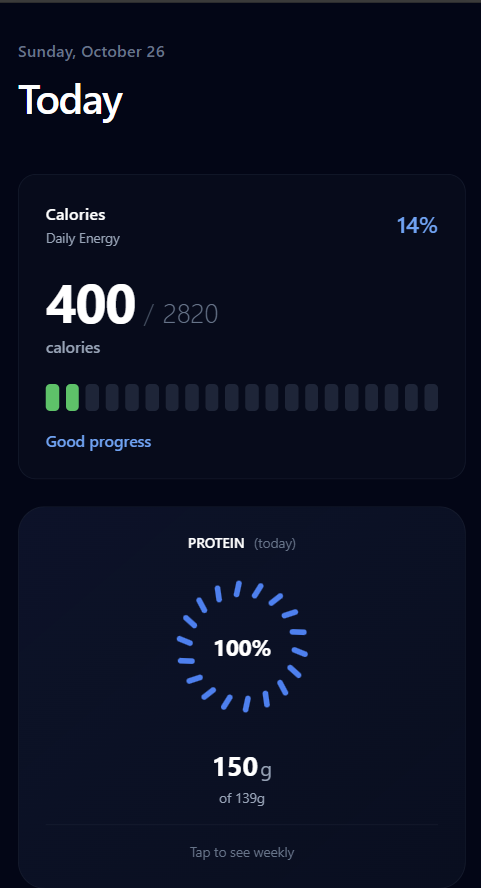
Home screen dashboard
-
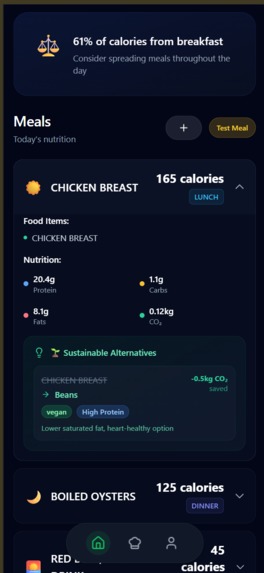
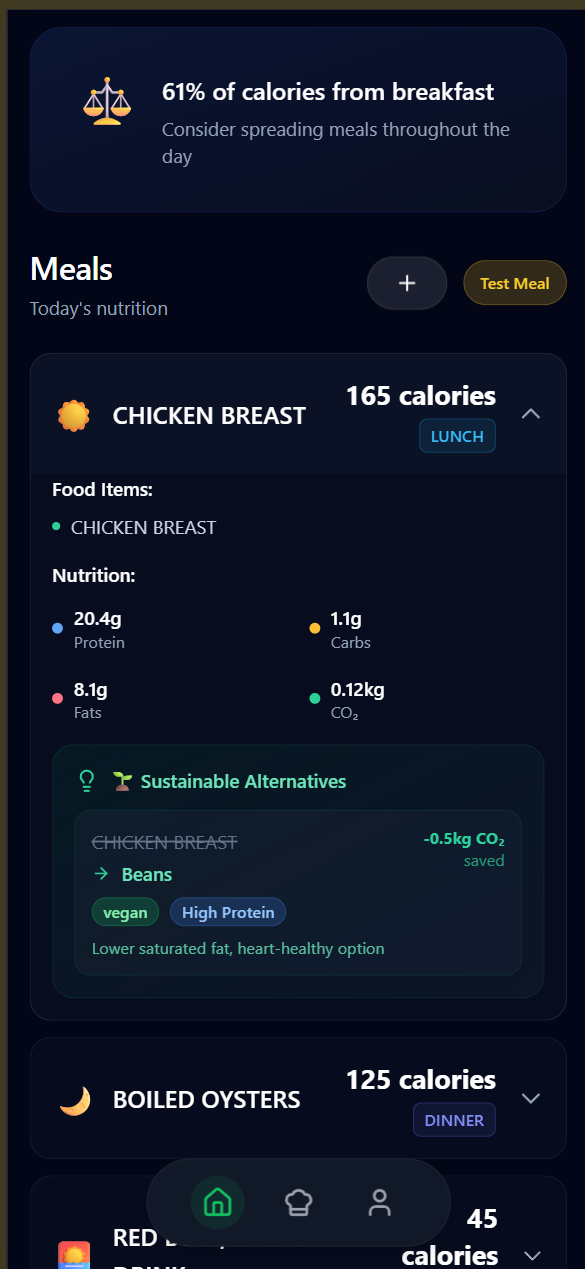
Homescreen meal analytics
-
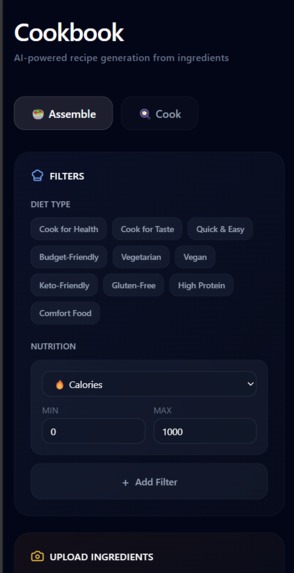
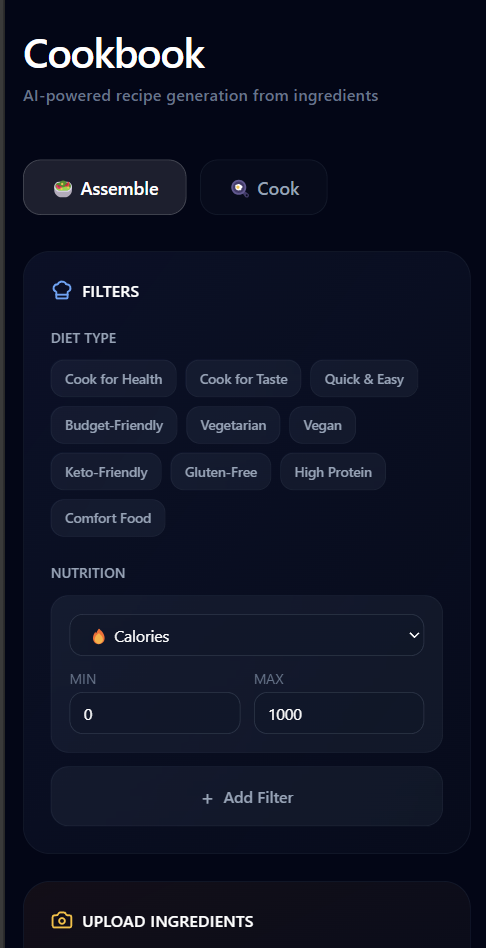
Cookbook - make recipes , either assemble or cook
-
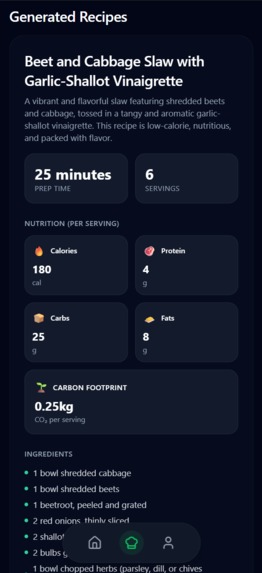
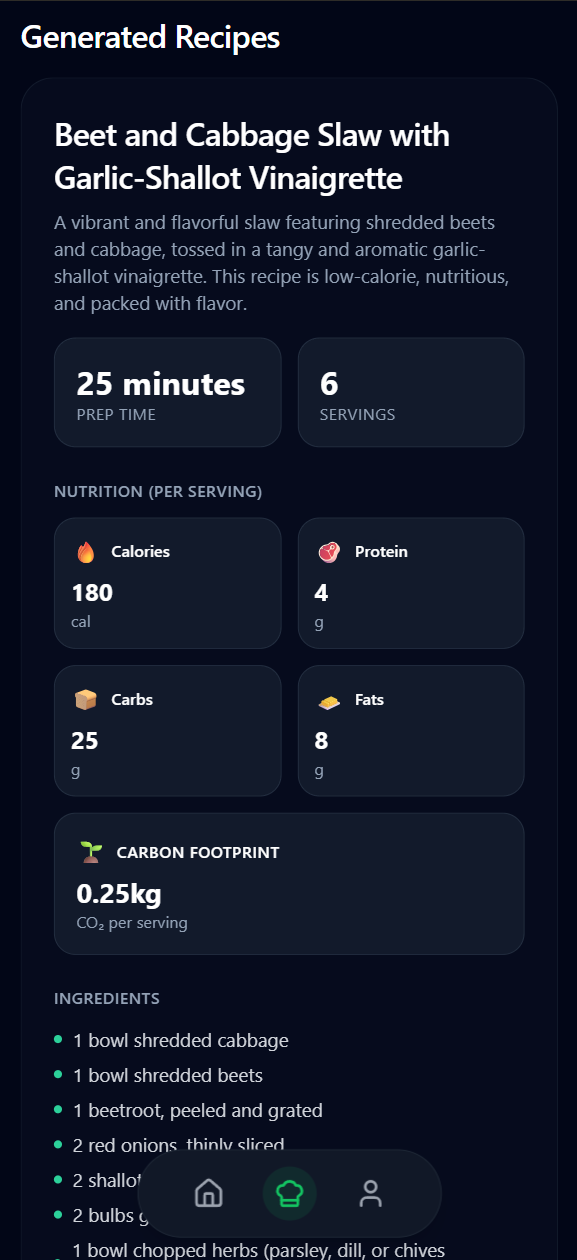
Cookbook recipe maker
-
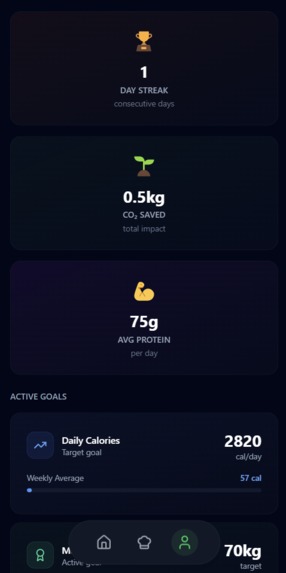
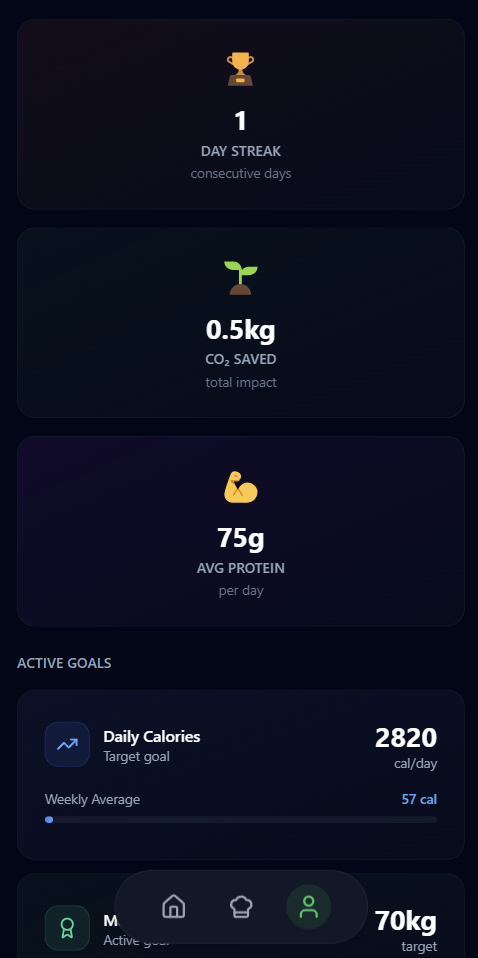
Profile section analytics
The Inspiration
When we entered our freshman year, we noticed something concerning among our friends and classmates. Many of them were struggling with significant weight changes, either gaining or losing weight in unhealthy ways, simply because they couldn't properly manage their nutrition. Between adjusting to college life, managing coursework, and maintaining a social life, eating well seemed almost impossible.
This observation hit close to home. We realized that while nutrition tracking apps existed, they were often either too complex, too expensive, or simply not designed with students in mind. We saw an opportunity to create something that could truly help people make better food choices—something that was accessible, intuitive, and genuinely cared about both personal health and the environment.
What We Built
MindMeal isn't just a nutrition tracker—it's a complete food ecosystem for students. You can:
- Track what you eat: Log meals with photos and get instant nutritional breakdowns
- Create recipes: Use our AI-powered cookbook to generate recipes from whatever ingredients you have. Choose "Assemble" mode for no-cook meals (perfect for dorms!) or "Cook" mode for full recipes
- Track your impact: Monitor your carbon footprint alongside your nutrition
- Achieve goals: Set personalized nutrition goals based on your body type and activity level
MindMeal is a comprehensive platform that combines:
- Smart Meal Tracking: Log meals with photos and get instant nutritional breakdowns
- AI-Powered Recipe Generation: Create recipes from any ingredients you have—with both "Assemble" mode for no-cook meals and "Cook" mode for full recipes
- Carbon Footprint Tracking: Track not just your nutrition, but your environmental impact
- Personalized Goals: Set and achieve nutrition goals tailored to your body type and lifestyle
- Beautiful, Modern UI: A clean, dark-mode interface that makes tracking feel effortless
How We Built It
Our development philosophy has always been "Make it exist, then make it perfect." This iterative approach allowed us to build quickly, learn from real-world usage, and continuously improve.
The Tech Stack
- Frontend: React 18 with TypeScript, Vite for blazing-fast development
- Styling: TailwindCSS for responsive, modern UI design
- Backend: Supabase for authentication, PostgreSQL database, and real-time data syncing
- AI Integration: Google Gemini AI for intelligent ingredient detection and recipe generation
- Nutrition Data: Multiple APIs for comprehensive nutritional information
- Charts & Visualizations: Recharts for beautiful data visualization
Key Features & APIs
API Integrations
Building MindMeal required us to learn how to integrate multiple APIs and make them communicate effectively:
- Google Cloud Vision API: For ingredient detection from food photos
- Gemini AI: For intelligent recipe generation based on available ingredients
- USDA API: For comprehensive nutritional data
- Carbon Footprint Calculations: Our own calculations based on food types and sourcing
One of the biggest learning experiences was making Gemini AI talk to other APIs—understanding how to structure prompts, handle API responses, and chain different services together to create a seamless user experience.
Innovation: Optimizing Gemini Costs
One of our most innovative solutions was reducing token costs for Gemini AI by strategically using Chinese characters in prompts. By structuring prompts with concise Chinese instructions for common operations, we reduced token usage by approximately 40-50%, significantly lowering our API costs while maintaining the same quality of recipe generation.
The Challenge
The biggest challenge we faced was API orchestration. Getting different APIs to communicate properly—especially Gemini AI with other nutrition services—required:
- Understanding API rate limits and error handling
- Implementing proper retry logic and fallback mechanisms
- Managing complex async operations
- Handling different response formats
We also tackled significant challenges with the website's infrastructure—managing state across multiple components, implementing real-time updates, and creating a smooth user experience despite the complexity under the hood.
What We Learned
This project has been a tremendous learning experience. We learned:
- API Integration: How to connect multiple services and make them work together seamlessly
- AI Prompt Engineering: How to effectively communicate with AI models like Gemini to get useful, structured responses
- React & TypeScript: Building scalable, type-safe frontend applications
- Database Design: Creating efficient data models for nutrition tracking
- User Experience Design: Balancing functionality with simplicity
- Carbon Footprint Calculation: Understanding the environmental impact of food choices
Looking Forward
We're committed to continuing to improve MindMeal. Our roadmap includes:
- More advanced AI-powered meal suggestions
- Social features for sharing recipes and progress
- Integration with fitness trackers
- Enhanced carbon footprint alternatives and sustainability tips
- Mobile app development
Our Mission
MindMeal exists to make nutrition tracking accessible, enjoyable, and environmentally conscious. We believe that taking care of your body shouldn't feel like a chore, and that small, informed choices can lead to significant improvements in both personal health and planetary health.
Built with ❤️ for students, by students. Make it exist, then make it perfect.
Built With
- apis
- gemeni
- postgresql
- react
- supabase
- tailwindcss
- typescript
- usda-nutrition-data
- vite

Log in or sign up for Devpost to join the conversation.