-
-

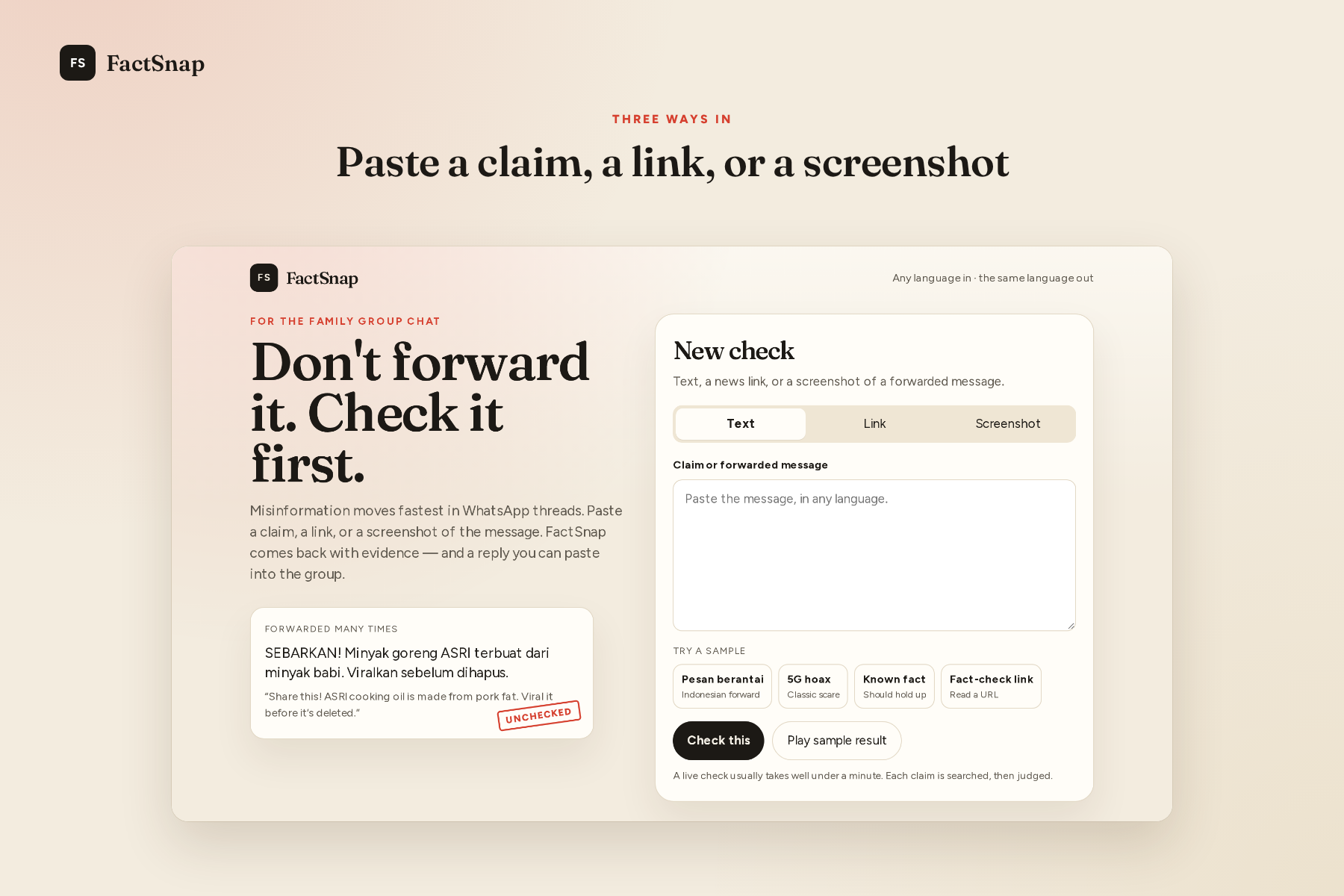
- FactSnap: check before you forward. Paste a claim, link, or screenshot and get an evidence-backed fact-check in seconds.
-
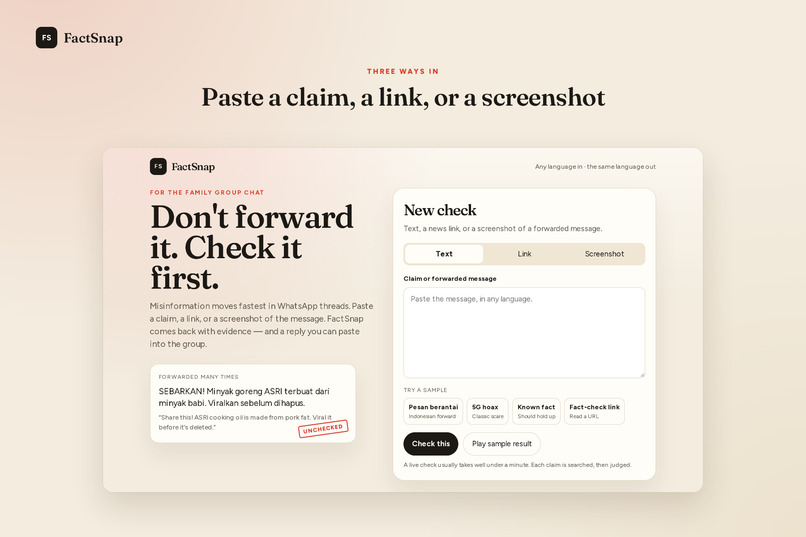
- Three ways in: paste a claim, a news link, or a screenshot of a forwarded message, in any language.
-
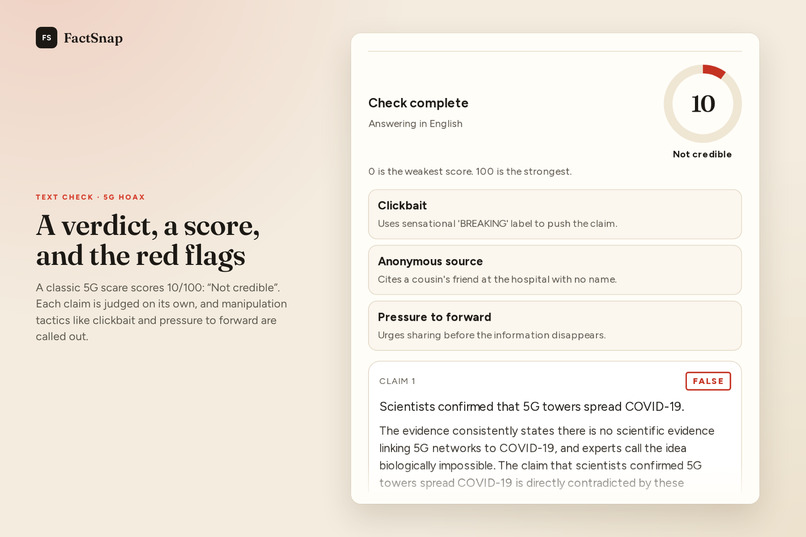
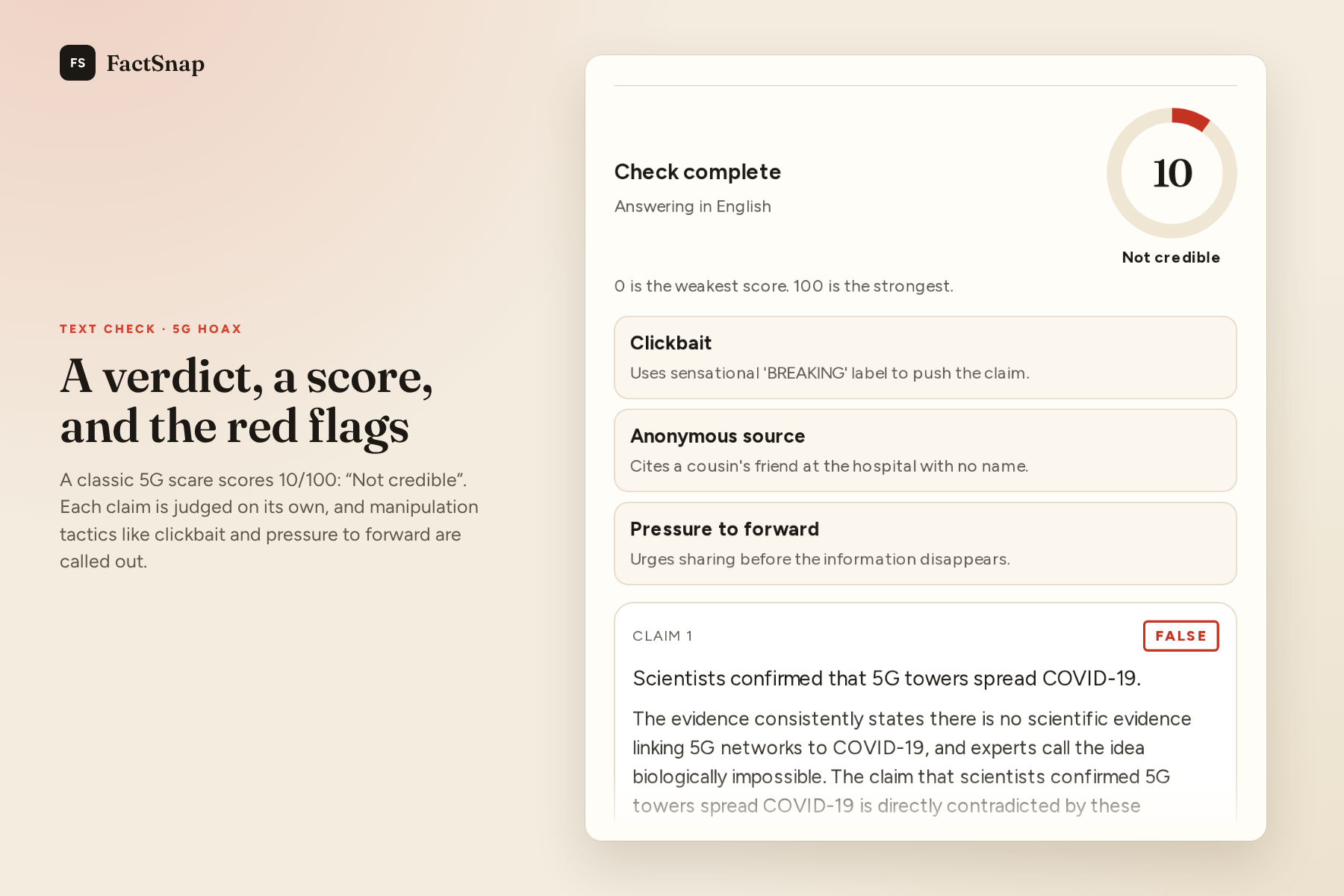
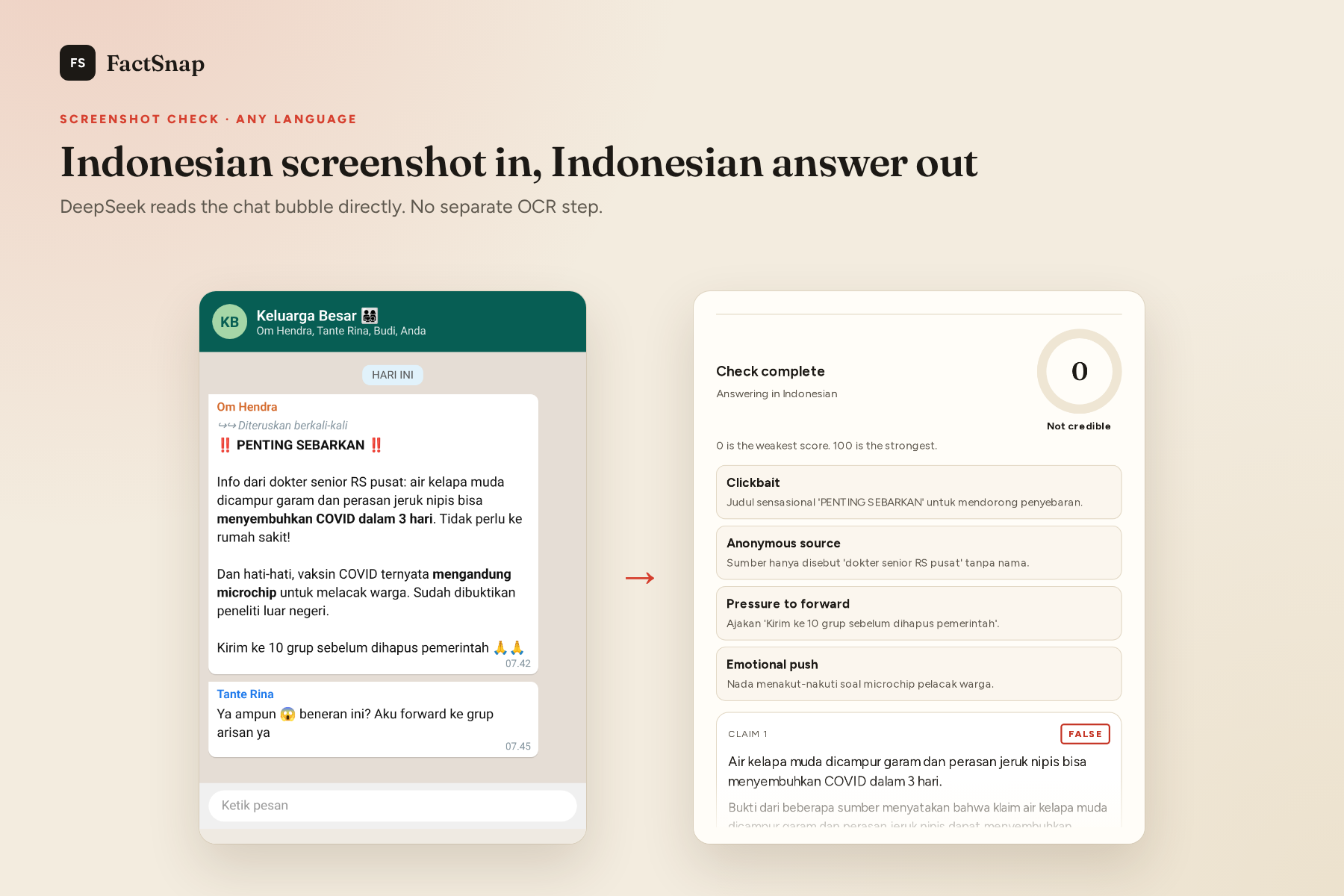
Each claim gets its own verdict, and red flags like clickbait and pressure to forward are called out.
-
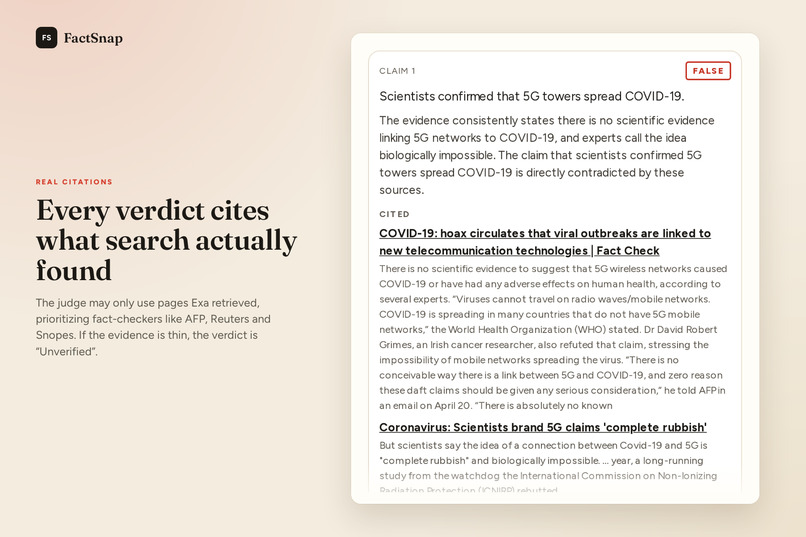
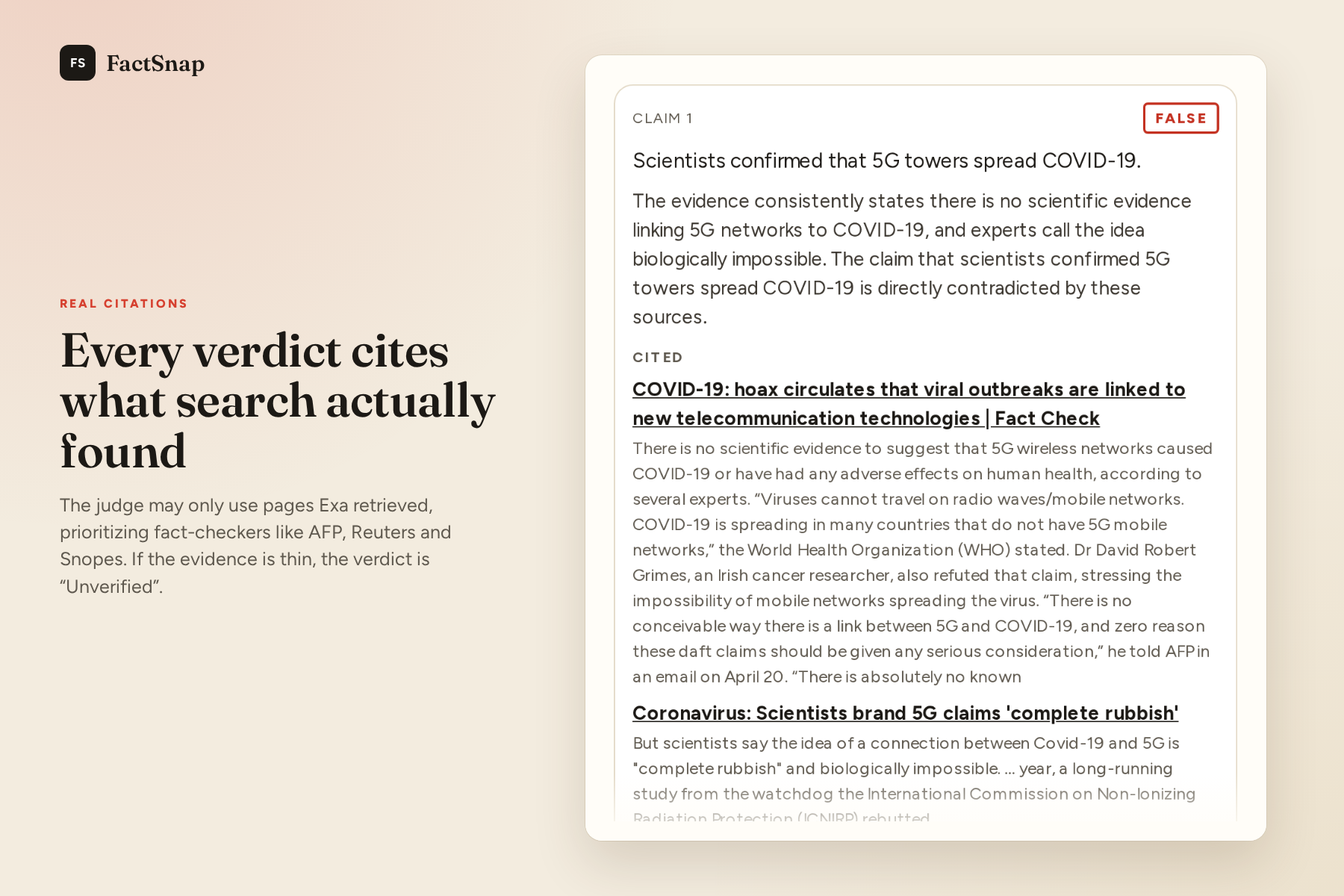
- Every verdict cites what search actually found, like AFP's fact check on the 5G claim.
-
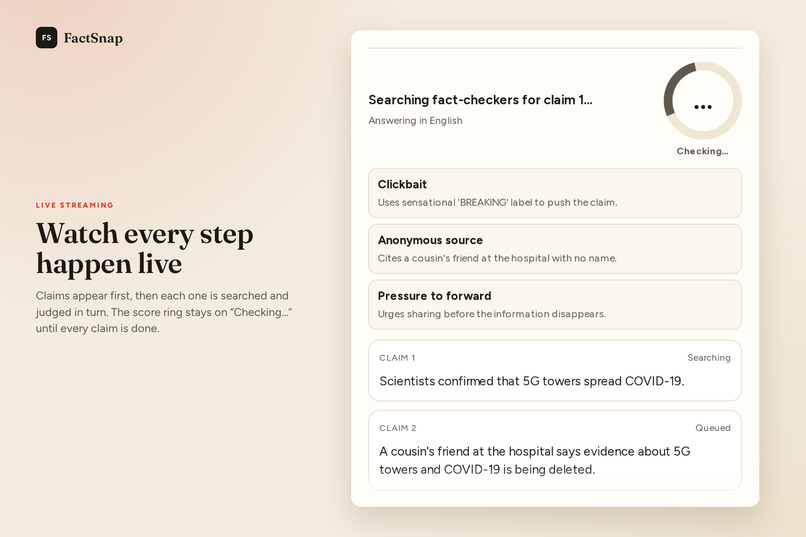
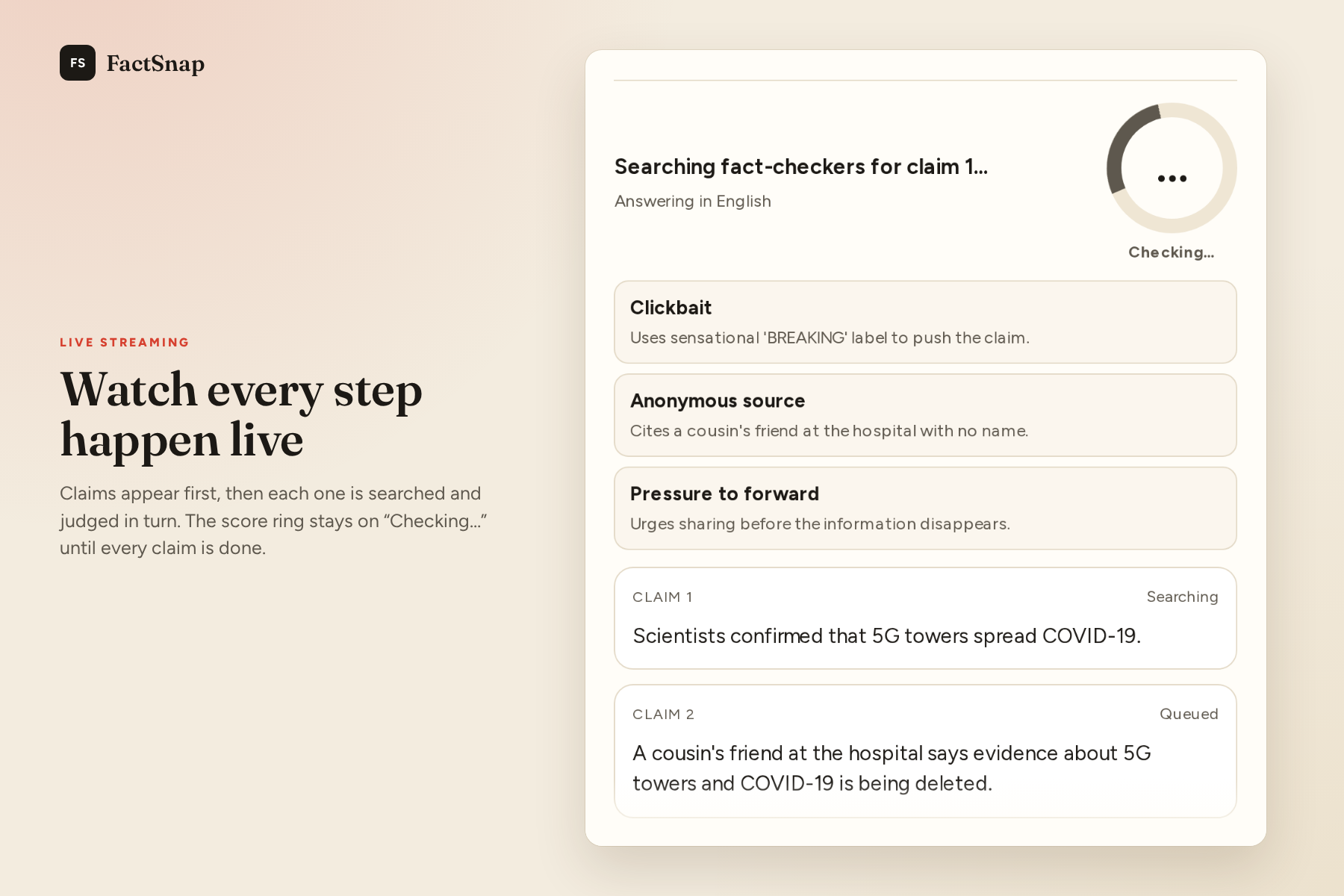
- Results stream in live: claims appear first, then each one is searched and judged, while the score ring shows "Checking…"
-
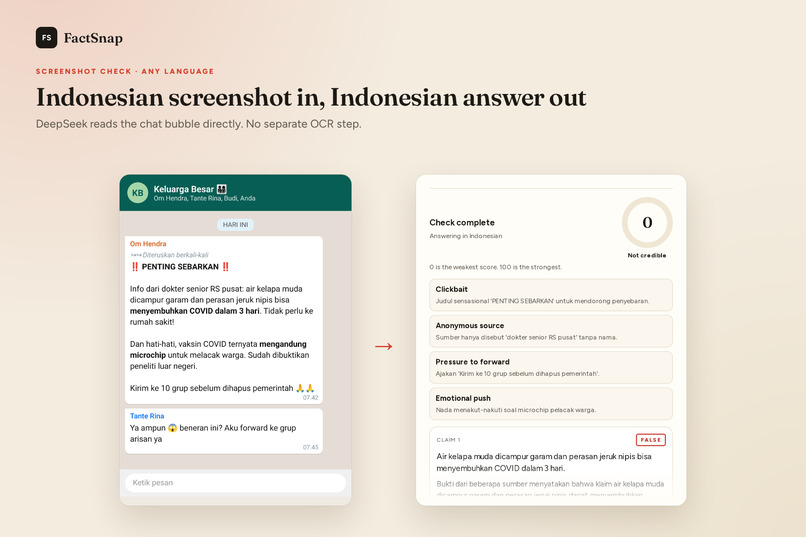
- Indonesian WhatsApp screenshot in, Indonesian answer out: DeepSeek reads the chat image directly, with no separate OCR step.
-
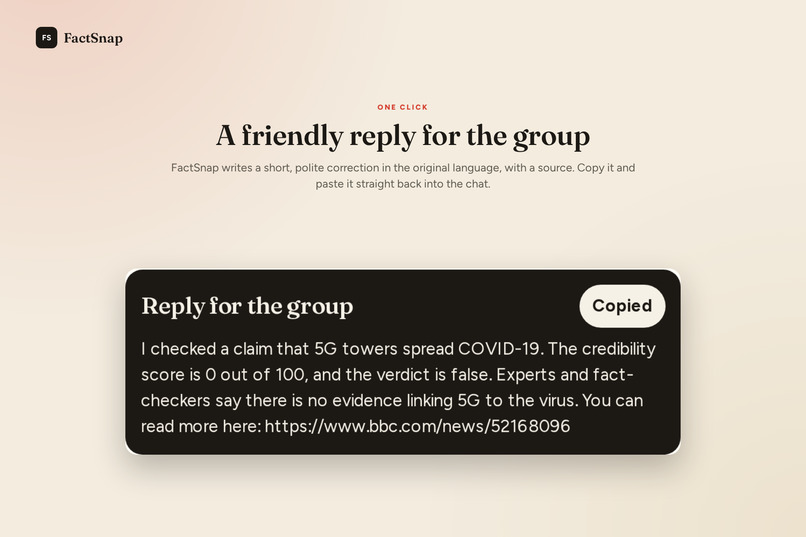
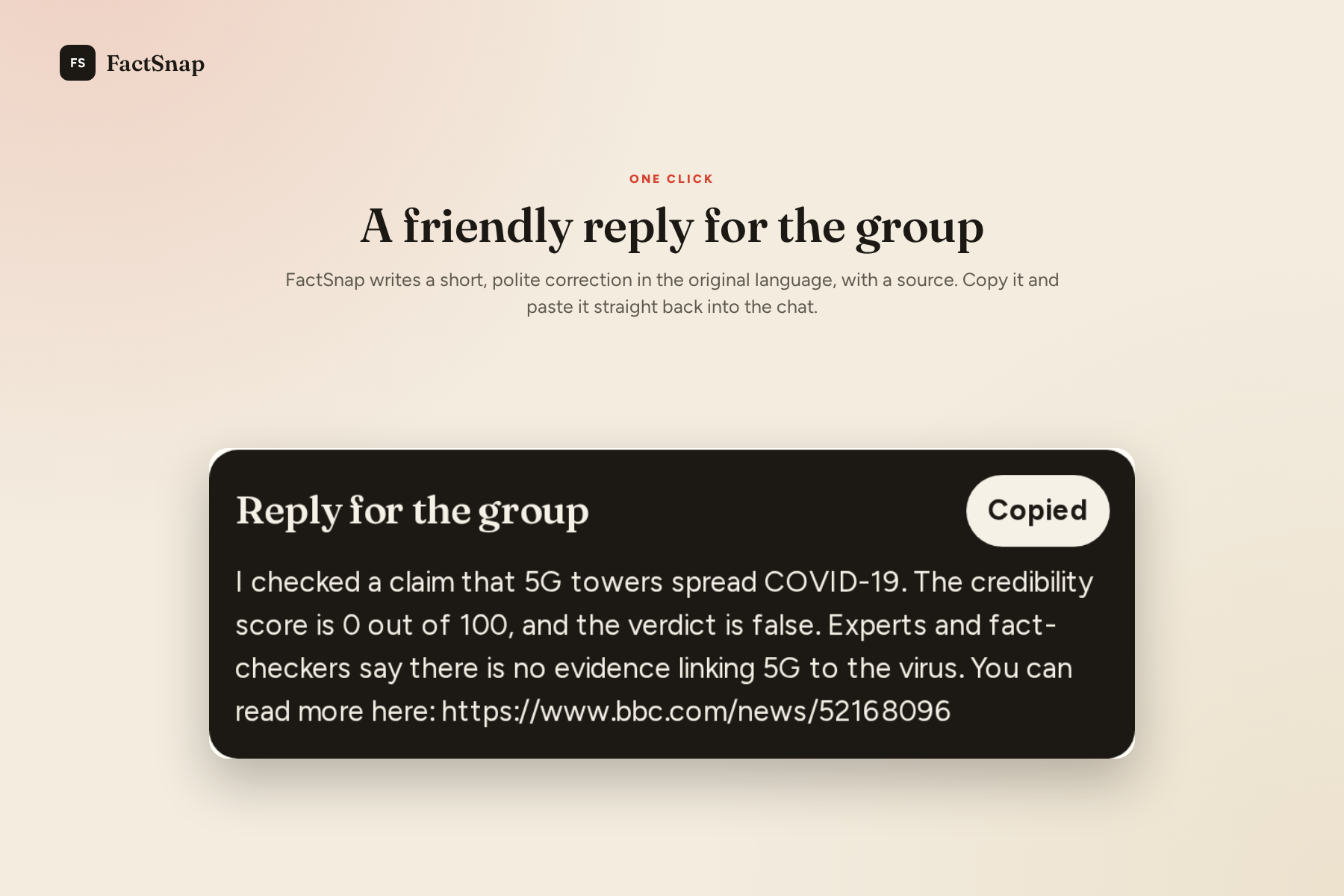
- One click copies a short, polite correction with a source, ready to paste back into the family group.
-
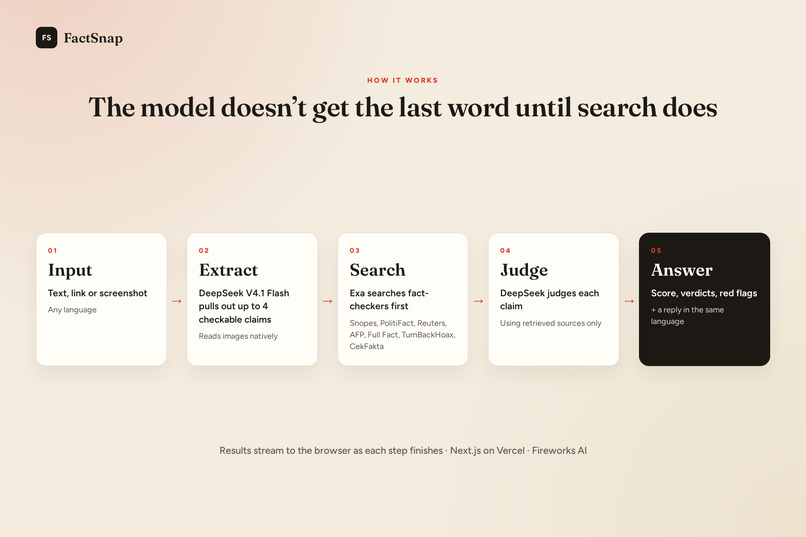
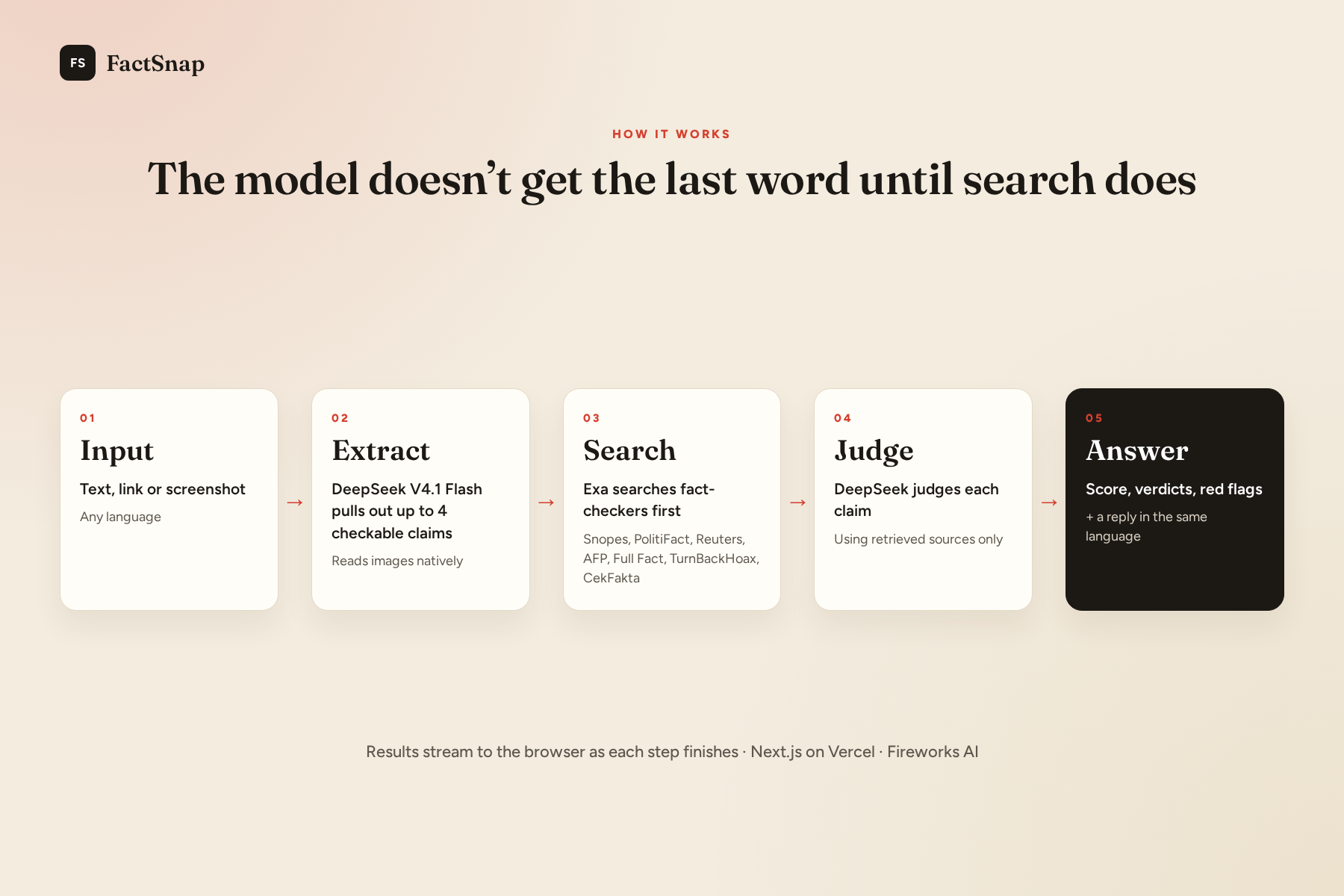
DeepSeek V4.1 Flash pulls out the claims, Exa searches fact-checkers first, and DeepSeek judges each claim using only the retrieved sources.
Inspiration
Misinformation spreads fastest in private group chats. Well-meaning relatives forward "urgent" health tips, microchip-vaccine claims, and fake news screenshots because they want to protect the people they love. Checking each message takes time and skill, and it's even harder when the hoax isn't in English. We wanted to make fact-checking as easy as forwarding.
What it does
FactSnap checks a pasted message, a news link, or a screenshot in seconds. It breaks the content into specific claims, finds evidence from trusted fact-checkers, and gives each claim a verdict (True, False, Misleading, or Unverified) with real citations. It also flags manipulation tactics like clickbait and pressure to forward, and shows an overall credibility score only after every claim has been judged. Then it writes a short, polite reply in the same language as the original message, ready to paste back into the group. Any language in, the same language out.
How we built it
FactSnap is a Next.js 15 app on Vercel. DeepSeek V4.1 Flash, served on Fireworks AI, reads text and images natively, so no separate OCR step is needed. It extracts the claims, and Exa searches the web for each one, prioritizing outlets like Reuters, AFP, Snopes and local fact-checkers. A separate judging step evaluates each claim using only the sources Exa actually retrieved, which keeps verdicts grounded and stops the model from inventing citations. Every step streams to the UI live as NDJSON, so users can see how the conclusion was reached.
Challenges we ran into
- Keeping verdicts grounded: the judge only sees retrieved sources and must say "Unverified" when the evidence is missing.
- Multilingual hoaxes: detecting the input language and making sure the search, the verdicts and the reply all stay in that language.
- Streaming UX: partial results looked like final verdicts at first, so we added a neutral "Checking…" state until every claim is judged.
- Staying fast and free on serverless limits.
Accomplishments that we're proud of
- A full check runs in about 5–15 seconds, with sources a user can click and verify.
- It works on screenshots in languages like Indonesian, which is how hoaxes actually spread.
- The copy-paste reply turns a fact-check into something people will actually send.
What we learned
Grounding matters more than model size. Restricting the judge to retrieved evidence made the results far more trustworthy. We also learned that the hardest part of fighting misinformation is the social side, so the friendly reply matters as much as the verdict.
What's next for FactSnap
- A WhatsApp and Telegram bot, so people can forward a message and get a check back
- A browser extension
- Caching checks for viral hoaxes we've already seen
- Support for audio and video forwards
Built With
- deepseek
- next.js
