-
-
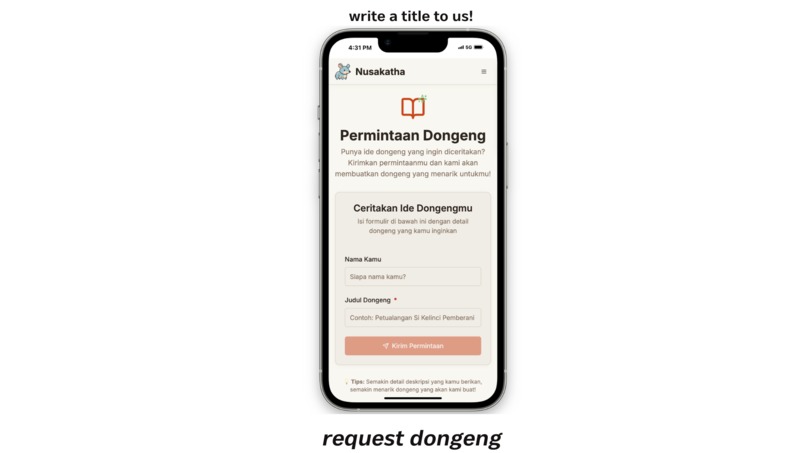
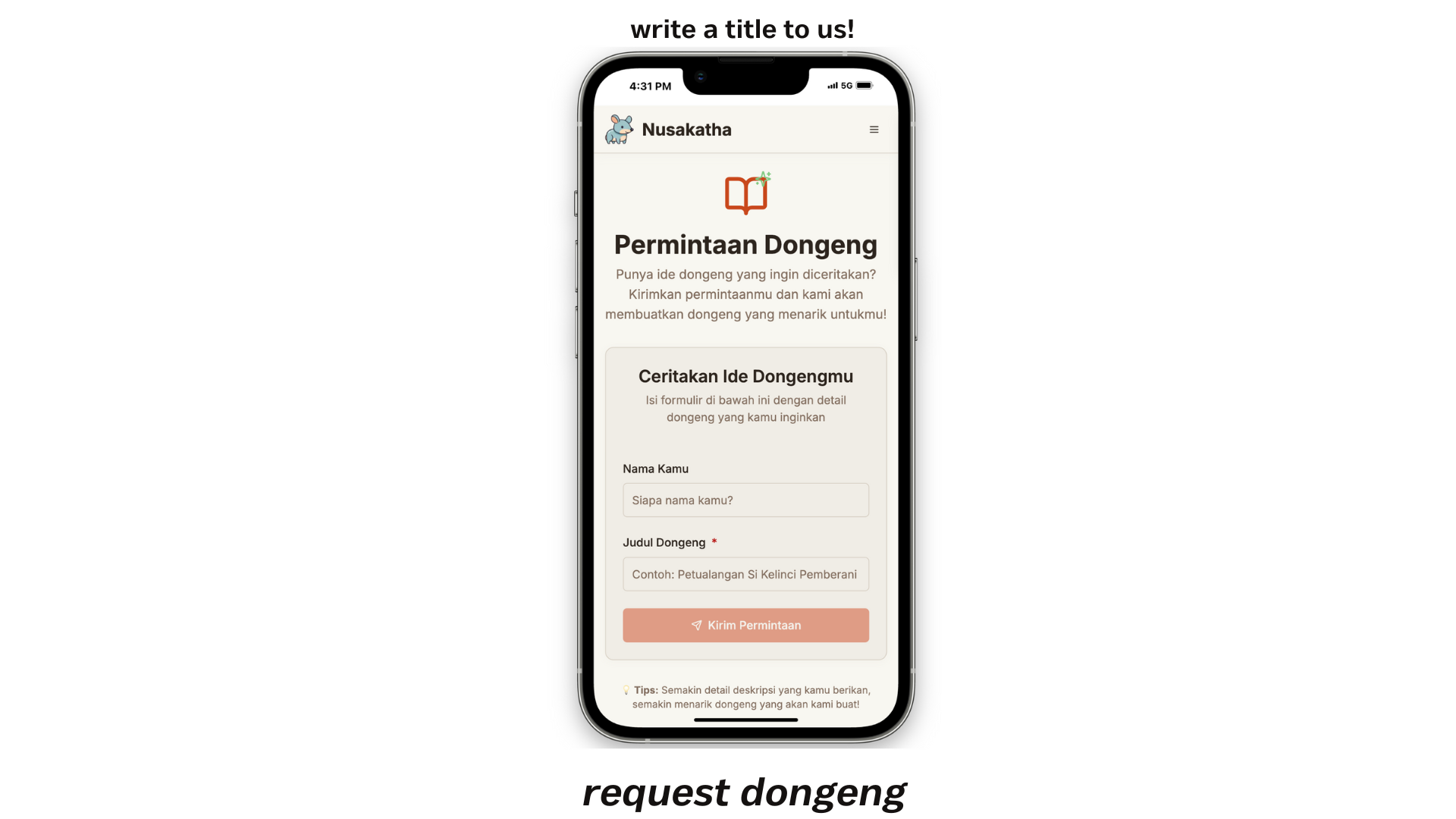
Request Dongeng Page
-
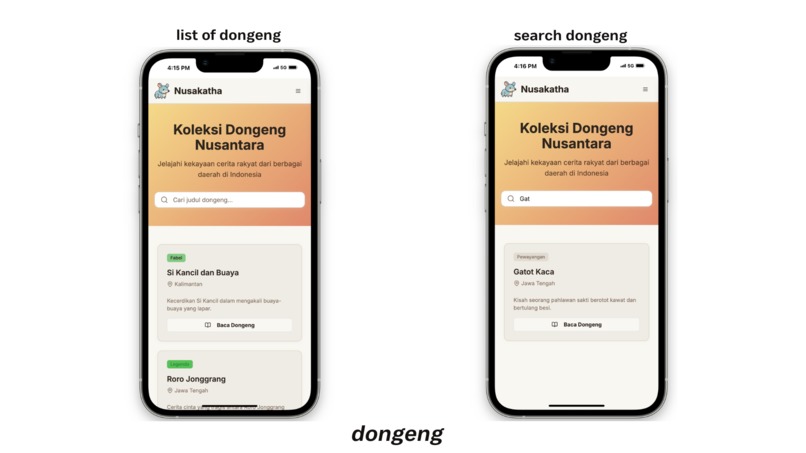
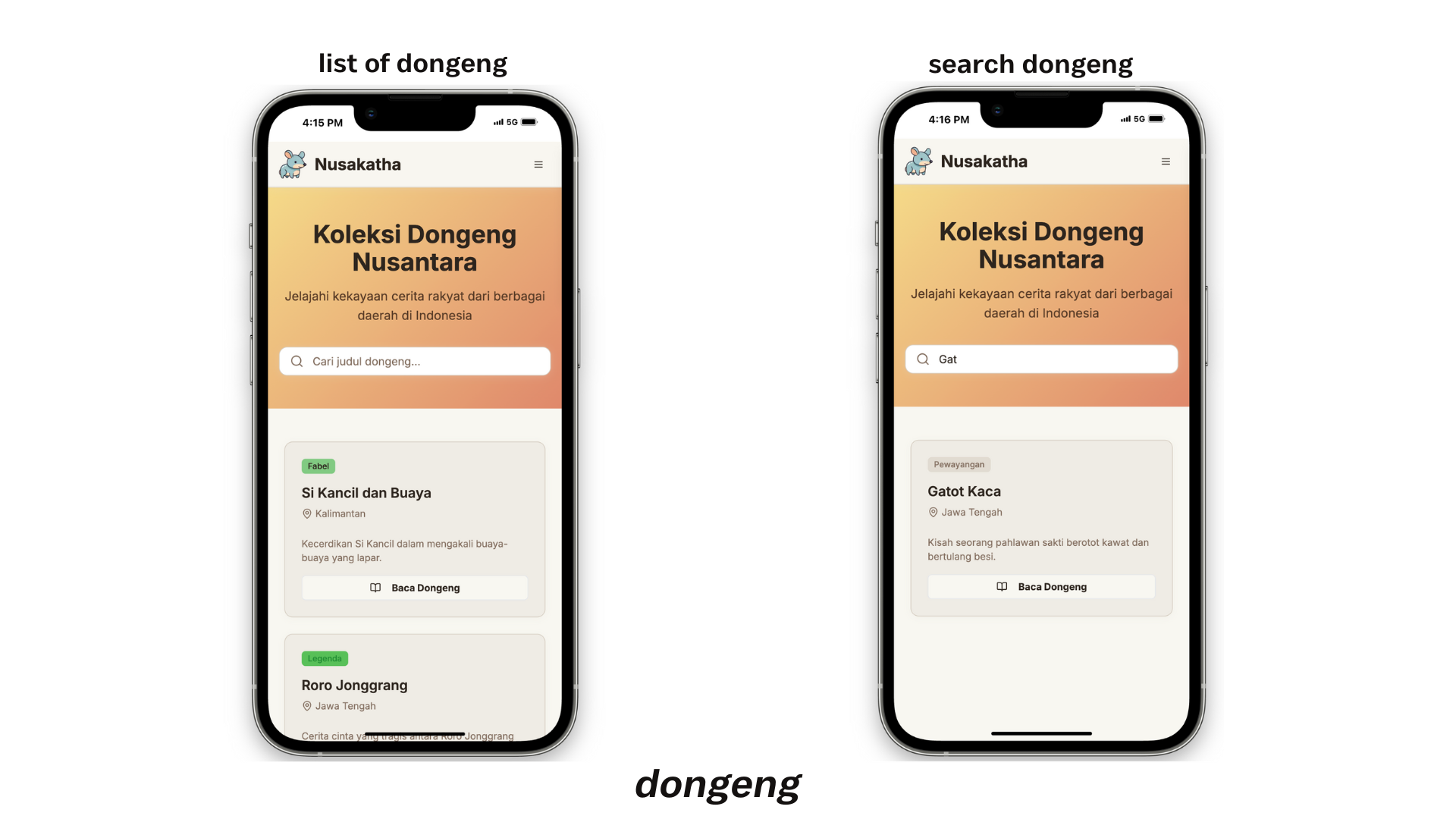
Dongeng Page
-
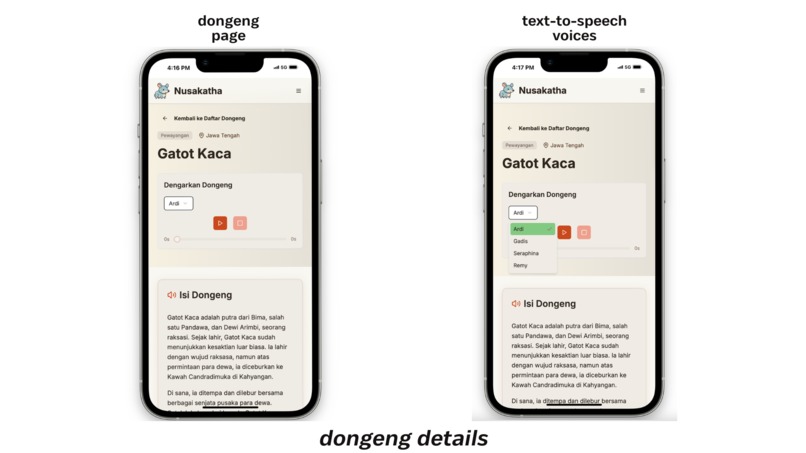
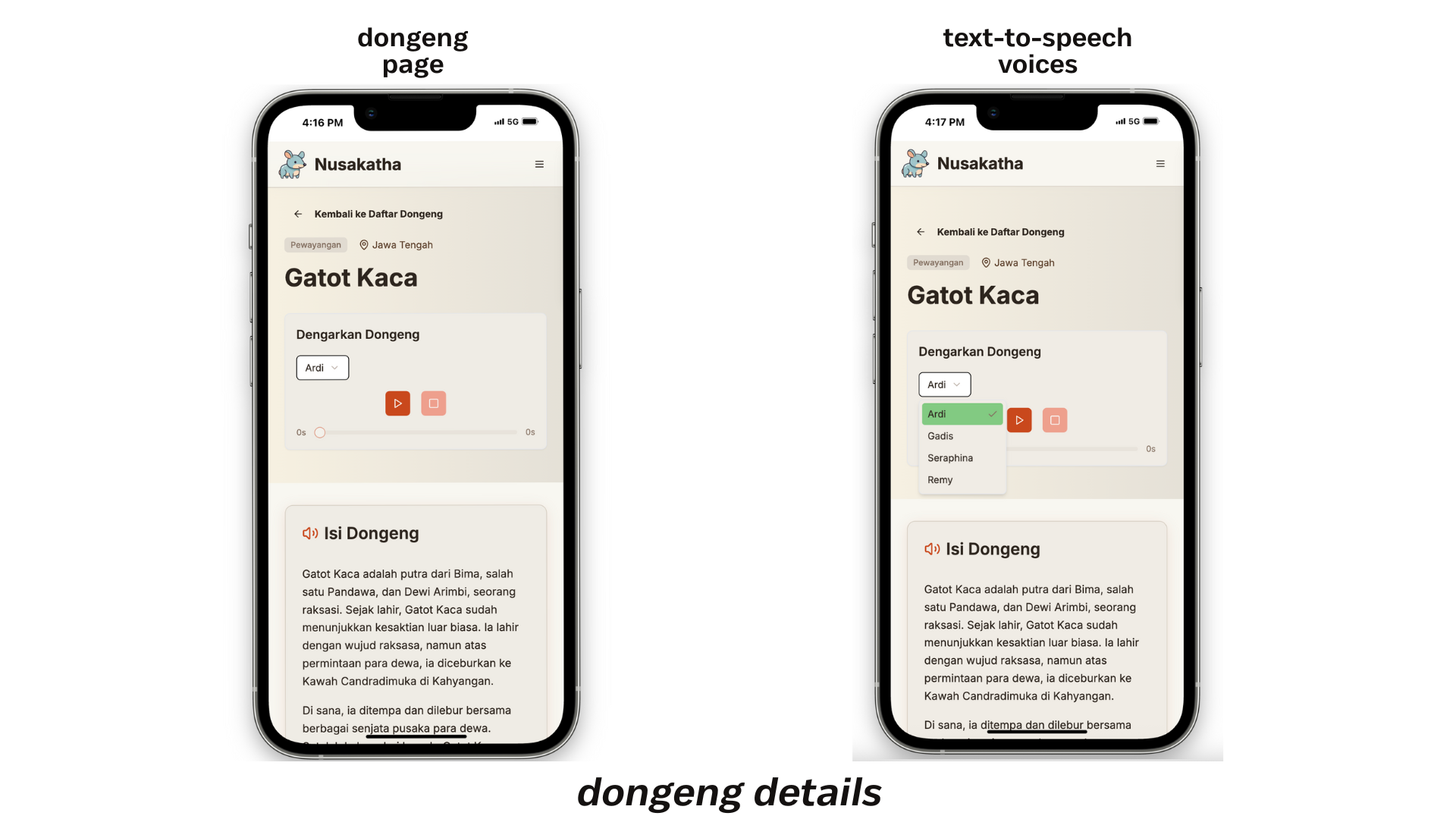
Dongeng Details Page
-
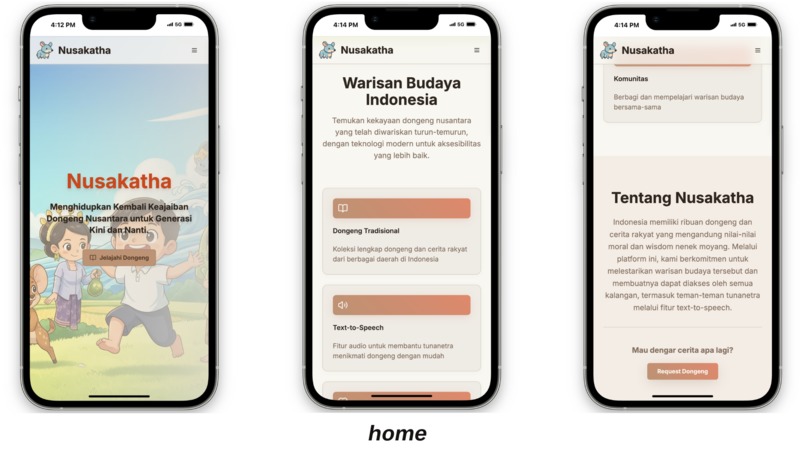
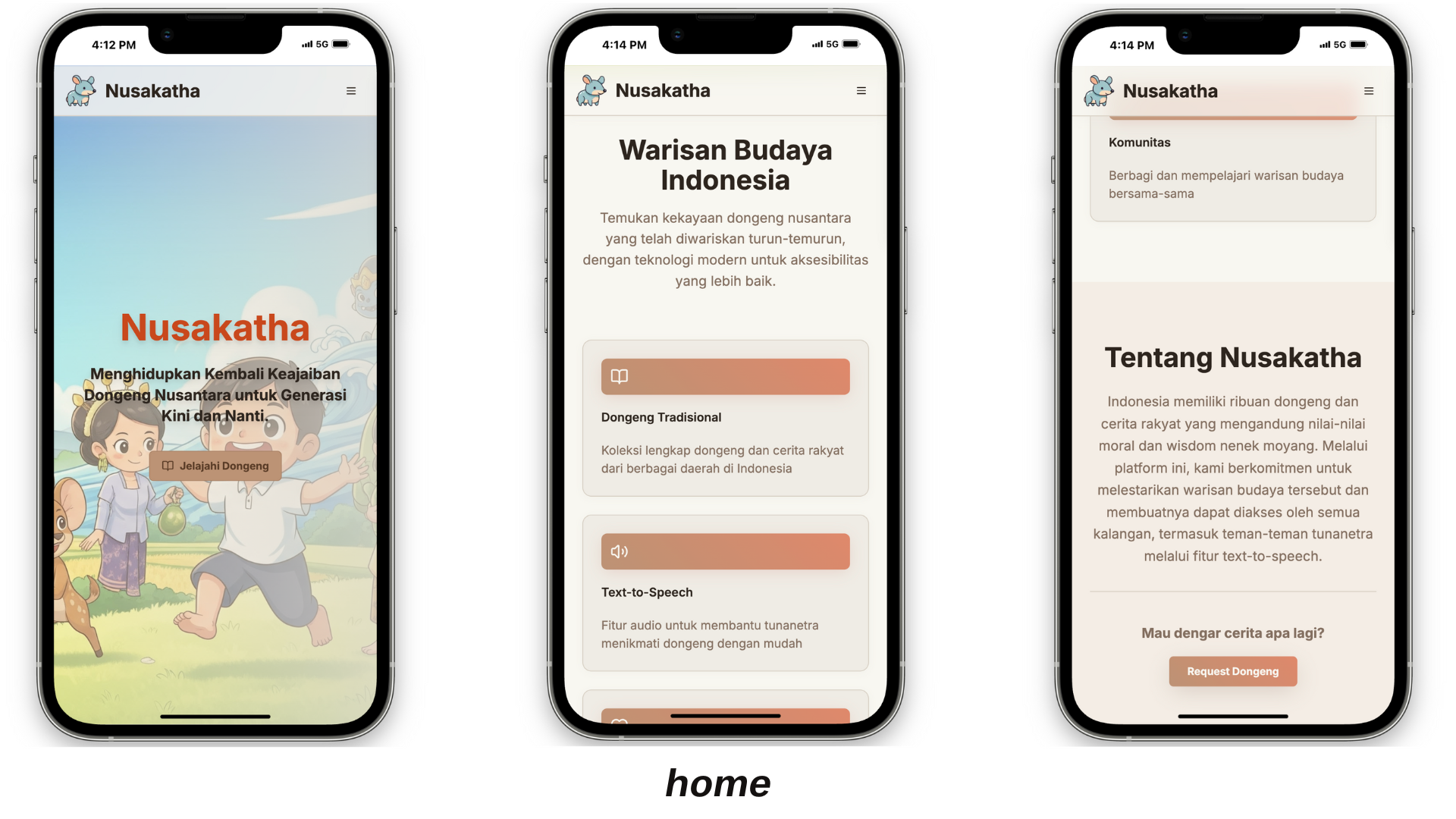
Home Page
Inspiration
Indonesia is a country rich not only in natural resources, but also in cultural heritage. However, as time goes by, these cultural treasures, especially traditional folktales are slowly fading. With each passing generation, the risk of these stories being forgotten grows, leaving behind a gap in the nation's collective identity. We were inspired by the idea of preserving Indonesia’s cultural heritage while also making it accessible to everyone, including the visually impaired, through the power of technology and storytelling.
UNESCO once noted that less than 1 in 10,000 Indonesians has a strong interest in reading, a shocking statistic that illustrates the lack of a strong reading habit nationwide. In the 2022 PISA assessment, Indonesia ranked 74th out of 78 countries in reading literacy, with over 60% of students scoring at only the basic level, struggling to make sense of written information (OECD PISA 2022).
That’s why we created Nusakatha: to revive Indonesian folktales through immersive text-to-speech storytelling, making cultural literacy inclusive, engaging, and accessible, especially for those who struggle with reading or are visually impaired.
What it does
Nusakatha is a web platform that introduces Indonesian folktales, cultural history, and traditions through curated written content combined with Text-to-Speech (TTS) technology.
Key features include:
- A growing library of Indonesian folktales from various regions.
- Text-to-speech audio playback, with options to choose different voices and tones.
- Aimed at being inclusive for the blind and visually impaired, while also engaging for children and audio learners.
How we built it
Frontend: Next.js + TailwindCSS + ShadCN Backend: Flask, Firebase, Azure Text-to-Speech Service
We started by building the frontend using Next.js, styled with TailwindCSS and enhanced with ShadCN components for a faster development and better UI/UX experience. Next, we set up our database to store the collection of dongeng (fairy tales) and user requests.
For the backend, we developed a Flask REST API to convert selected dongeng into audio using the Azure Text-to-Speech service. The generated audio is then temporarily cached on the frontend to improve loading speed and give users better playback control.
Challenges we ran into
- Spending too much time brainstorming and narrowing down our idea
- Transitioning our codebase from React + Vite to Next.js, which took extra effort
- Frequent Git conflicts that slowed down our workflow
- Spent hours figuring out how to properly control audio playback on the frontend
Accomplishments that we're proud of
- We are able to build a functional MVP that is not only educational, but also inclusive and culturally rich in less than 24 hours with full TTS integration
What we learned
- Setting up and configuring various Azure resources
- Integrating a Flask backend with a Next.js frontend
- Techniques for resolving Git conflicts during collaboration
What's next for Nusakatha
- Adding a voice cloning service to make the dongeng experience more personalized and engaging
- Creating custom dongeng text tailored for different age groups of children

Log in or sign up for Devpost to join the conversation.