Inspiration
Choosing accommodation at NUS is one of the first major decisions students make, yet it is often the most confusing. With numerous halls, residential colleges, and houses—each differing in cost, culture, facilities, and academic commitments—students are left to navigate scattered information across PDFs, websites, and spreadsheets.
As students ourselves, we saw peers struggling to balance practical constraints like budget and faculty proximity with intangible factors such as “vibes” and lifestyle fit. This inspired us to build NUSAccoMatch—a platform that transforms overwhelming information into clear, personalized recommendations, helping students find not just a place to stay, but a community they belong to.
What it does
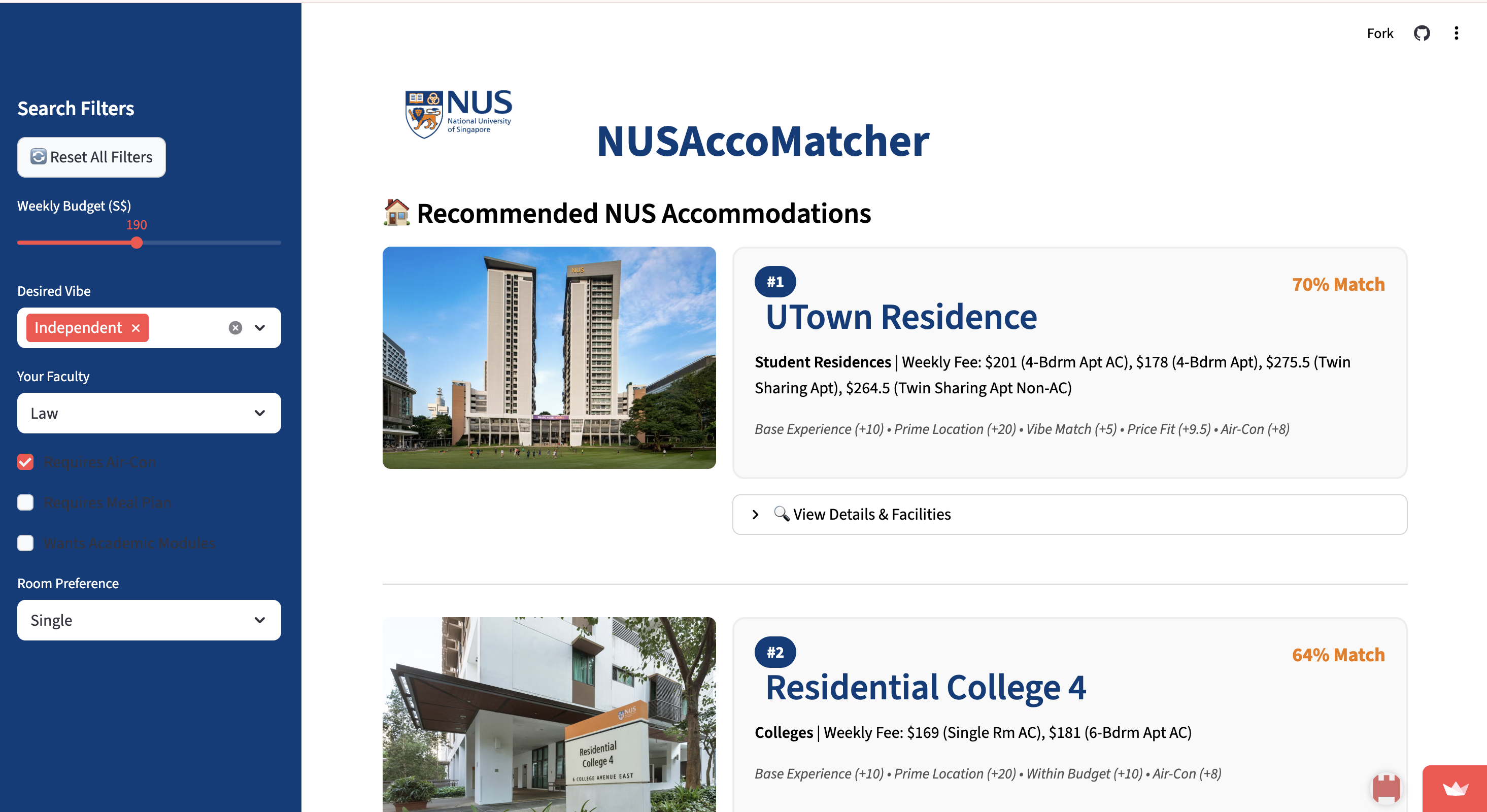
NUSAccoMatch is a web-based accommodation matching engine that recommends NUS hostels based on a student’s personal preferences.
Users can specify:
Weekly budget
Faculty or department proximity
Desired hostel “vibes” (e.g. social, sports, academic)
Facilities such as air-conditioning, meal plans, and academic modules
Room preferences
The app evaluates all NUS accommodations and generates a ranked list with match percentages, clearly explaining why each hostel was recommended. This allows students to make confident, data-driven decisions instead of relying on guesswork or word-of-mouth.
How we built it
We built NUSAccoMatch using Python, Pandas, and Streamlit.
-Data Processing: We obtained a dataset containing hostel costs, facilities, faculty proximity, and lifestyle attributes.
Matching Algorithm: Each accommodation is scored using a weighted system that prioritizes faculty proximity, budget fit, vibe alignment, and essential facilities.
User Interface: Streamlit enables an interactive sidebar for preference selection and dynamically renders ranked results with explanations and virtual tour links.
Design Philosophy: We focused on transparency—every recommendation comes with feedback so users understand why it matches their preferences.
This lightweight architecture allows the app to run quickly while remaining easy to extend.
Challenges we ran into
One major challenge was quantifying subjective preferences like “vibes” and cultural fit in a fair and meaningful way. Translating human experiences into structured data required multiple iterations.
We also faced data inconsistencies, particularly with accommodation fees and facility descriptions, which required robust parsing and sensible defaults. Designing a scoring system that balanced budget, location, and lifestyle—without over-prioritizing any single factor—was another key challenge.
Accomplishments that we're proud of
Designing a transparent, explainable matching algorithm instead of a black-box recommender
Successfully converting qualitative lifestyle preferences into computable features
Building a fully functional, user-friendly web app within a short hackathon timeframe
Creating a solution that addresses a real and relatable student pain point
Most importantly, we’re proud that NUSAccoMatch focuses on decision-making, not just information display.
What we learned
Through this project, we learned how to:
Clean and structure messy real-world datasets
Design weighted scoring algorithms for recommendation systems
Build user-centric interfaces that prioritize clarity and trust
Balance technical feasibility with meaningful user experience
We also learned that good software solves human problems first—and technical complexity should always serve usability
What's next for NUSAccoMatch
Moving forward, we plan to:
Incorporate user profiles and saved preferences
Integrating AI and real-time feedback
Add student reviews and testimonials for richer context
improve scoring with machine learning based on real user feedback
Expand support for exchange students and graduate housing
Deploy the app publicly for incoming NUS cohorts
Our goal is to make NUSAccoMatch a go-to platform that helps every student start university life with confidence.

Log in or sign up for Devpost to join the conversation.