Inspiration
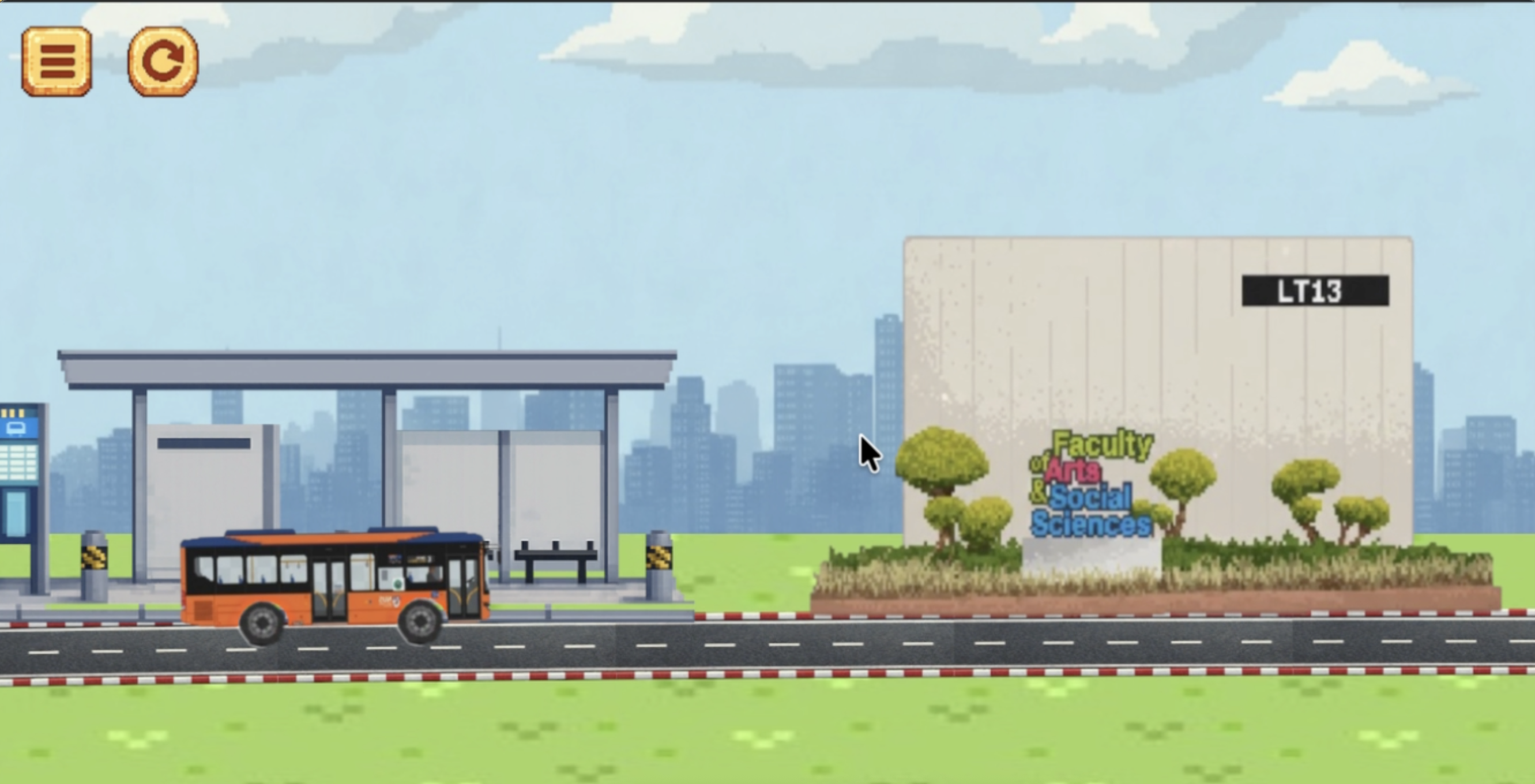
The project was inspired by everyday life on the NUS campus, especially the iconic school buses and hilly roads. We wanted to turn a familiar setting into a playful, interactive experience.
What it does
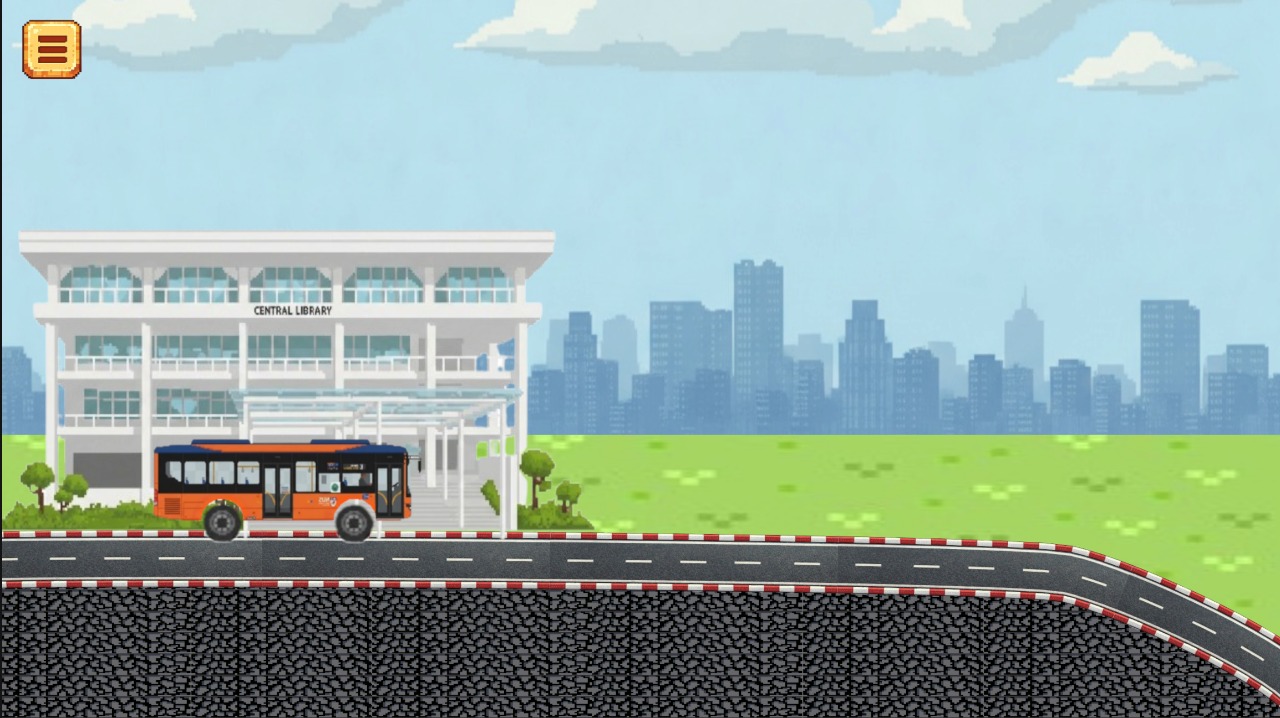
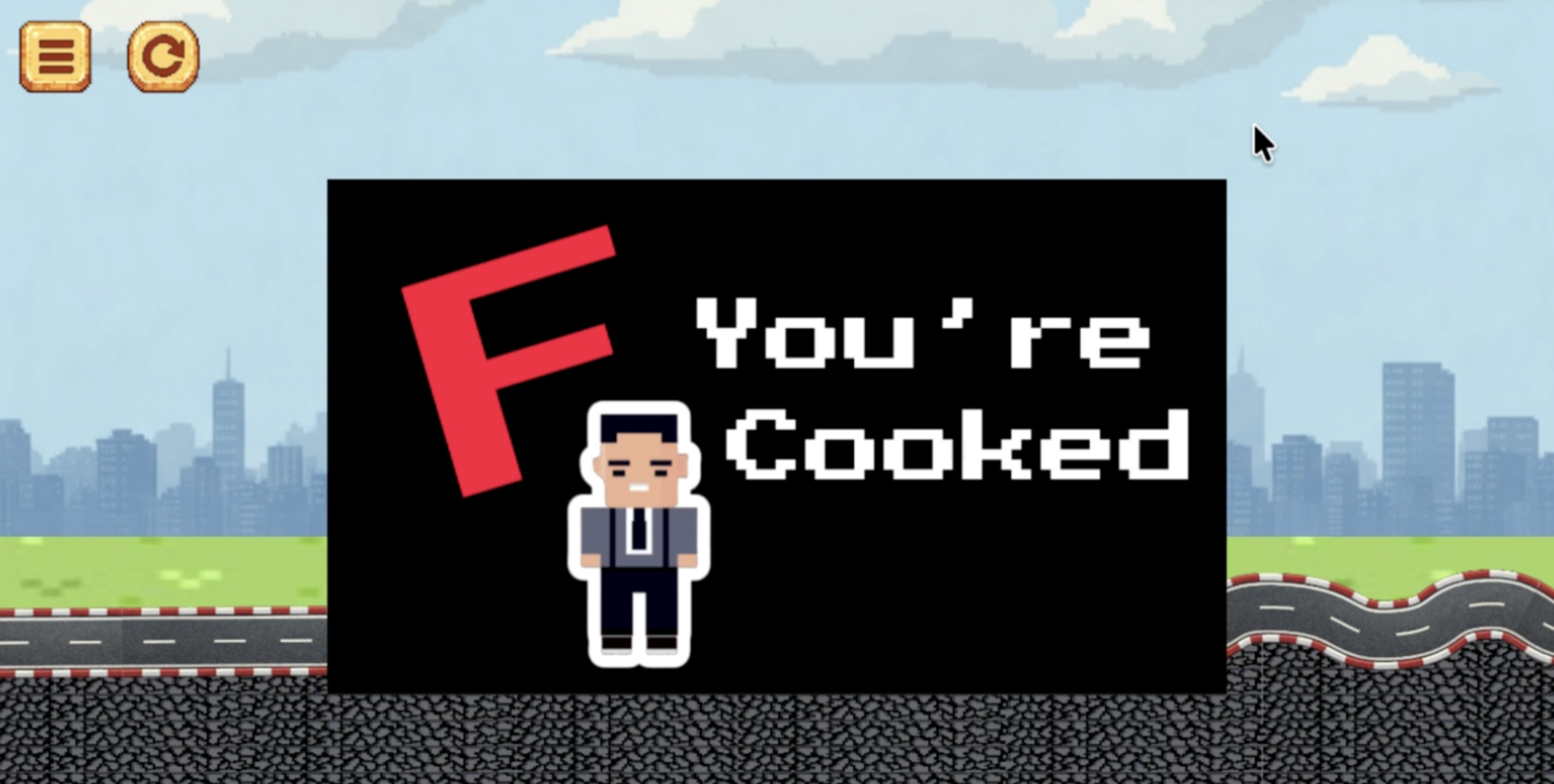
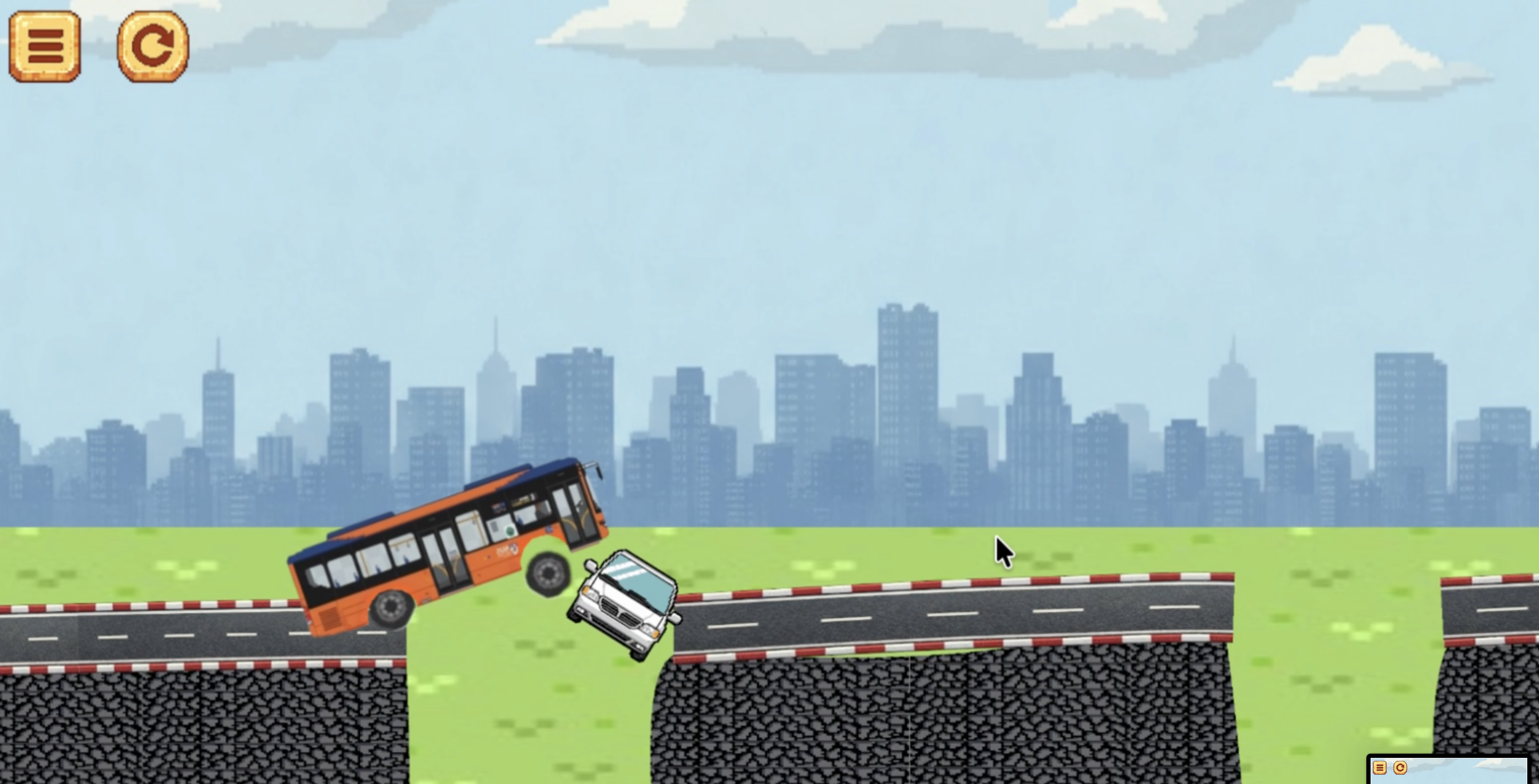
NUS LastBus is a 2D platformer where players control a school bus navigating campus-inspired terrain. The bus drives across slopes, performs jumps, and reacts to event-based obstacles triggered at specific locations, challenging players to reach the destination without crashing.
How We Built It
We built a 2D platformer using Unity, implementing physics-based movement for the bus, collision detection, and trigger-based events. Campus-inspired roads and obstacles were designed to reflect slopes and jumps, with UI feedback for key interactions.
Challenges we ran into
One major challenge was fine-tuning physics so the bus felt responsive on slopes and jumps without behaving unpredictably. Small changes in parameters like gravity and force (e.g. $F = ma$) had a big impact on gameplay, requiring careful iteration and testing.
Accomplishments that we're proud of
We successfully recreated the feel of NUS’s hilly terrain in a 2D game, implemented reliable collision and trigger systems, and built a fully playable level that blends familiar campus elements with engaging gameplay.
What We Learned
We learned how to work with 2D physics, manage collisions and triggers, and design levels that balance realism and fun. We also gained experience structuring game logic and debugging unexpected interactions.
What's next for NUS LastBus
Next, we plan to add more levels based on different parts of campus, introduce new obstacles and power-ups, and refine visuals and sound design to further enhance immersion.

Log in or sign up for Devpost to join the conversation.