
Inspiration
Electronics retail in markets like Kenya suffers from a basic reliability gap, not just a price problem. Shoppers navigate dozens of unvetted sellers with no guarantee of genuine hardware, a real warranty, transparent pricing, responsive support, or a way to pay in installments. Suppliers, meanwhile, aren't set up to build that trust themselves — they want to move inventory, not run a retail brand.
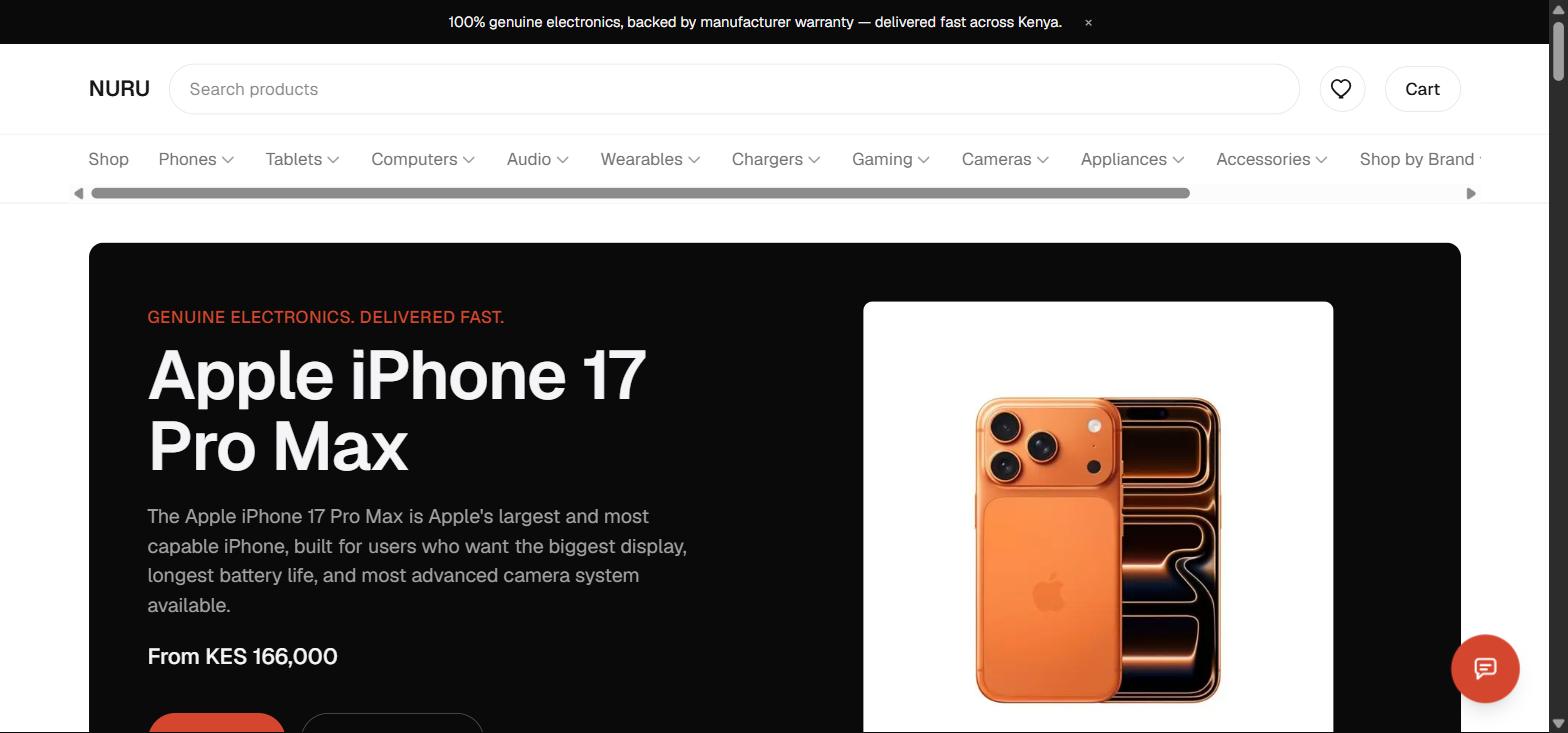
NURU was built to be that trusted single storefront — one place where customers get genuine hardware, real warranty coverage, Lipa Pole Pole (BNPL) financing, and support that actually resolves things, without gambling on which seller to trust. To run that at the standard of a much larger retailer without a matching headcount, we built NURU as an AI-native retail operating system on Google Gemini and Google Cloud — a small team, and a set of Gemini-driven agents doing the work a 20–50 person operations org would normally do.
What it does
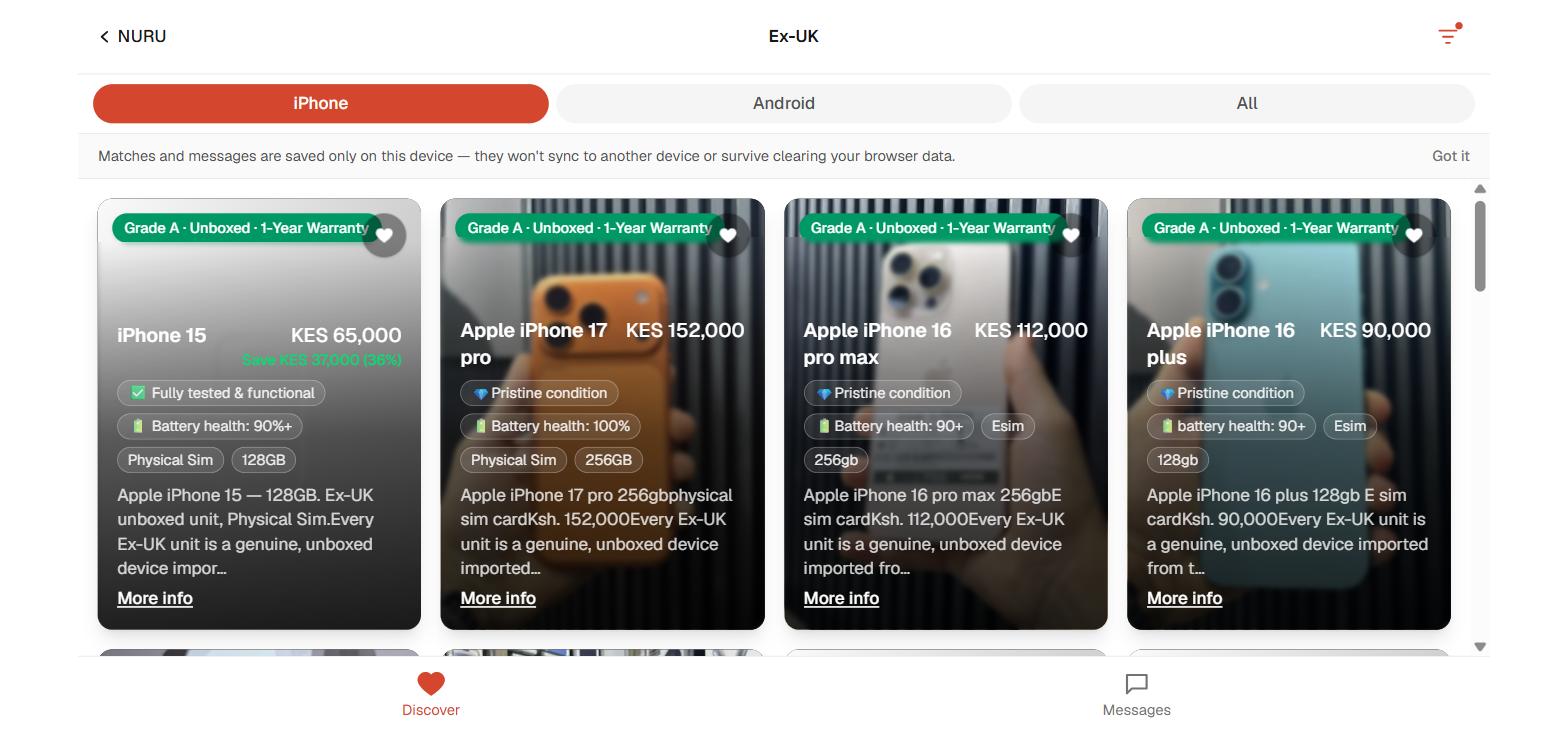
- Trusted, guaranteed catalogue: A single storefront (Shopify-backed) where every listing ships with manufacturer warranty and fast delivery. For price-sensitive shoppers, we also surface Ex-UK certified-unboxed units of the same model at a lower price with the same 1-year warranty, with an exact savings figure computed on request — never estimated.
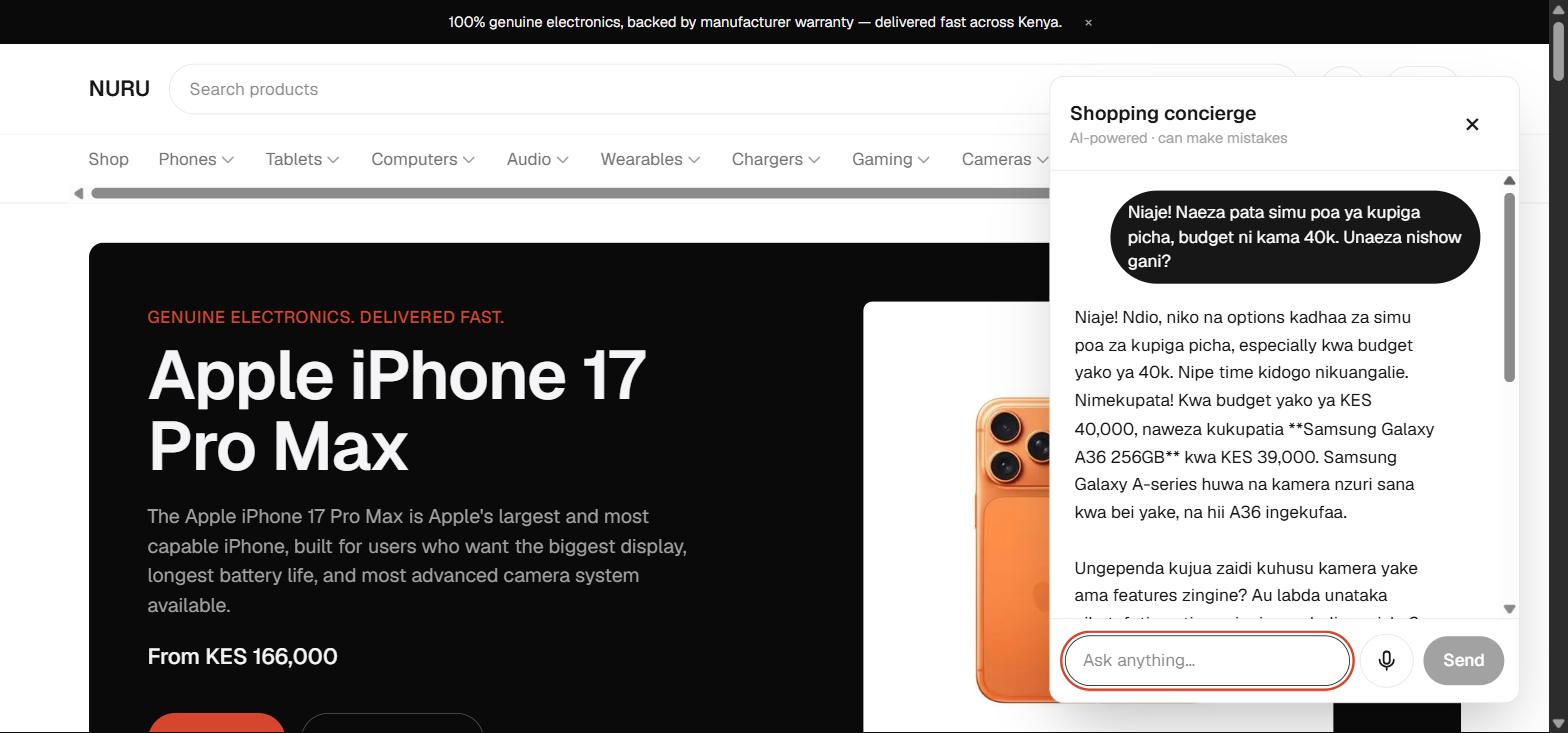
- Multimodal multilingual sales floor: A Gemini 2.5 Flash shopping concierge that converses in English, Swahili, and Sheng, with real-time speech-to-text and Gemini neural TTS for voice. It runs grounded tool calls for every fact it states — vector search over the catalog (Vertex
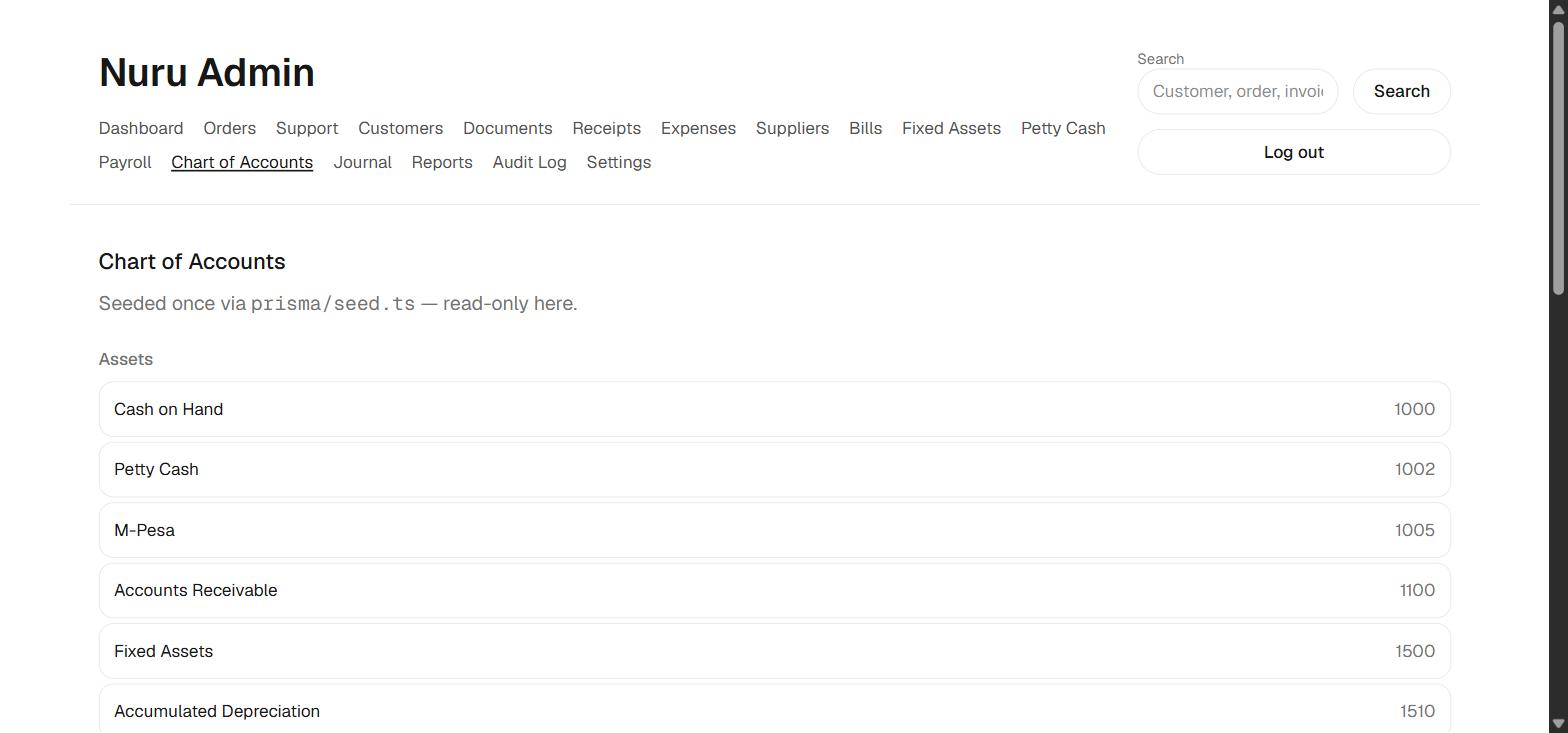
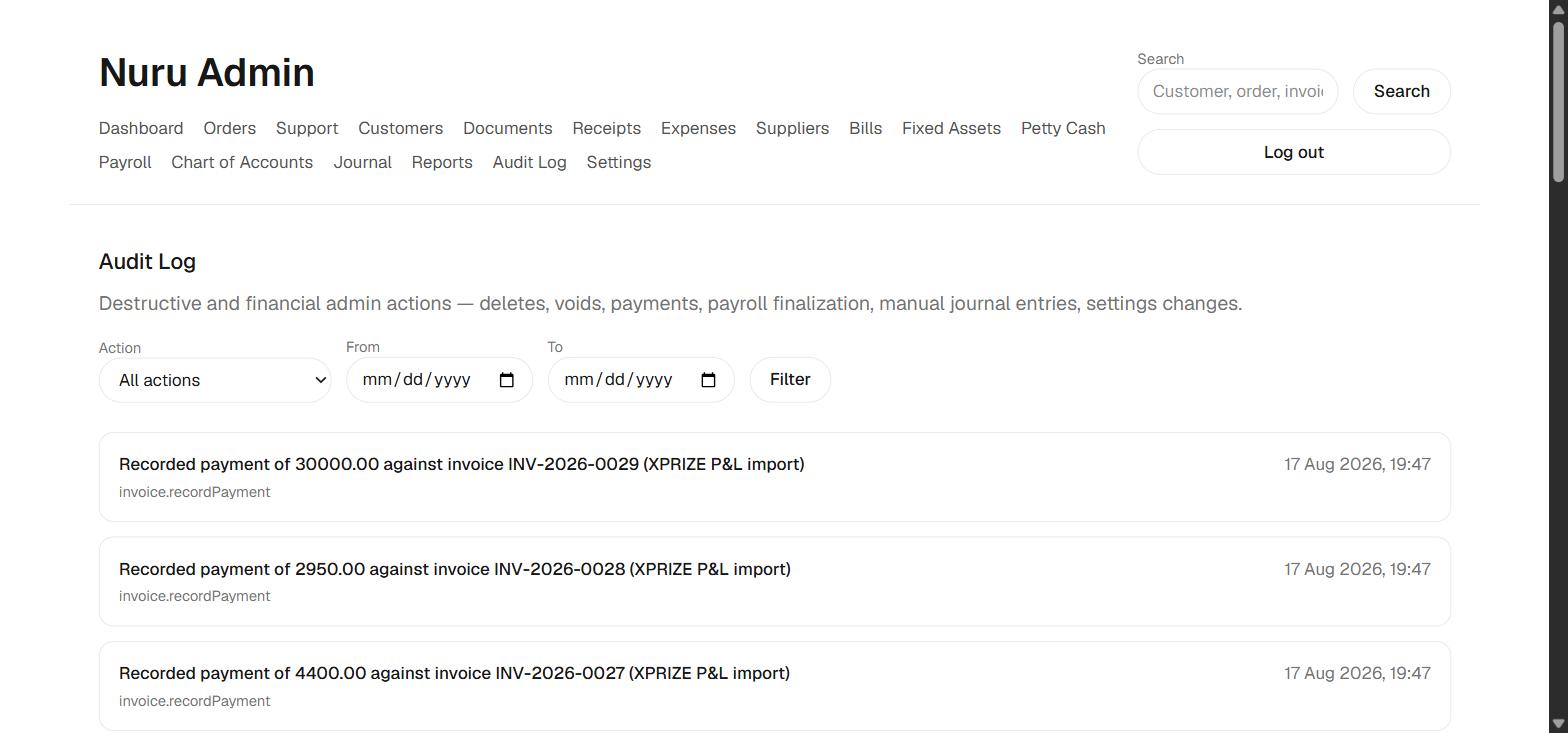
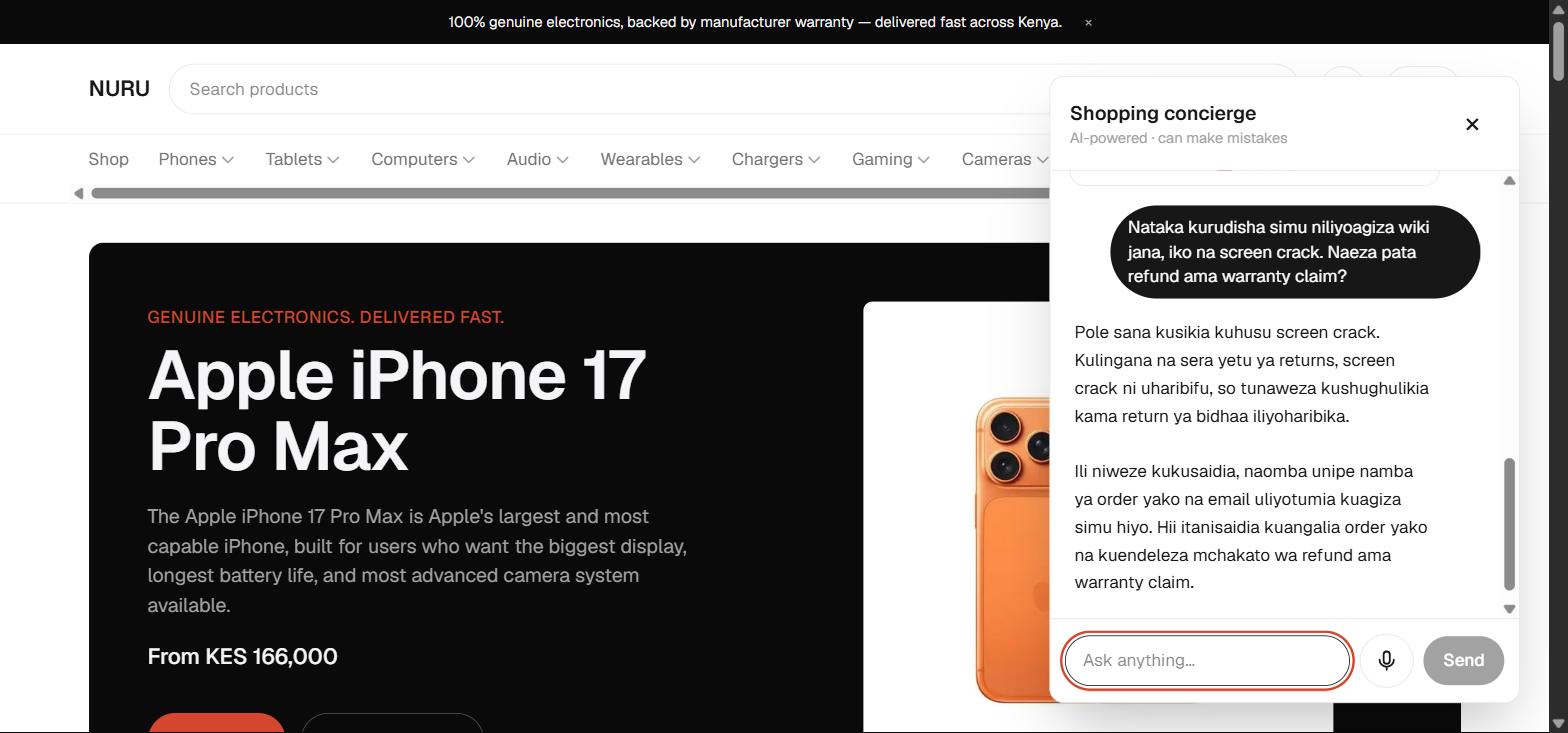
text-embedding-004embeddings, ranked by cosine similarity), BNPL plan lookups, and live cart mutations — never inventing a price, SKU, or availability. - Autonomous support & returns: Gemini evaluates return/refund/warranty claims against a published policy window, issues a real decision (approved/denied/escalated), and — when approved — writes a balanced double-entry journal entry directly into the PostgreSQL general ledger. No human sign-off in the loop for the common cases.
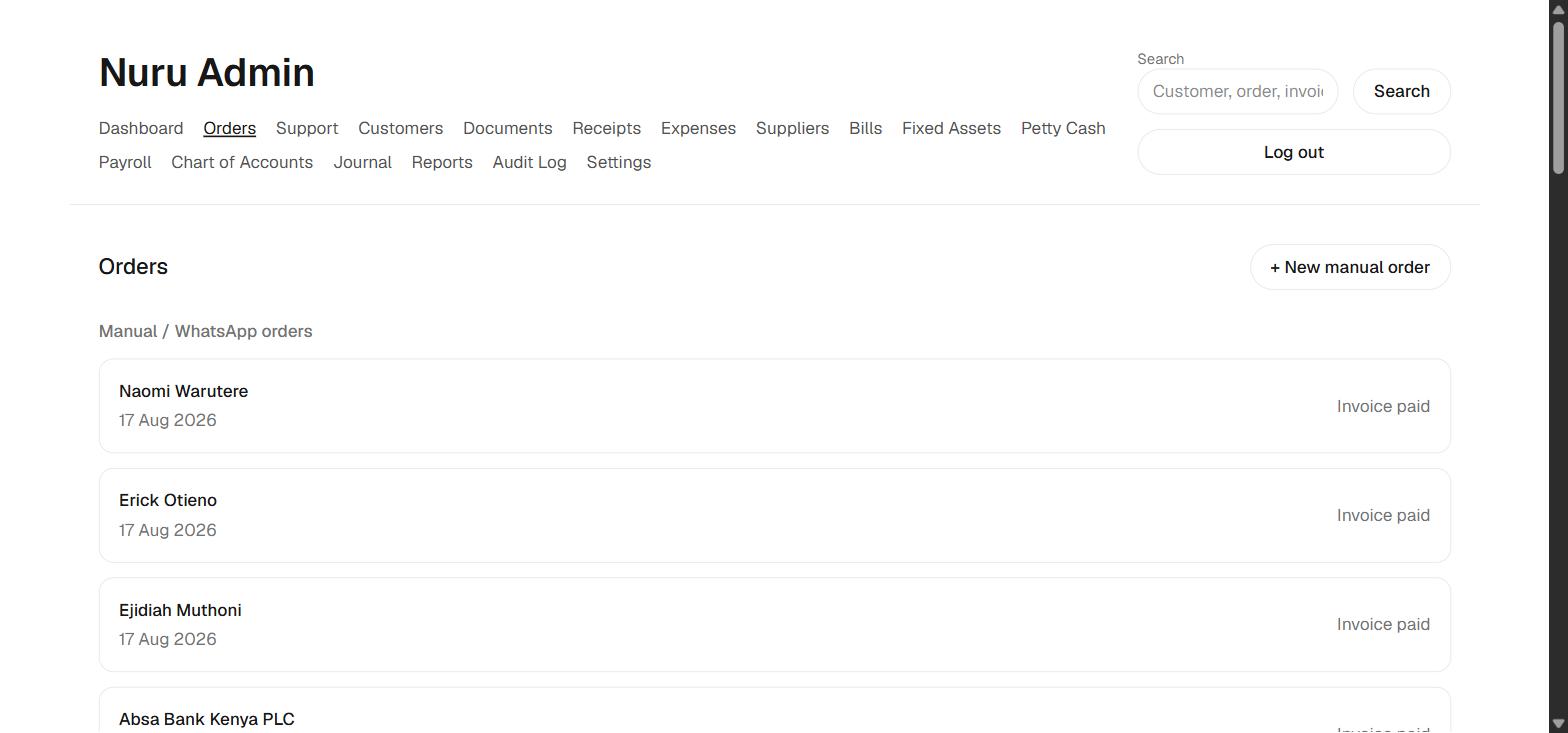
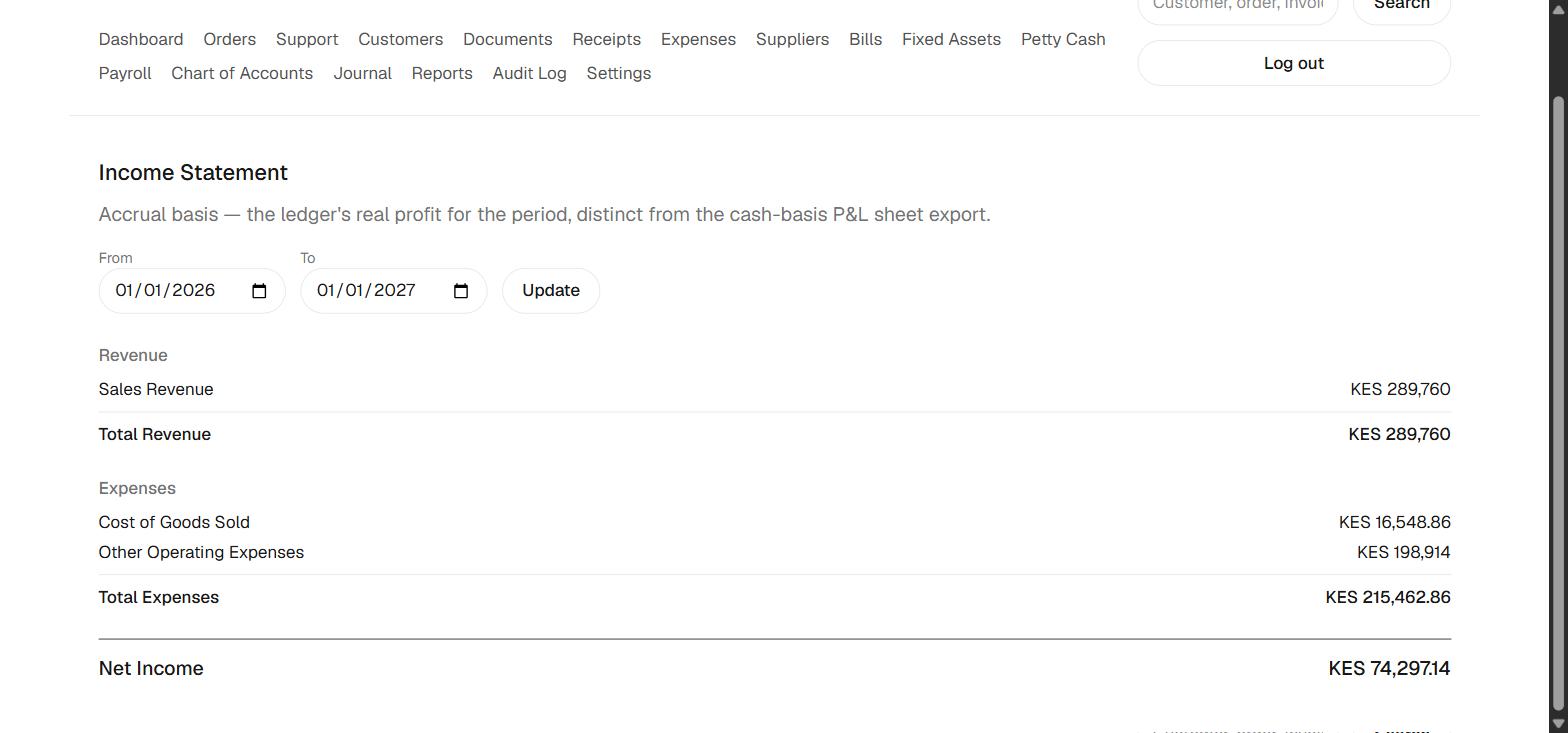
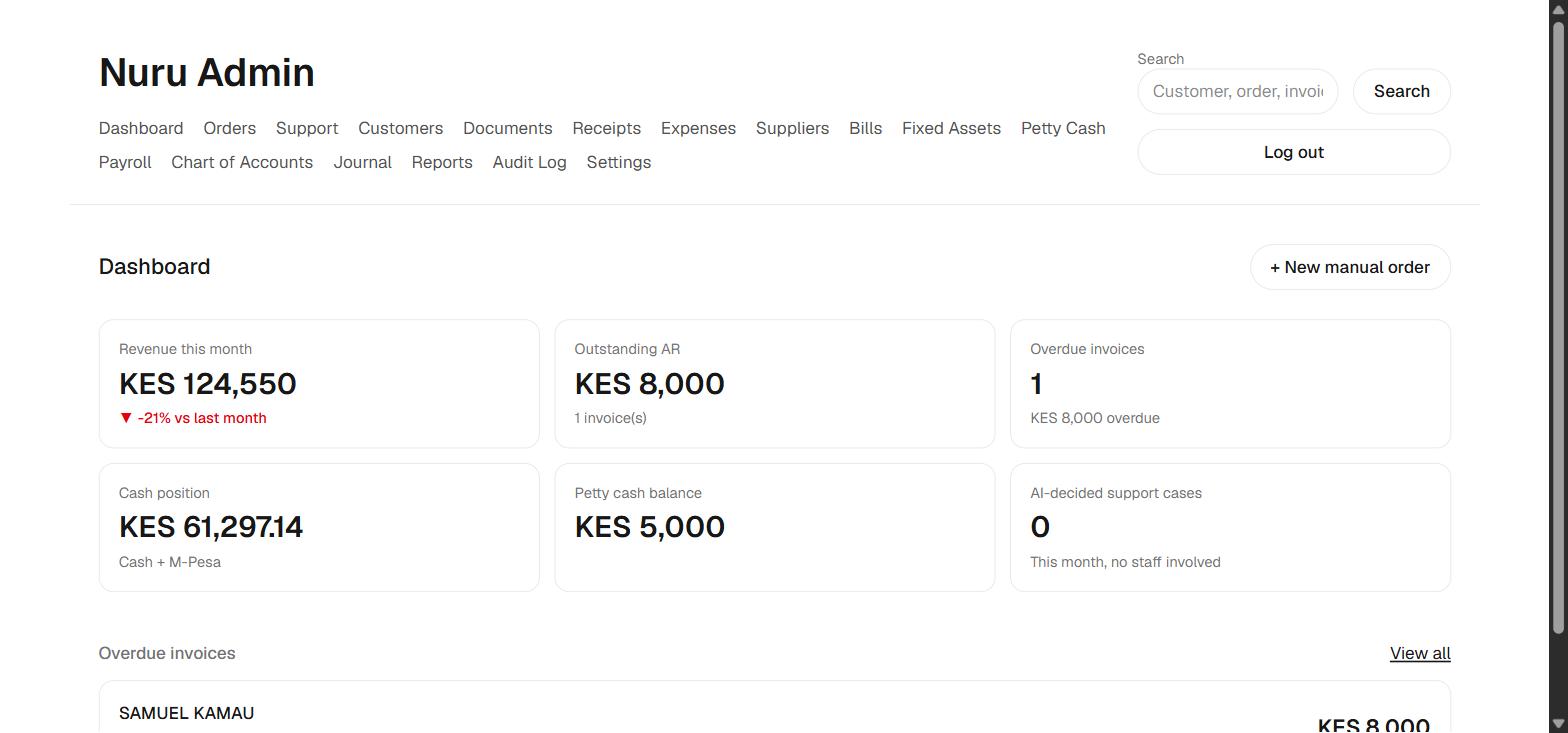
- Autonomous ERP: Every sale, pay-on-delivery collection, and gig-rider courier payout posts to a standardized Chart of Accounts. A daily cron computes cash-basis P&L and pushes it to Google Sheets automatically once the target spreadsheet is wired in — the sync path is fully built and tested end-to-end; we're finishing that last configuration step for this submission.
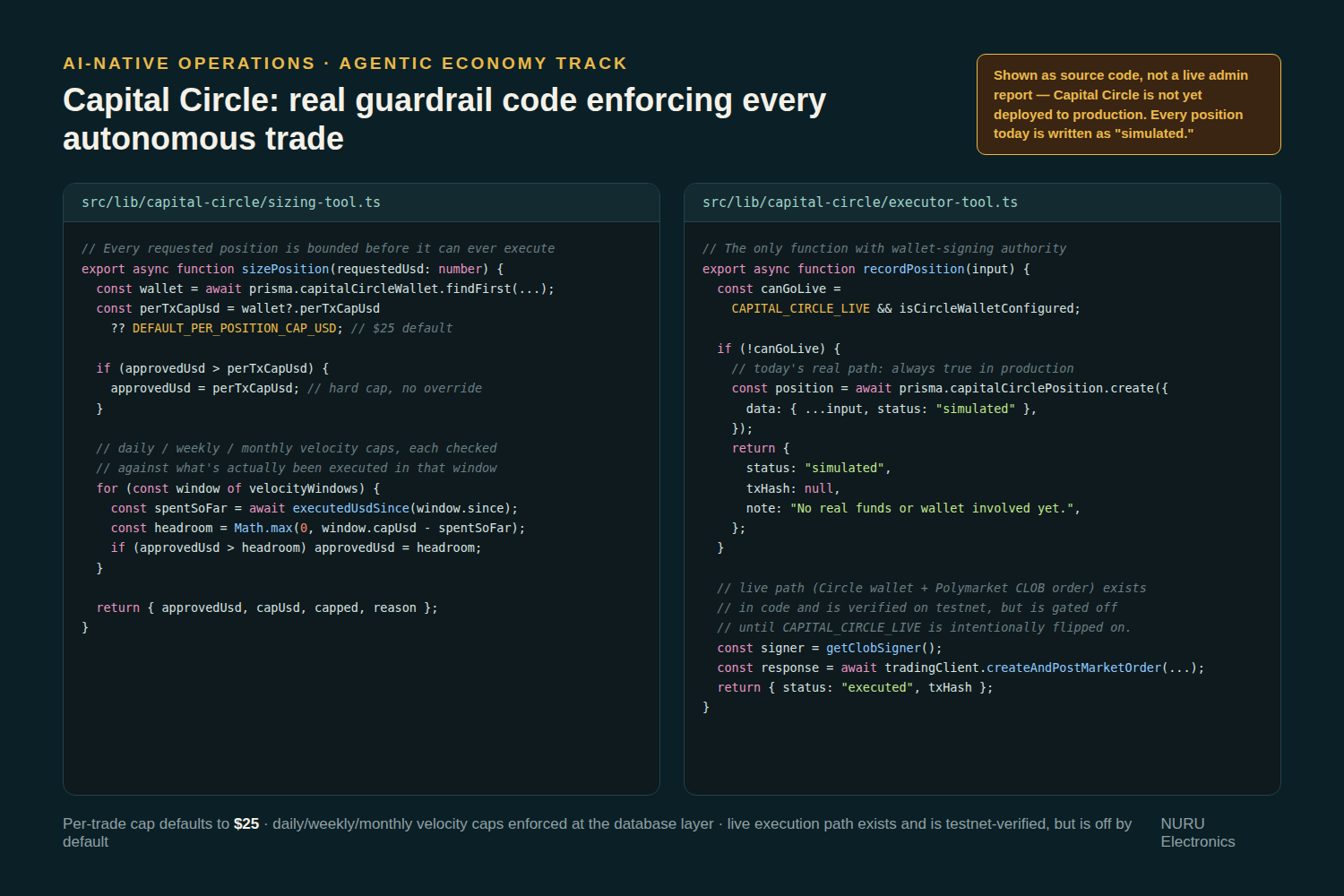
- Autonomous treasury (Capital Circle): A firewalled, USDC-denominated pool, deliberately isolated from the core ledger, that runs a weekly Gemini-driven research → size → record cycle against real, live Polymarket markets. Every position is bounded by database-enforced circuit breakers (a $25 default per-trade cap, plus daily/weekly/monthly velocity caps), and trade signing uses Circle Developer-Controlled Wallets with EIP-712 typed-data signatures — verified end-to-end against a real testnet wallet. A funded mainnet wallet is fully provisioned; we're keeping execution in simulation mode against real market data until we're ready to flip it live, so every number we report here is honest about what's simulated versus executed.
How we built it
- AI agent layer: Google Vertex AI via
@google/genai, Gemini 2.5 Flash for streaming tool-calling inference, a dedicated Gemini TTS model for voice, and Vertextext-embedding-004for semantic catalog search. - Commerce & ERP: Next.js 16 (React 19, App Router), Shopify Admin/Storefront APIs for the catalog and checkout, PostgreSQL via Prisma for orders, the full double-entry ledger, payroll, petty cash, fixed assets, and creditors — plus Google Sheets API for one-click/automated P&L export.
- Autonomous capital & Web3 rails: Circle's Developer-Controlled Wallets SDK on Polygon, EIP-712 typed-data signing (also reused for x402 pay-per-call USDC micropayments to premium market-data providers), and Polymarket's CLOB client for order execution.
- Deployment: Dockerized, deployed via Google Cloud Build to Cloud Run.
Challenges we ran into
- Supplier trust and onboarding. Getting suppliers to share clean, structured pricing (vs. messy PDFs, CSVs, and WhatsApp lists) is a relationship problem before it's a data problem — this is still ahead of us, not behind us, and shapes our roadmap below.
- Cash-only inventory. The cheapest units often come from suppliers who require cash upfront rather than consignment terms, which caps how aggressively we can price certain SKUs today.
- Keeping every AI claim grounded. The hardest engineering discipline wasn't the Gemini integration itself — it was making sure the concierge and the returns agent could never state a price, policy outcome, or ledger entry without a real tool call backing it, since both write real financial state.
Accomplishments we're proud of
- A production Gemini agent that runs real conversations end-to-end in three languages/registers and closes the loop into a real cart and checkout.
- Closed-loop AI accounting: the returns agent doesn't just chat — it issues real decisions and posts real, balanced general-ledger entries in PostgreSQL.
- A treasury architecture (Capital Circle) with real cryptographic guardrails — per-trade and velocity caps enforced at the database layer, EIP-712 signing verified against a live testnet wallet, and a funded mainnet wallet ready to go — built honestly as simulation-first so every result we show is real and auditable.
- Running the sales floor, warranty adjudication, bookkeeping, and now treasury research on a genuinely small team, with Gemini doing the work that would otherwise need separate department hires.
What we learned
The advantage isn't just "add AI to a store" — it's letting Gemini own entire operational loops end-to-end (conversation → cart, claim → ledger entry, market signal → sized position) instead of just assisting a human at each step. We also learned to be disciplined about the line between what's shipped and what's roadmap: it's tempting to describe the vision as already built, but for a business built to be audited, the more valuable story is exactly what's running today, in production, against real data.
What's next for NURU
- Multi-supplier price consolidation. Build the ingestion pipeline to merge multiple supplier price lists into one catalogue where the lowest verified price per SKU wins automatically — the natural next step once supplier onboarding (Challenge #1) is solved.
- Unlocking cash-only suppliers with additional working capital to secure the lowest-cost inventory tier.
- AI-powered trade-in condition auditing using Gemini multimodal vision to grade device condition live, for instant automated trade-in offers.
- Console and gaming trade-in expansion, extending the same standardized grading pipeline from phones/laptops into PS5, Xbox, and Nintendo hardware.
- Flipping Capital Circle live once we're ready to move real capital under the same guardrails we've already proven on testnet.
Built With
- bnpl
- circle
- circle-programmable-wallets
- gemini-api
- google-ai-studio
- google-cloud
- google-cloud-firestore
- google-sheets-api
- graphql
- mpesa
- neon
- nextjs
- node.js
- polygon
- postgresql
- prisma
- react
- shopify
- shopify-api
- tailwindcss
- typescript
- usdc
- vertex-ai
- viem


Log in or sign up for Devpost to join the conversation.