-
-
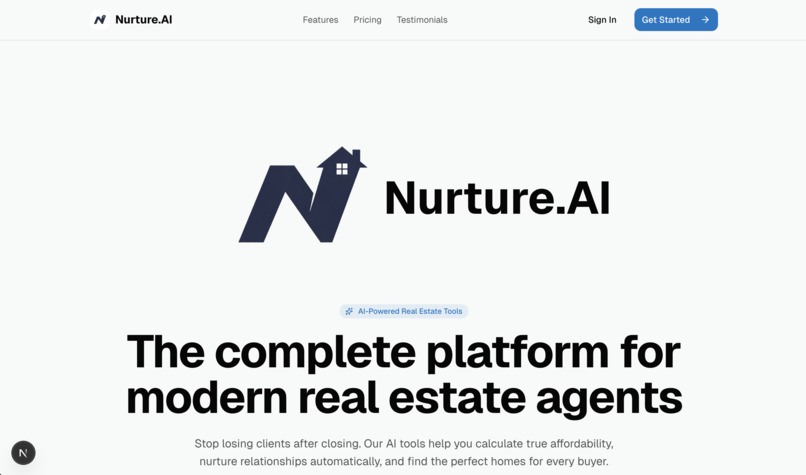
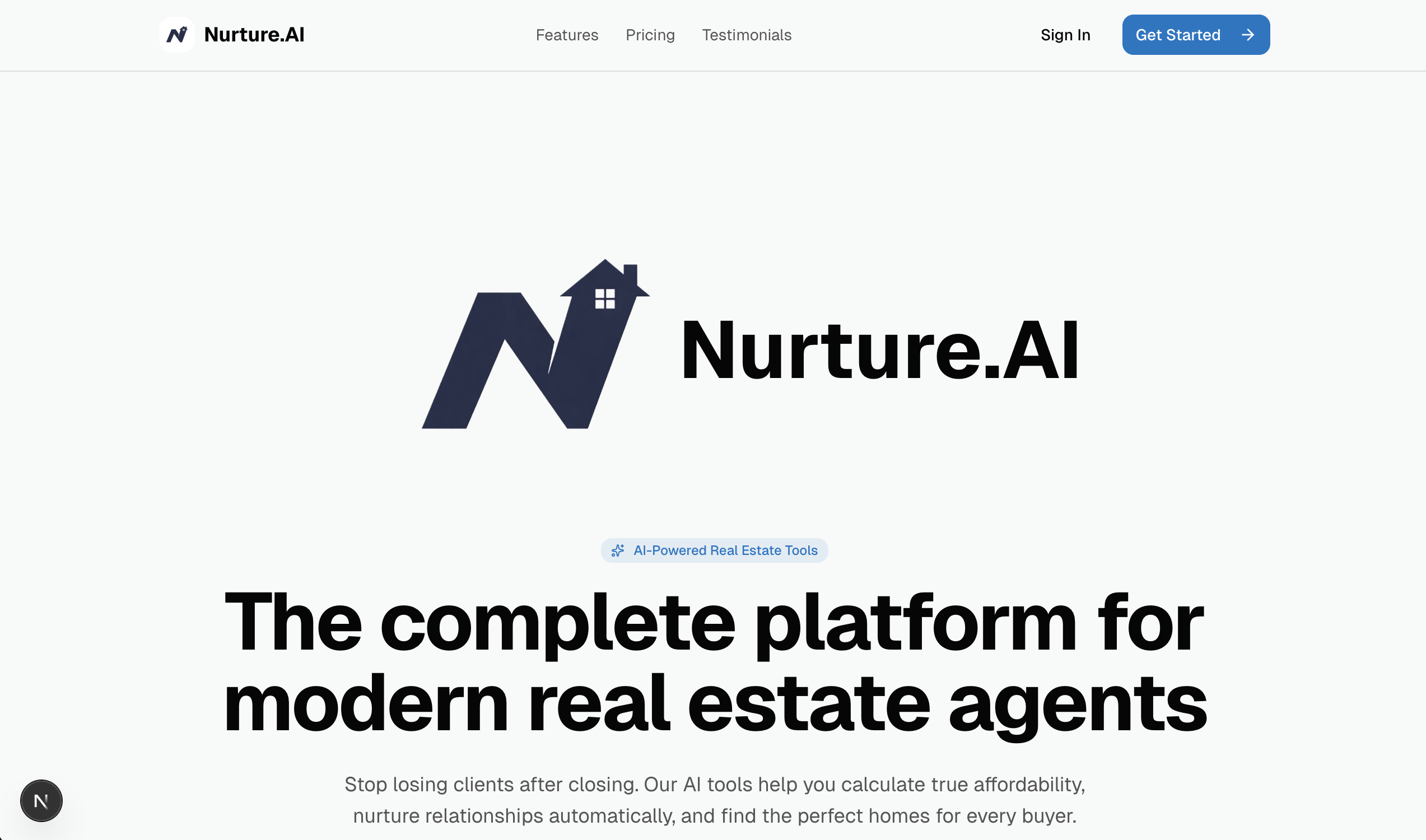
Homepage
-
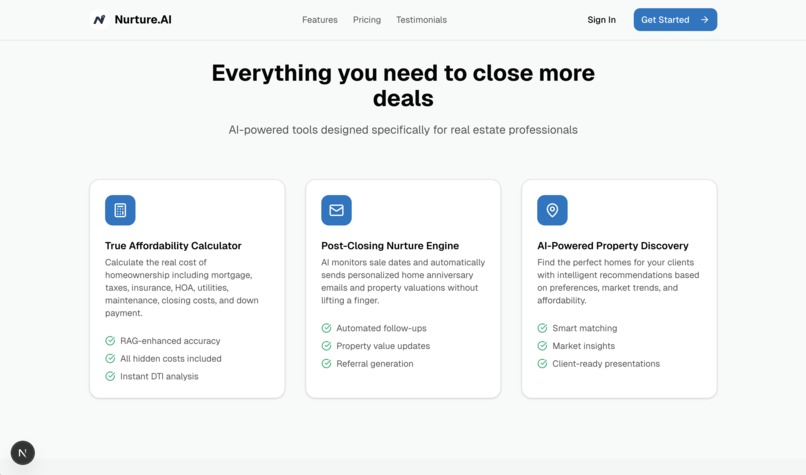
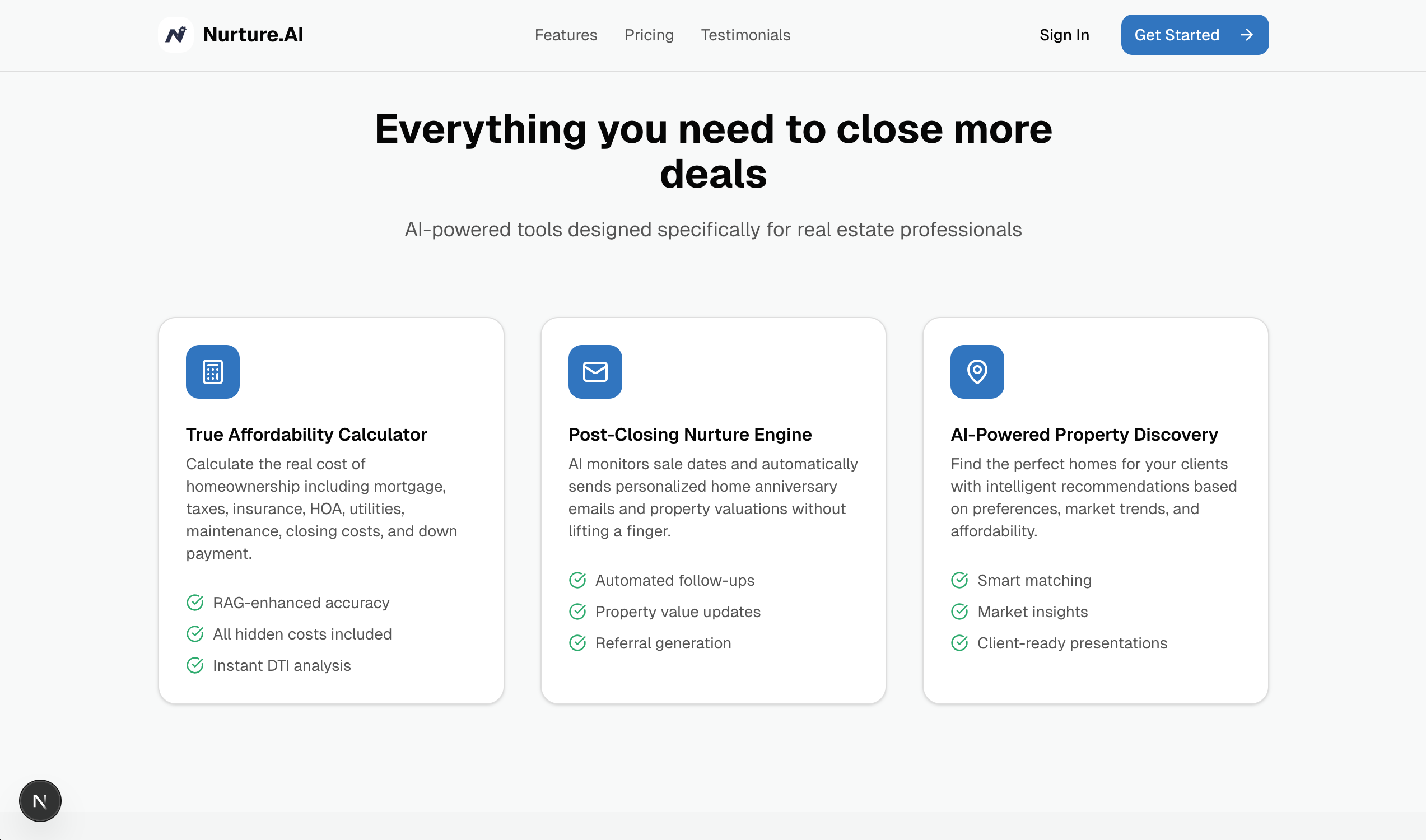
Features
-
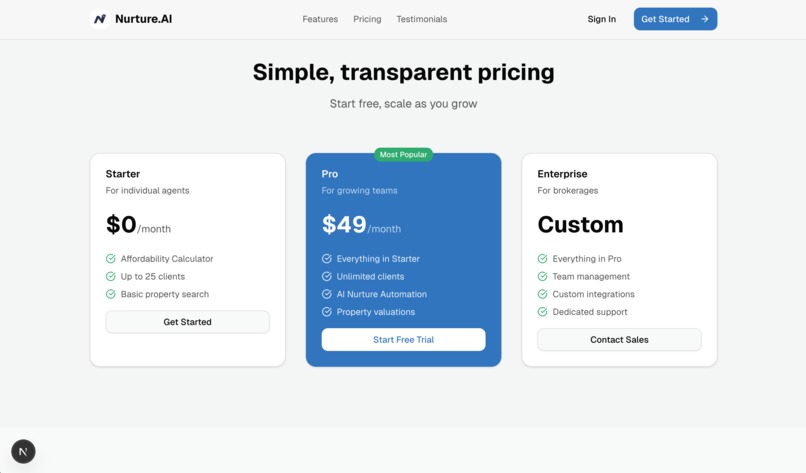
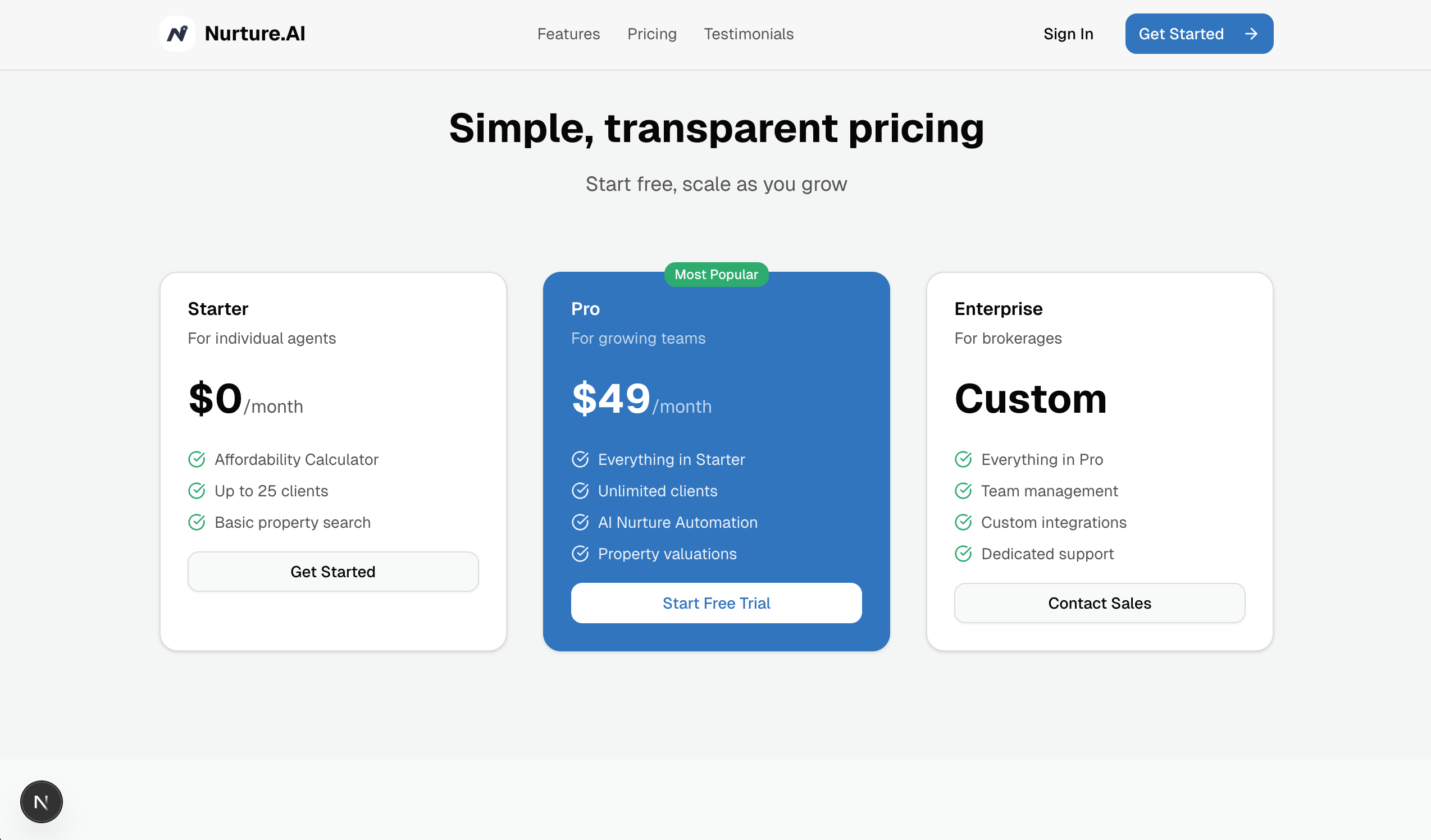
Pricing
-
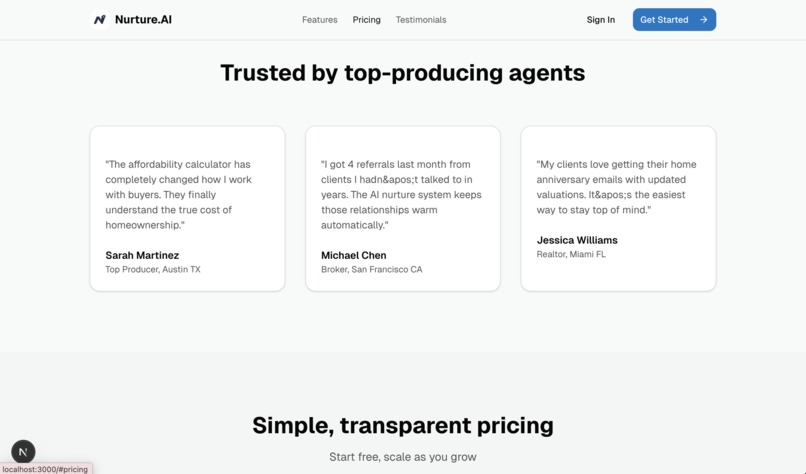
Testimonies
-
Footer
-
Dashboard
-
Affordability Calculator Tab
-
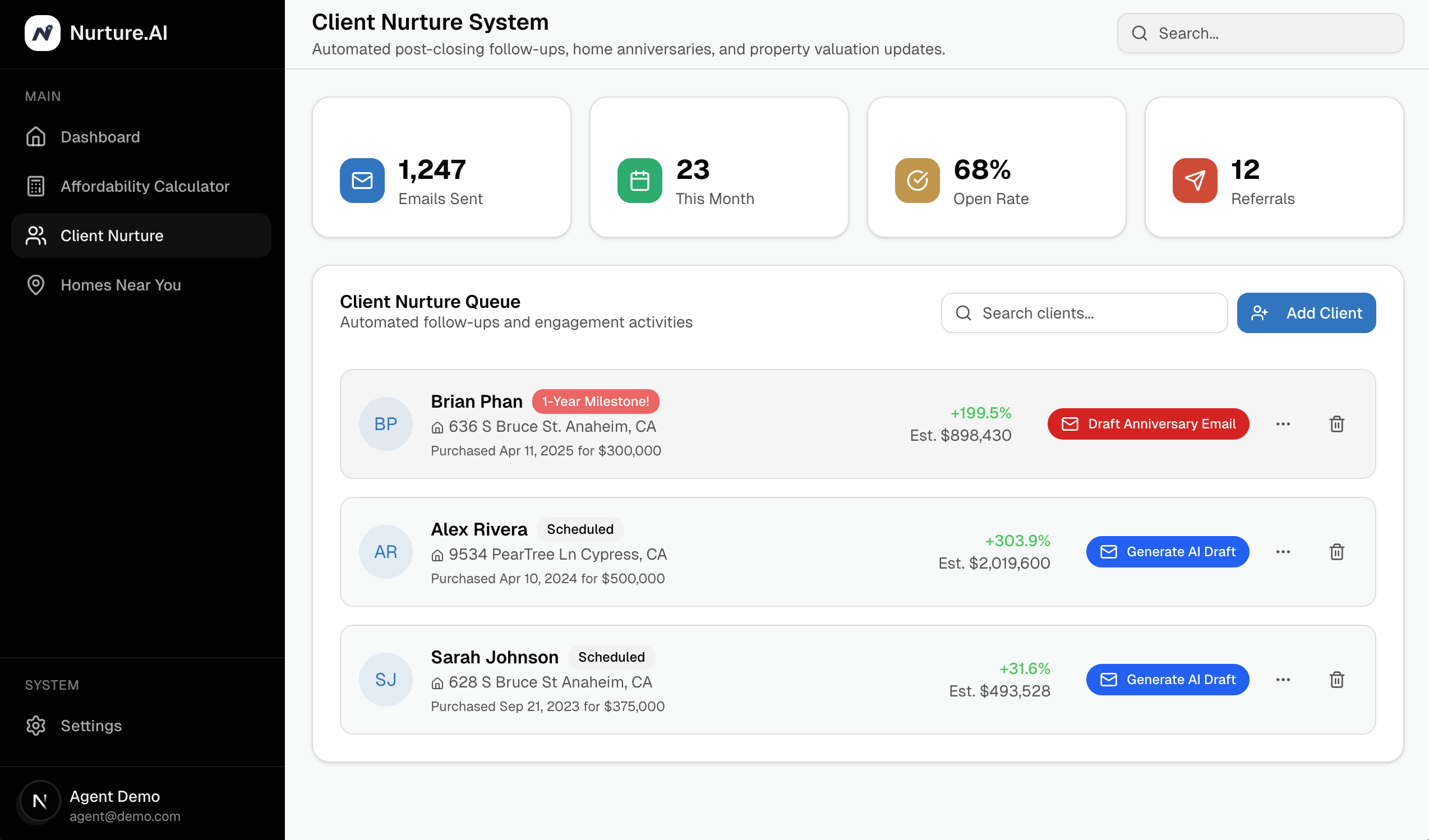
Client Nurture Tab
-
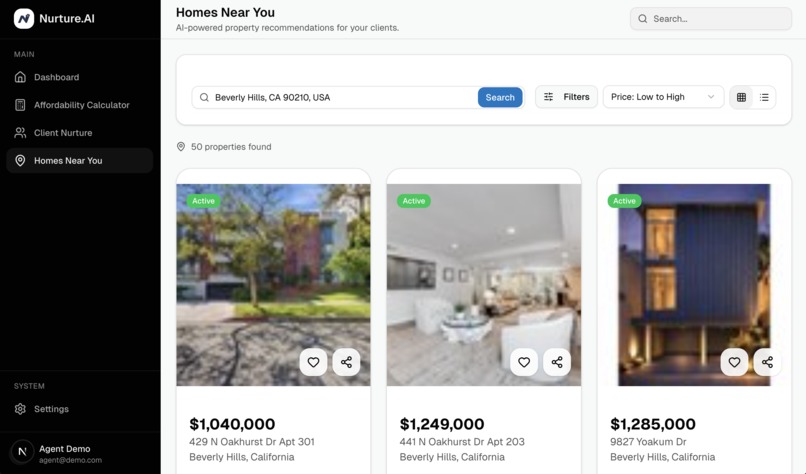
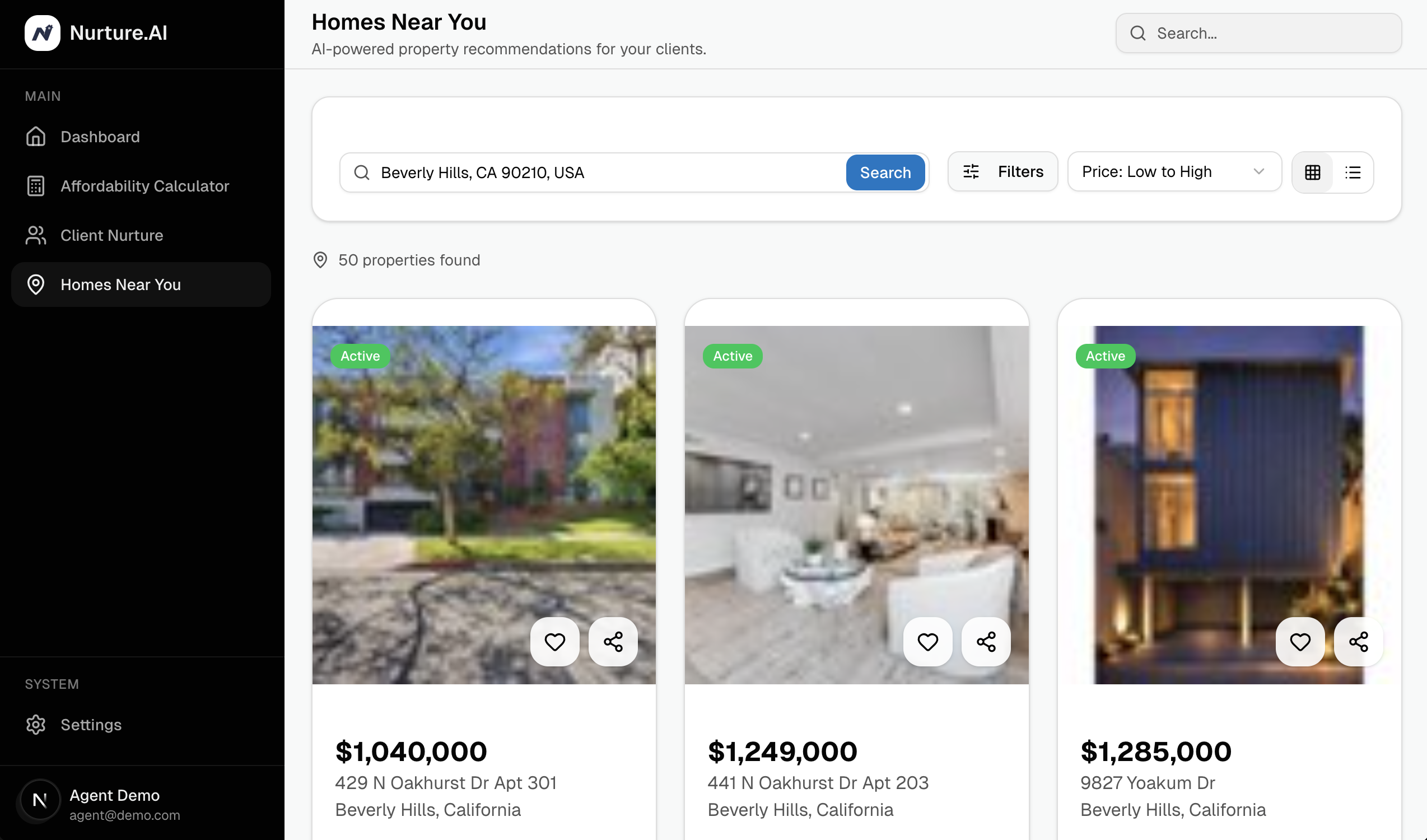
Homes Near You Tab
Inspiration
As students deeply interested in real estate, we were inspired to create a platform to simplify and improve the work of real estate agents. We focused on the key issue of real estate agents losing long-term client value after closing due to fragmented data, missed follow-ups, and lack of personalized insights, despite relationships being the core of their business. So, we wanted to create an application to prioritize personalized, continuous client engagement for the agent throughout the entire homeownership journey.
What it does
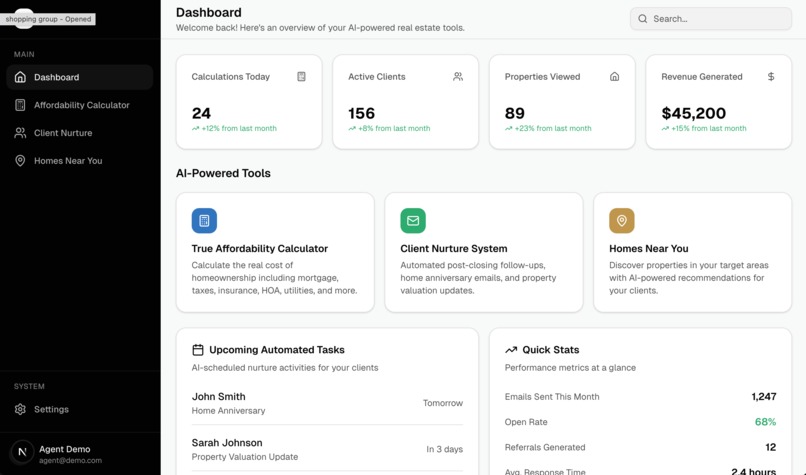
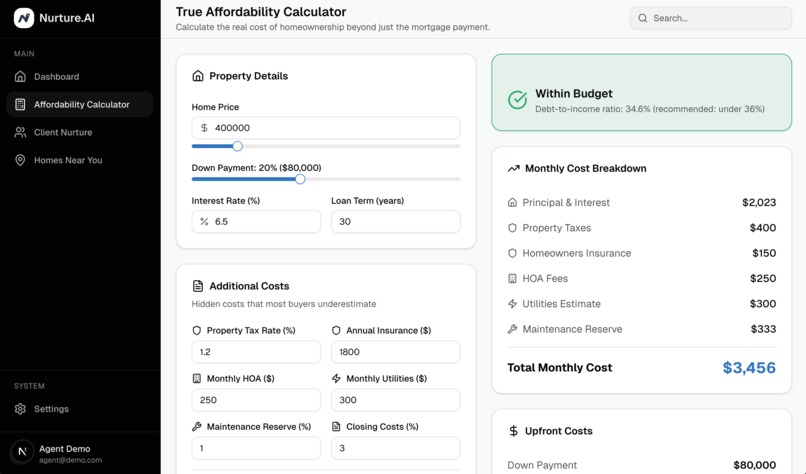
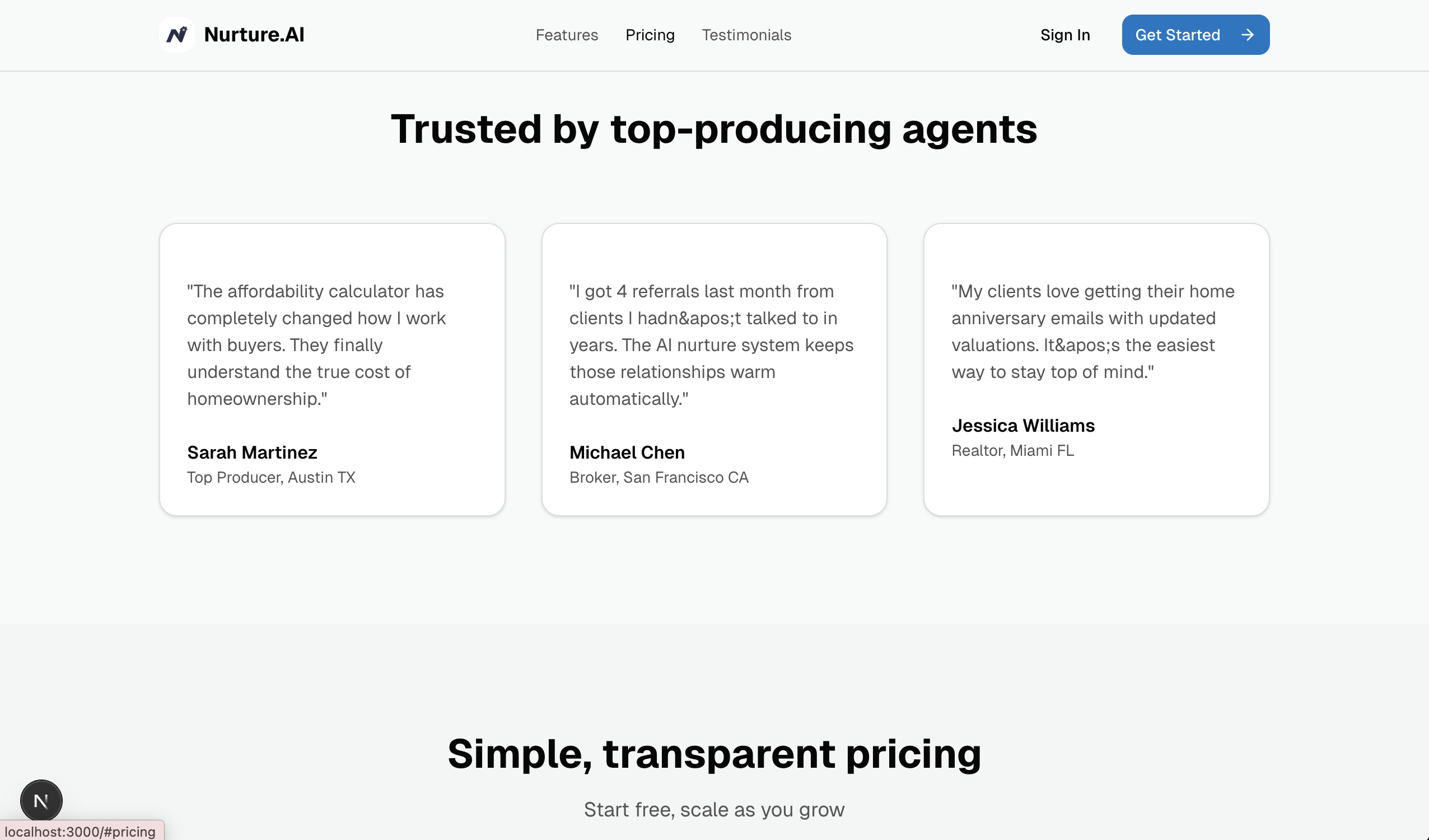
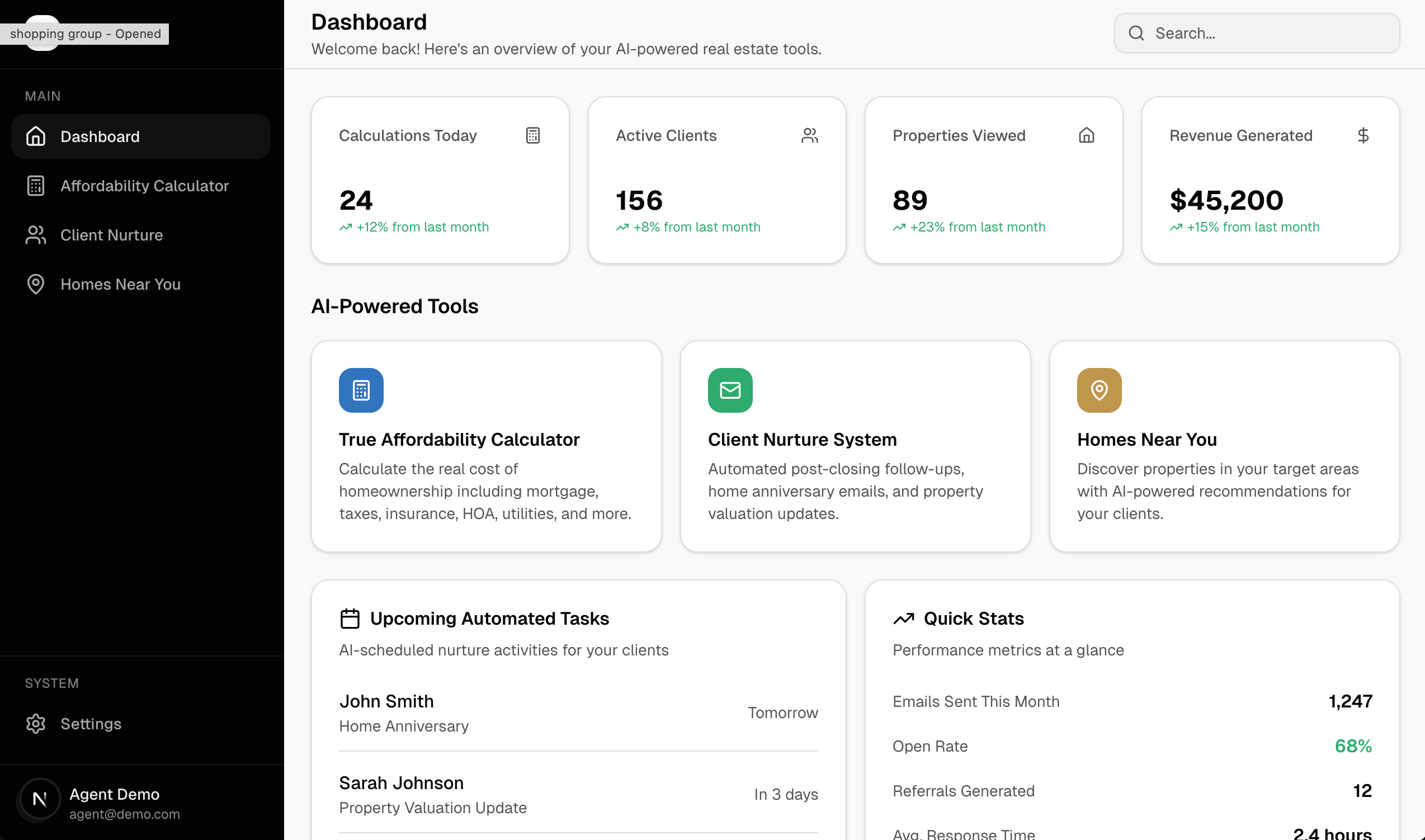
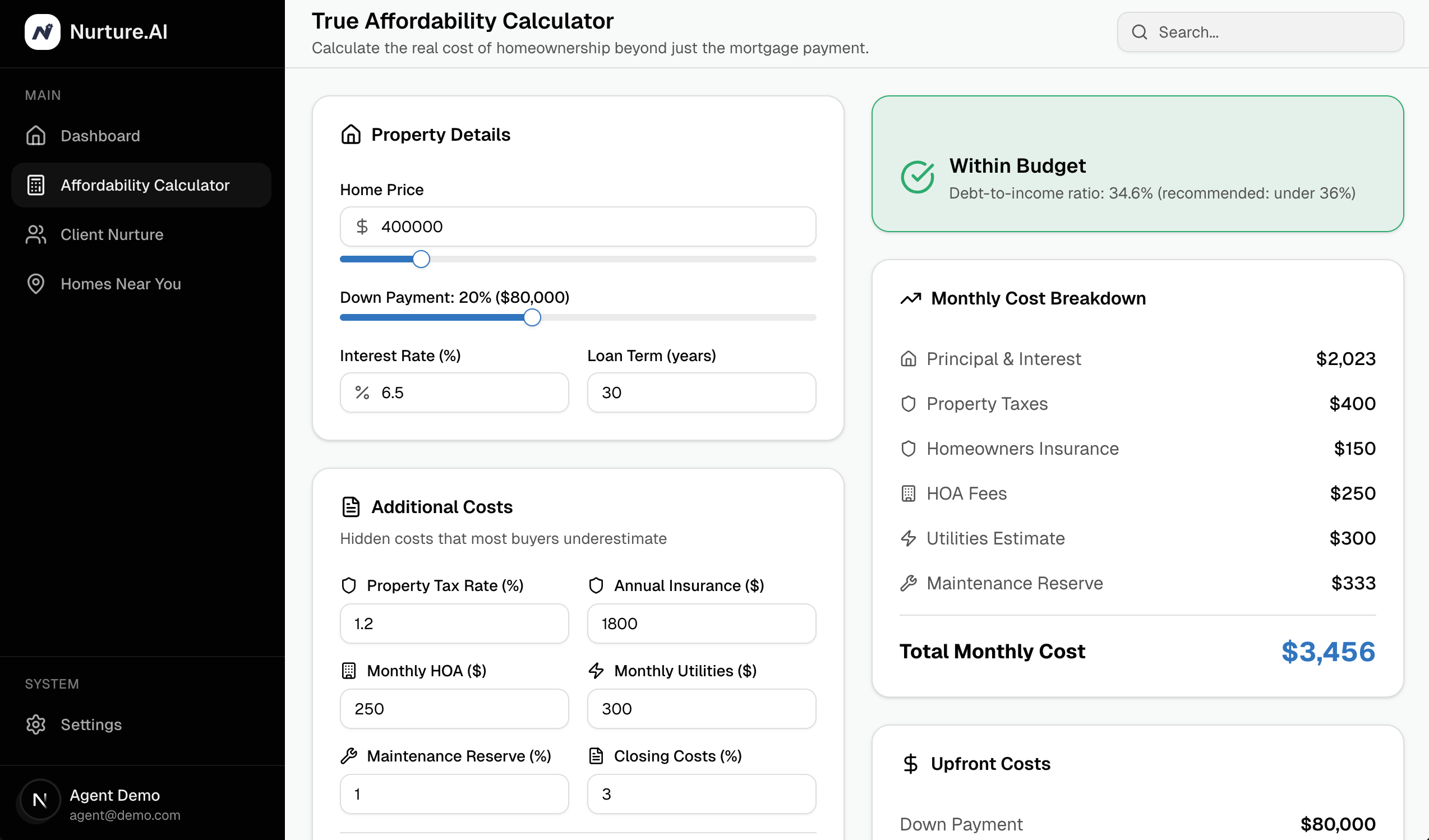
Nurture.AI is a FinTech AI-powered software as a service (SAAS) that helps real estate agents calculate true affordability incorporating usually hidden fees and factors, scope out potential property investments, and automatically nurture client relationships through personalized follow-ups and insights.
How we built it
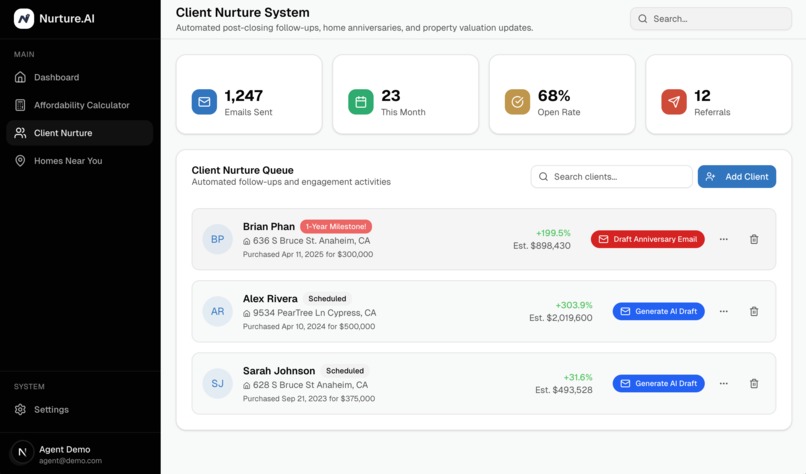
We built Nurture.AI using Google Gemini on Vertex AI to power reasoning and generation, with a FastAPI backend, PostgreSQL database, and a Vercel frontend. We implemented agentic workflows with tool-calling to automate affordability analysis, property matching, and client follow-ups. For the Nurture System, we created a Supabase Database to have a way for our real-estate agents to save their clients lists. This is then connected to our Frontend for an easy-to-manage interface with basic CRUD for editing the database. We then have an auto draft email to give our clients updates on their home property values vs. when they bought it through ATTOM API (provides real-time property value) which updates the Clients Database and is used by GEMINI API to draft an email updating the property value. This then allows the client to draft the email to the user’s default mailing system to send out. A majority of our front-end (including our Affordability Calculator) was built with typescript using Vercel.
Challenges we ran into
We faced challenges in aggregating and normalizing fragmented housing cost data, designing accurate matching logic, and ensuring the AI agent could reliably trigger actions like follow-ups without hallucinations. For the Homes Near You page, we had trouble deciding on which API to use to retrieve real listings of properties. At first, we used the RentCast API, but given the limited 50 API requests we had, we decided to switch over to RapidAPI to better support our testing needs. Additionally, connecting APIs such as the ATTOM API was a struggle, having to understand the documentation to be able to figure out the parameters we need to send (eg. Address1 and Address2) to be able to get the real-time property value. This required parsing the data to the required formats.
Accomplishments that we're proud of
We’re proud that we were able to build a fully functional, end-to-end AI system that not only generates valuable insights but takes real action, such as drafting personalized client follow-ups using live property data. Furthermore, we successfully integrated multiple APIs and implemented agentic workflows that connect backend data, AI reasoning, and a clean front-end interface. We’re proud that we created a practical and intuitive product that directly addresses real-world pain points for real estate agents.
What we learned
We learned how to design and implement AI systems that go beyond simple operations by using tool-calling to perform real-world actions. We also gained experience integrating multiple external APIs, handling inconsistent data formats, and building a full-stack application that balances technical complexity with usability. Most importantly, we learned how to translate a real-world business problem into a functional AI-driven solution.
What's next for Nurture.AI
Next, we plan to integrate MLS data to improve listing accuracy, enhance our matching algorithms with more personalized user behavior data. We also plan to expand the platform into a full CRM system to sell to real estate agents. We also aim to automate more workflows, such as scheduling follow-ups and tracking client engagement, to further strengthen long-term relationship management and increase agent efficiency.
Built With
- attomapi
- geminiapi
- google-cloud
- google-maps
- javascript
- python
- rapidapi
- supabase
- typescript
- vercel

Log in or sign up for Devpost to join the conversation.