-
-
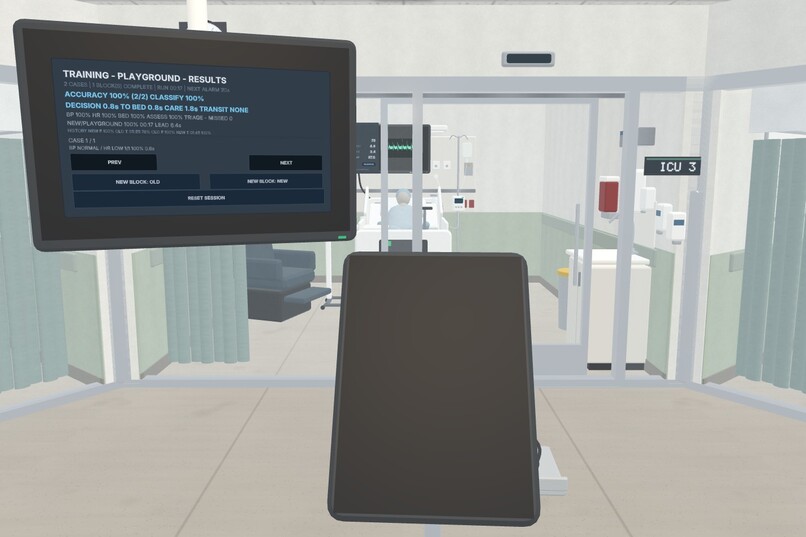
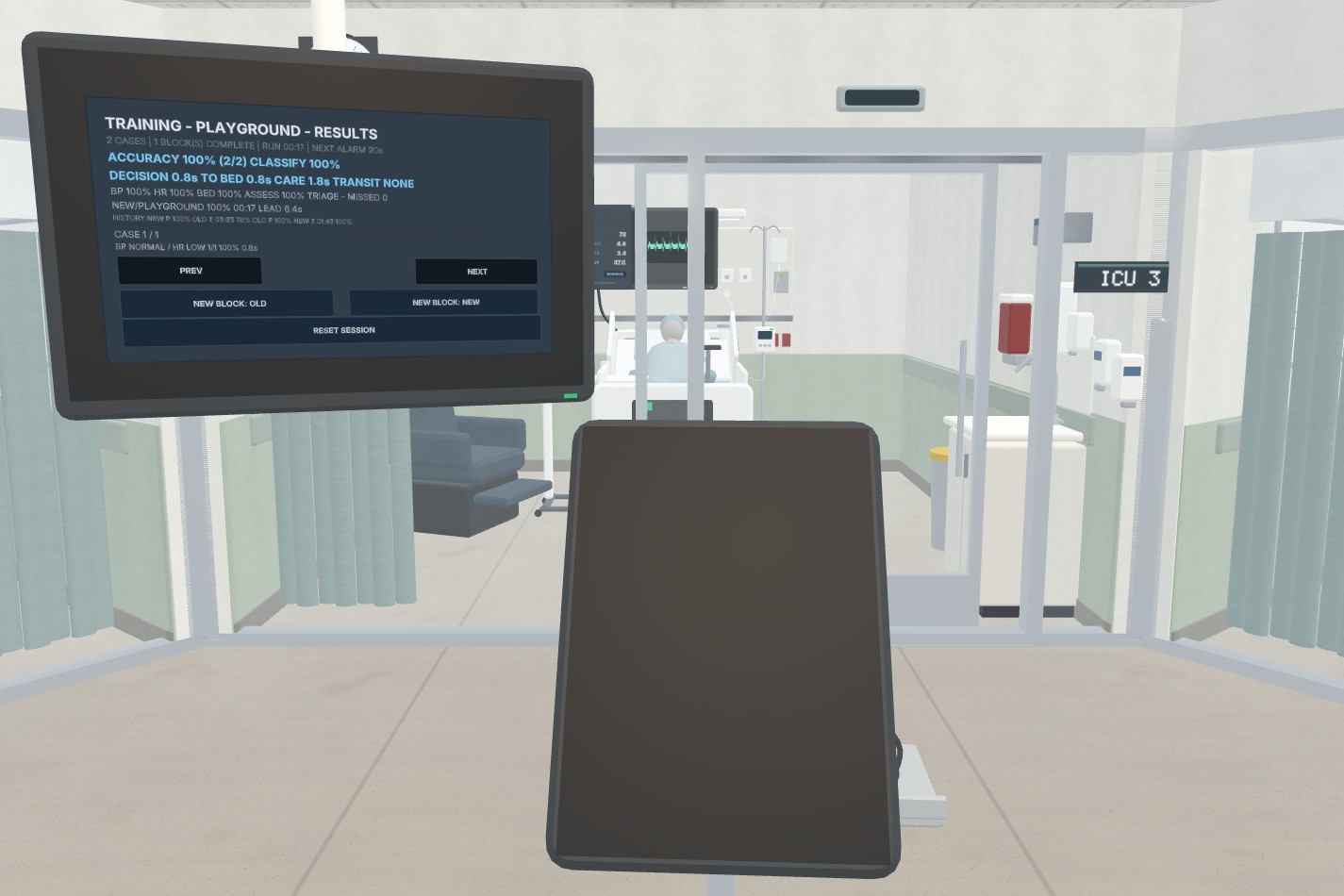
Results
-
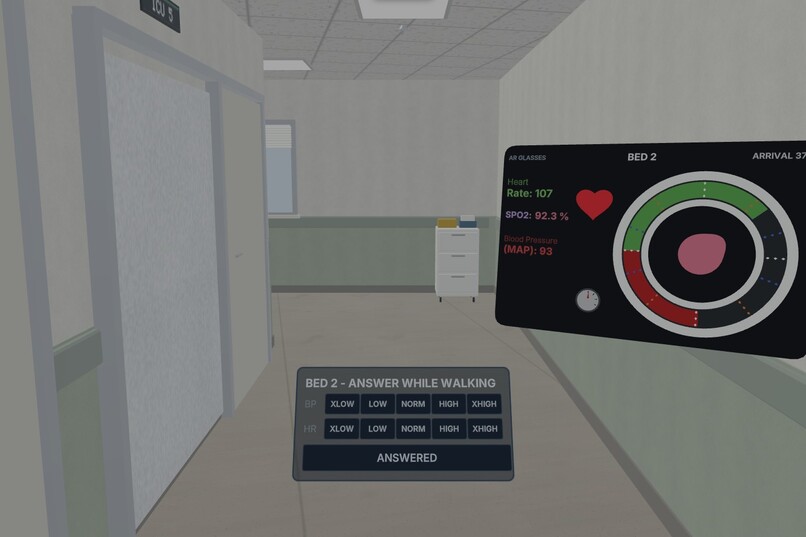
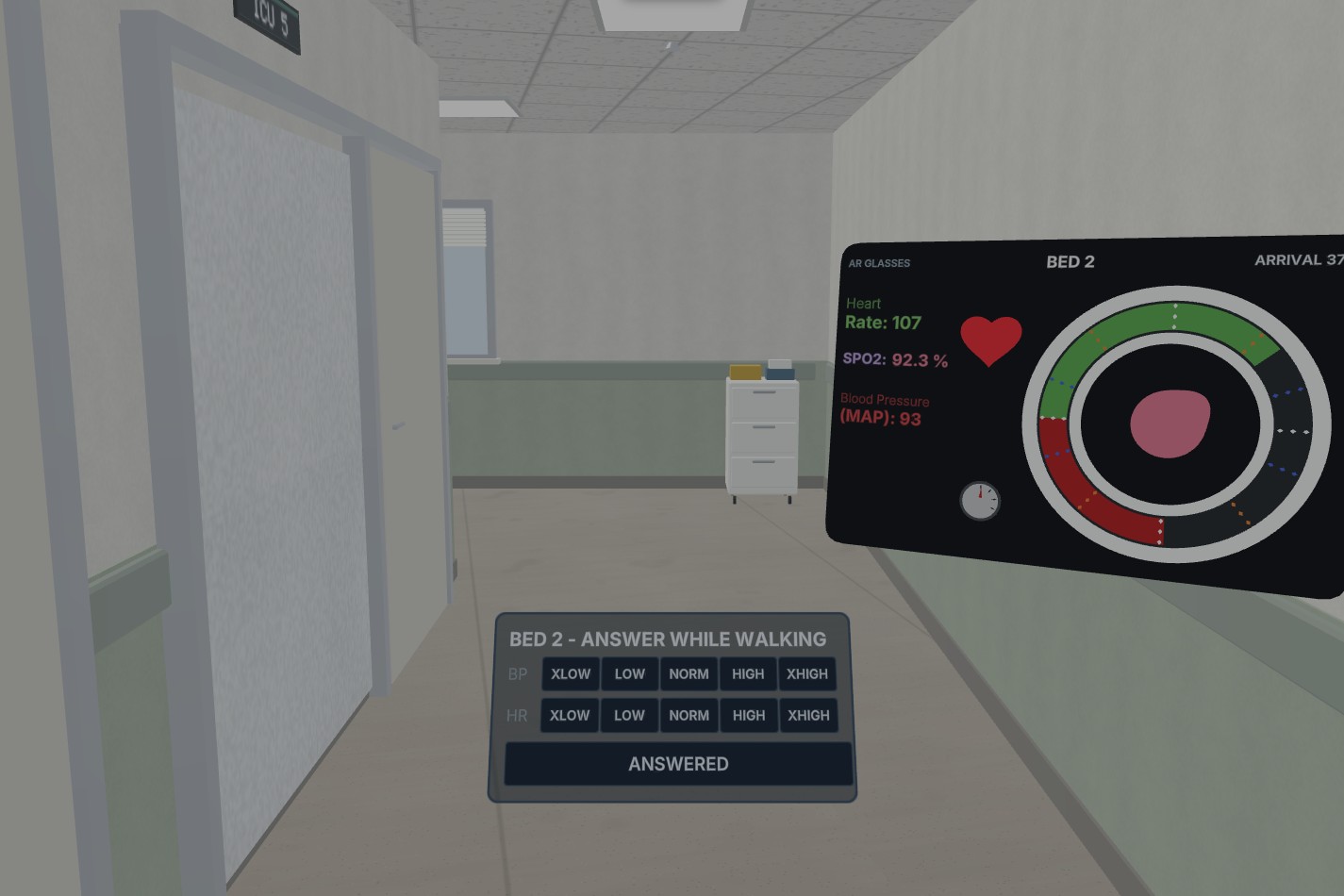
Transit and questioning
-
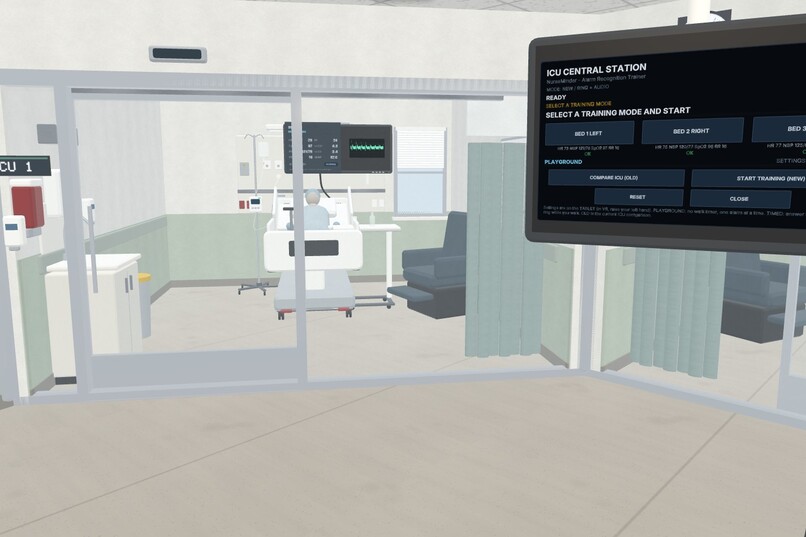
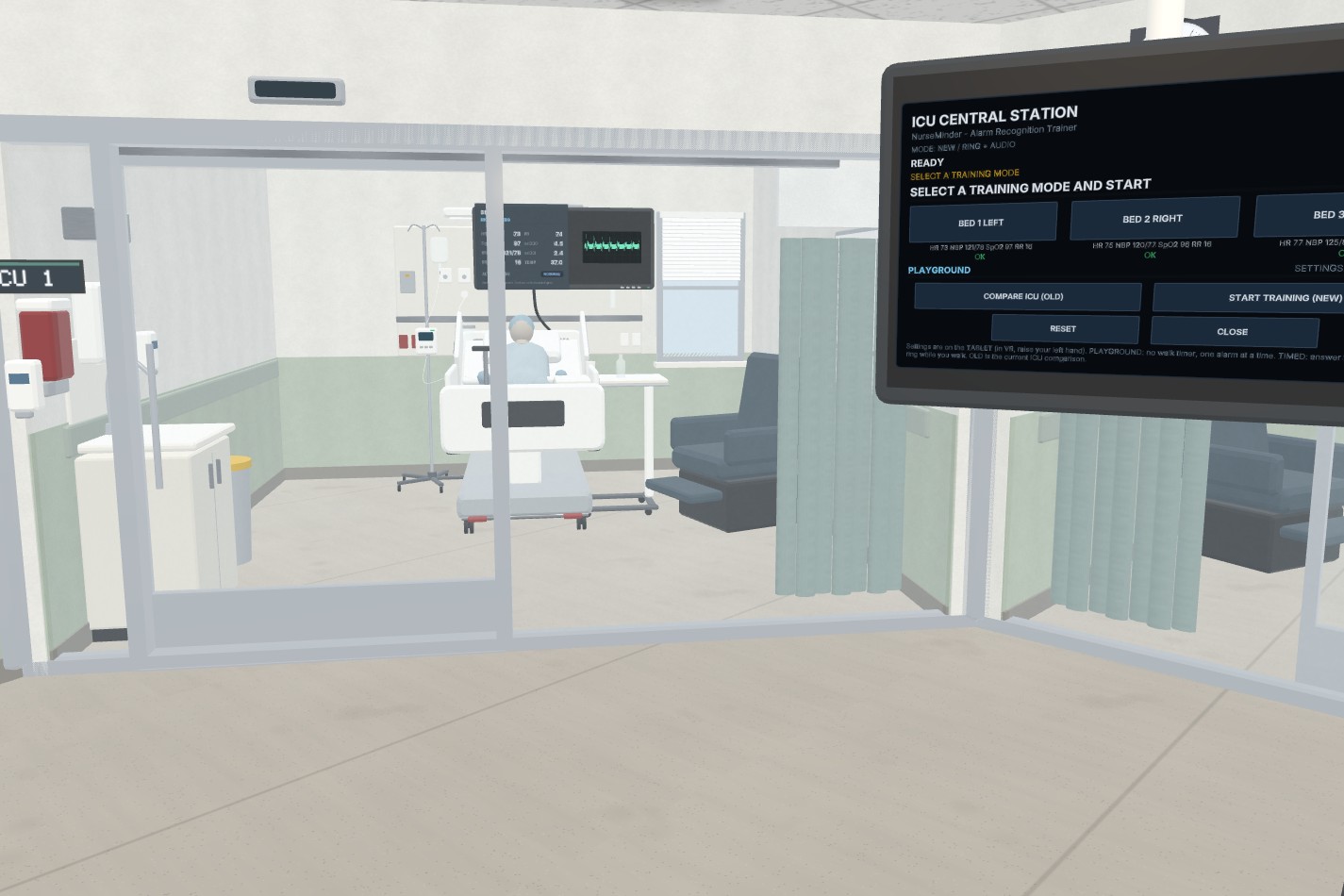
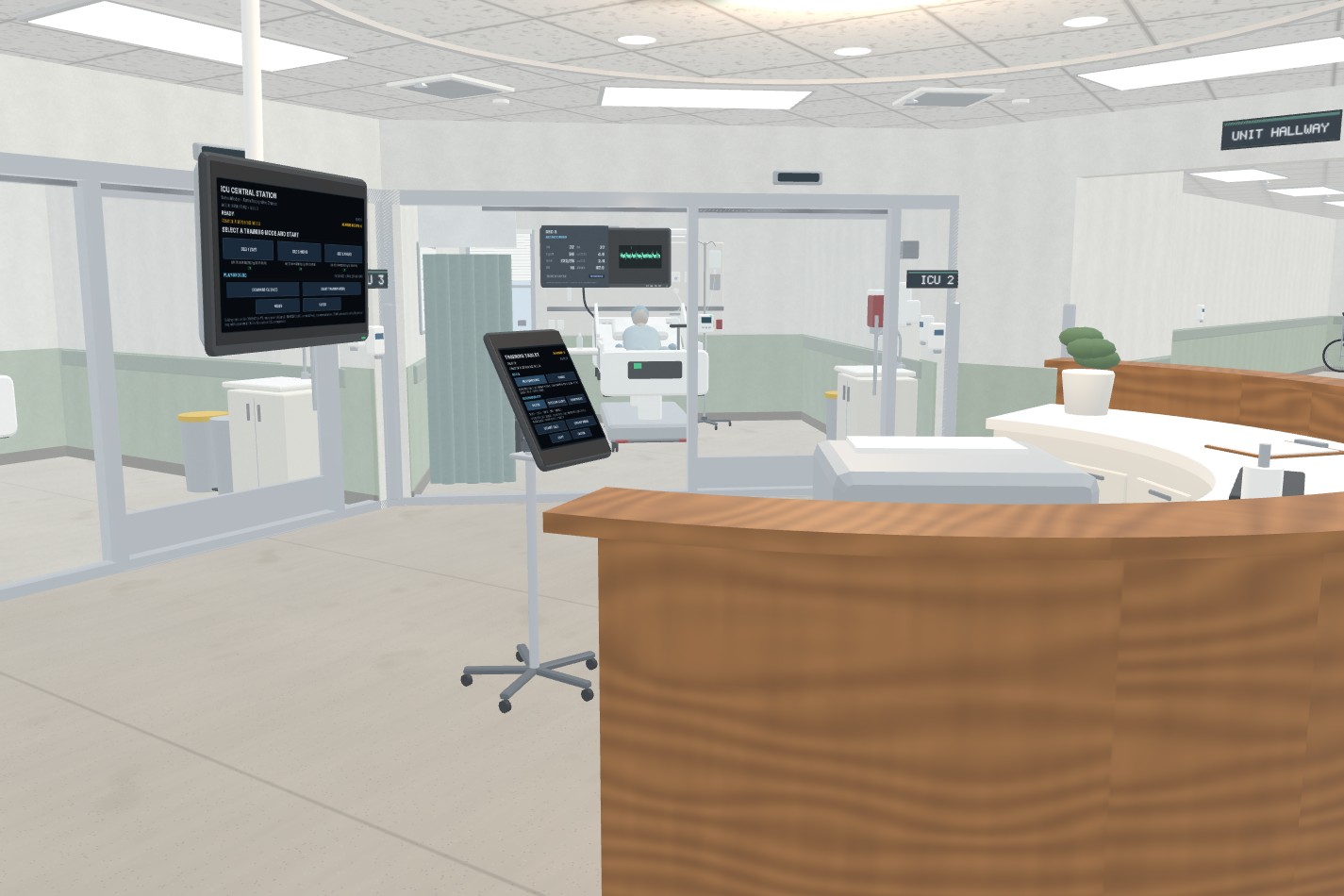
Central Station in lobby
-
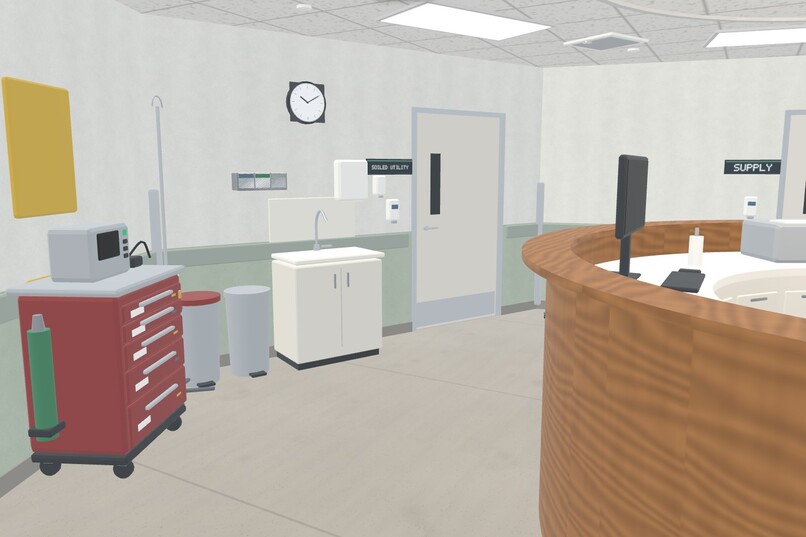
Walking in lobby
-
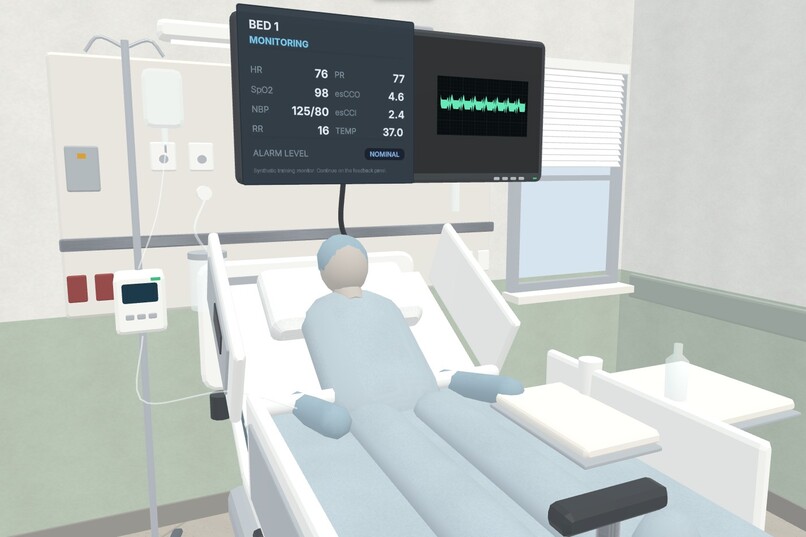
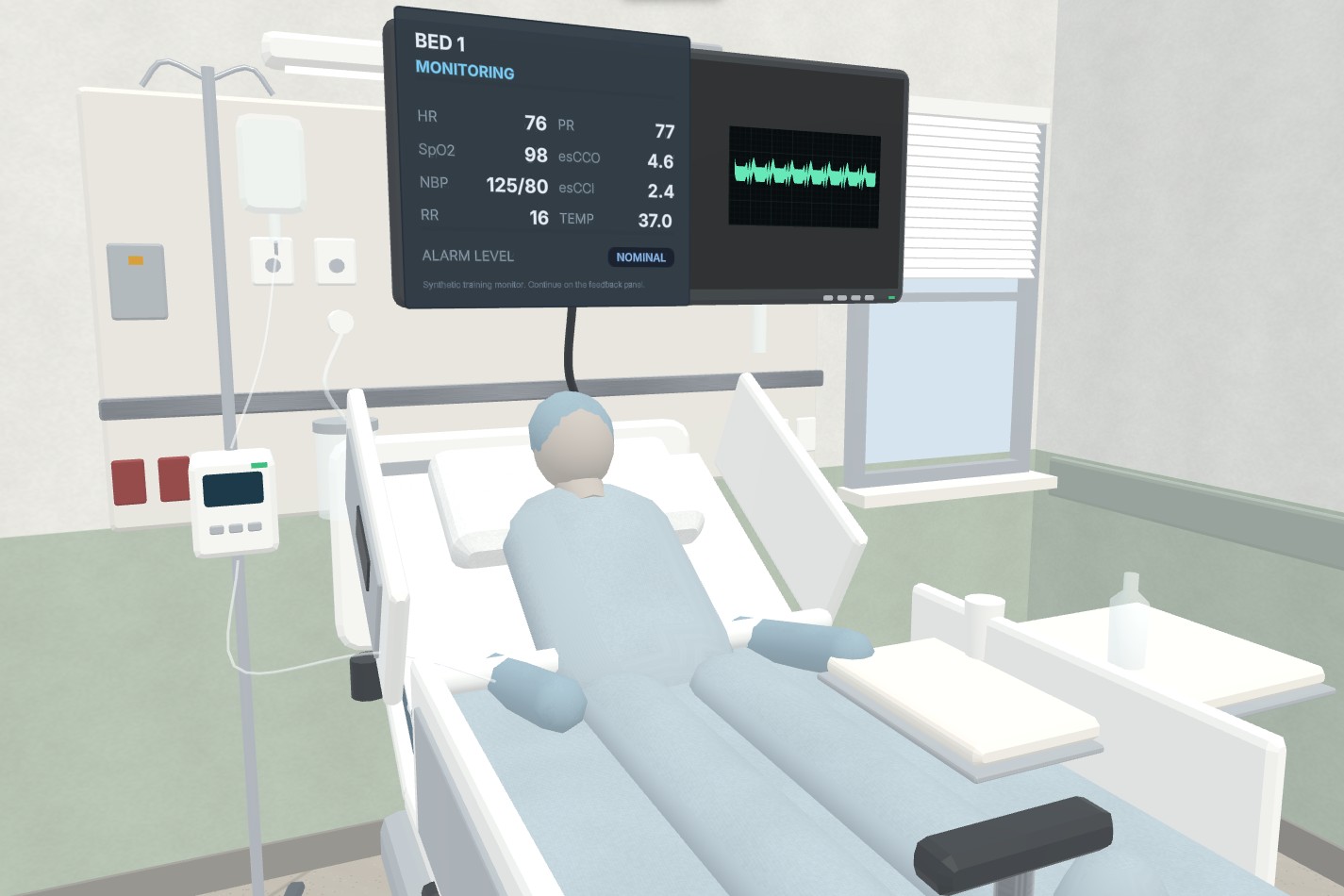
Patient bed view
-
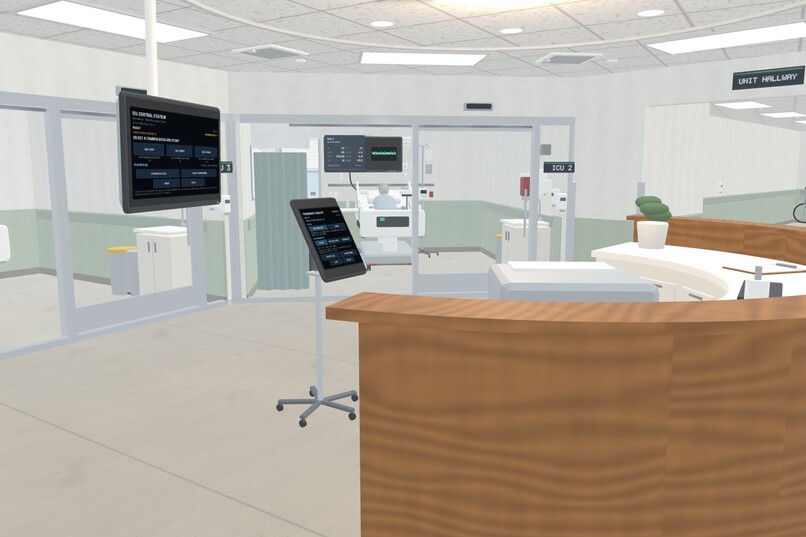
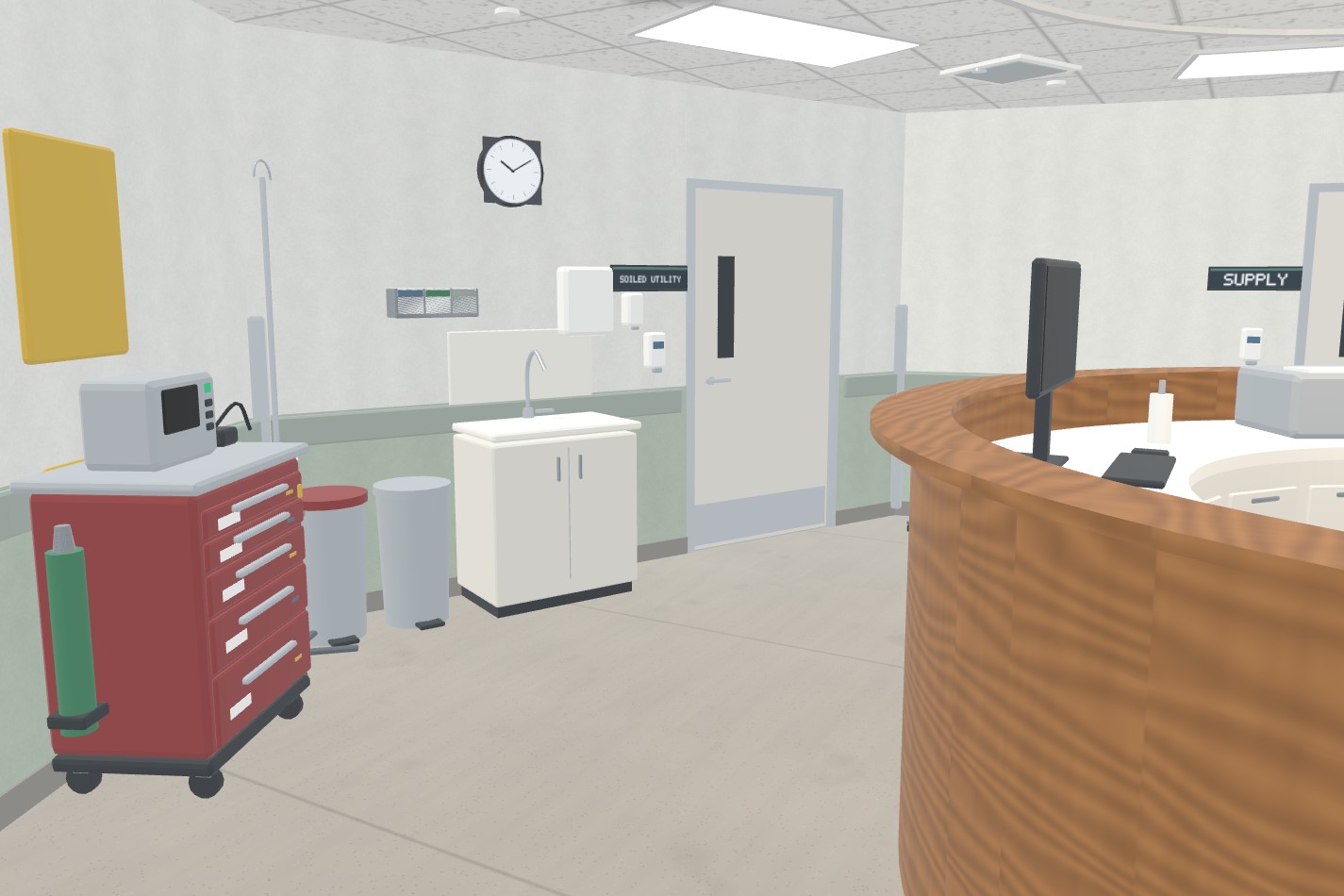
Lobby
-
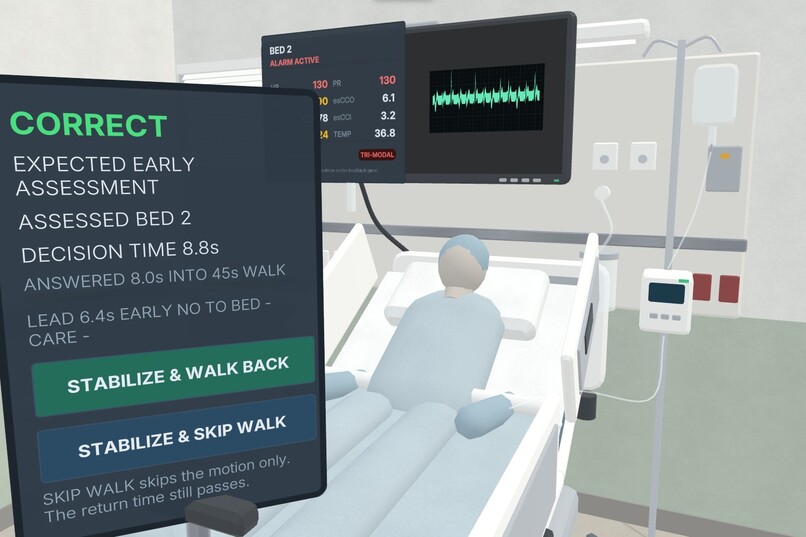
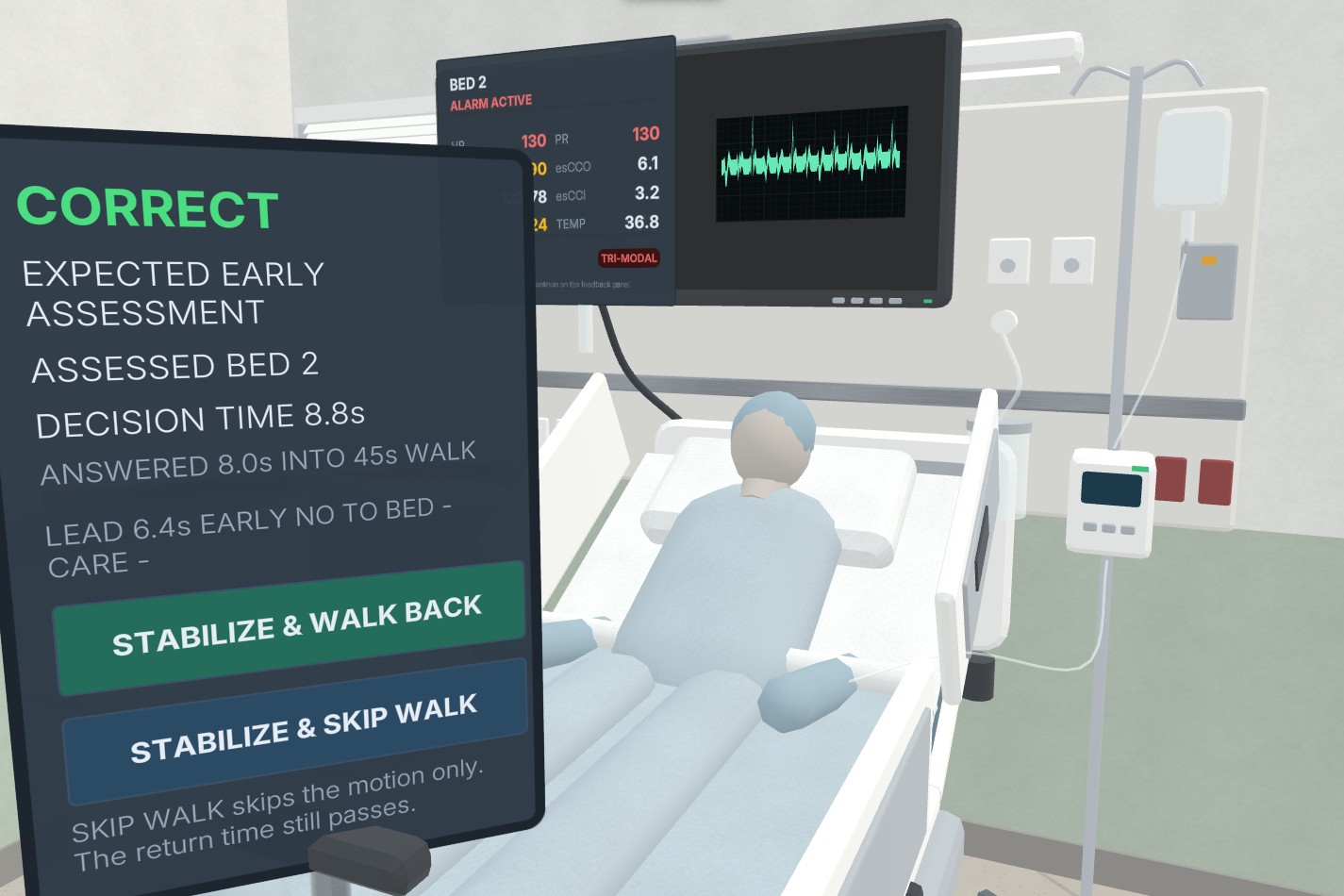
Scoring
-
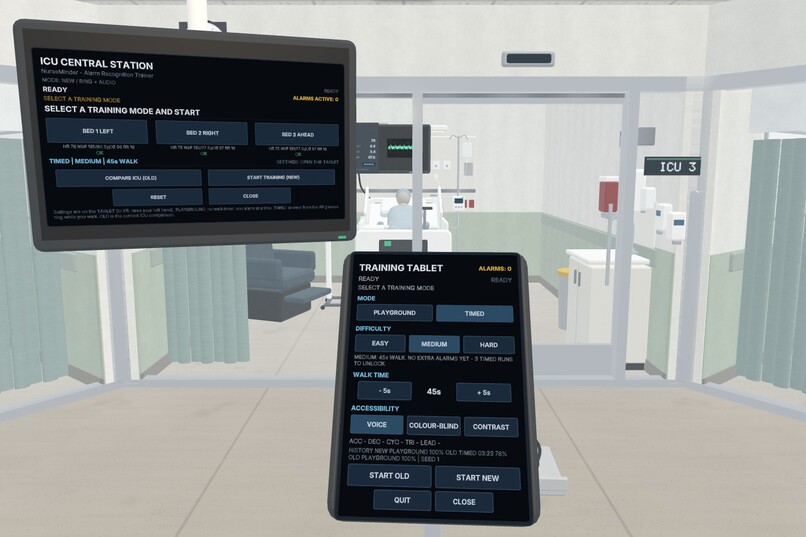
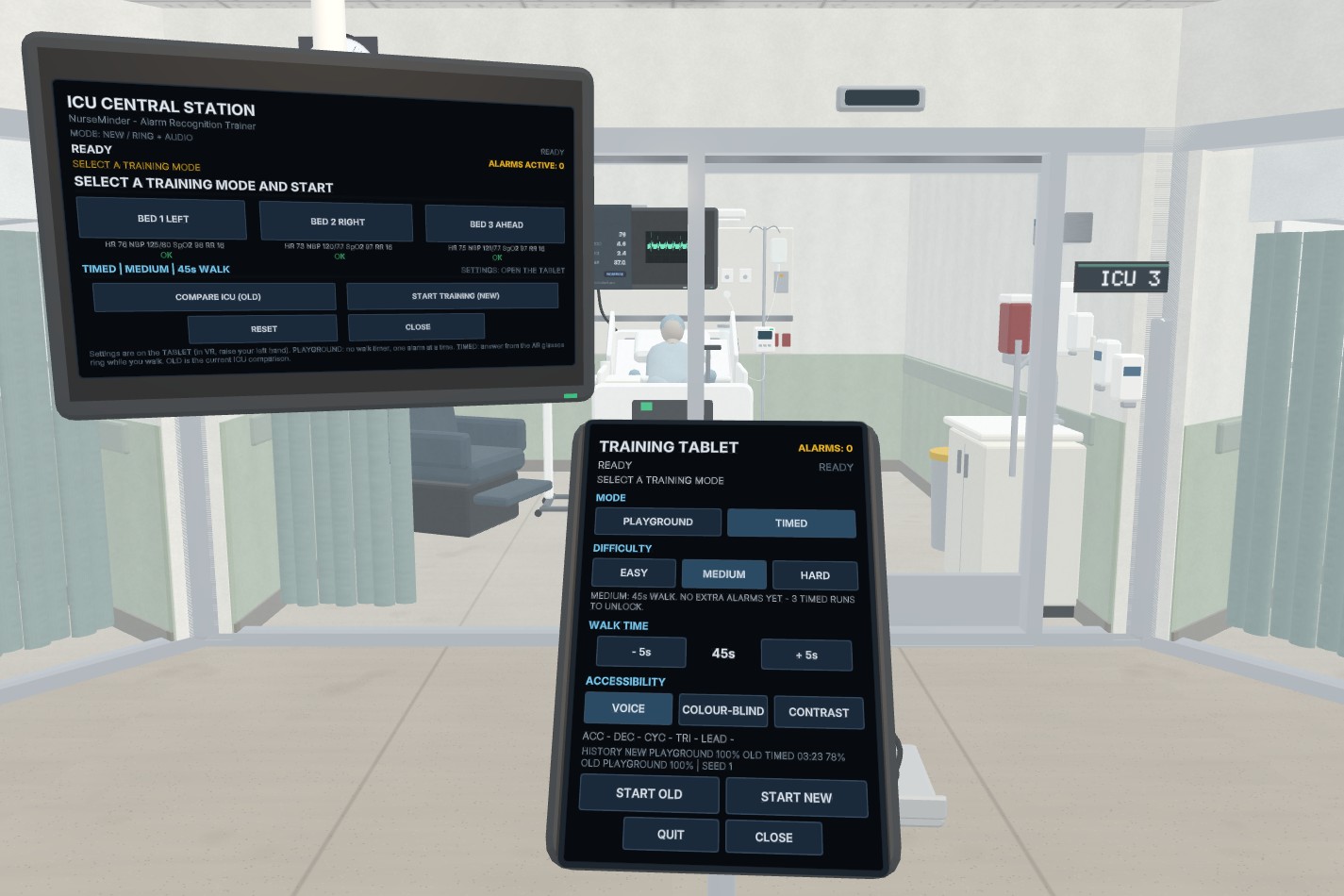
Choosing training target
-
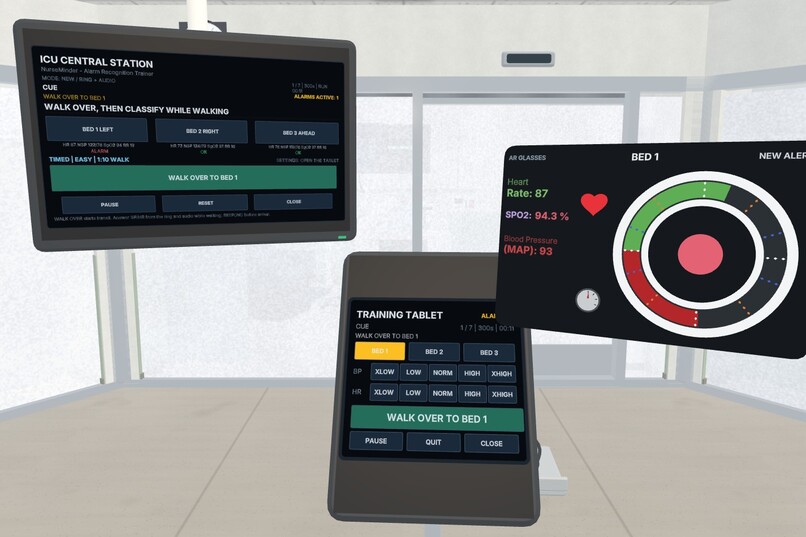
Colorblind enabled trimodal alarm system
-
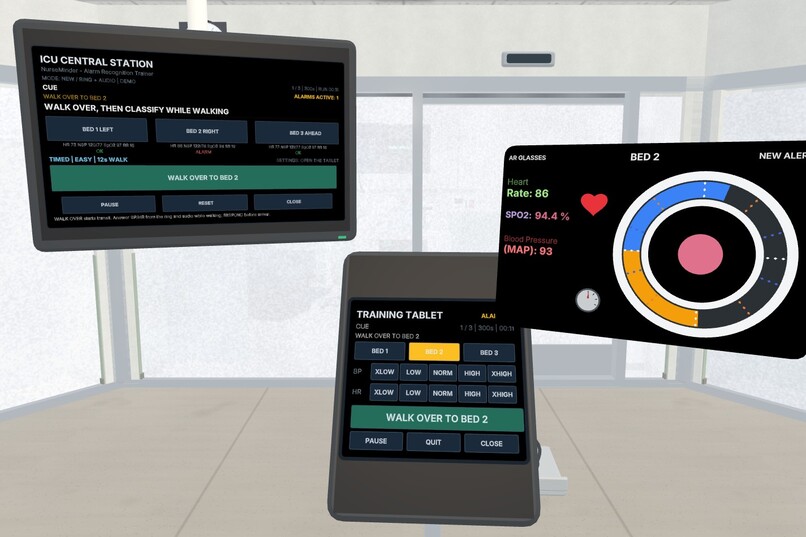
Colorblind enabled trimodal alarm system
-
-
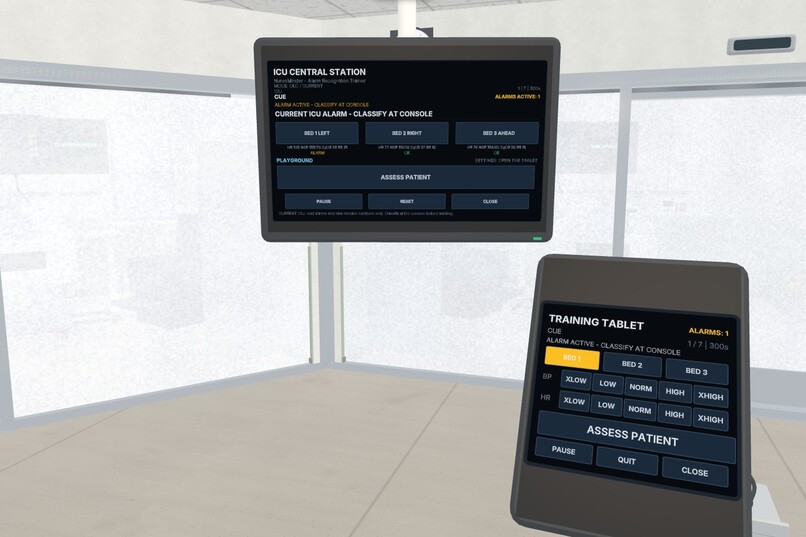
Timed mode
Inspiration
Nurses, doctors, and other frontline workers know all too well that in the start of their career, they will inevitably be the reason someone dies. NurseMinder begs the question: what if you could experience the environment before you reached the bedside?
Rather than recreate a real hospital enviornment, or make a generic diagnosis tester like worldle for doctors, I wanted to give an immmersive training for the one specific thing about their new ICU/hospital environment every new health professional on the job is shocked to experience in the hospital --- the alarms.
Every sound, display, and interaction has a purpose: helping a trainee acclimate to the environment and practice deciding where to direct their attention and what to assess next.
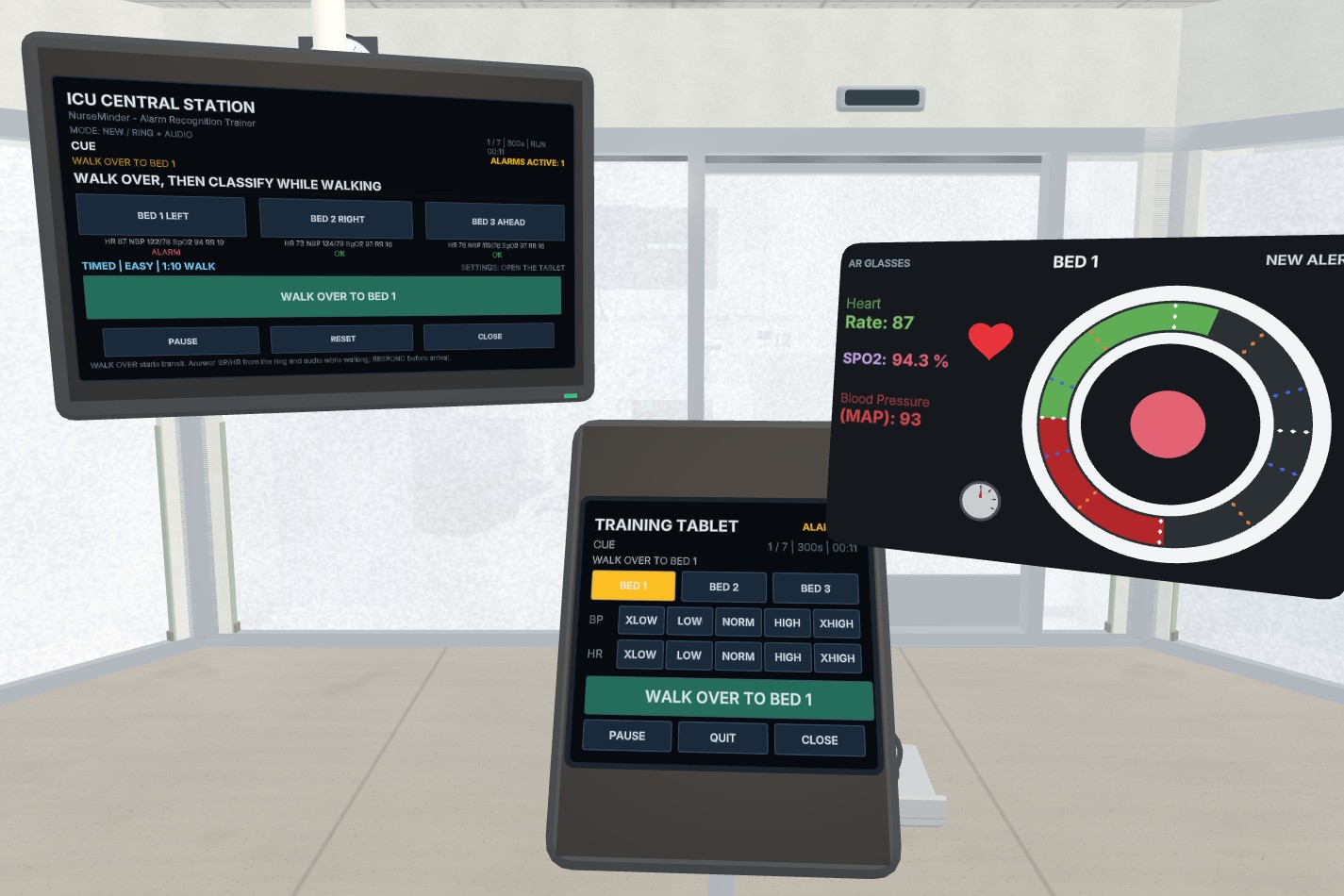
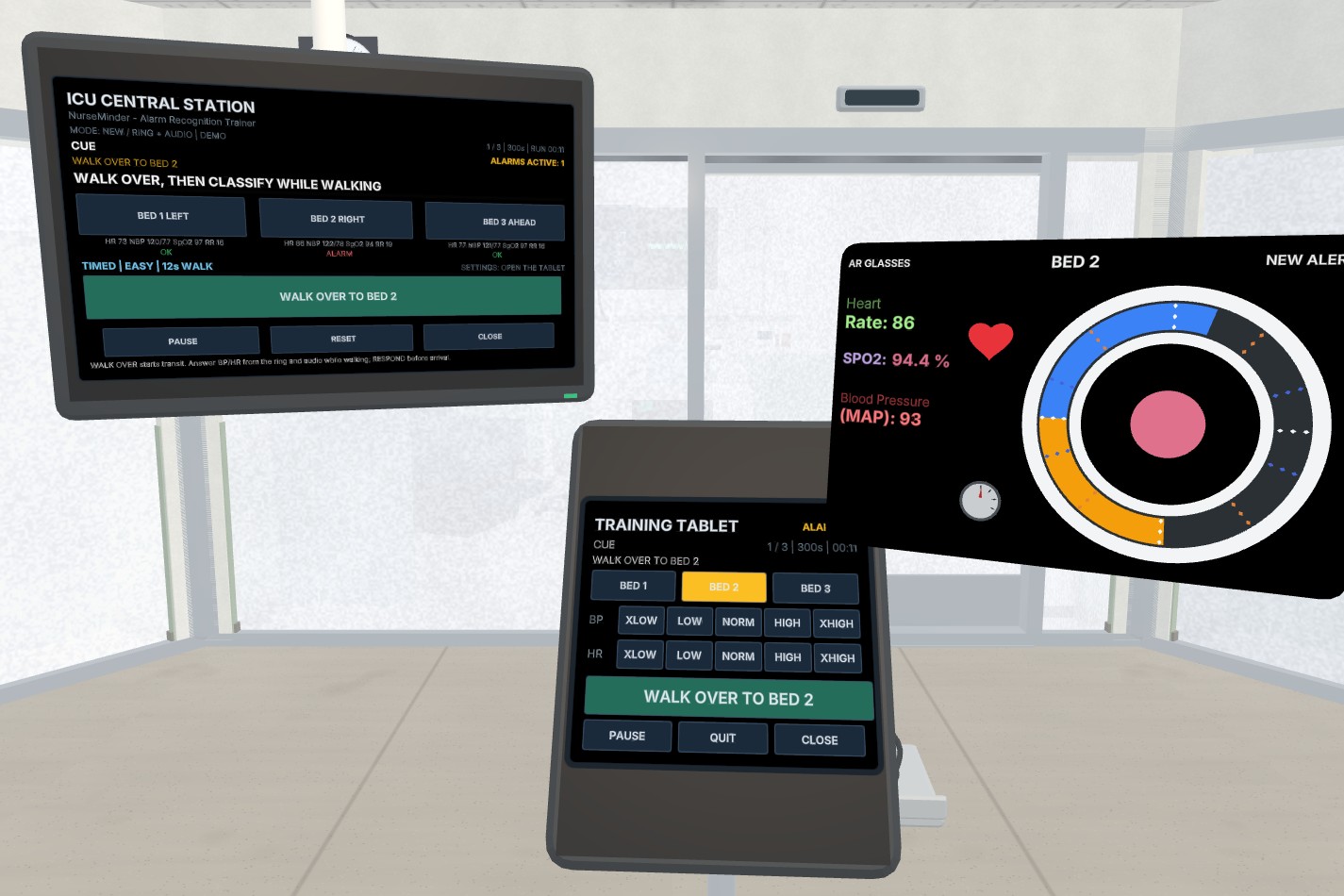
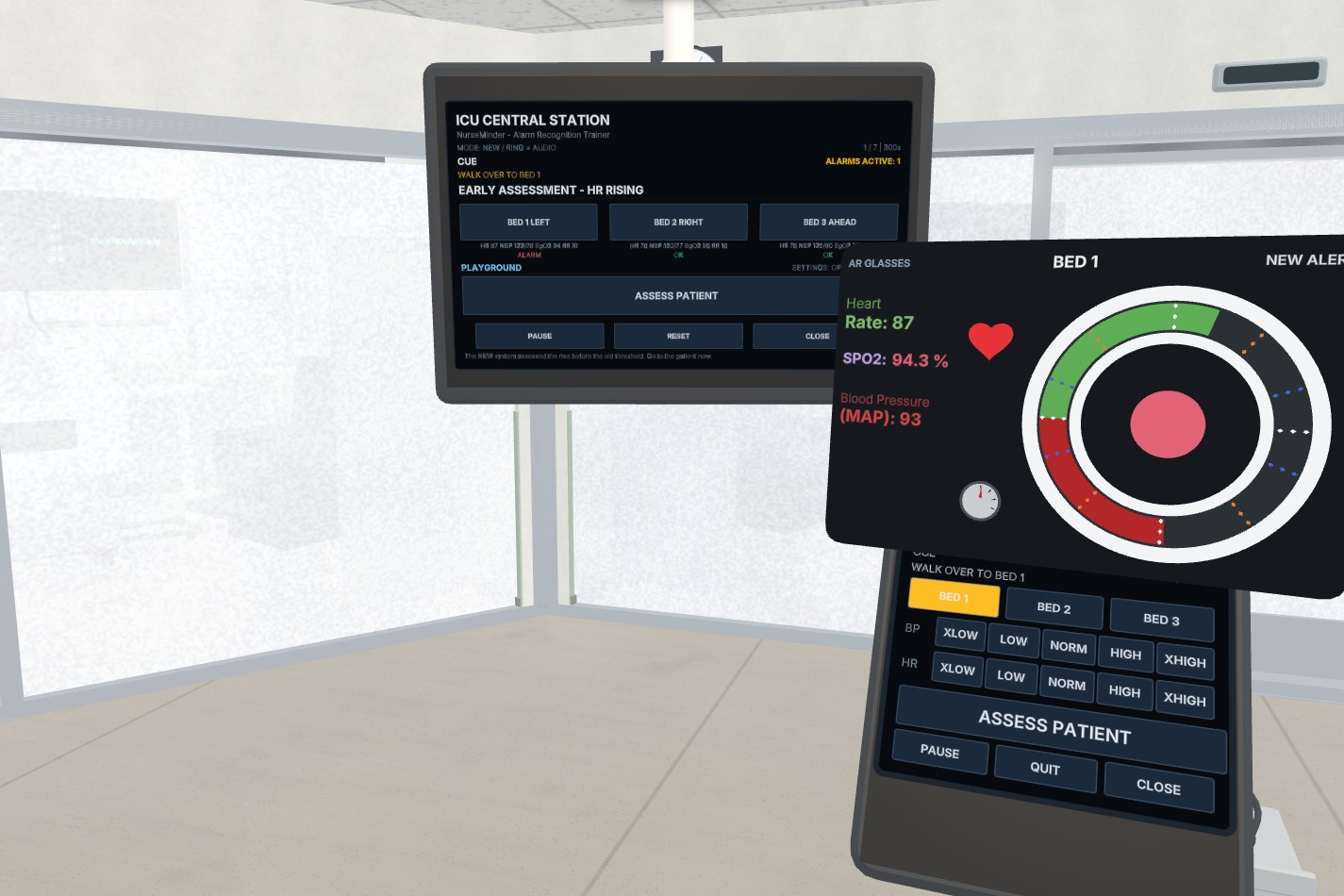
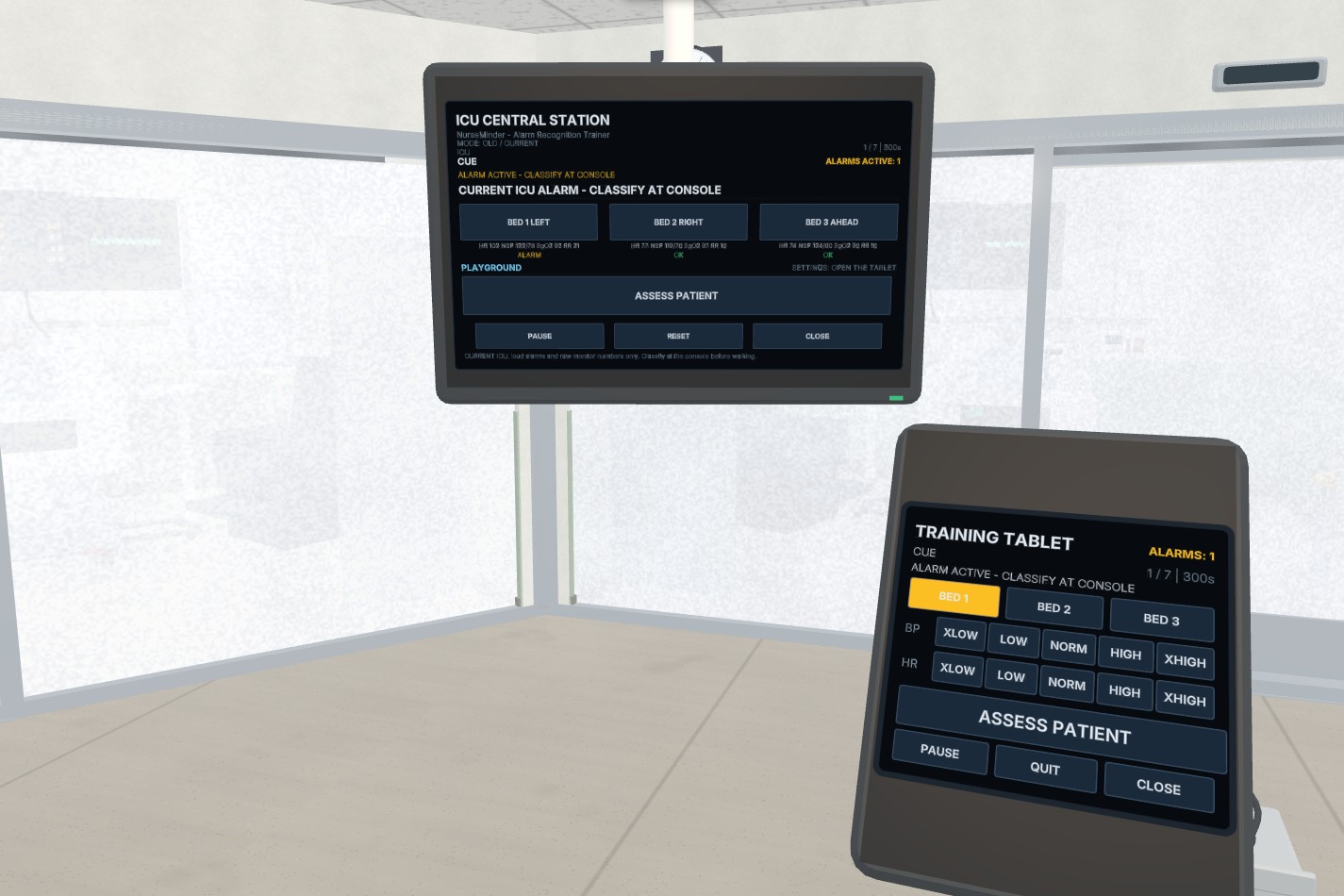
The result --- A seated, hands-first VR alarm-training simulator. Three patient rooms surround your station. An alarm sounds. Two different alarm systems are shown, showing a new alarm system I am developing for my senior design project that enables anyone hard of hearing or that has difficulty seeing as well as the current status quo. My goal was to help train for the current alarms but also see how this new alarm system not only enables the hard of hearing and visually impaired but also minimizes time wasted and maximizes patient care. You identify the patient, interpret the cue, and make your decision.
Is it hard? On paper no as long as you treat patients faster then alarms pop up! The hospital is virtual. The decisions are yours.
What it does
NurseMinder turns alarm interpretation into a repeatable practice loop: notice, interpret, respond, reflect. Start with untimed practice to learn the mechanics, then introduce the real-life scenarios...travel time, overlapping alarms, and greater onset of alarms. Each scripted shift includes six individual events and a three-patient triage finale that asks you to prioritize competing cues --- literally showing how you as the attending nurse will decide who to treat first.
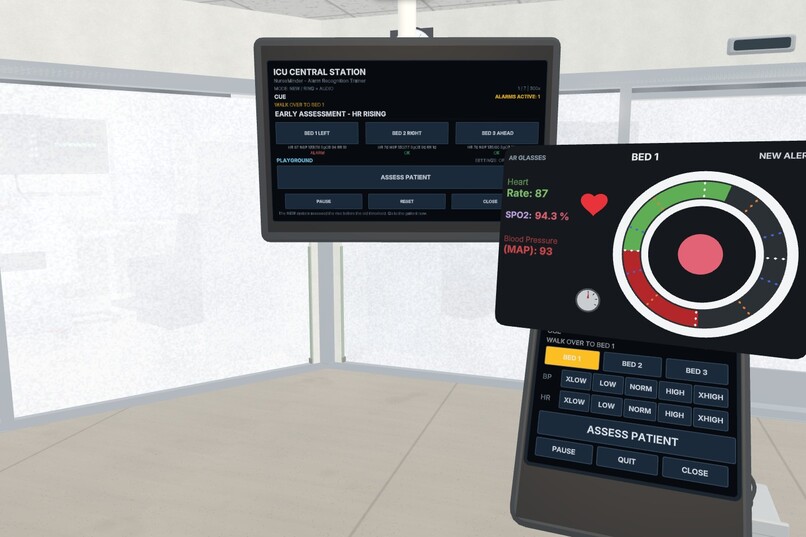
Two modes make the design differences tangible. 1) The baseline presents numeric displays and generic alarm banners of the status quo. 2) The enhanced mode adds the novel trimodal system, it includes a glanceable vital-sign ring, patient-vitals audio for heart rate and blood pressure, and a haptic tapping and buzzing through a vest or 'haptics belt.' These three modalties are what enables a nurse with any difficulty for vision, touch, or hearing. Furthermore, a user can see how these modalties can inform them during timed travel, so you can answer before arriving.
Both modes replay the same scenario seed. Results separate accuracy from timing, and a saved run history gives you something concrete to revisit.
This is the productivity goal: turn a short session into deliberate practice, not just time spent in VR.
How we built it
I built NurseMinder independently using TypeScript and the Immersive Web SDK, with spatial interfaces, synthesized audio, and a procedurally constructed ICU environment. It runs through WebXR and is hosted on Azure Static Web Apps, I bought the domain name through Godaddy. The implementation is original, incorporating alarm designs used with permission. All patient vitals are synthetic.
In real life research meta AR glasses are being experimented with as a source both the audio and visual overalys of the new alarm system.
I separated simulation and scoring from rendering so scenario rules could be tested independently. Twenty scripted shifts provide repeatable practice, while shared geometry and materials keep the environment economical to render.
Challenges we ran into
This was my first time working with anything aroun VR/AR. But the hardest challenge was was making a richly populated scene and environment to support a simple decision. The ring, patient rooms, audio, tablet, and feedback all compete for attention. I kept refining their placement and visibility so the next action remained clear.
Another challenge was honest comparison: replaying the same cases without confusing a scripted cue advantage with demonstrated clinical benefit.
Accomplishments that we're proud of
I built more than a virtual hospital: I built a complete practice loop. NurseMinder takes a trainee from noticing an alarm to interpreting it, responding, and reviewing their decision. As well as teaching a trainee a more accessible option that lets a new nurse perform just as good as any other nurse regardless of visual, auditory, or sensory impairments.
As a solo developer, I am proud to have spent <$50 in token costs, learned how to actually make a VR environment and proud to have brought together a procedural ICU environment, spatial audio, work from my actual Senior Design Project I'm working on in real life (with permission), hands-first controls, and scenario-based scoring in one browser-accessible experience. I am proud to have made a rich first-principles training sim that conceptually contributes to saving lives.
What we learned
The most important interface is the one that helps you make the next decision.
I learned to prioritize readable displays, generous interaction targets, and clear feedback over visual complexity. Hands-first design also changed how I approached reach: instead of expecting users to lean toward a fixed control panel, the training tablet moves toward their raised hand. Accessibility became part of that design process. Colorblind and high-contrast options provide alternative presentations, while untimed practice lets users learn before adding time pressure. The whole concept of the new trimodal alarm system is accessibility and I was glad I could make showcasing it further accessible.
What's next for NurseMinder
My next priority is testing on a headset, focusing on hand interaction, display readability, spatial audio, and seated comfort. Then using this VR to test how fast people can understand the new alarm system.
From there, I want to add voice-first answering, clearer onboarding for unfamiliar alarm encodings, and more scenarios that expand the practice curriculum.
Longer term, I hope this becomes a much larger than myself. As a senior design project and as a system that saves lives --- the goal of nurseminder ins't to replace replace clinical education. But to add a complement for a focused, repeatable practice for alarm awarness that is easier to access and more specific to learning alarms, not general clinical education. NurseMinder will remain a synthetic-data training prototype, not a tool for monitoring or treating real patients --- but hopefully the actual trimodal alarm system goes on to become the norm, helping nurses and frontline staff with alarm fatigue and saving people who have so much left to live out in their otherwise early terminated life.
TypeScript three.js JavaScript HTML5 Node.js Webgl Azure
Built With
- azure
- bun
- godaddy
- html5
- javascript
- metavr
- node.js
- three.js
- typescript
- vite
- webgl
- webxr


