-
-
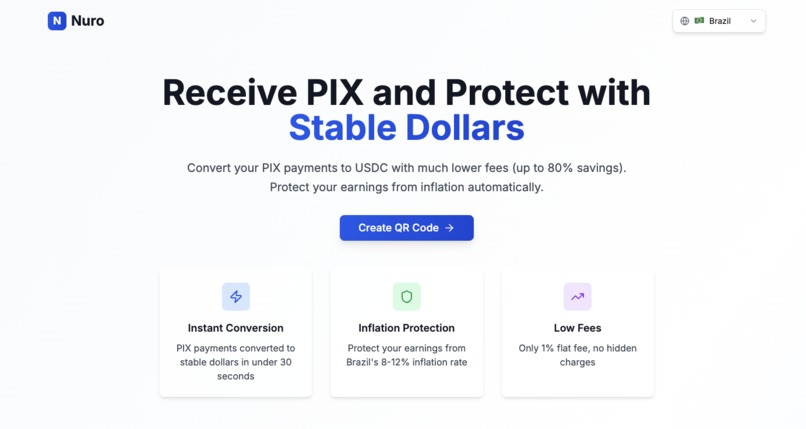
Landing Page
-
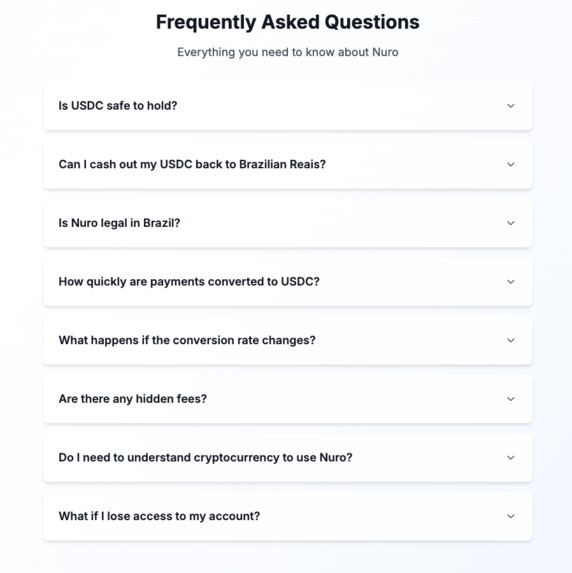
FAQ
-
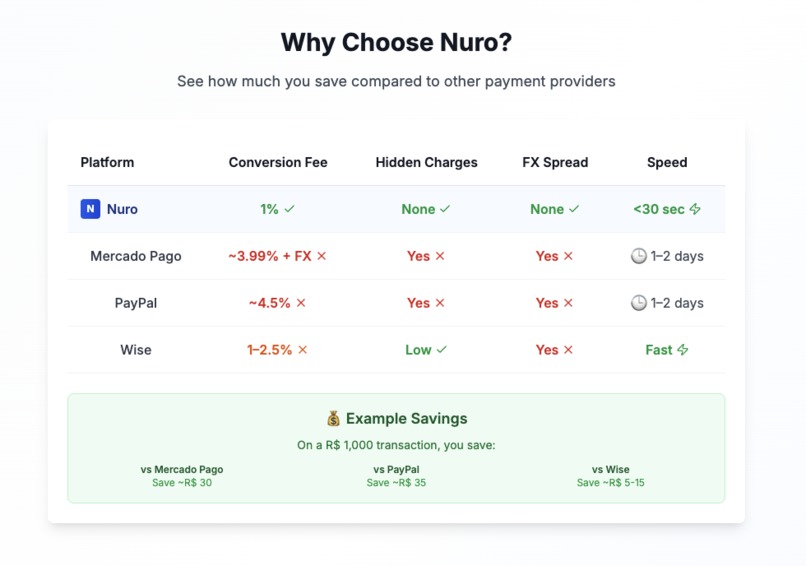
Why Nuro?
Inspiration
While I was in fintech, I had firsthand experience interacting with merchants from high-inflation countries - small business owners doing everything right, yet still losing control of their income. One café owner told me, “Every time I save up a little, it’s worth less the next month.” That stuck with me.
These aren’t people looking to speculate on crypto. They’re just trying to preserve the value of what they’ve already earned. But local banks charge high fees, and moving money into stable currency is complicated, expensive, or outright inaccessible.
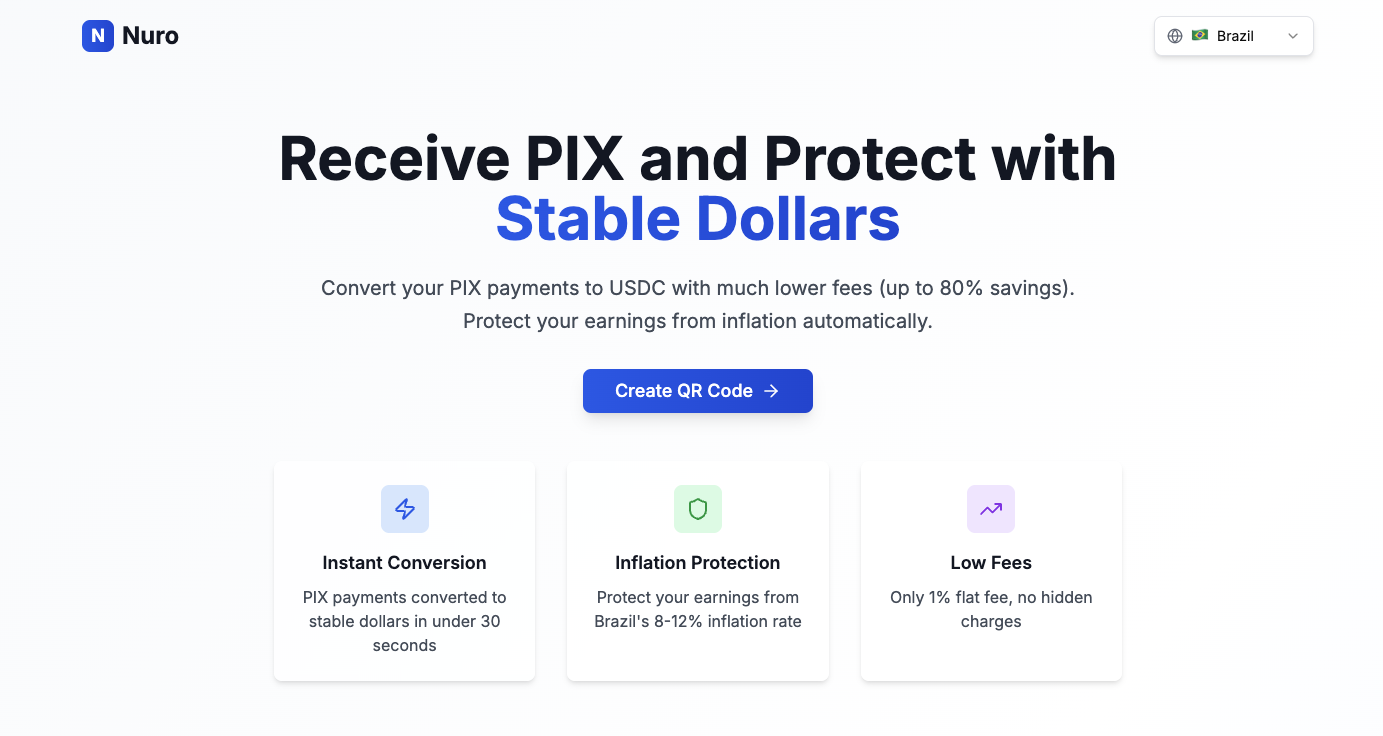
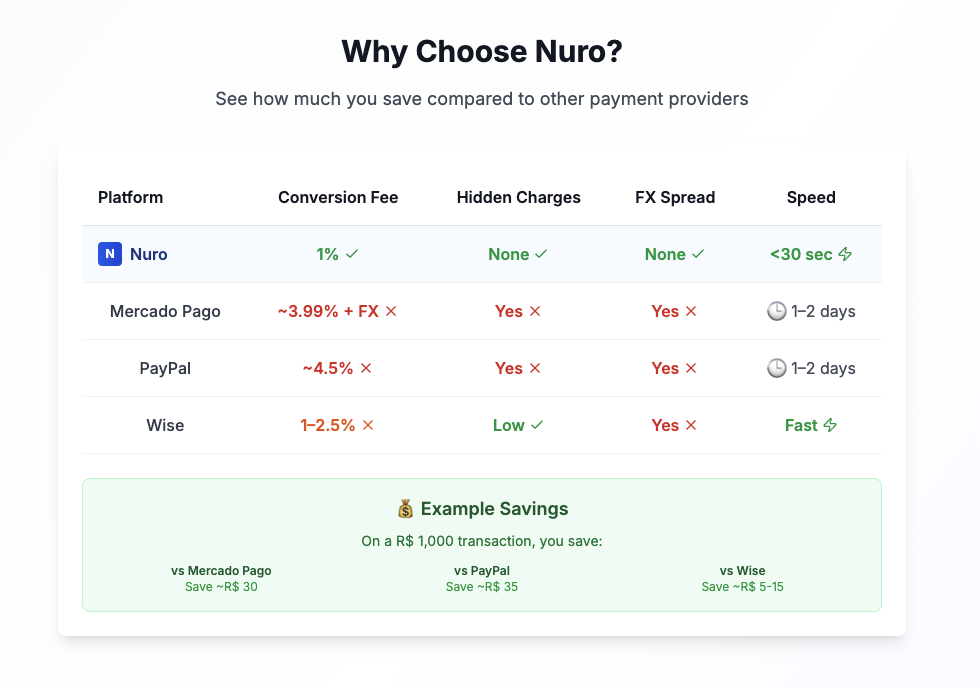
That’s why I built Nuro - to give merchants a simple, affordable way to convert their local earnings into digital dollars (USDC), instantly. With just 1% flat fee and no complex paperwork, Nuro makes it easy to protect your income from inflation, no matter where you live or work.
What it does
Nuro lets merchants convert local fiat payments, starting with PIX in Brazil, directly into USDC at the point of sale. As soon as a customer pays, the funds are automatically converted into stablecoins and sent to the merchant’s wallet. It’s fast, non-custodial, and costs just 1%, with no hidden fees or KYB required.
How we built it
We built Nuro with a modern, secure stack optimized for speed and scalability:
- Frontend: Next.js (React, TypeScript), styled with Tailwind CSS and shadcn-ui components, deployed via Vercel CLI
- Backend: Node.js + Express (TypeScript), PostgreSQL hosted on AWS RDS
- Fiat rails: Integrated with Mercado Pago for PIX payment acceptance
- Blockchain: Polygon network using ethers.js and Alchemy for smart contract interaction
- Wallet: Privy for secure, user-friendly wallet authentication and management
- Dev Tools: Jest for unit testing and Cypress for end-to-end testing
Challenges we ran into
- Integrating PIX in a developer-friendly way took time, as public documentation is fragmented.
- Abstracting blockchain complexity while still staying non-custodial required thoughtful UX.
- Ensuring regulatory flexibility (avoiding KYB while still offering something usable) meant researching how far we could push stablecoin access without triggering compliance flags.
Accomplishments that we're proud of
- Fully working MVP with PIX → USDC conversion live on testnet
- Near-instant user onboarding with no wallet setup or crypto knowledge needed
- Pricing is an order of magnitude cheaper than legacy providers (1% flat fee)
What we learned
- The crypto UX gap isn’t just a design problem; it’s an empathy problem. Most small business users don’t want to “learn” crypto; they want to solve a real-world pain fast.
- Stablecoins like USDC can do a lot of good in inflation-prone economies, but only if the rails are clean, cheap, and local-payment-native.
What's next for Nuro
- Launch in Brazil with real PIX support and USDC withdrawals on Polygon
- Add email receipts, transaction history, and auto-withdrawals to improve UX
- Explore deeper integration with POS and e-commerce platforms for merchants
- Expand to other high-inflation economies like Argentina, Turkey, and Nigeria
Built With
- and-cypress-to-deliver-a-scalable
- cypress
- express.js
- framer-motion
- mercado-pago-api
- next.js
- node.js
- polygon
- polygon-(via-alchemy-api)
- postgresql
- privy
- tailwind-css
- typescript
- vercel


Log in or sign up for Devpost to join the conversation.