NURA — Neural Unity Recognition Architecture
What Inspired Us
We were in the library at 11pm watching a classmate stare at a blank page, open ChatGPT, close it, open it again, and submit something that wasn't really theirs. We recognized the feeling immediately. That hollow moment after you submit. The A that feels like someone else's work.
We are fourth year software engineering students who watched our whole generation slowly stop trusting their own thinking without noticing it happen. We didn't want to build another mood tracker. We wanted to build something that could actually feel what students can't. That question became NURA.
What We Learned
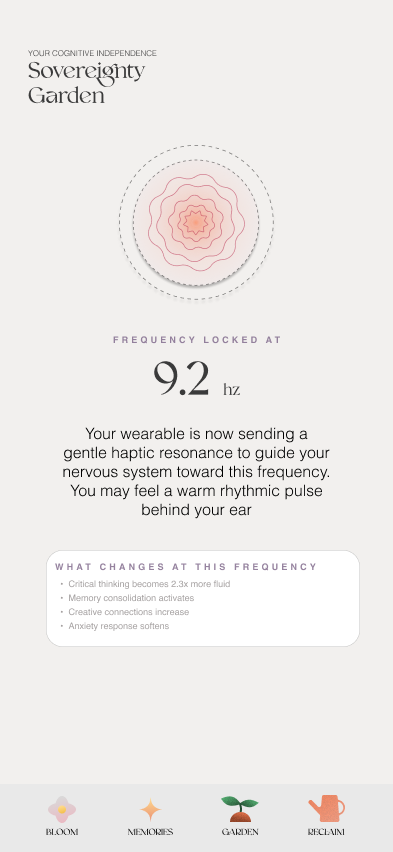
Humans have between 22 and 33 distinct senses, and we have built almost no tools for the ones that matter most in the digital age. We learned that the signals already exist, brainwave oscillation, heart rate variability, skin conductance, breath patterns, but nobody had translated them into something a student could feel and act on in real time. We also learned that the best interface isn't always a screen. Sometimes it's a warm pulse behind your ear that says: you're still here.
The research hit hard too. Gallup found teens average 4.8 hours a day on social media. A 2025 ScienceDirect study found AI dependency directly reduces critical thinking through cognitive fatigue. The US Surgeon General confirmed that more than 3 hours of daily social media doubles the risk of depression and anxiety. None of those students had a tool to feel any of it happening. That's the gap NURA fills.
How We Built It
We started with the problem, not the solution. We spent the first phase just sitting with one question: what does cognitive erosion feel like from the inside, and what would it mean to actually sense it? From that we built NURA around a new sense we called cognoception, the ability to perceive in real time whether your thinking is genuinely yours or being quietly replaced. Everything in the product, every screen, every haptic pattern, every word, had to serve that one idea.
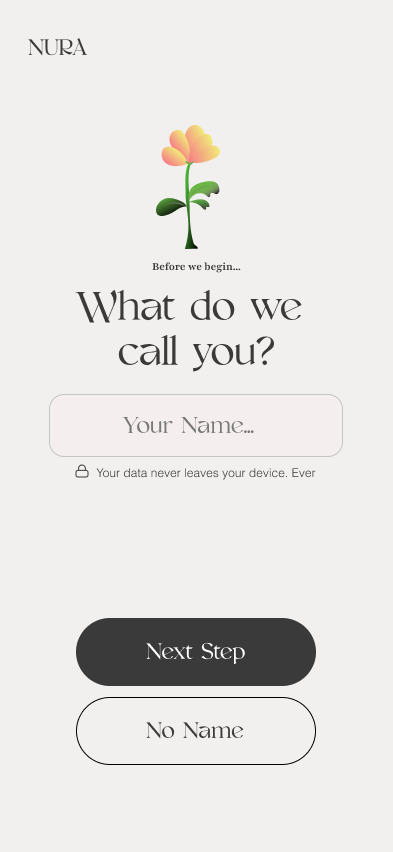
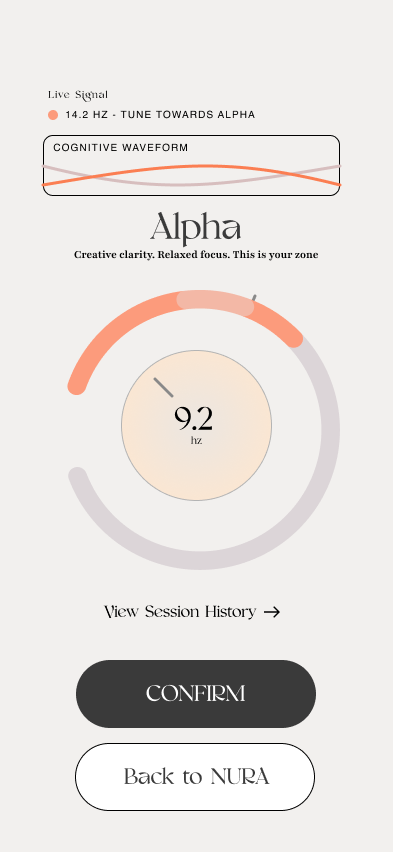
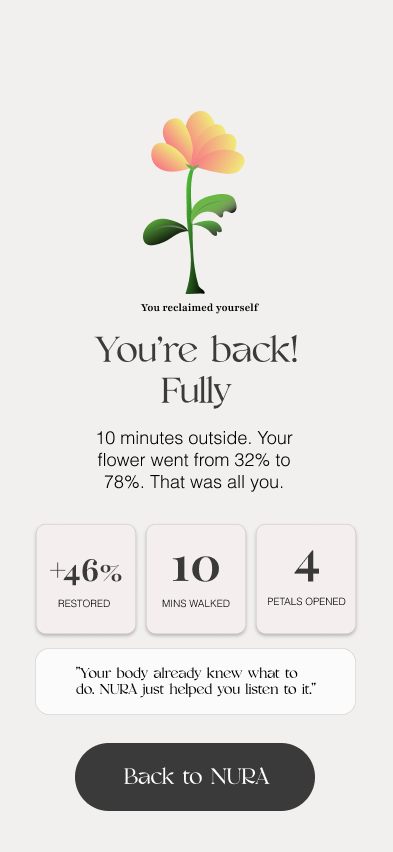
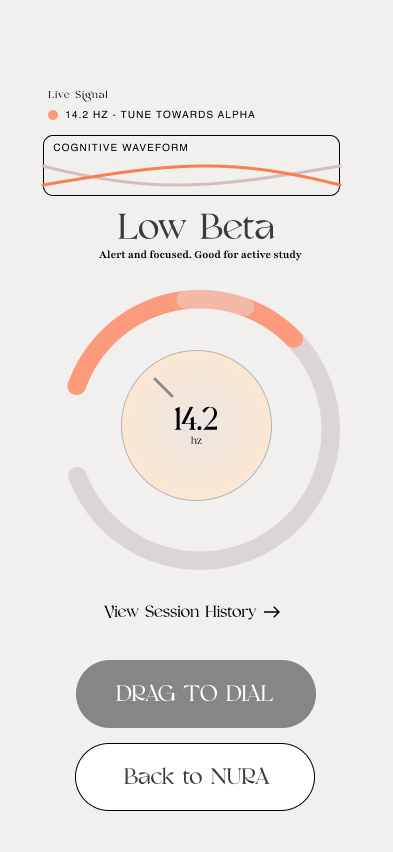
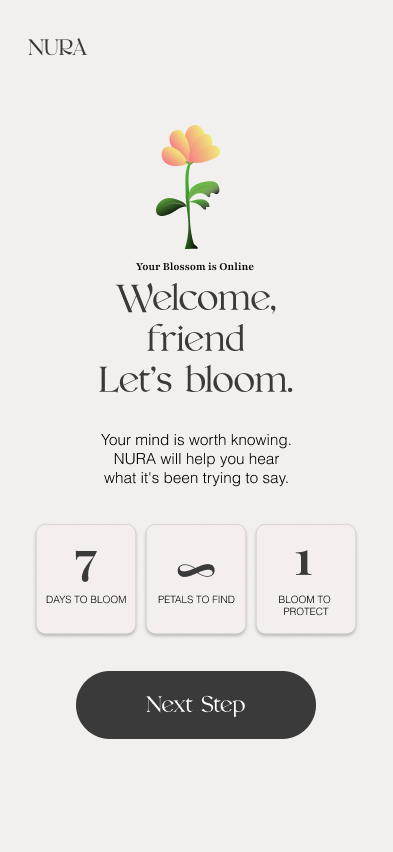
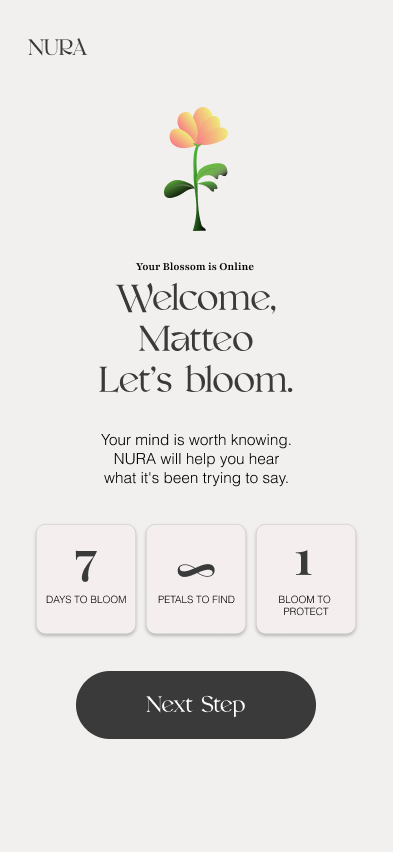
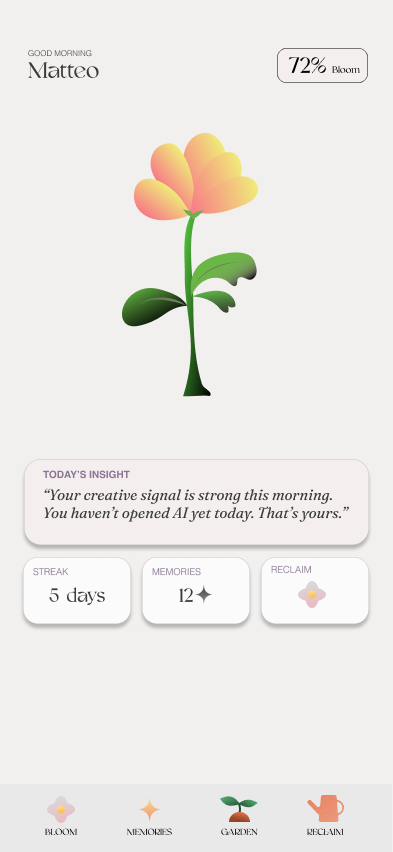
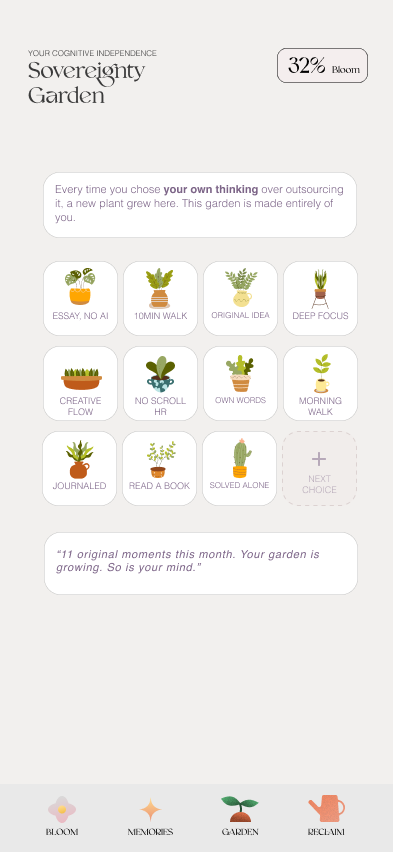
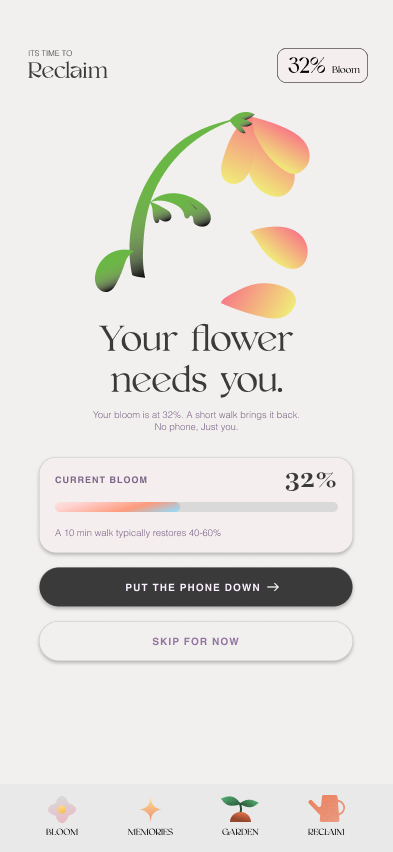
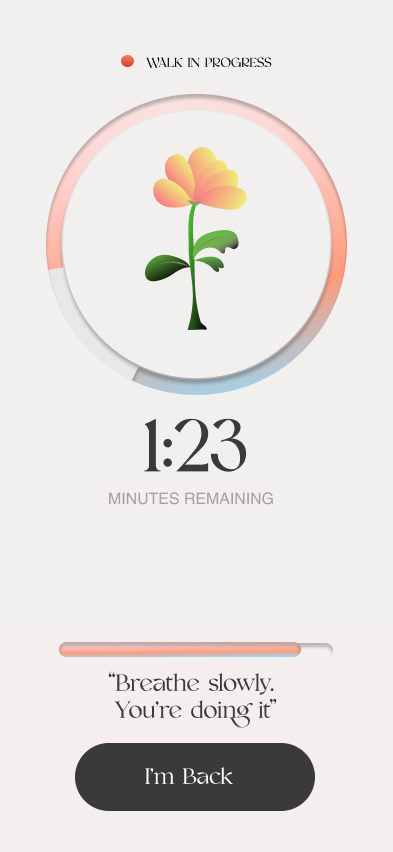
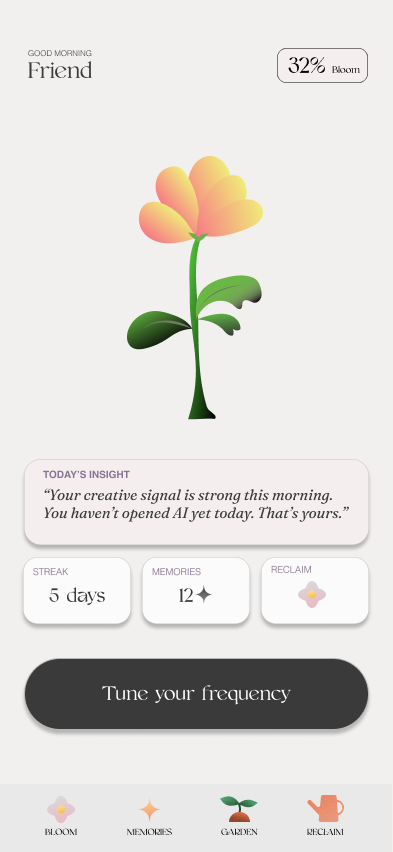
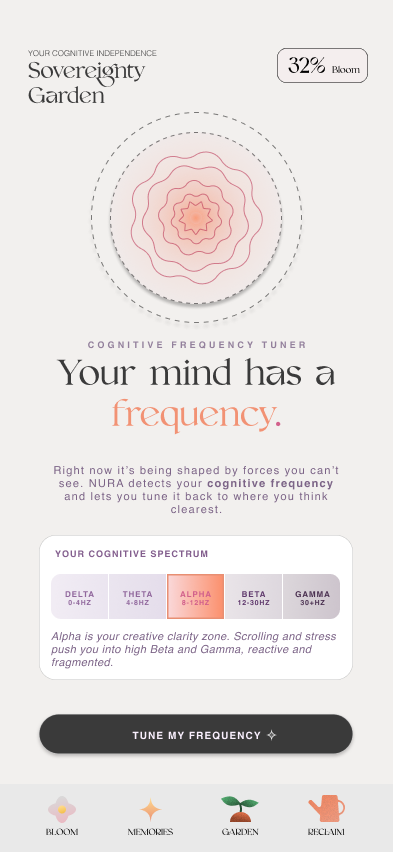
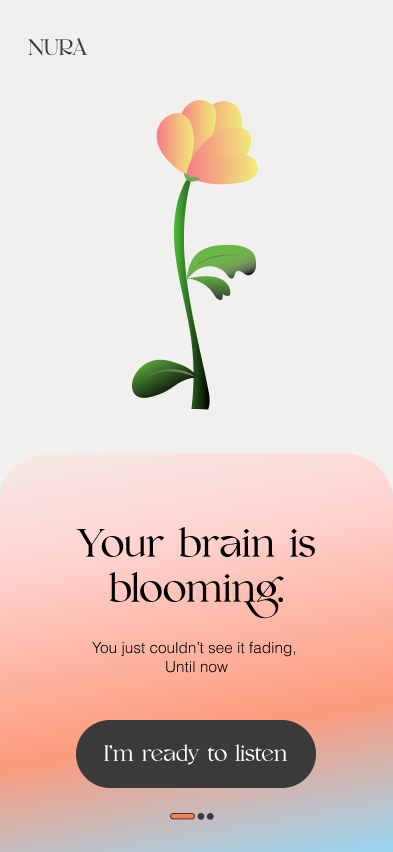
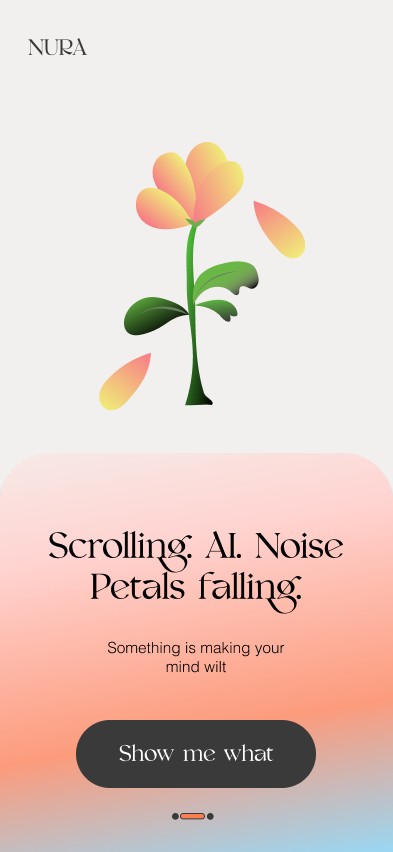
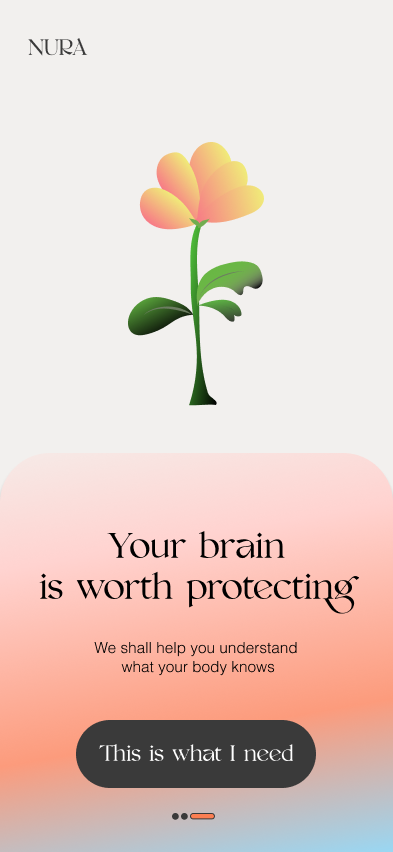
The flower came later and changed everything. Once we had the metaphor, the product told its own story. We prototyped every screen in high fidelity and built two distinct interfaces: a visualization interface showing bloom state, drain sources, and cognitive memories, and a sensory enhancement interface where students drag a physical dial to tune their cognitive frequency back toward Alpha, the creative clarity zone, while the wearable guides the nervous system there through haptic resonance.
Challenges We Faced
The hardest challenge was restraint. We had so many ideas and had to keep cutting until only the ones that truly served the core sense remained. The second was making speculation feel grounded. Every design decision had to be rooted in a real human need or a real biological signal, the frequency tuner is based on neurofeedback therapy, a clinical practice with 50 years of research behind it.
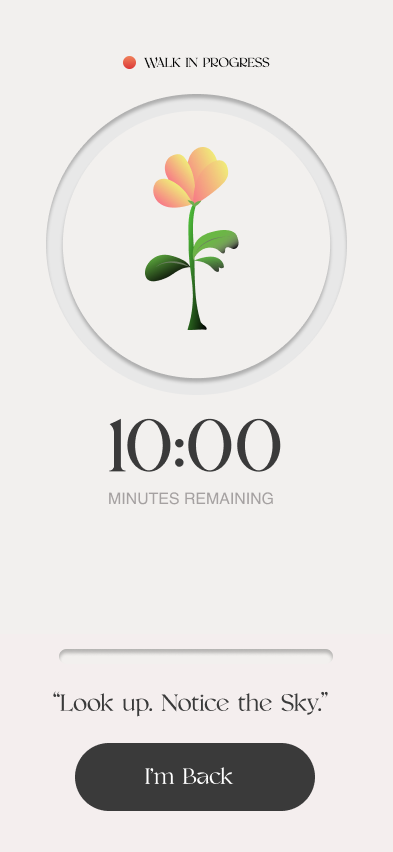
The challenge we didn't expect was designing a tool that genuinely respects the user. Every wellness app wants daily engagement. We built NURA to want the opposite. Reclaim Mode tells you to put the phone down. The anti-dependency safeguard flags if you start relying too heavily on NURA itself. We built a product designed to make itself unnecessary. That felt like the most honest thing we could do.
Built With
- css
- figma
- javascript
- react


Log in or sign up for Devpost to join the conversation.