Inspiration
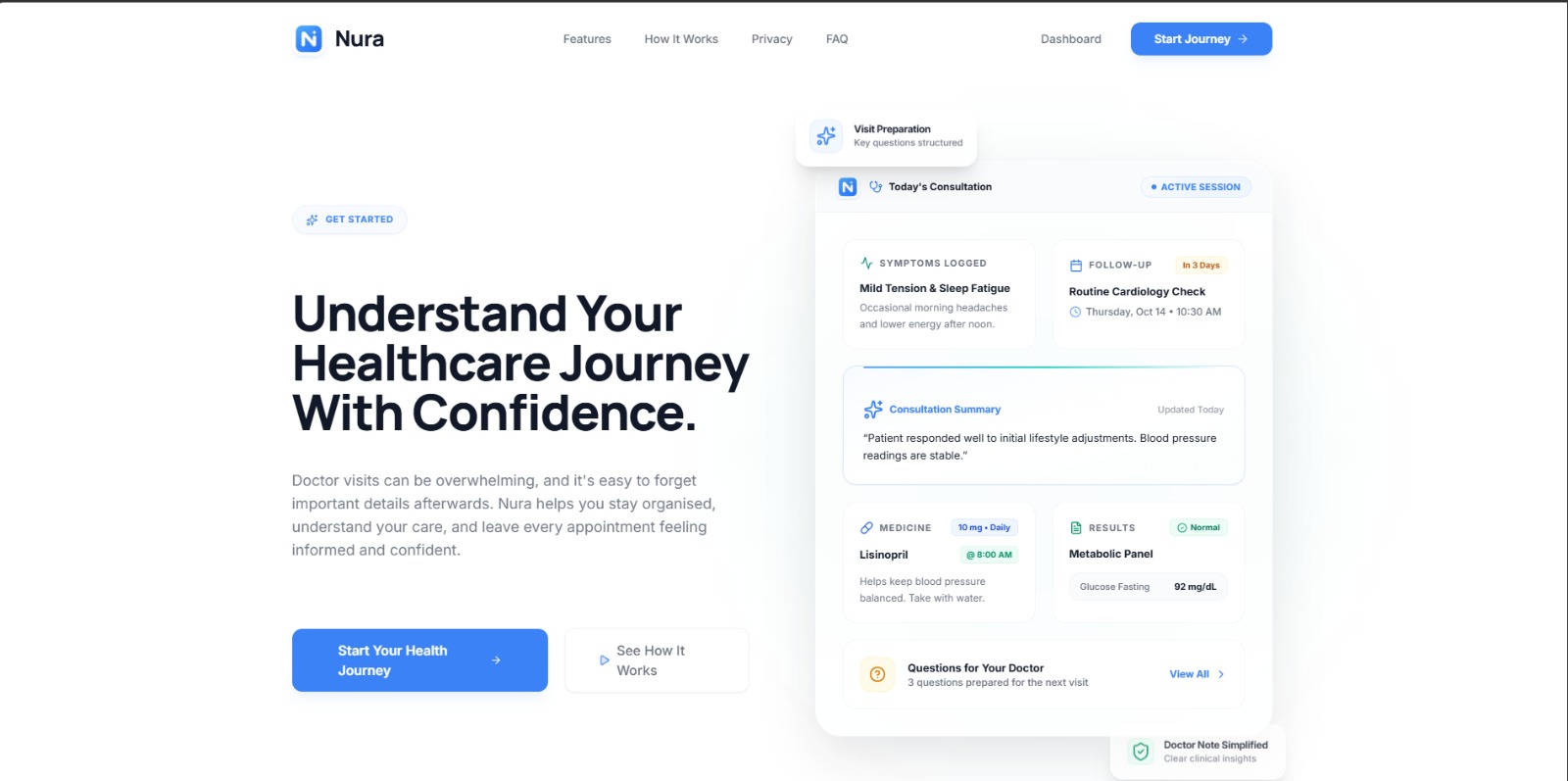
A doctor's consultation is only one part of a patient's healthcare journey. Before the consultation, patients may struggle to organize and communicate their symptoms. Afterward, they often leave with prescriptions, diagnostic tests, medical terminology, and instructions they may not fully understand.
Nura was inspired by this gap. Instead of creating another symptom checker, I wanted to build a patient companion that follows the flow of a health concern — from symptoms and consultation to treatment, follow-up, and recovery.
What it does
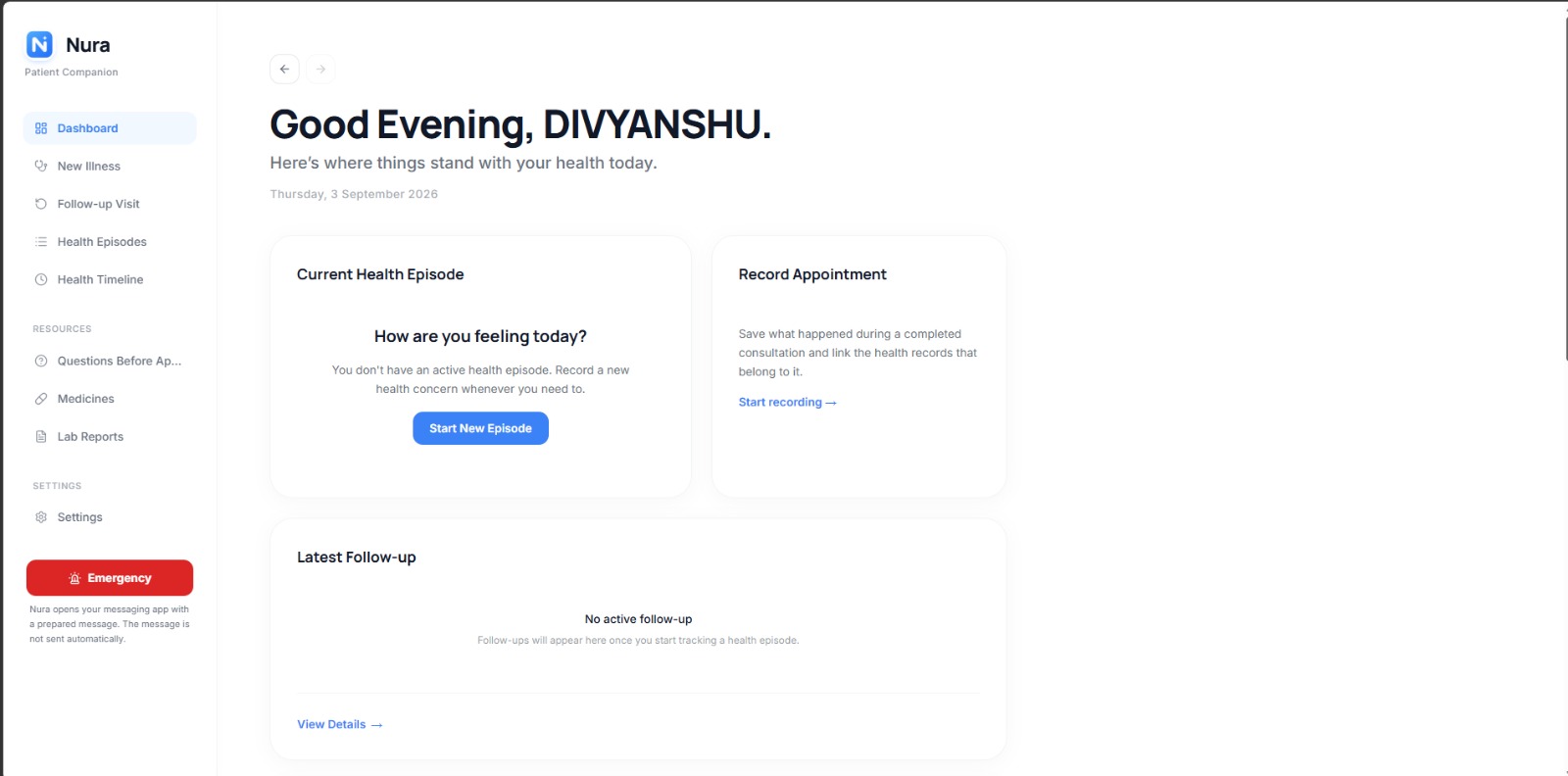
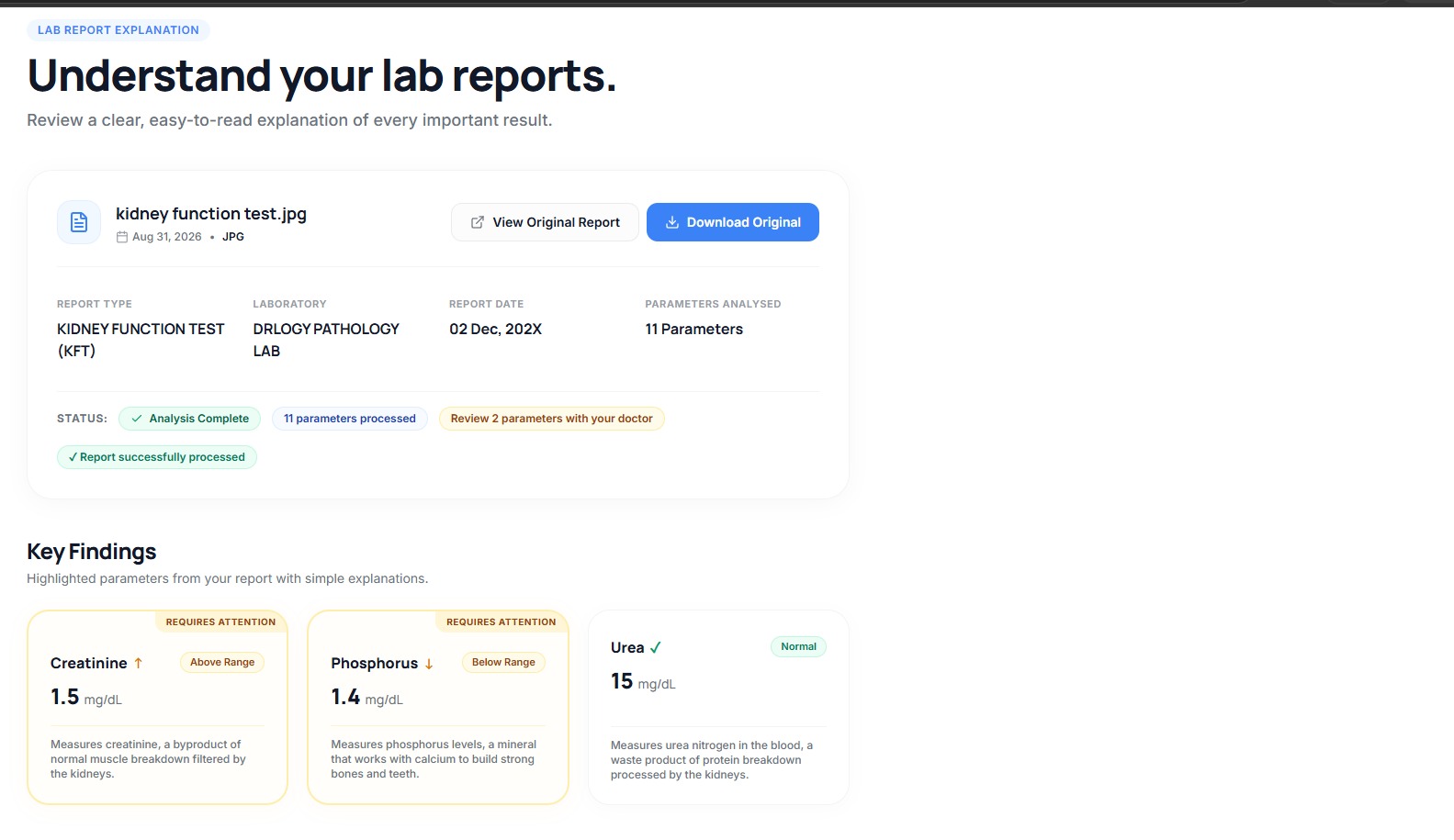
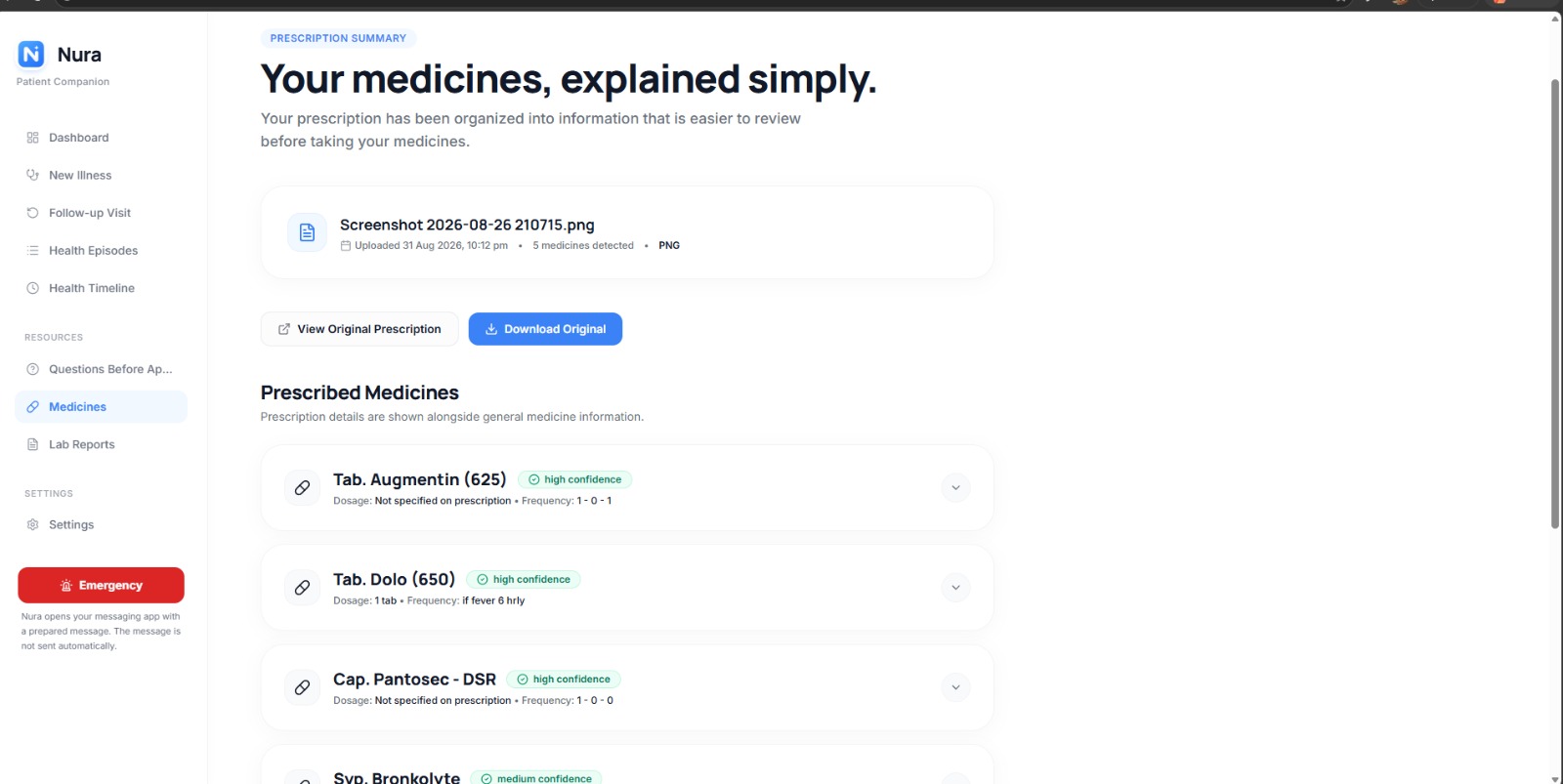
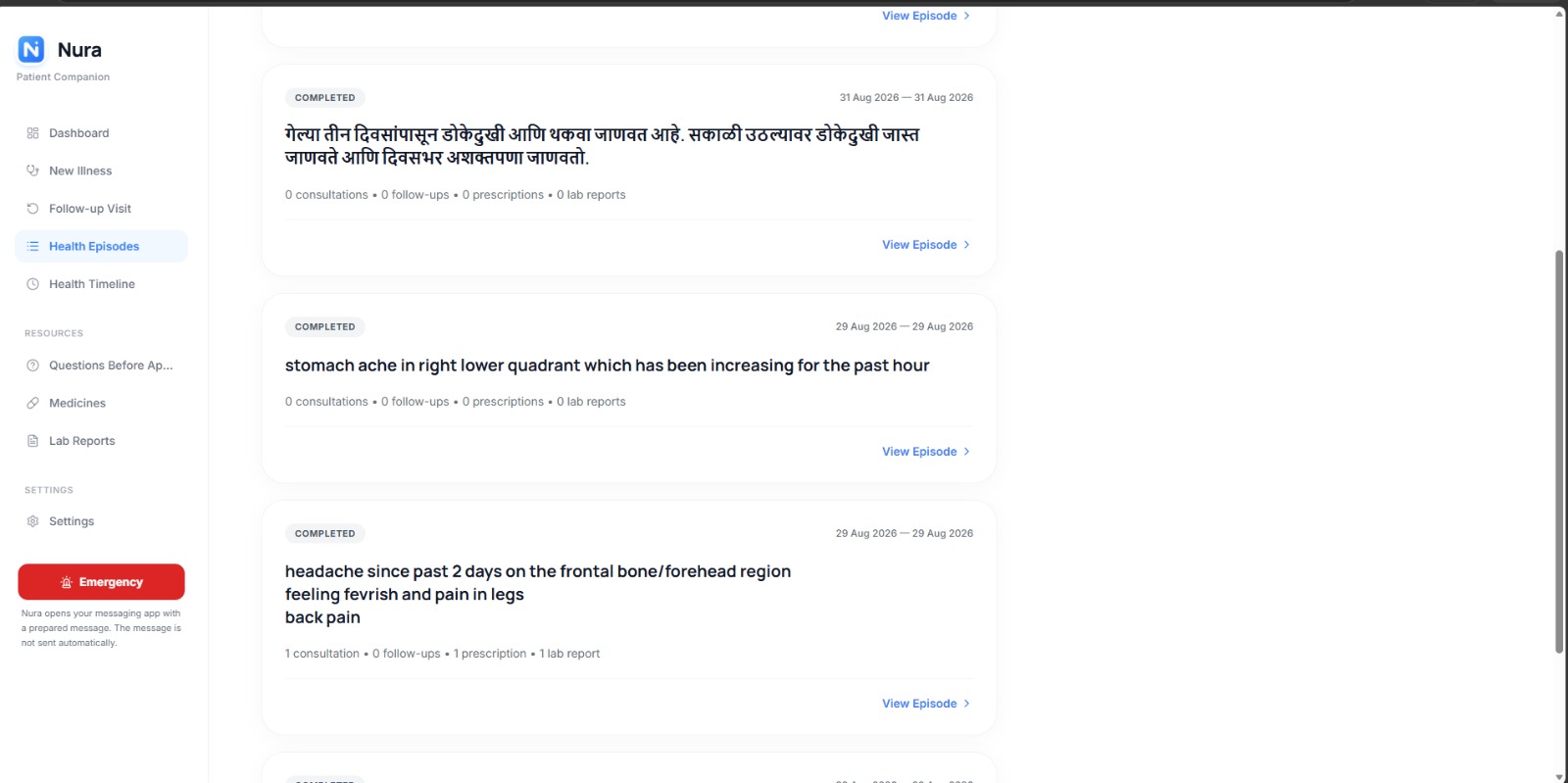
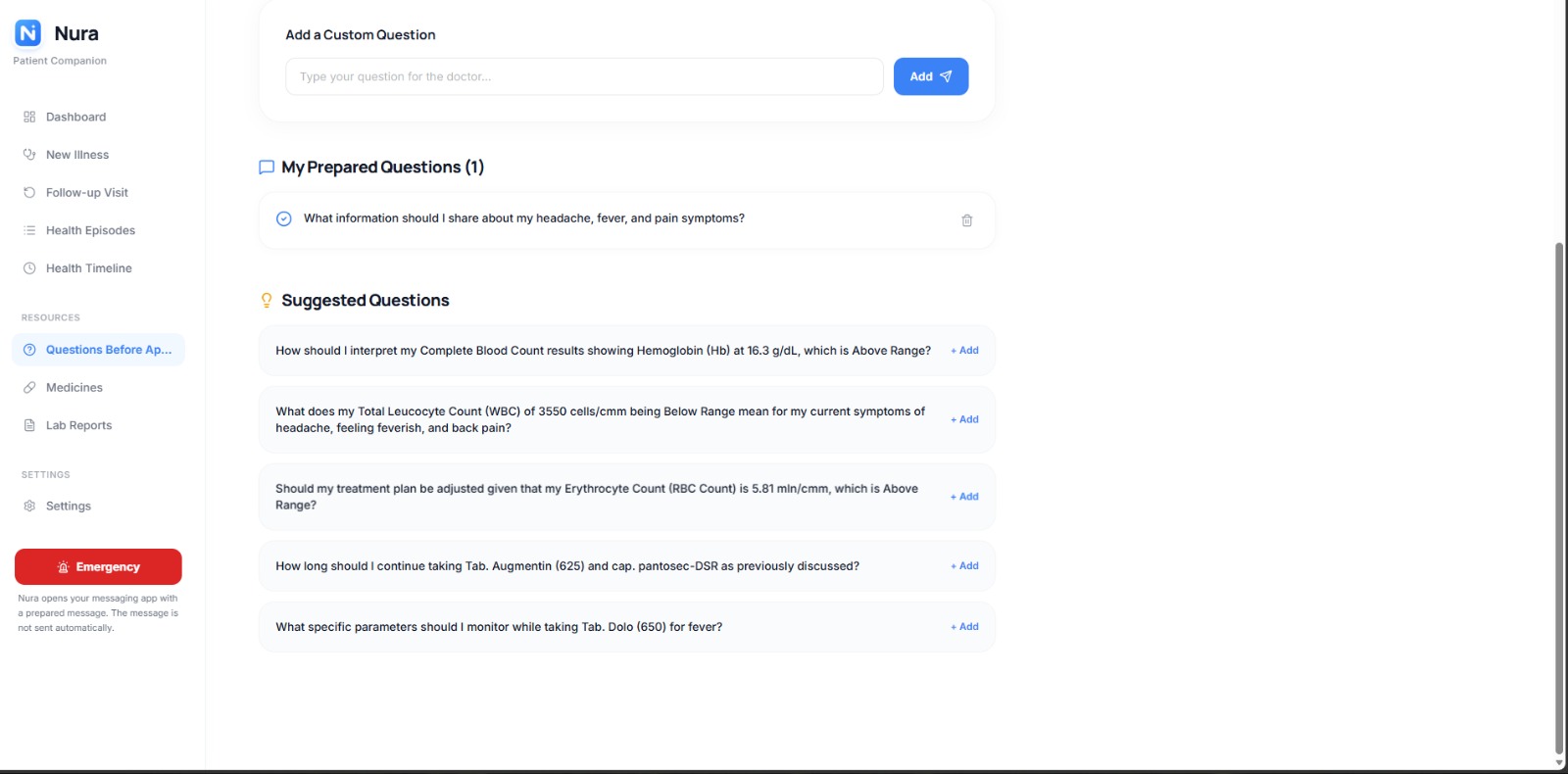
Nura organizes the patient journey into connected stages.Before a consultation, patients can record their symptoms along with their severity and duration and generate a structured consultation summary.After the consultation, patients can upload prescriptions and lab reports. Nura helps extract and explain medical information in simpler language, including the purpose of medicines, common side effects, instructions, and the meaning of diagnostic information.Patients can then continue recording follow-ups and view the progression of their health concern through a unified health timeline.Nura is designed as an educational and organizational companion, not as a replacement for professional medical advice or diagnosis.
How I built it
Nura was built as a Progressive Web App using React, TypeScript, Vite, and Tailwind CSS for the frontend.Supabase provides authentication and backend infrastructure, while server-side functions handle AI-powered workflows such as prescription extraction and medical-information explanation. AI models are integrated to process uploaded medical information and convert complex terminology into more understandable explanations. The application is also installable as a PWA, allowing it to provide an app-like experience while retaining the accessibility of the web.AI-assisted development tools were used extensively during development, particularly for implementation, while I focused on the product concept, user experience, system integration, testing, and iteration.
Challenges
One of the biggest challenges was designing Nura as a connected patient journey rather than a collection of unrelated healthcare tools. Features such as symptom logging, prescriptions, reports, follow-ups, and the health timeline needed to feel like parts of the same health concern.
AI integration introduced additional challenges, including API limitations, handling inconsistent document inputs, structuring model outputs, and ensuring that failures in one AI-powered feature did not break the rest of the patient's information flow.
Another important challenge was determining the appropriate role of AI in a healthcare application. Nura therefore focuses on helping patients organize and understand information they already have, rather than attempting to diagnose conditions or replace healthcare professionals.
What I learned
Building Nura taught me that developing a useful product involves much more than implementing individual features. I learned about designing complete user flows, authentication, backend integration, APIs, AI-assisted document processing, Progressive Web Apps, debugging, and continuously refining a product based on how the complete experience fits together.
Most importantly, the project changed how I think about healthcare software: sometimes the problem isn't a lack of information — it's making existing information understandable and useful to the person who needs it..
Built With
- css
- gemini
- git
- postgresql
- pwa
- react
- supabase
- tailwind
- typescript
- vite

Log in or sign up for Devpost to join the conversation.