Inspiration
Many people struggle with making food choices that align with their fitness goals and dietary restrictions. With countless product options available, it's overwhelming to balance cost, nutrition, and personal health needs. We wanted to create a solution that simplifies this decision-making process while keeping users informed and empowered.
What it does
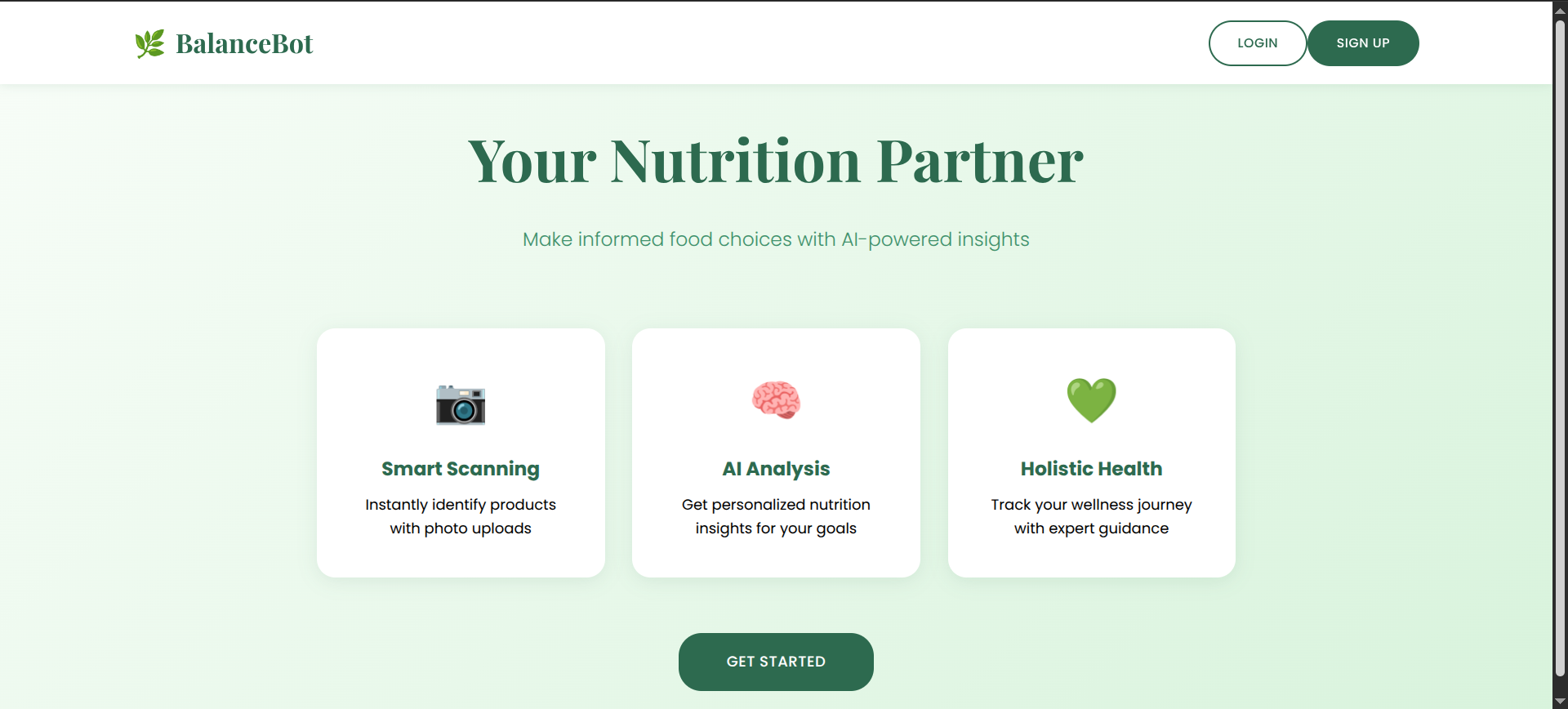
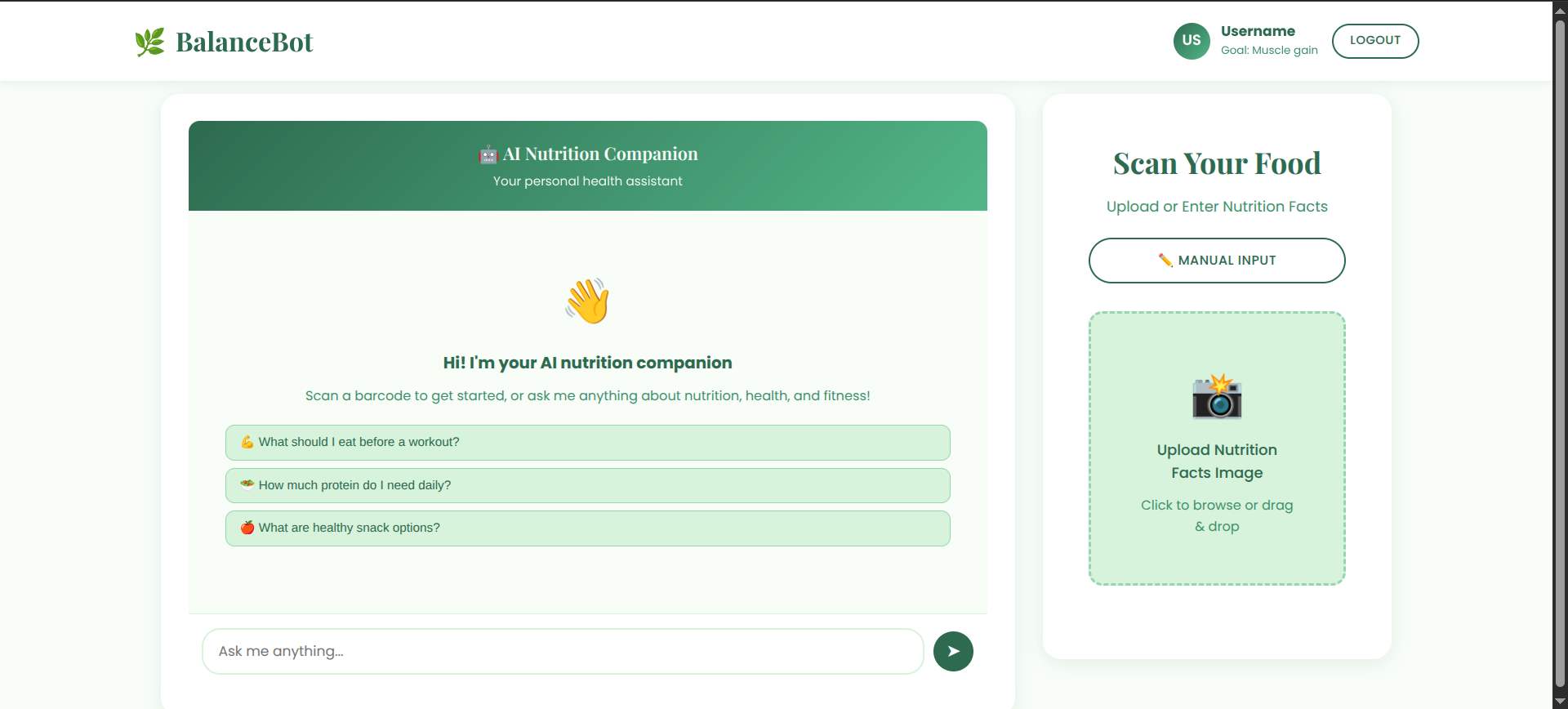
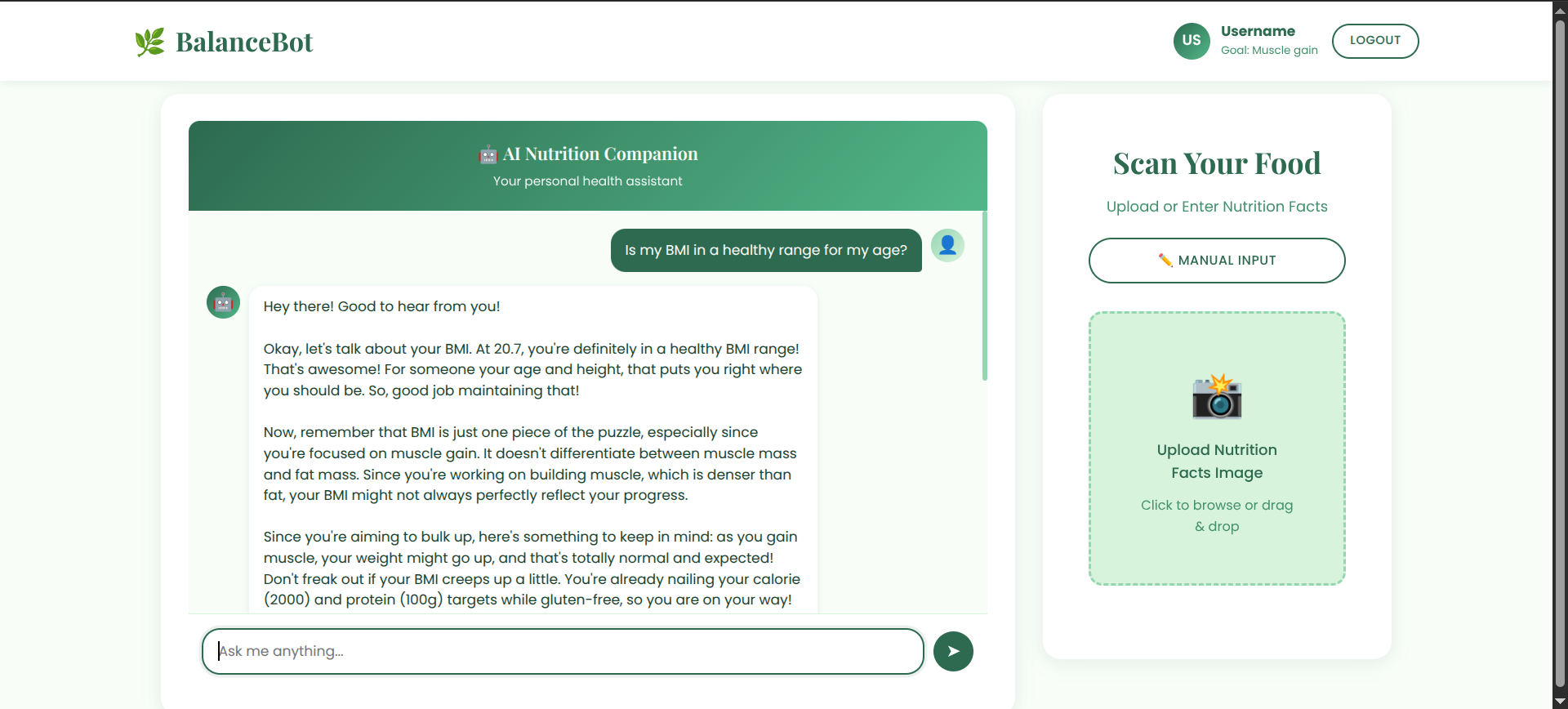
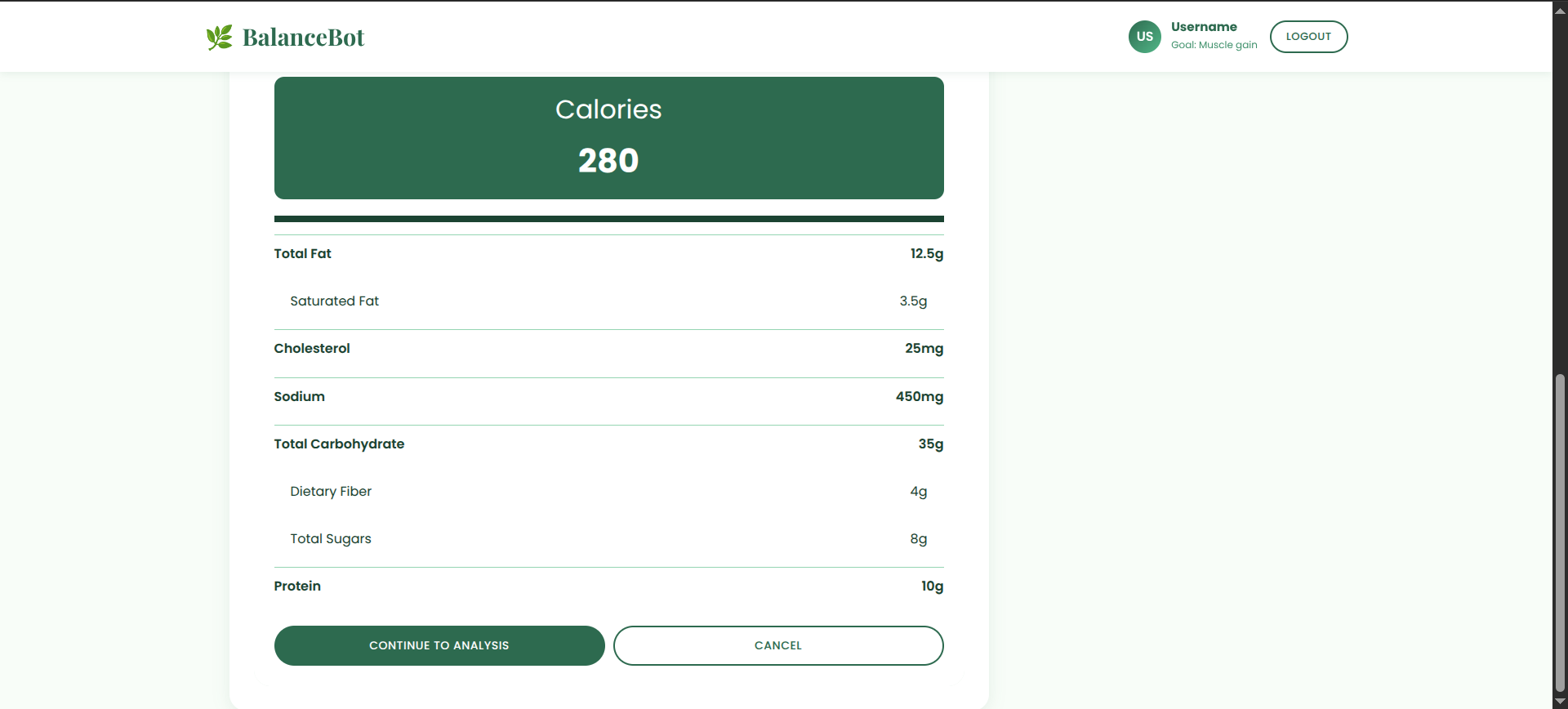
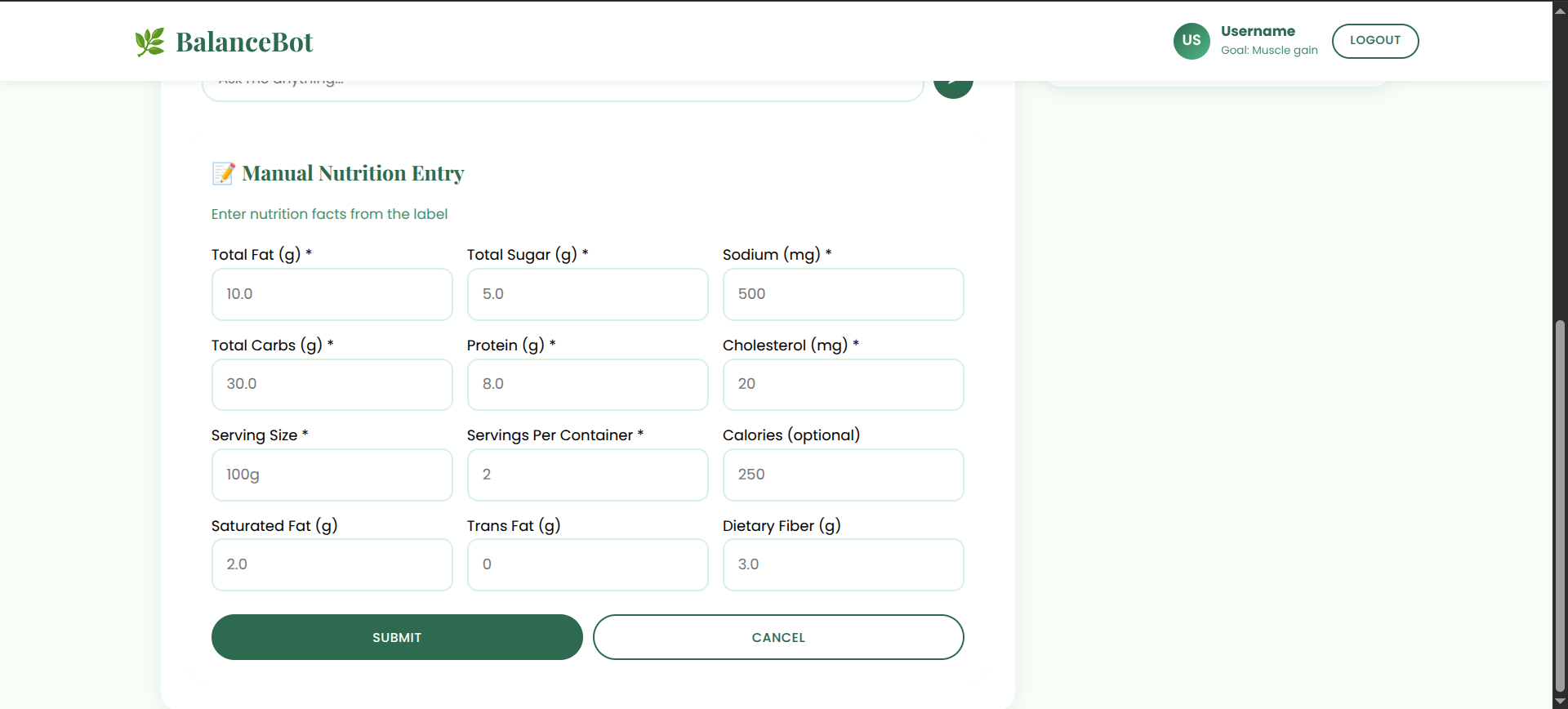
BalanceBot is your personalized nutrition companion that: Scans barcodes or accepts manual input to instantly retrieve nutrition facts and product information Provides AI-powered insights and recommendations tailored to your specific fitness goals (weight loss, muscle gain, maintenance) Features a specialized AI chatbot trained exclusively on nutrition topics, ensuring focused, reliable guidance Evaluates products across three dimensions: health impact, fitness alignment, and cost-effectiveness Helps users make informed, budget-conscious food choices while staying on track with their wellness journey Personalized meal suggestions based on budget and goals
How we built it
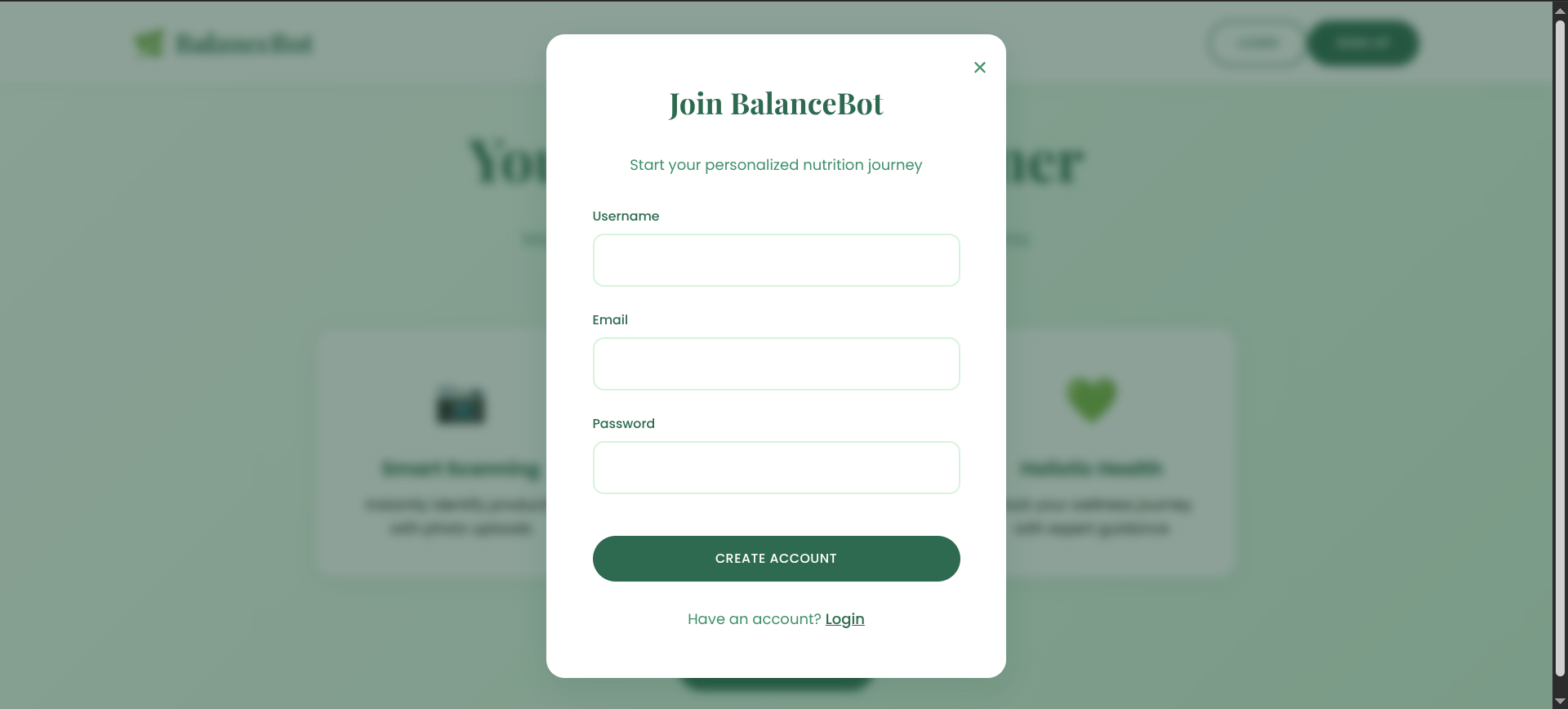
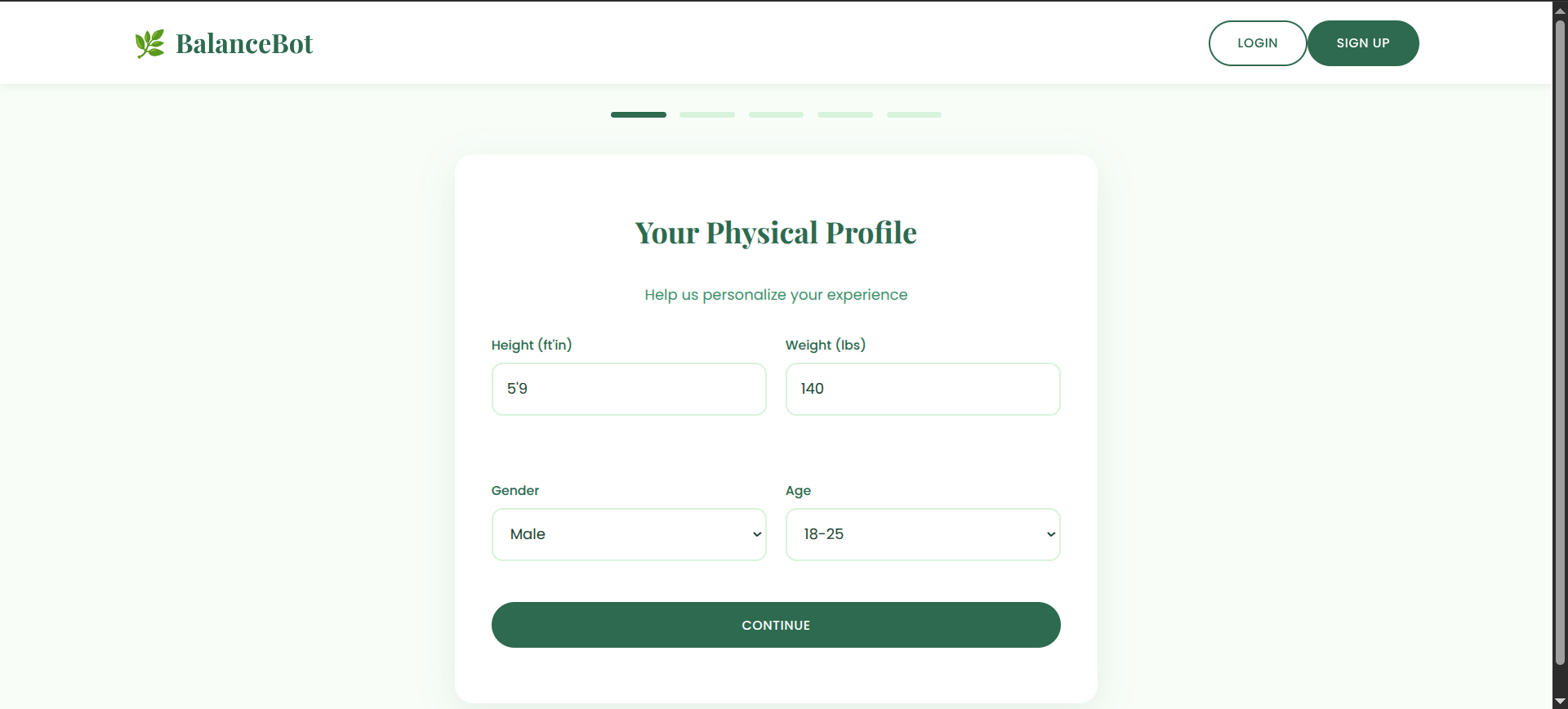
Frontend: We designed a clean, intuitive interface using HTML, CSS, and JavaScript. We carefully planned the user flow, what pages to show, which pop-ups to trigger, and how users navigate the experience. Our color scheme was inspired by health and wellness aesthetics, creating a calming yet motivating environment.
Backend: We built a root agent using ADK (Agent Development Kit) with three specialized evaluation tools: Health Evaluator - Analyzes nutritional content and health impacts Fitness Evaluator - Assesses alignment with user's fitness goals Price Evaluator - Compares cost-effectiveness The root agent intelligently routes user queries to the appropriate tool and provides suitable responses. We integrated Google's Gemini 2.0 Flash API for powerful LLM capabilities and designed the agent with a warm, supportive personality focused on nutritional knowledge.
Tech Stack: Frontend: HTML, CSS, JavaScript Backend: Python Flask AI/LLM: ADK, Google Gemini 2.0 Flash Collaboration: GitHub for version control Development: VS Code
The barcode scanning feature connects to product databases to retrieve real-time nutritional information, which is then processed through our evaluation pipeline.
Challenges we ran into
LLM Integration & Agent Configuration: Getting the root agent to correctly interpret user intent and route to the appropriate evaluation tool required extensive prompt engineering and testing UI/UX Design: Balancing simplicity with functionality while ensuring mobile responsiveness was an iterative process. We wanted a clean interface that didn't overwhelm users but still provided comprehensive information Frontend-Backend Integration: Synchronizing the display logic with backend responses, especially handling loading states and error messages gracefully Barcode Scanner Implementation: Finding reliable barcode APIs and connecting them to comprehensive nutrition databases proved challenging due to data availability and API limitations Differentiation: The nutrition app space is saturated, so we struggled to identify our unique value proposition. We ultimately focused on the personalized AI companion aspect with multi-dimensional evaluation (health + fitness + price)
Accomplishments that we're proud of
Successfully integrated a complex frontend-backend architecture with real-time AI responses. Built a fully functional end-to-end system, from barcode scan to personalized recommendations, in 36 hours. Created an intuitive, mobile-friendly UI that makes nutrition tracking accessible and non-intimidating. Implemented a sophisticated agent system with intelligent query routing and context-aware responses. Delivered a working demo where 90% of advertised features function reliably Learned and applied cutting-edge AI tools (ADK, Gemini 2.0) that were new to our entire team
What we learned
Technical Skills: How to architect and implement an ADK agent system with multiple specialized tools Setting up and configuring LLM agents with specific personalities and knowledge domains Full-stack integration: Connecting frontend user interactions to backend AI processing seamlessly Effective API design and consumption (Google Gemini, barcode databases) Managing asynchronous operations and real-time data flow
Soft Skills: Time management under pressure: prioritizing features and making strategic trade-offs Effective teamwork and communication: dividing tasks between frontend/backend and syncing regularly Problem-solving resilience: debugging complex integration issues and finding creative workarounds User-centric thinking: constantly asking "Will this make sense to someone with no technical background?"
Domain Knowledge: Nutrition science and how different dietary components affect fitness goals The complexity of food databases and product information systems How to make technical nutrition data accessible and actionable for average users
What's next for BalanceBot: Your Nutrition Partner
Image recognition for food items without barcodes (fresh produce, home-cooked meals) Expanded barcode database with more reliable data sources and international products Mobile app for iOS and Android (current version is mobile-friendly web) Community features: Goal-sharing, recipe exchanges, and support groups Enhanced AI training with verified nutrition sources for medical-grade accuracy Meal planning assistant that suggests complete meal combinations based on goals and budget Progress tracking dashboard with visualizations of nutritional intake over time Real-time price scraping from local grocery stores for accurate, location-specific cost comparisons Partnerships with nutritionists to validate recommendations Integration with fitness trackers (Apple Health, Google Fit) for holistic health monitoring
Our ultimate goal: Transform BalanceBot from a useful tool into a trusted daily companion that empowers people to make healthier food choices and achieve their wellness goals, regardless of their budget or nutritional knowledge level.


Log in or sign up for Devpost to join the conversation.