-
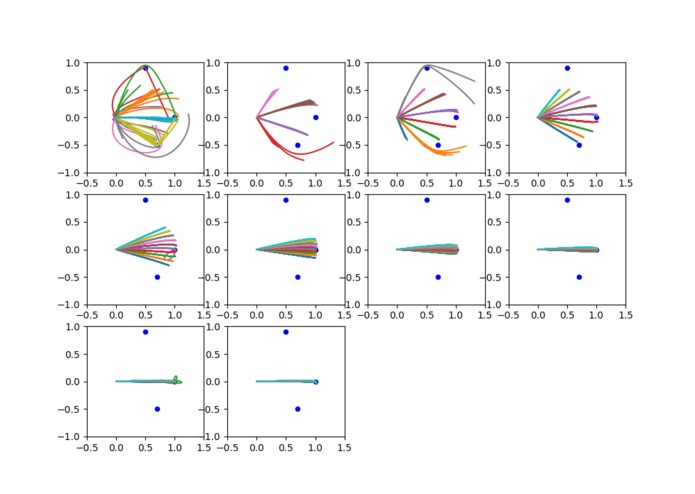
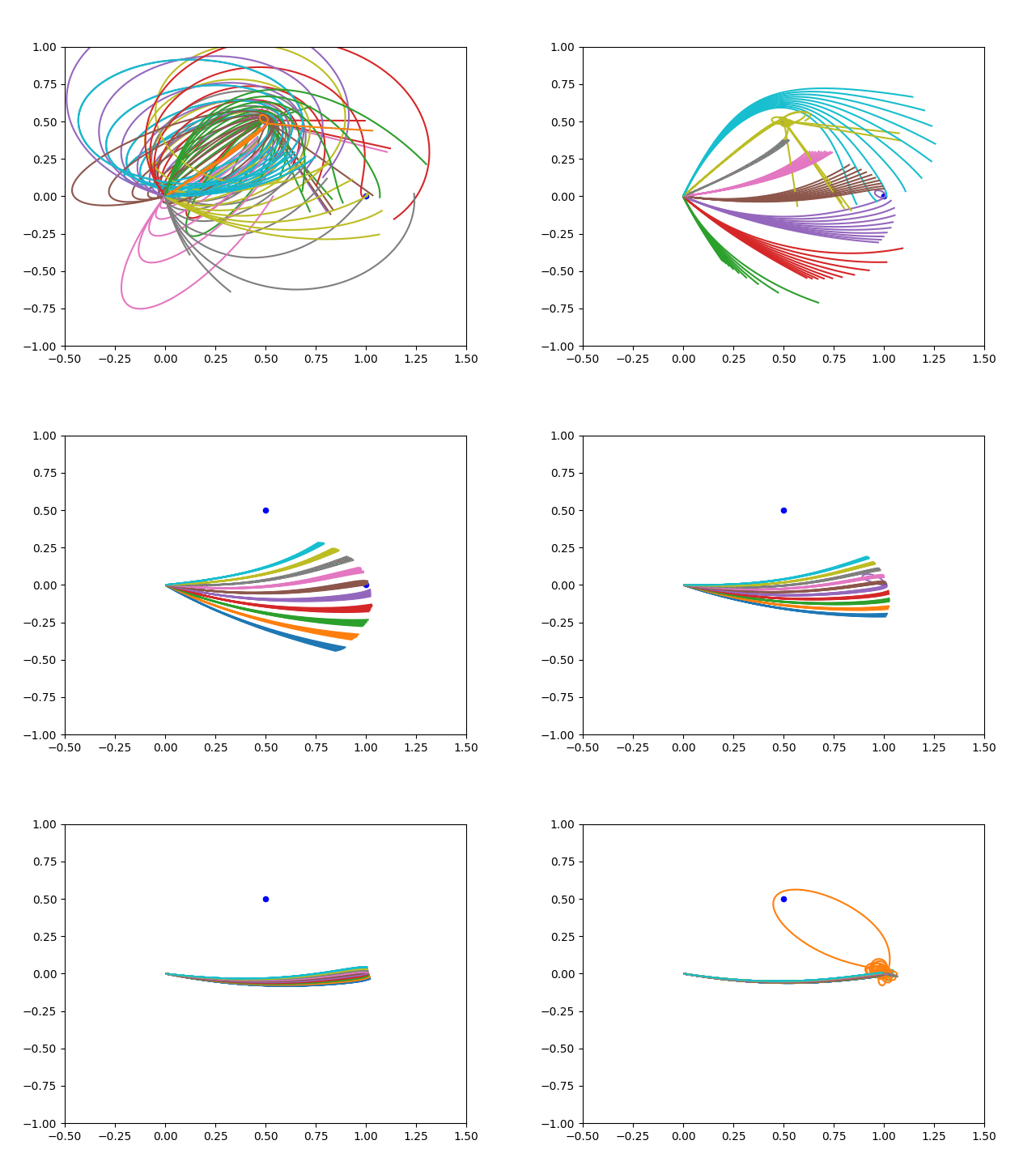
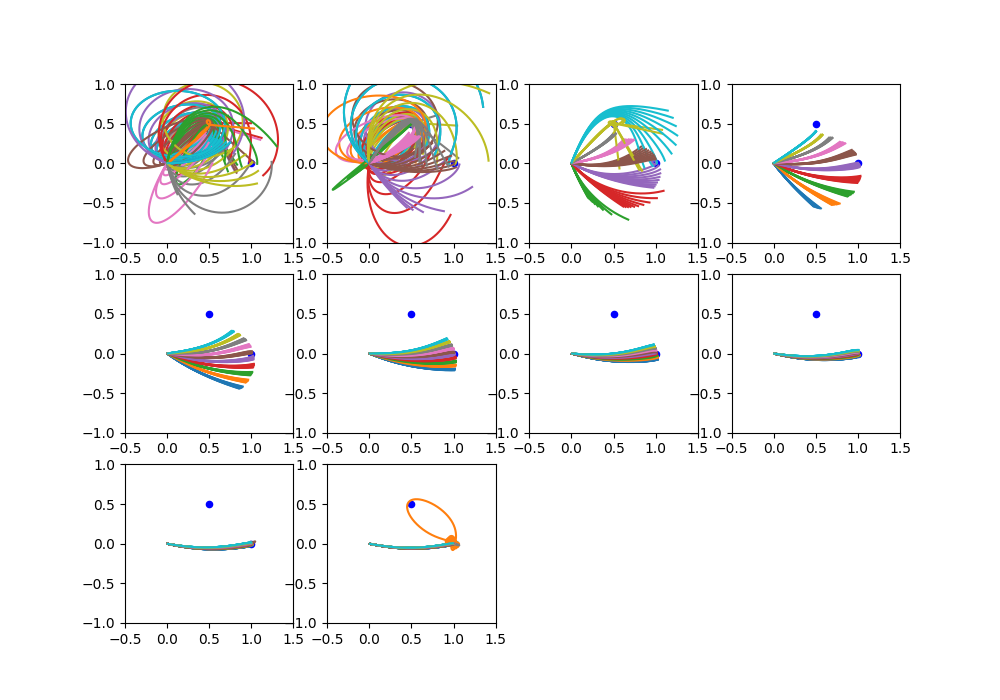
Minimal time trajectory across a straight line betweeen two masses: Truncation Steps
-
 GIF
GIF
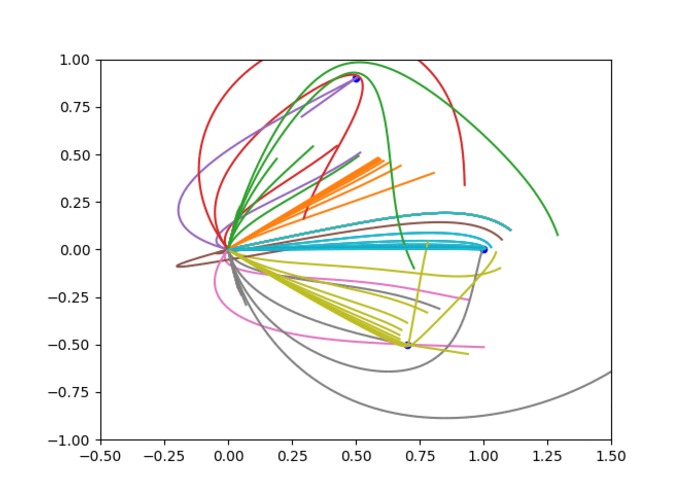
Minimal time trajectory across a straight line betweeen two masses
-
 GIF
GIF
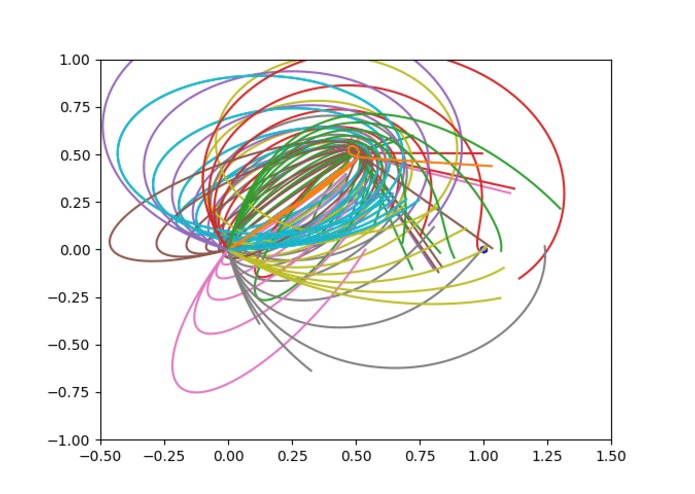
Minimal time trajectory across a line betweeen two stationary asymmetric masses: Truncation GIF
-
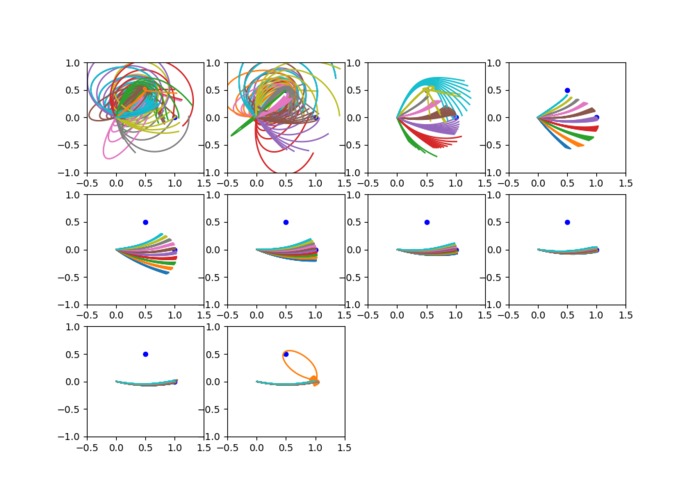
Minimal time trajectory across a line between two stationary asymmetric masses: Truncation Steps
-
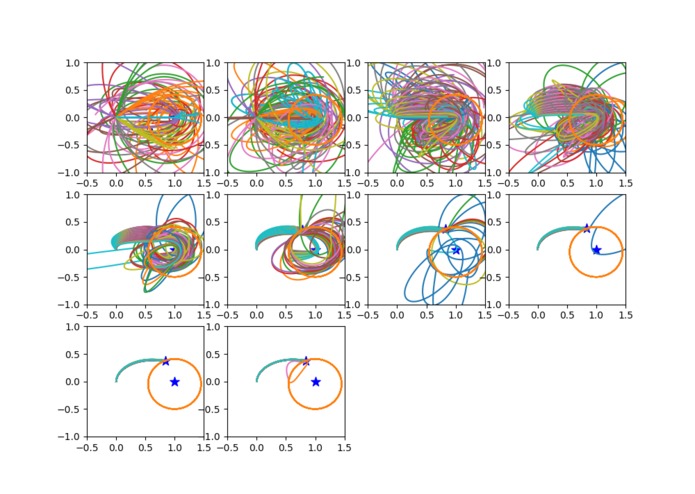
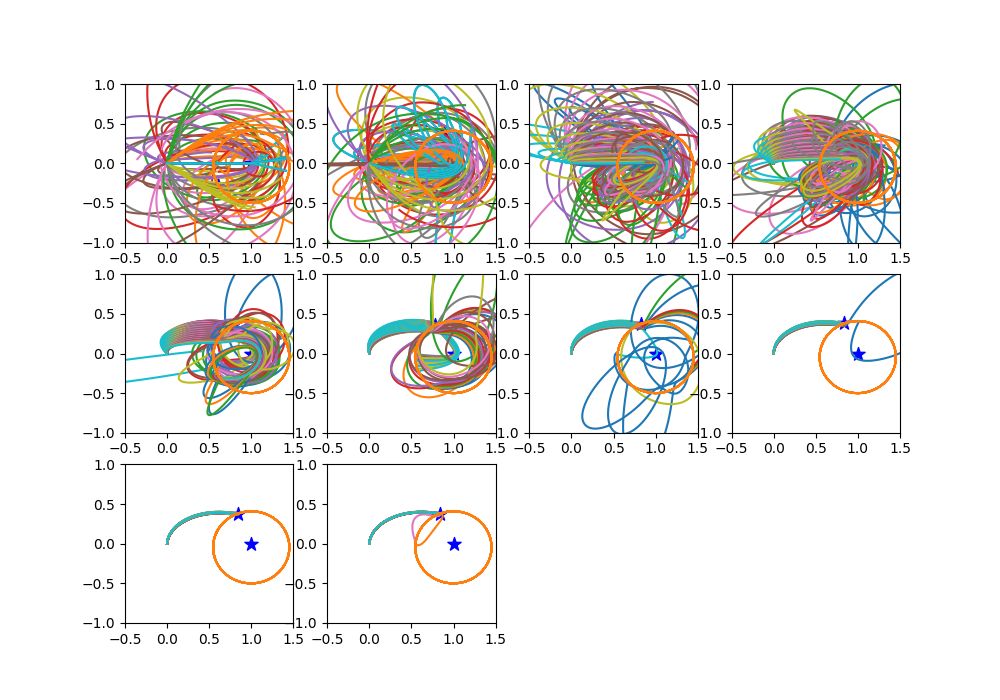
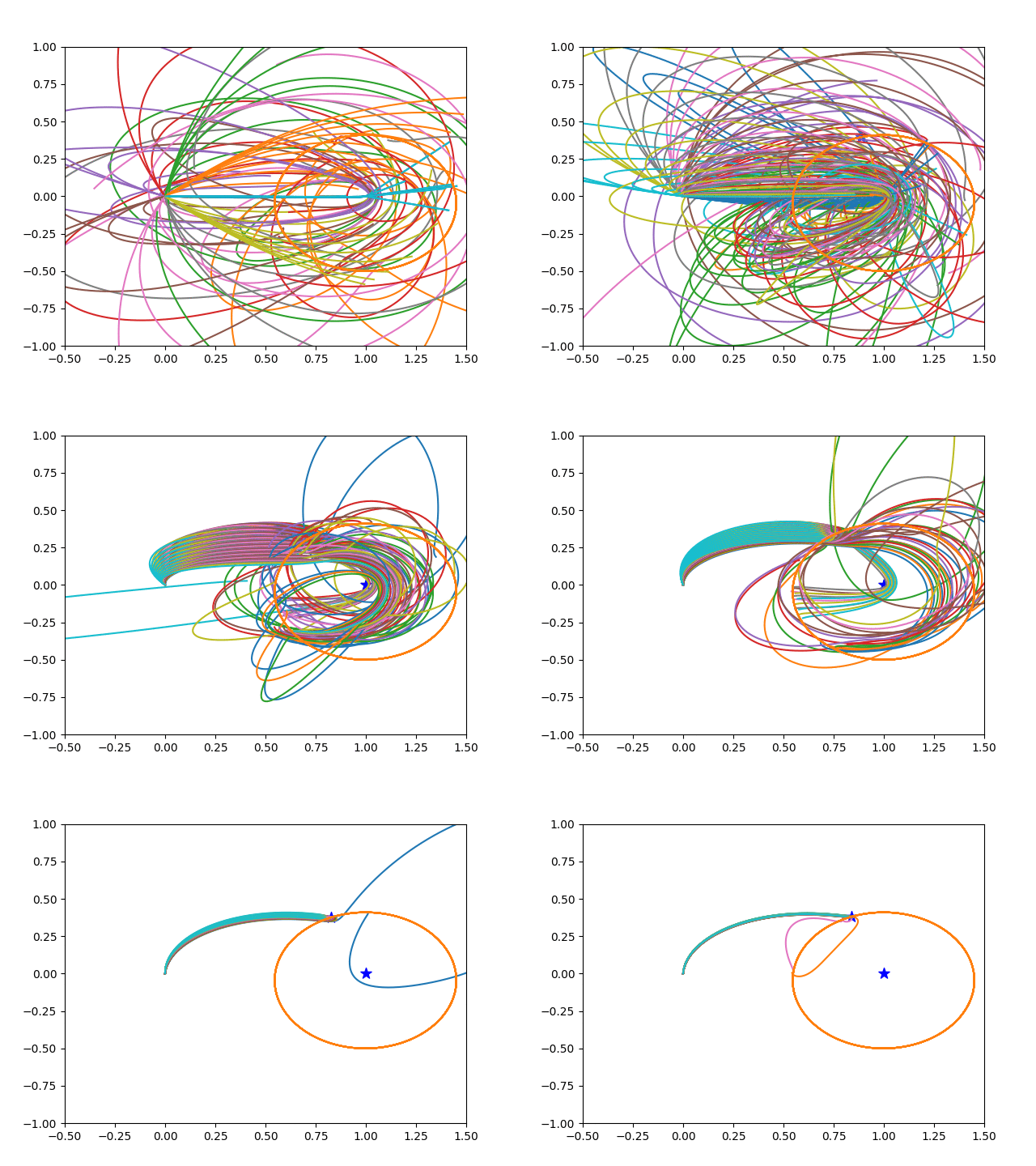
Minimal time trajectory across a line between two orbiting asymmetric masses: Truncation Steps
-
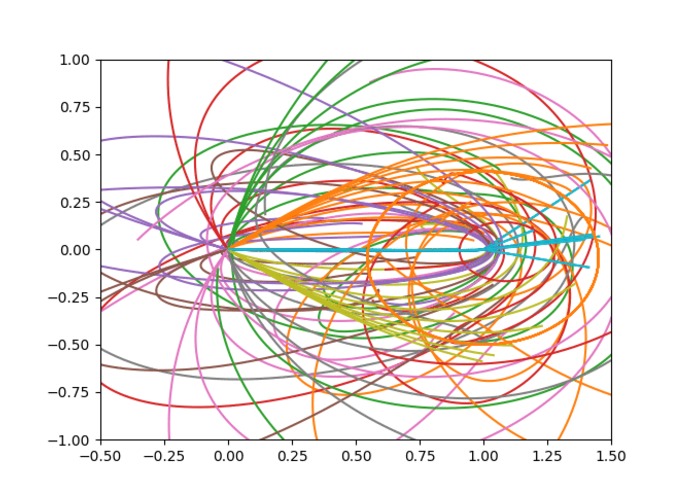 GIF
GIF
Minimal time trajectory across a line between two orbiting asymmetric masses: GIF
Inspiration
We were interested in path finding algorithms in general. A problem that interested us all was the optimum path in space, given the dynamics of the gravitational field associated with orbiting or stationary objects
What it does
Uses a search algorithm to produce a best guess of the fastest path a shuttle/ object can take to move from point A to point B, given the existence of gravitational fields from neighboring objects.
How we built it
Used the matplotlib.pyplot and tkinter modules to visual trajectories. Euler-Cromer methods in conjunction with Newton's laws were used to alliteratively compute trajectories.
Challenges we ran into
Began the problem with orbiting planets and sought to find a cost function for a particle with existing planets; however, we found it difficult to produce the cost function itself given the most generalized set up of an arbitrary number of planets and their orbits, as well as initial conditions
Accomplishments that we're proud of
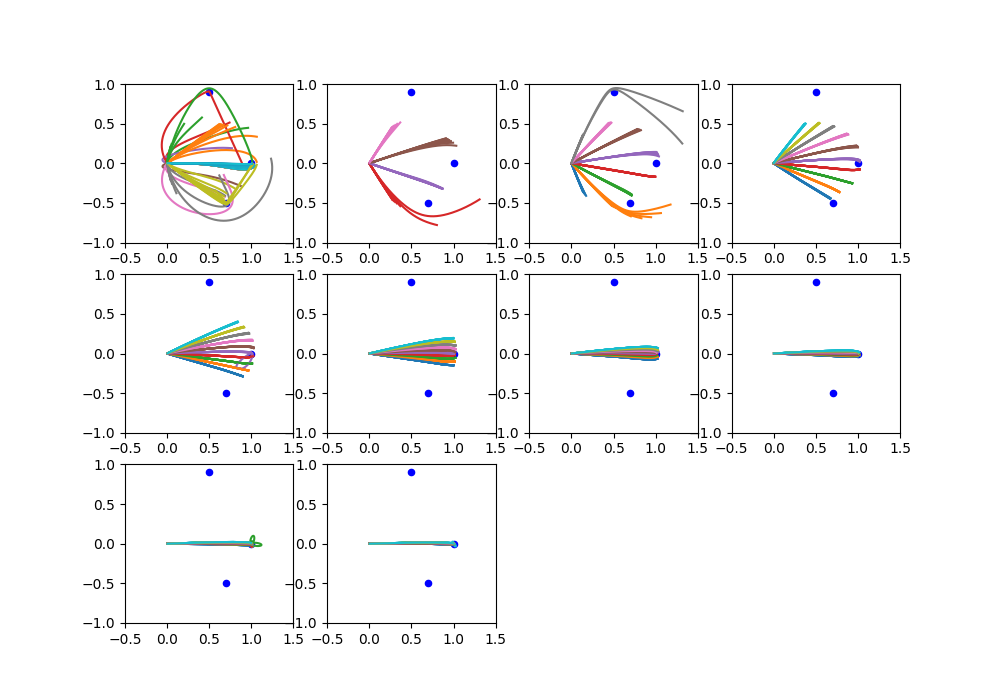
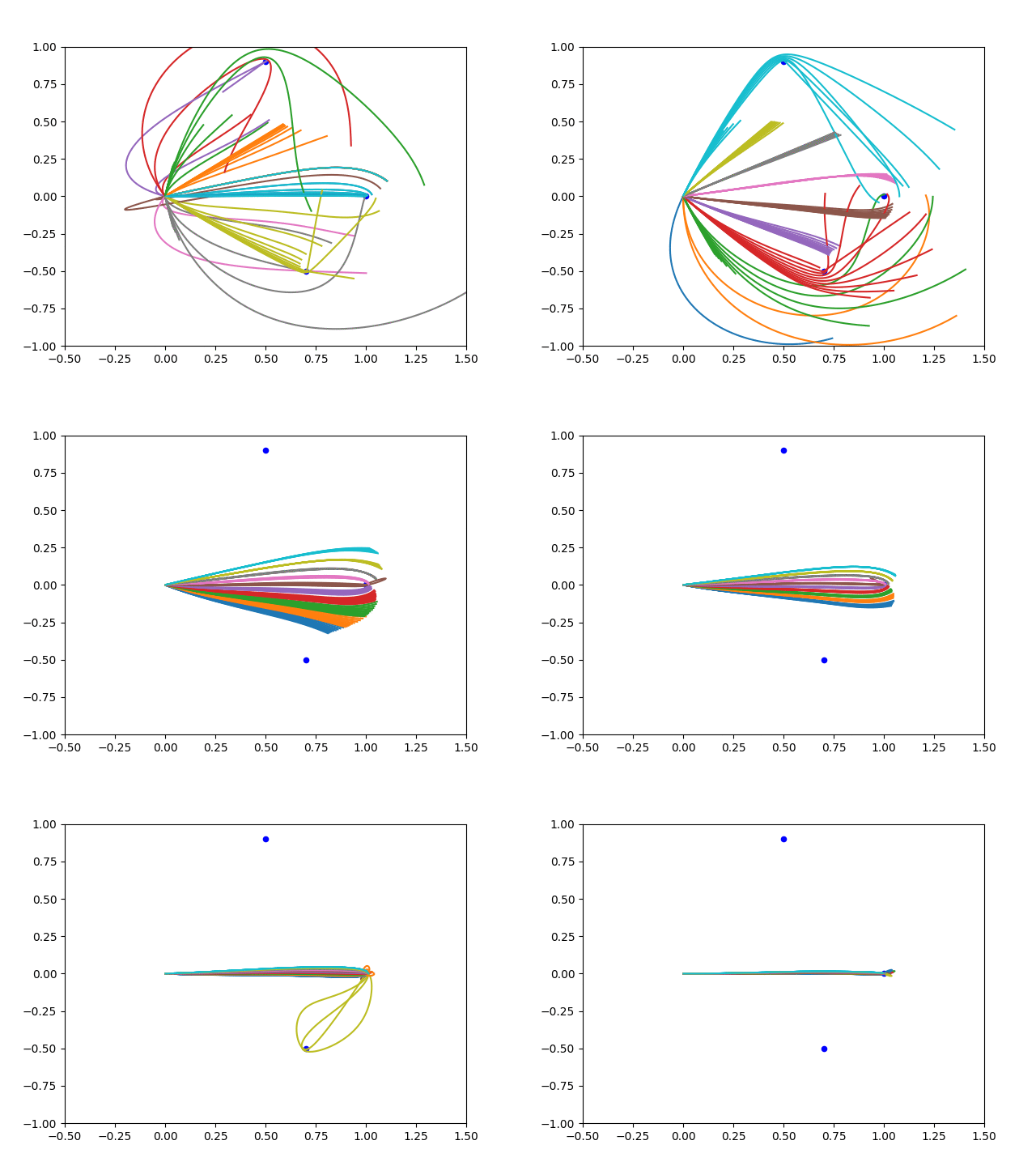
Was able to produce a truncating algorithm to limit possible initial trajectories that often converged to a path or paths of minimal difference. Was able to break down the initial problem into more tangible objectives to ultimately build up to our initial goal.
What we learned
Using tkinter.
What's next for Numerical Orbital Path Optimization
Finding a better algorithm that has some form of mathematical rigor to truly converge to better values. Use the foundation to optimize other practical questions about space travel like fuel consumption and how it can be optimized. Introduce better visualization method for trajectories.


Log in or sign up for Devpost to join the conversation.