Inspiration
The biggest challenge for XR today is no longer how impressive it looks, but whether people accept it and whether it creates real value. We believe that in learning and assessment, games in Extended Reality open the way to Extended Learning and Extended Assessment: bringing the virtual world closer to how children actually learn, and making authentic assessment possible, with high integrity and low risk.
Maths in many elementary classrooms is still paper, memorising and multiple choice, and an answer on paper can be copied or pasted from a chatbot. We wanted:
- Adaptive learning, so no child is bored or left behind.
- Creative learning, where what children learn becomes something they make.
- Authentic assessment, where children solve with their own hands and we see how they solve.
What it does
Immersive tech for adaptive, creative and authentic learning and assessment.
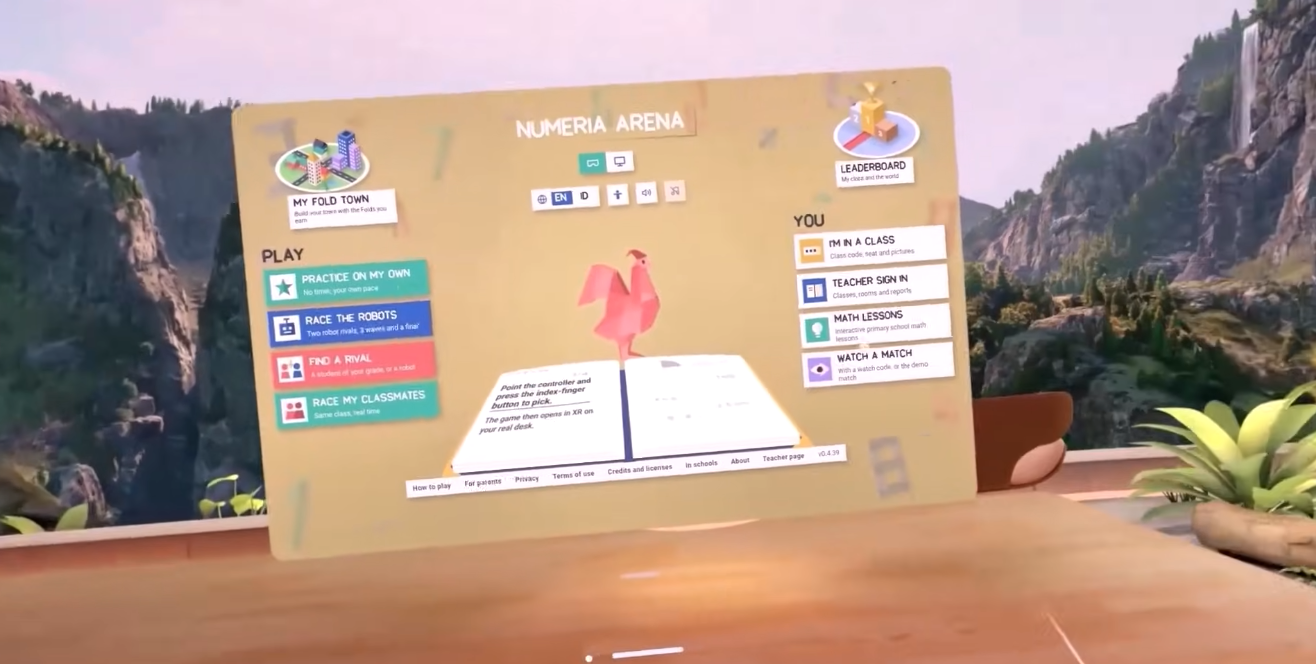
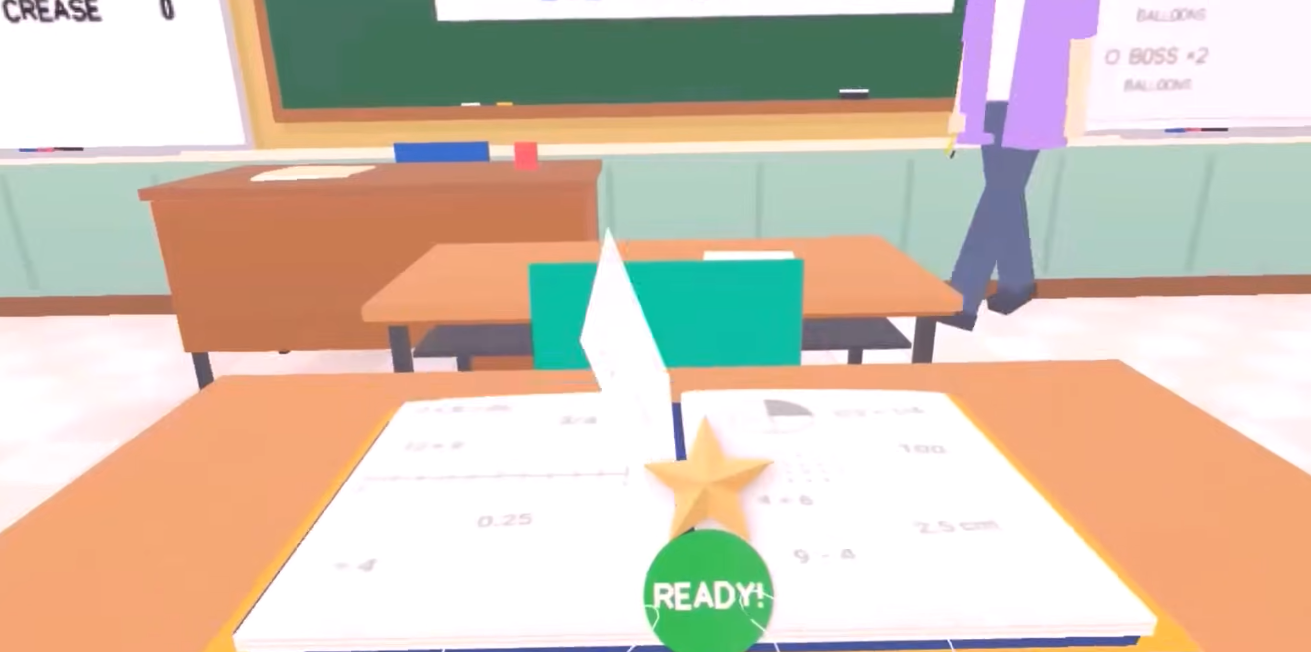
Numeria Arena is an educational mixed reality game that unfolds as a paper pop-up book on any real desk, inside the Meta Quest browser. No install: open a link and play.
- Grades 4 to 6, and beyond. Core upper elementary maths, adapting to each player's level, so older students can strengthen their foundations too.
- Hands first. Lay a hand flat on the table and the book opens there. Press, pinch and pick up. Controllers work too.
- Multiplayer. Race robots, classmates at up to six desks, or friends side by side at one smartboard.
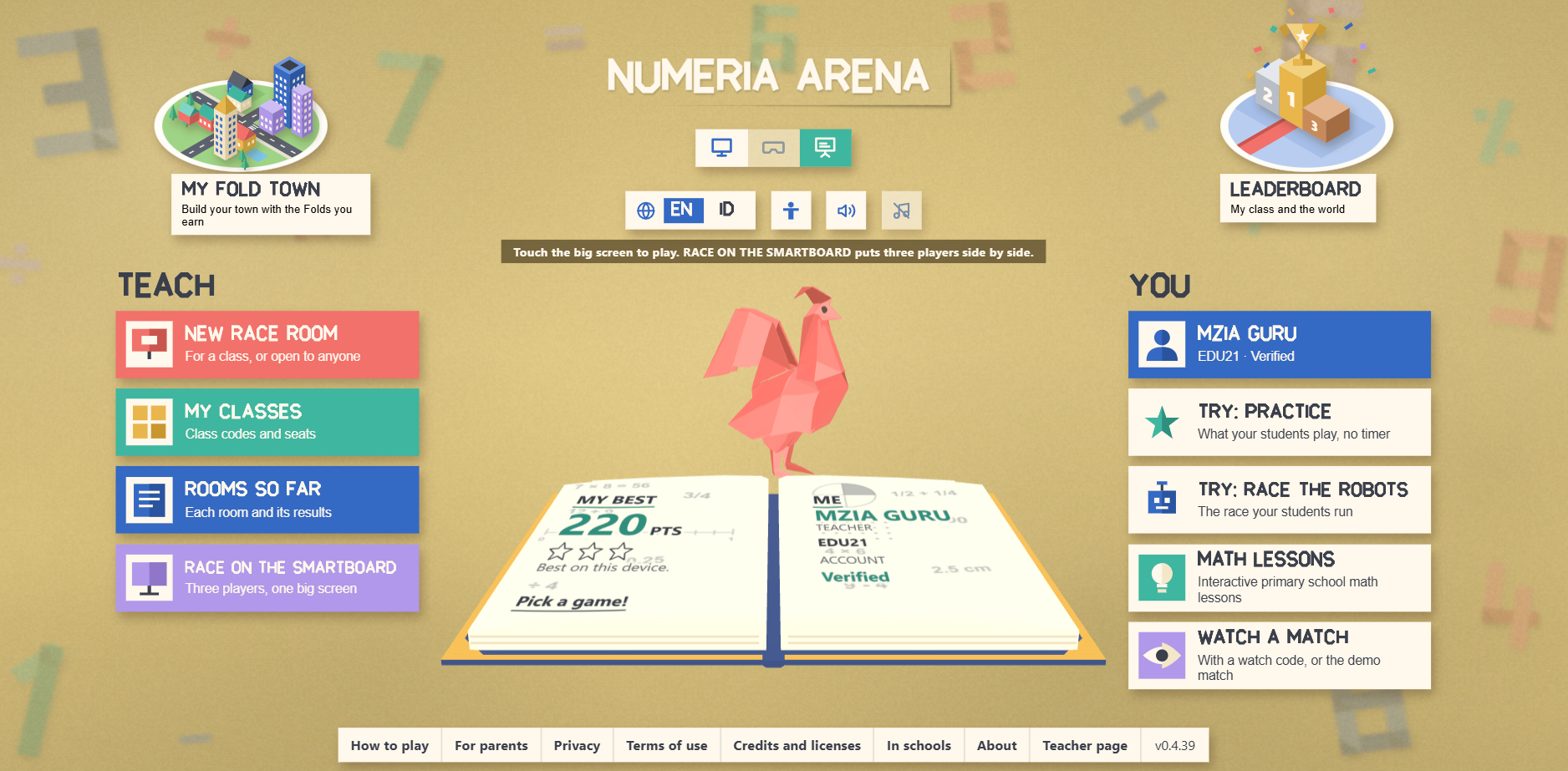
- Managed and analyzed by the teacher. The teacher runs every race and gets clear reports and AI insights for each skill and seat.
- Accessible. Seated, one-handed, read-aloud, high contrast, big numbers, no timer and steady aim.
- Works offline. After the first visit, practice and robot races need no internet; answers sync when back online. Only live class races need the network.
- Safe for children. Students join a class seat with a code and three pictures, never a name or an email. AI sees only seat numbers.
7 games in one arena
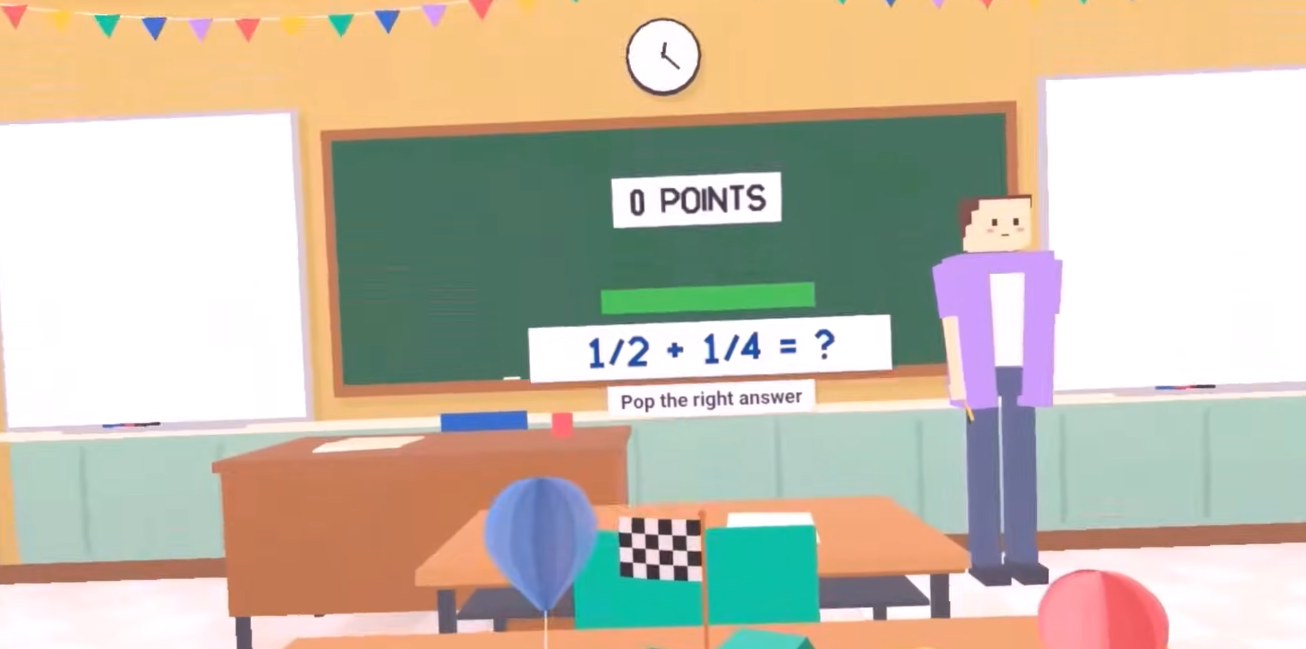
- 5 action maths games: Balloon Burst (poke the right balloon), Orb Forge (merge crystals into the exact number), Factory Sort (carry creatures to the right gate), Bridge Builder (lay fraction and decimal planks to span a gap) and Balance Gate (place weights until the scale balances).
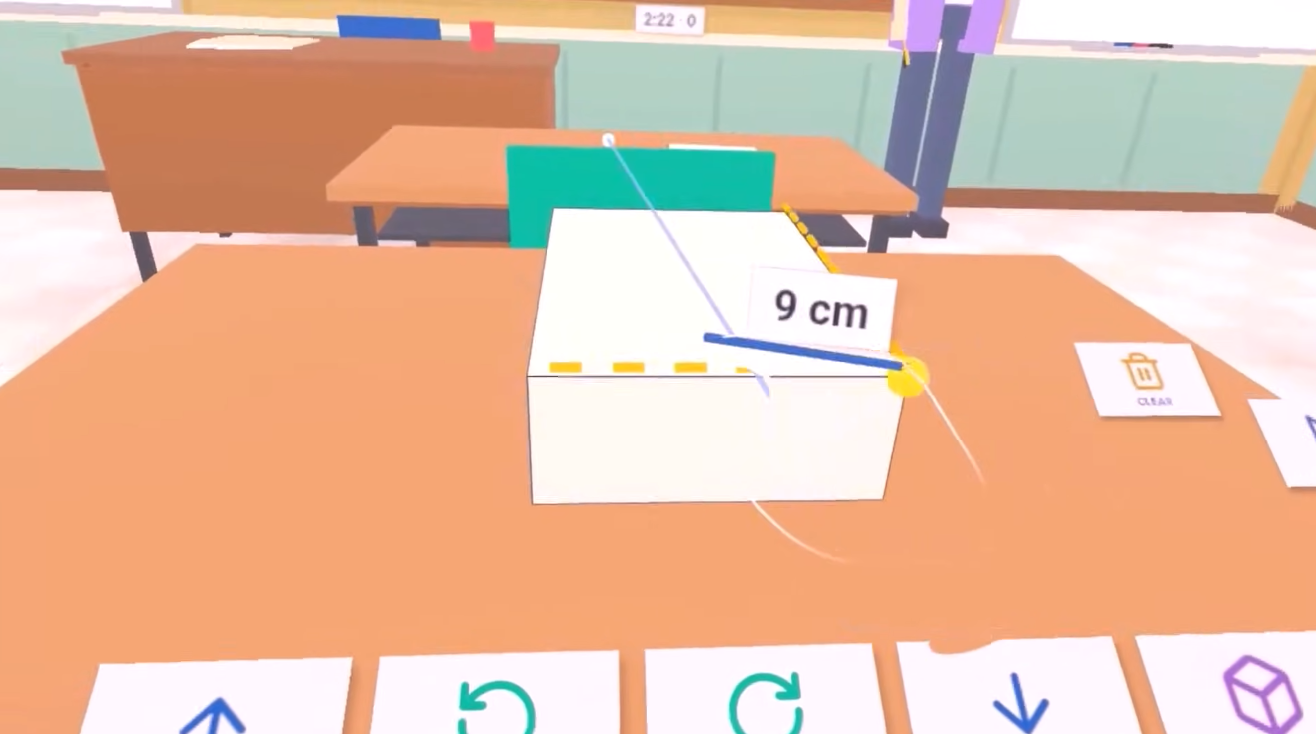
- 1 problem solving game: Measure Hunt, where students measure real and paper objects with their fingertips to solve perimeter, area and volume problems.
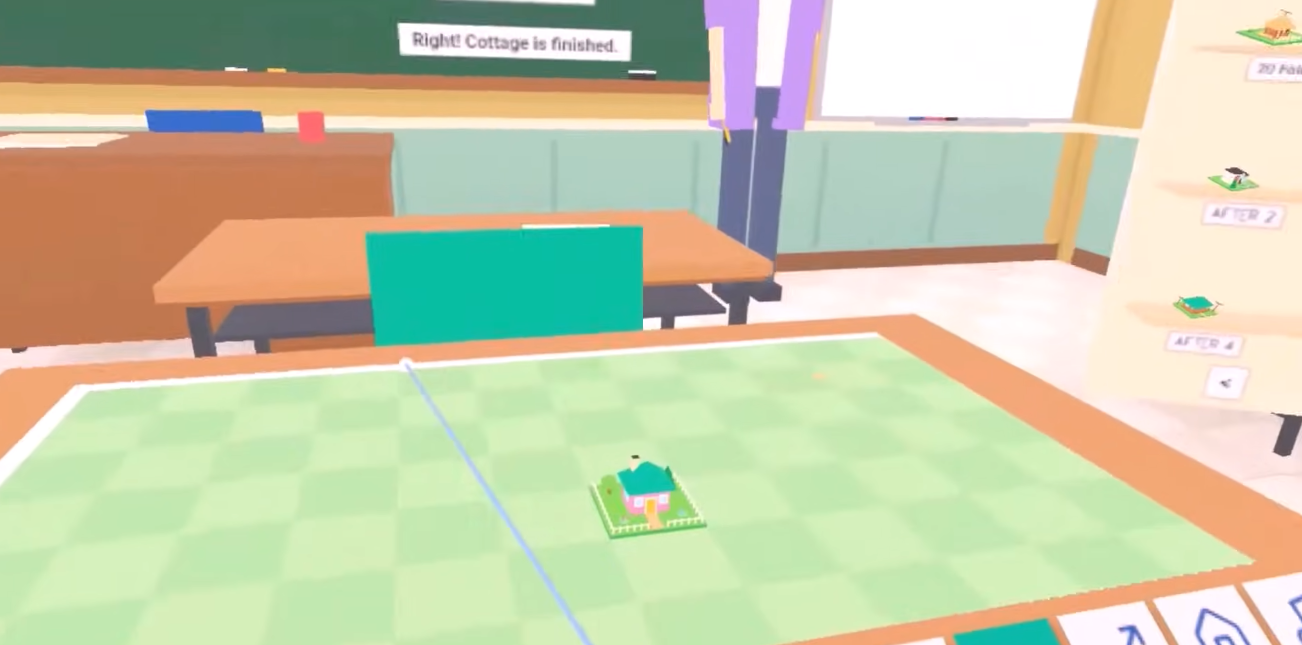
- 1 creativity game: Fold Town, a city builder where students spend the credits they earned to build their own paper town on the desk, with a landmark for every topic they master.
7 ways to play
- Practice: play alone, at your own level.
- Race the robots: three timed waves and a boss round against two labelled robots.
- Find an opponent: race a player of the same grade.
- Class race: up to six desks race live, started by the teacher; robots fill empty seats.
- Smartboard race: not enough headsets? Up to three students race at one classroom touch screen, by touch or by hand in front of the camera.
- Watch the race: the class follows every desk live on the big screen, and the teacher sends cheers.
- Build your town: spend earned Folds on 214 paper pieces and place them by hand; every topic mastered raises a landmark.
Adaptive learning
- Maths you can touch: numbers become balloons, crystals, planks and weights.
- Every child at their own level: 29 skills, 224 validated templates, each question fitted to the player.
- From gap to lesson: each weak skill links straight to one of 52 interactive lessons.
Creative learning
- Learning becomes building: every answer earns Folds to build a paper town by hand.
- Progress you can see: each mastered topic raises a landmark that cannot be bought.
Authentic assessment
- The real world is the question: students measure a real box on their desk with their fingertips.
- How, not only what: the game assesses how they measured, and the answer must match their own work.
- Hard to cheat: an answer done by hand cannot be copied or pasted from a chatbot.
Fair and run by the teacher
- Fair, healthy competition: in a class race the server, not the headset, makes every question and decides every answer. Points reward effort relative to each student's own level, with no negative points. In a 1000-student simulation, strong and weak students earned points within 5.8% of each other.
- Run from a phone: the teacher opens a room and starts the race, desks count down together, and the whole class watches on a big screen.
- Teacher plus AI: optional AI insights help the teacher read the class. Only seat numbers go to the AI; student names stay in the teacher's browser.
How we built it
- XR client: WebXR with Meta's Immersive Web SDK (IWSDK) on three.js, in TypeScript, built with Vite. Passthrough and hand tracking place the paper world on the student's actual desk: we read the hand joints to detect a flat, still hand and put the book at the height of the real table.
- One game core in Rust: question generation, an exact fraction engine (so
0.1 + 0.2is exactly0.3), adaptivity, fairness and answer checking live in a single Rust crate. It is compiled to WebAssembly for practice on the headset and runs natively on the server for class races, so both judge answers exactly the same way. - Server: Rust with Axum and Tokio (REST, plus WebSockets for live races) and PostgreSQL through SQLx.
- Offline: a service worker keeps the game on the headset, and an outbox holds answers until they can be sent.
- Teacher and class pages: React Router, React and Tailwind CSS; teachers sign in with Firebase Authentication.
- AI: any OpenAI-compatible provider, chosen and configured by the admin, never hard-coded. AI never writes questions or answers.
- Smartboard mode: MediaPipe hand tracking reads the board's webcam on the device only; no picture leaves it.
- Deploy: Docker on a VPS managed with Dokploy.
- Testing: 117 core tests, 75 server tests and a validator that checks all 224 templates. Most development ran in the IWSDK emulator, then on a Meta Quest 2 and in a real classroom.
Challenges we ran into
- Hands that touch by accident. A relaxed hand's pinch could burst the balloon its ray rested on. Headset logs showed it, so answers are now chosen by touch only for hands, with a short grace period after each press.
- Putting the book on the real table. Detected tables and pinches placed the book at heights the student could not predict, sometimes under or over the real table. We switched to a simple sign: lay a hand flat on the table, and the book opens right there.
- Every real desk is different. The virtual classroom is built around the measured real desk, while classmates must stay on the floor even when a real table is unusually high.
- Real teachers, real confusion. In the classroom trial a teacher pressed "open room" again and again, thinking it was a switch, and opened many rooms. We redesigned the buttons and feedback so each press clearly opens one new room and names it.
Accomplishments that we're proud of
- Adaptive, creative and authentic in one loop: questions adapt to each student, progress becomes a town they build, and assessment comes from what they do with their hands, even on real objects on their desk.
- A complete system, not a demo: learning, assessment, class races judged by the server, teacher insights, lessons, creativity, offline play and accessibility work together in one product.
- Ready for a classroom: it runs in the Quest browser, so a teacher shares one link and a class can play, even where the internet is weak.
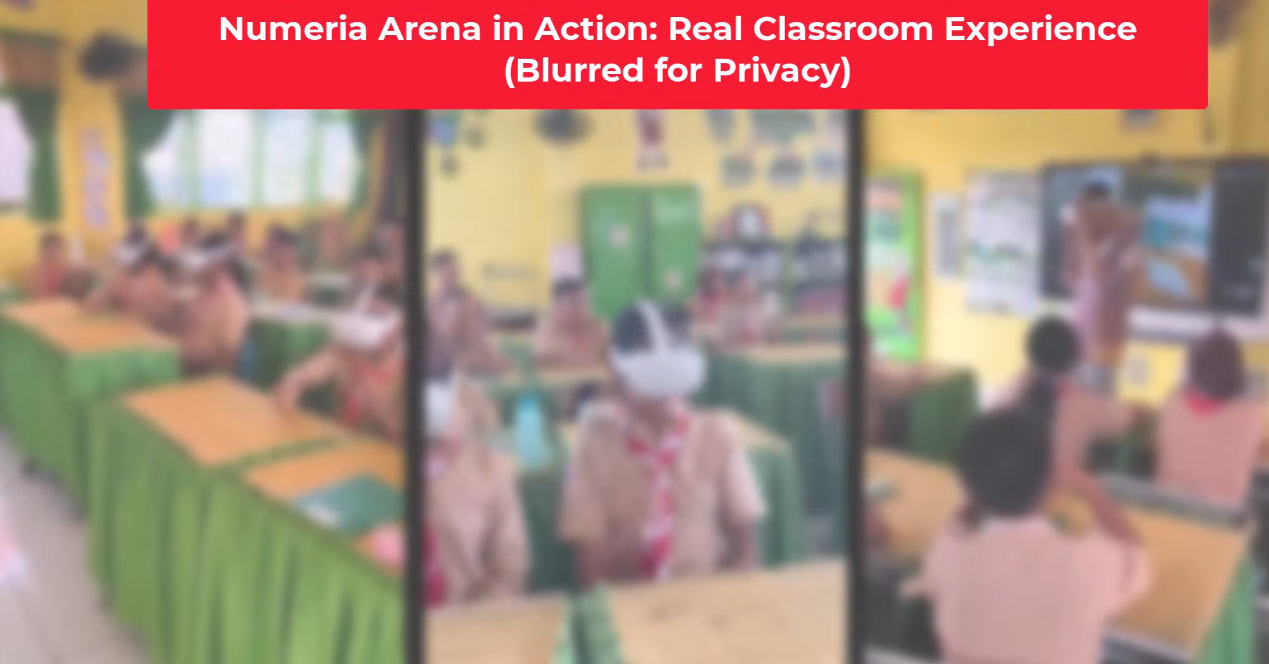
- Proven in a real classroom: a teacher brought Numeria Arena into an elementary classroom in Indonesia, and the students' response was very positive.
- Wanted by schools: after that first trial, other schools have asked to run Numeria Arena with their students, and a national government institution in Indonesia invited us to demo it as their sole exhibitor.
What we learned
- In a classroom, the teacher's flow matters as much as the game: one unclear button can stop a whole class.
- Hand tracking needs intent, not just contact. What counts as a press must be designed and checked against real logs.
- The simplest gesture often wins: a flat hand on the table placed the book better than any automatic detection we tried.
- Privacy is easiest when built in from the start: seat numbers instead of names, picture passwords instead of emails, and on-device camera reading.
What's next for Numeria Arena
- Trials in the schools that have already invited us, and the government exhibition demo.
- Measuring learning results and frame rate properly before we claim them.
- Every question template reviewed by teachers, with difficulties calibrated from real answers.
- More topics and Measure Hunt tasks across the elementary curriculum.
- More languages beyond English and Bahasa Indonesia, and more schools.
Built With
- axum
- docker
- firebase
- hand-tracking
- immersive-web-sdk
- mediapipe
- meta-quest
- openai-compatible-api
- passthrough
- postgresql
- react
- react-router
- rust
- sqlx
- tailwindcss
- three.js
- tokio
- typescript
- vite
- webassembly
- webxr
