-
-
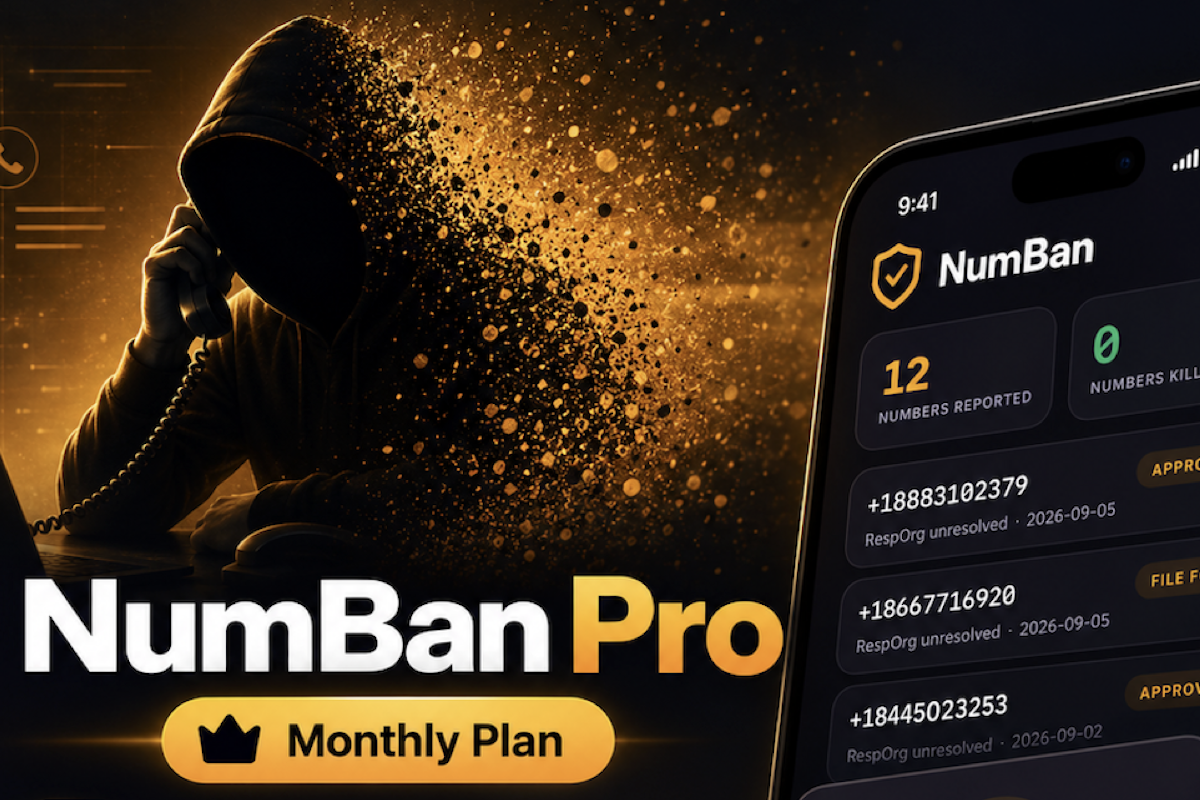
Thumbnail
-
-
-
-
-
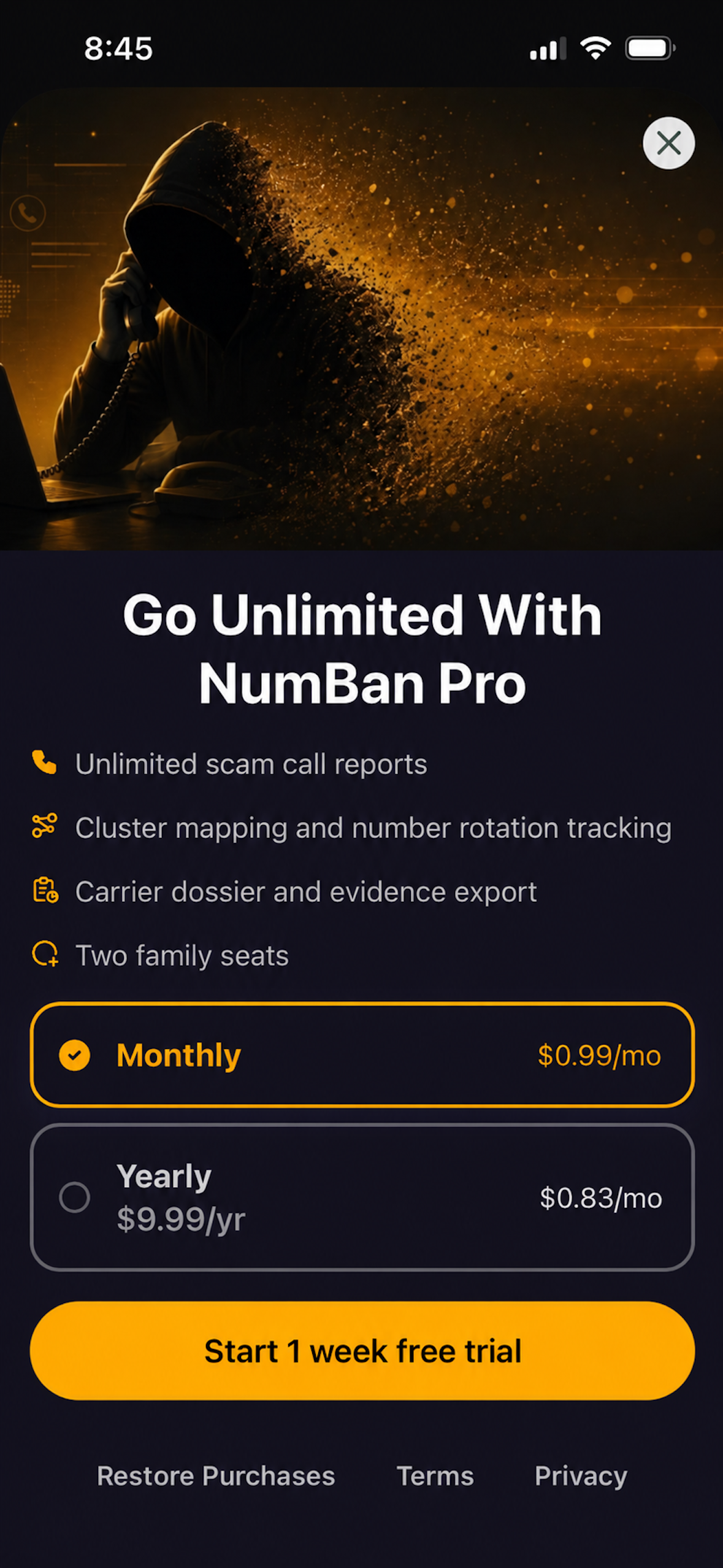
Paywall. 1179x2556
-
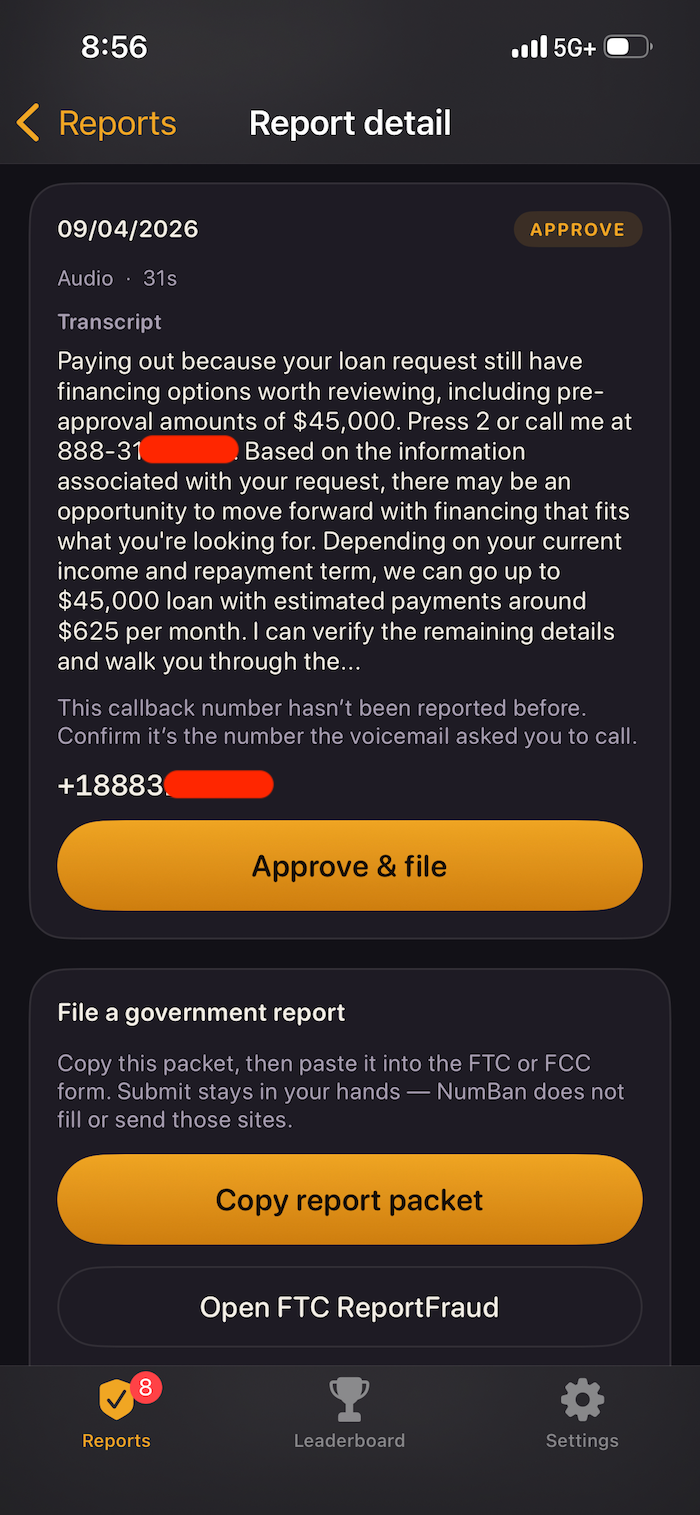
Voicemail Detail Page
-
-
Numban App Icon
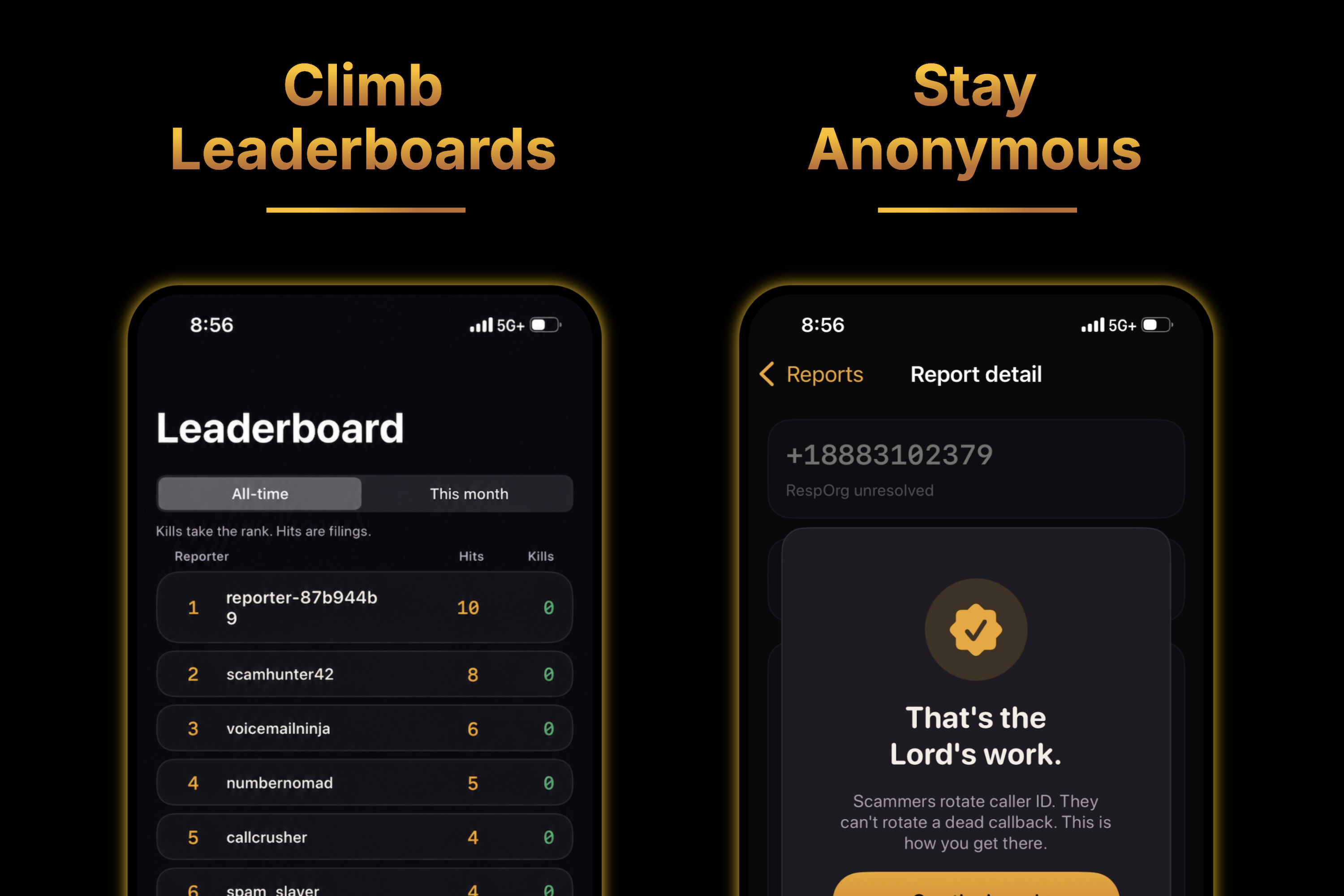

What it does
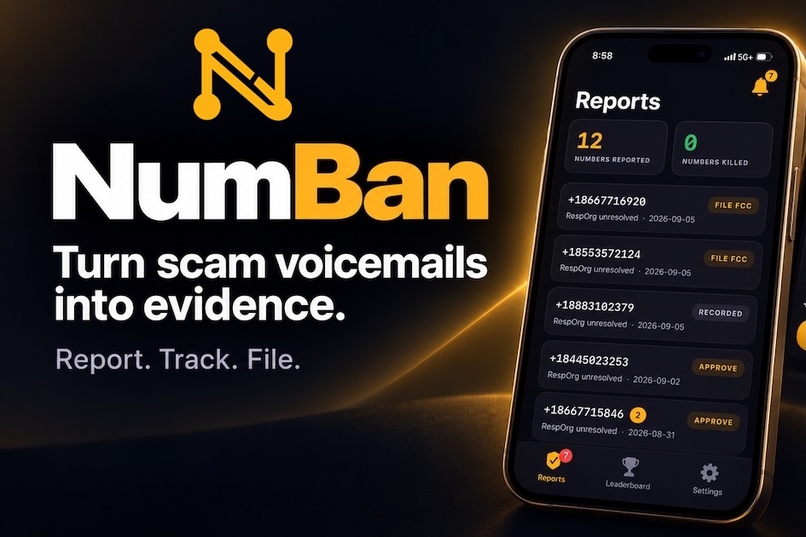
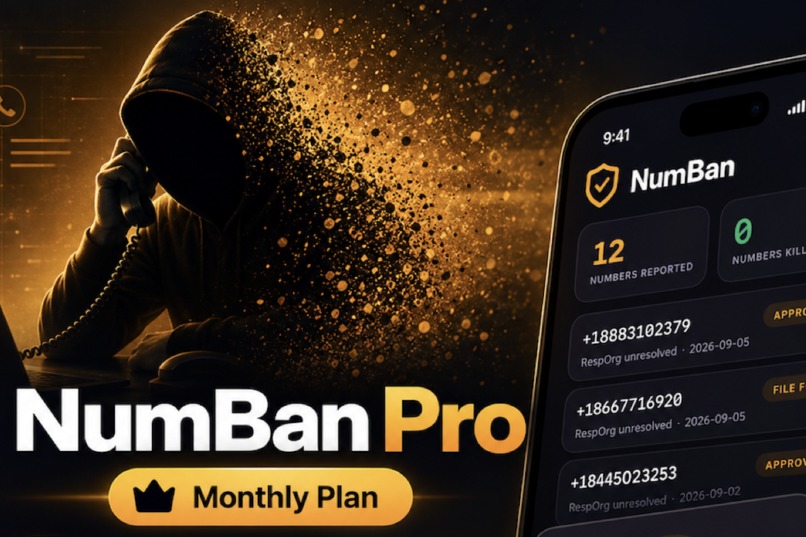
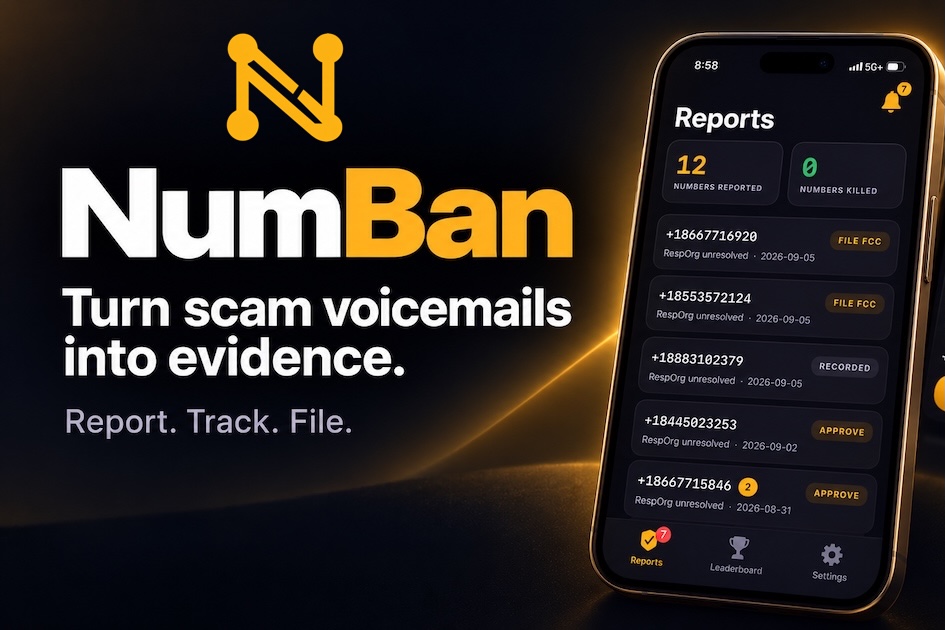
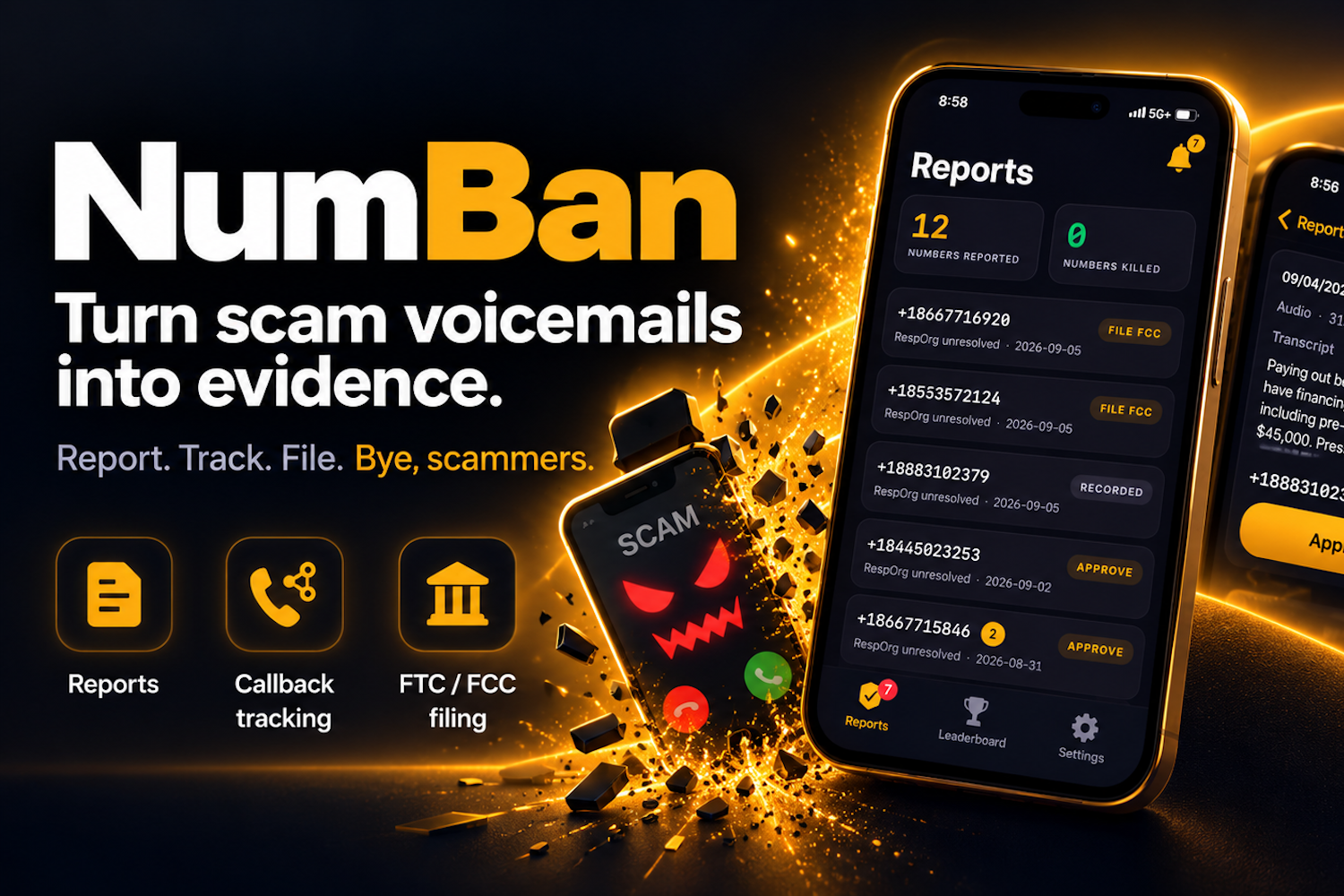
NumBan lets users share a voicemail from a scam caller, extracts the callback number, and reports it to their carrier. Caller ID is easy to fake, so blocking numbers is pointless. However, the callback number in a scam voicemail has to work, so that's where we hit them.
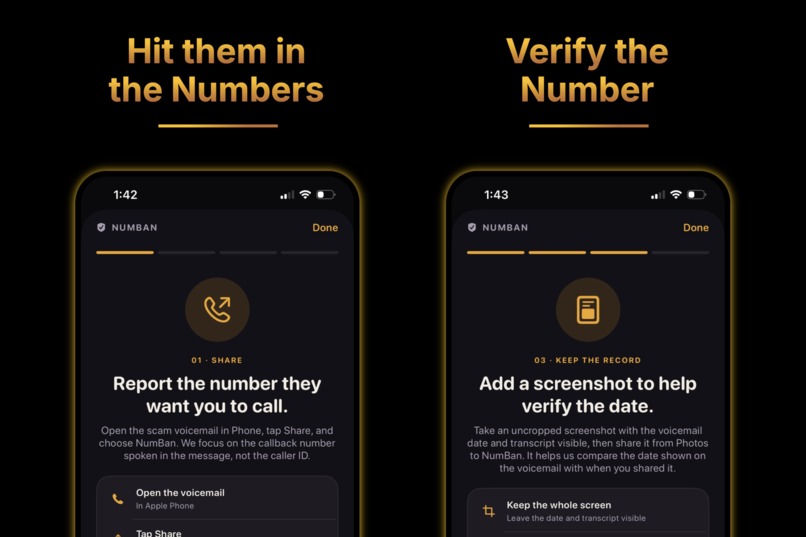
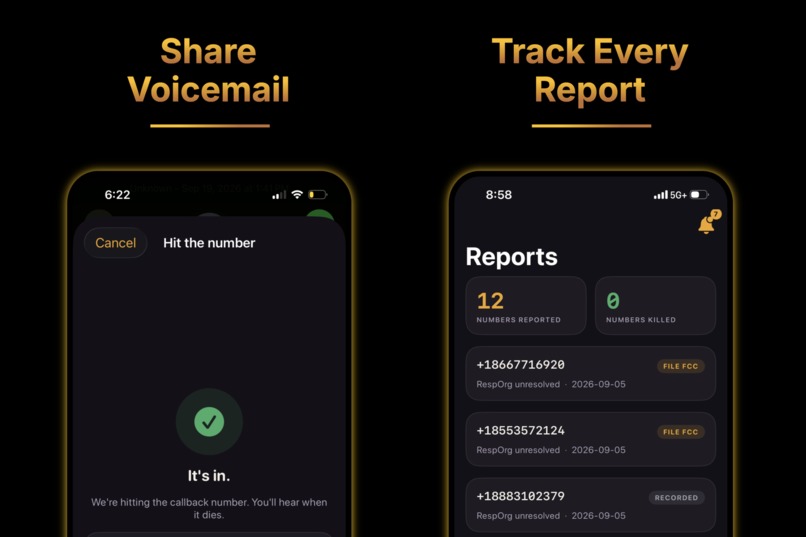
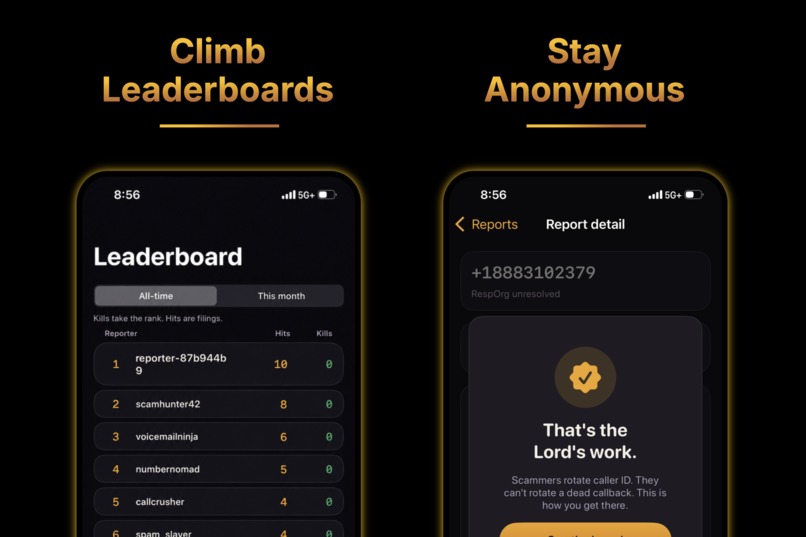
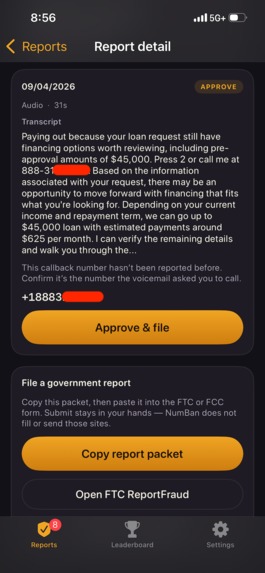
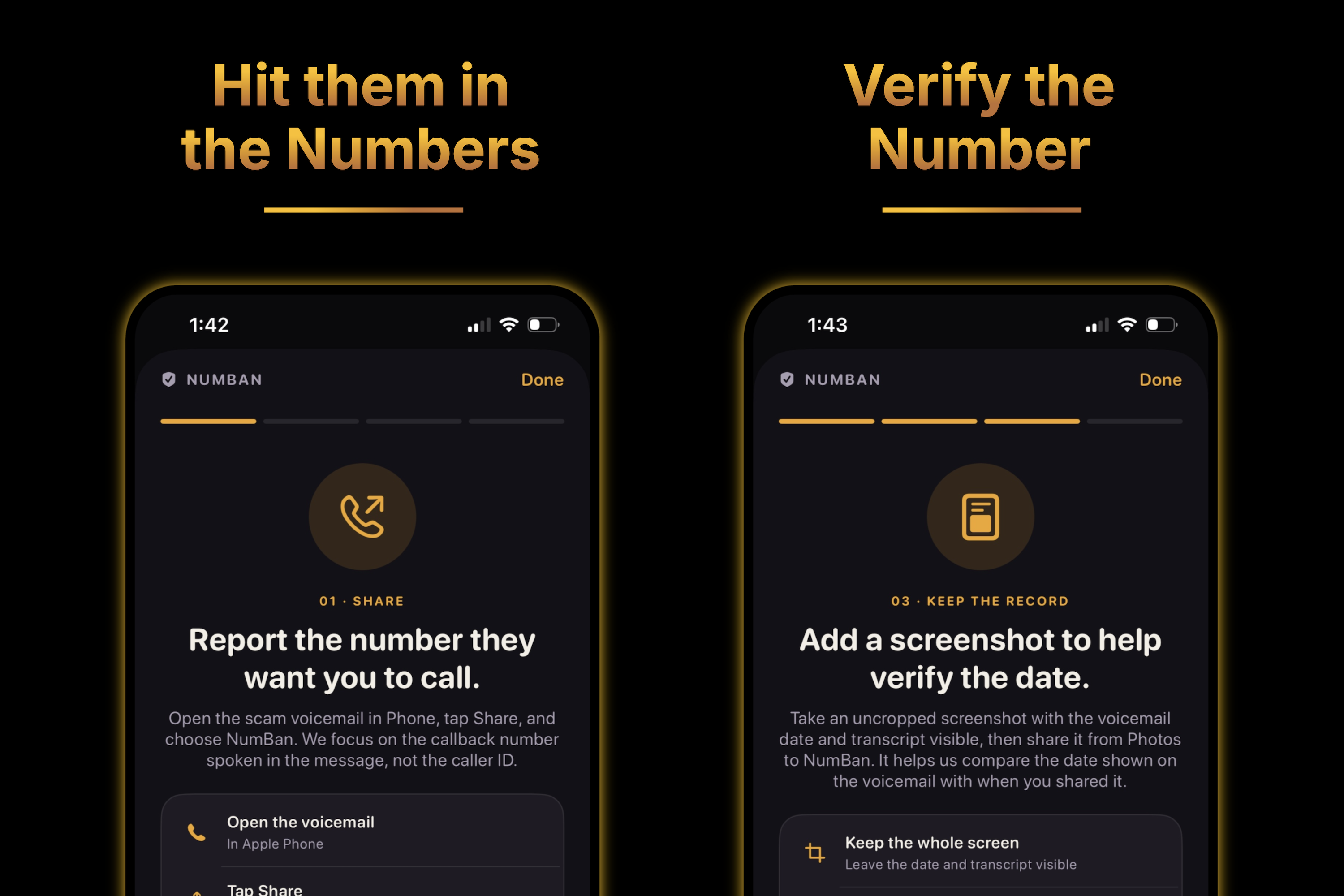
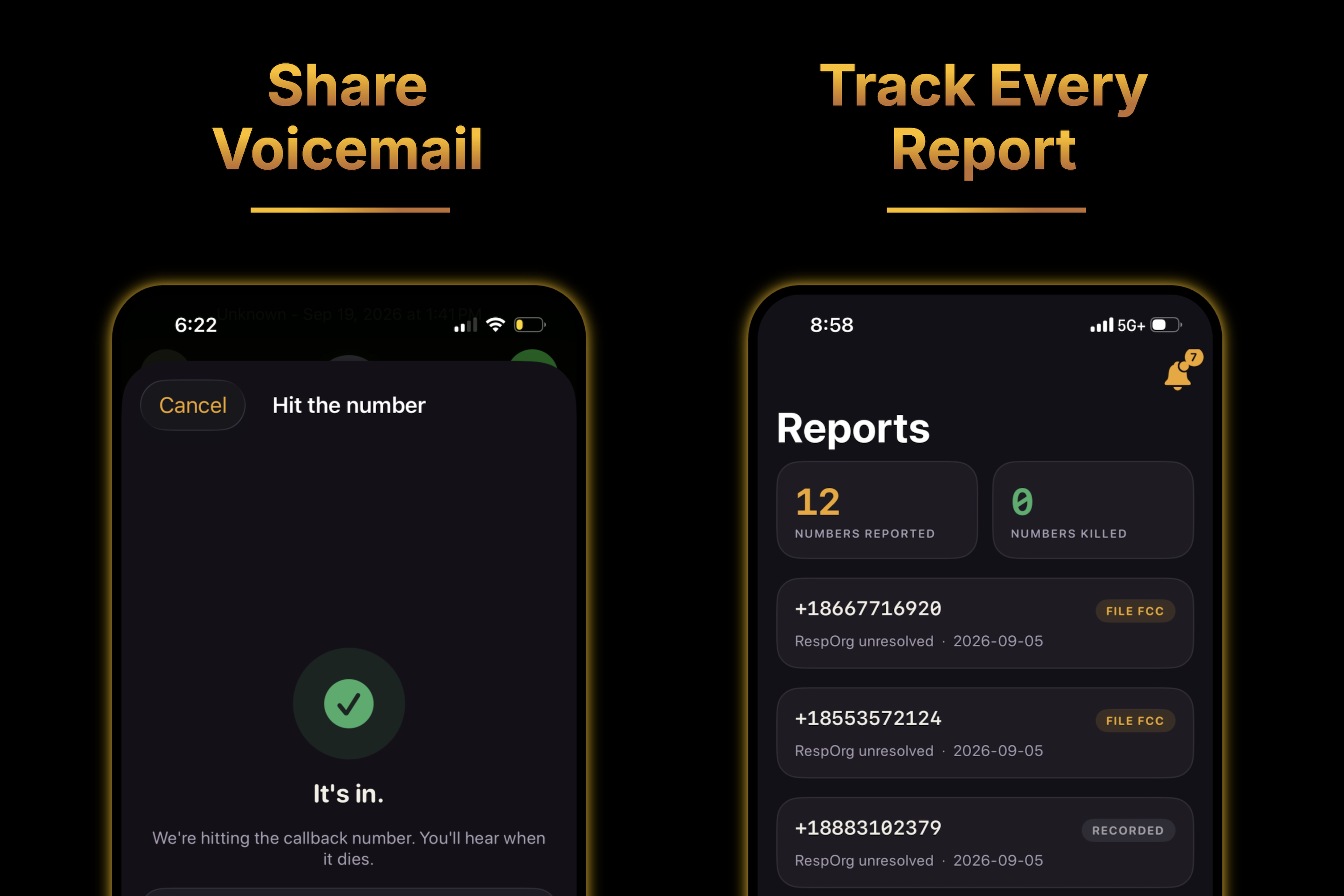
NumBan lets an iPhone user share a voicemail directly from the Phone app. It transcribes the audio, finds the number the caller wants you to dial, and asks you to confirm it. The report is logged and sent to the carrier from a NumBan alias, so your personal email and phone number are not sent to a carrier.
Reporting a number starts a record and once corroborated, NumBan sends it to the carrier. Users can also upload a screenshot of their visual voicemail as additional evidence. NumBan also gives the user a copy-ready packet and direct links to the FTC and FCC forms for reporting scammers.
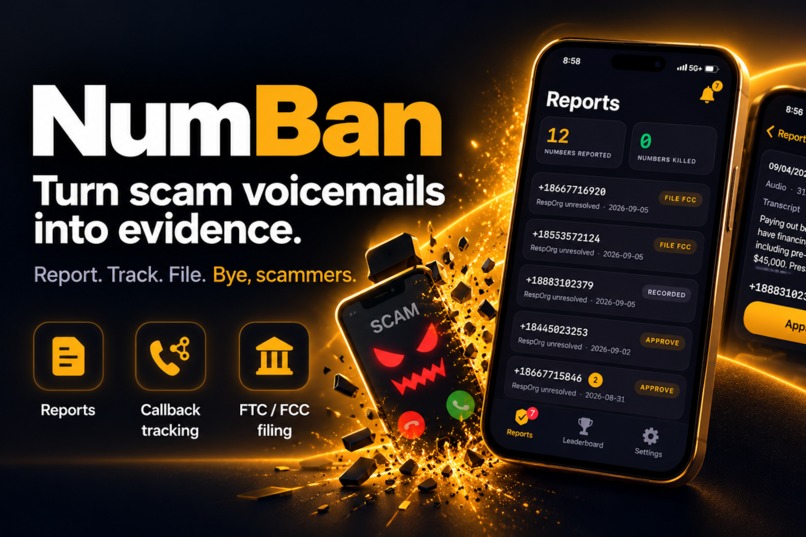
Reported numbers are then pinged periodically from the NumBan backend. When we detect that a number has been disconnected, we alert the user(s) who reported it with a push notification and move them up the kills leaderboard.
NumBan does not claim that one tap magically takes down a number. The point is to make useful evidence easier to collect and close the loop if the callback number later appears to die. With enough users, we can track and record scammer activity and potentially get their enabling carriers shut down.
Why I built it
I get at least a dozen scam calls a week, so many that I have to send all unknown callers to voicemail. Blocking the caller ID does nothing because the next call comes from another fake number. The voicemail is different: it necessarily contains a real number that the scammer needs victims to call.
Blocking caller numbers is pointless and reporting them to the FCC/FTC is tedious and meaningless. NumBan handles these reports and tracking as easily as possible, with as little as one tap, allowing us to more accurately identify the bad actors and do so across many users.
How it works
- Share a 3–300 second voicemail to NumBan.
- NumBan transcribes the audio and extracts callback numbers.
- A notification is sent asking the user to confirm the number the voicemail asked them to call.
- NumBan records it, looks up the carrier or RespOrg, and files a report with the scammer's phone provider.
- The app sends useful updates when approval is needed, a report is queued, a number moves, or a kill is confirmed.
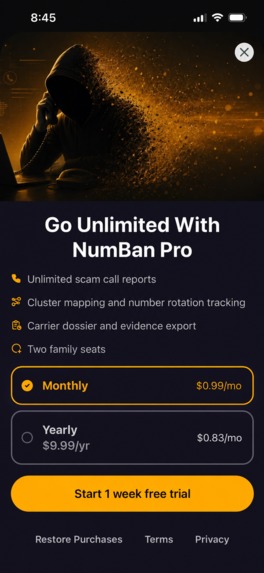
Free users can file three verified reports each month. NumBan Pro removes the cap. It costs $0.99 monthly with a seven-day trial or $9.99 yearly.
How I built it
The app and Share Extension are native SwiftUI. A Cloudflare backend handles transcription, number extraction, carrier lookup, queues, and scheduled checks. The app uses a mix of Twilio, Telnyx, and Somos to look up the responsible technology provider. RevenueCat manages subscriptions. OneSignal handles case-status notifications that bring someone back when there is actually something worth seeing.
What I learned
The Share Extension is the product and it has to be super simple. If sharing a voicemail takes more than a few seconds, the rest does not matter, as users do not tolerate such friction.
I also learned a ton about Responsible Organizations, regulations and technology like TCPA and STIR/SHAKEN, and got very familiar with the constellation of telephony providers. Most importantly, I learned that I have truly struck a nerve and have identified a salient and pernicious problem; User feedback has been overwhelmingly encouraging.
I am entering the Grand Prize, RevenueCat Peace Prize, Keep Them Coming Back, HAMM, Design, Most Viral, Growth Loop, and #BuildInPublic.
Built With
- apns
- cloudflare
- d1
- firebase
- ios
- onesignal
- r2
- resend
- revenuecat
- storekit
- swift
- swiftui
- twilio
- typescript
- whisper
- xcode


Log in or sign up for Devpost to join the conversation.