-
-
Banner
-
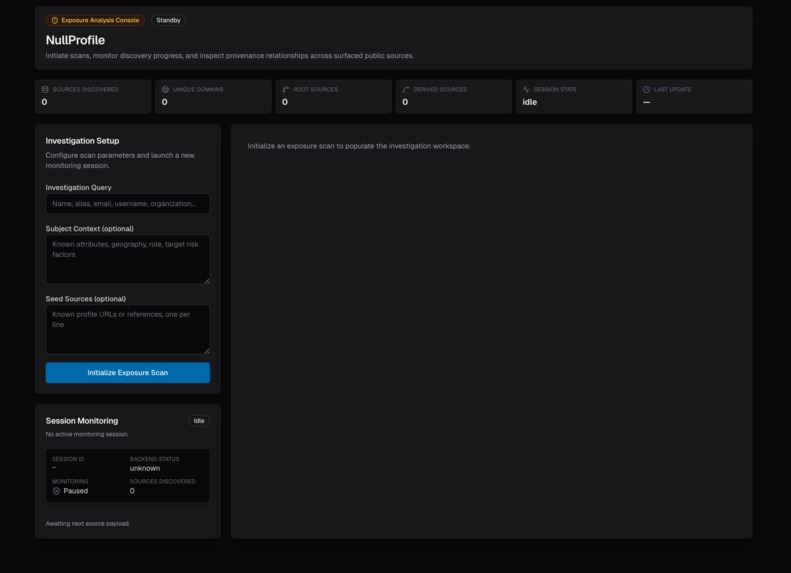
NullProfile initial interface
Inspiration
We were inspired by how easy it has become to connect "anonymous" online accounts to real people using public information. We wanted to build something that shows this risk in a clear way and helps people better understand their online exposure.
What It Does
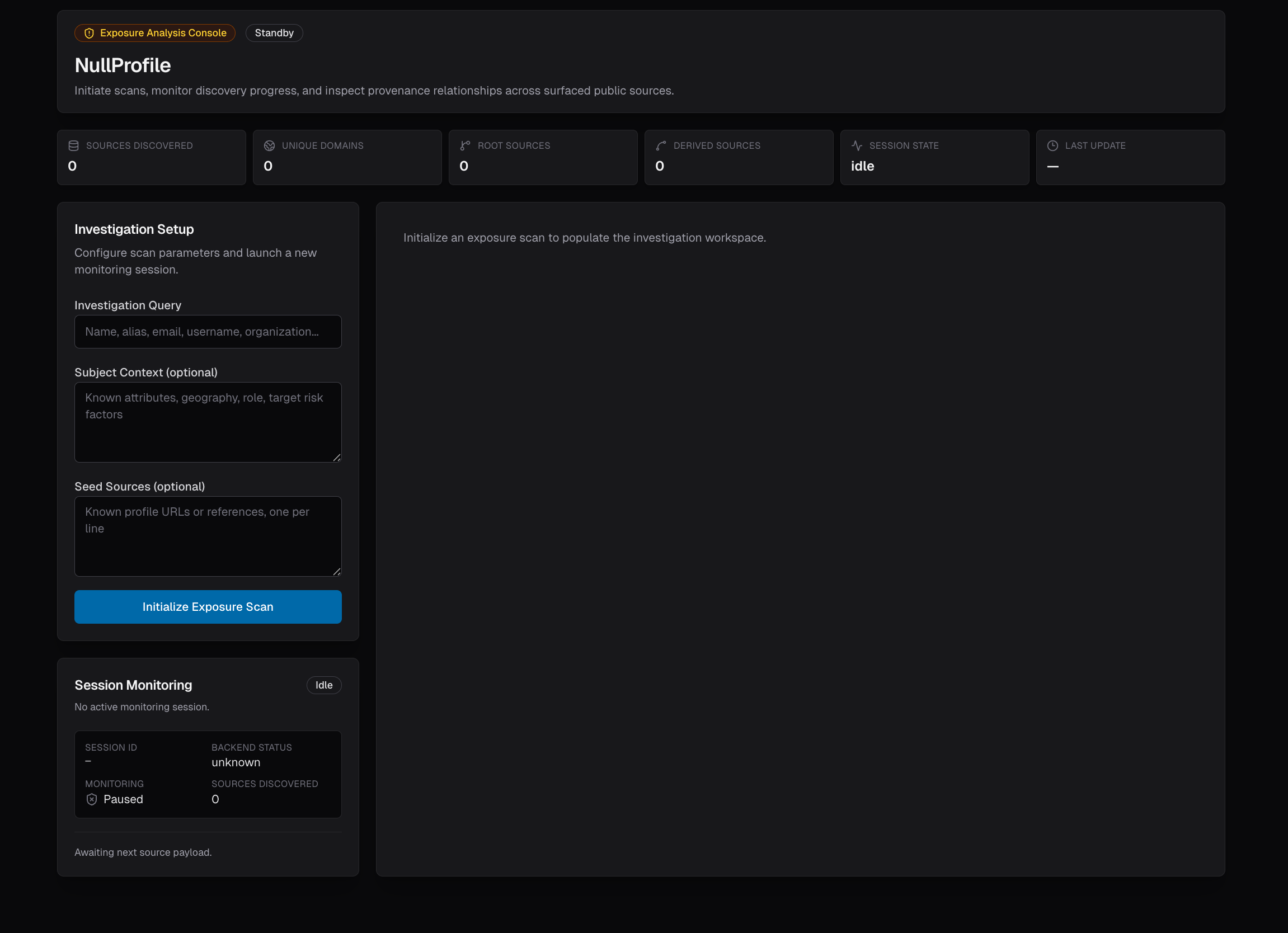
NullProfile is a privacy audit tool that uses public OSINT to show how a pseudonymous social media account can be connected to a real identity.
It looks at visible signals like usernames, bios, comments, and location clues, then searches for matching profiles and shows how those clues connect.
Overview
| Category | Details |
|---|---|
| Project | NullProfile |
| Purpose | Show how public signals can weaken anonymity |
| Input | Public accounts (e.g. Instagram page) |
| Analysis | Usernames, bios, comments, links, location patterns |
| Output | Linked profiles, identity clues, risk insights |
How We Built It
We built NullProfile as a multi-agent Python system with a simple graph-based frontend.
| Component | Role |
|---|---|
| Claude | Finds and reasons through profile clues |
| Grok | Helps connect clues into a stronger profile |
| Linkup | Searches the web for public matches |
| Patchright | Automates browsing and scraping |
| Graph Algorithm | Visualizes the connections in a graph |
Challenges
One major challenge was getting models to handle this type of task, since some were hesitant even when the goal was privacy defense. We also dealt with unreliable scraping, uneven search results, and the risk of matching the wrong person.
What We’re Proud Of
We built a working system that brings together social signals, web search, browser automation, and graph visualization in one flow.
More importantly, it makes a real privacy issue easier to see and understand.
What We Learned
We learned that privacy loss usually does not come from one big leak. It comes from many small clues that seem harmless on their own but become identifying when combined.
What’s Next
We want to make NullProfile more accurate, easier to use, and more focused on defense. That means better confidence scoring, clearer risk explanations, more platform support, and stronger recommendations for how users can reduce exposure.


Log in or sign up for Devpost to join the conversation.