-
-
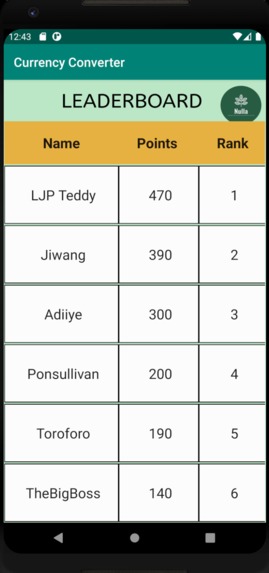
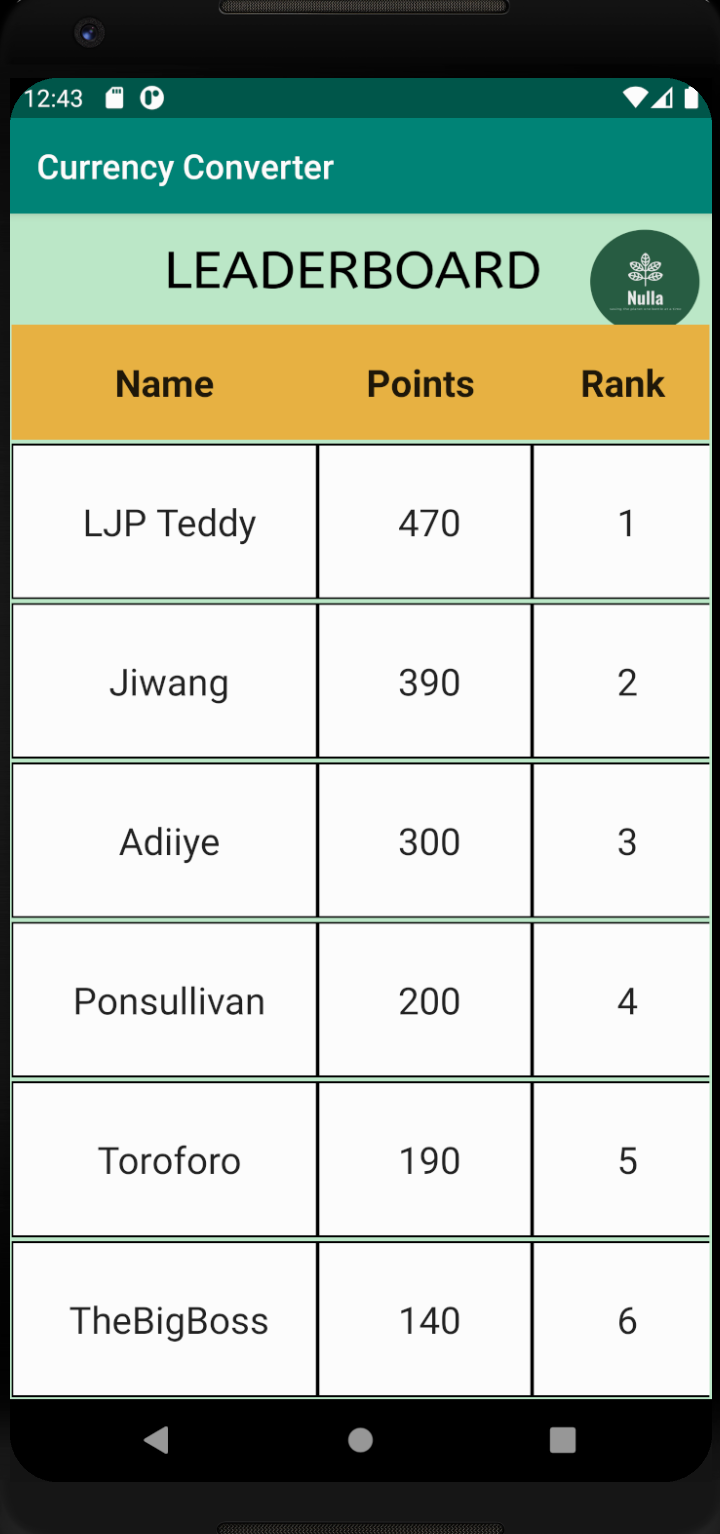
Leaderboard [Northern California Region]
-
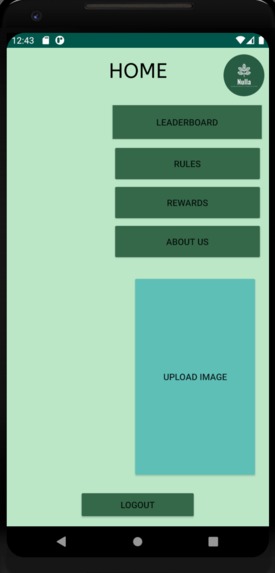
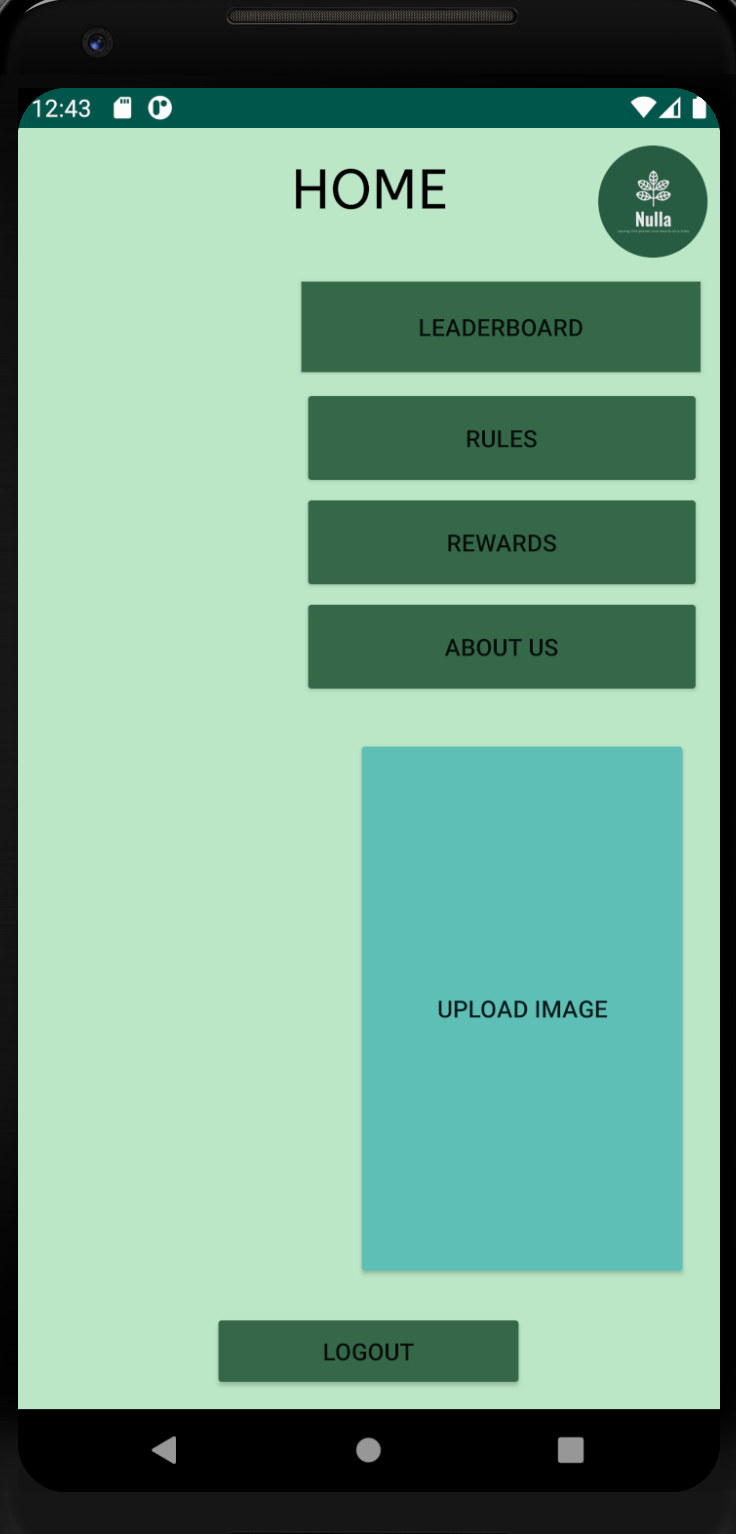
Navigation/Main Meny
-
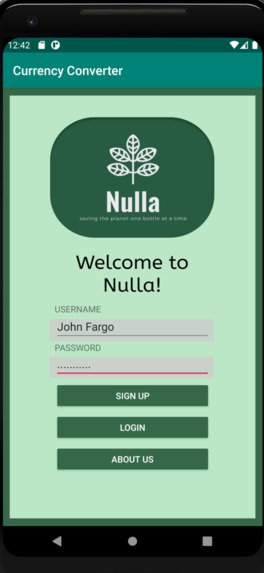
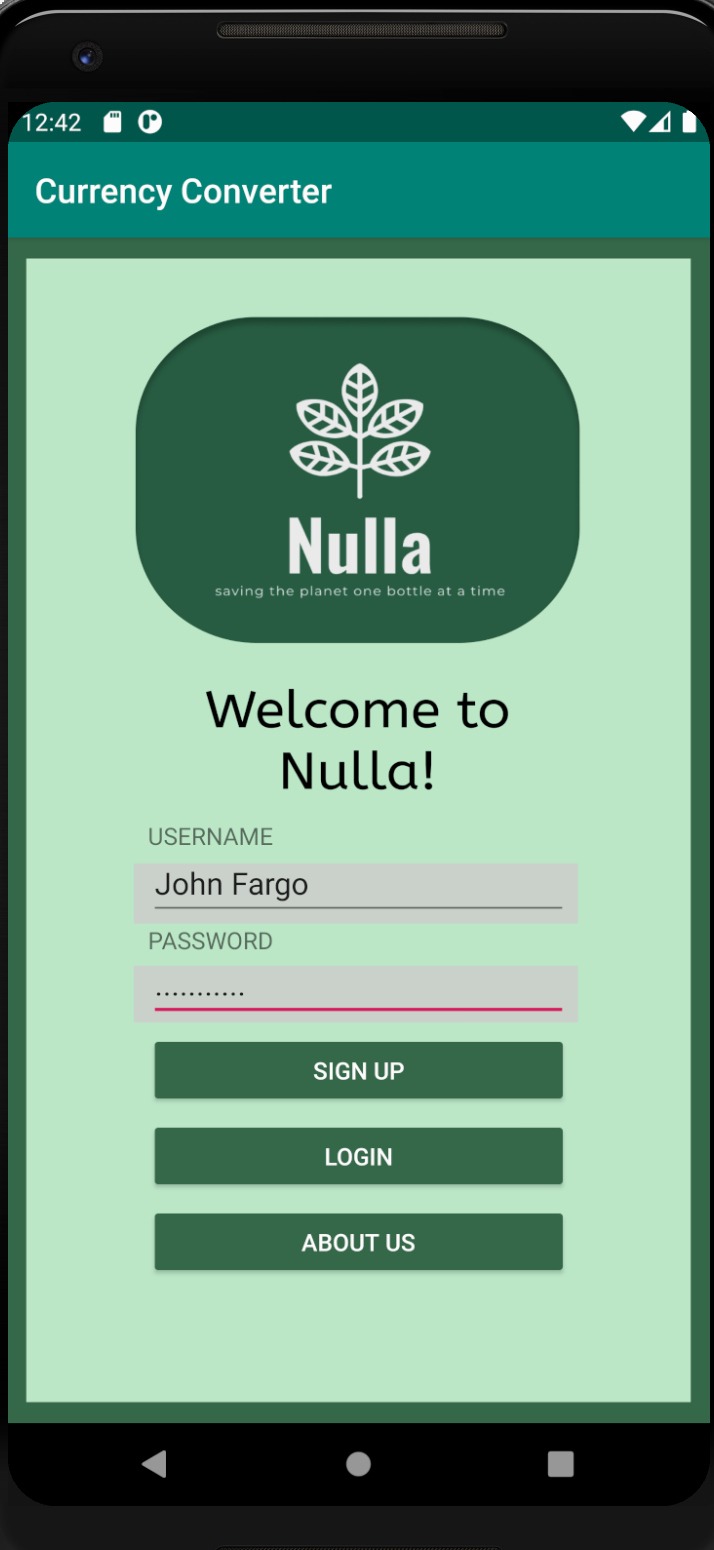
Login screen
Inspiration
According to national geographic, 91% of plastic is not recycled around the world leading to more than 8 trillion tons of plastic in the oceans every year. All of our group members live in the Bay Area in California, and we regularly see the ill effects of plastic waste in reservoirs and lakes, affecting both the natural flora and fauna of our homes. We are all avid recyclers, and we wanted to take action to spread awareness about the benefits of recycling by providing an easy solution to channel an individual's innate competitive desire into a drive to recycle to save the planet: Nulla.
What it does
Nulla has several functionalities which make it unique and the perfect solution to combat the ills of ignorant plastic disposal. Nulla allows users to log in by authenticating text fields with a MySQL database. User's may also sign up to make an account and have access to all of Nulla's amazing features!
Once authenticated, users can take pictures from Nulla of them recycling or performing actions to benefit the environment. Through remote syncing, the pictures will be transported directly from the user's local device to an Amazon S3 bucket on AWS. AWS Rekognition will be run on each image to determine if the submitted picture meets the rules and specifications laid out in the "Rules" page in the app. If Rekognition has a 95% or higher certainty that the picture constitutes an environmental benefit, 10 points are automatically credited to the user's account. This will dynamically update a leaderboard where users may view who has the highest points in their region. This friendly competition will encourage users to take more pictures and thus recycle more.
Each month, users on the leaderboard may cash out their points for prizes. For example, a user with 400 points (40 pictures) by the end of the month who is first in his or her region can claim a $500 Amazon gift card. After claiming a reward, the user's points reset to 0. Prizes vary by region and for the Northern California region, a $500 Patagonia gift card is the top prize with a $250 Amazon gift card for second.
How we built it
We initially designed Nulla's UI in Figma, but we had difficulties exporting it to Android Studio since there was no easy documented way of doing so. Afterwards, we began setting up interactive features in Android Studio such as buttons and text fields using Java. We then set up an SQLite Database in Android Studio to hold usernames and passwords from people who register in the app. One of our greatest tasks was figuring out an authentication system by figuring out if the user input in the username and password fields matched up with users in our database. Another large task was implementing a camera API and sending taken pictures to the Amazon S3 bucket on AWS, running AWS Rekognition, and bringing the results back to our app and using them to determine credits.
Challenges we ran into
The first great challenge that we ran into when building Nulla, was the registration and authentication system. Not only did we need to create a database to hold all the user info, but we also needed to query the database and check if user inputs matched up with user info in the database. We ended up implementing a database using SQLite with Android Studio, and authenticating the users using Java methods. Our 2nd great challenge was actually implementing a camera API, since we all had little to no experience working with cameras, and sending the picture files to Amazon's AWS Rekognition system to be analyzed was also a challenge. We still plan to add a more solid camera and image recognition system to Nulla in the future, as well as other important features.v
Accomplishments that we're proud of
Despite facing some intimidating challenges, we did accomplish some things that we are proud of. The first thing we accomplished that we were proud of was correctly formatting/fitting the UI to Android Studio’s various emulators (each of different ratios and sizes) especially after exporting from figma did not work out. This was accomplished by using relative layouts instead of a layout with constraints. The second thing that we are proud of is the navigation between the various pages of the app. This was achieved by creating an external java class and programming from there. This allowed us to freely navigate between tabs and access certain pages with ease.
What we learned
Over the course of this hackathon, we as programmers have learned quite a bit from our experiences. First of all, we had to overcome our reliance on figma to build the UI and get the navigation up and running. Then, we were faced by the problem of having to authenticate users and add their registration information to an online database that we would need to query to validate login information. Through various attempts we learned how to authenticate users and their login information using java, and how to interact with the database. Lastly, in implementing the camera API, we learned how to access the phones features to take pictures and from there upload them to Amazon’s AWS Rekognition Model so that recyclable items would be detected. Though we still have a lot to learn, this hackathon definitely proved to be a learning experience.
What's next for Nulla
The team that developed Nulla will continue to improve it to one day become an international sensation, saving our planet one bottle at a time. We wish to partner with local businesses to offer a more diverse range of rewards to offer leaderboard winners. We also wish to pursue a more robust implementation of the AWS Rekognition API and the Camera API. We would also like to make Nulla available in multiple languages to break down any language barriers we may have in reaching an international audience. Our journey to take Nulla to the next level has only begun, and we are very grateful for this hackathon in providing us the foundation to do so.
Built With
- amazon-web-services
- android-studio
- camera
- figma
- java
- mysql

Log in or sign up for Devpost to join the conversation.