Inspiration
Traditional learning platforms often provide the same lessons and assessments to every student, even though each learner has different strengths, weaknesses, and learning speeds. AI chatbots can answer questions, but their answers may not always be grounded in study materials, and they rarely provide a complete, adaptive learning journey.
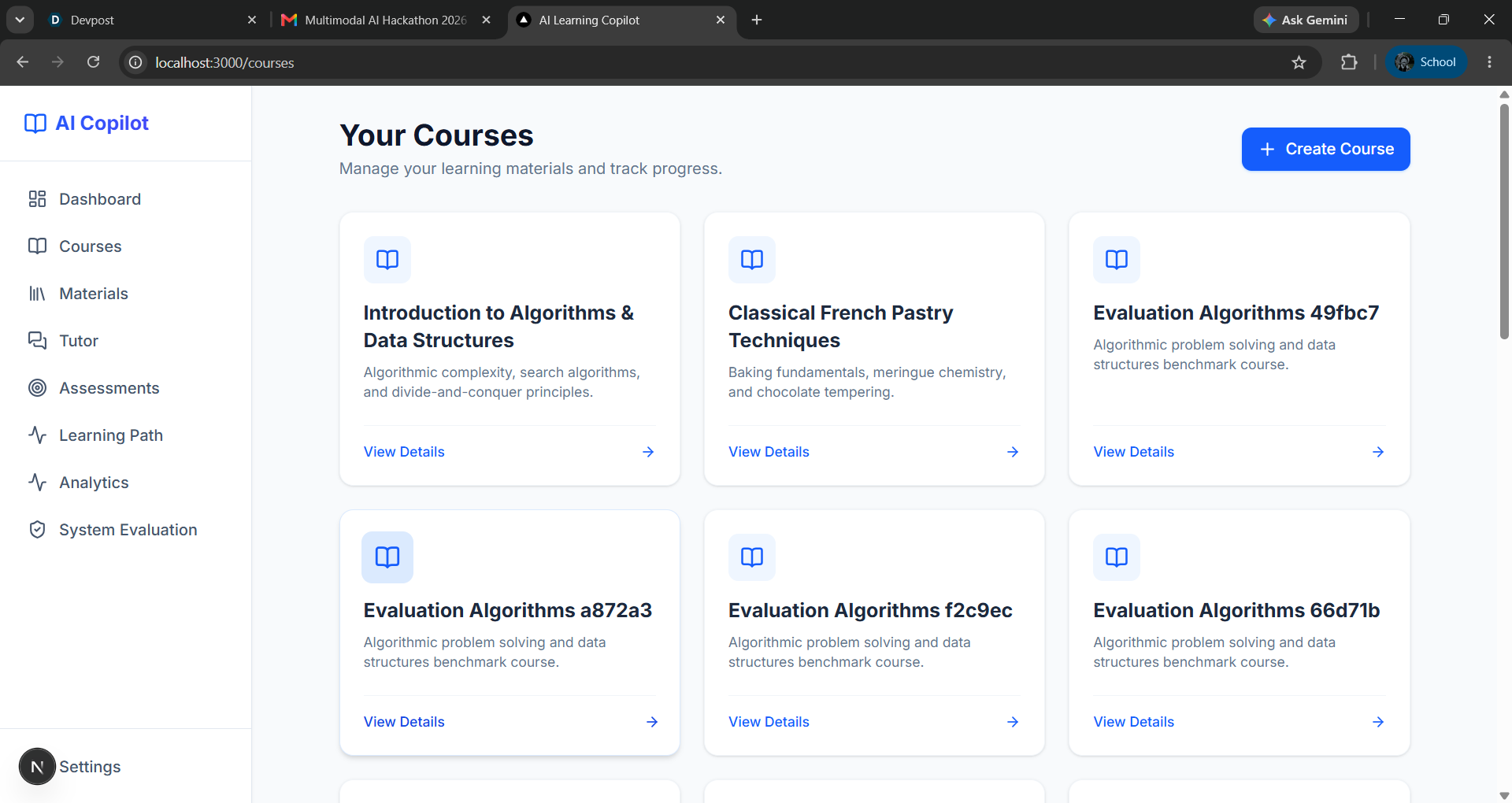
We wanted to build something more useful: an AI learning companion that understands a student's study materials, identifies knowledge gaps, and adapts the learning process to help them improve. This idea inspired AI Learning Copilot — a system that brings tutoring, assessment, personalized learning, and revision together in one platform.
What It Does
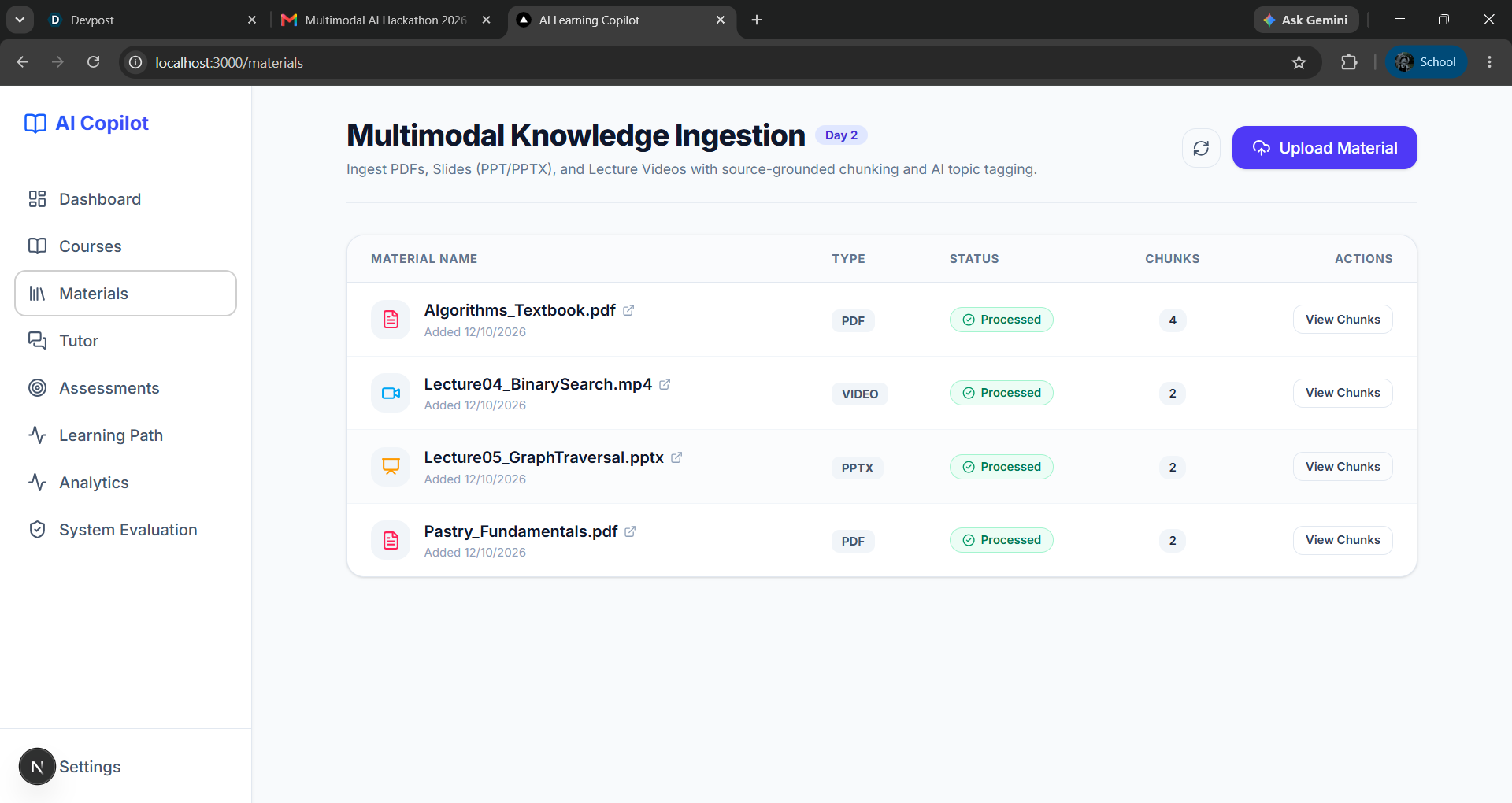
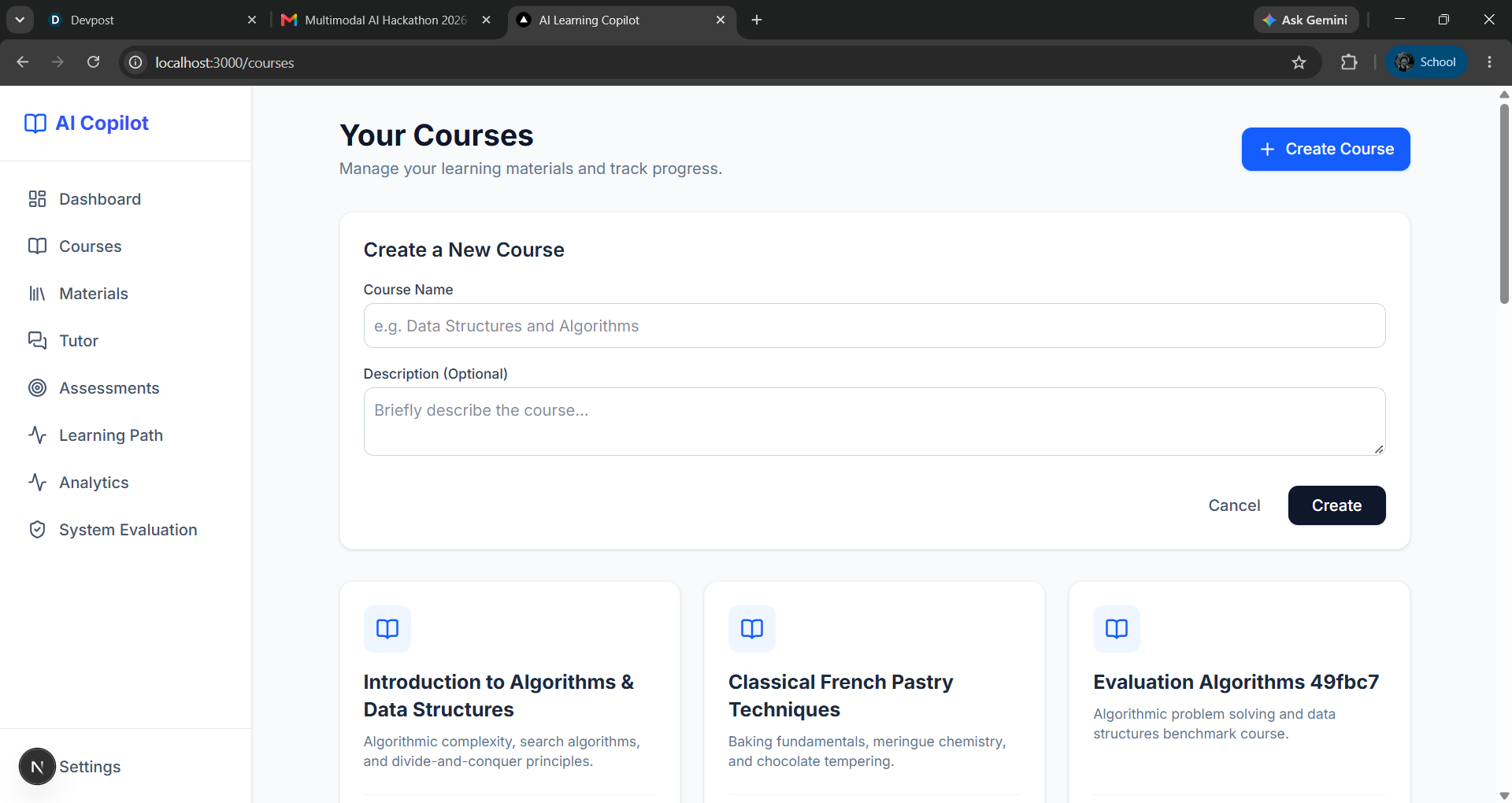
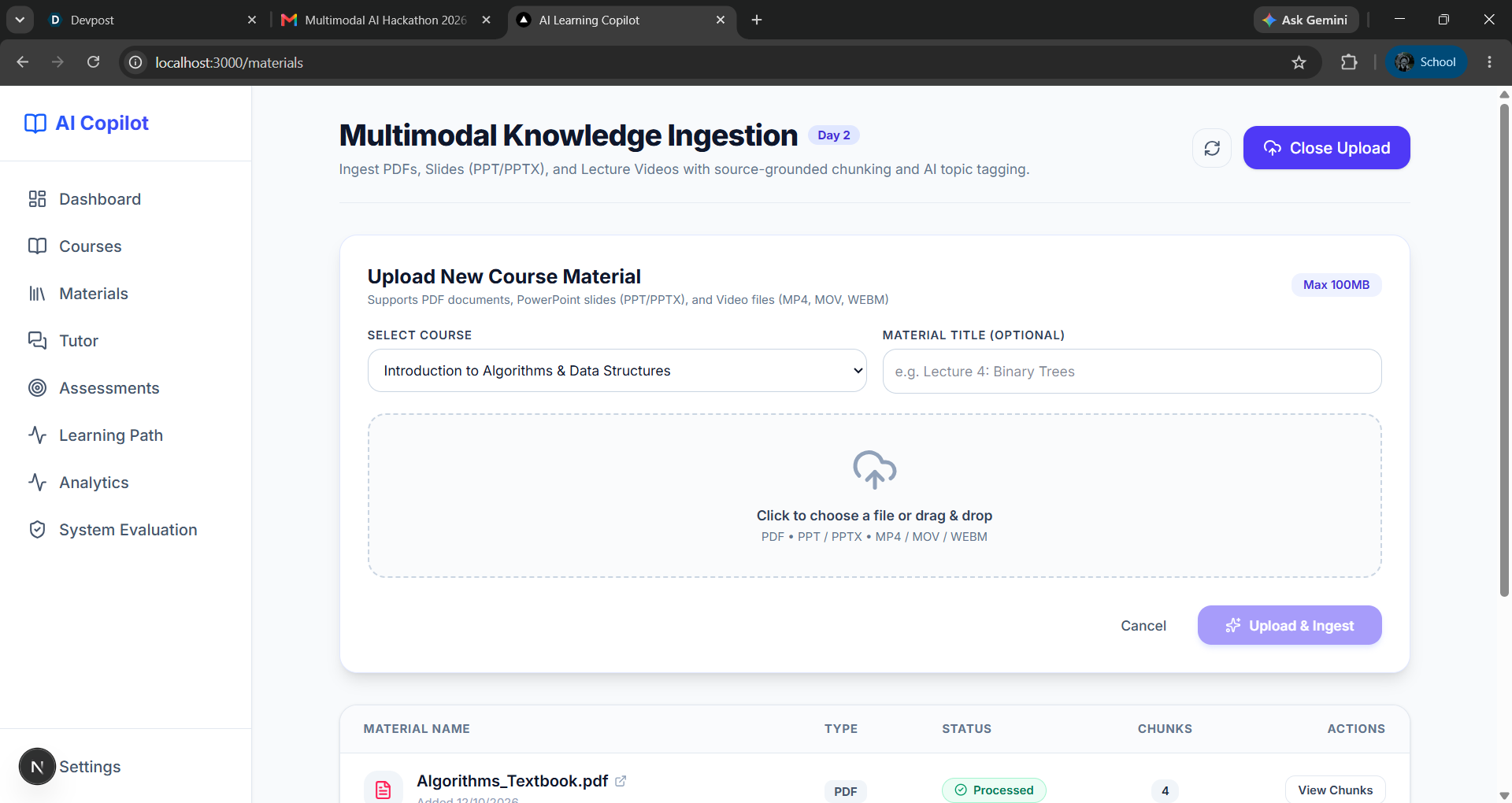
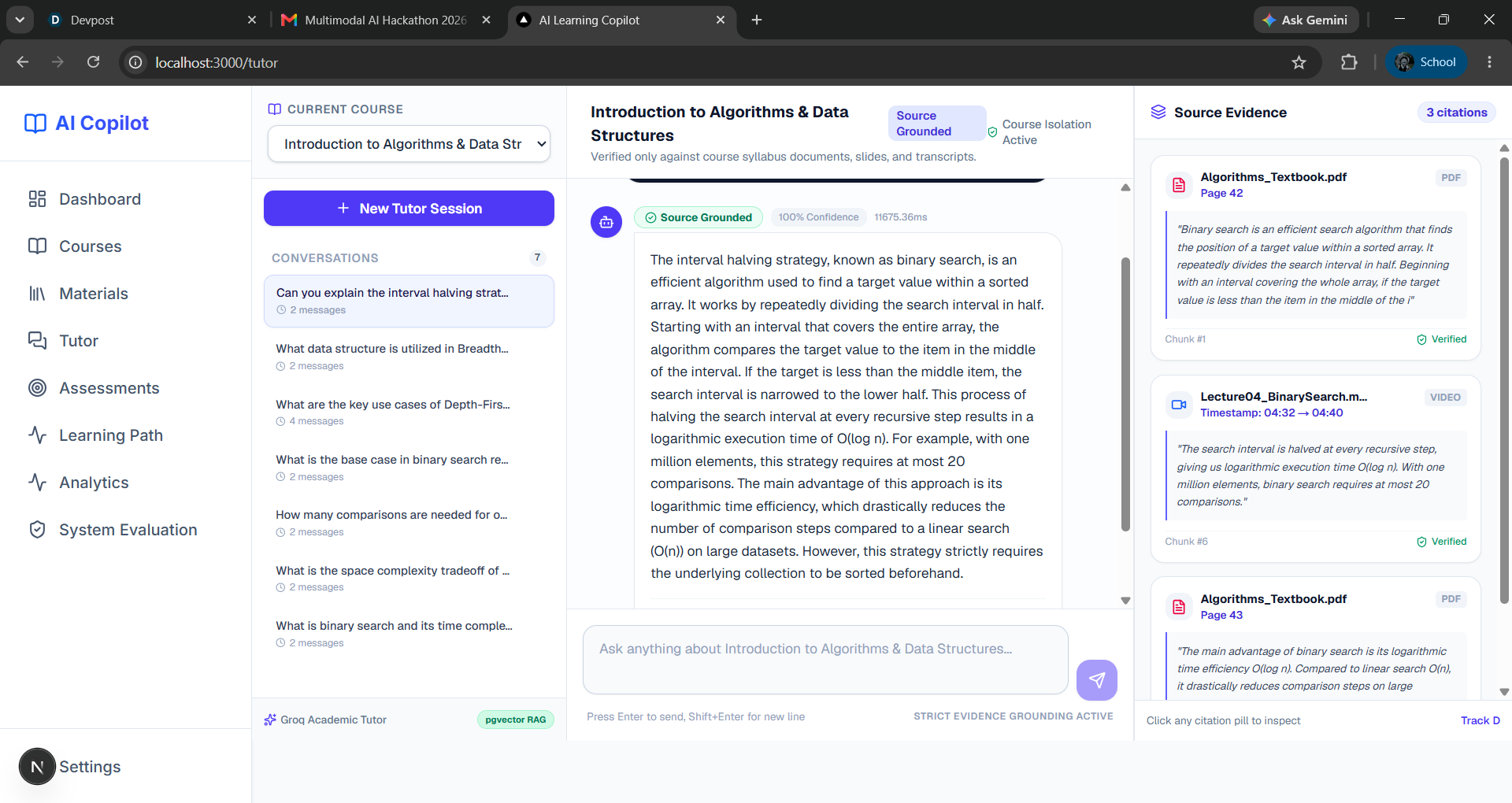
AI Learning Copilot transforms uploaded learning materials into a personalized learning experience. Students can upload PDFs, PowerPoint presentations, and supported video content. The system extracts and organizes content while preserving source information, such as page numbers, slide numbers, and timestamps where available.
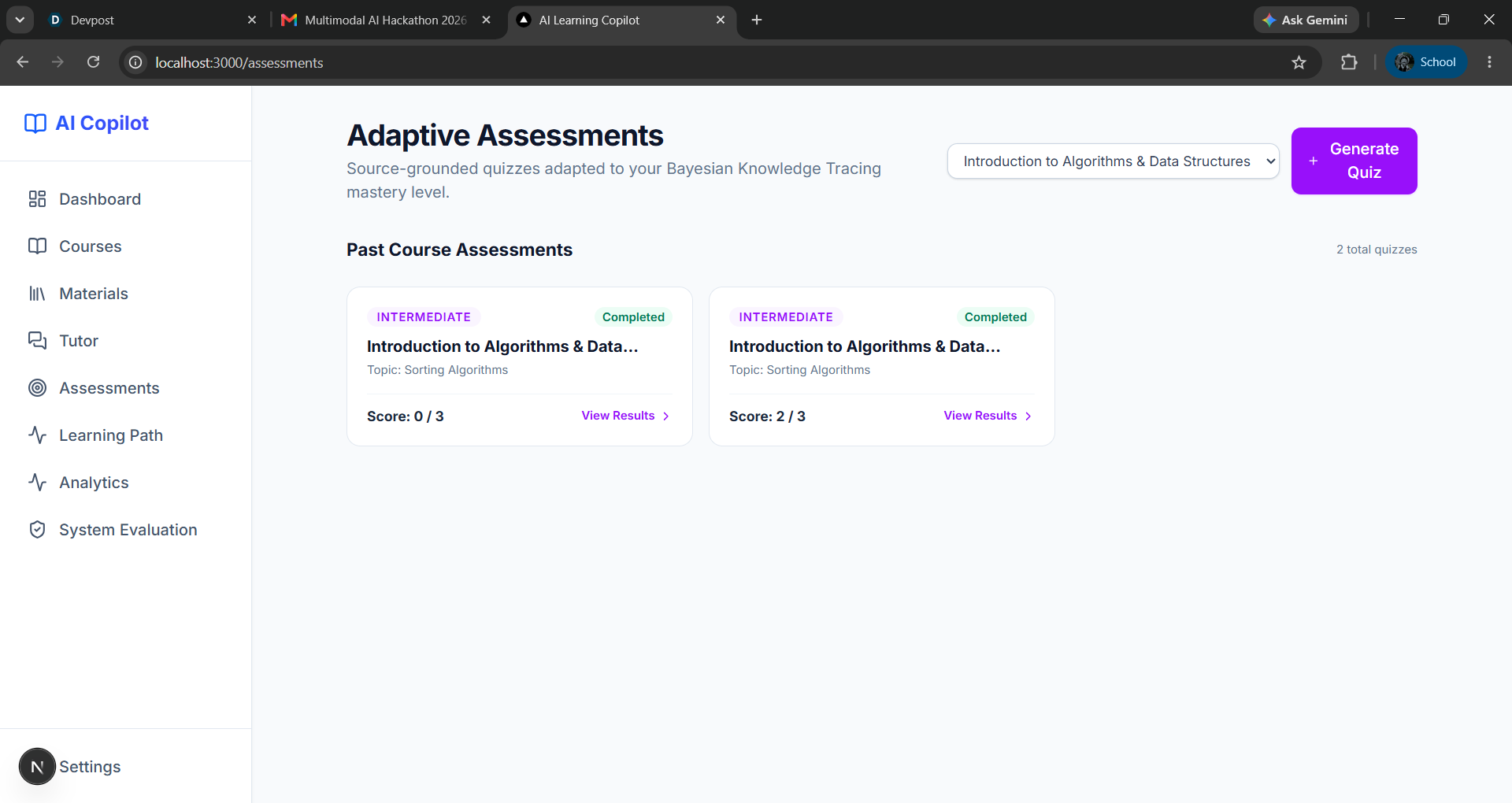
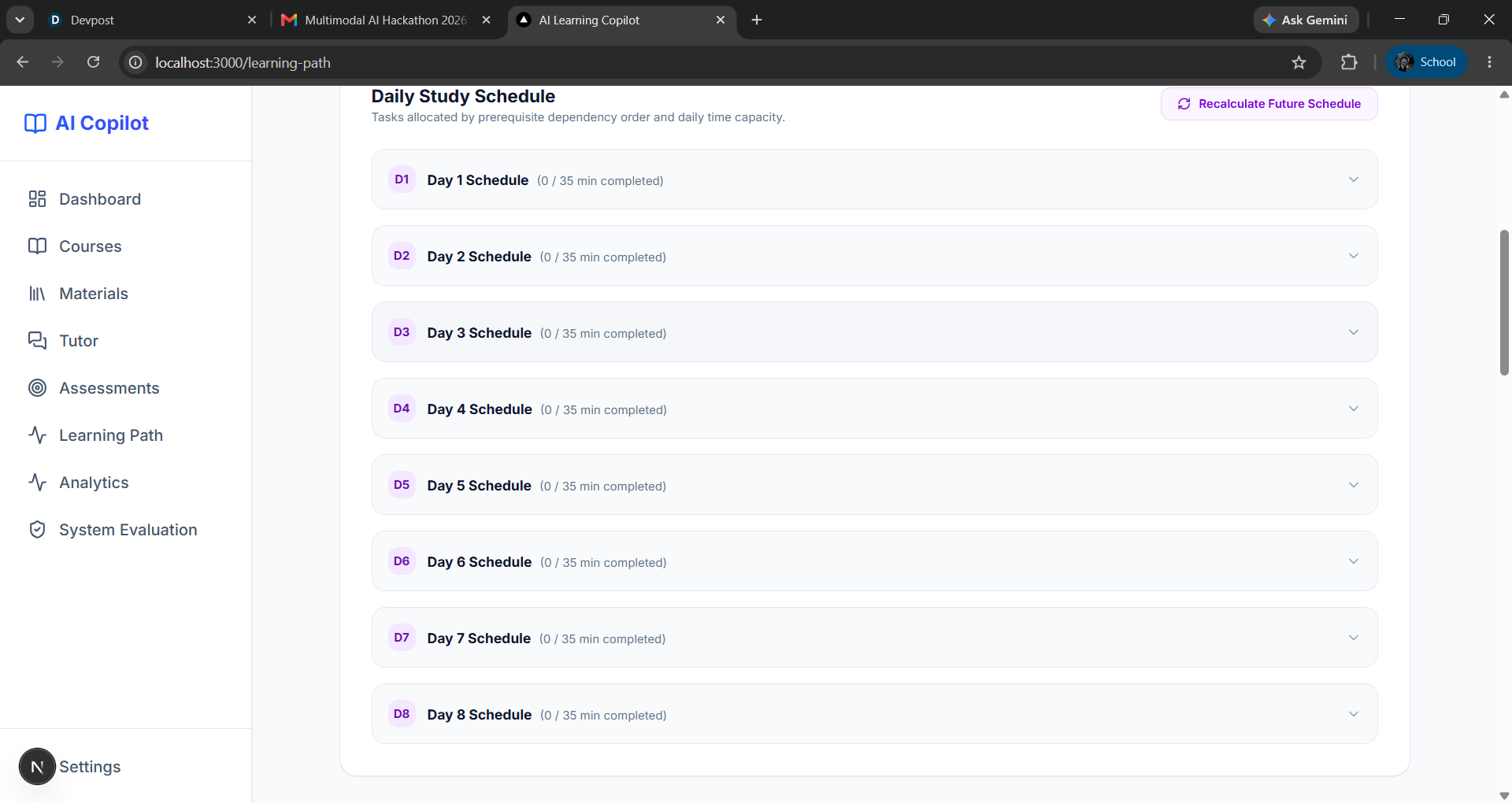
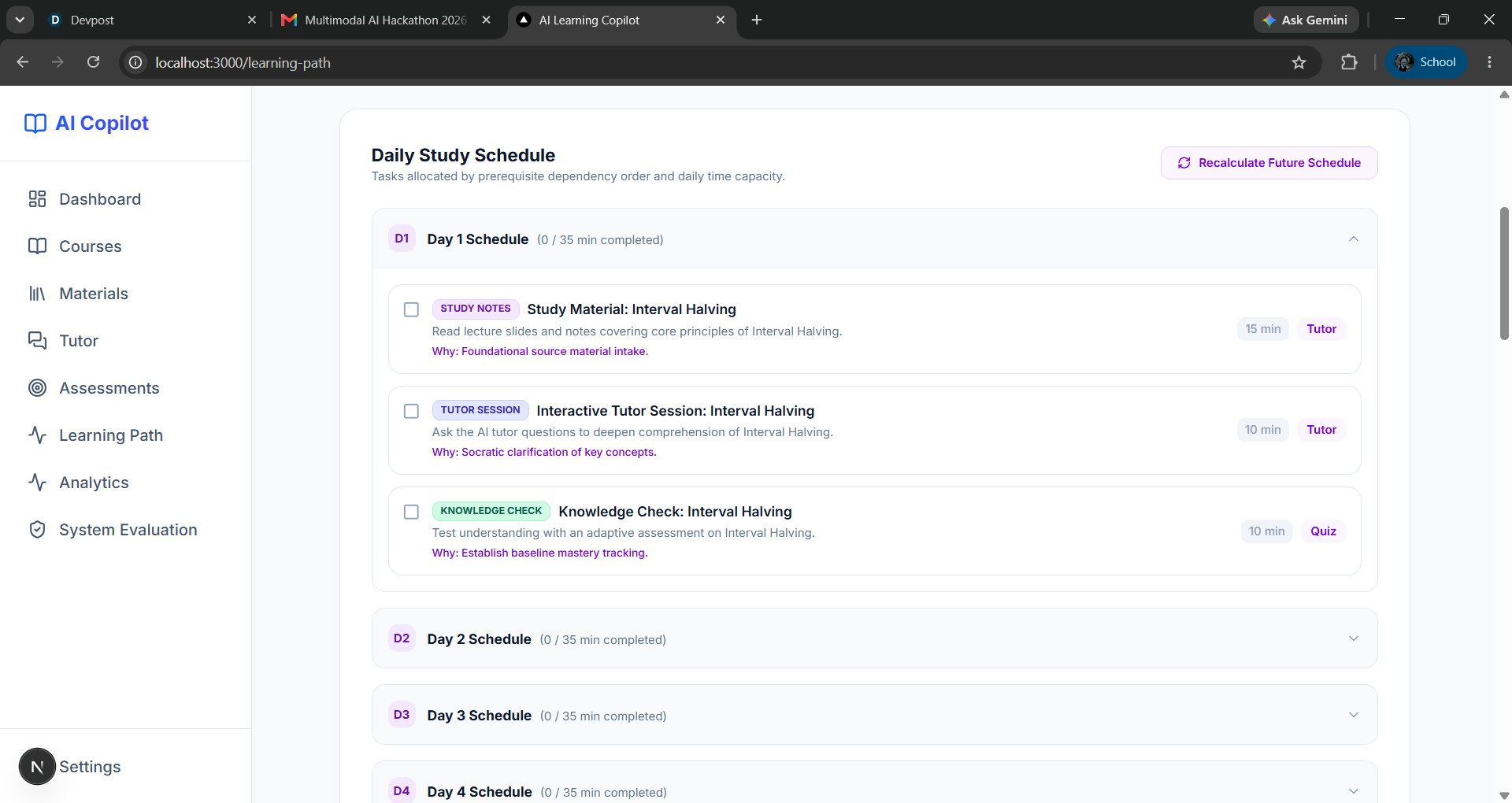
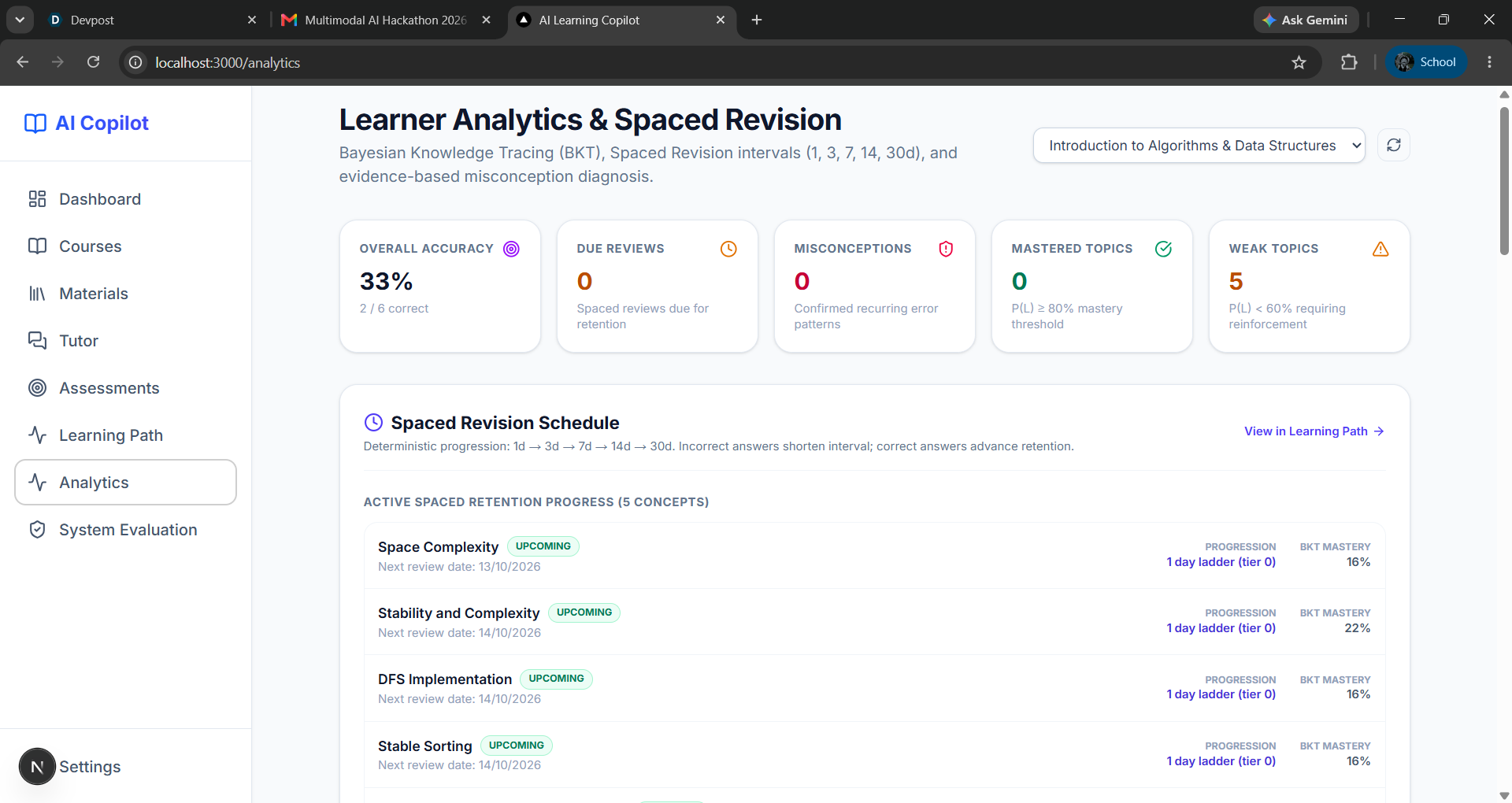
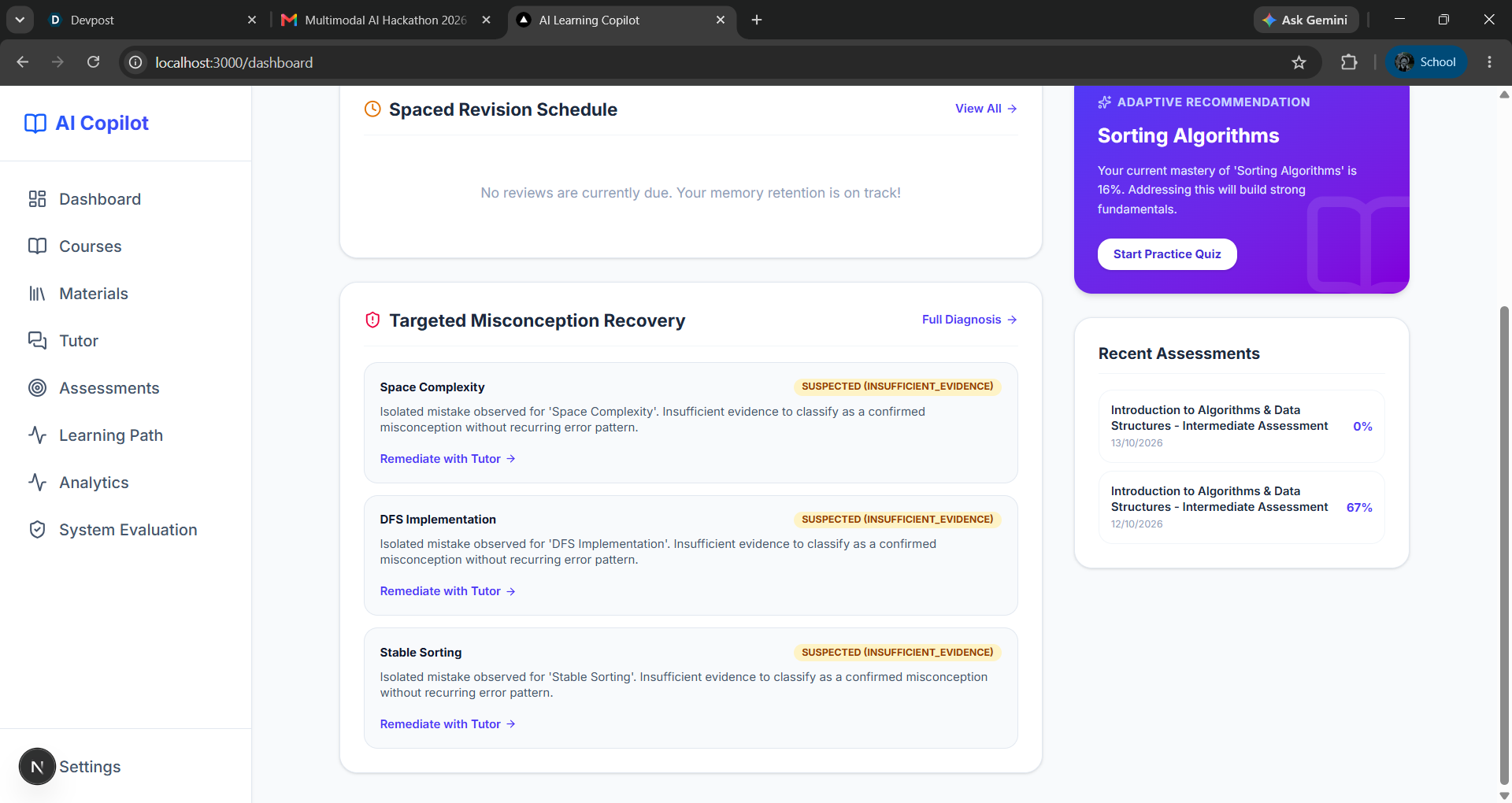
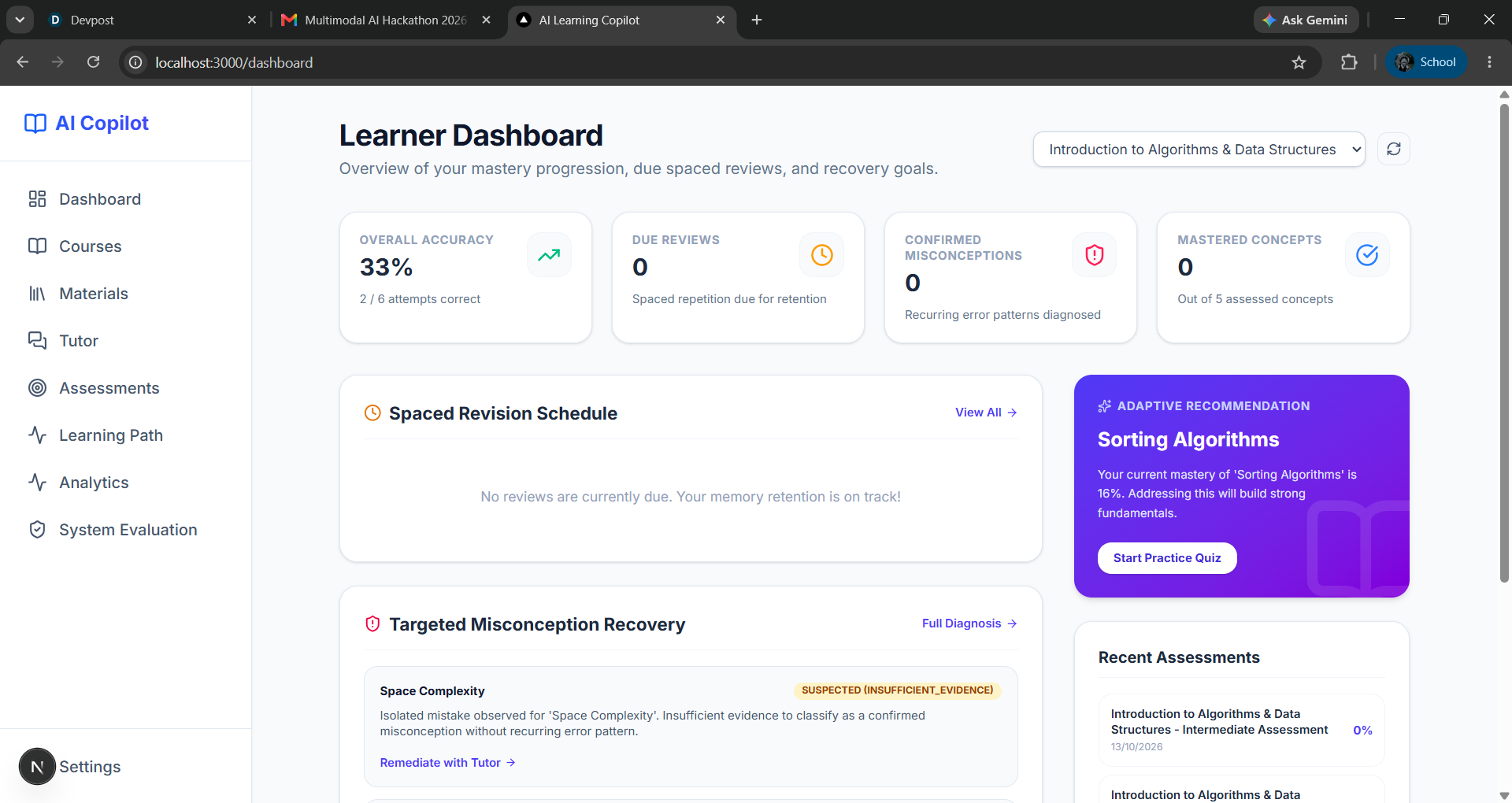
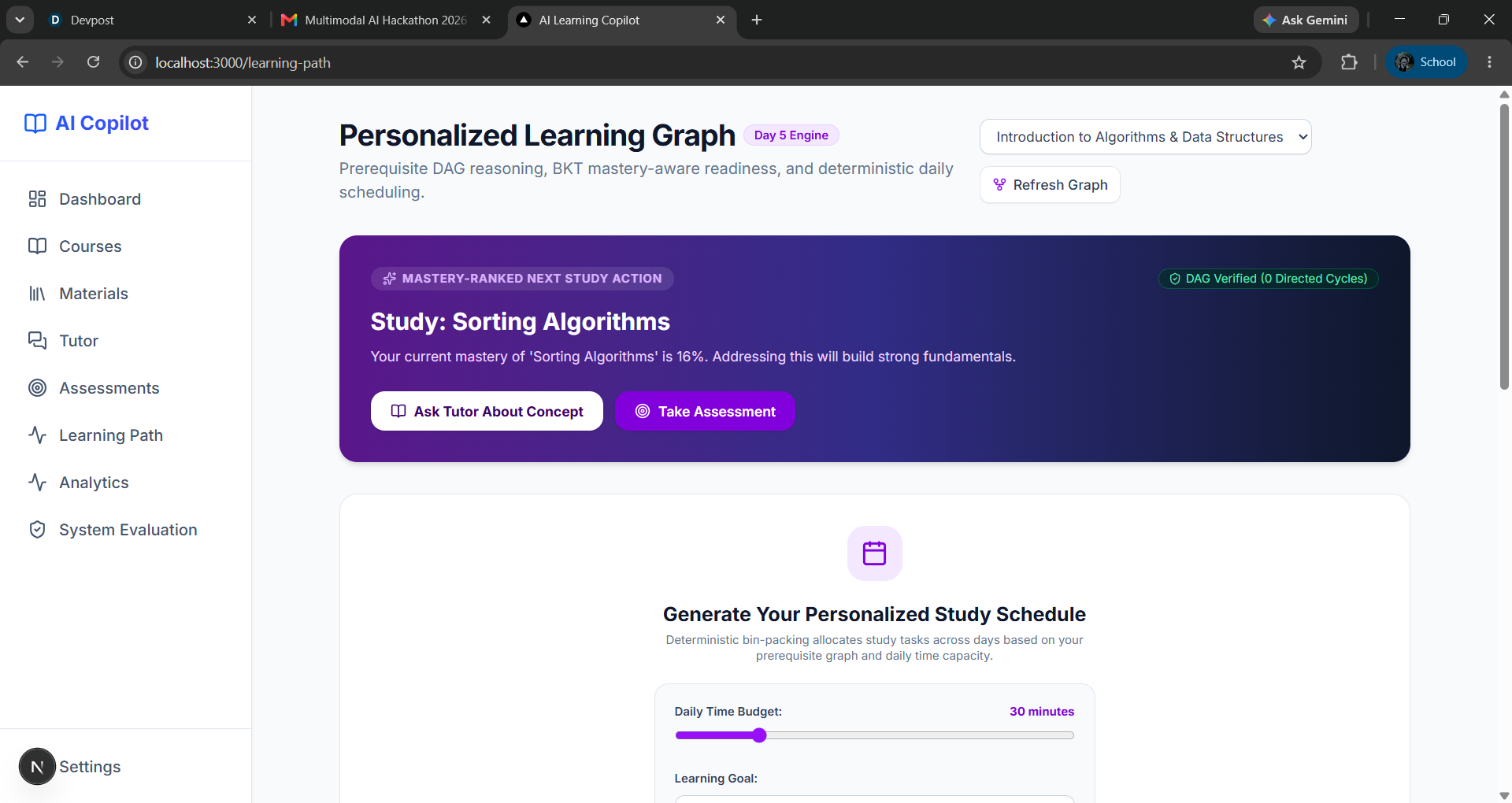
Its AI tutor retrieves relevant information from course materials to provide source-grounded answers with citations and avoids presenting unsupported information as fact. The platform also generates assessments, evaluates answers, tracks topic mastery, identifies potential misconceptions, schedules spaced revisions, and creates learning paths based on prerequisites and available study time.
Our core learning cycle is:
Learn → Test → Evaluate → Identify Weaknesses → Adapt → Improve
How We Built It
We built AI Learning Copilot using a full-stack architecture designed to support modular development and future expansion.
- Frontend: Next.js, TypeScript, Tailwind CSS, shadcn/ui, and Recharts for an interactive learning dashboard and dedicated workspaces.
- Backend: Python, FastAPI, Pydantic, SQLAlchemy, and Alembic for APIs, application logic, and database migrations.
- AI and Retrieval: Groq API integration, document processing, chunking, embeddings, and course-scoped retrieval to support grounded tutoring.
- Adaptive Learning: Bayesian Knowledge Tracing (BKT) to update estimated topic mastery, assessment-based weakness detection, and misconception analysis.
- Personalized Revision: A spaced-repetition schedule using a revision ladder of 1, 3, 7, 14, and 30 days, alongside a prerequisite-aware learning planner.
- Data and Testing: SQLite for local development, with PostgreSQL compatibility planned for production deployment, plus automated tests and evaluation workflows.
We organized development into incremental stages, building the foundation first and then integrating content ingestion, retrieval, assessment, learner modeling, revision, planning, and evaluation. Each stage was designed to preserve existing API contracts and undergo focused testing and regression checks.
Challenges We Faced
One major challenge was making AI answers trustworthy. A general-purpose model can produce convincing answers that are not supported by a student's course materials. We addressed this by restricting retrieval to the relevant course, validating citations, and implementing refusal behavior when sufficient supporting evidence is unavailable.
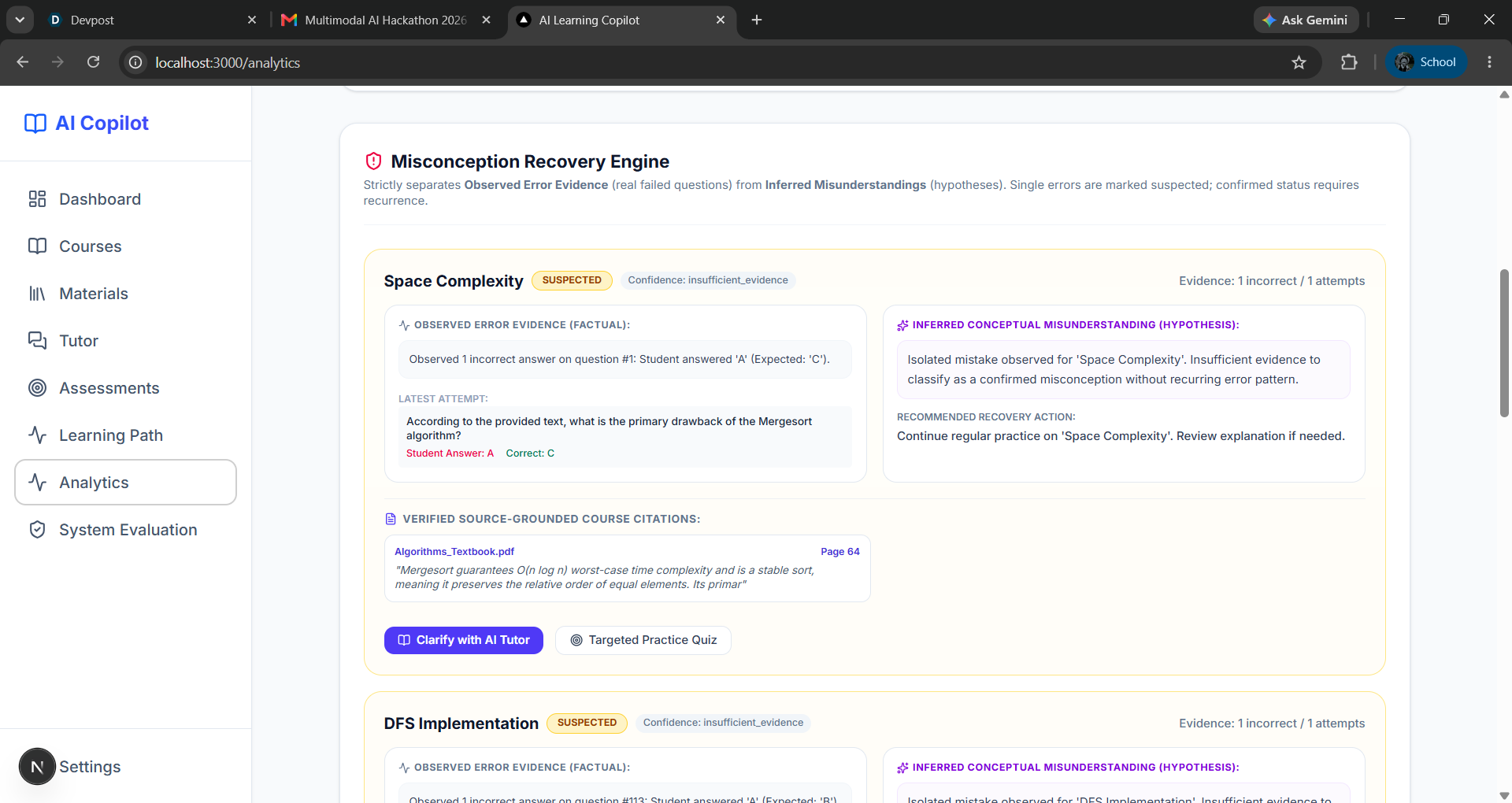
Another challenge was building personalization without overreacting to a single incorrect answer. We separated observed assessment errors from inferred misconceptions and designed the system to gather repeated evidence before treating a misconception as confirmed.
Combining multiple learning features was also challenging. Assessment results needed to update mastery estimates, influence revision schedules, and inform learning-path recommendations without duplicating records or corrupting progress. We addressed these integration risks through modular services, database migrations, idempotent assessment submission, and regression testing.
Finally, evaluating an adaptive learning system requires more than demonstrating that it works for one example. We developed an evaluation workflow intended to measure retrieval quality, citation validity, answer grounding, assessment quality, and simulated learner progress. Simulated results must remain clearly distinguished from real-world student outcomes.
What We Learned
Building AI Learning Copilot taught us that useful educational AI requires more than connecting a language model to a chat interface. Reliable source attribution, well-designed assessments, learner-state tracking, and meaningful evaluation are equally important.
We learned how retrieval-augmented generation can connect AI responses to learning materials, how Bayesian Knowledge Tracing can estimate mastery over time, and how spaced repetition and prerequisite-aware planning can support a more structured learning journey.
Most importantly, we learned to treat an AI learning product as an integrated system: every answer, assessment, revision, and recommendation should contribute to the learner's next step.
What's Next
Our next priorities are to strengthen multimodal understanding, improve embedding quality and retrieval benchmarks, expand evaluation with reproducible learner simulations, and validate deployment against a production PostgreSQL environment. We also aim to evaluate the system with real learners before making claims about learning gains.
AI Learning Copilot is our step toward learning that is not only personalized, but also grounded, measurable, and adaptive.
Built With
- artificial
- css
- fastapi
- generation
- groq
- intelligence
- language
- large
- learning
- machine
- models
- next.js
- personalized
- postgresql
- pymupdf
- python
- react
- retrieval-augmented
- tailwind
- typescript

Log in or sign up for Devpost to join the conversation.