-
-
AI
Nufari — AI-Powered Food and Fitness Assistant
Inspiration
Nufari was inspired by a simple problem: people often have food at home but still do not know what to cook, how it fits into their nutrition goals, or how to use it before it expires. Manually tracking ingredients, calories, meals, and workouts can also become time-consuming and discouraging.
We wanted to build one application that connects food recognition, nutrition, recipes, and fitness. Instead of manually entering every ingredient, users can take a photo and let AI transform what it sees into useful, organized information.
What It Does
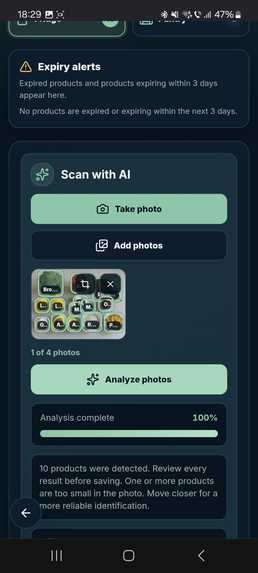
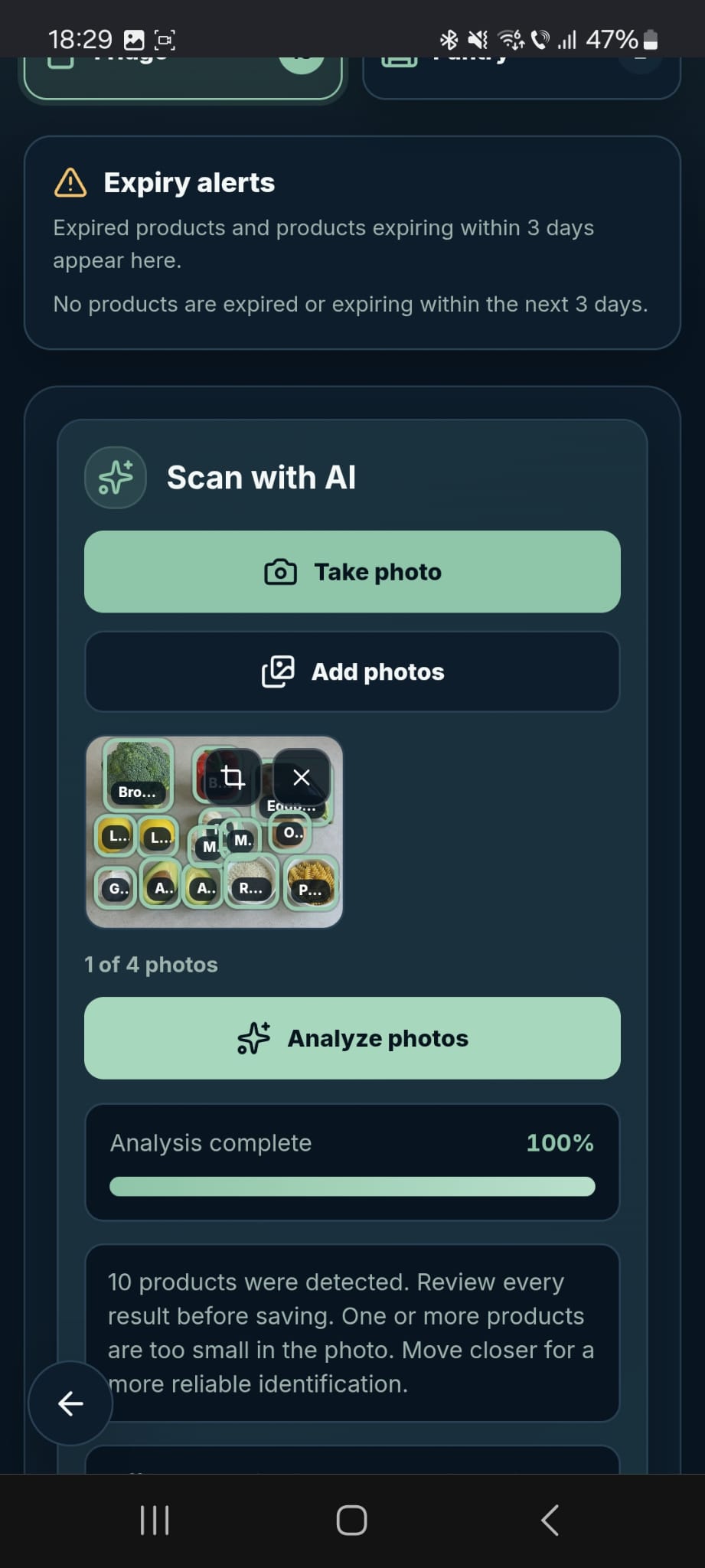
Nufari uses artificial intelligence to analyze food photos and:
- Recognize ingredients and packaged products
- Identify product brands when visible
- Count multiple items in the same image
- Remove duplicate detections
- Organize detected items into clear, editable cards
- Build a smart digital pantry
- Suggest recipes based on available ingredients
- Support meal planning and nutrition tracking
- Track workouts, progress, and fitness goals
- Connect food choices with the user’s fitness objectives
- Encourage healthier habits and reduce food waste
The goal is to create a complete food and fitness companion rather than just another image-recognition tool.
How We Built It
We built Nufari around an AI-powered image-analysis pipeline. When a user uploads or captures a photo, the system examines the entire scene, recognizes individual ingredients and products, extracts visible information such as brand names, and estimates the number of items.
The raw AI output then passes through normalization and deduplication logic. This step merges repeated detections, separates the product itself from illustrations printed on its packaging, corrects inconsistent names, and produces a clean list of results. For example, a biscuit pictured on a yogurt package should not be detected as a separate physical ingredient.
The processed results are displayed as consistent cards that users can review and edit. These ingredients can then be used by the recipe, nutrition, meal-planning, and fitness features. The fitness module helps users connect their meals and nutritional choices with workouts, personal objectives, and long-term progress.
We focused on keeping the interface simple and visual so that a complex AI workflow feels natural to the user.
Challenges We Faced
One of the biggest challenges was preventing duplicate detections. A single product could be recognized several times from its packaging, text, logo, or illustrated ingredients.
Brand extraction was another difficult problem. AI can confuse a product name with its flavor, category, or other text printed on the label. We had to improve how results were interpreted and normalized so that the correct brand and product were displayed.
Complex photos introduced additional challenges. Ingredients can overlap, appear in different sizes, or be placed inside bowls and containers. The system also needed to distinguish between real objects and images printed on packaging.
Finally, combining food recognition, recipes, nutrition, and fitness into one coherent experience required careful design. Each feature had to feel connected without making the application overwhelming.
What We Learned
We learned that successful AI applications require more than sending an image to a model. The quality of the final experience depends heavily on validation, structured outputs, normalization, deduplication, and clear user feedback.
We also learned that image recognition is not always deterministic. Testing the application with many different combinations of fresh ingredients, packaged products, brands, lighting conditions, and camera angles was essential.
Most importantly, we learned how food, nutrition, and fitness data can work together. Recognizing an ingredient is only the first step—the real value comes from turning that recognition into practical recommendations that help users cook, plan, train, and live healthier.
What’s Next
Next, we plan to improve recognition accuracy, expand the product and brand database, introduce more personalized recipes and workout recommendations, and provide deeper progress insights.
Our long-term vision is for Nufari to become a personal AI companion that understands what users eat, what they have available, and what they want to achieve—then helps them make better decisions every day.
Built With
- capacitor
- css3
- deno
- html5
- hugging-face
- javascript
- node.js
- onnx-runtime
- postgresql
- python
- pytorch
- react
- supabase
- tesseract.js
- transformers.js
- typescript
- vite

Log in or sign up for Devpost to join the conversation.