-
-
price-match
-
cart-top-up
-
trust-no-discount
-
dashboard-holdout
-
decisions-and-guardrails
Inspiration
Every store I see treats a leaving shopper the same way: a popup with 10% off. It annoys me as a shopper and it makes no sense as a seller. Half the time I was going to buy anyway, and the other half my problem was never the price.
I wanted a checkout that acts like a good shop assistant: it notices what is going on, says one useful thing, or leaves you alone.
What it does
NudgeyCart is a WooCommerce plugin with an AI agent behind it. It never asks the shopper why they are leaving. It watches what they do and makes one offer, or none:
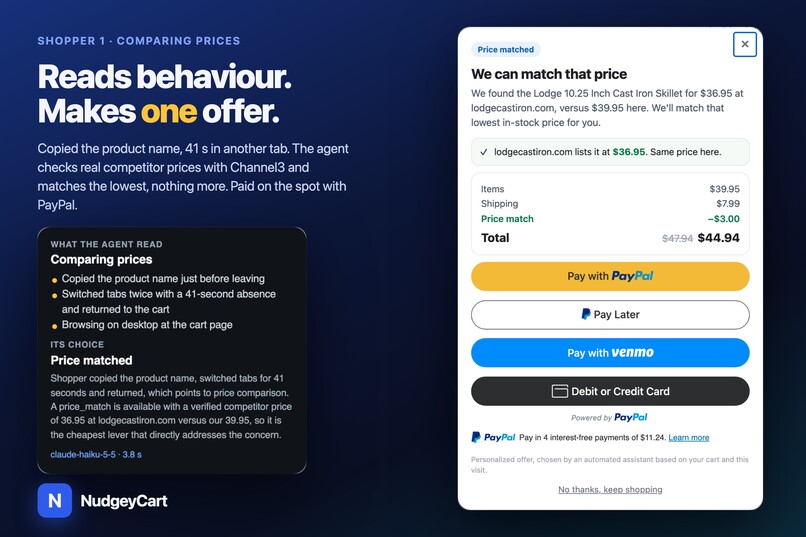
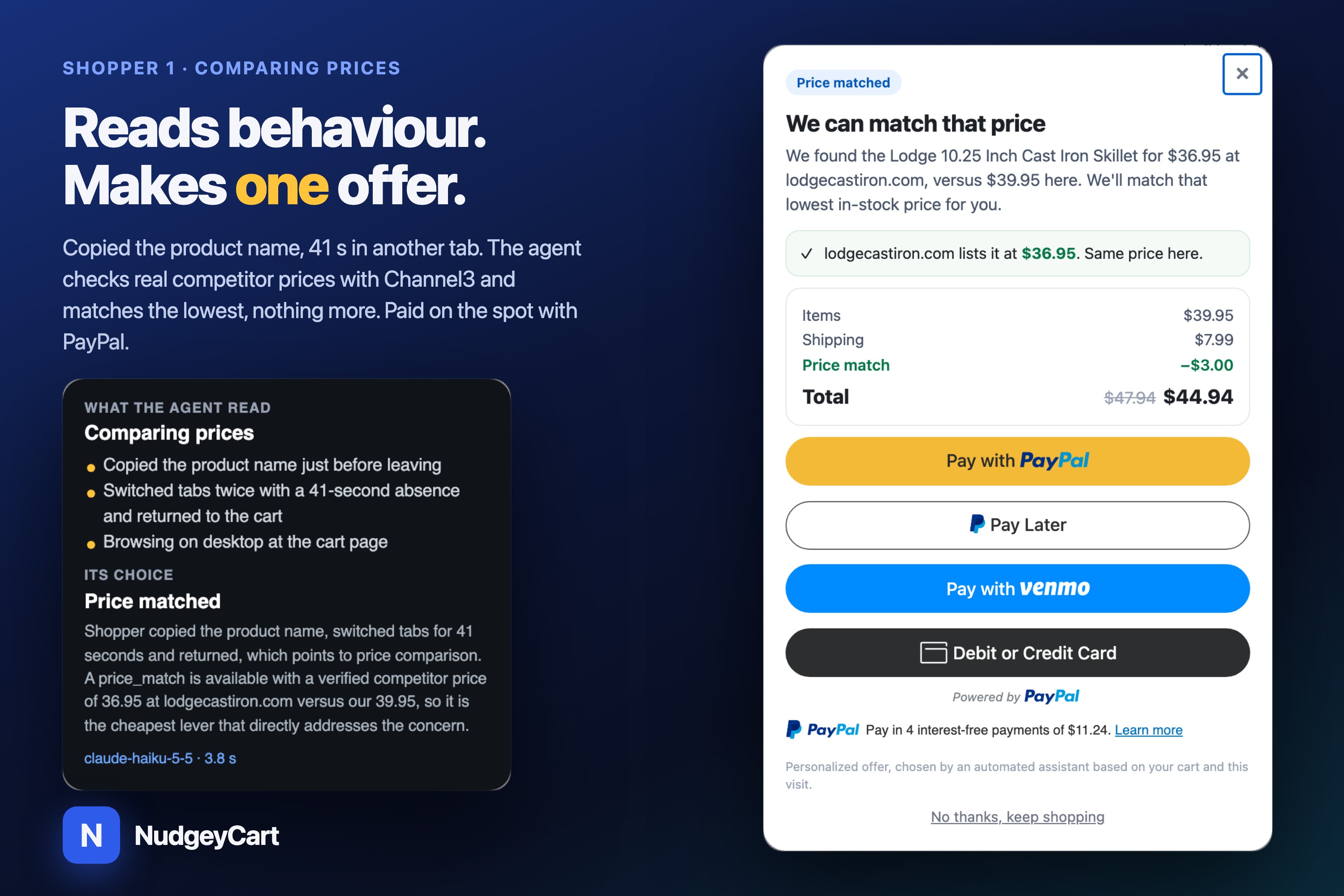
- Copied the product name and went to another tab? It finds the real competitor price with Channel3 and matches it. Nothing more.
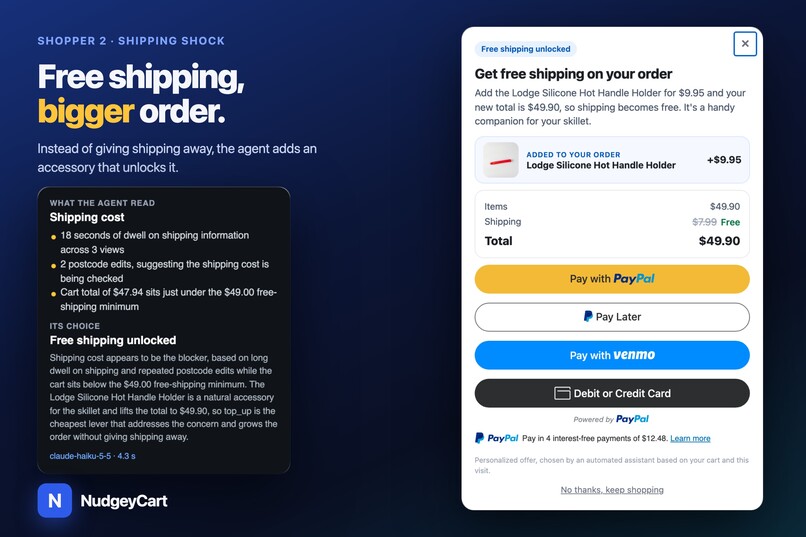
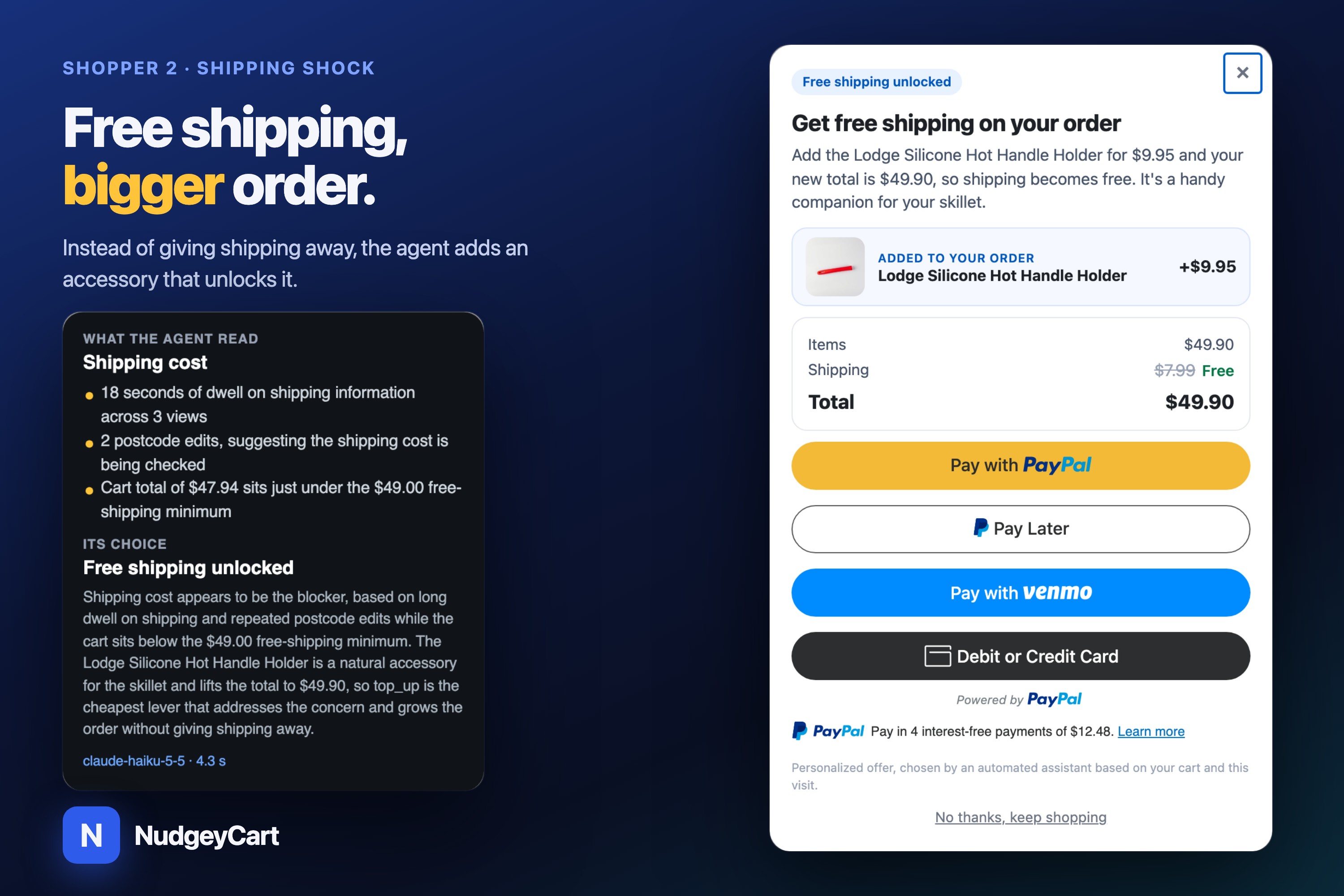
- Stuck on the shipping cost? It suggests a small add-on that unlocks free shipping. The store sells more instead of giving something away.
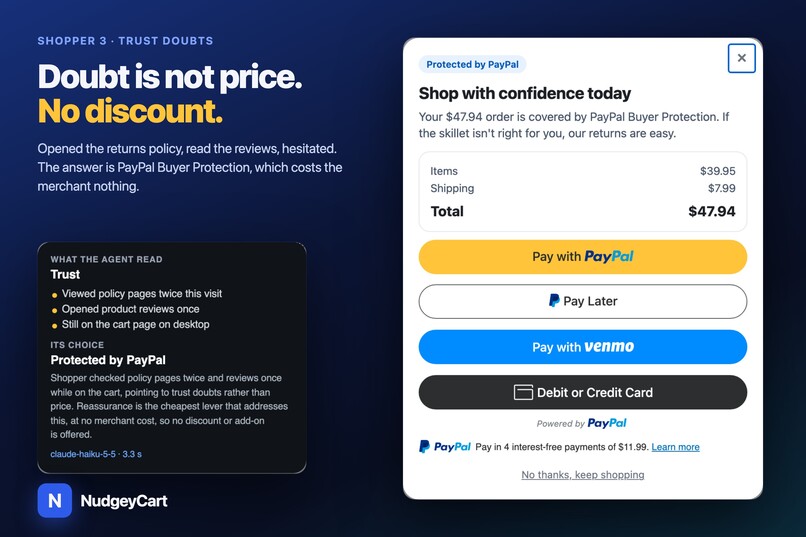
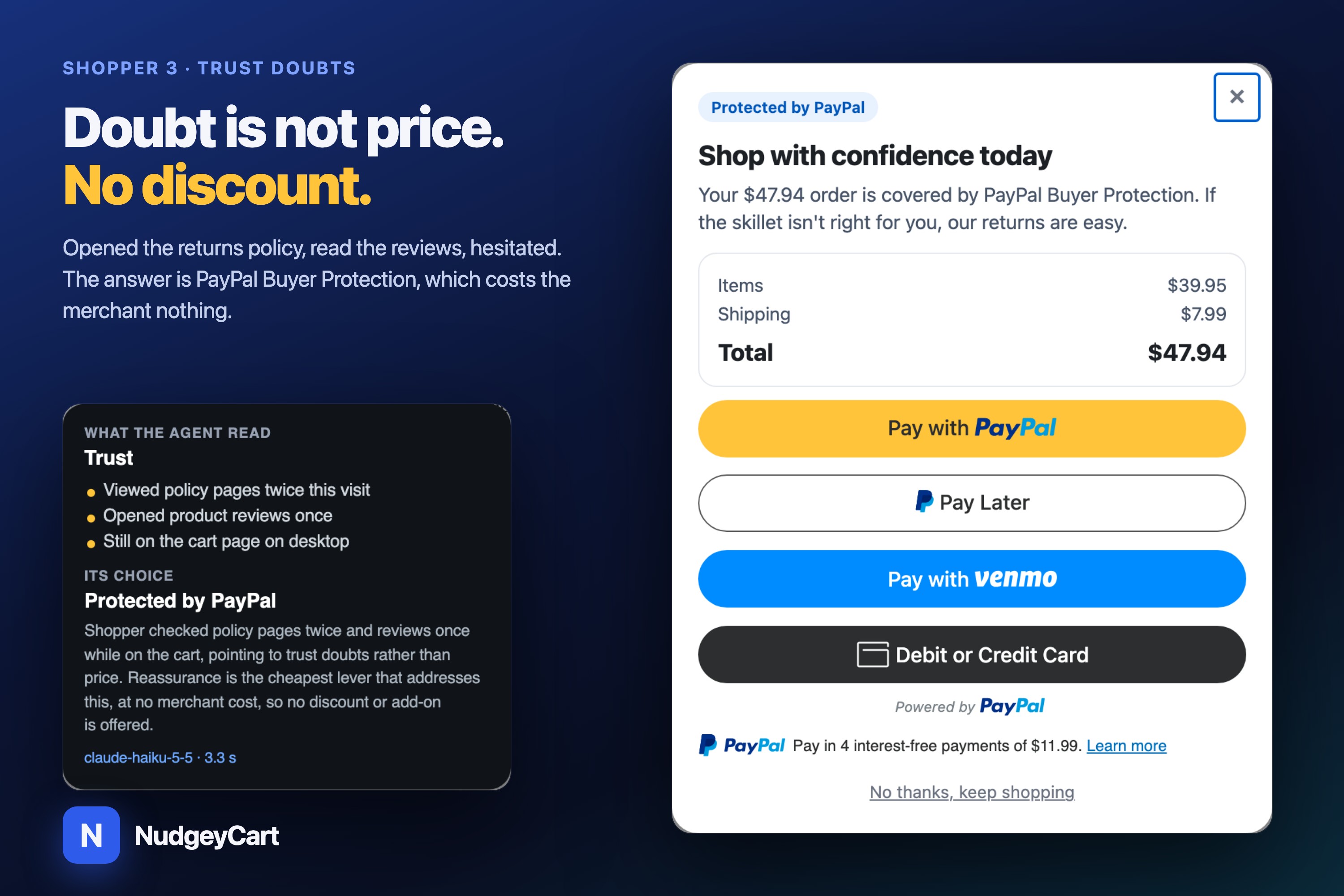
- Reading the returns policy and the reviews? No discount. Just PayPal Buyer Protection, which costs the merchant nothing.
- Just browsing? It stays quiet.
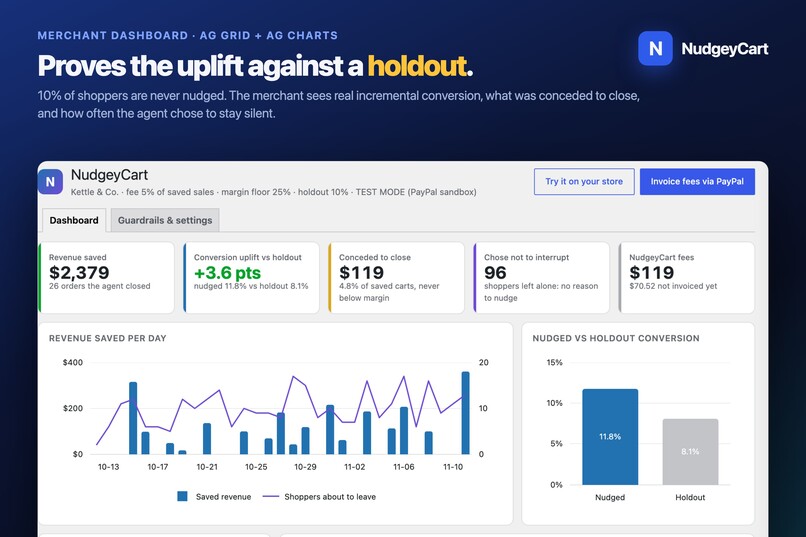
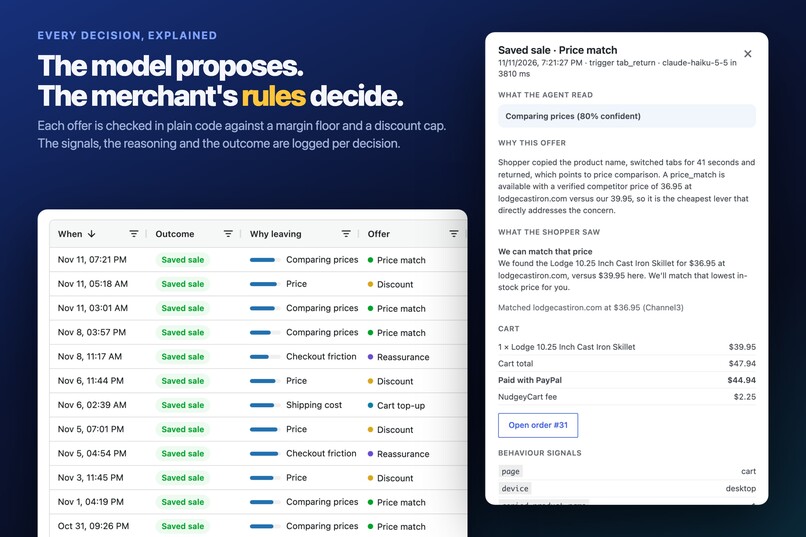
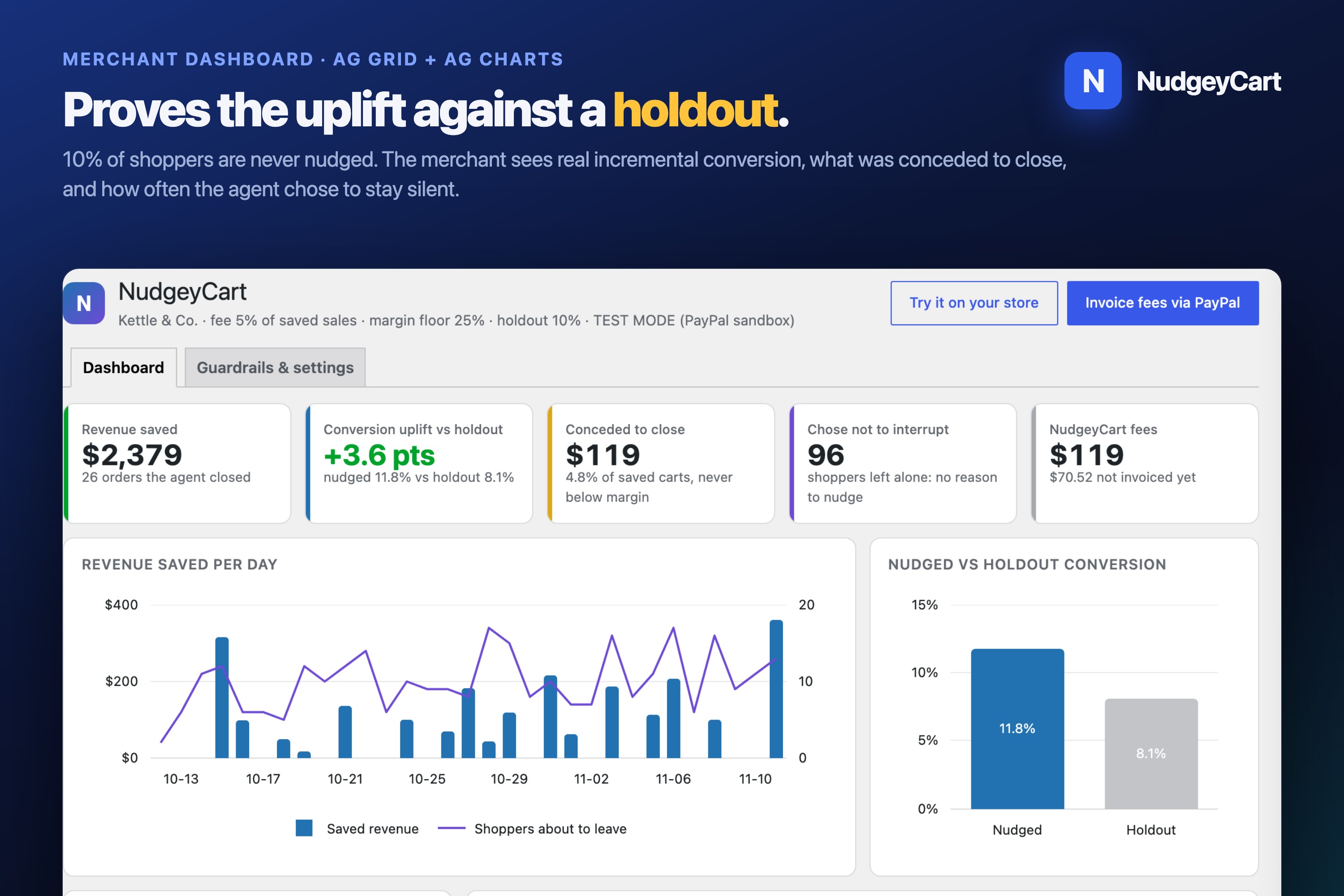
The shopper pays right there with PayPal, Pay Later, Venmo or card. The merchant sets a margin floor the agent can never cross, sees the real uplift against a group that is never nudged, and only pays a 5% fee on the sales the agent closed, billed as a PayPal invoice.
How I built it
- A WooCommerce plugin (PHP and JavaScript) reads the behaviour signals and shows the offer.
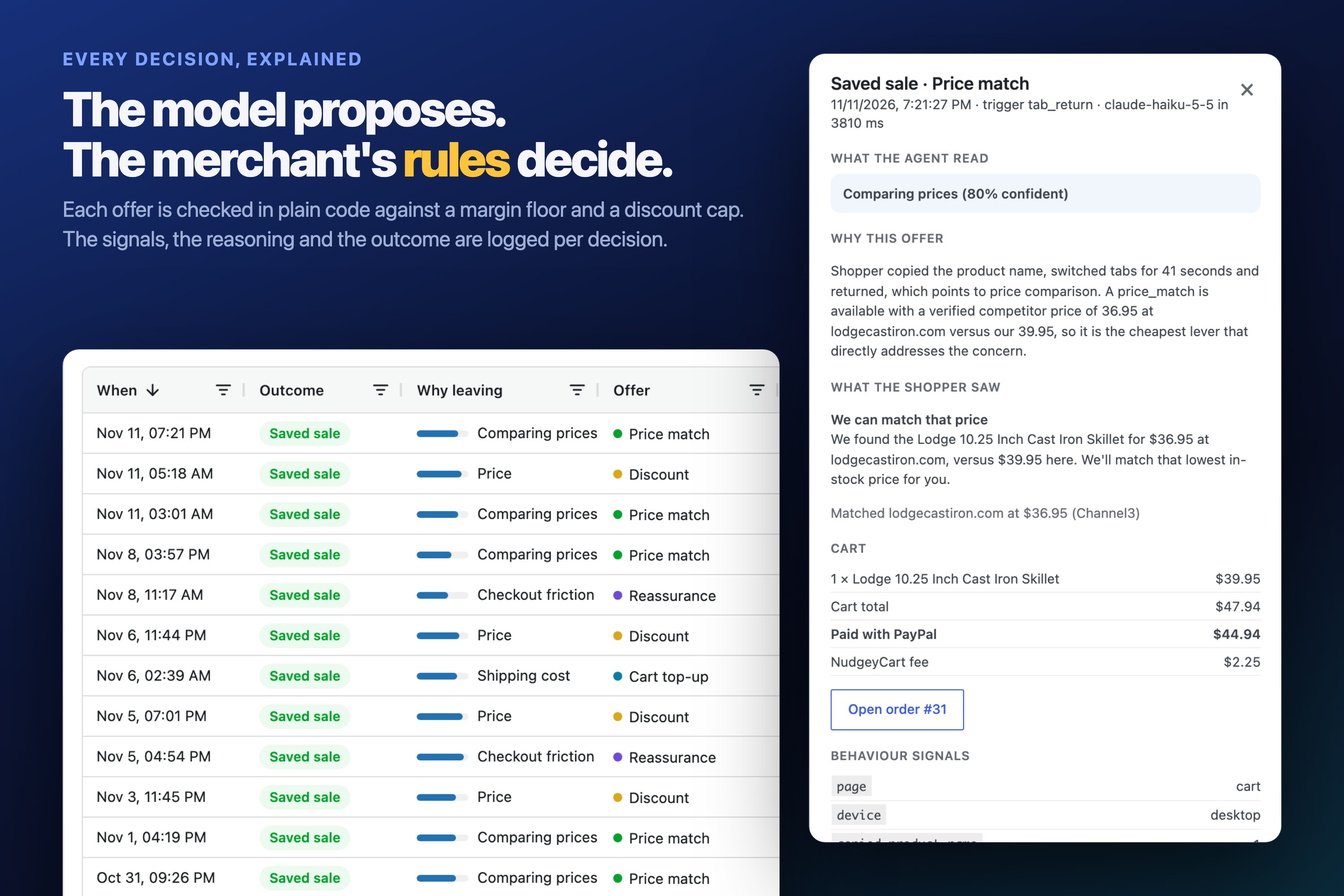
- A small Python API on Render asks Claude Haiku 5.5 to pick one option, then plain code checks it against the merchant's rules.
- PayPal moves the money both ways: Orders v2 with PayPal, Pay Later, Venmo and card for the shopper, and Invoicing v2 for the fee.
- Channel3 provides the competitor prices. AG Grid and AG Charts power the dashboard.
- The demo runs on WordPress Playground: one link and a full store boots in your browser.
Challenges
- Speed. My first model took 6 seconds, and by then the shopper is gone. Haiku, plus looking up prices as soon as the item hits the cart, got it down to a few seconds.
- Charging the fee. I wanted to take it inside the same payment, but that needs PayPal partner approval, so the prototype sends an invoice instead.
What I'm proud of
The agent often picks the answer that costs the merchant nothing, and the whole flow is real in the sandbox: offer, payment, paid order, invoice.
What I learned
The hard part is not making an offer. It is knowing why someone is leaving, and knowing when to say nothing.
What's next
Taking the fee inside the payment, retention offers for subscription cancellations, and opening the same engine to AI shopping agents.
