-
-
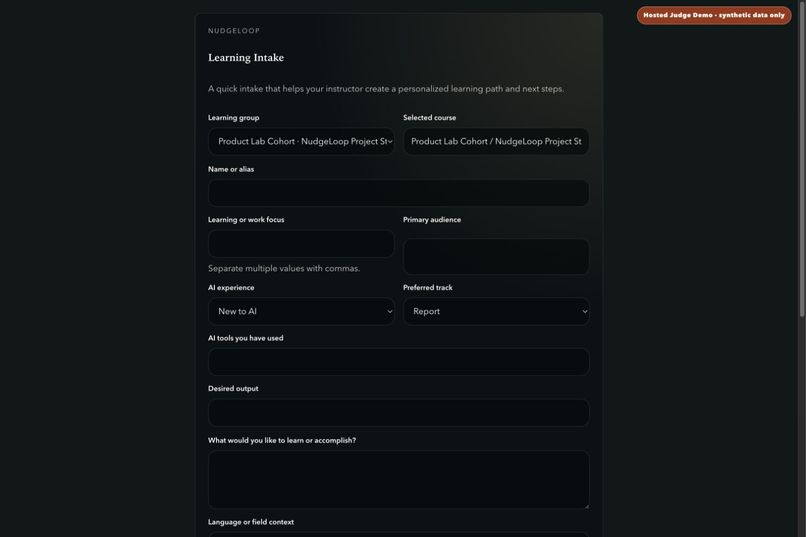
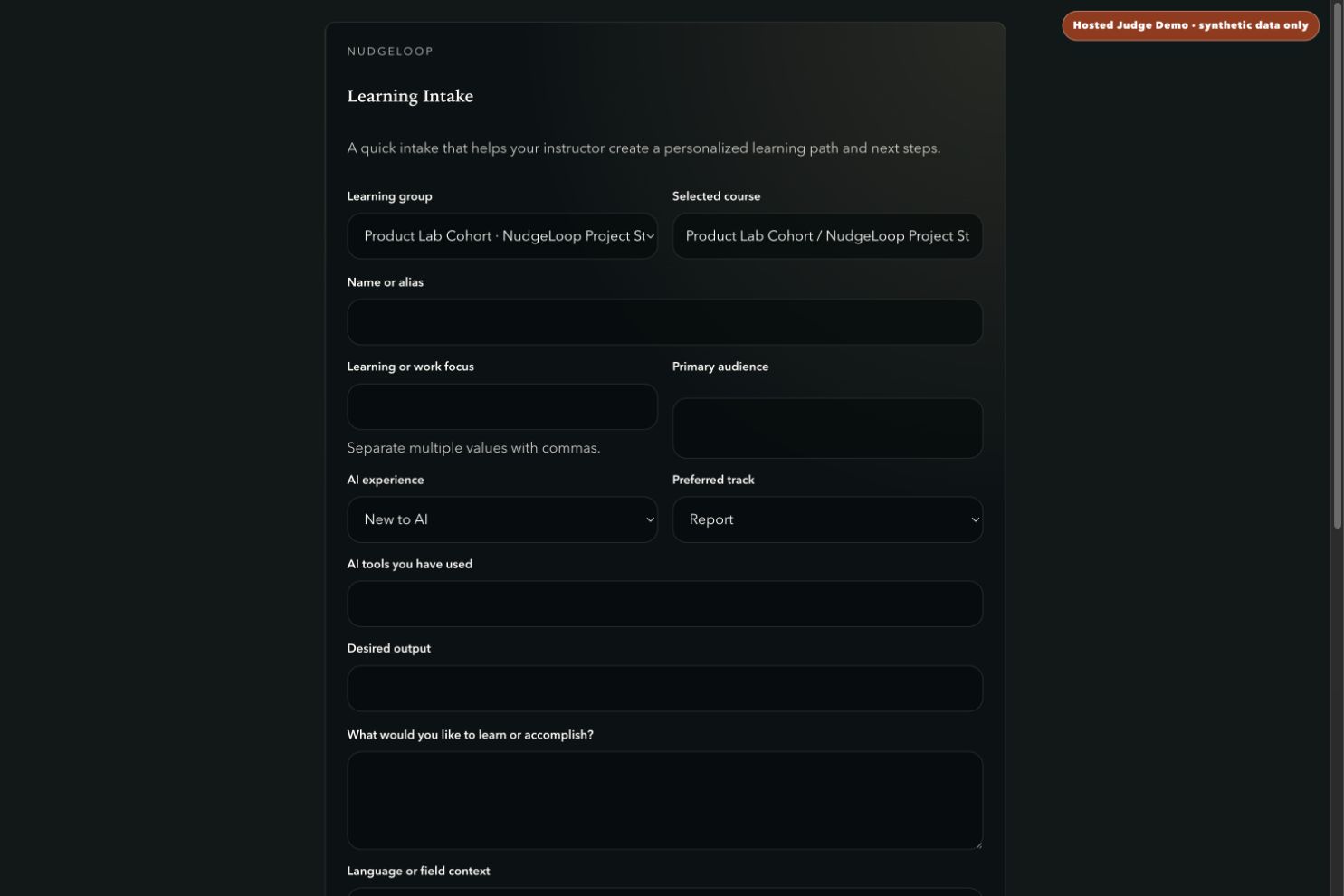
04-learning-intake
-
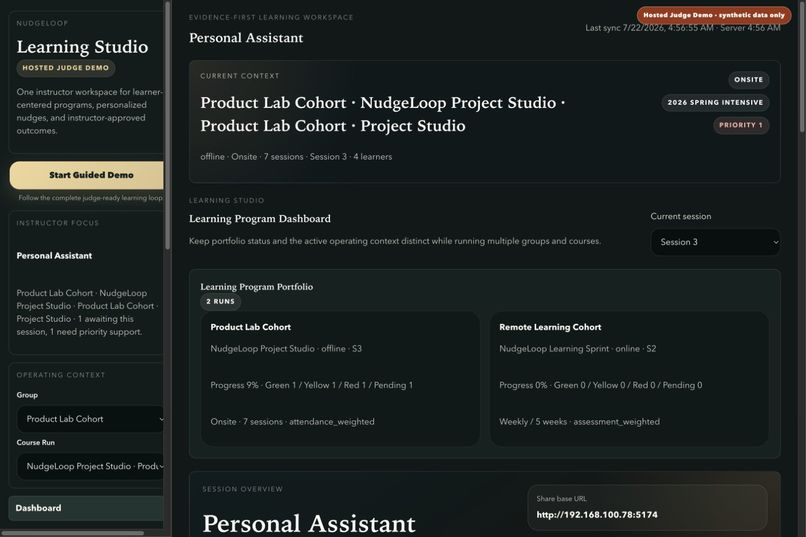
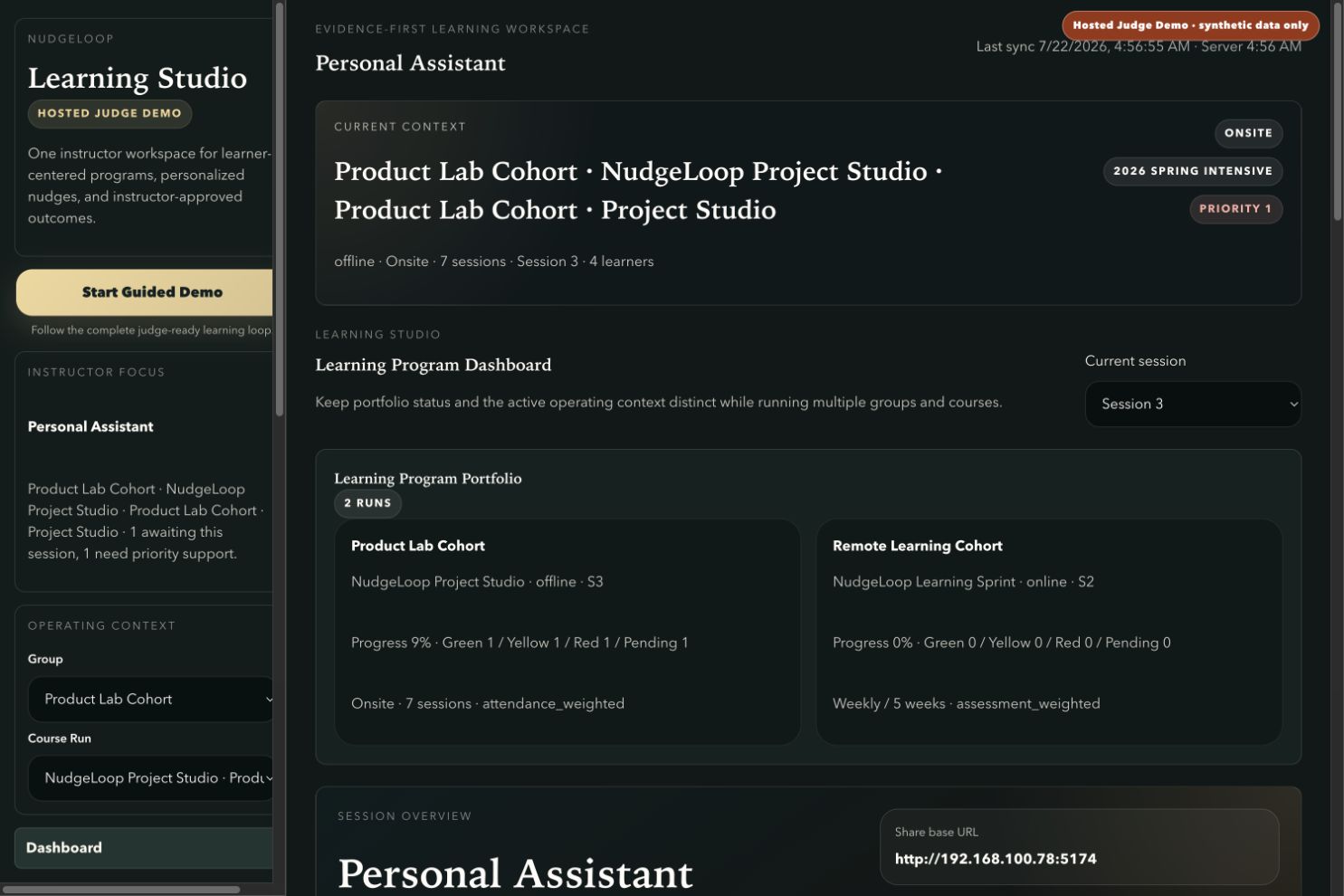
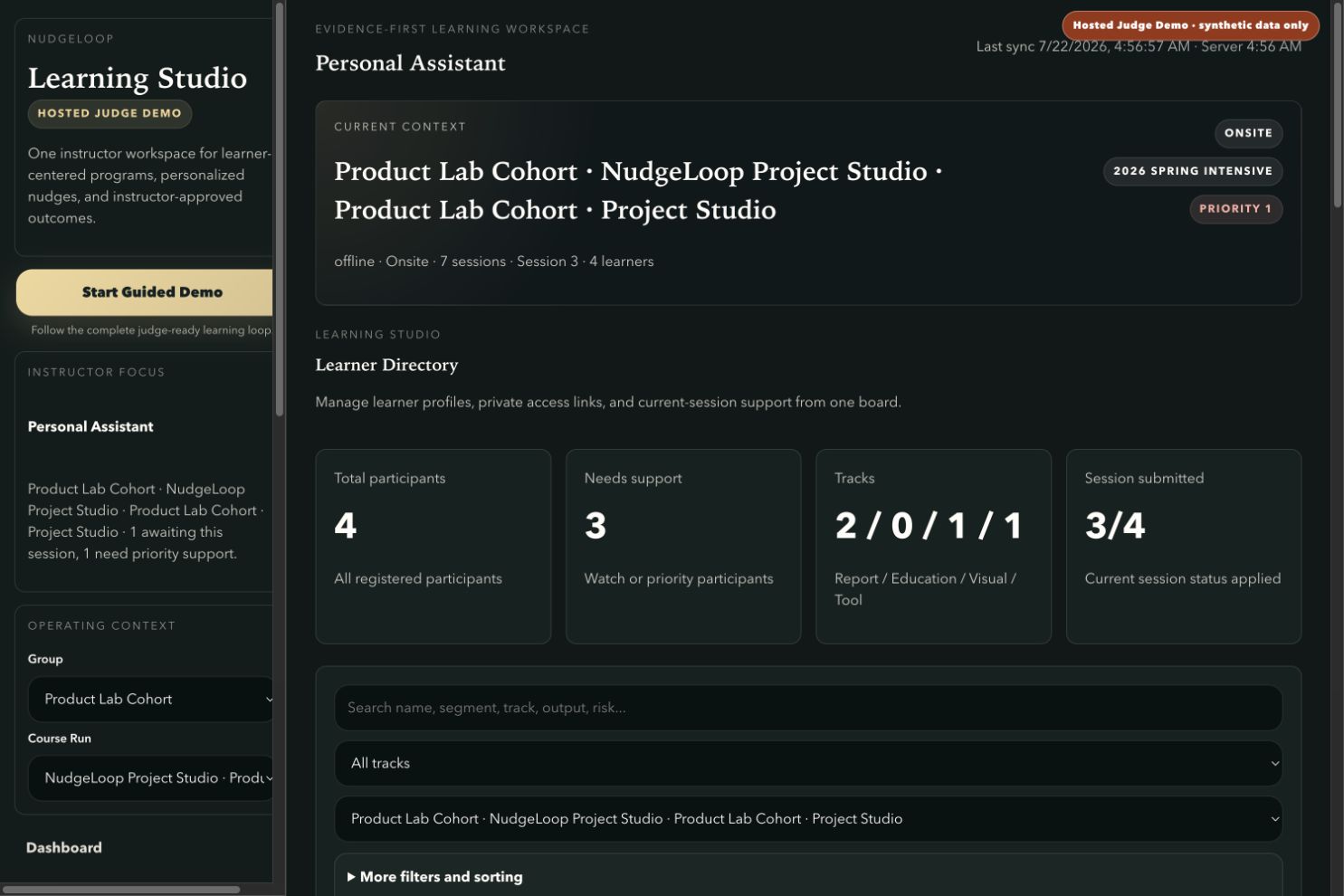
01-learning-studio-dashboard
-
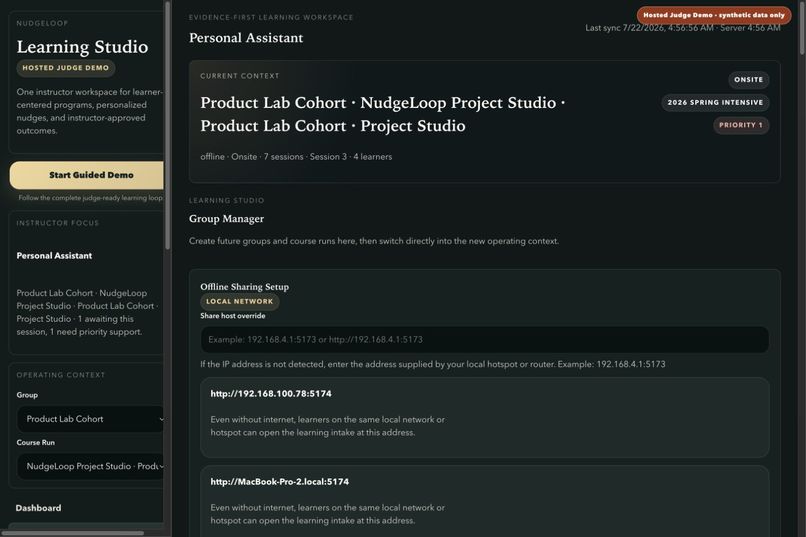
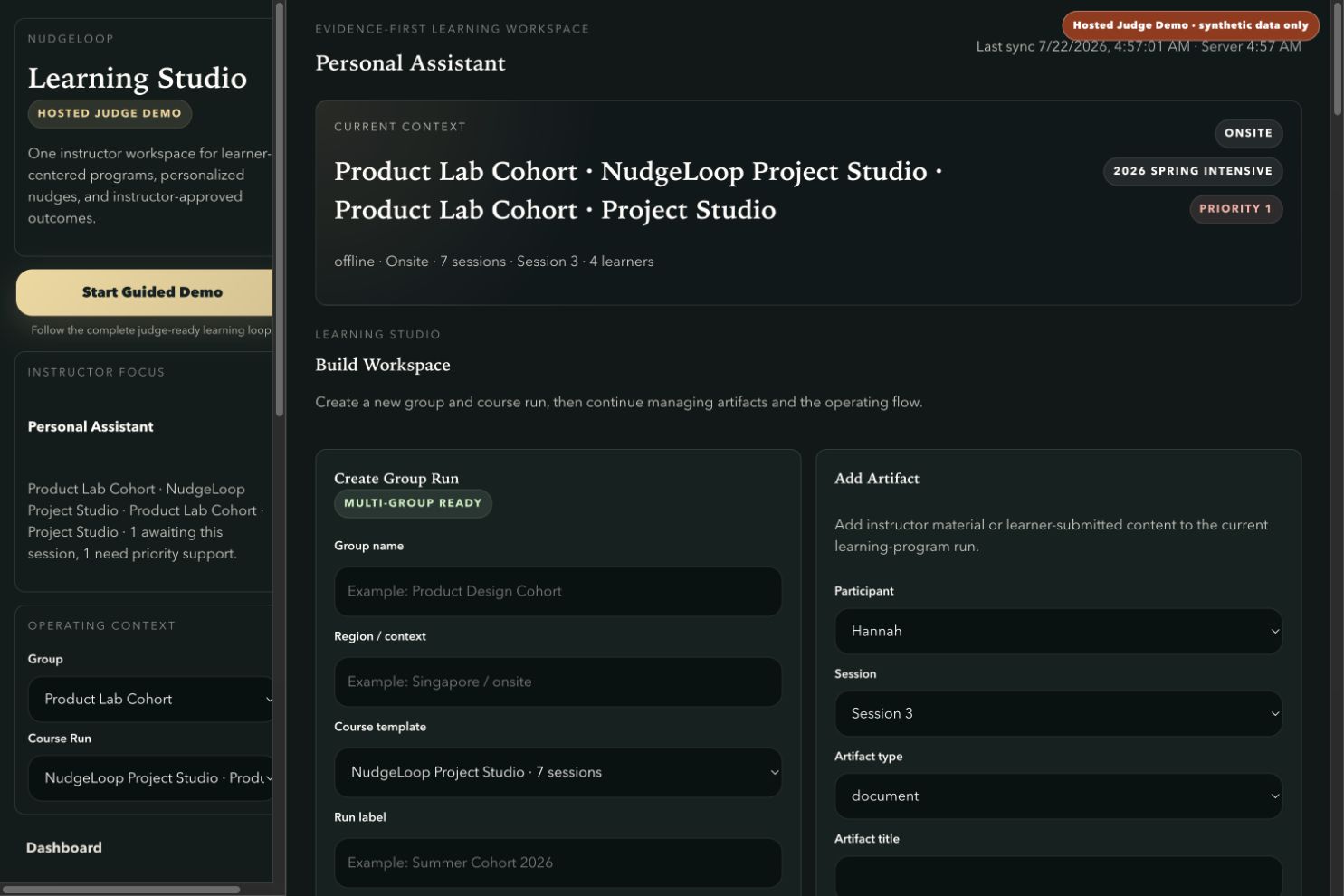
02-learning-program-setup
-
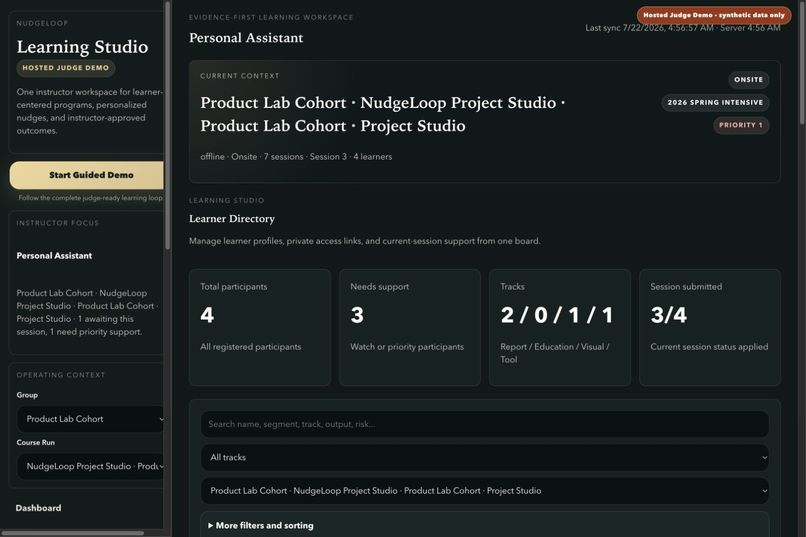
03-learner-directory
-
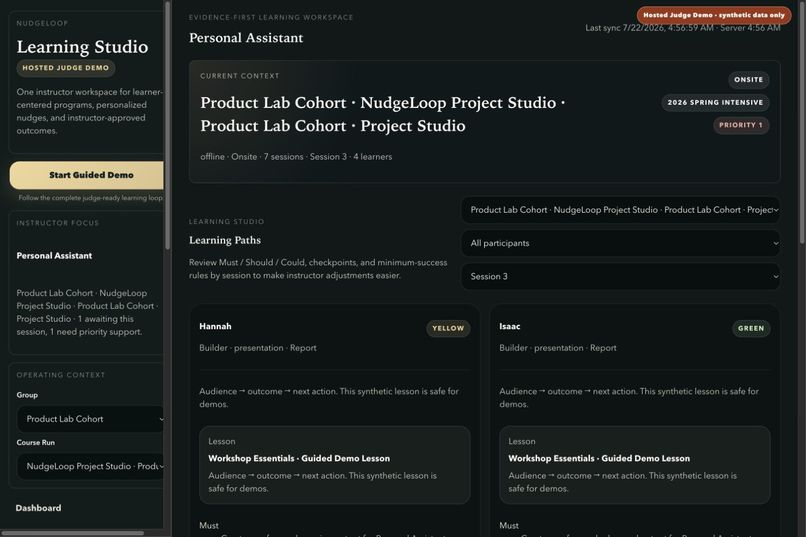
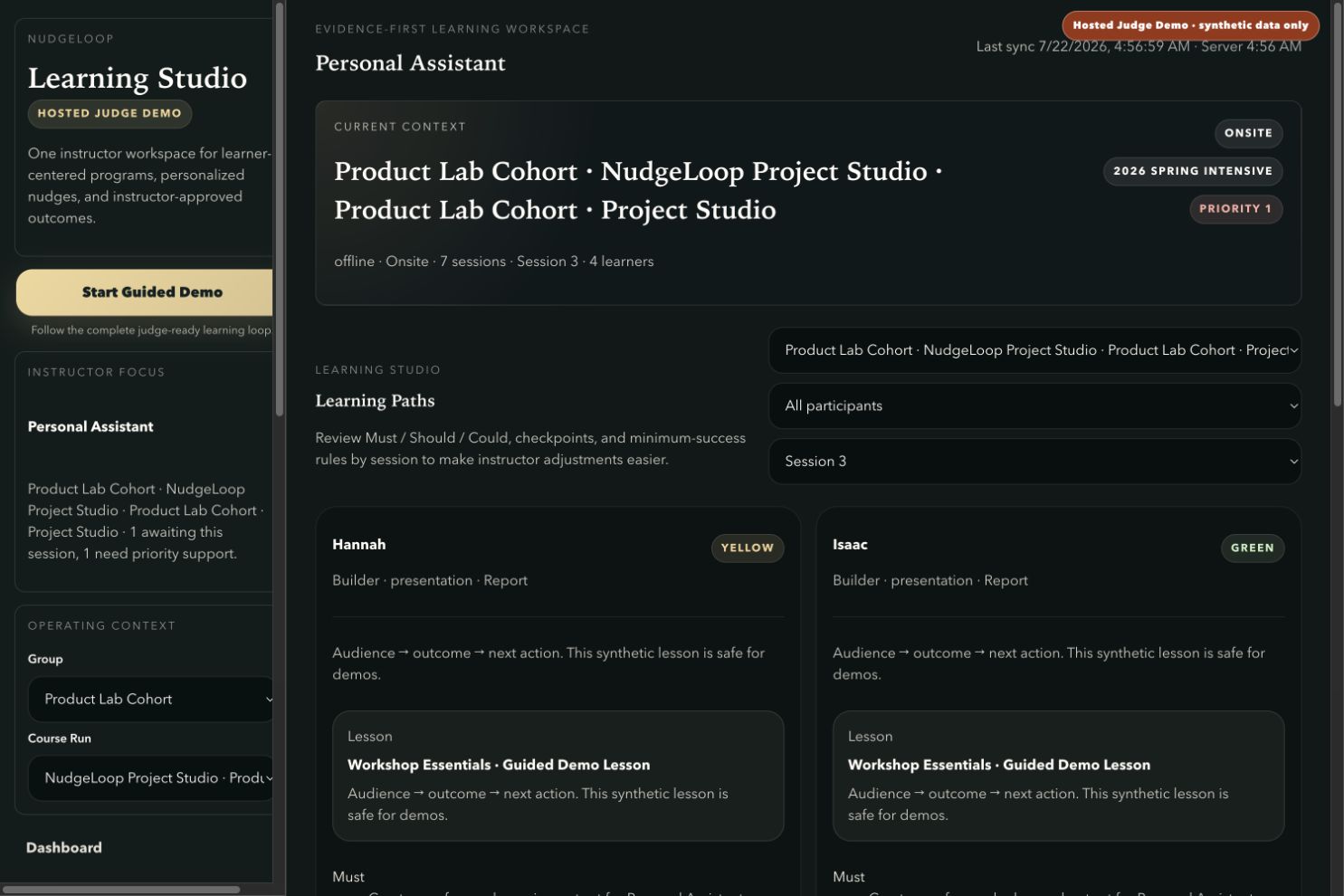
05-personalized-learning-paths
-
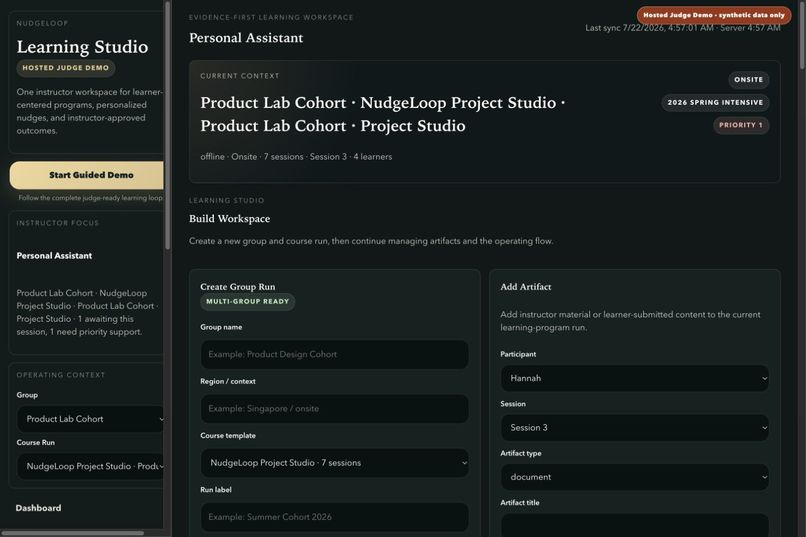
07-submission-workspace
-
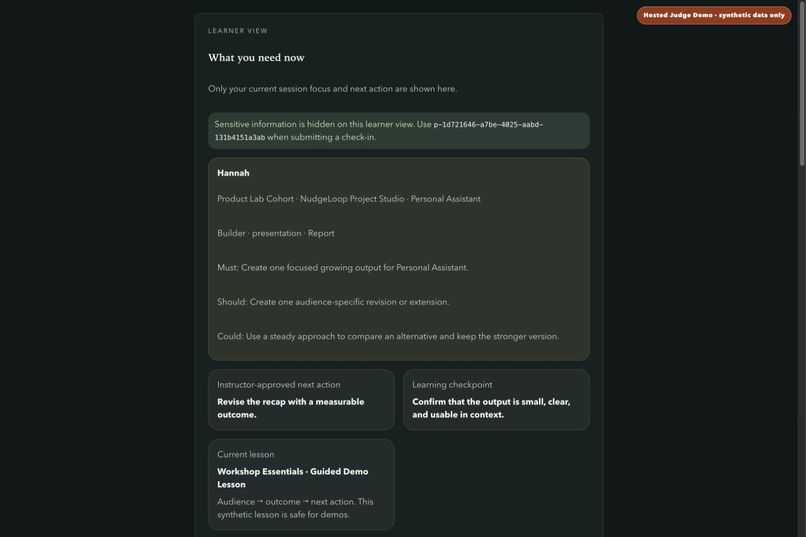
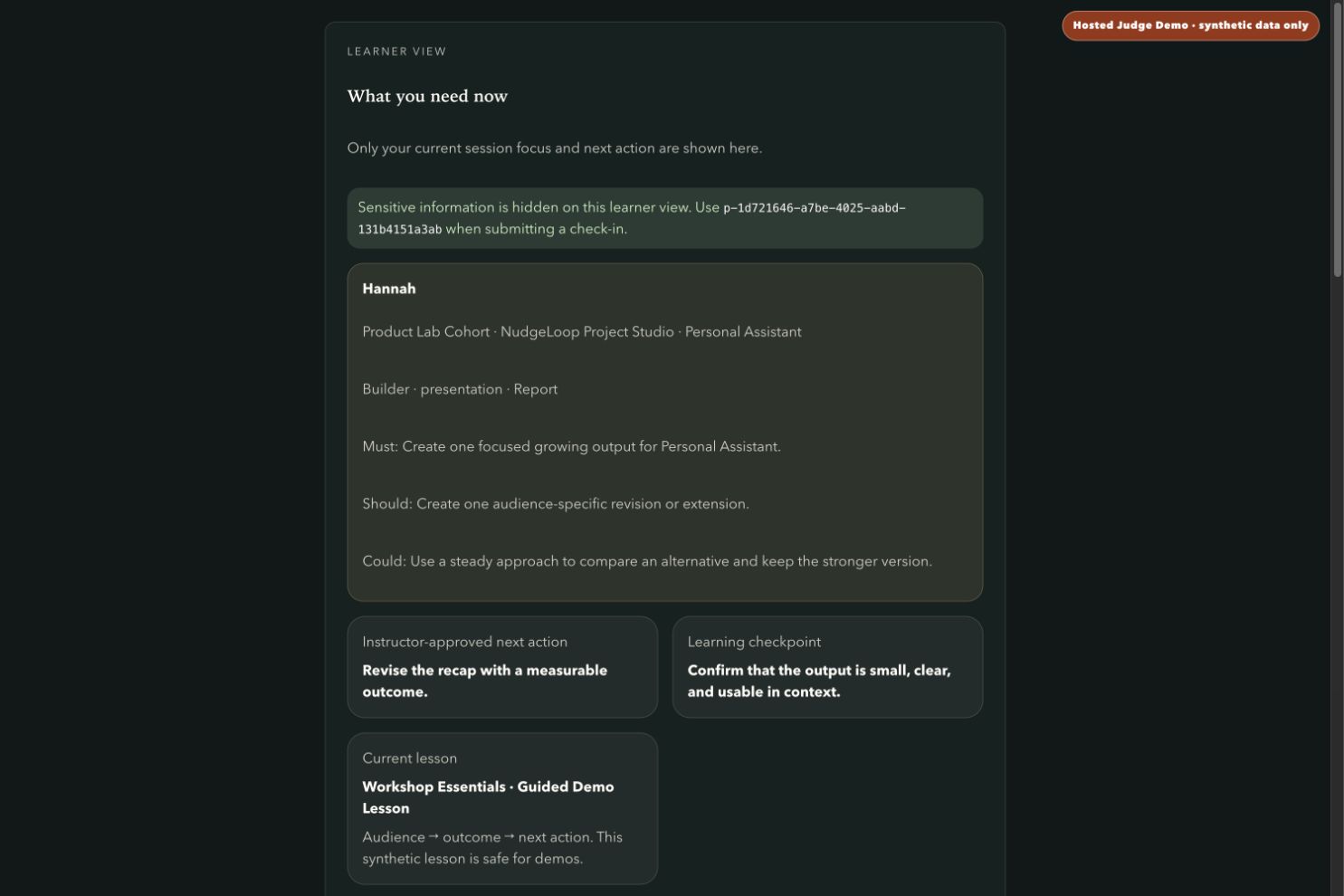
08-personal-learner-questions
-
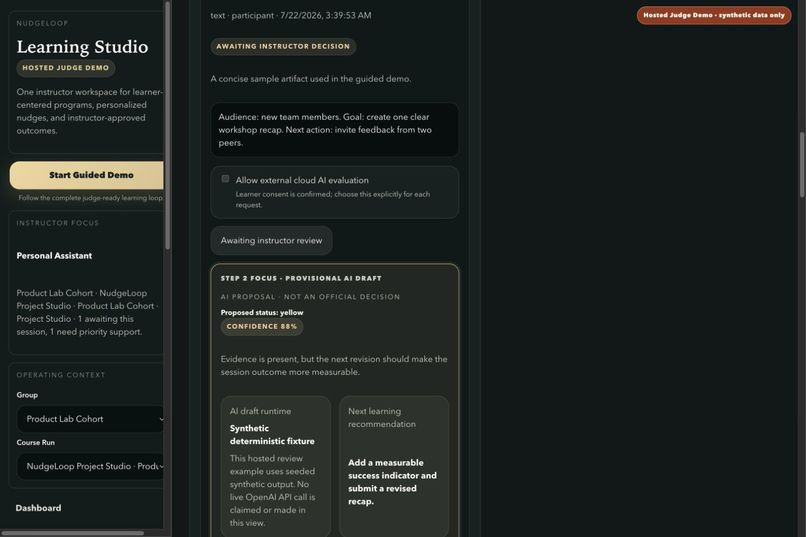
09-ai-draft-runtime
-
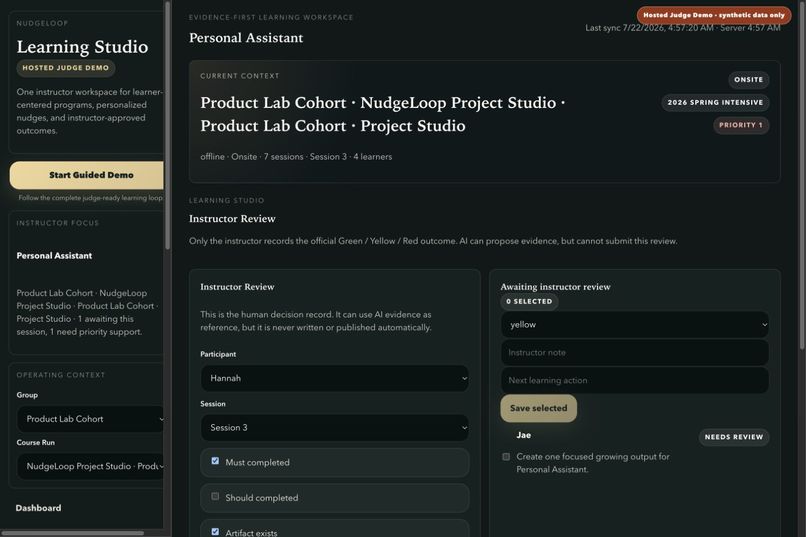
11-instructor-review
-
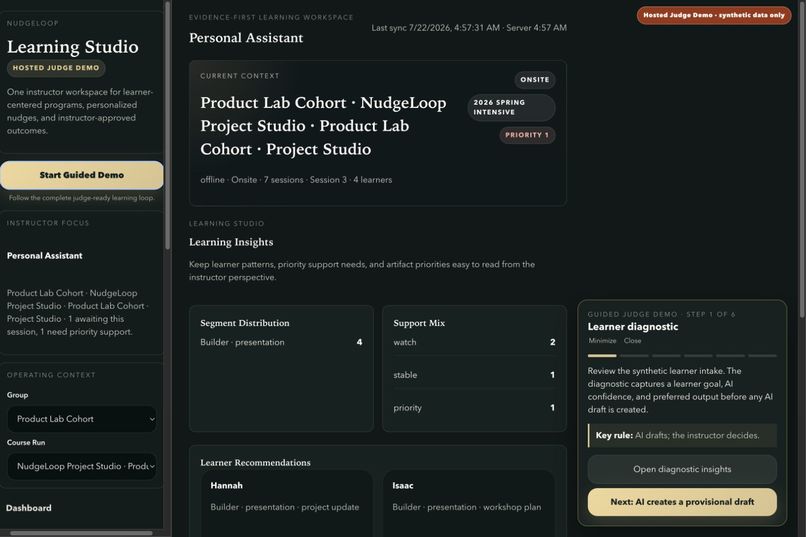
13-guided-judge-demo
-
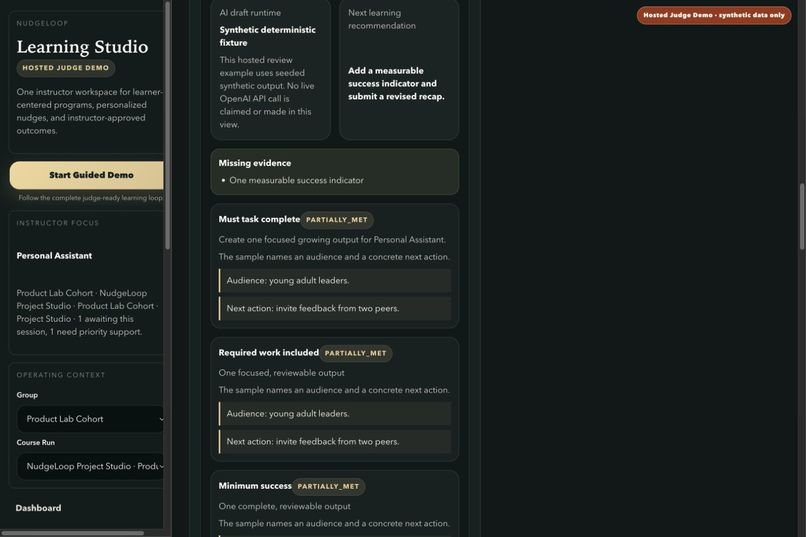
10-instructor-decision
-
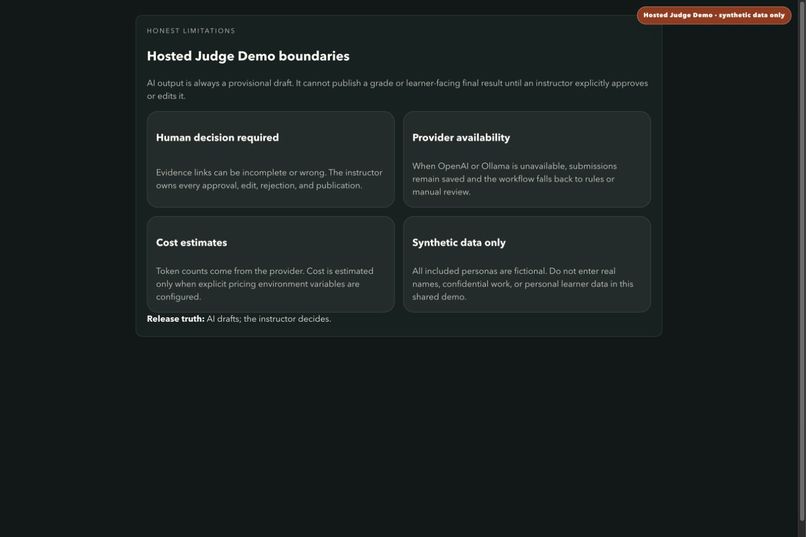
12-privacy-and-human-control
-
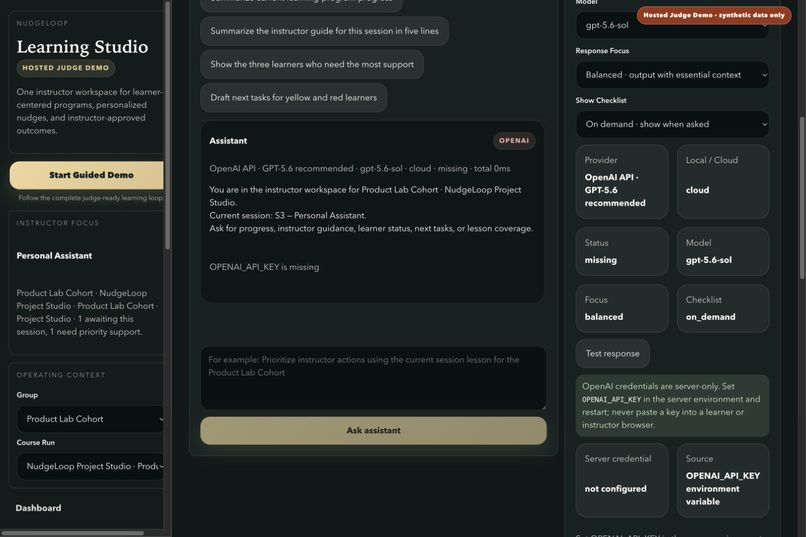
06-learning-assistant
-

14-BridgeSprint_Seoul_Feb252026
-

15-GRUTS Classroom_Philippine_Jul152026


One instructor. Many learners. Every learner seen.
In many low-resource and mixed-connectivity learning settings, one instructor may teach 20 to 50 learners with very different starting points. Some are confident. Some are young. Some are learning in a second language. Some have limited devices, unstable internet, or no personal AI subscription.
The instructor wants to help every learner. But there is not enough time to read every signal, answer every question, and write every piece of feedback during a live session.
That is why I built NudgeLoop Learning Studio.
What inspired us
NudgeLoop grew from real teaching and field-learning experience: local learner submission workflows, QR-based participation, and short intensive learning programs where instructors needed to see many learners quickly and fairly.
The key question was simple:
How can one instructor give each learner a useful next step without replacing the instructor with AI?
We believe AI should not make final educational decisions. It should help the instructor notice, understand, and respond.
What NudgeLoop does
NudgeLoop is a local-first, instructor-led learning studio for courses, workshops, youth programs, teacher training, NGO capacity building, community learning, and other learning settings.
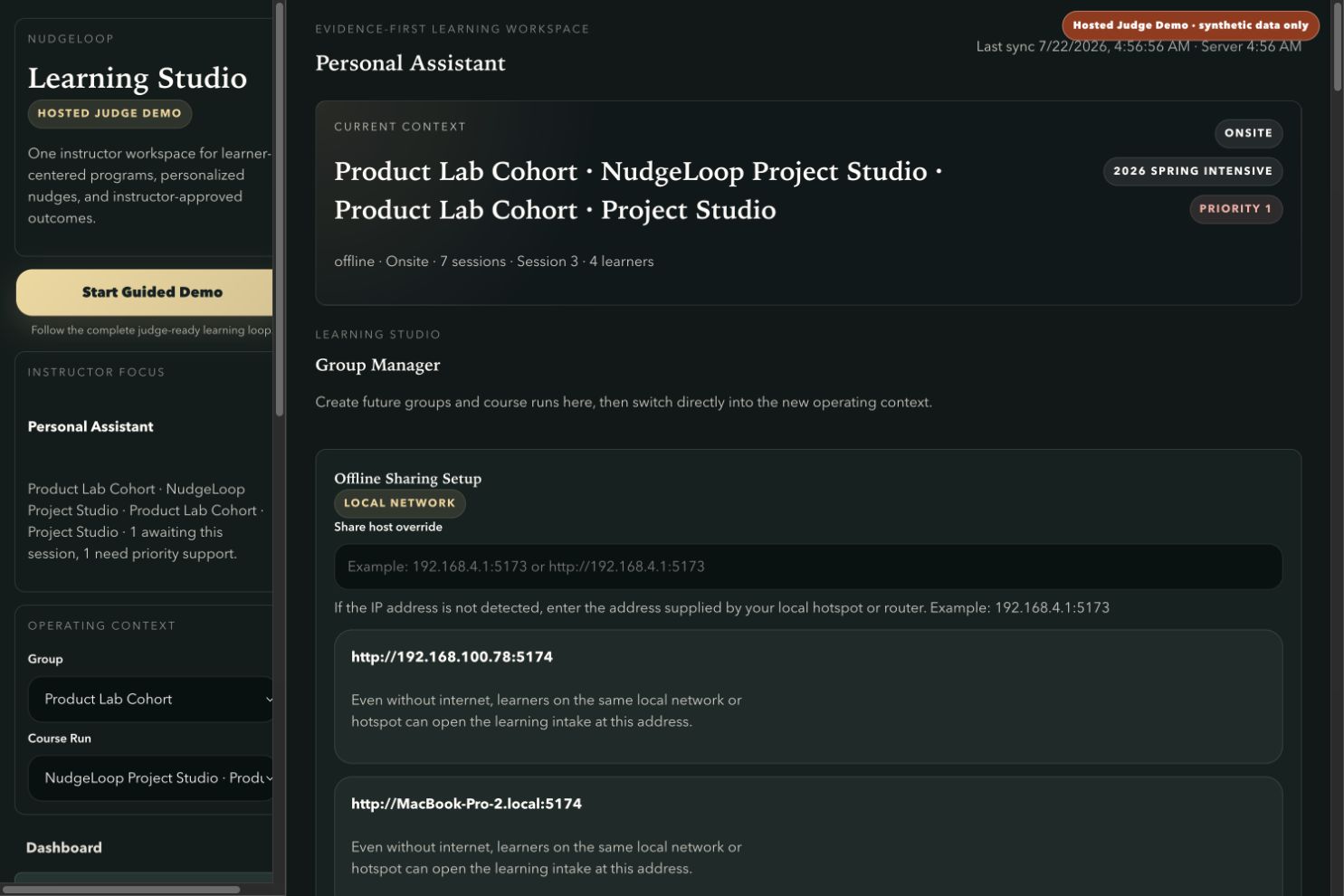
An instructor can create a learning program and share a QR code or local link. Learners can join from a phone or laptop, complete a short learning intake, ask questions, submit work, and receive a personalized learning nudge.
The learning loop is:
- The learner joins with a private learner code.
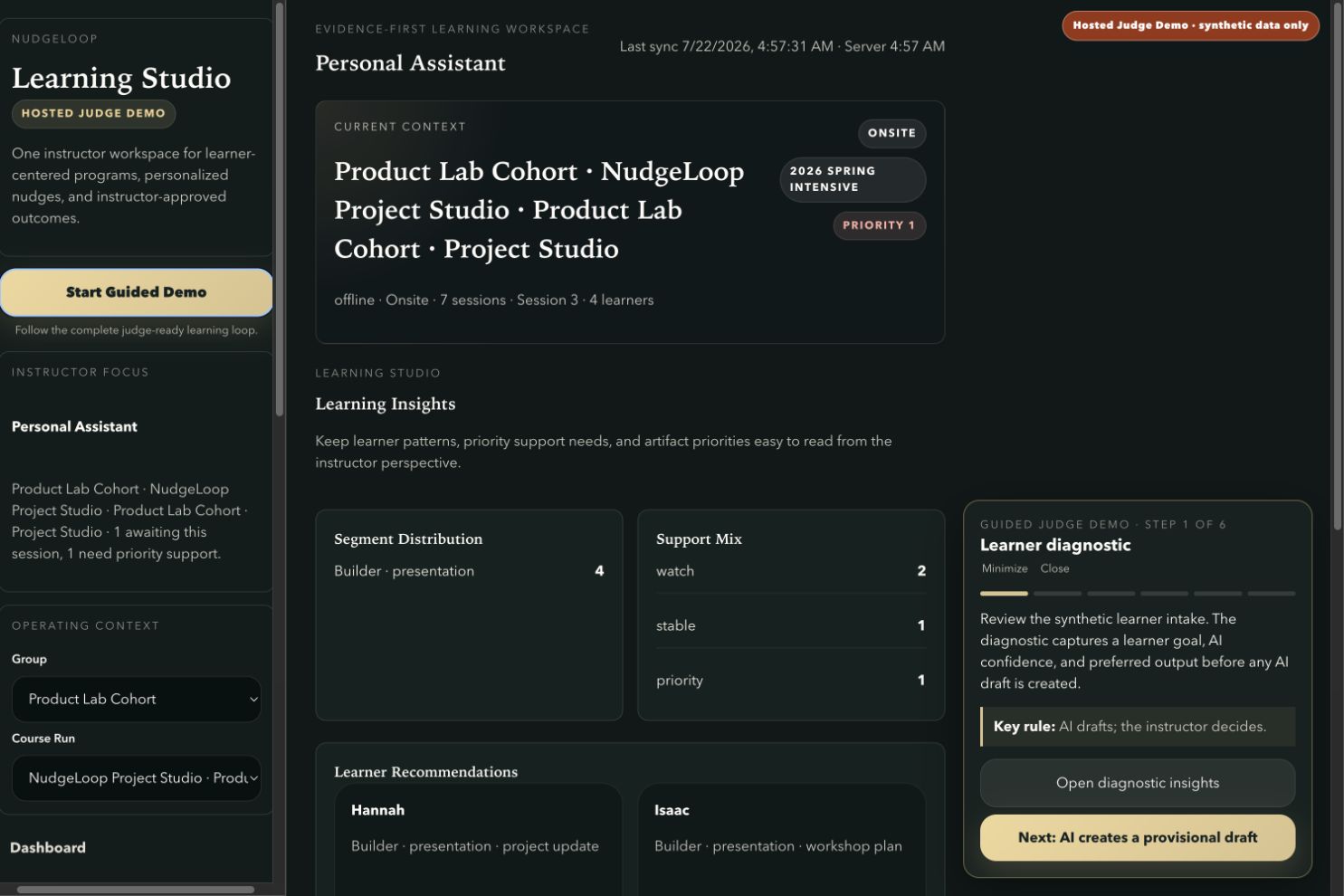
- The learner completes a short diagnostic or learning intake.
- The learner asks a question or submits supported text.
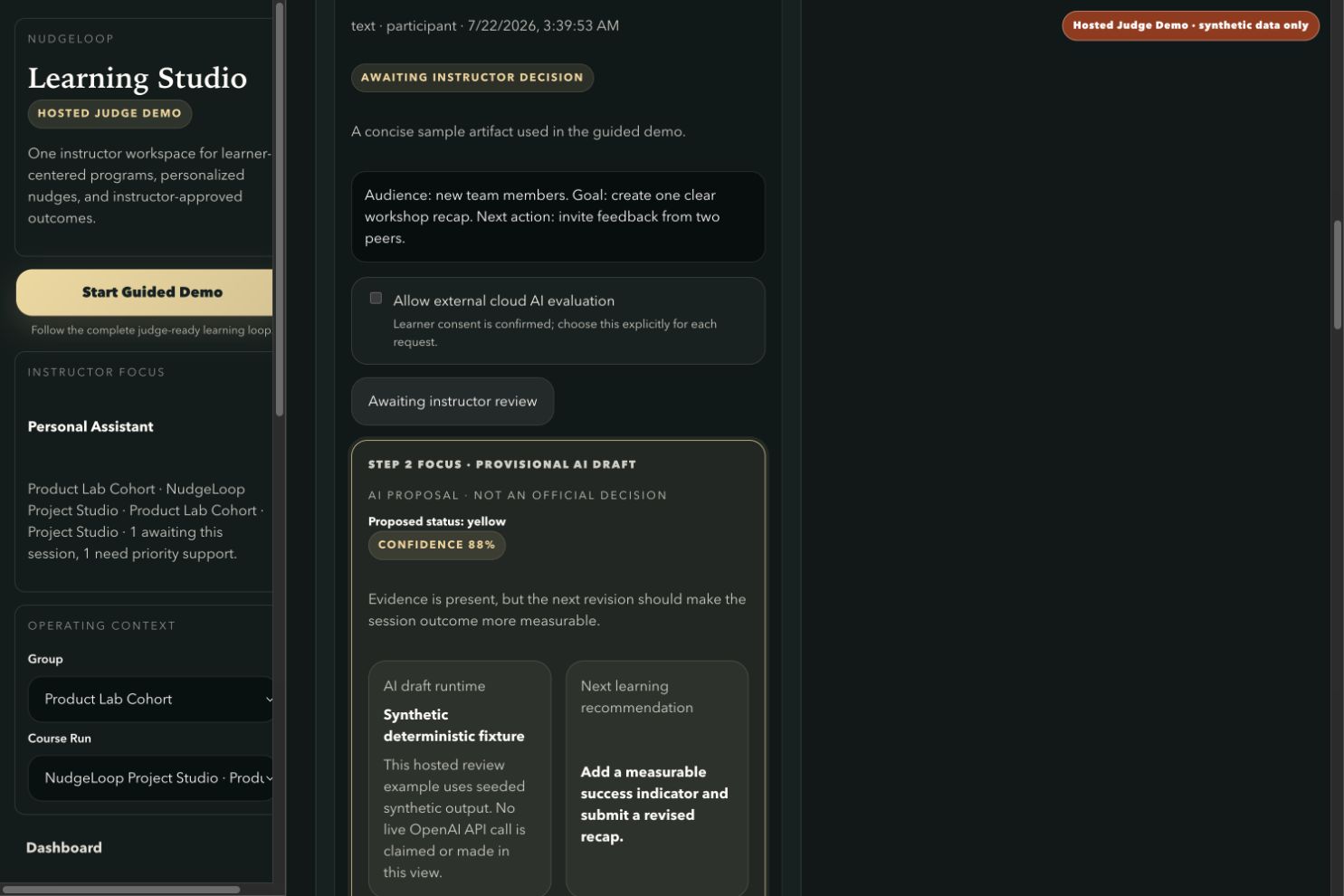
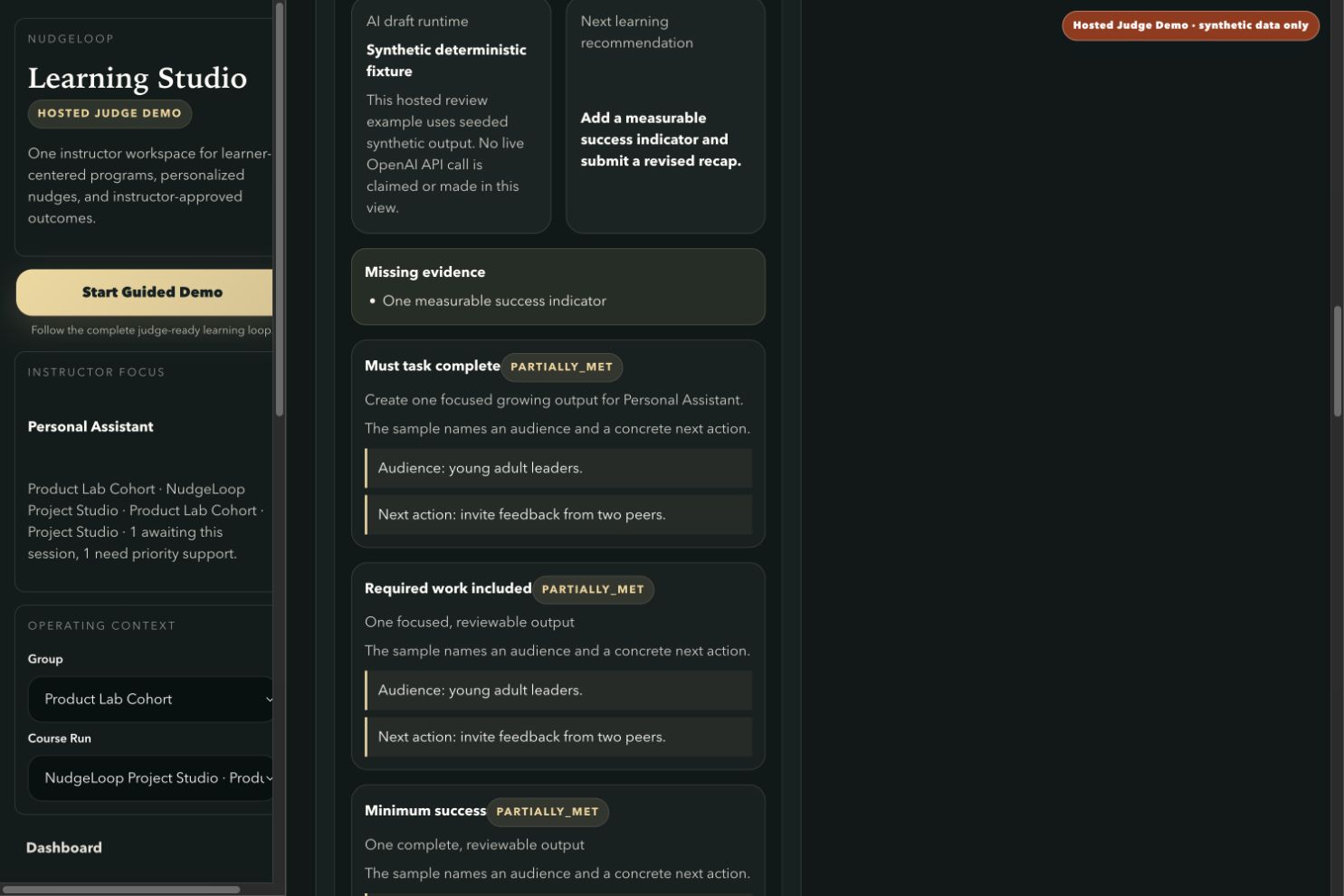
- AI creates a provisional, evidence-linked draft.
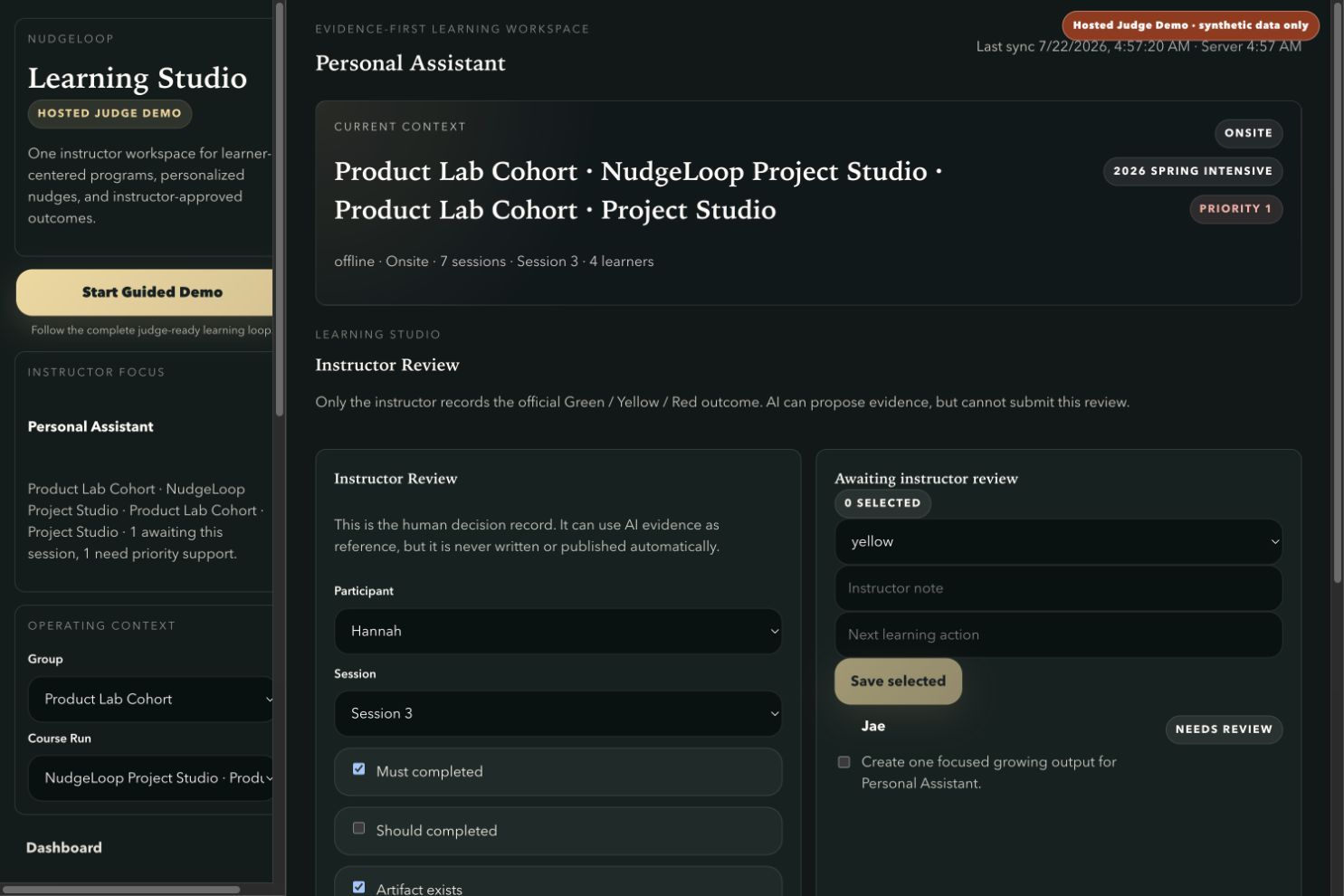
- The instructor edits, rejects, or approves the draft.
- The learner sees only the instructor-approved result.
This is not automatic grading.
AI drafts. The instructor decides.
Personalized nudging, not one-size-fits-all teaching
NudgeLoop uses a learner-centered nudging approach. It does not simply divide people into “high,” “middle,” and “low” groups.
Instead, it looks for the smallest useful next step.
For example:
- A young learner with low confidence may receive a short example and a simple first task.
- A second-language learner may receive plain language and a sentence starter.
- An experienced learner may receive a deeper application challenge.
- A learner who is quiet or late may receive a private, low-pressure next action.
The goal is not to label learners. The goal is to help each learner move forward with dignity.
Why OpenAI matters
OpenAI technology makes the learning loop more useful when the instructor has a secure internet connection.
Through server-side OpenAI API calls, NudgeLoop can help draft:
- personalized learning nudges,
- evidence-linked feedback,
- instructor summaries of common learner needs,
- possible next steps based on a learner's question or submission.
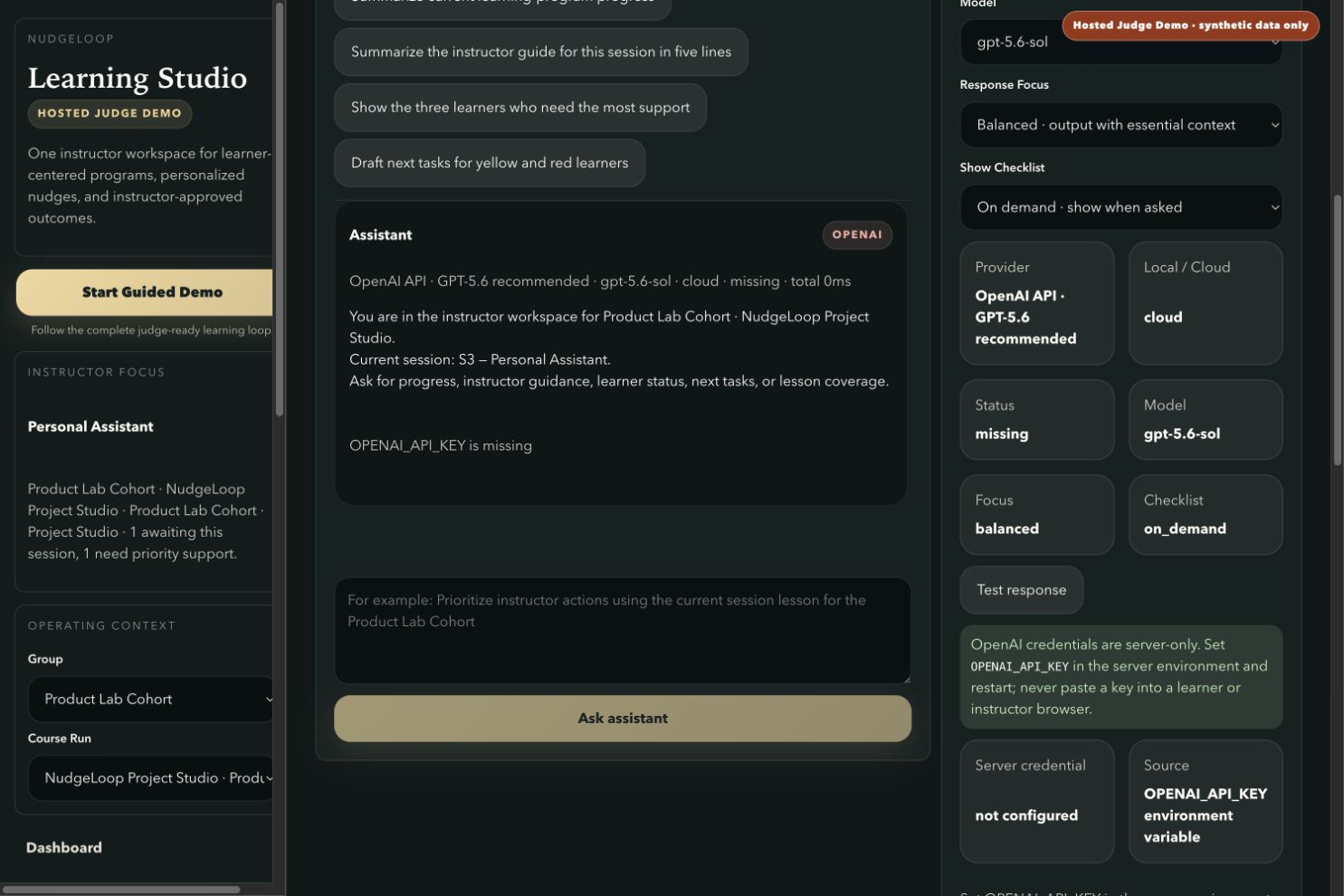
OpenAI is never exposed directly to learners. The API key stays on the server, not in the browser, QR code, or learner device.
NudgeLoop also separates two kinds of AI help:
- Quick nudges for short learner questions during a session.
- Deep review for submitted work that needs evidence, a queue, and instructor approval.
The public Judge Demo clearly shows whether a draft is a live server-side OpenAI result or a synthetic deterministic fixture. We do not pretend that fixture data is a live AI call.
Built for difficult learning environments
NudgeLoop is designed for places where internet, devices, subscriptions, time, and privacy cannot be taken for granted.
Learners do not need their own AI account. They can join through an instructor-managed local network, hotspot, or hosted link.
The system is designed to:
- save learner questions and submissions before an AI call,
- preserve work when the connection is slow or fails,
- use retry queues and safe fallback states,
- support local-first participation,
- keep the instructor in control of the learning environment.
This makes the idea useful for youth programs, rural or low-connectivity communities, field training, teacher development, NGOs, seminaries, and community workshops.
Privacy and human responsibility
Privacy matters even more when learners are young or in vulnerable settings.
NudgeLoop uses learner codes and synthetic data for the public demo. It keeps OpenAI calls server-side, limits inputs and outputs, tracks AI usage, and includes rate limits, timeouts, retries, and budget controls.
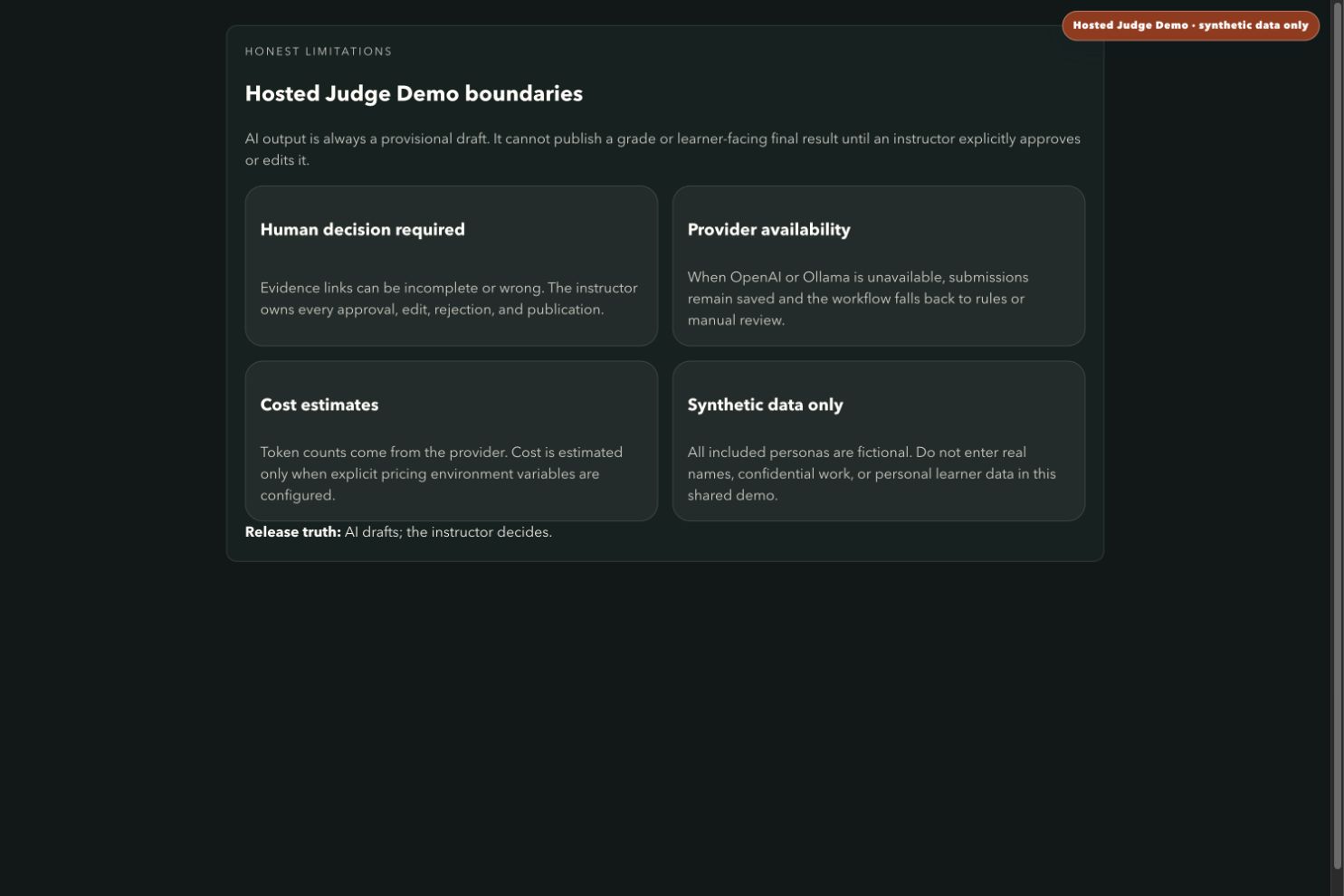
Most importantly, no final grade, official feedback, or high-impact decision is published automatically.
The instructor can see the AI draft, its evidence references, edits, approval status, and timestamps. The learner sees the final result only after instructor approval.
What we built
We built two connected modes using the same learning logic:
- Local Classroom Mode for instructor-hosted, local-network learning.
- Hosted Judge Demo Mode for reviewers, using fictional learner personas and isolated synthetic data.
The Judge Demo makes the full learning loop visible:
- learner intake,
- personal question,
- AI draft,
- instructor review,
- instructor-approved learner result.
We also added a guided demo, private learner links, mobile-aware screens, resettable personas, offline-save behavior, backup/export support, automated tests, and an honest limitations page.
Challenges we faced
The hardest challenge was not adding AI. It was making AI useful without making it look like the authority.
We had to design clear boundaries between:
- a fast learner nudge and a deeper feedback review,
- local learning participation and cloud AI processing,
- an AI suggestion and an instructor decision,
- a safe public demo and real learner data.
We also had to keep the interface simple enough for busy instructors and learners using small mobile screens.
What we learned
We learned that personalization is not just “more AI.”
Good personalization needs context, restraint, privacy, and human judgment.
A useful AI response is not always a long answer. Sometimes it is one respectful question, one example, or one next step that helps a learner continue.
We also learned that reliability is part of educational care. If the network fails, learner work should not disappear. If AI fails, the instructor should still be able to continue.
What is next
Next, we want to run structured field pilots with instructors and learners in mixed-connectivity settings. We want to measure:
- learner join and intake completion,
- whether personalized nudges are meaningfully different and useful,
- instructor editing and approval patterns,
- response time and API cost,
- learning confidence and task completion,
- safe use across languages and devices.
NudgeLoop is not trying to become another large learning management system.
It is building one reliable promise:
Help one instructor see many learners, give each learner a meaningful next step, and keep human responsibility at the center.
Built With
- express.js
- gpt-5.6
- local-first
- node.js
- openai-api
- privacy
- react
- typescript
- vercel
- vite
- vitest
- zod


Log in or sign up for Devpost to join the conversation.