Inspiration
I was sitting at my desk one afternoon, about to order Zomato for the third time that week, when it hit me — I had no idea what that decision was costing the planet. Not because I didn't care, but because nobody had ever told me at the moment I was making the choice. That's the gap NudgeGreen fills. The problem with sustainability isn't intent — most people want to do better. It's the lack of the right information at the right moment.
What it does
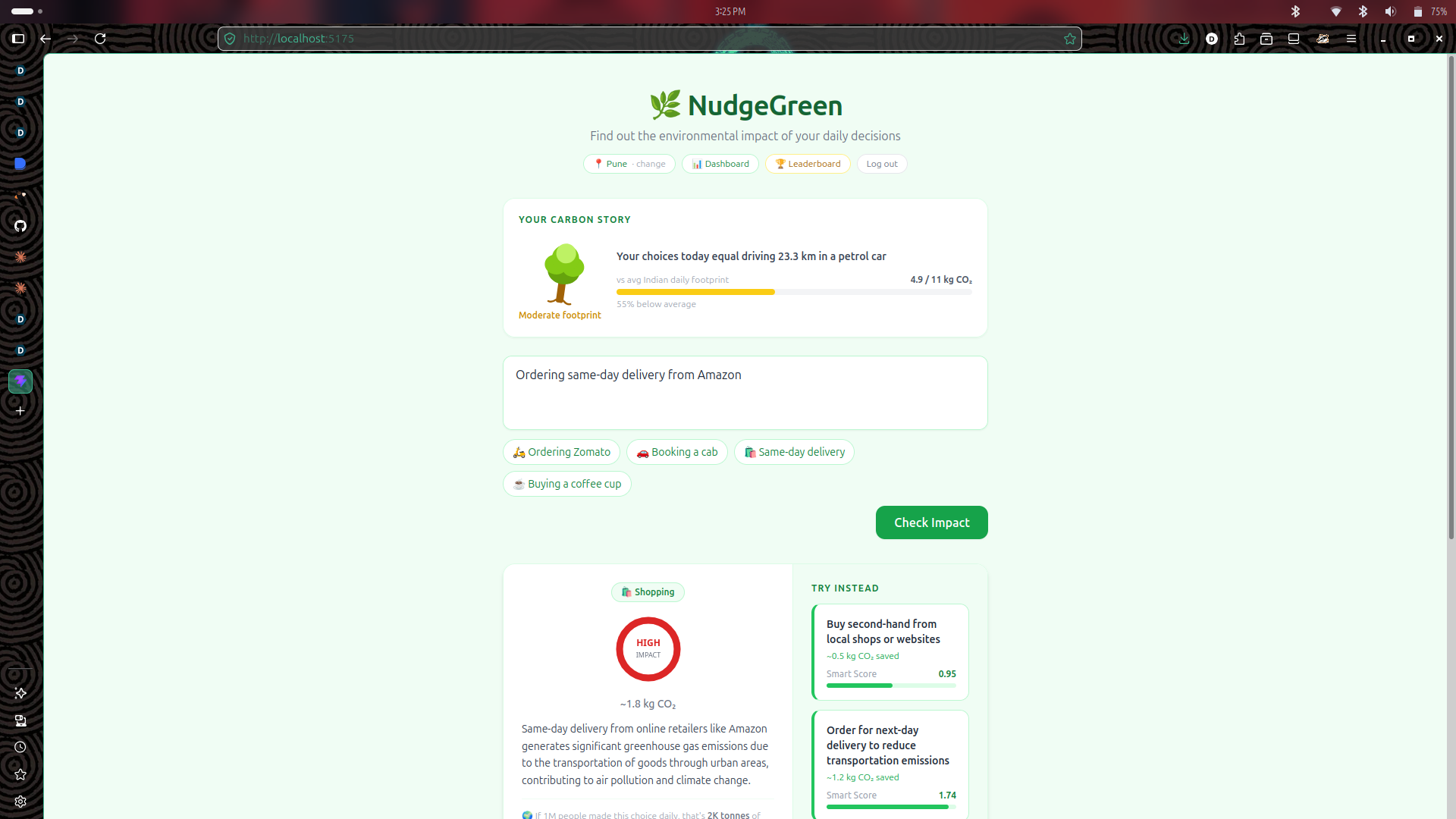
NudgeGreen is a real-time sustainable decision engine. You type what you're about to do — "booking a cab", "ordering Zomato", "same-day delivery from Amazon" — and within seconds it shows you:
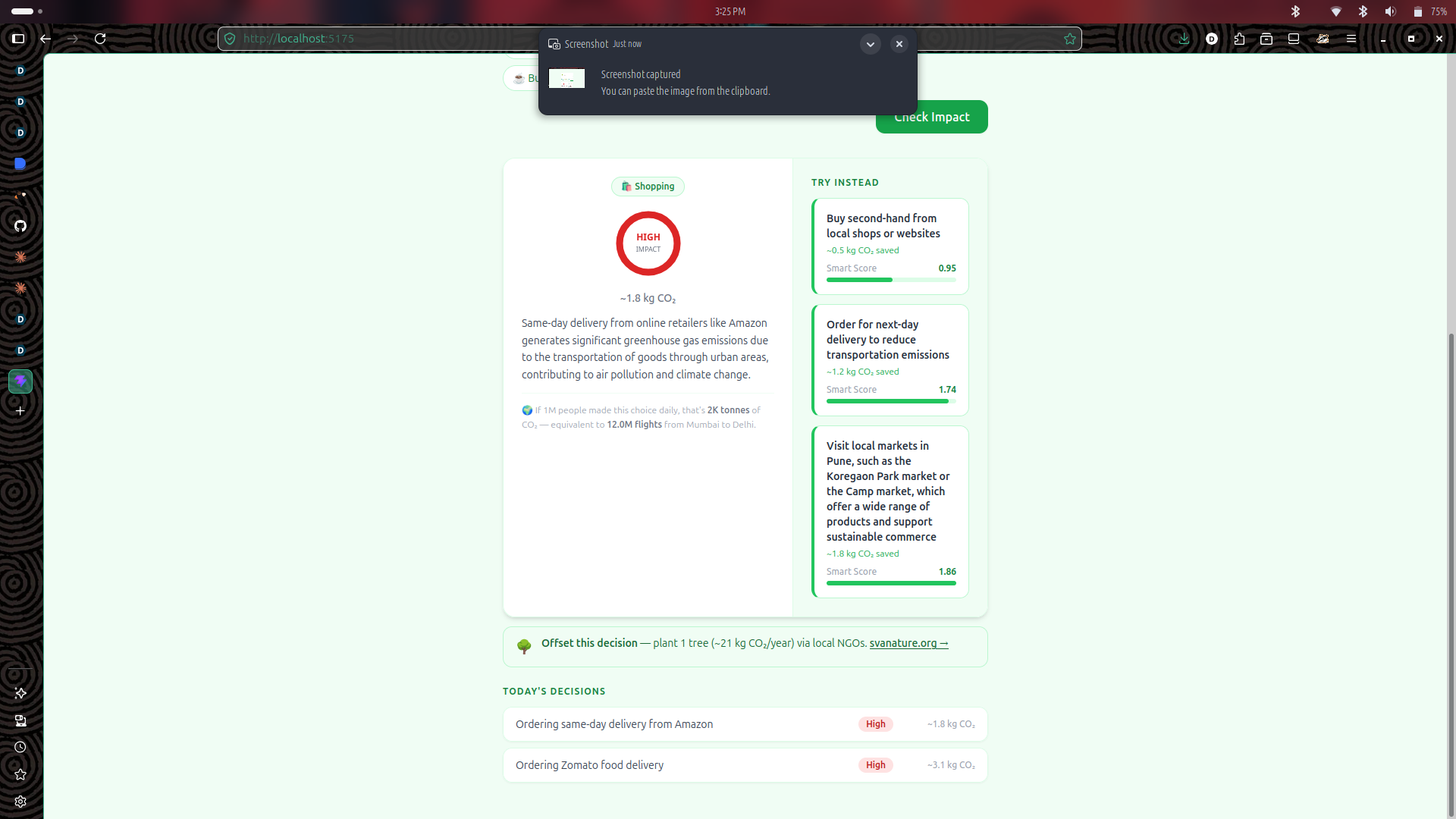
- The environmental impact of that choice (Low / Medium / High) with a real CO₂ estimate
- Why it has that impact, explained in plain language
- 2-3 actionable greener alternatives ranked by a Smart Score (CO₂ saved × convenience)
- A "What if 1M people did this?" stat to show collective scale
- A living Carbon Story tree that wilts or thrives based on your session footprint
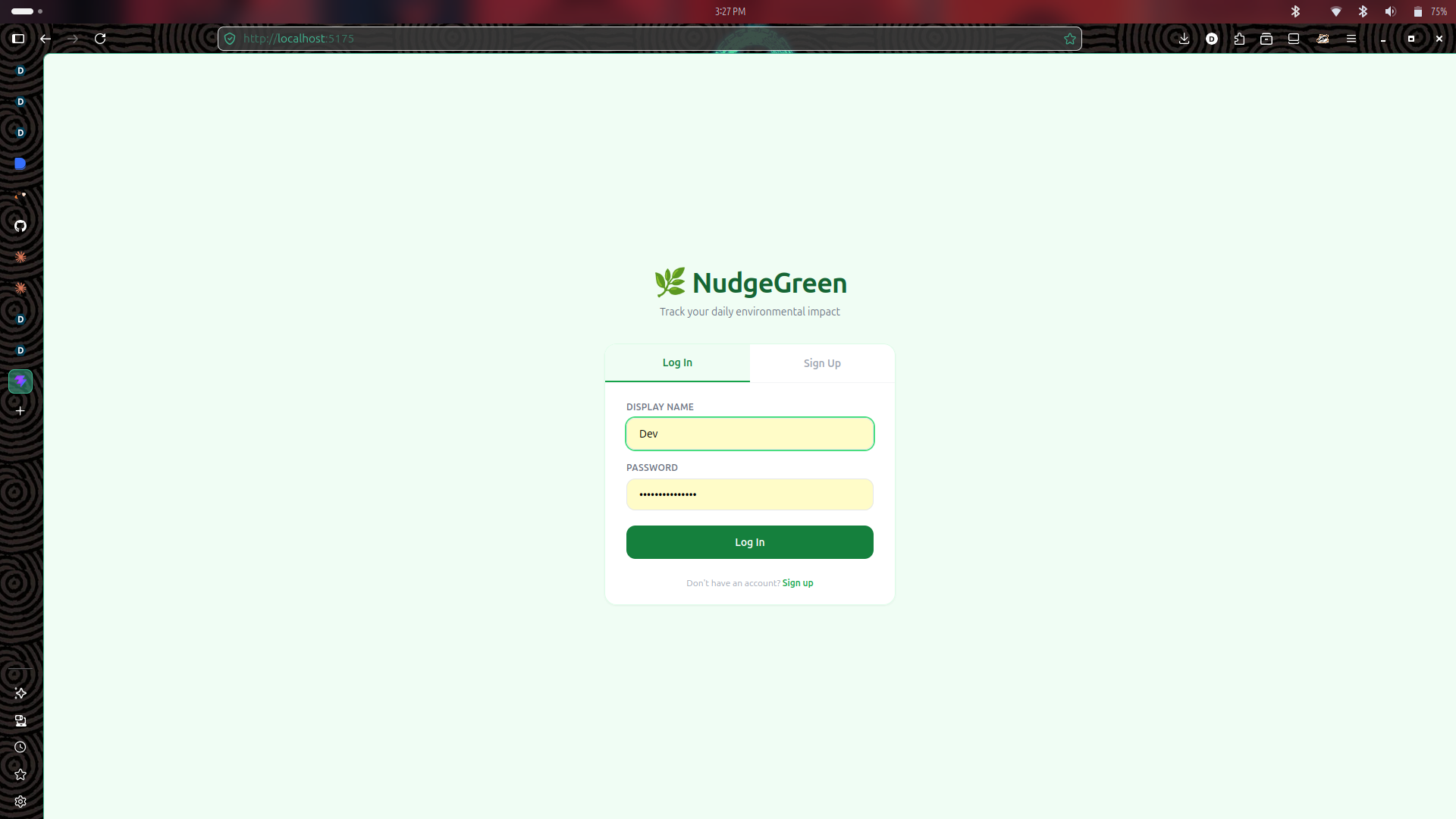
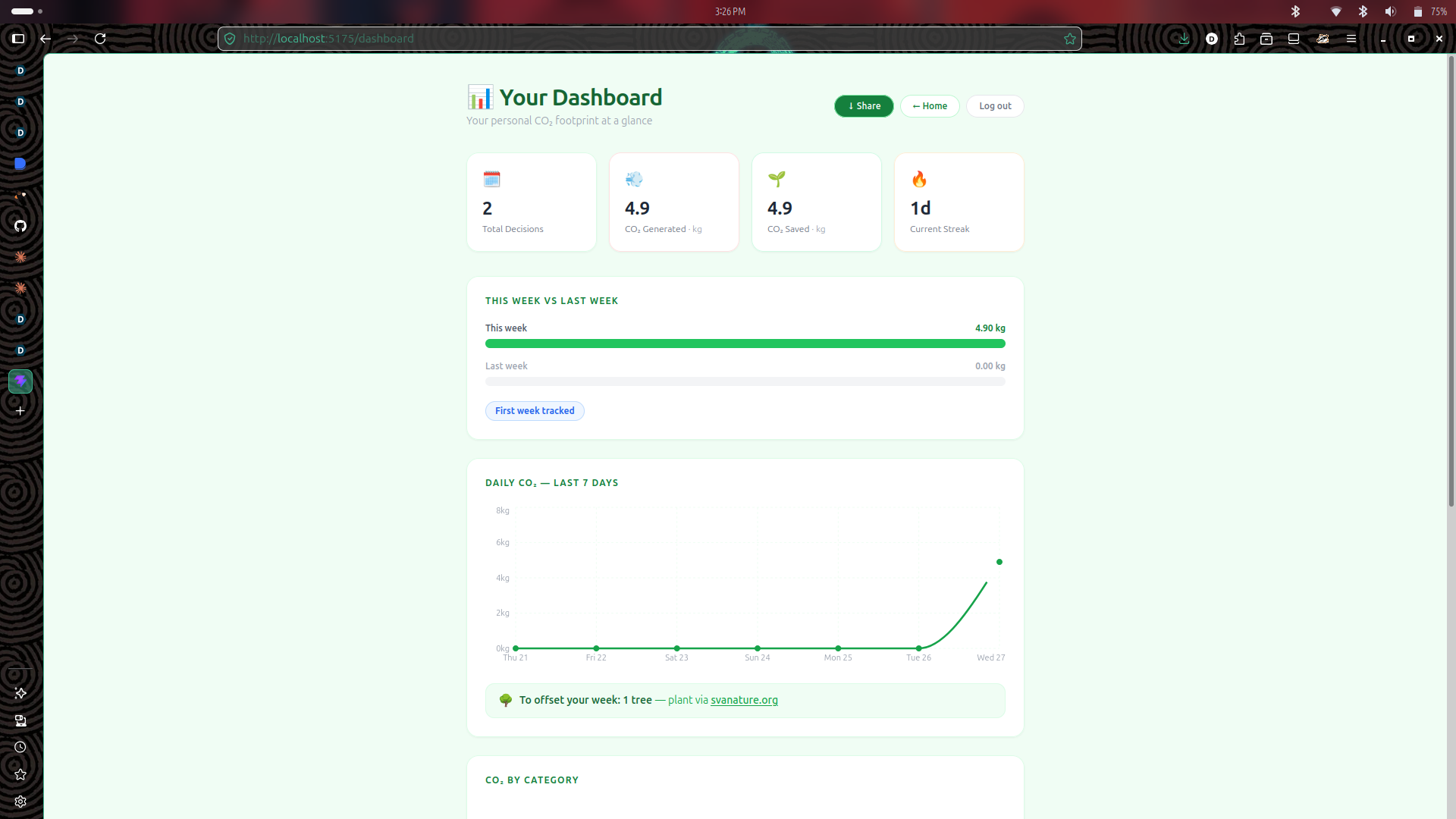
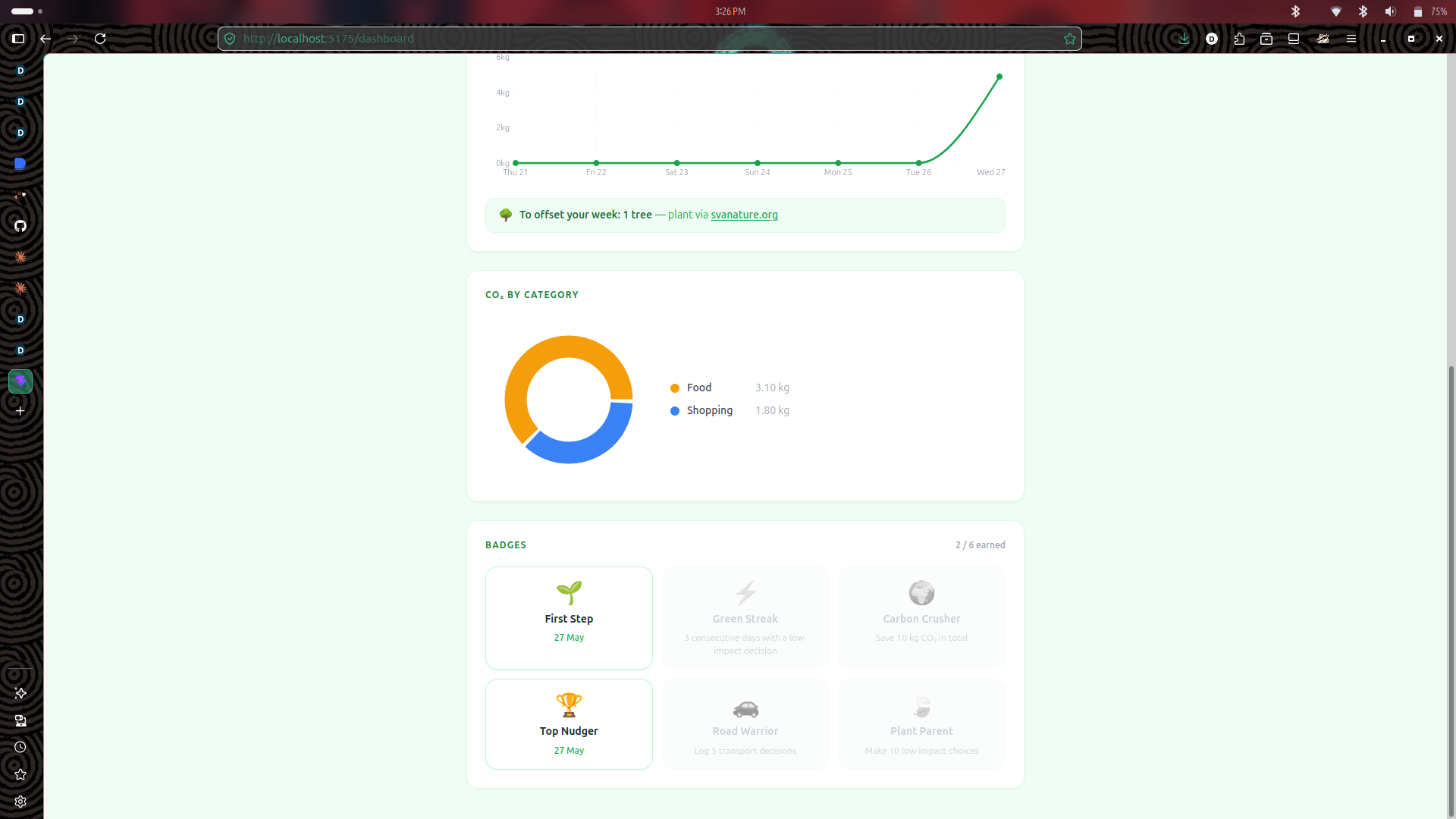
- A personal dashboard with CO₂ graphs, category breakdown, and weekly comparison
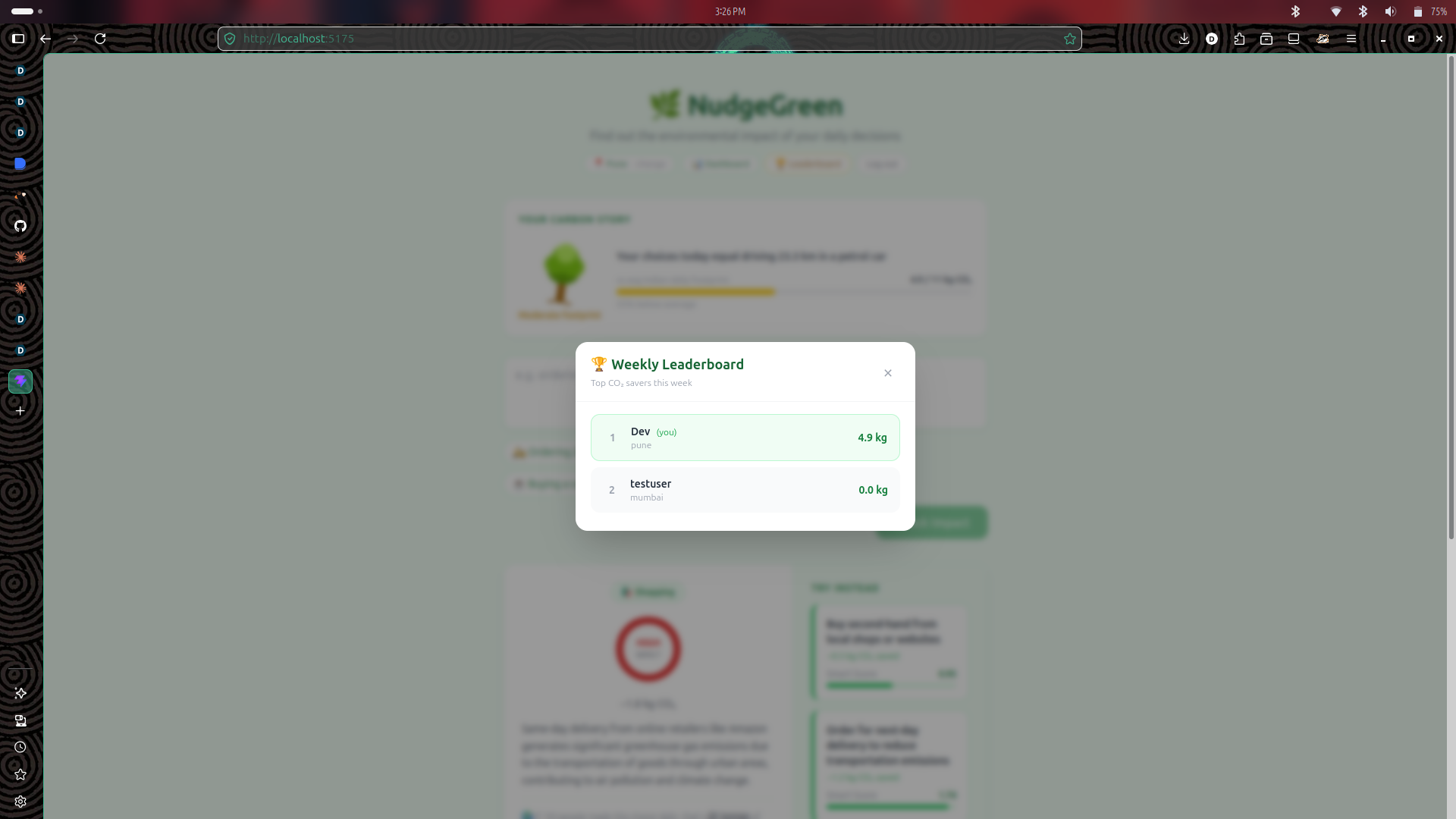
- A leaderboard to compete with other users on CO₂ saved
- Badges for green streaks, saving milestones, and consistent choices
- City-aware estimates for Mumbai, Delhi, Bangalore, Chennai, and Pune
How we built it
NudgeGreen is built around four layers of intelligence, not just an AI wrapper:
Carbon Database Engine — a structured database of 30+ common daily decisions across Transport, Food, Shopping, and Energy with real CO₂ values. The AI reasons on top of actual data, not guesses.
Decision Classifier — every input is automatically categorized before analysis, enabling category-specific nudge logic.
AI Reasoning Layer — Llama 3.1:8B running locally via Ollama receives the decision, category, real CO₂ data, and city context. It returns structured JSON with impact level, reason, and ranked alternatives.
Nudge Scoring System — alternatives are scored using:
nudge_score = (co2_saved × 0.7) + (convenience_score × 0.3)
The full stack: React + Tailwind CSS + Vite on the frontend, Node.js + Express on the backend, PostgreSQL for persistent user data, JWT for auth, and Recharts for dashboard graphs.
Challenges we ran into
- Getting Llama 3.1:8B to return consistent structured JSON required careful prompt engineering — small wording changes caused the model to abandon the JSON format entirely
- Designing a nudge scoring system that balances CO₂ savings with real-world convenience, because a suggestion nobody follows saves zero carbon
- Building city-aware CO₂ estimates that felt accurate without access to live emissions data — solved with researched multipliers per city based on transport infrastructure and grid mix
- Making the carbon story tree feel emotionally meaningful without being preachy or guilt-inducing
Accomplishments that we're proud of
- Built a full-stack product with auth, persistent user accounts, leaderboard, badges, and a personal dashboard — in under 24 hours
- The nudge scoring system genuinely surfaces the most actionable alternative, not just the greenest one on paper
- The "Your choices today equal driving X km in a petrol car" translation makes abstract CO₂ numbers feel real and personal
- Running entirely on a local LLM means NudgeGreen works offline, costs nothing to run, and keeps user data private
What we learned
The hardest part of sustainability tech isn't the data — it's the UX. People don't change behavior because they're shown numbers. They change because the right information reaches them at the right moment, in the right way. Every design decision in NudgeGreen was made around reducing friction, not increasing awareness. Awareness without action is just guilt.
What's next for NudgeGreen
- Habit Engine — after 5+ decisions, detect patterns and proactively nudge: "Hey Dev, you usually order food around now — want a greener option today?"
- Friends Feed — follow other users, see their green choices, send nudges
- City-level impact map — aggregate CO₂ data across all users visualized by city
- Daily Challenges — "Make 3 low-impact choices today" with bonus badges
- Mobile PWA — installable on phone for in-the-moment decision support
- Habit score — a weekly sustainability score that tracks improvement over time
Built With
- bcrypt
- express.js
- jwt
- llama-3.1
- node.js
- ollama
- postgresql
- react
- recharts
- tailwind-css
- vite

Log in or sign up for Devpost to join the conversation.