-
-
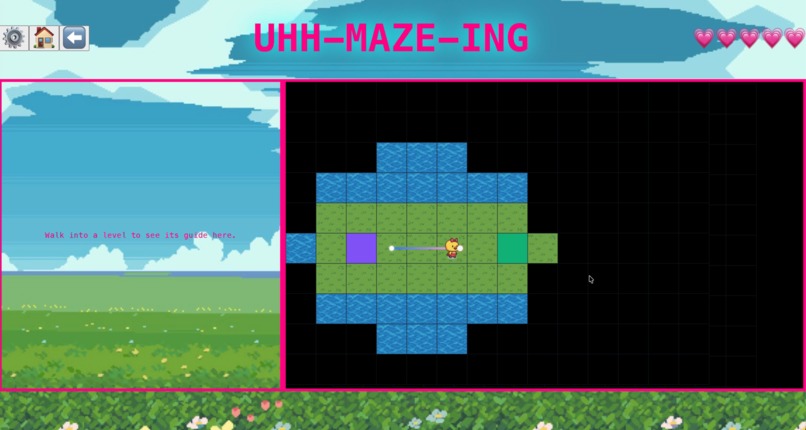
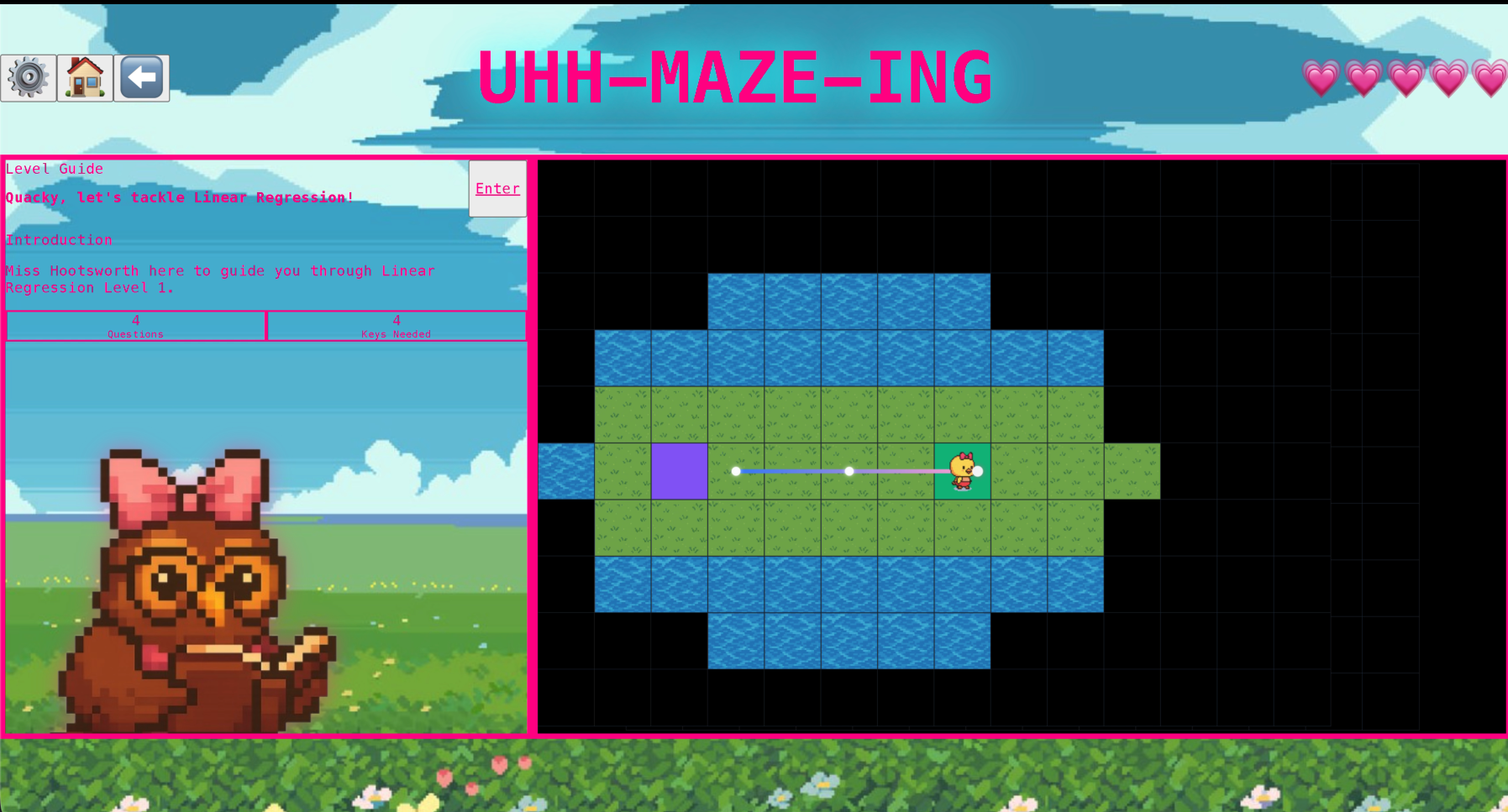
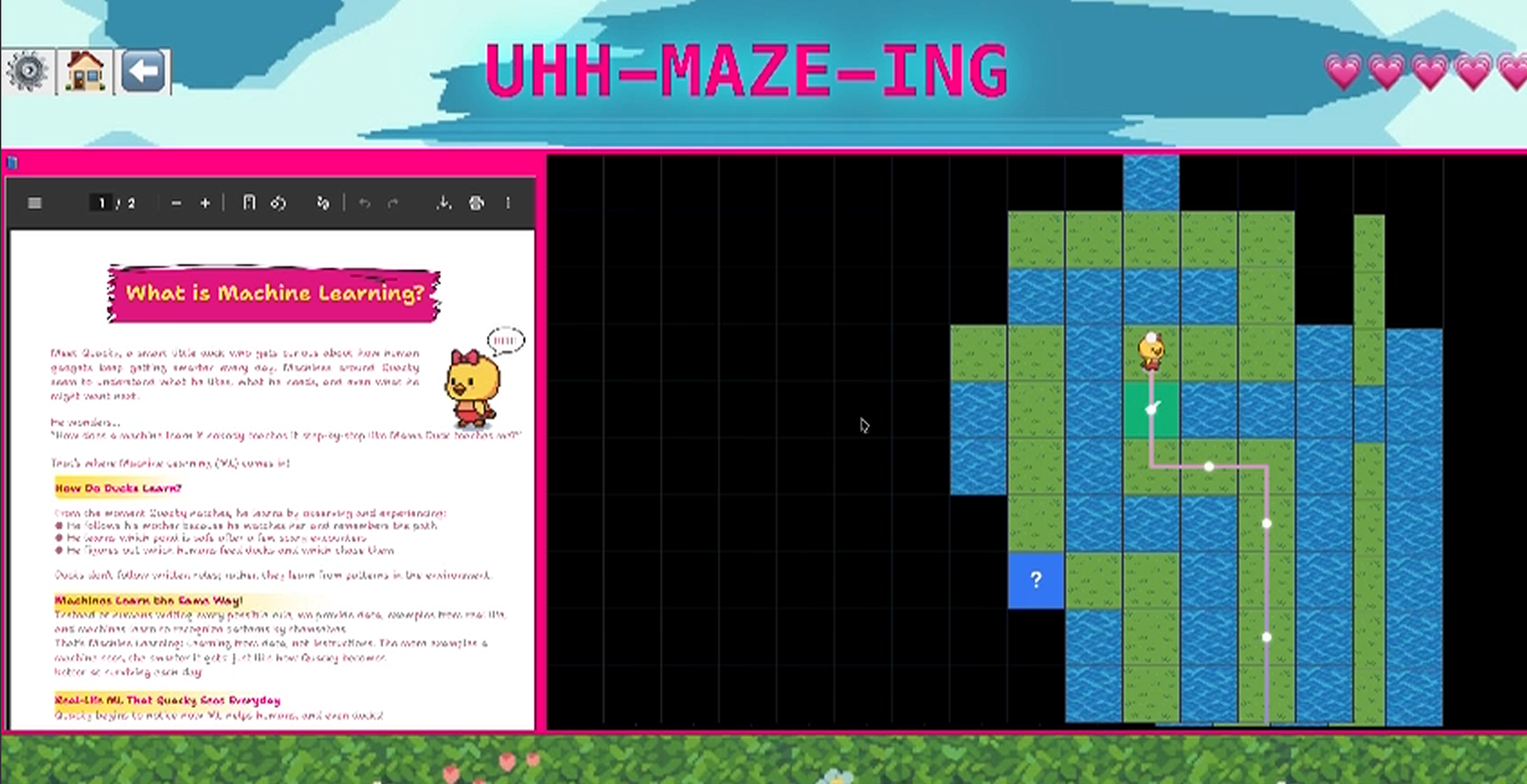
The beginning
-
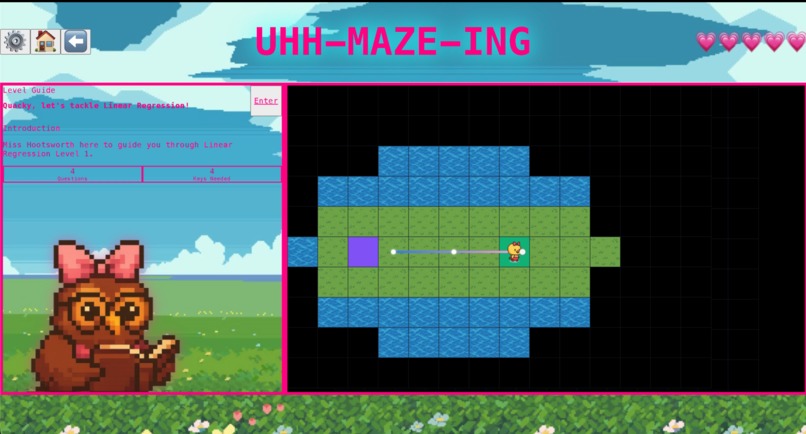
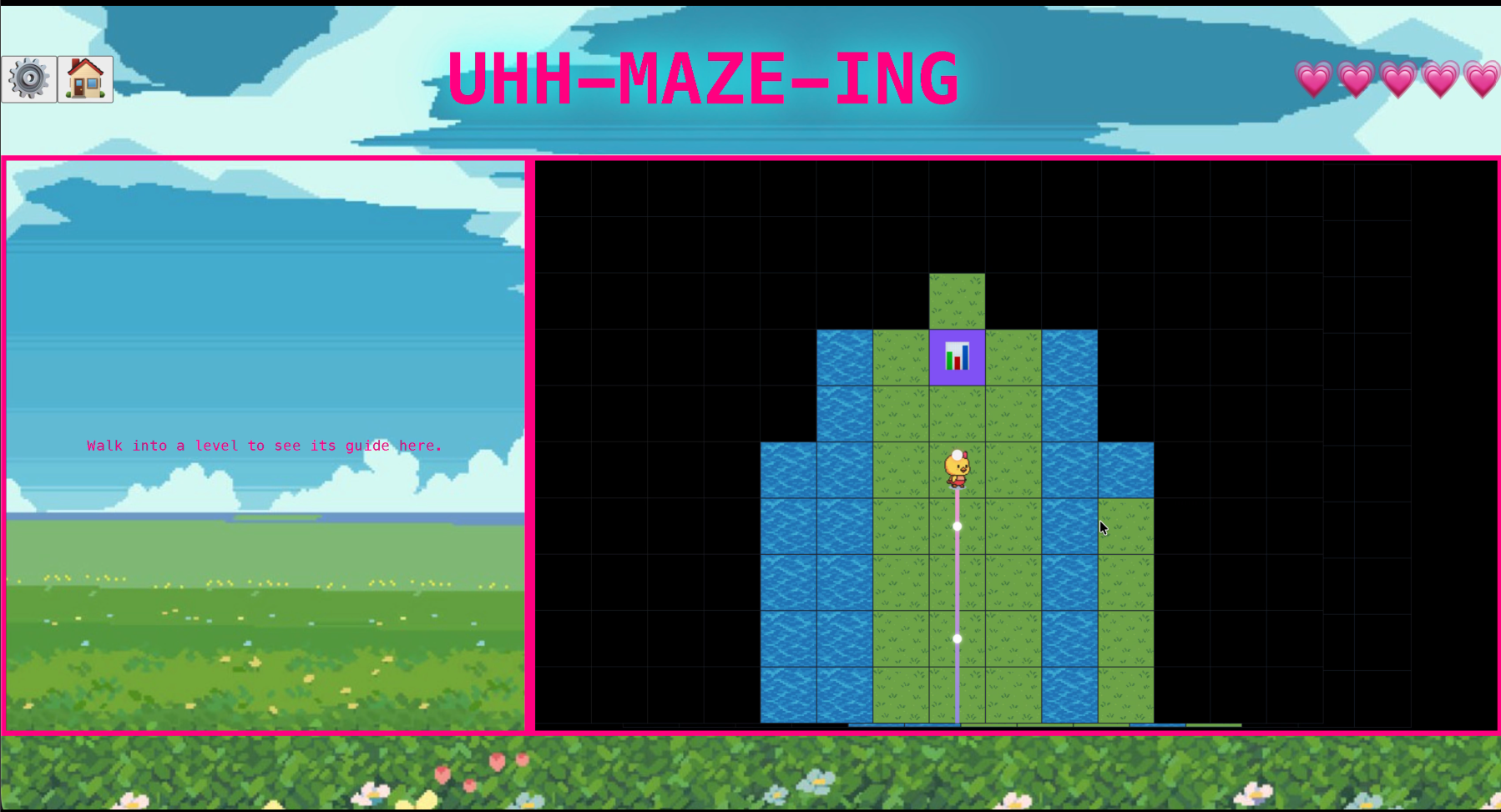
Topic selection
-
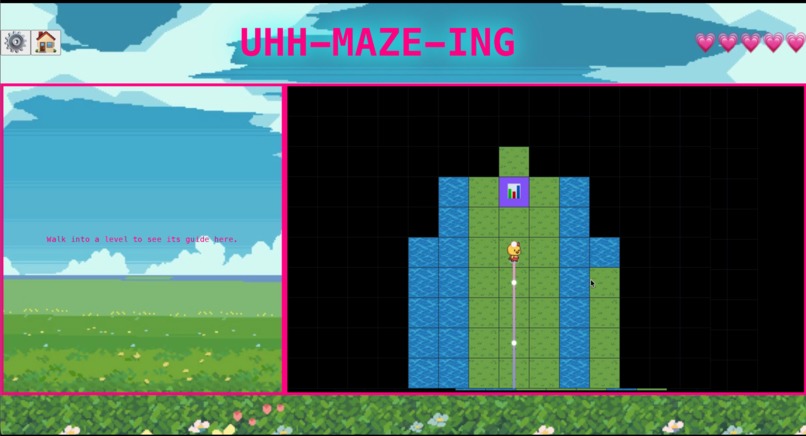
Another topic selection
-
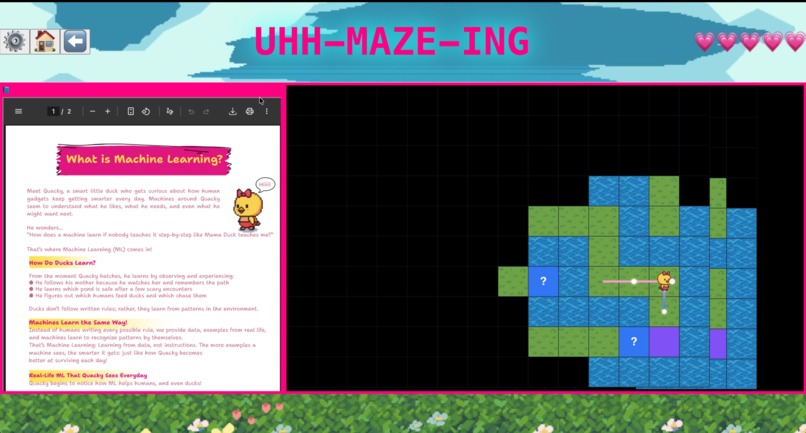
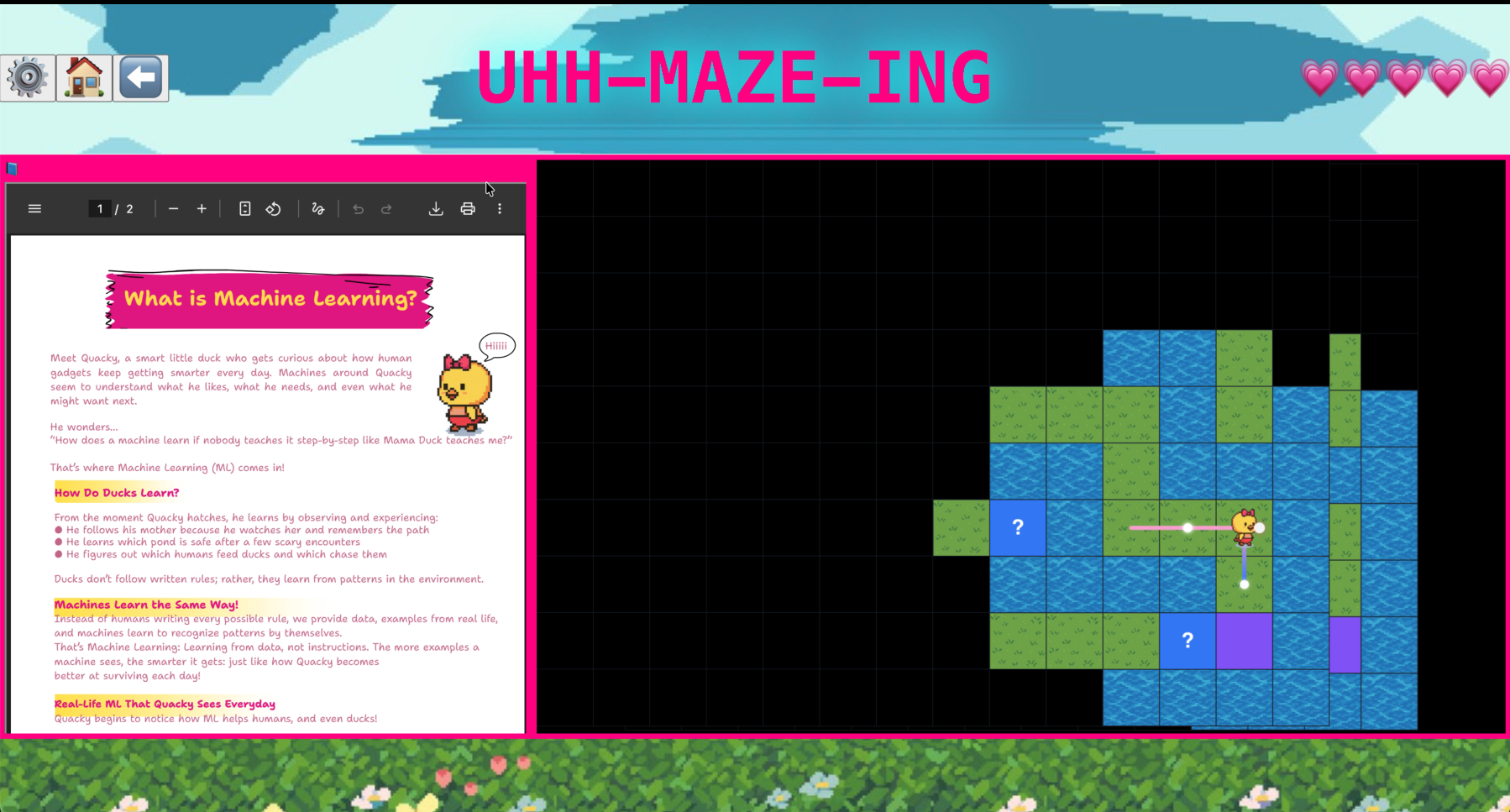
Document session
-
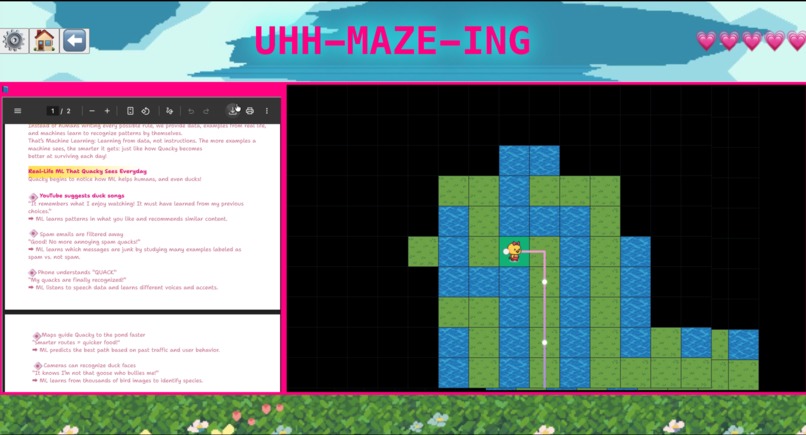
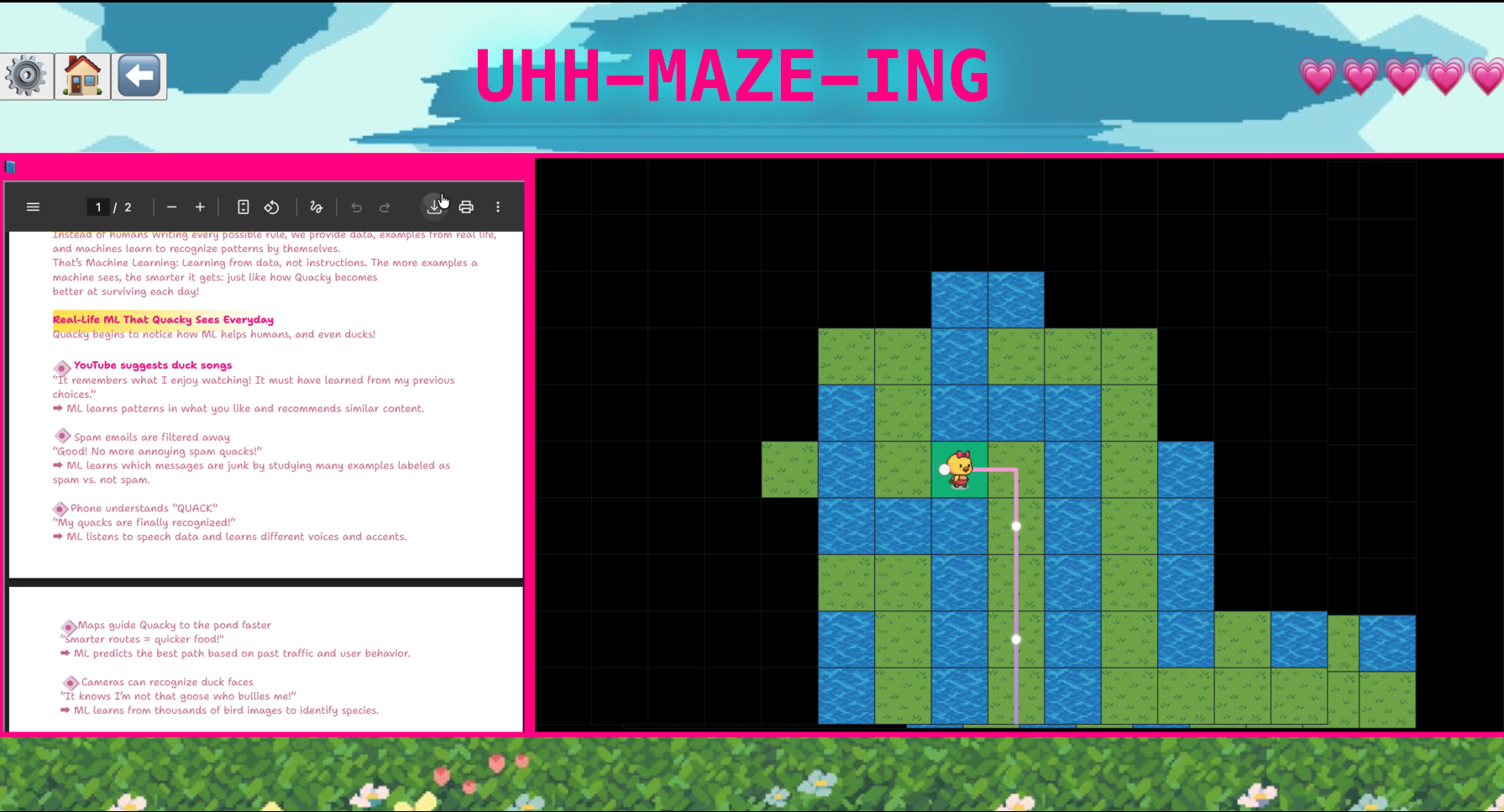
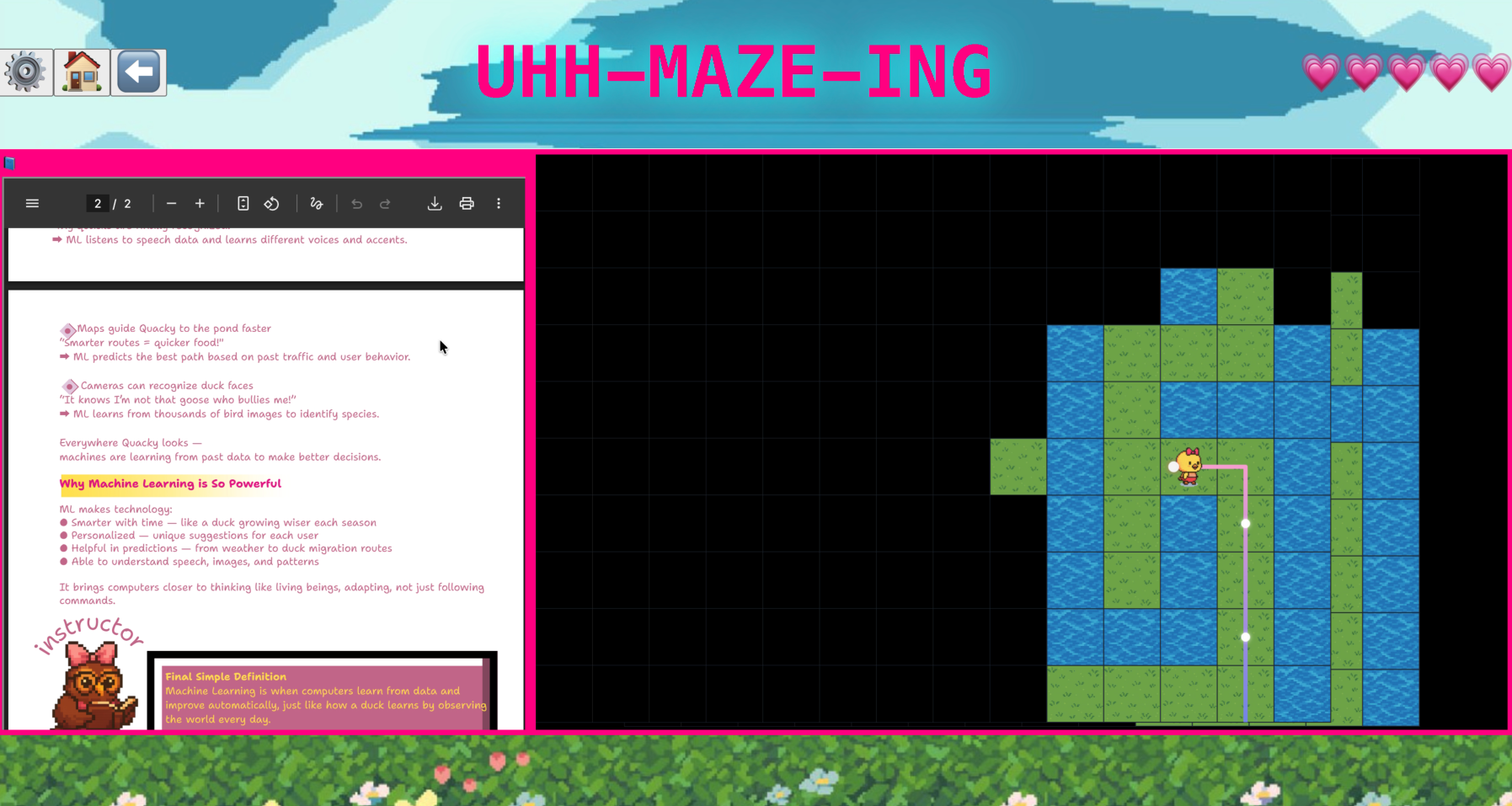
More reading
-
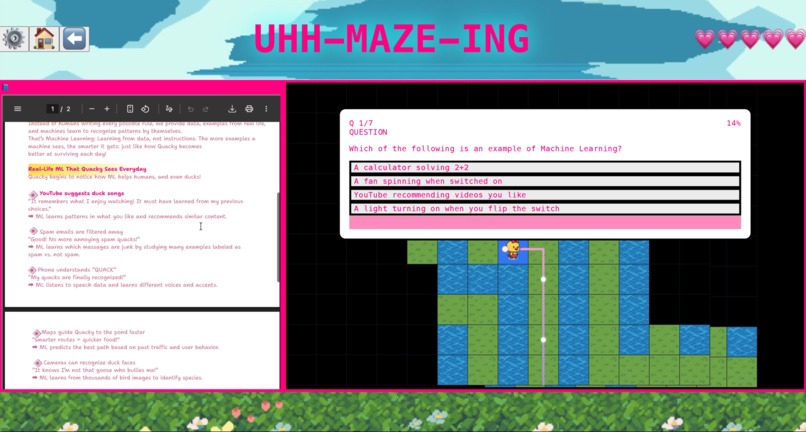
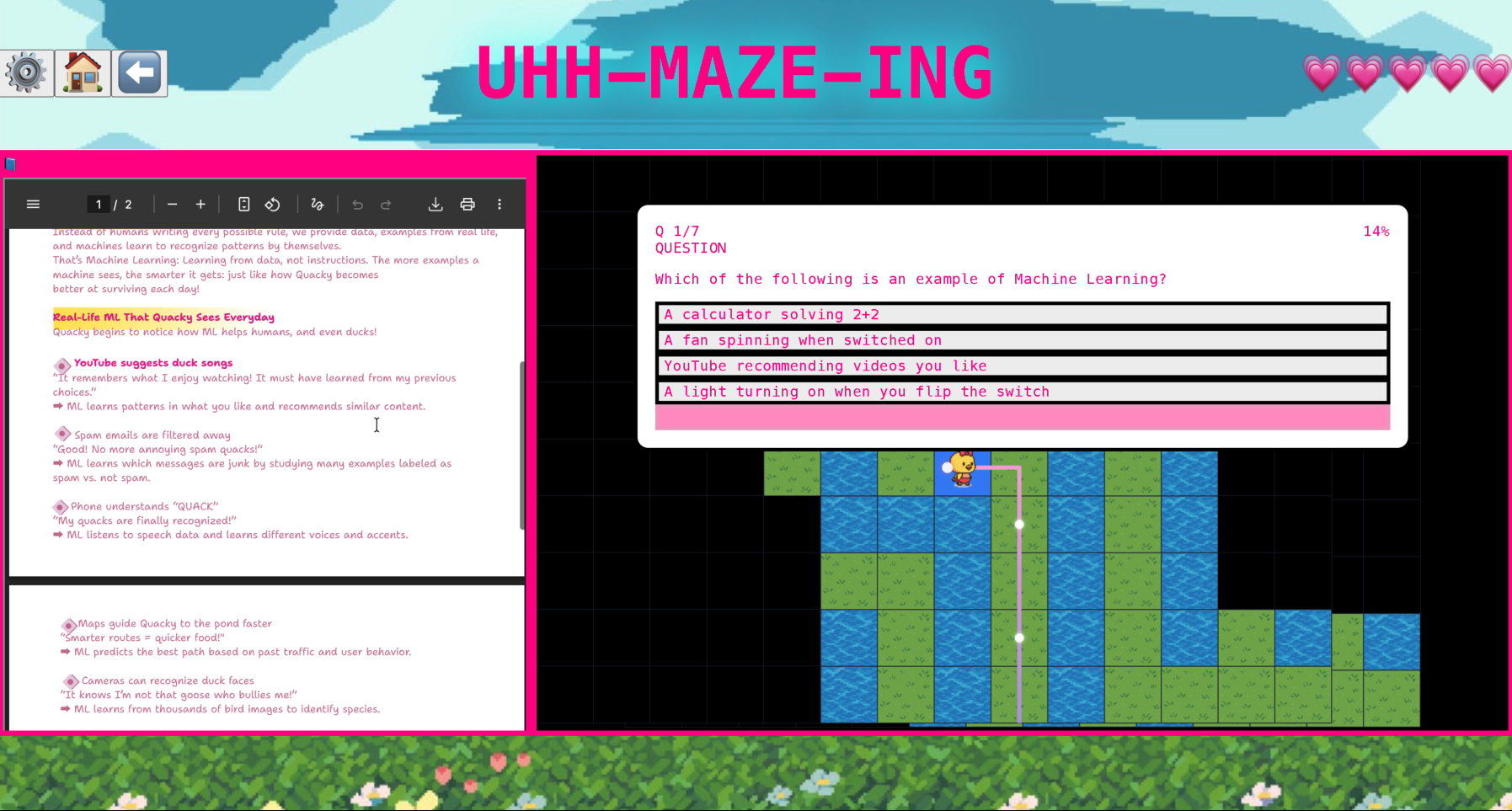
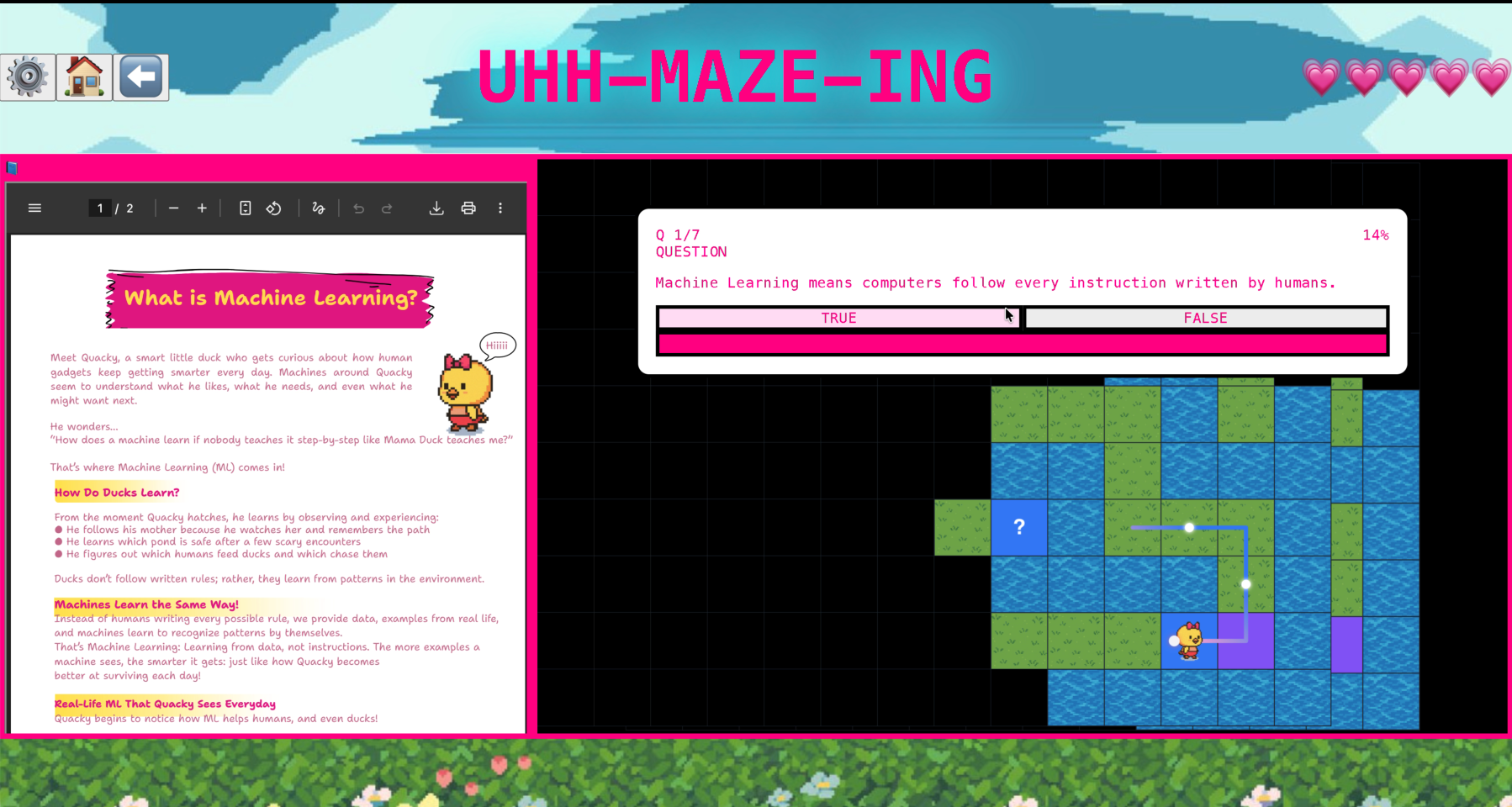
Question pop up
-
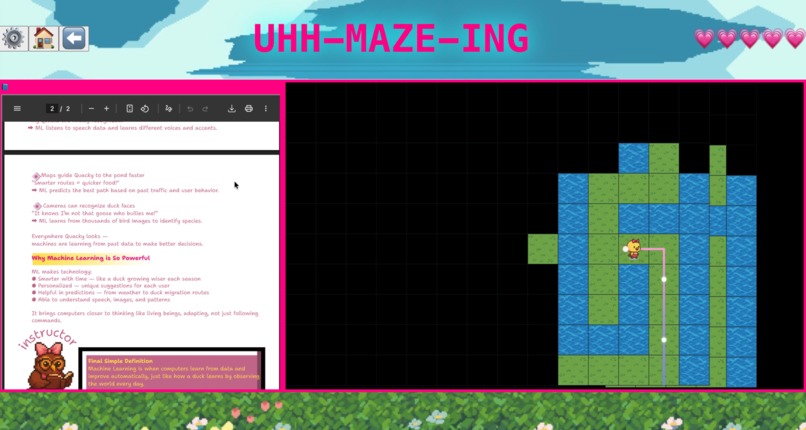
At the end
-
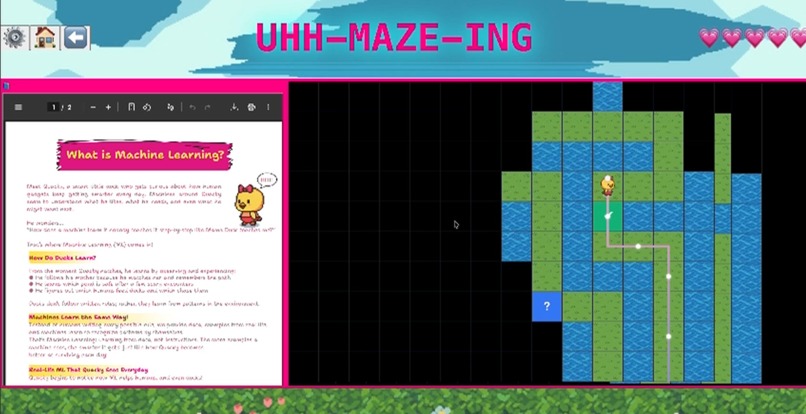
After a correct answer
-
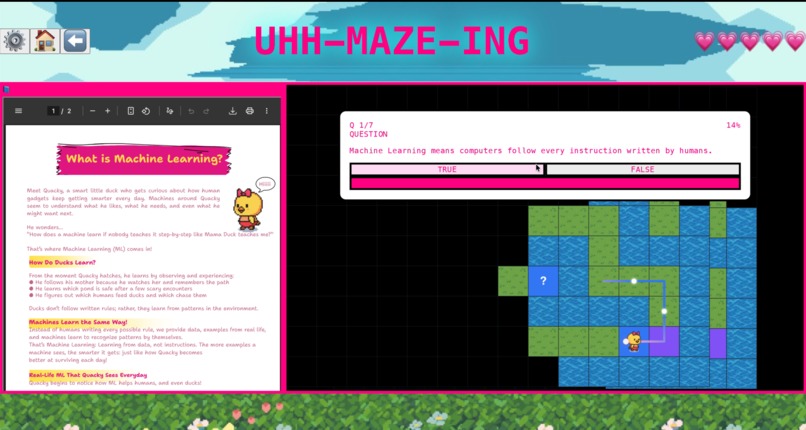
Choosing
-
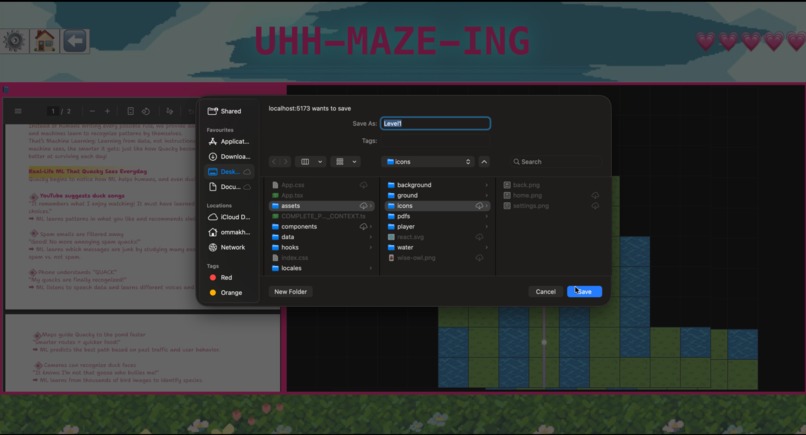
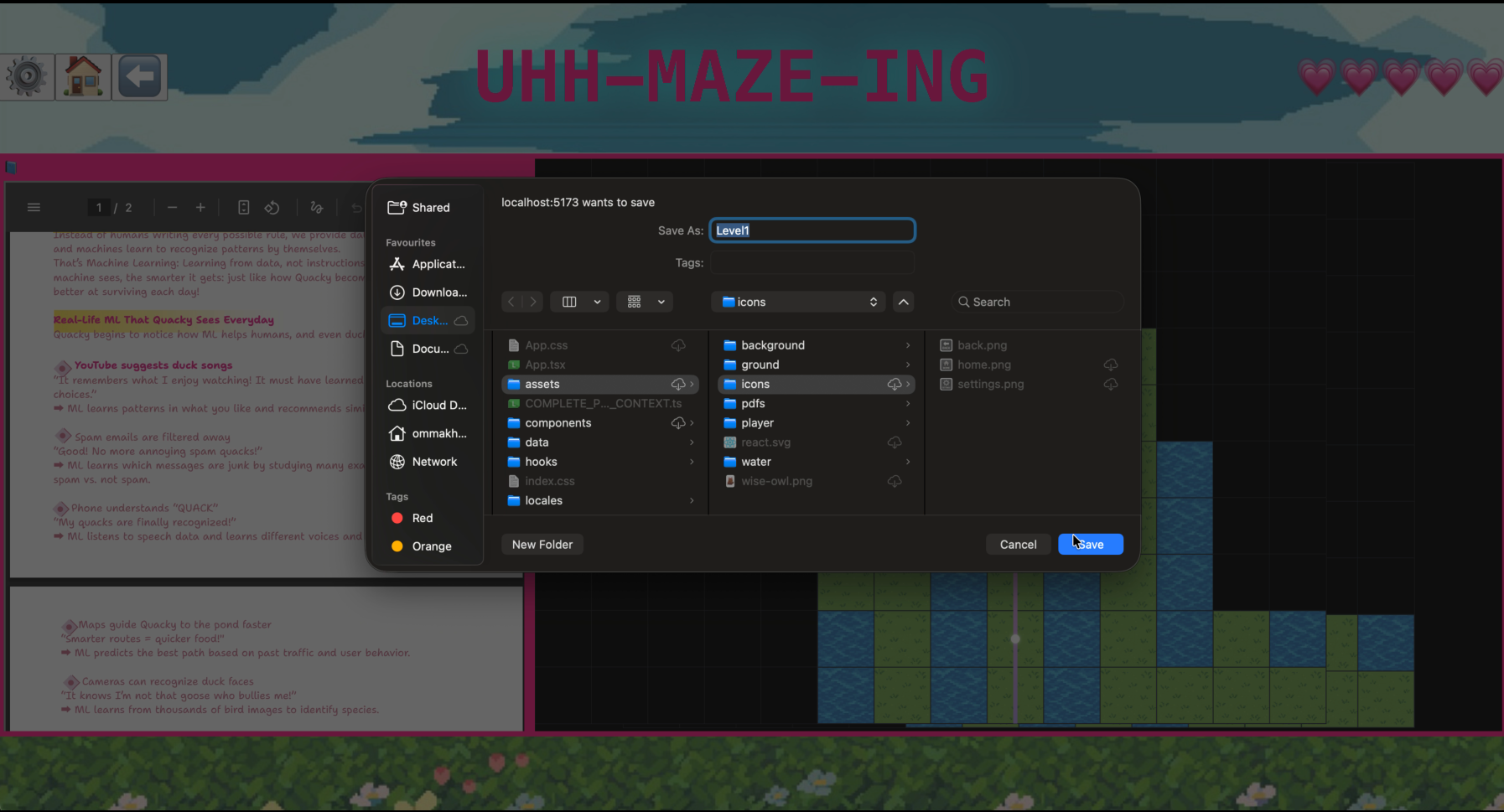
Saving notes
-
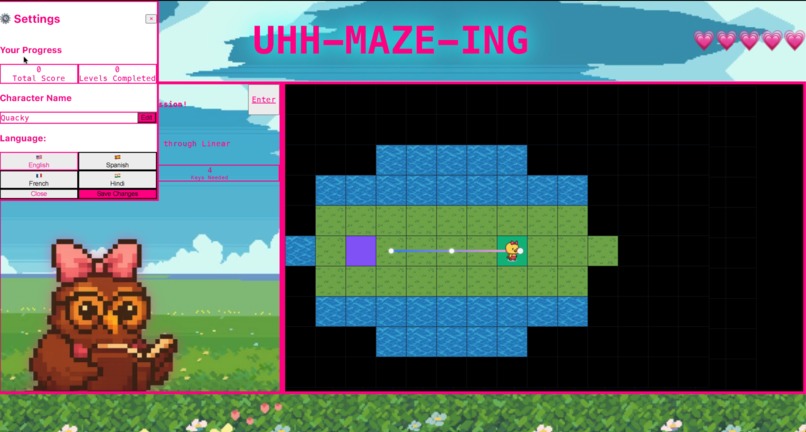
Settings to manipulate
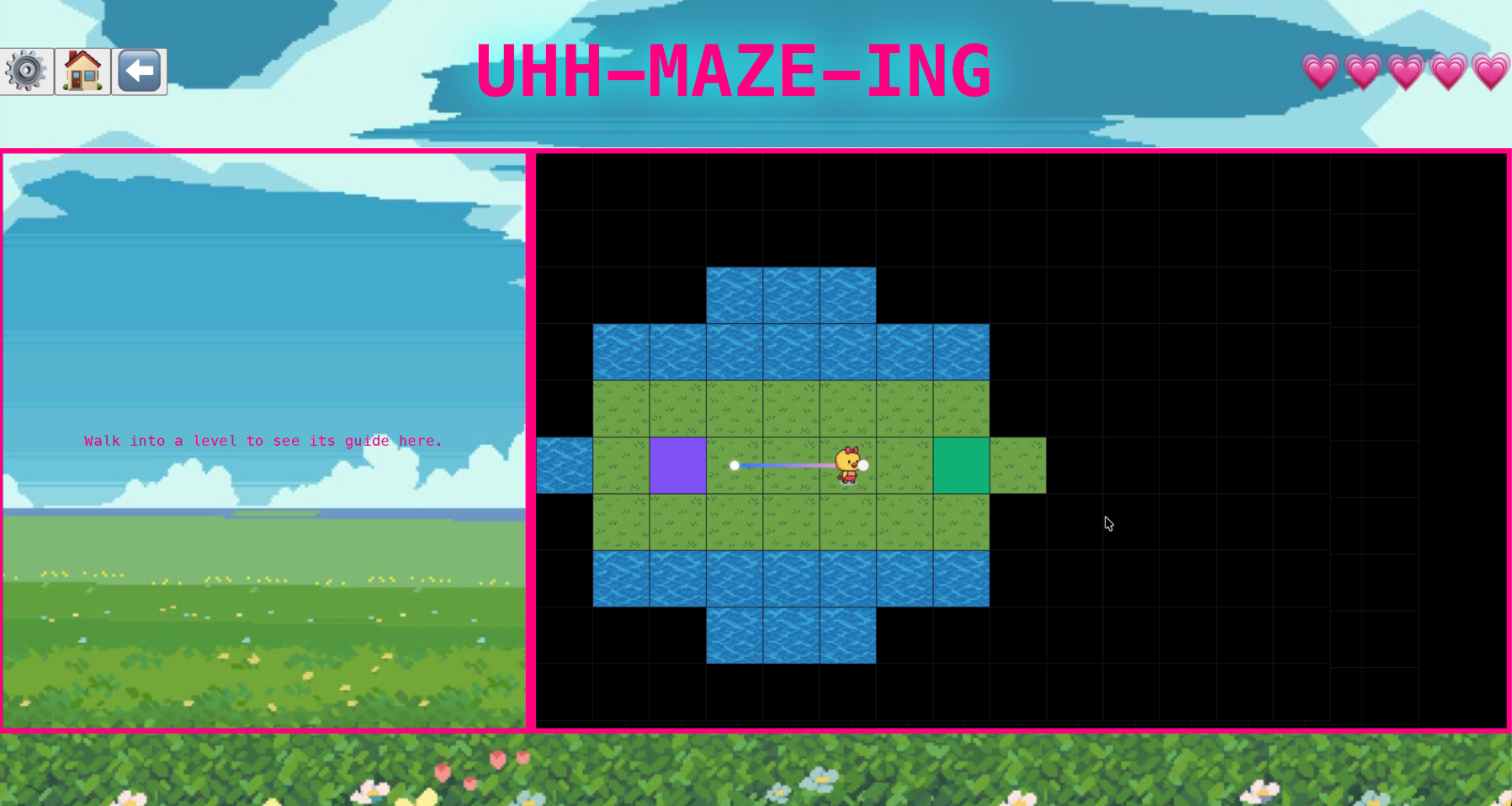
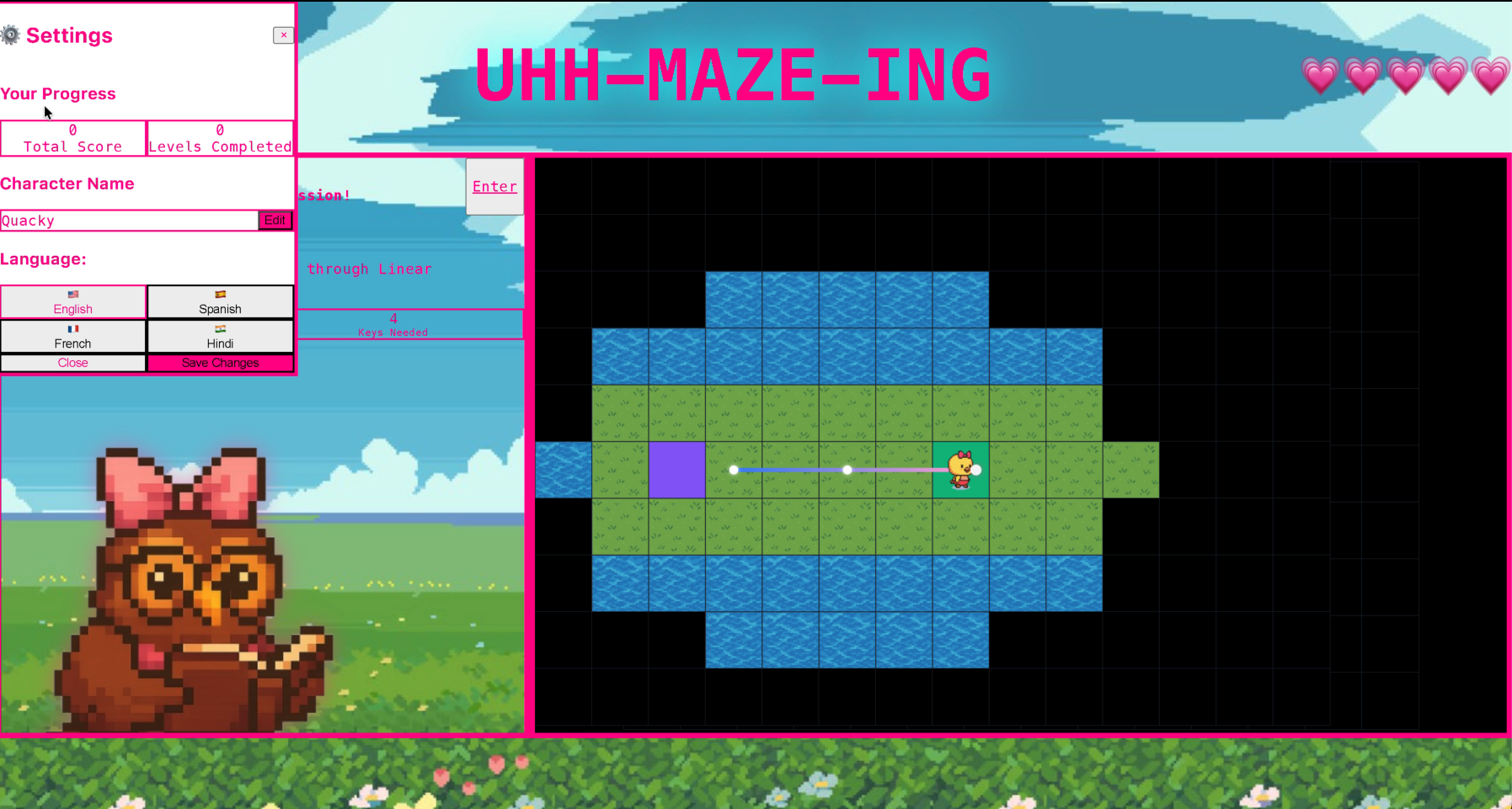
Inspiration
Let's be honest: learning Machine Learning can feel like trudging through a desert. Textbooks drone on, videos put you to sleep, and flashcards? They're about as exciting as watching paint dry. We've all been there, staring at equations, desperately trying to remember what gradient descent actually means beyond the Greek letters. But here's the thing: we remember every puzzle from The Legend of Zelda and every level from Portal. Games stick with us because they make us do things, feel things, and solve things. So we asked ourselves a simple question: what if we could make learning ML feel less like homework and more like an adventure? That's how UHH-MAZE-ING was born, a game where you don't just read about Machine Learning concepts; you literally walk through them.
What it does
UHH-MAZE-ING transforms ML concepts into a living, breathing 3D maze. Instead of memorizing definitions, you explore corridors that represent different topics:
Introduction to ML: Follow the glowing blue path as you trace the line of best fit
Working with Data: Navigate purple-lit corridors that mirror data preprocessing pipelines and feature extraction
Supervised Learning Basics: Journey through checkpoints that represent decision boundaries and labeled training examples
Unsupervised Learning Basics: Explore branching paths where clusters form organically, revealing patterns without guidance
Environmental Impact of ML: Traverse energy-lit zones where each computational step illuminates the carbon cost of training models
As you explore, you encounter quiz combat zones, not the boring multiple-choice kind, but dynamic challenges where getting it wrong costs you a life, but also teaches you why. Each correct answer unlocks a key; each mistake becomes a lesson.The magic happens when gameplay mirrors actual ML concepts. Instead of staring at that equation, you walk it. Each step down a corridor represents an iteration, each turn represents adjusting parameters. You're not memorizing, you're experiencing.
How we built it
We knew we needed it to feel smooth, look good, and actually teach something. Here's what we used:
Frontend: React plus TypeScript powers the 2D visuals and keeps everything interactive without lag
Backend: Node.js handles all the behind-the-scenes work, tracking progress, serving up quizzes, calculating scores in real-time
The Secret Sauce: Google Gemini AI generates fresh quiz questions every single playthrough. No two games are ever identical
Game Design: We built procedurally generated mazes with fog-of-war (because mystery keeps things interesting) and dynamic checkpoints that adapt to how you're doing
Progress Tracking: Everything you do gets tracked and analyzed, so the game learns from you as you learn from it
We threw in animations and sound effects too, not because we're trying to be the next AAA title, but because those little touches make learning feel less like a chore and more like an experience.
Challenges we ran into
Finding the Balance: Our first version? Way too much game, not enough learning. Players had fun but couldn't tell you what logistic regression was. The second version? So educational it felt like detention. It took us way too many iterations to find that sweet spot where fun and learning actually coexist.
Maze Logic: Turns out, randomly generating mazes is easy. Generating mazes that are solvable, fair, and actually teach something? That's hard. We had to write custom algorithms to make sure paths aligned with ML concepts and didn't accidentally create impossible dead ends.
AI Question Generation: Getting Google Gemini to generate questions was cool. Getting it to generate good questions consistently was painful. We spent hours handling edge cases, questions that were too vague, too hard, or occasionally just... weird.
Performance: Rendering environments in a browser while juggling live AI requests and real-time tracking is like trying to juggle while running a marathon. We had to get creative with memory management and optimization to keep things smooth.
Accomplishments that we're proud of
We're genuinely proud that we created something where people can actually walk through Machine Learning concepts and remember them. The procedural generation means every playthrough feels fresh. We successfully gamified education without making it feel gimmicky, the fog-of-war, keys, and checkpoints all serve the learning objectives, not just the fun factor. Getting the full stack working together, frontend, backend, AI, game mechanics, without it falling apart felt like a small miracle. But the best part? We remembered the concepts better and, more importantly, didn't hate the learning process. That's a win in our book.
What we learned
Gamification isn't just a buzzword, it genuinely helps people remember abstract stuff better. Procedural generation is amazing but needs guardrails, or you end up with chaos. Real-time AI is powerful but temperamental; you need backup plans for when it inevitably does something unexpected. Most importantly, we learned that balancing what users want, what they need to learn, and what's actually possible to build is an art form. You can't nail it perfectly, but getting close enough is what matters.
What's next for UHH-MAZE-ING
We're not done. Not even close. More Topics: We want to add CNNs, Reinforcement Learning, Transformers, the whole ML curriculum, gamified.
Smarter Mazes: Imagine mazes that actually learn from how you play and adjust difficulty in real-time based on your strengths and weaknesses.
Go Mobile: iOS and Android versions with offline support, so you can learn ML concepts on the subway (or, let's be real, while procrastinating).
Community Features: Leaderboards, collaborative challenges, maybe even player-vs-player quiz battles. Learning doesn't have to be lonely.
VR Experience: Picture this, physically walking through neural networks, reaching out to touch activation functions, seeing gradient descent from inside the optimization space. That's the dream.
UHH-MAZE-ING started as a frustration with boring learning methods. It's becoming proof that education doesn't have to feel like punishment, it can feel like play.
Built With
- css
- css-animations
- git
- google-gemini-ai
- javascript
- python
- react.js
- three.js
- typescript
- vercel





Log in or sign up for Devpost to join the conversation.