-
-
Software roadmap
-
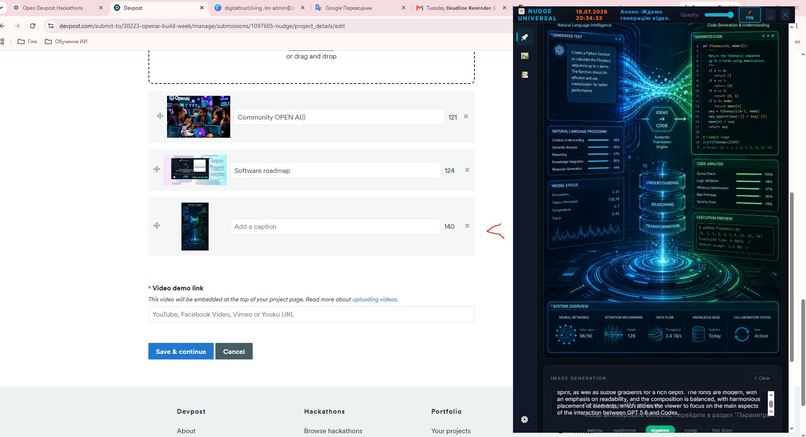
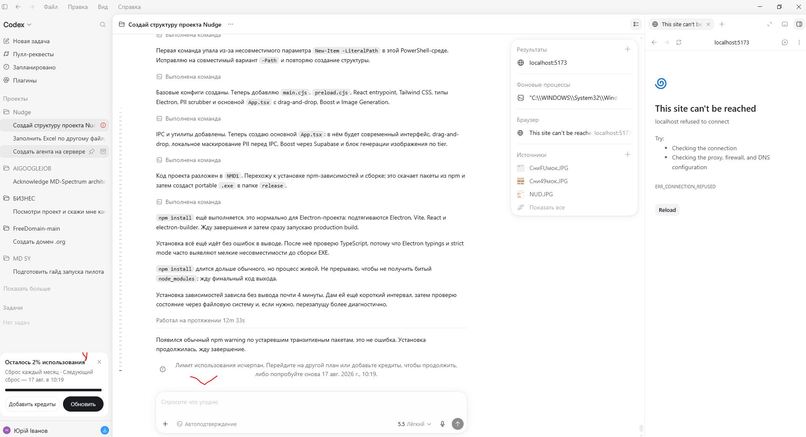
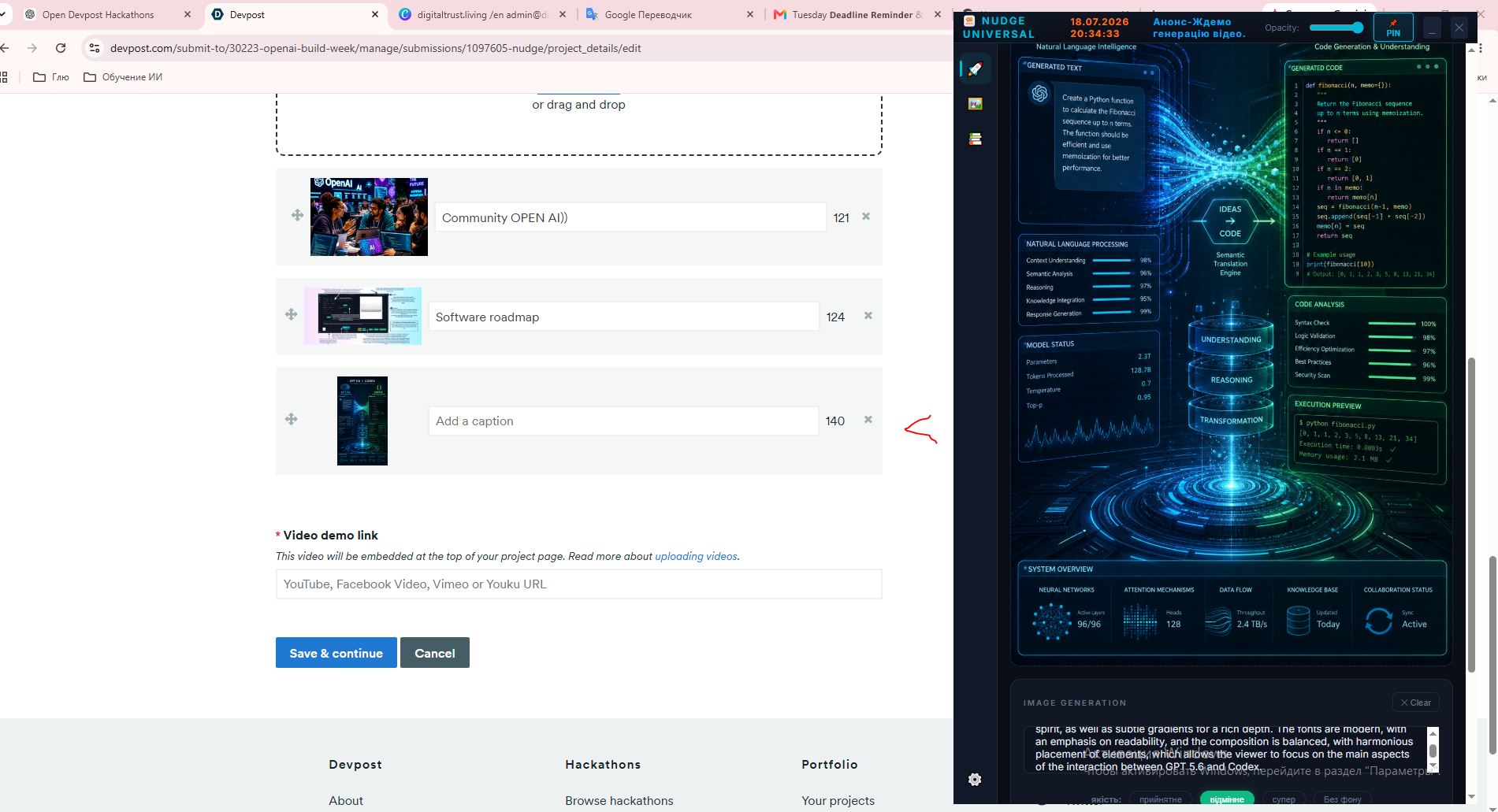
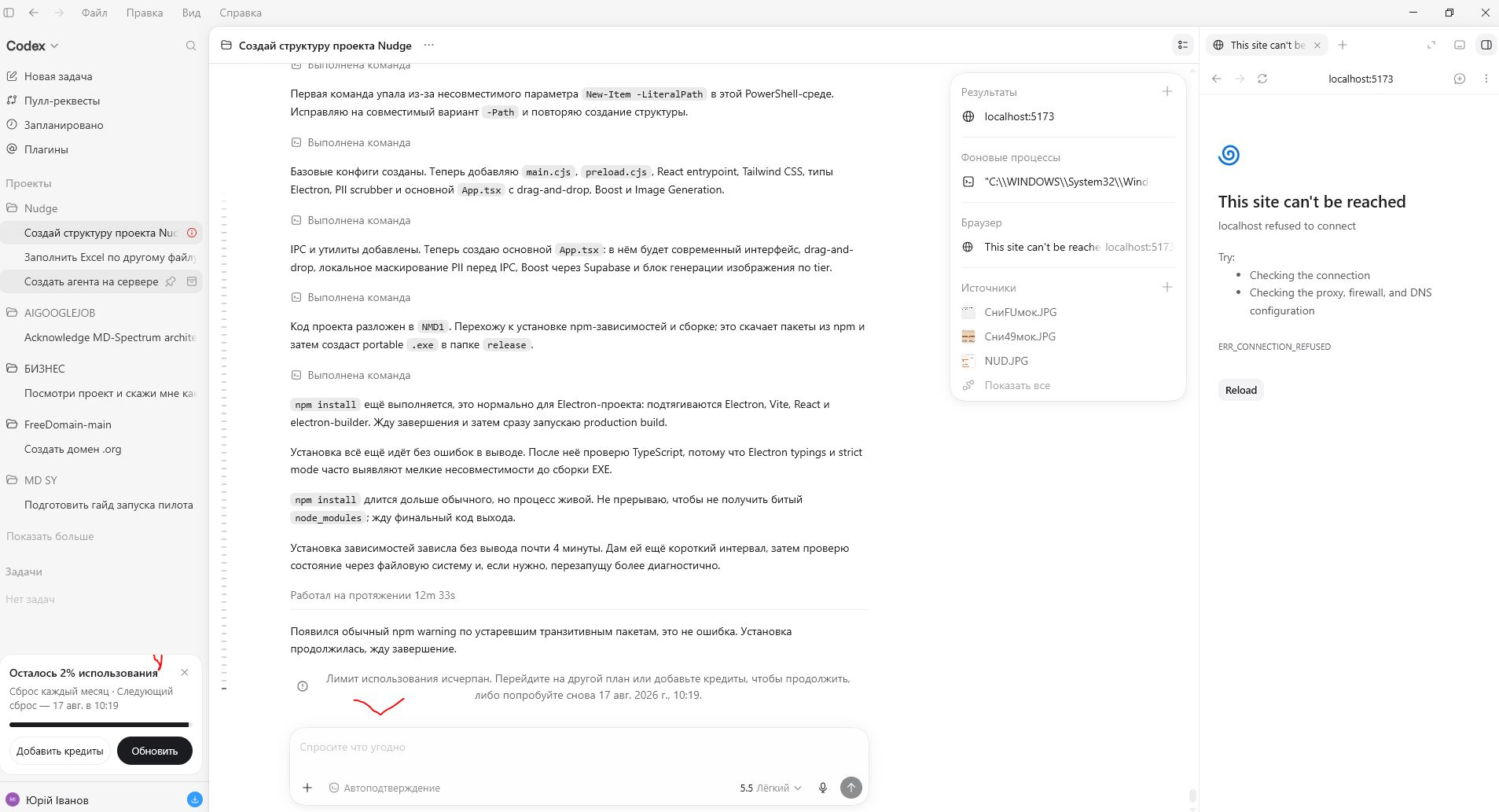
See an illustration showing how GPT 5.6 interacts with Codex. Immediately dragging into shape!
-
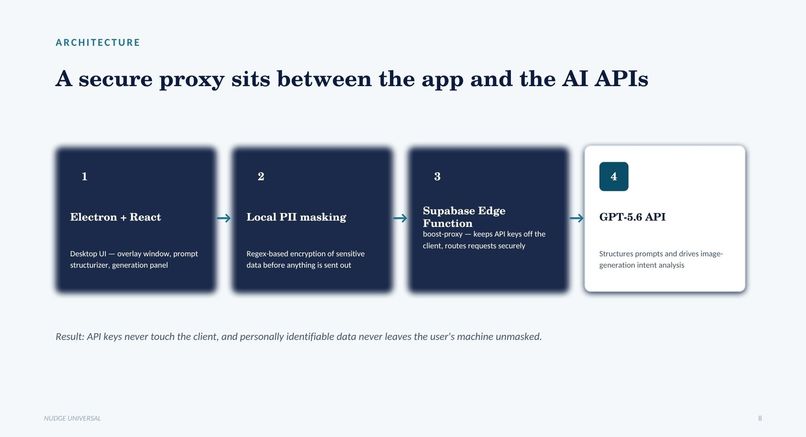
encryption of personal data
-
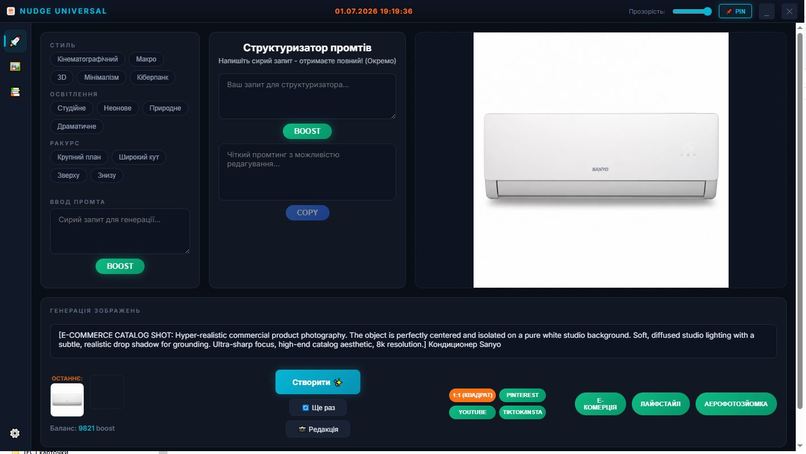
e-commerce
-
creation and media
-
))
-

from a YouTube video
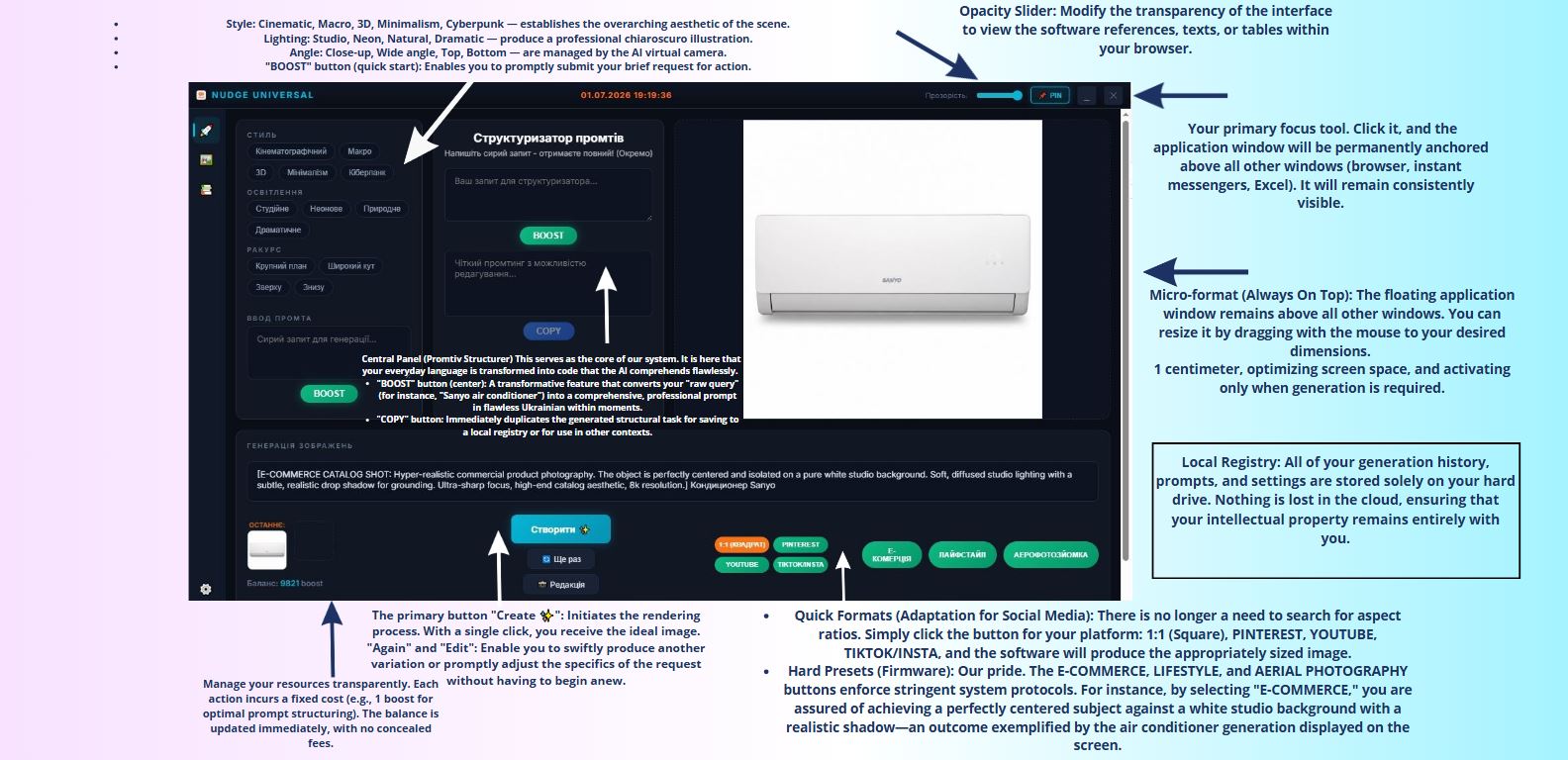
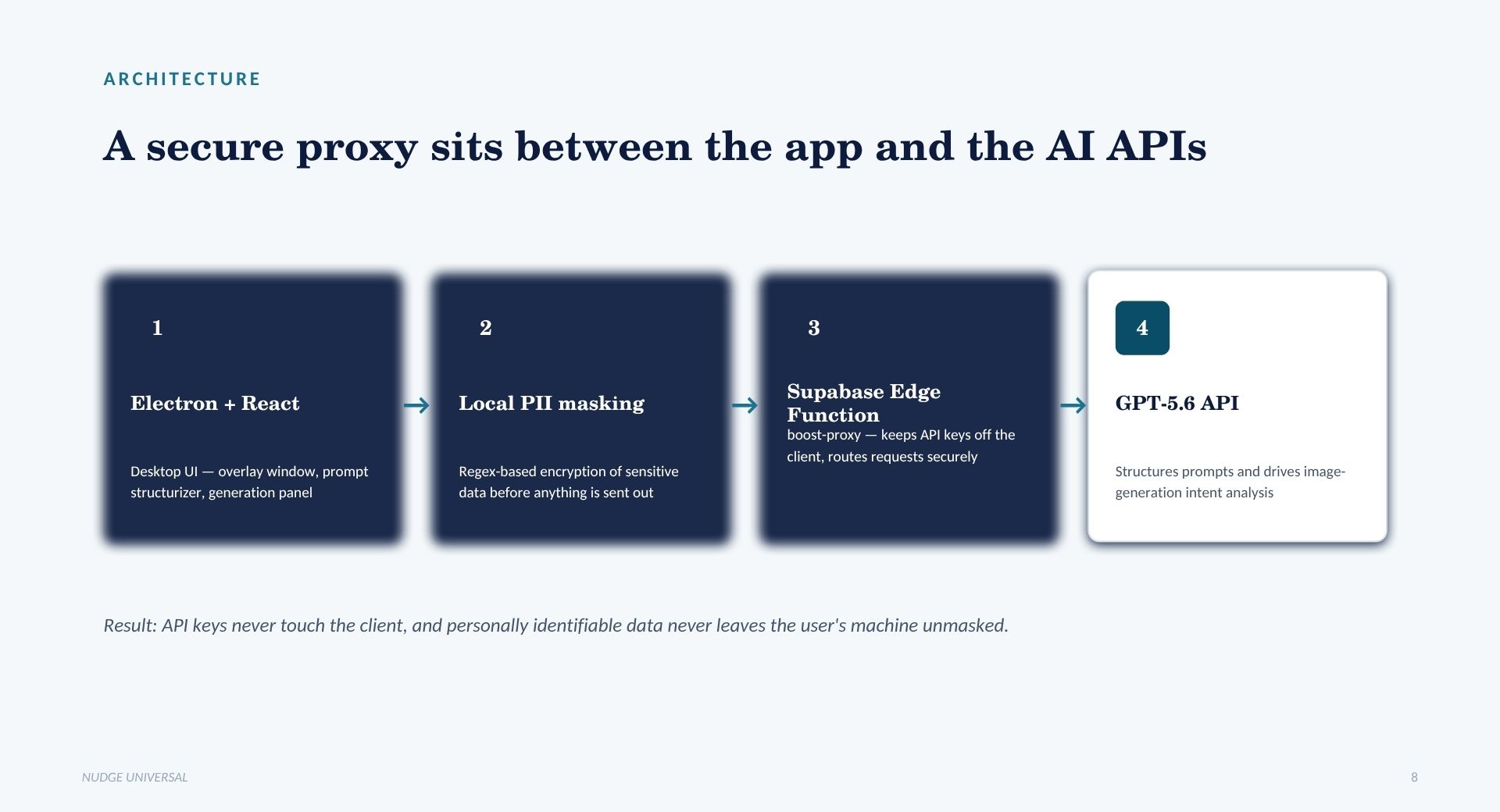
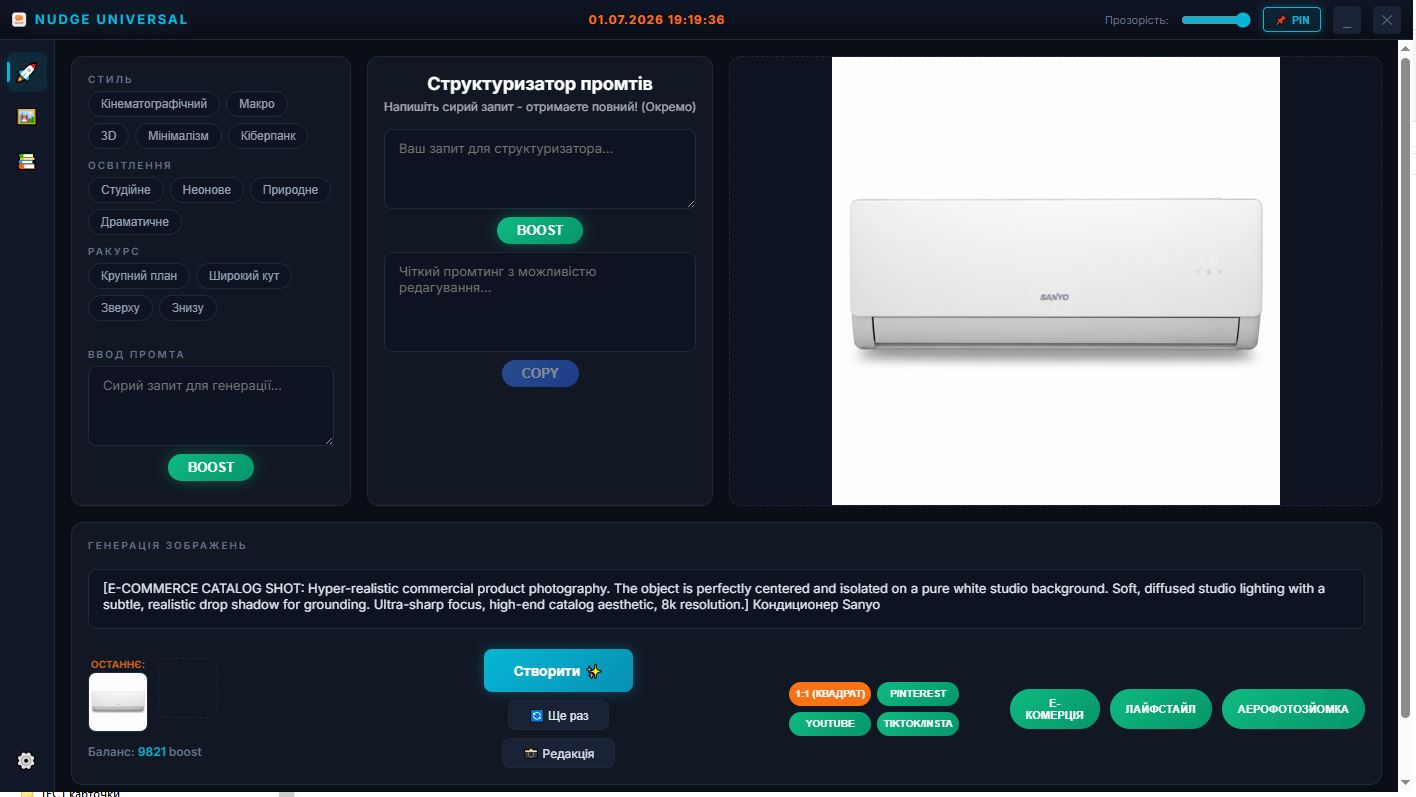
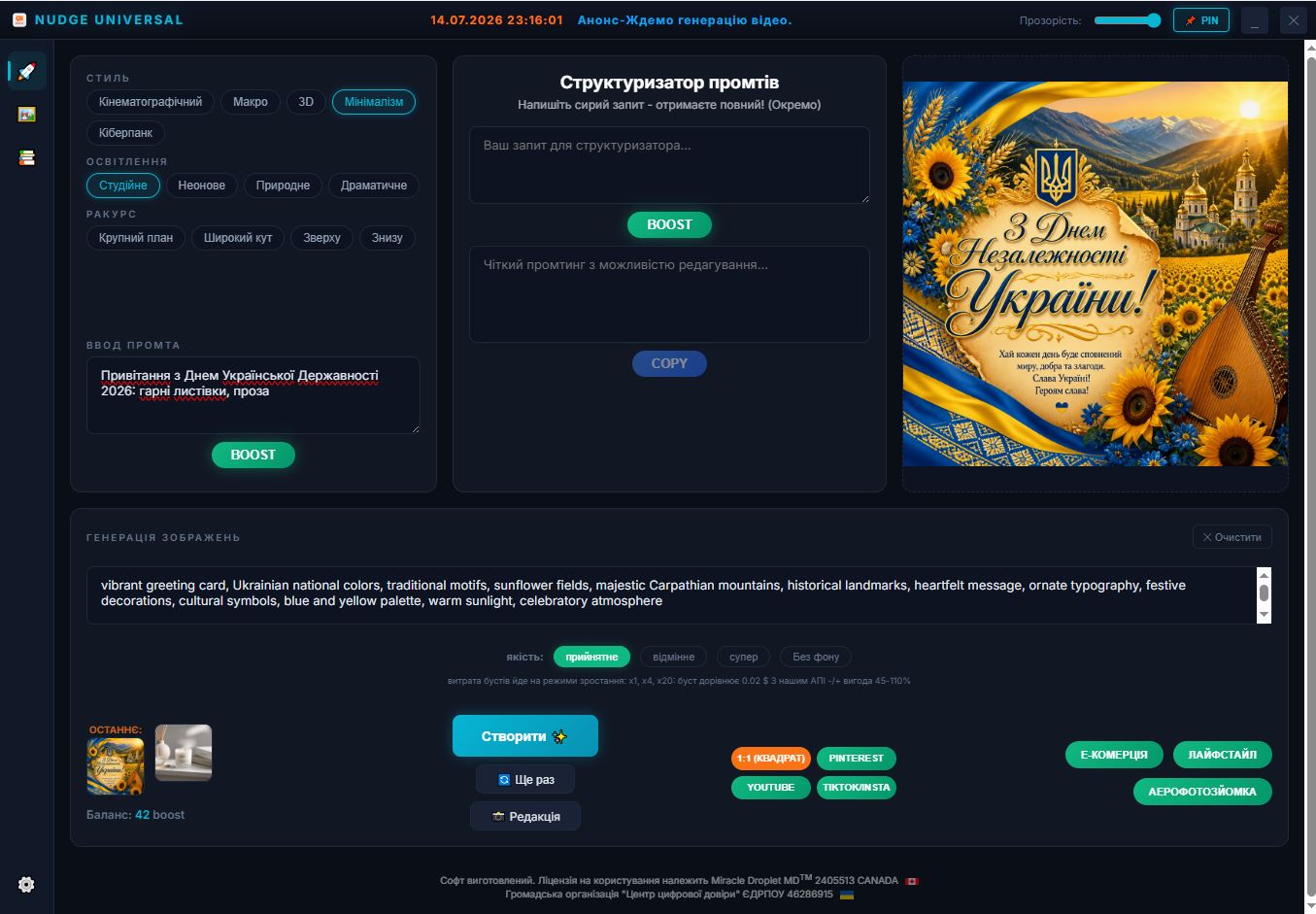

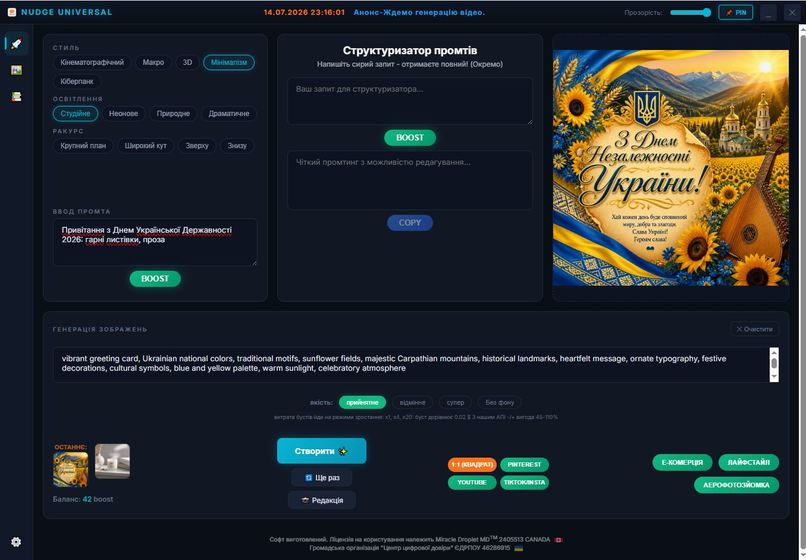
An illustration of "context switching." Every day, knowledge workers, e-commerce managers, and administrative staff spend hours switching between browser tabs, CRM systems, and AI interfaces.
The Ukrainian NGO Center for Digital Trust has developed an intelligent, always-on-top browser overlay.
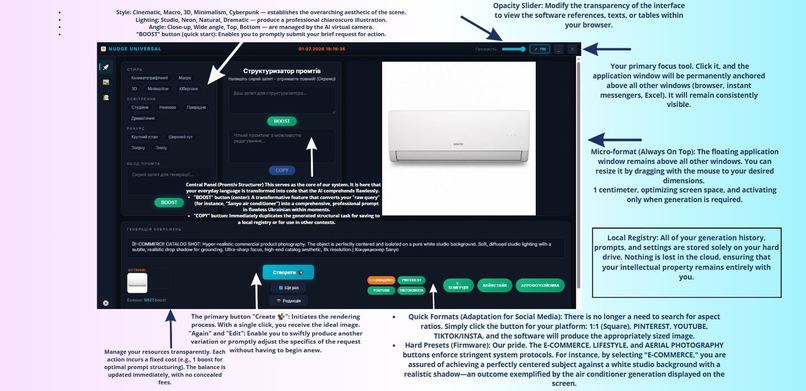
Nudge eliminates this friction by providing AI assistance directly to the cursor. Eliminates tab switching while working! Nudge was born out of the need to unify the workflow: No switching: drag and drop content directly into the overlay form on a website, store, etc. Privacy-first: secure local sanitization of personal data before the data reaches the API. Universal utility: a tool that isn't tied to a single niche, but adapts to legal, e-commerce, psychology, and public administration. Technical implementation and role of Codex. Nudge is built as a model-agnostic desktop application architecture. We used the OpenAI Codex as our development framework to design the secure gateway logic. Performance Mathematics. We consider Nudge's workflow efficiency by reducing "cognitive load." If $T_{total}$ is the task execution time and $S$ is the number of switches between applications, then:$$T_{total} = \sum_{i=1}^{n} (t_{task, i} + t_{switch, i})$$By using an overlay architecture, we aim to make $t_{switch} \to 0$, effectively optimizing the workflow to the limit of human input speed. Integration Pipeline We designed Nudge to handle multimodal input. The workflow follows the following logic: Input: Drag and drop text/images onto the overlay layer. Sanitization: A local privacy sanitization engine filters sensitive data based on specified parameters: $$\text{Data}{clean} = f(\text{Data}{raw}) \setminus {PII_{entities}}$$ Orchestration: The request is routed through Nudge Gateway to an optimal model (e.g., GPT-5.5, GPT-5.6 Sol for highly inferential tasks, or Terra for speed). Challenges: System Integration: Creating a cross-application overlay that does not interfere with OS-level window management was a significant engineering challenge. We had to manage asynchronous event handlers to ensure the overlay remains responsive regardless of the active host application. Security vs. Usability: Implementing a privacy sanitization layer fast enough to avoid perceptible lag required optimizations to local regular expression processing and token parsing. Universal Scalability: Developing a suggestion structure engine that works equally well for legal documents, e-commerce product descriptions, and government registry data required a flexible, modular architecture for implementing suggestions. Learning Outcomes:
Throughout this development, we strengthened our belief that the future of AI is not chat, but an integrated user interface layer.
We learned that: UX is a bottleneck: the best model is useless if it requires user distraction.
Local cloud access is a must: for enterprise and government use, local data cleansing is not just a feature, but a requirement. Nudge is now a universal framework—a layer above the noise, ready to be customized for any sector requiring accuracy, speed, and privacy.
Built With
- api-gateway
- cloud-native
- codex
- cross-platform
- cryptography
- data-privacy
- desktop-app
- electron
- enterprise-ai
- gpt-5.6-sol
- gpt-5.6-terra
- json
- llm
- local-first
- machine-learning
- openai-api
- overlay-architecture
- pii-scrubbing
- productivity
- prompt-engineering
- python
- saas
- ui/ux
- workflow-automation


Log in or sign up for Devpost to join the conversation.