-
-
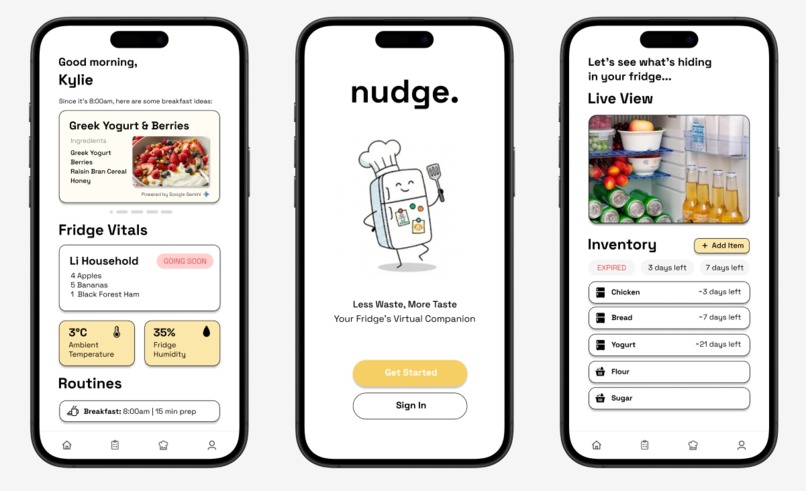
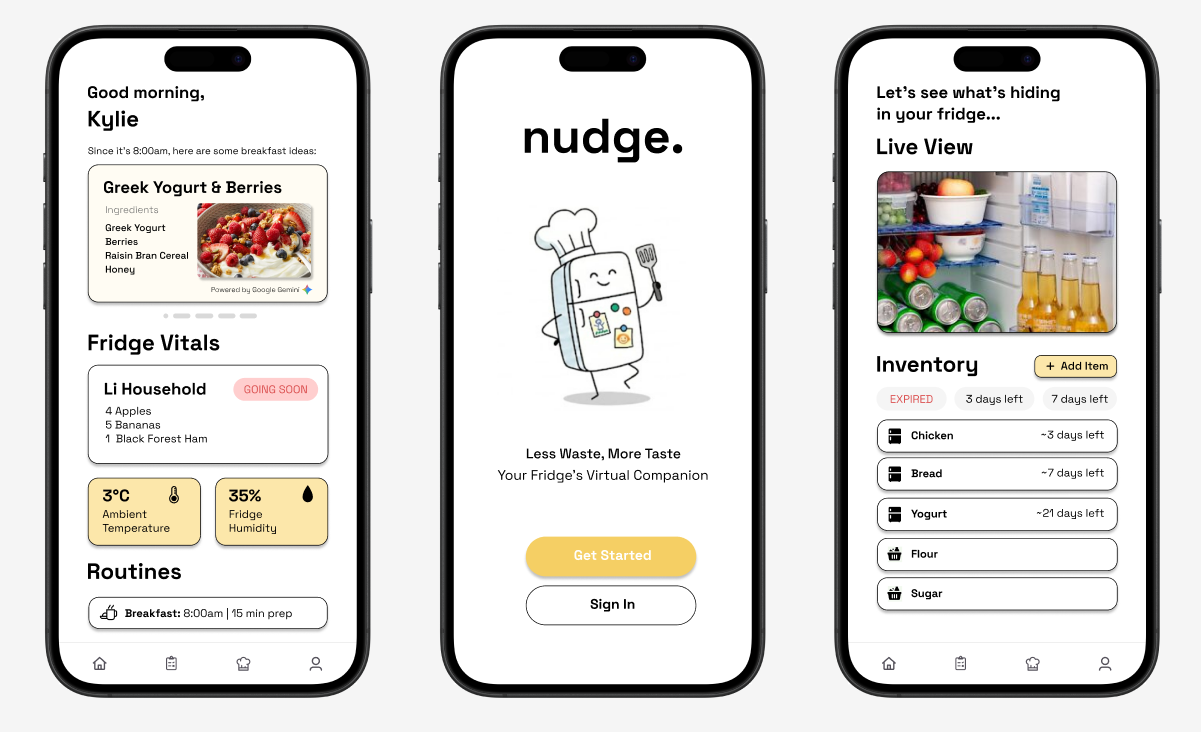
nudge. user interface
-
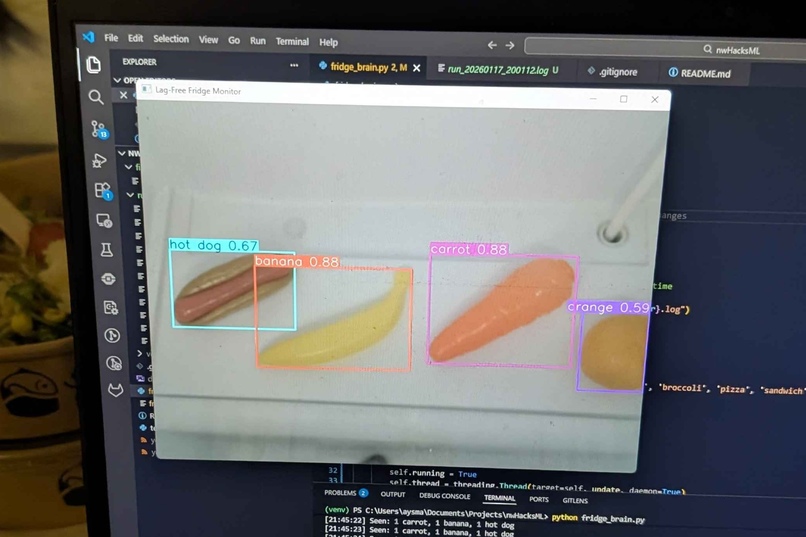
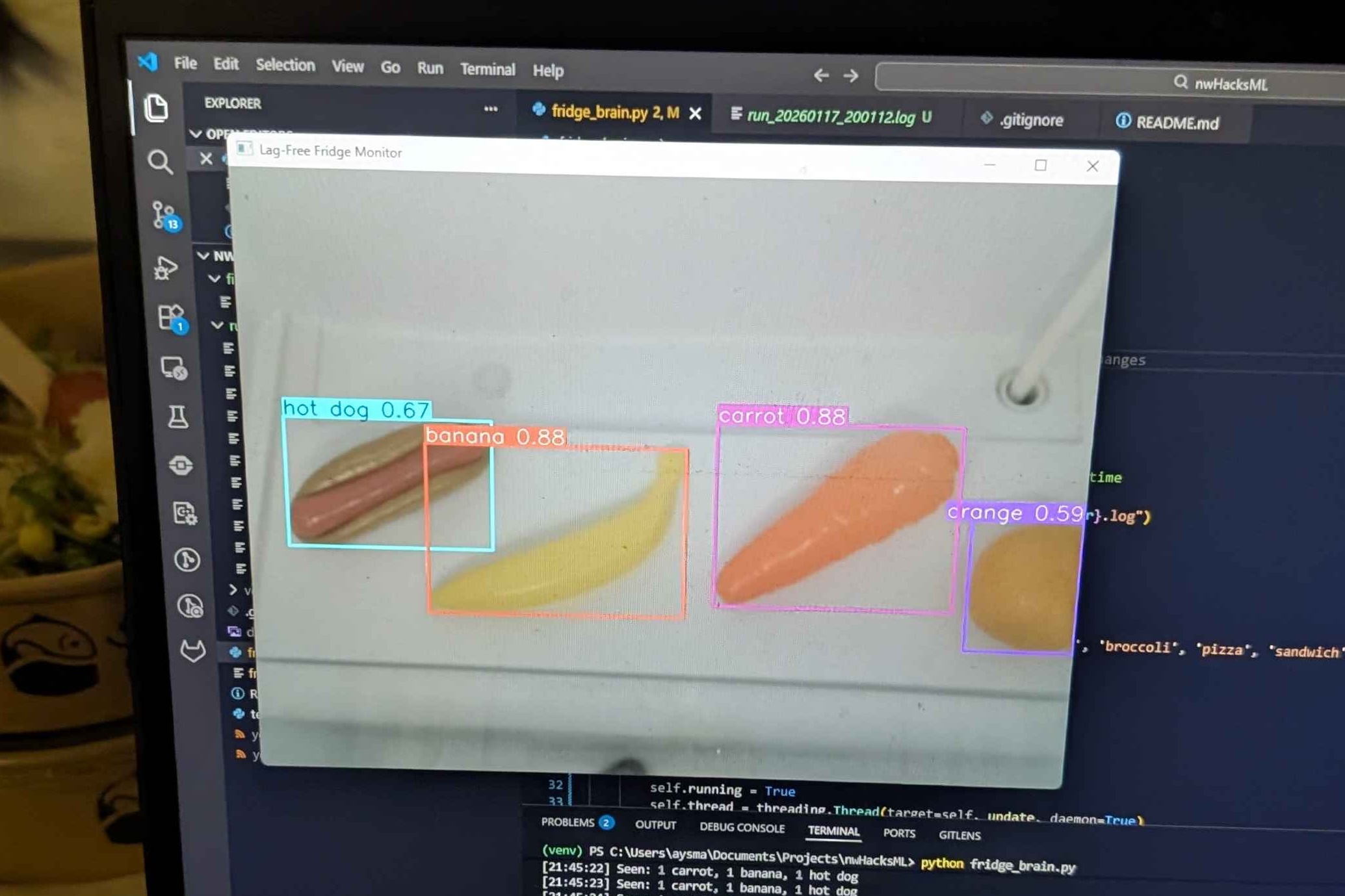
image recognition model
Inspiration
Food waste is a massive problem with over 50 million tonnes of food waste produced every year in Canada alone. 60% of it is avoidable with better planning and awareness, and a majority happens at the household level where food is forgotten, spoiled, or unused.
We were inspired by a simple question: What if your fridge could nudge you to use what you already have? nudge. was born from the idea that a simple reminder can lead to more sustainable everyday habits.
What it does
nudge is an AI-enabled smart fridge system that helps reduce household food waste by turning your fridge into an intelligent assistant.
A camera mounted inside the fridge continuously scans its contents and sends images to a backend server. Using computer vision and AI, nudge:
- Identifies ingredients inside the fridge
- Estimates food freshness and ripeness over time
- Tracks what’s available before it goes bad
- Generates personalized recipes based on ingredient availability and user preferences
How we built it
Hardware
- ESP32 + ESP32-CAM mounted inside the fridge
- Powered by a battery / power bank for flexibility
- Grove temperature sensor to monitor fridge conditions
- Arduino setup with Grove connector shield
Backend
- Python & TypeScript for backend services
- MongoDB Atlas for storing ingredient data and history
- Gemini API for: Image recognition of fridge contents, AI-generated, personalized recipe creation, Computer vision pipeline processes images streamed from the fridge camera
Frontend
- React with Tailwind CSS and JavaScript
- Web app dashboard showing: Detected ingredients, Freshness estimates, Suggested recipes based on preferences and availability
Challenges we ran into
- Hardware reliability: Streaming images from inside a cold, enclosed fridge environment while maintaining stable power and connectivity
- Computer vision accuracy: Handling overlapping items, poor lighting, and partially obscured ingredients
- System integration: Coordinating hardware, backend processing, AI APIs, and frontend updates in real time
- Time constraints: Balancing ambitious hardware + AI goals within a hackathon timeframe
Accomplishments that we're proud of
- Building a fully integrated hardware + AI + web system
- Successfully streaming camera data from an ESP32-CAM to a backend server
- Using Gemini API for both image understanding and recipe generation
- Creating a solution grounded in real, impactful statistics about food waste
- Designing Nudge to be practical, scalable, and user-friendly—not just a demo
What we learned
- Hardware-software projects demand strong teamwork and clear division of responsibilities
- How to build components
- How to route pages
- How to use prototyping in Figma
What's next for nudge.
- Introduce expiry alerts and proactive “use-this-today” nudges
- Add user profiles with nutrition goals
- Add a Favourites section to bookmark recipes
- Improve ingredient recognition accuracy and freshness estimation
- Explore partnerships with non-profit organizations and restaurants for greater impact
Built With
- api
- arduino
- gemini
- javascript
- mongodb
- python
- react
- tailwind
- typescript
- wifi


Log in or sign up for Devpost to join the conversation.