-
-
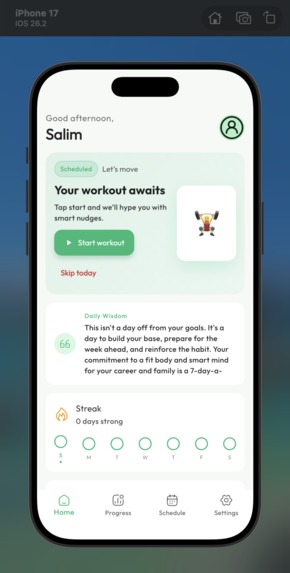
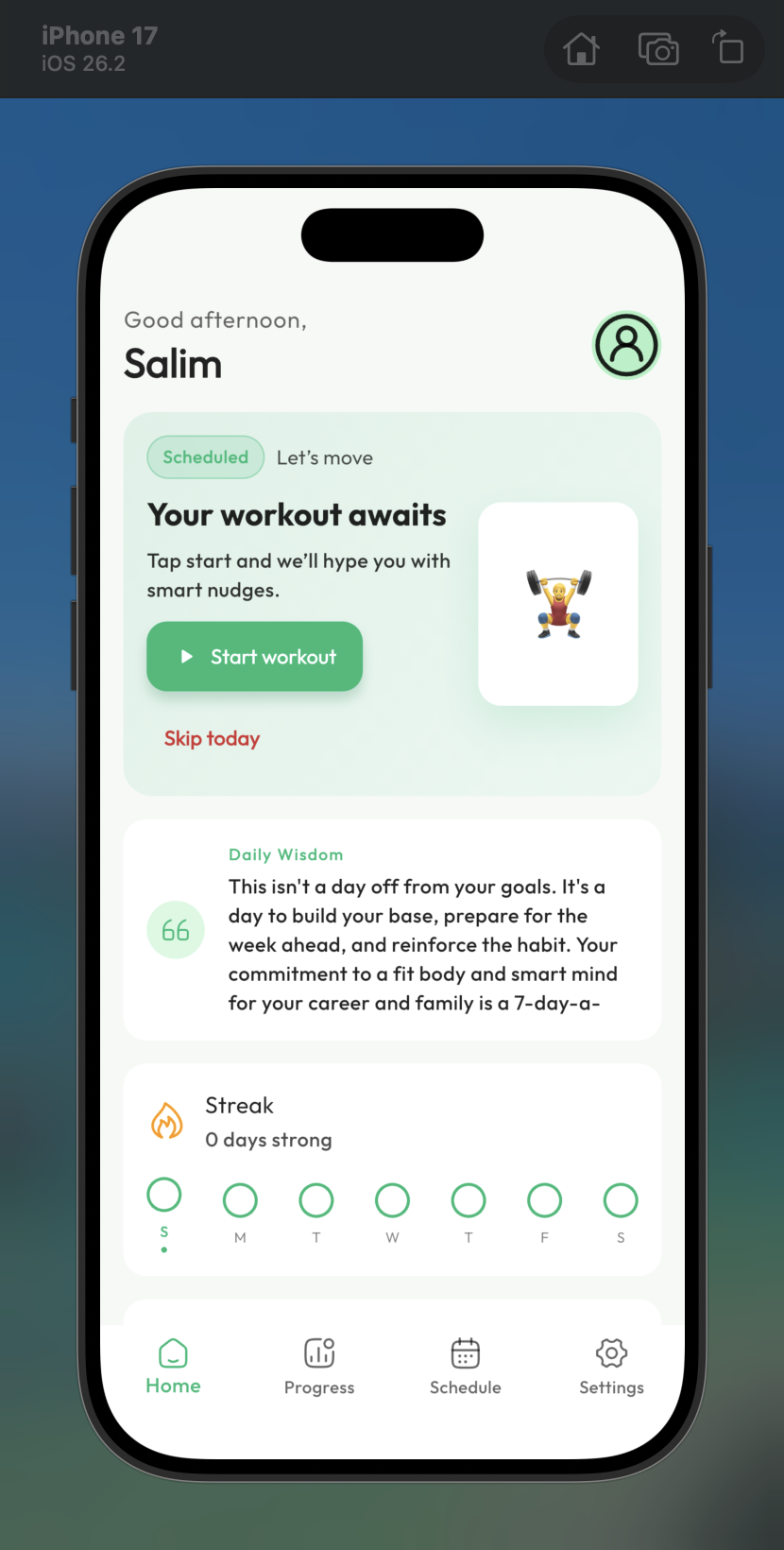
Your complete workout companion - track, schedule, and stay motivated
-
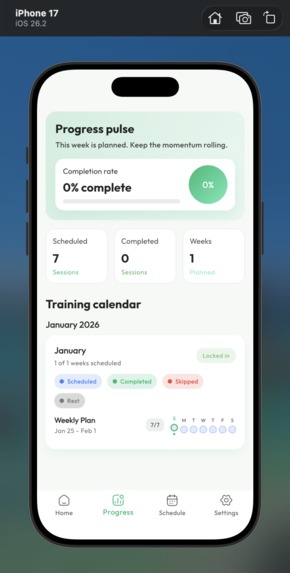
Track your progress with detailed insights and stay on target with your goals
-
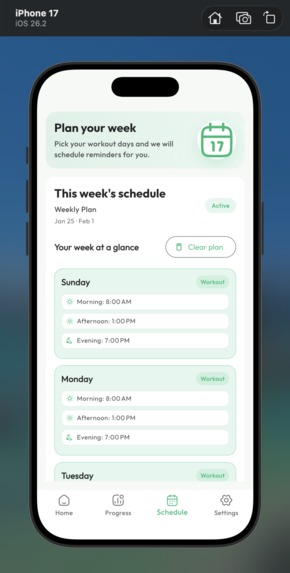
Never miss a workout with intelligent scheduling and timely notifications
Nudge Fit — Project Story
Inspiration
I built Nudge Fit to solve a personal problem: I already knew why I wanted to work out, but I kept losing that motivation at the exact moment I needed it. Planning wasn’t the issue—remembering my reasons was.
So I built an app that acts like a workout butler: it remembers my motivations and gently (sometimes persistently) brings them back until I start my workout or intentionally skip the day.
What it does
Nudge Fit helps users stay consistent without guilt:
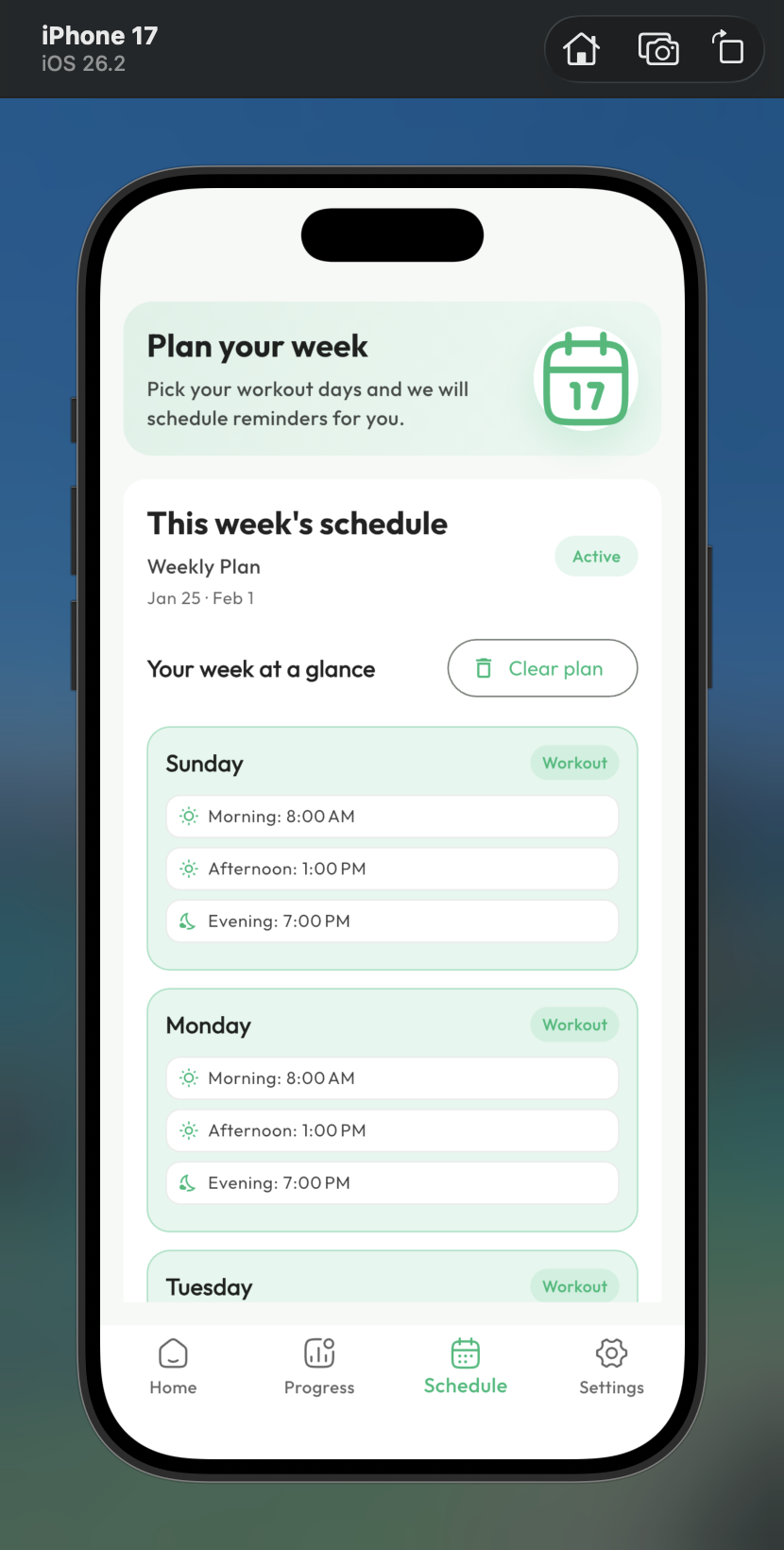
- Choose workout days for the week.
- Define motivations, goals, fitness level, and a preferred coaching tone.
- Receive personalized AI nudges (morning/afternoon/evening) on workout days.
- Tap Start workout or Skip today—both are deliberate choices.
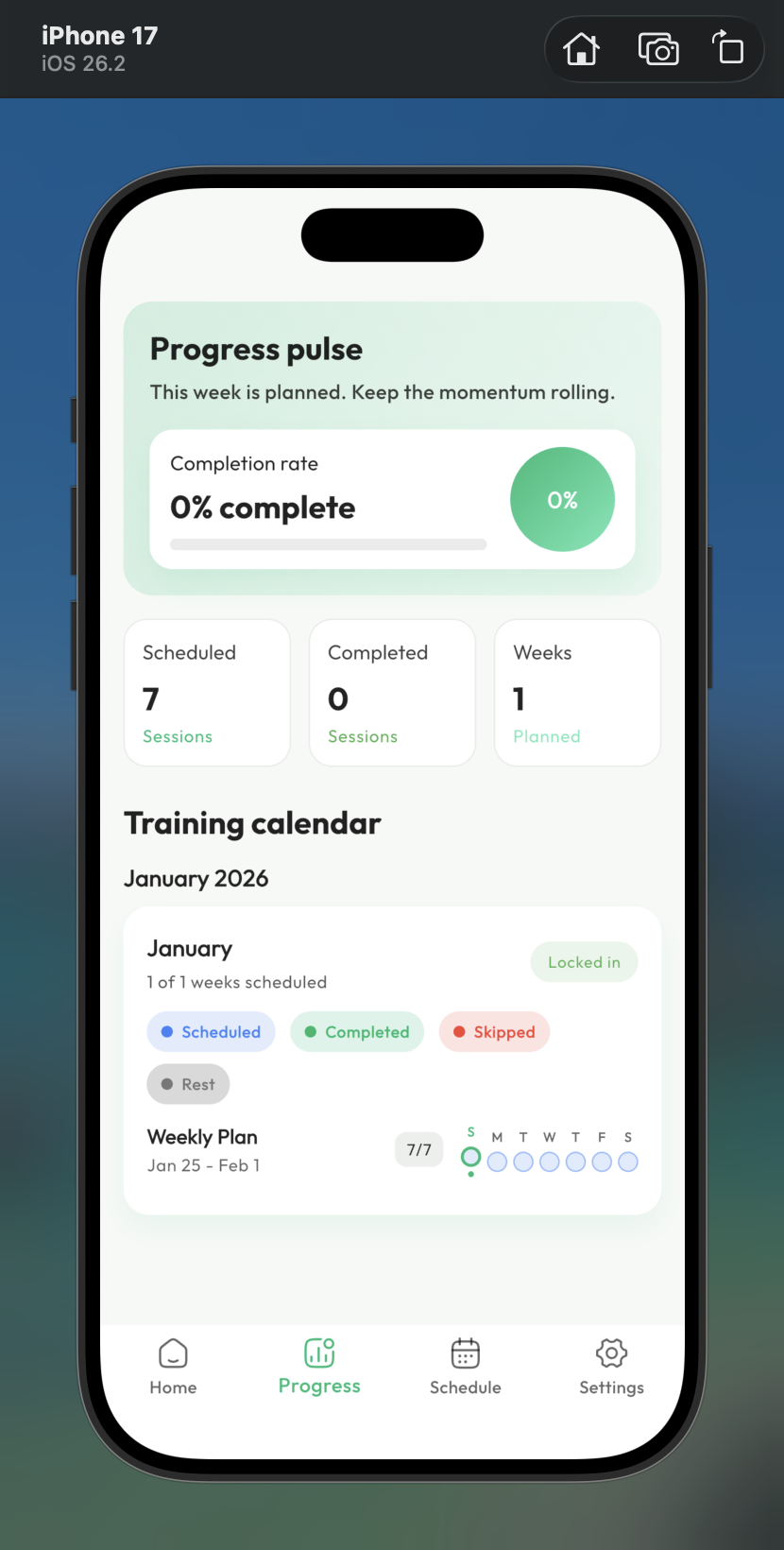
- Track progress and a streak based on completed workout days.
Instead of generic reminders, nudges are tailored to the user’s own motivations and goals. The app reframes the same goal in fresh, human ways so it feels relevant day after day.
How I built it
Frontend (Flutter)
- Flutter handles UI, schedule selection, and day status changes (pending/performed/skipped).
- Local notifications are scheduled on-device using
flutter_local_notifications, with timezone handling for accuracy. - A streak card and progress views visualize consistency and weekly momentum.
Backend (Serverpod)
- Serverpod stores profiles (motivation, goals, coaching tone, fitness level), week schedules, day schedules, and notifications.
- It generates AI notification copy using Gemini 2.5 Flash, anchored to each user’s profile data.
- The server returns tailored notification text while the device schedules delivery locally.
Data model highlights
- Weekly schedules include a deadline and a list of day schedules.
- Each workout day gets three notifications (morning/afternoon/evening).
- Progress is tracked per week and aggregated into a streak count.
Challenges I ran into
- Learning Serverpod quickly. Coming from Rails and Supabase, the Serverpod mental model took time. Serverpod Academy made it click, especially from a Flutter-first perspective.
- Designing the data model. I structured progress around weeks and days, with explicit statuses and notification lists. This kept the logic clear but required careful planning.
- AI in production UX. I had to balance prompt quality, latency, token limits, and cost while keeping the experience smooth.
- Migrating from local-only to Serverpod. The project started without a backend, so I had to build a translation layer between local models and Serverpod-generated models. Starting server-first would have saved time, but the migration taught me a lot about data ownership and syncing.
Accomplishments that I’m proud of
- Built a working Flutter + Serverpod app within the hackathon timeline.
- Personalized motivation instead of generic reminders.
- Implemented a scheduling system with streak and progress visualization.
- Integrated a new backend framework and AI messaging end-to-end.
- Delivered an app that fits the “Flutter Butler” theme naturally.
What I learned
- Serverpod is a strong backend for Flutter once the core mental model clicks.
- Serverpod Academy is a great on-ramp.
- Early data model decisions deeply shape flexibility later.
- AI features require thinking about latency, cost, and UX—not just prompts.
- Personal pain points lead to sharper, more focused product decisions.
What’s next for Nudge Fit
- True consecutive streak logic (not just total completed days).
- Streak milestones and long-term progress insights.
- Home-screen motivation highlights or quotes.
- Deeper personalization based on user behavior.
- Adjustable coach intensity (from gentle to “very annoying”).
A tiny bit of math
The app already computes a simple weekly coverage ratio:
$$ \text{coverage} = \frac{\text{completed days}}{\text{scheduled days}} $$
It’s a small thing, but it helps track consistency without guilt.
Built With
- dart
- flutter
- gemini
- postgresql
- riverpod
- serverpod



Log in or sign up for Devpost to join the conversation.