-
-
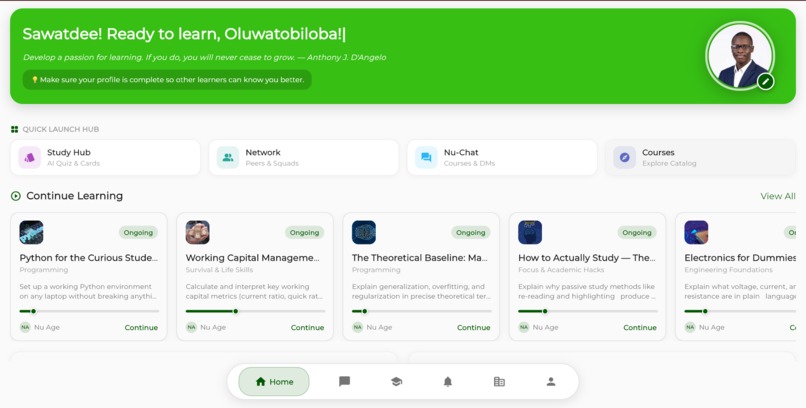
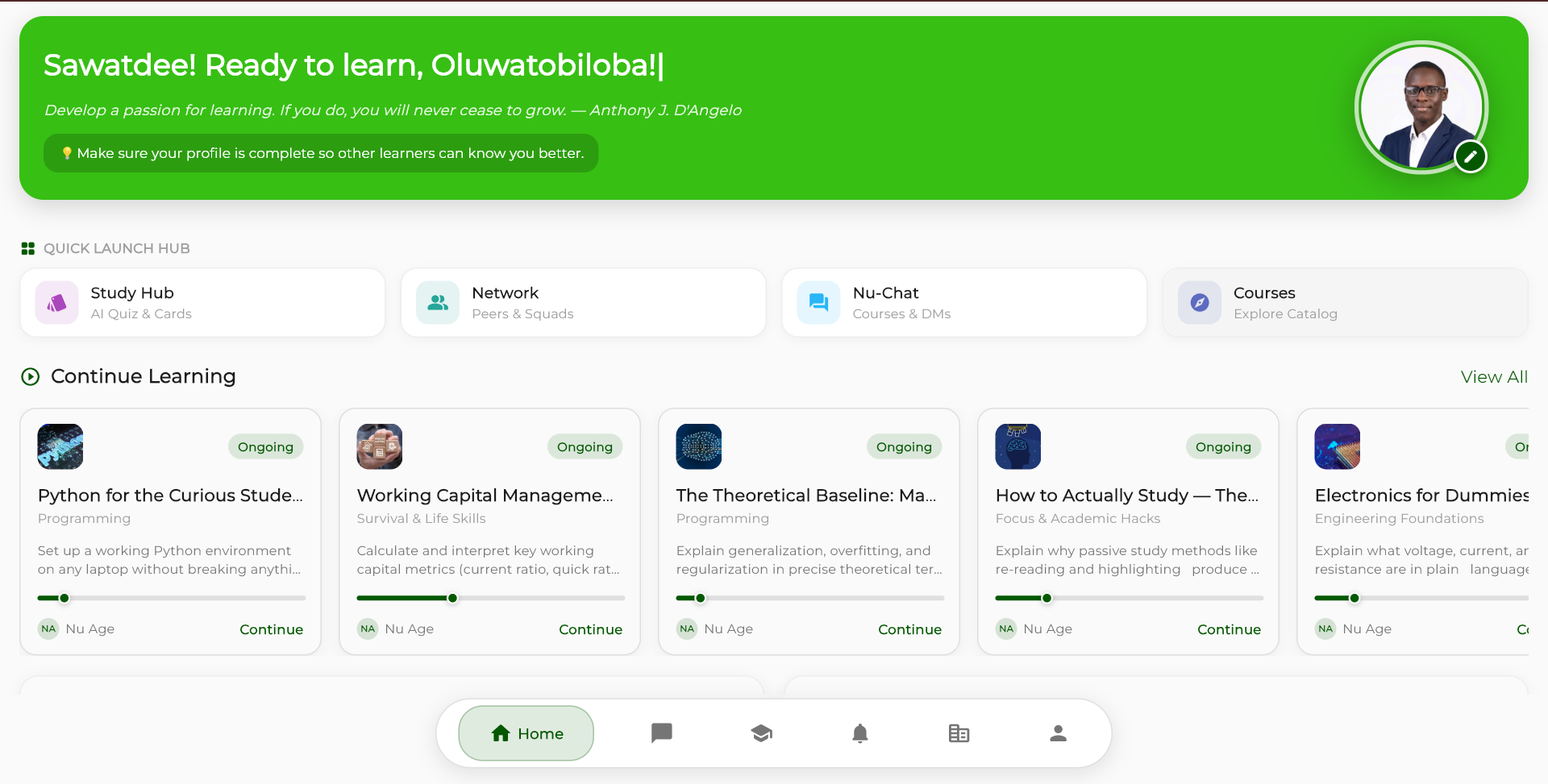
Dashboard
-
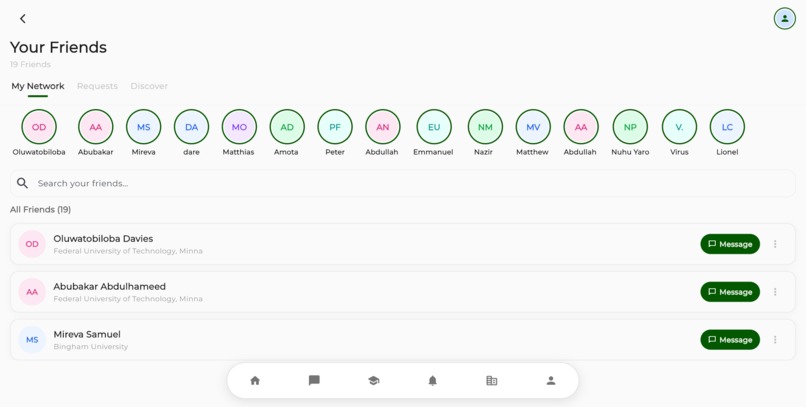
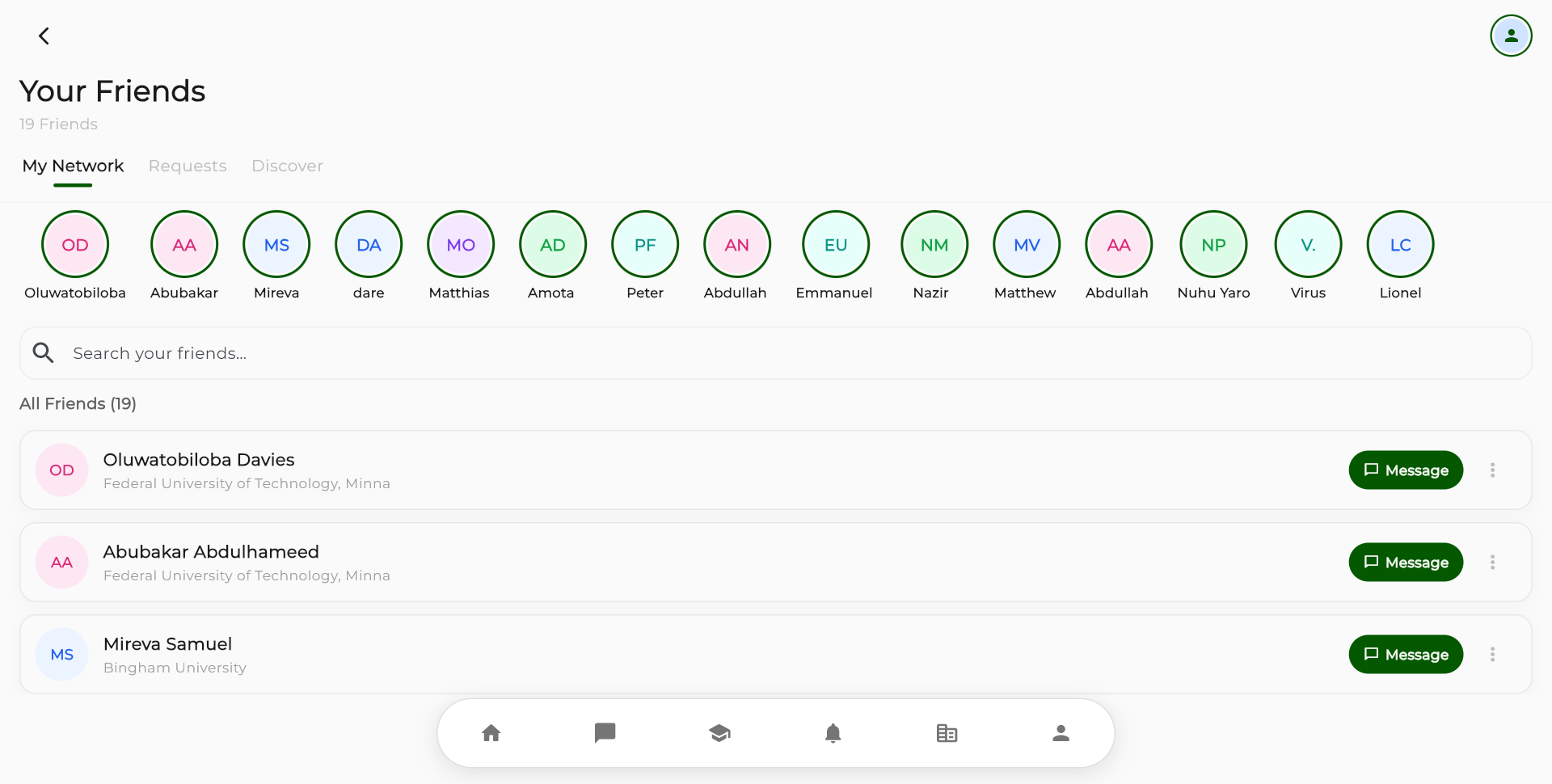
Network
-
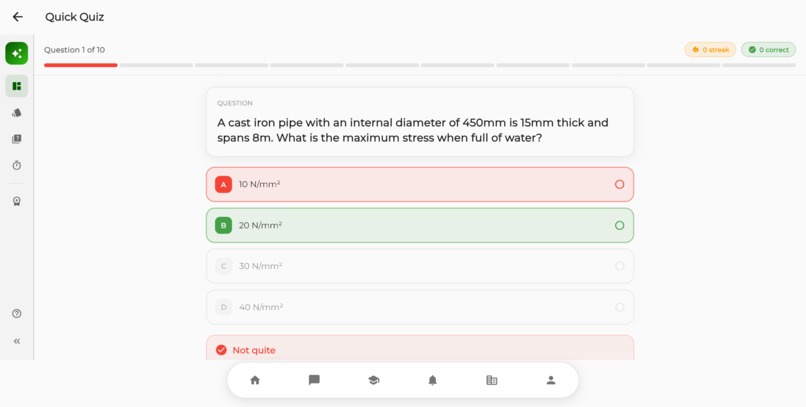
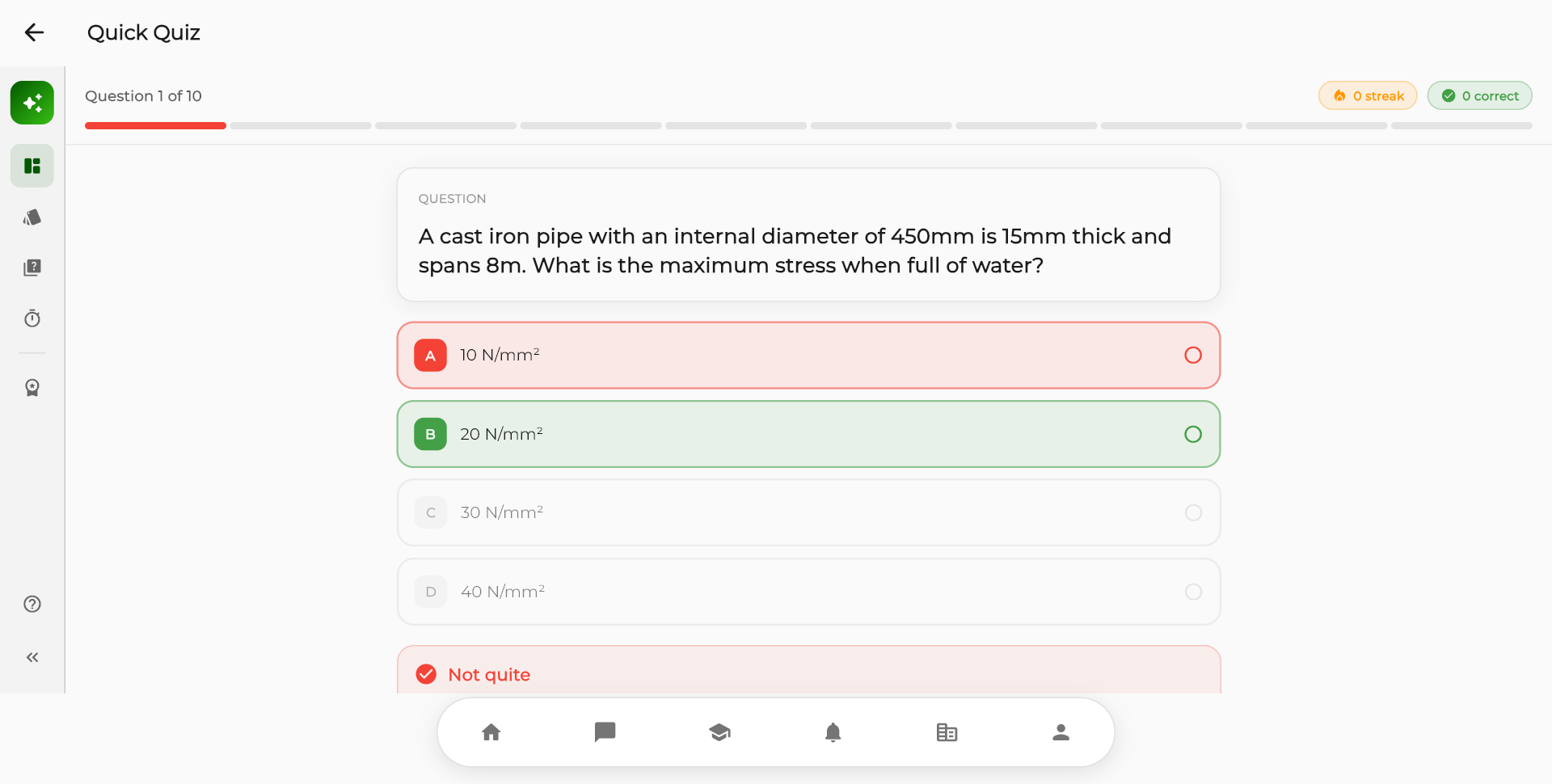
Quick Quizzes
-
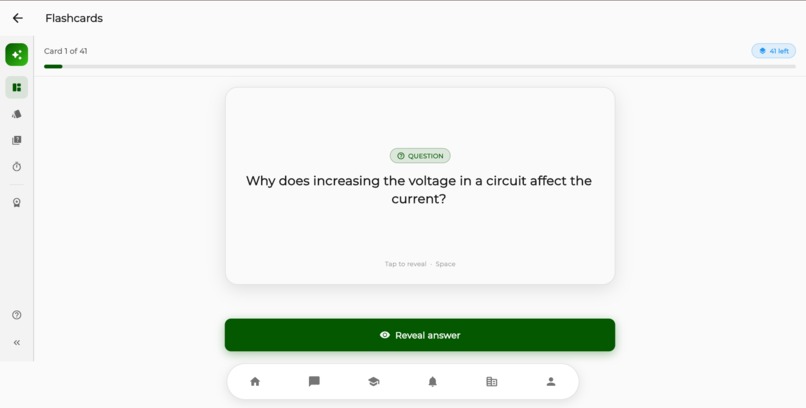
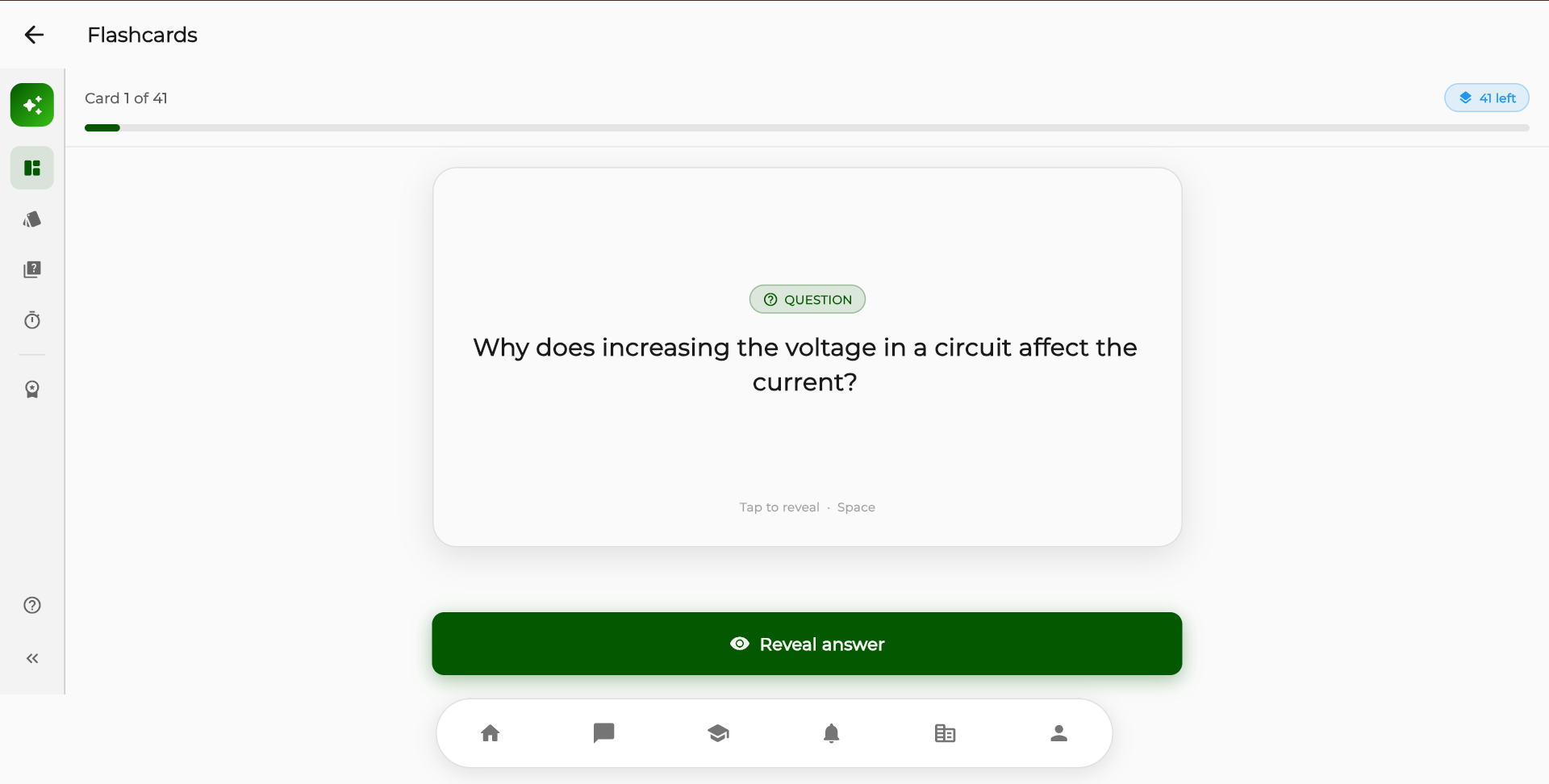
Flashcards
-
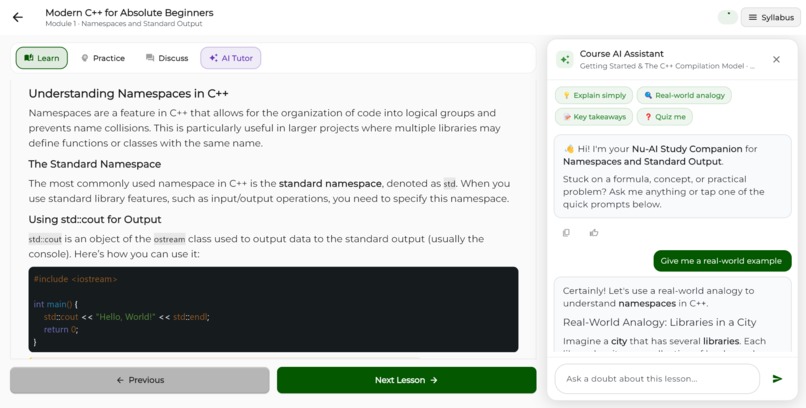
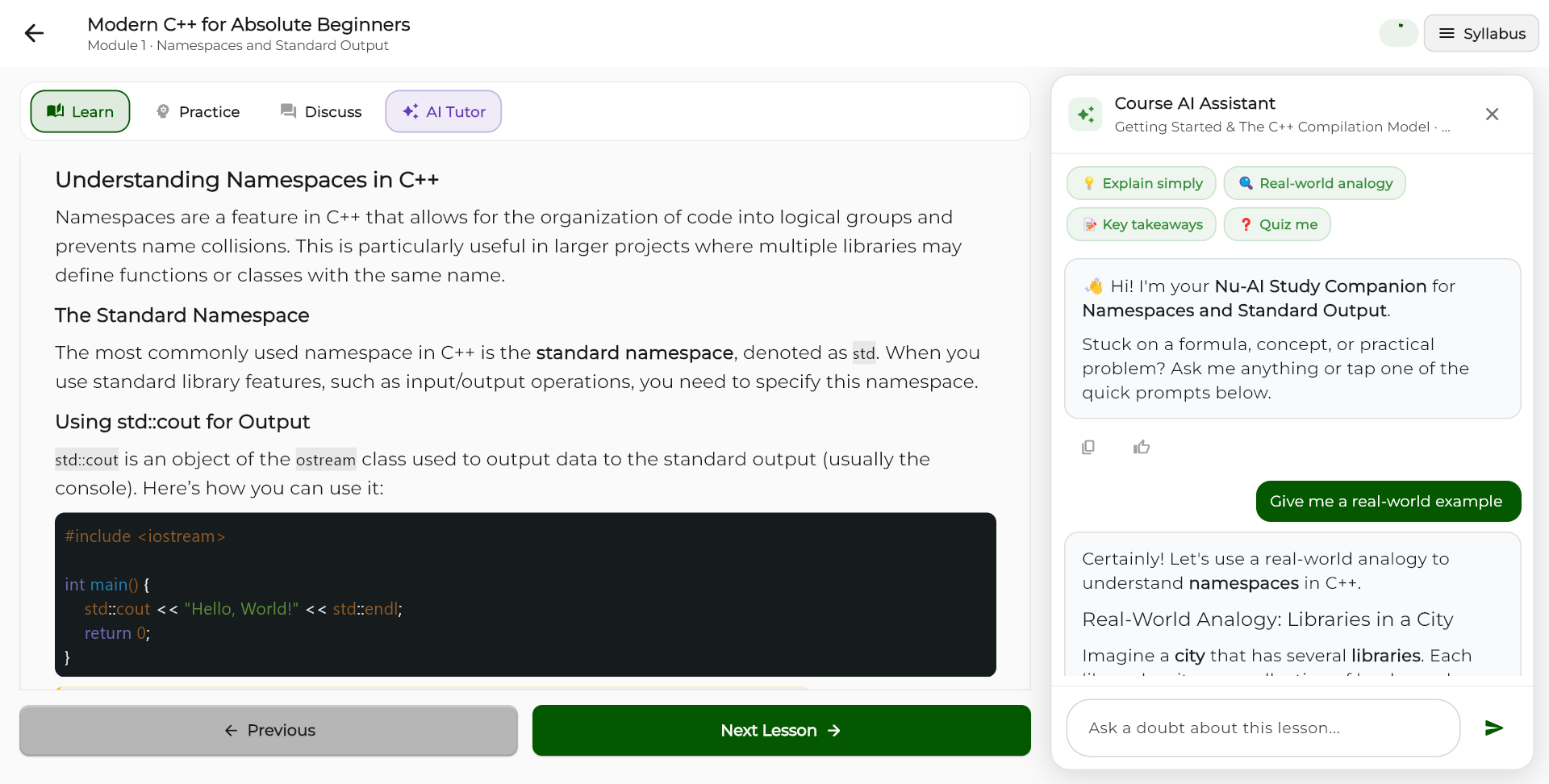
Course experience with AI Assistant
-
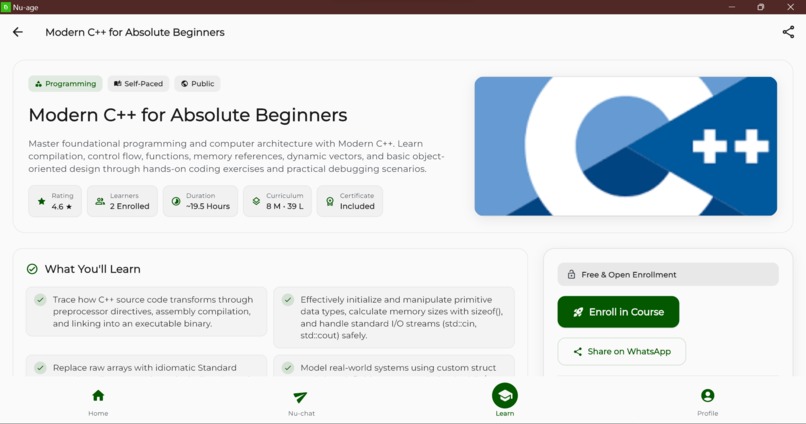
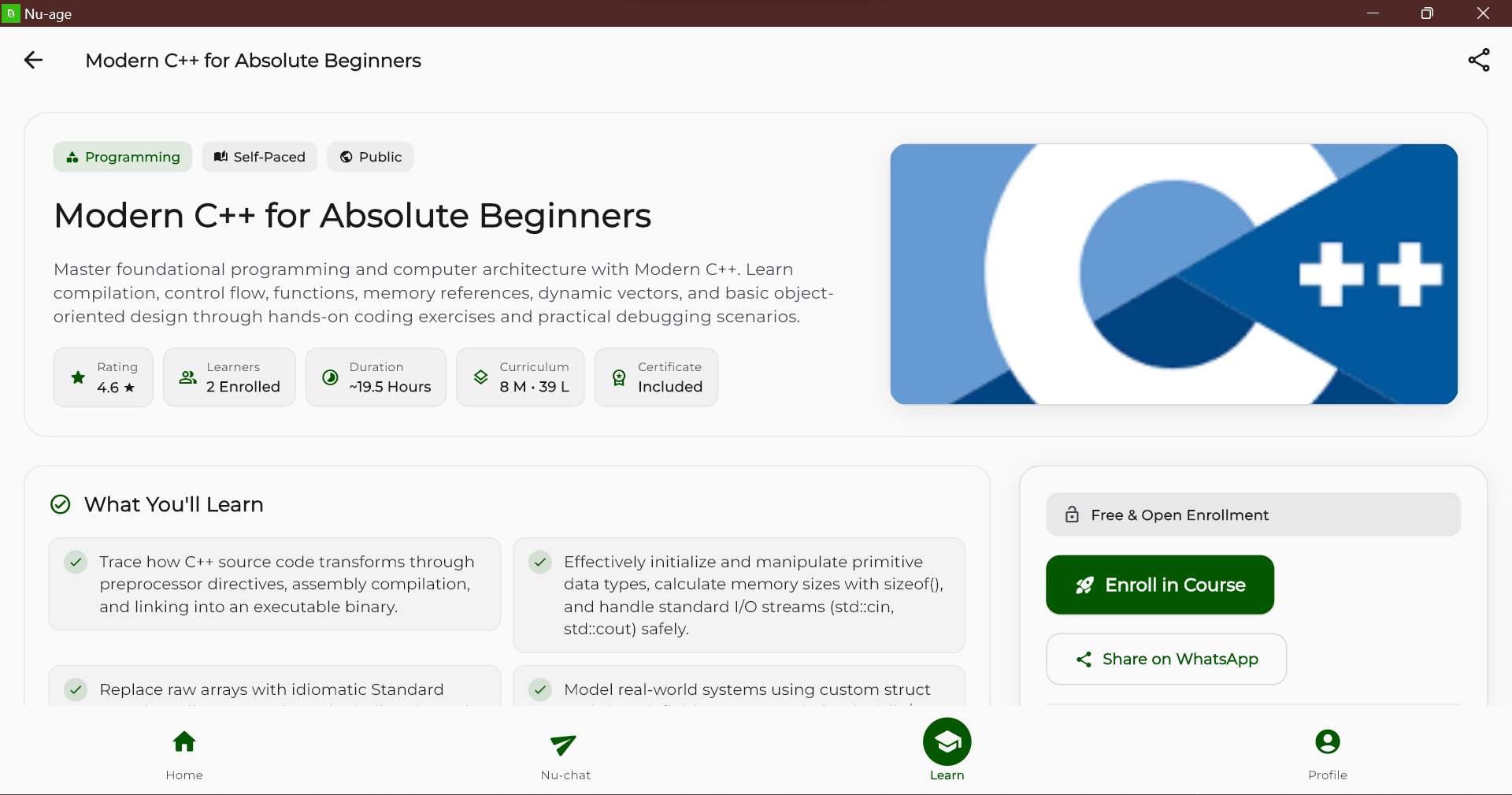
Courses
-
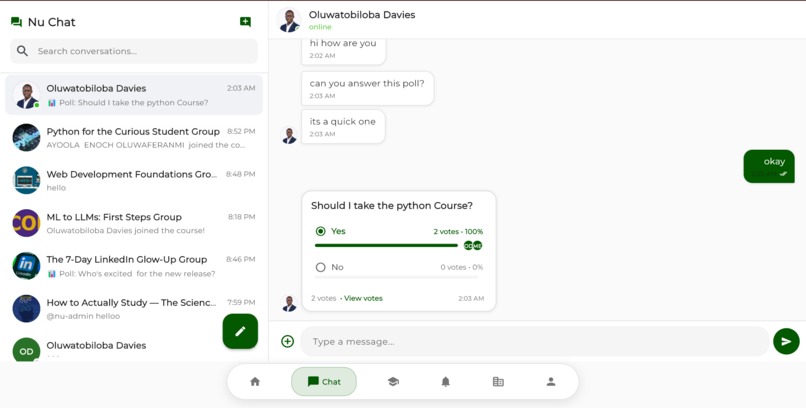
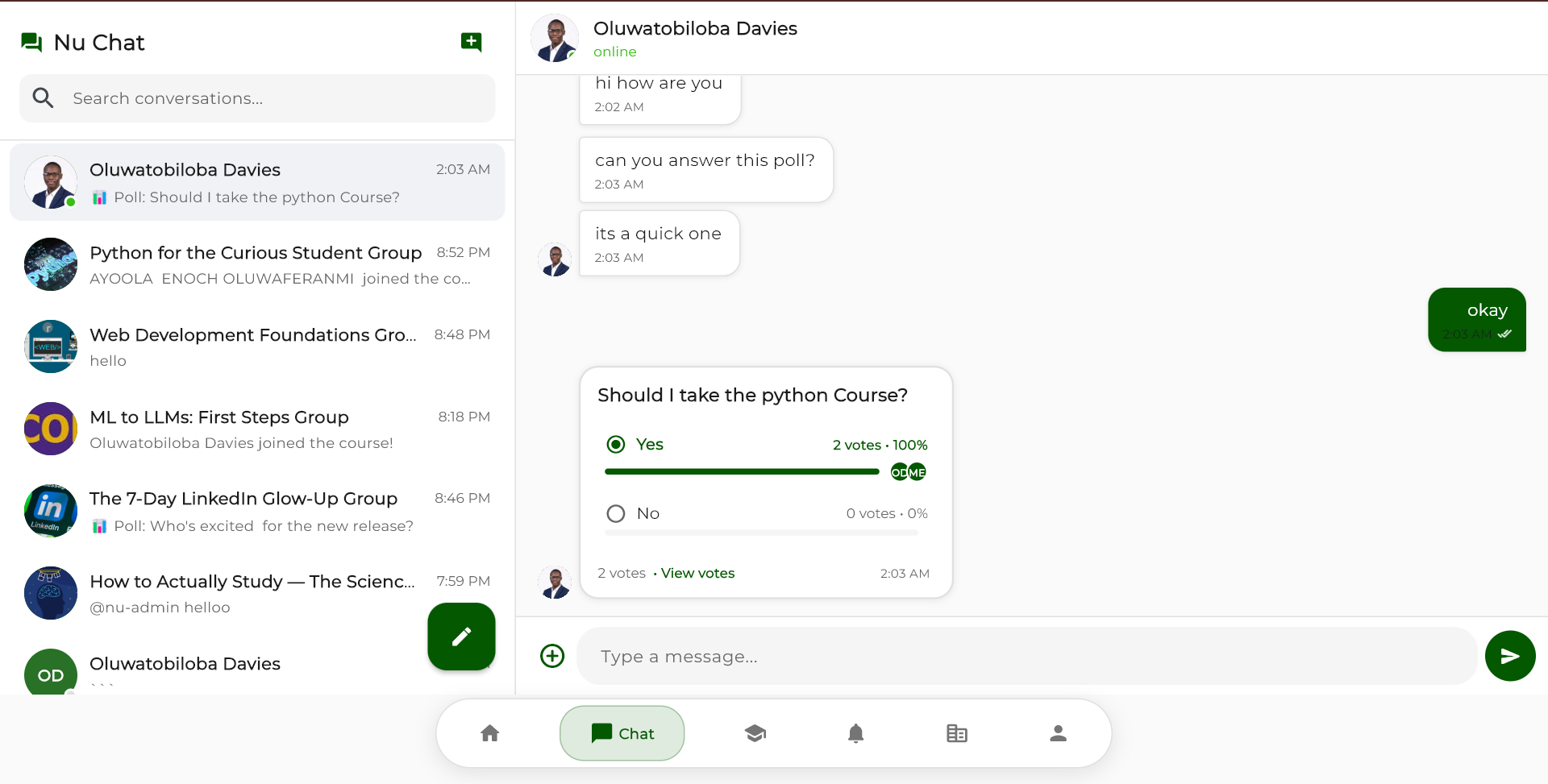
Nu Chat
-
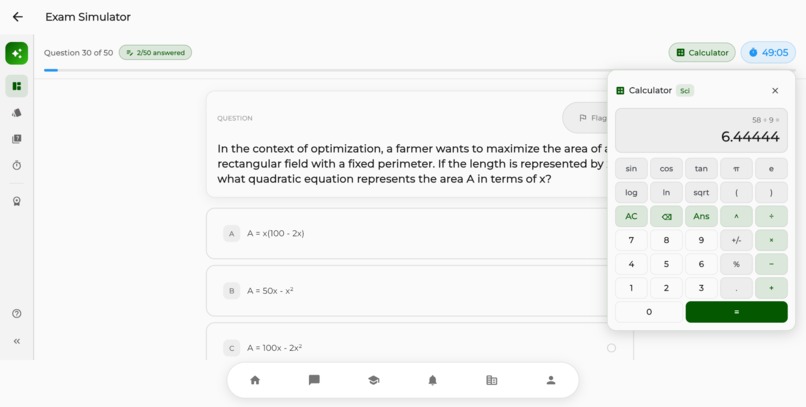
Exam Simulator
-
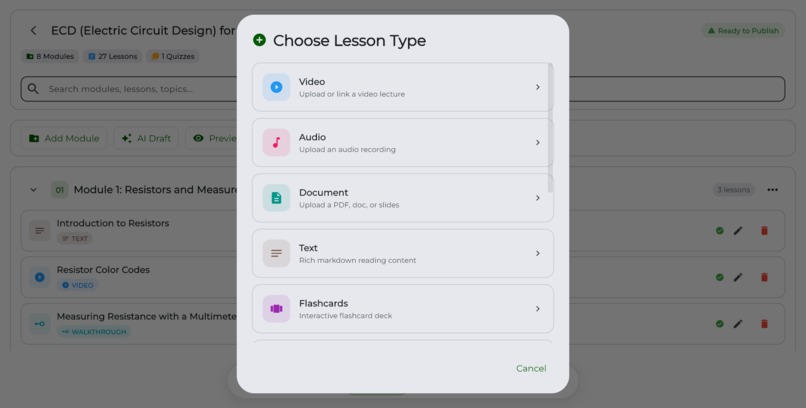
Course Builder
Inspiration
It's exam week at a Nigerian federal university. The portal is down. The handout you need is a blurry photo buried in a WhatsApp group with 400 unread messages. Your data bundle is gone.
I know this because I lived it. As a 200-level Mechatronics Engineering student at a Nigerian federal university, this wasn't a problem I researched. It was my everyday experience.
Education in Africa runs on bricolage. WhatsApp groups become administrative portals. Google Drive becomes the library. YouTube, Forms, and Excel fill the gaps. Students and tutors constantly improvise with tools that were never built for their reality, or worse, tools built with zero awareness of it. Data costs a large share of income, blackouts hit campuses in exam weeks, and students open social feeds just to read a class update. That isn't a minor inconvenience. It's a structural barrier to quality, equitable education for millions of students across the continent.
Last year, an entrepreneurship course crystallized it for me: my lecturer said we're often responsible for solving problems we didn't cause, because that's simply what needs to happen. The infrastructural decisions my university made became the everyday repercussions I set out to fix.
Nu Age was built by someone who has sat in every seat at the education table.
Nu Age directly addresses SDG 4: Quality Education. By replacing fragmented, improvised tools with one platform built for African infrastructure realities, it works to close the access gap that unreliable connectivity and limited resources create. It supports SDG 10: Reduced Inequalities by making quality learning tools usable regardless of device or connectivity, with audio screen readers in English, Hausa and French making courses accessible to more learners. And by connecting students, tutors, and institutions on one platform, it contributes to SDG 9: Industry, Innovation and Infrastructure: genuinely African-built digital infrastructure in a sector still largely served by tools designed elsewhere.
What it does
Nu Age is an offline-first, distraction-free learning ecosystem for students, tutors, and campus tutorial bodies. It is not just an app. It has five connected parts.
1. Offline-first learning: study without spending data
- Download once, study offline, sync later. Courses and study packs are saved to the device, so students can learn without mobile data and pick up where they left off when they reconnect.
- Audio screen readers in English, Hausa and French, so students can listen to a course as well as read it.
- Built for low-end phones. Markdown notes sit beside video, the app clears its cache selectively, and audio is compressed so storage doesn't run out.
- Available on Android, Windows, and the web.
2. Self-Study Hub: learn from your own material
Students upload a PDF, paste text, or paste a YouTube link to a concept they want to understand. Nu Age pulls in the content and generates:
- Flashcards for active recall of definitions, formulas, and key concepts
- Quick quizzes, short checks that reveal weak spots right after studying
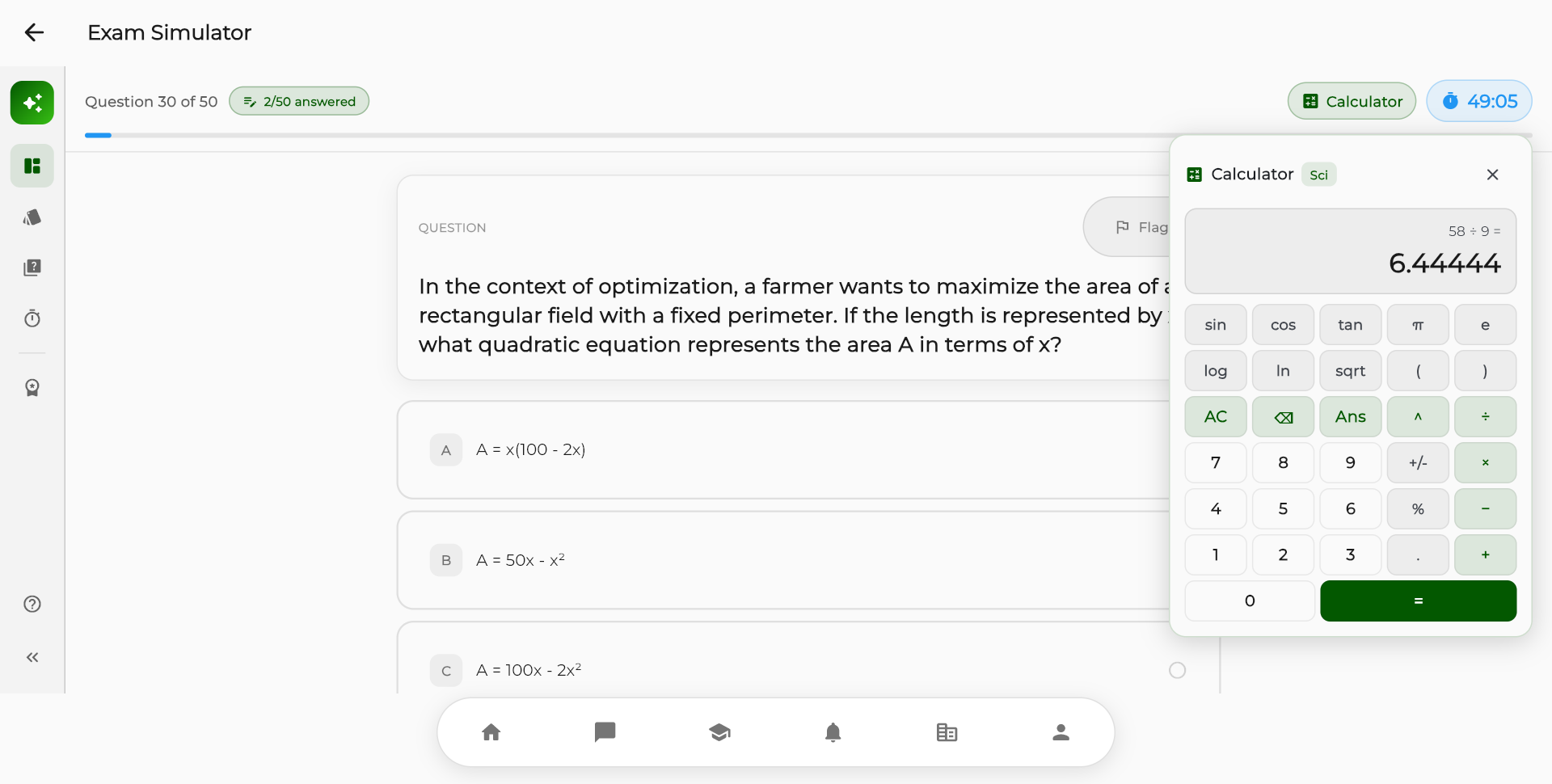
- Timed exam simulations with real countdowns, question flagging, and step-by-step score breakdowns
Everything is grounded strictly in the student's own material, not generic content.
A built-in AI Study Partner answers questions from what the student uploaded and remembers their notes across sessions. When a concept still isn't clicking, it recommends YouTube videos students can watch inside the app. The AI works in two modes: offline, it runs deterministically on rules applied to the material itself, and online, it uses models for deeper inference.
Don't want to generate your own? Pre-built packs from Nu Age and other students are available, unlocked with Nu Coins. Students earn Nu Coins by uploading high-quality decks, and higher-quality packs cost more, so the best material rises to the top and helpful students are rewarded.
3. CBT Exam Simulator: practise the way you will be tested
- JAMB and WAEC past papers in exam conditions, in timed computer-based-test mode.
- Past questions sit beside university STEM courses, so exam prep and coursework live in one place.
- Proctored cohort exams for tutors and institutions who want real exam conditions.
4. Connect and stay motivated: learning tied to community
- Course Chat. Every course has its own group chat, and students join automatically when they enroll, so study conversations stay tied to learning instead of scattered across social apps.
- Nu Chat for direct messages and a student network to discover and connect with peers in your field across universities.
- Duo Streaks. Students share a streak with a study buddy, which keeps the habit going and brings new learners in.
- Daily quests, leaderboards, and milestones to keep students coming back every day.
5. Courses and the Organization Portal: structured learning that proves itself
For students:
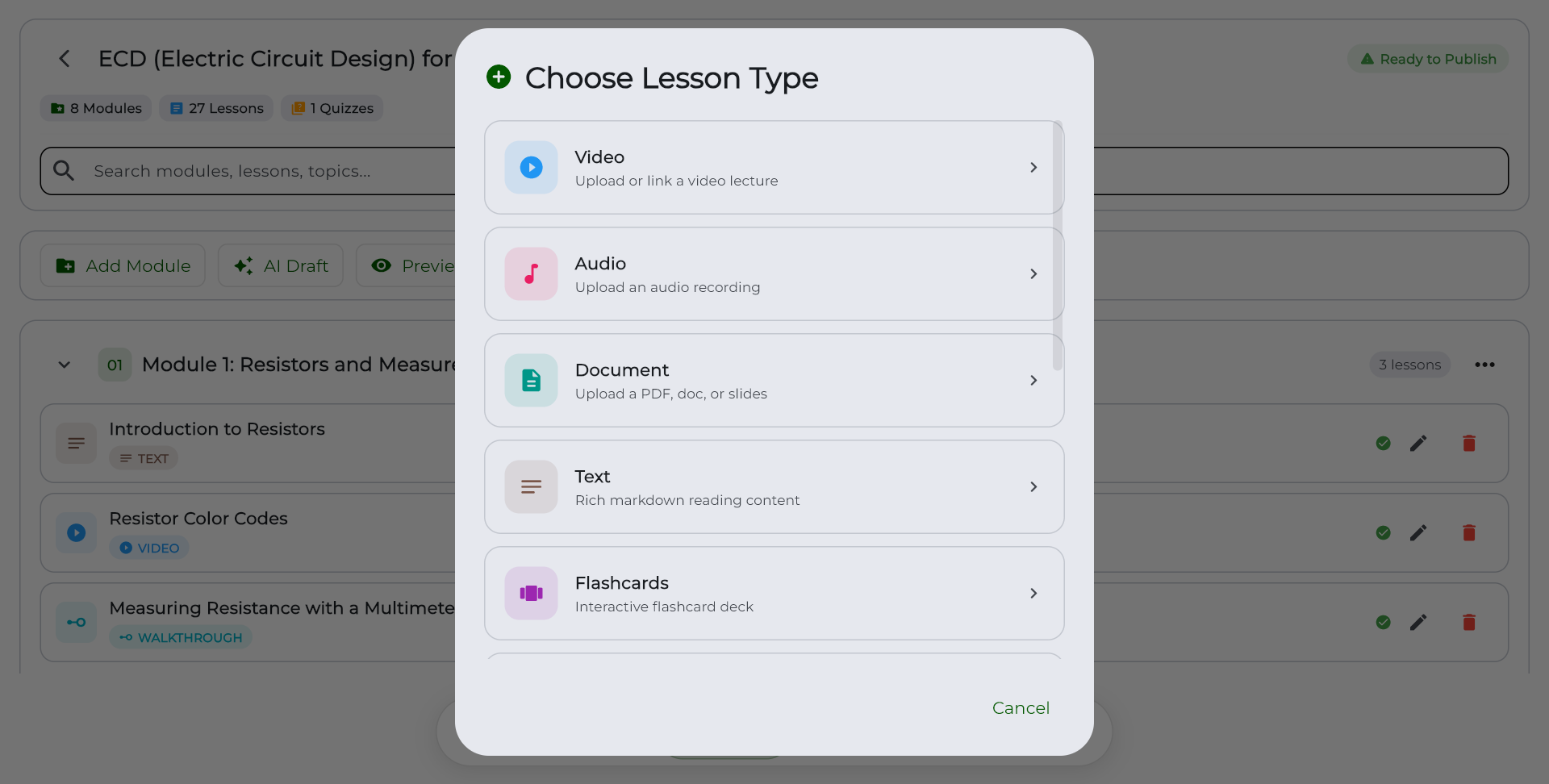
- Multiple lesson types (video, Markdown reading notes, fill-in-the-blank, interactive quizzes, downloadable resources, and coding labs)
- A per-course AI tutor grounded in that course's content, separate from the Hub tutor
- Discussion boards on lessons for questions and ideas
- Curated playlists that group courses into learning paths
- A built-in coding playground with 10+ programming languages, so students can practise programming on their phones, anywhere
- Verifiable certificates with QR verification, exportable to PDF and shareable to LinkedIn
For tutors and campus tutorial bodies, the Organization Portal gives them:
- A course studio with 10+ lesson formats and a modular course builder
- AI-drafted courses, generated as structured modules from a tutor's syllabus or past questions
- Cohorts for running training groups
- Timed, auto-graded, proctored exams and mock CBT sessions
- Playlists and drop-off analytics, so tutors can see who is reading what and who is falling behind
How I built it
Nu Age is a full-stack, AI-powered LMS built with Python and FastAPI on the backend, with a relational PostgreSQL database (via SQLAlchemy) using UUID-based primary keys and optimized many-to-many relationships to handle scalable, concurrent enrollment across multi-cohort courses.
The frontend is built with Flet, giving me a single, state-driven Python codebase that runs cross-platform on desktop and mobile, which is critical for reaching students regardless of device. Nu Age is available on Android, Windows, and the web.
AI is woven throughout, via OpenAI when online.
- Autonomous agents generate structured lesson modules and context-specific assessments directly from raw syllabus documents or past questions, meaningfully cutting content creation time
- Student-facing tutors are grounded in uploaded or course material rather than answering from generic knowledge
- Flashcards, quizzes, and exam simulators are generated from the student's own notes
- Students generate content while online, then study it offline, so heavy AI work doesn't spend their mobile data
An offline-first sync layer downloads courses and study packs to the device, plays media and runs quizzes locally, and syncs progress, streaks and chat when the connection returns.
Infrastructure is self-managed on AWS EC2, with a configured Linux environment, an Nginx reverse proxy, and SSL/TLS termination.
I also built a full gamification engine (Duo Streaks, daily quests, leaderboards, milestones), a CBT exam simulator with proctored cohort exams, an Organization Portal for tutorial bodies, and an automated certificate pipeline that exports to PDF and shares directly to LinkedIn on course completion.
Challenges I ran into
Infrastructure cost versus infrastructure reality. Nu Age leans heavily on AI, which means real, ongoing compute costs, while my users often have unreliable connectivity and limited devices. Building AI-heavy features that still serve resource-constrained students meant constantly pulling in two directions. I resolved it by generating content while the student is online, syncing it to the device, and running everything after that locally. Offline, the AI study partner falls back to deterministic, rule-based answers built from the student's own material.
Low-end phones run out of storage. Video-heavy courses fill up budget phones quickly. I pair video with lightweight Markdown notes, clear the cache selectively, and compress audio.
Convincing tutors to leave WhatsApp. The biggest assumption behind Nu Age is that tutors will move their teaching onto a platform when WhatsApp is already free and familiar. I reduce that risk with auto-graded quizzes, drop-off analytics that WhatsApp can't offer, and by setting up the syllabus for tutors myself.
Institutional adoption. Building something genuinely useful is one thing. Getting institutions to adopt it is another. Even with a formal partnership with FUTMinna's Entrepreneurship Centre, navigating bureaucracy to reach the students who need it now has been its own uphill climb.
Doing it all solo. I'm one student building an LMS, a CBT simulator, an AI pipeline and an organization portal while studying full-time. Every technical, product, and institutional challenge lands on one person, and honestly, I'm still figuring some of these out in real time.
Accomplishments that we're proud of
- Launched in May 2026 and grew organically to 250+ students
- 30+ courses live, including a coding playground with 10+ languages
- Formed a formal partnership with FUTMinna's Entrepreneurship Centre, which now uses Nu Age to deliver training
- Shipped a working, multi-platform product (Android, Windows, and web) end-to-end, solo, while studying full-time, without waiting for funding
- Built an AI study partner that works both offline and online
- Meaningfully reduced the time it takes to create course content with AI assistance
- Designed organic, zero-ad-spend growth loops into the product itself: a course-chat multiplier where one tutor brings a whole class, and Duo Streak invites between students
What we learned
Building for infrastructure-constrained environments forces real discipline. There's no room for bloated, resource-heavy design decisions when your users are working with unreliable connectivity and limited devices.
I also learned that trust, especially institutional trust, is earned slowly, and that a working product speaks louder than any pitch. And I learned that retention is a feature: students come back for streaks, quests, and a study buddy, not for a longer feature list.
Built with
Python, FastAPI, PostgreSQL, SQLAlchemy, Flet, OpenAI, AWS EC2, Nginx, SSL/TLS
Try it out
- Website and downloads (Android, Windows): https://www.nu-age.com.ng
Built With
- fastapi
- flet
- python
- sql
- sqlalchemy
