-
-
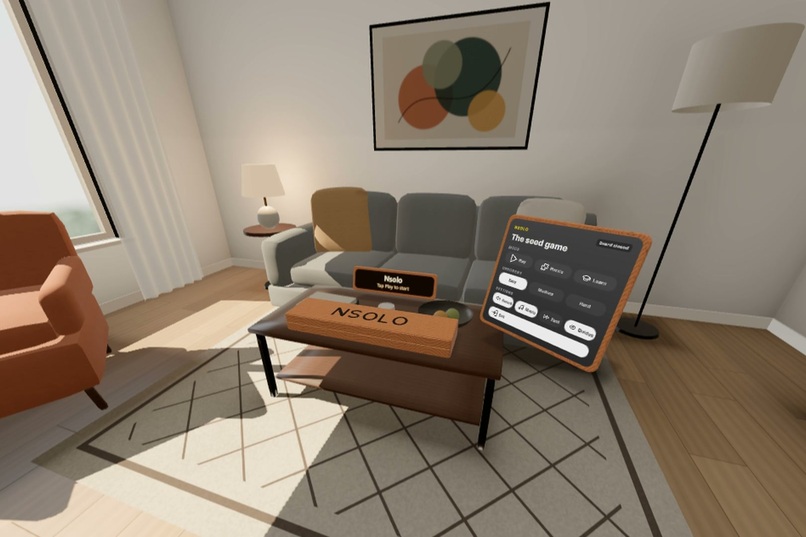
on your table
-
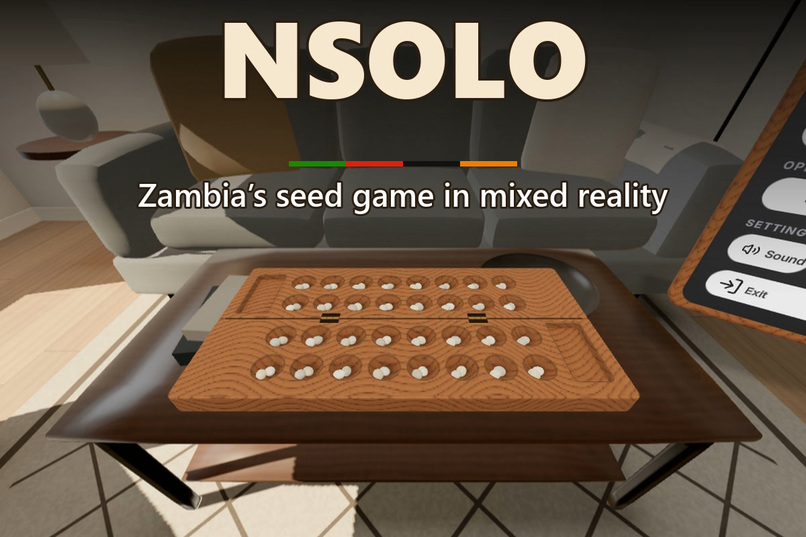
cover
-
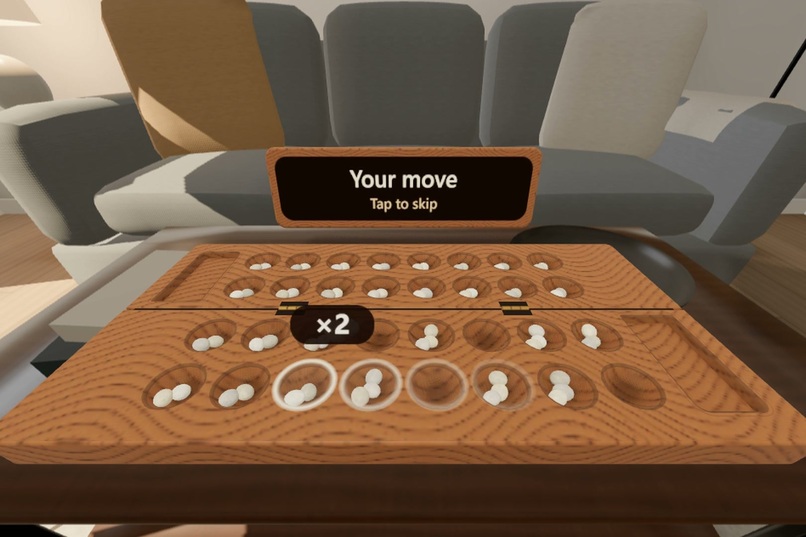
relay sowing
-
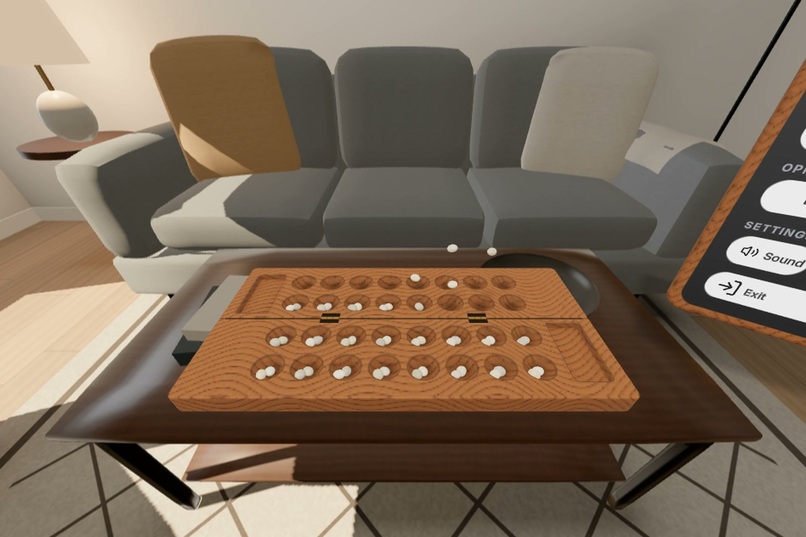
board unfolds
-
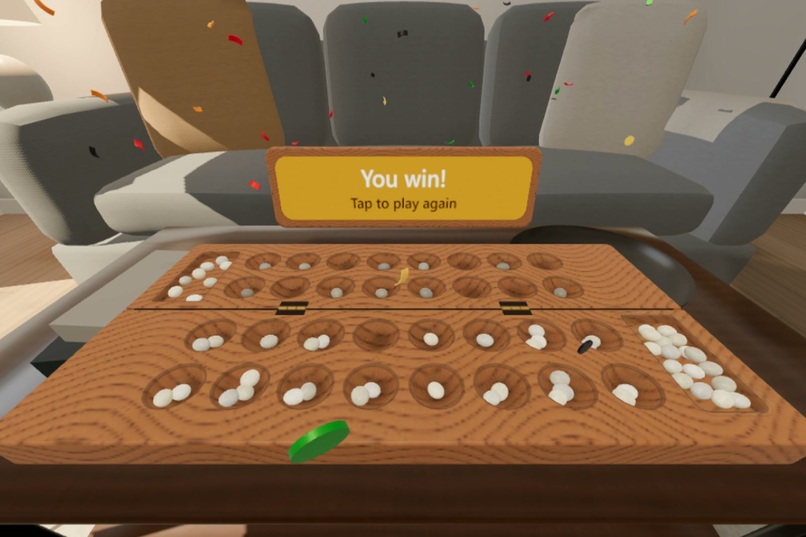
opponent stuck you win
-
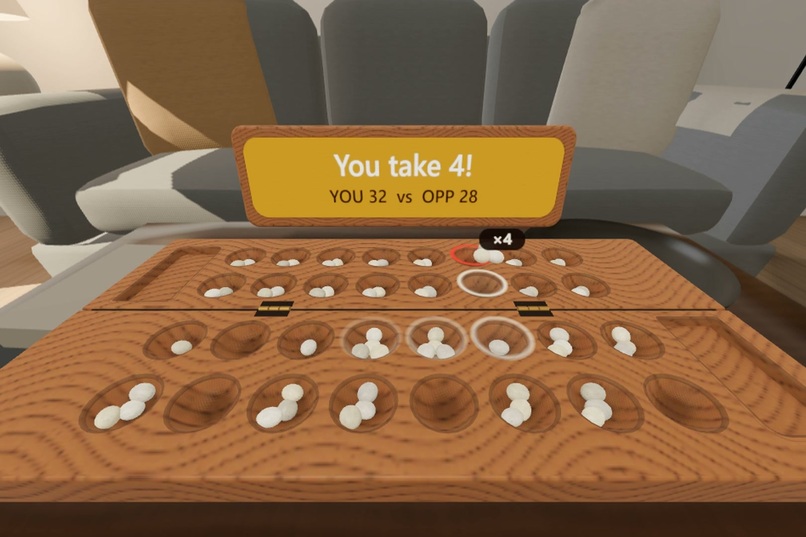
capture
-
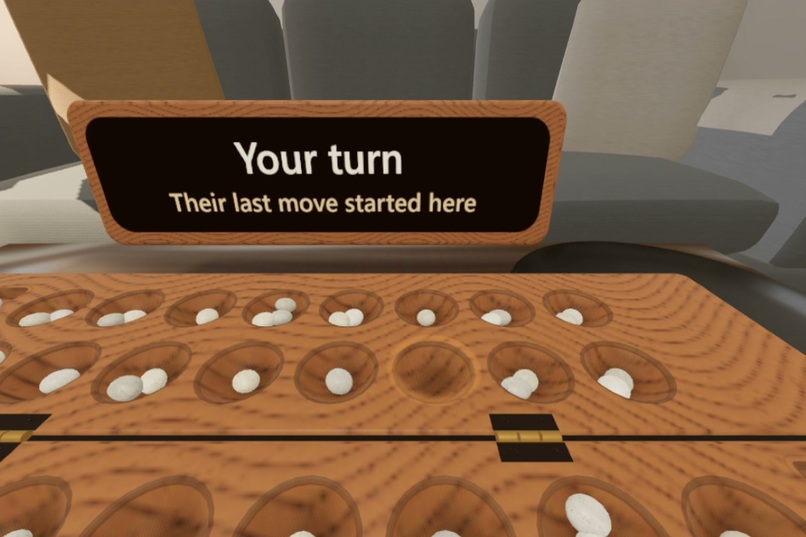
orange ring
-
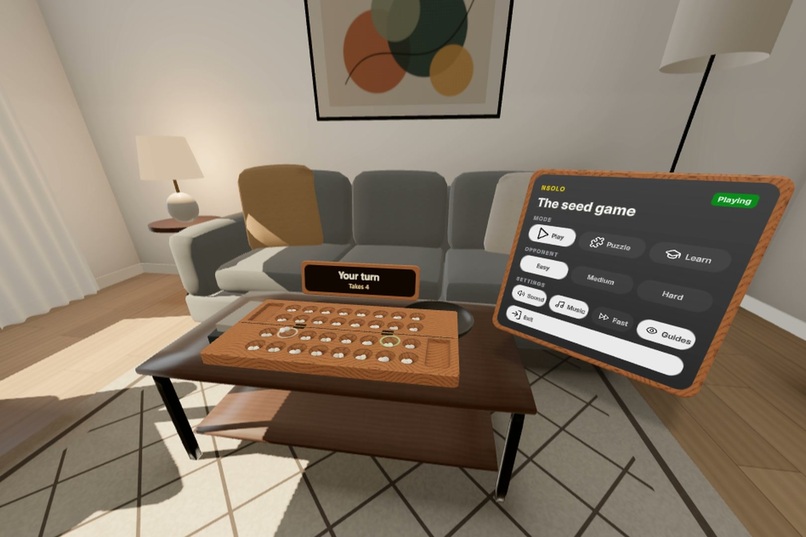
panel and room
-
learn lessons
-
hard puzzle
-
solved puzzle
Inspiration
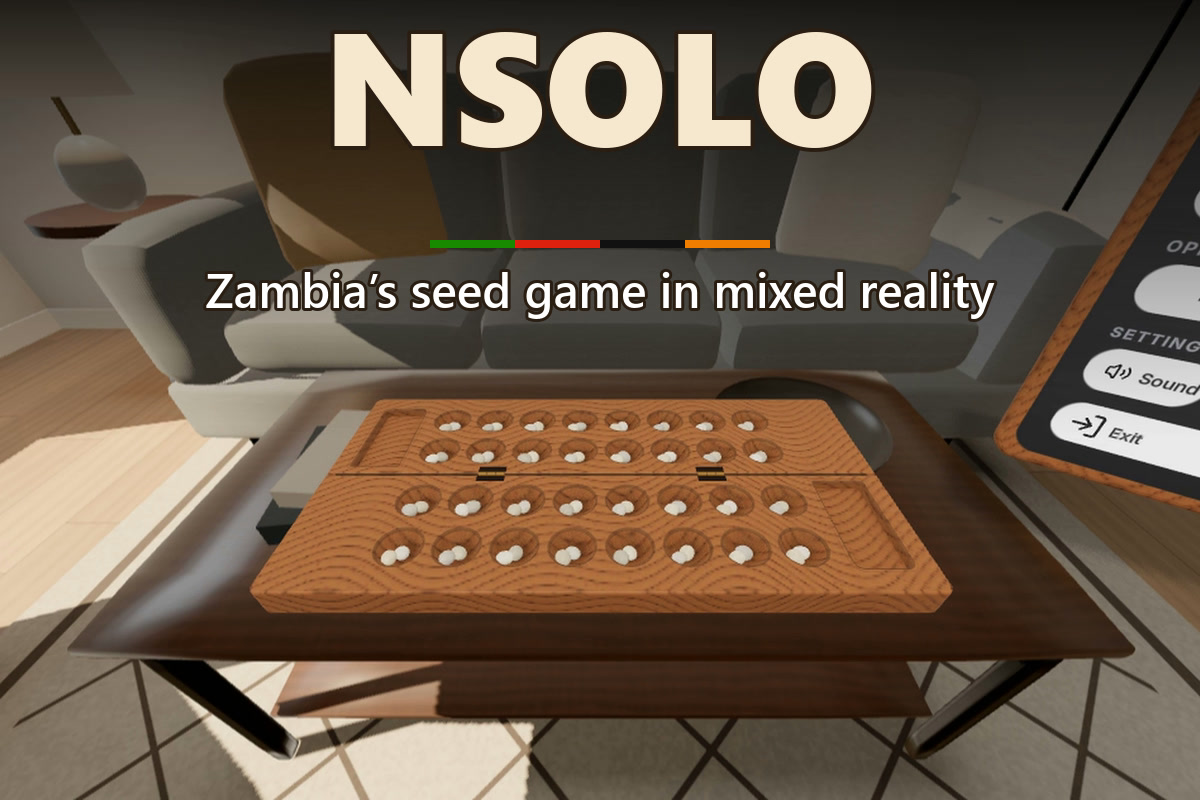
Nsolo is a four-row seed game played across Zambia for generations. People scratch the holes into the ground or carve them into a wooden board, and play with seeds or small stones. It's a game of counting, planning and long chains of moves. Very few people outside the region know it, and most people who'd like to try it don't have a board or anyone to teach them the rules.
I wanted anyone with a headset to sit at their own table and play Nsolo the way it's meant to be played: with your hands, picking up seeds and dropping them hole by hole.
What it does
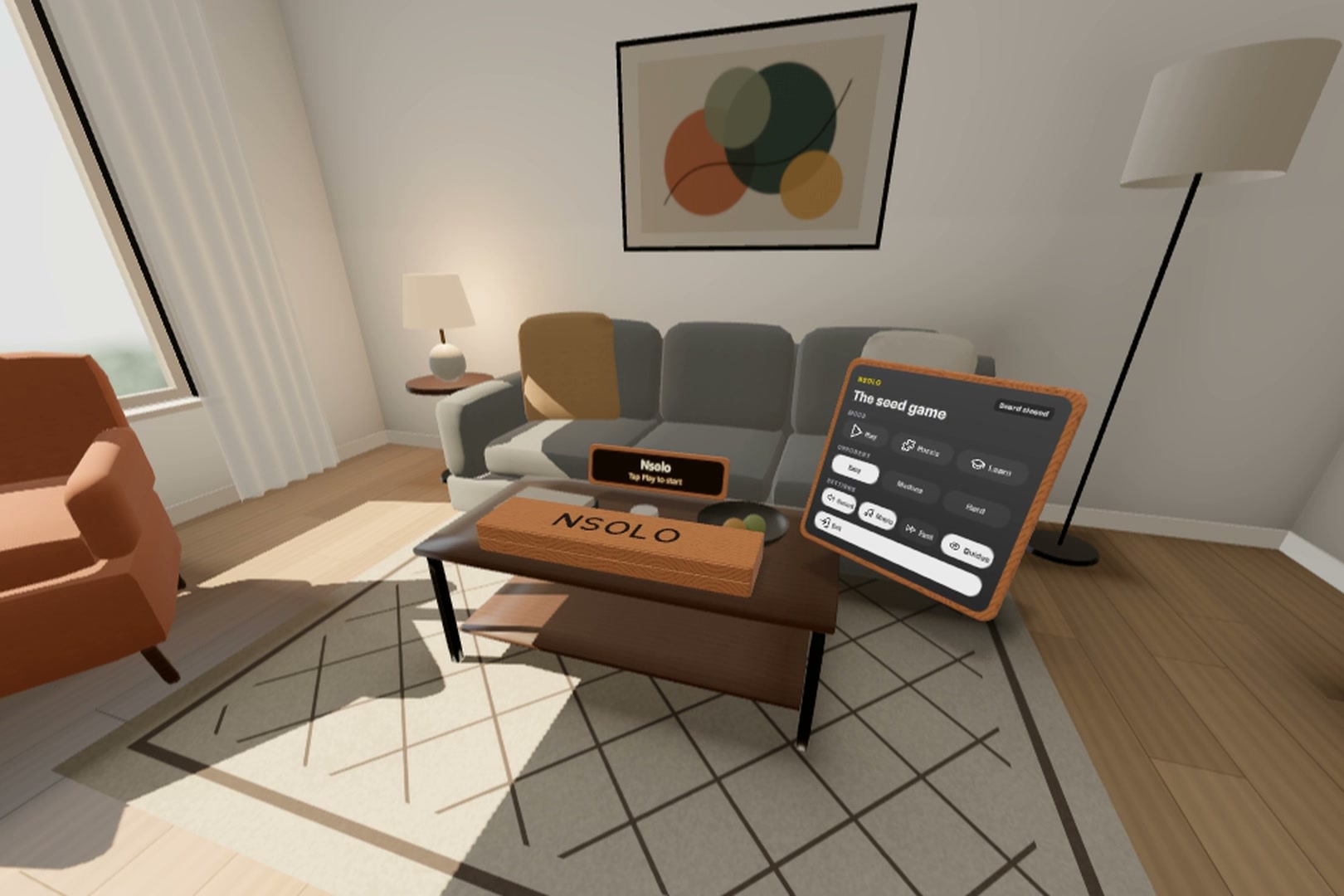
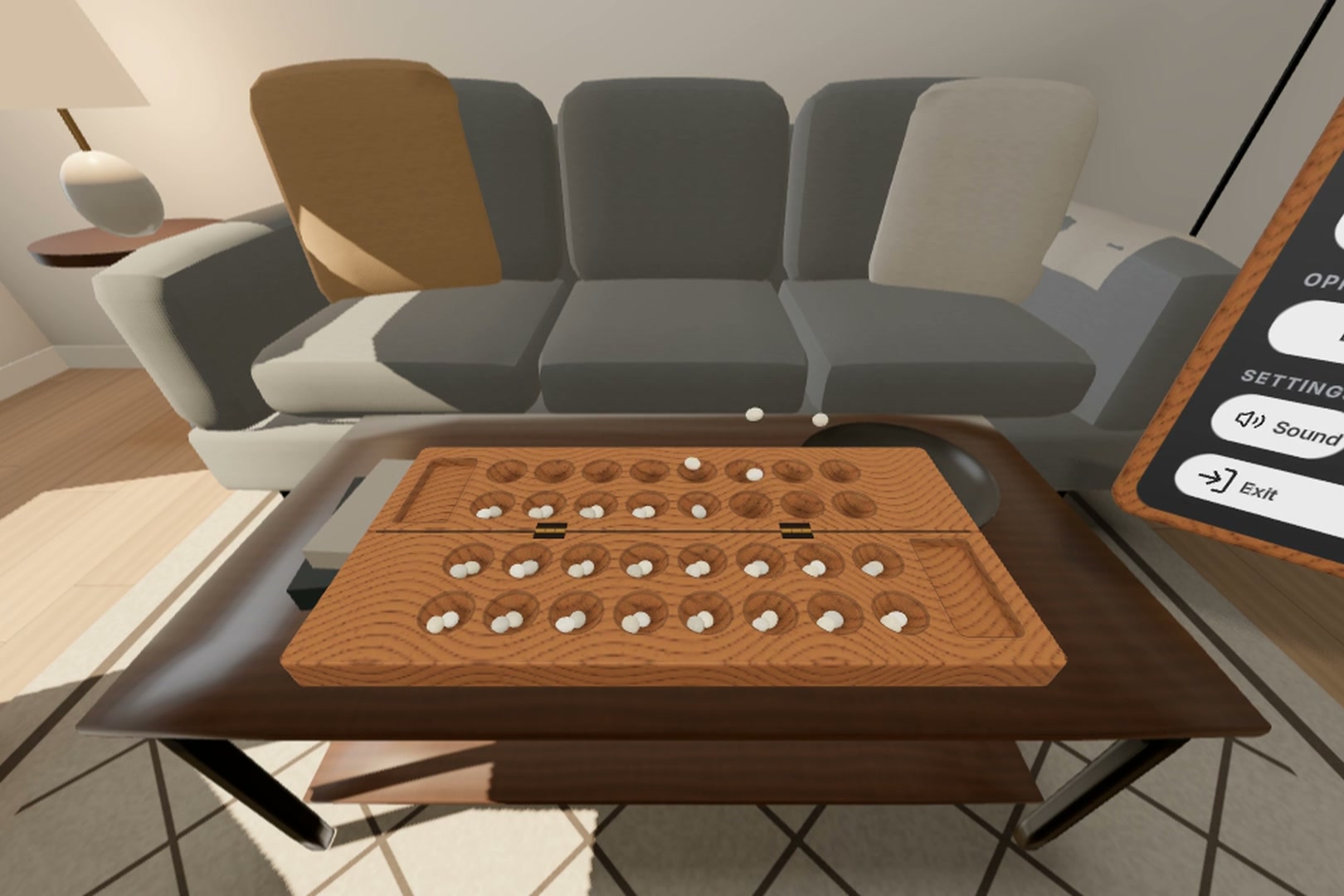
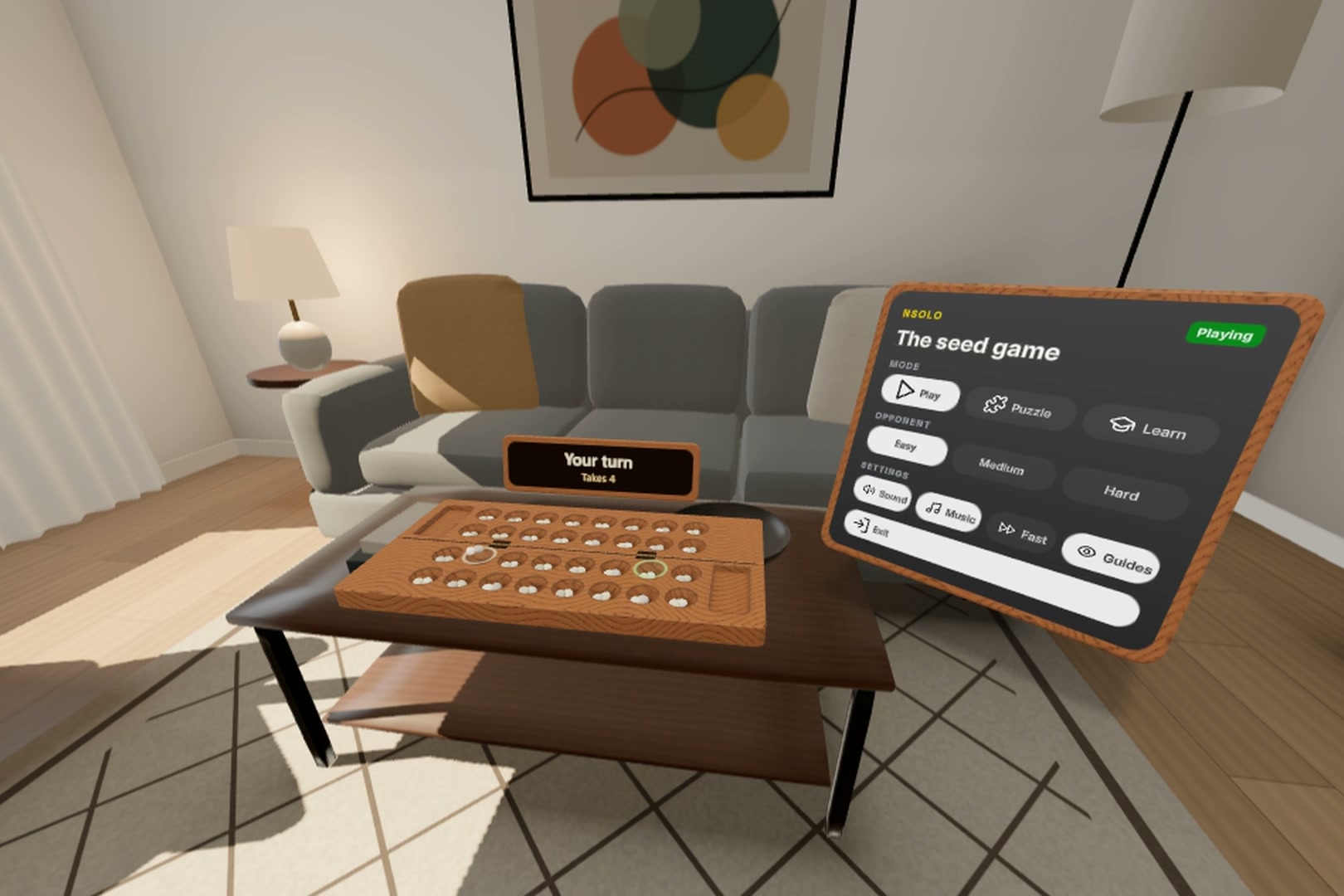
- A wooden board sits on your table. When you press Play it unfolds on its hinges, and two seeds drop into every hole.
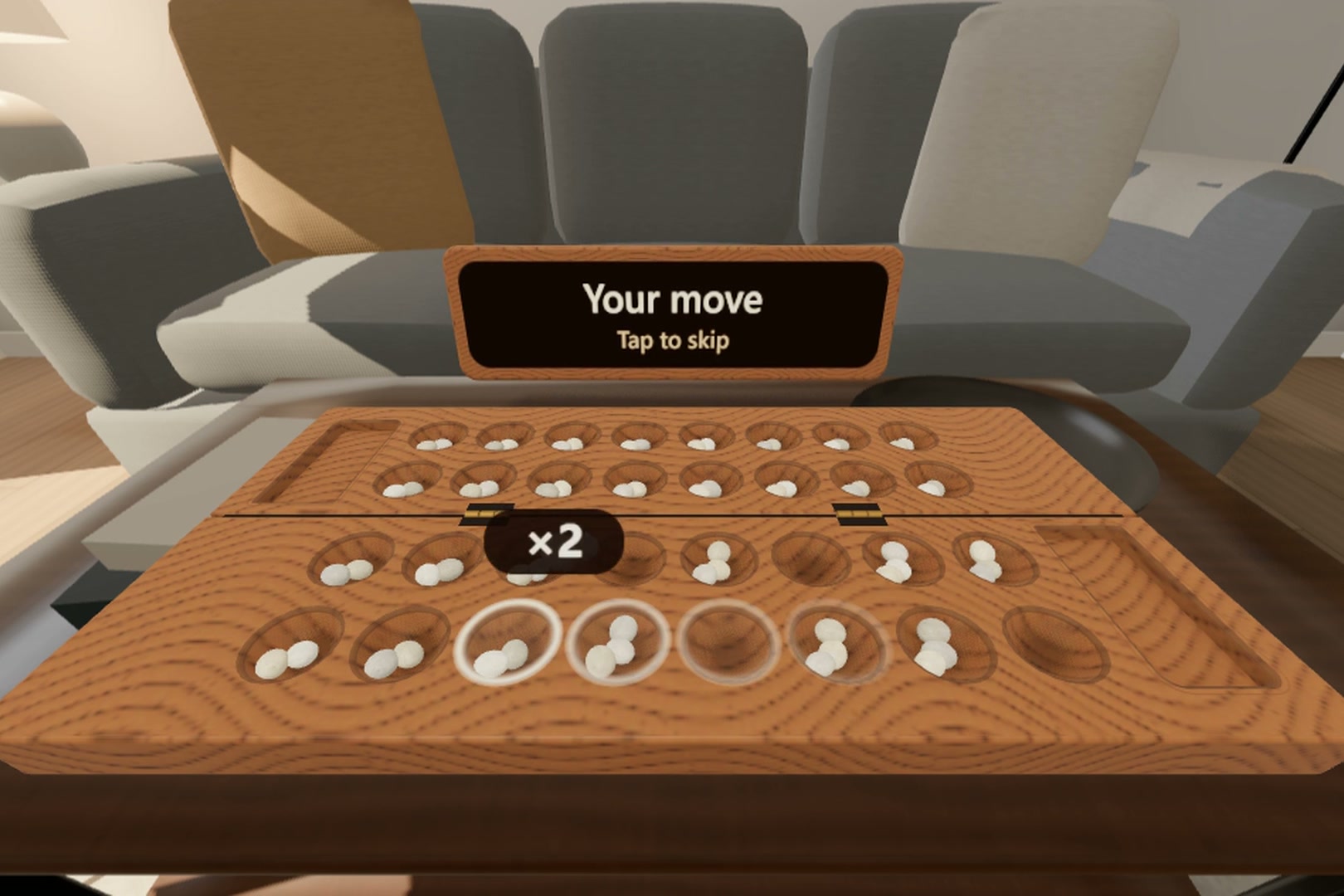
- Hands only: pinch the panel from a distance, or reach out and tap a hole to play it. No controllers are needed.
- The real rules:
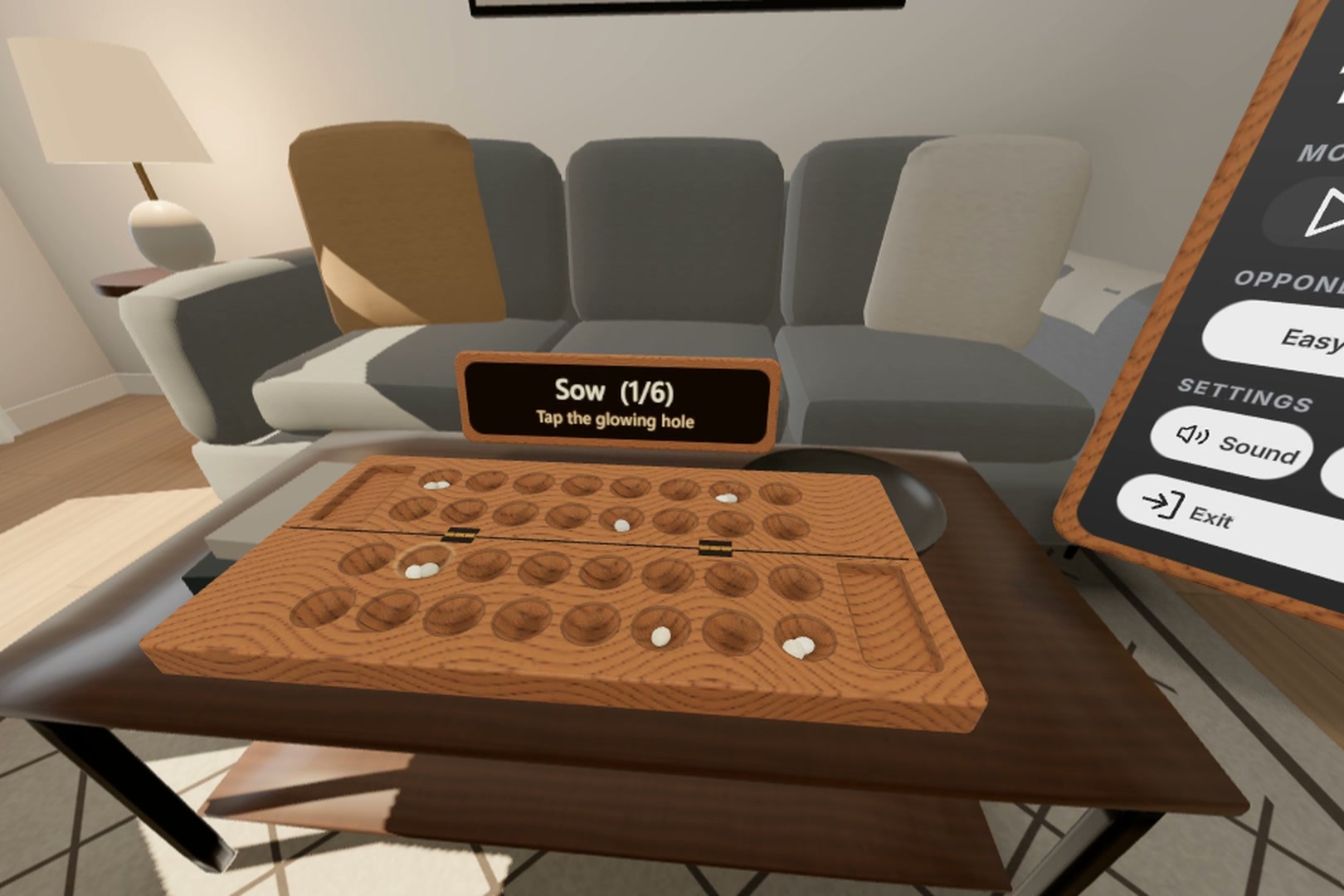
- Relay sowing: land on seeds and you scoop them up and keep going.
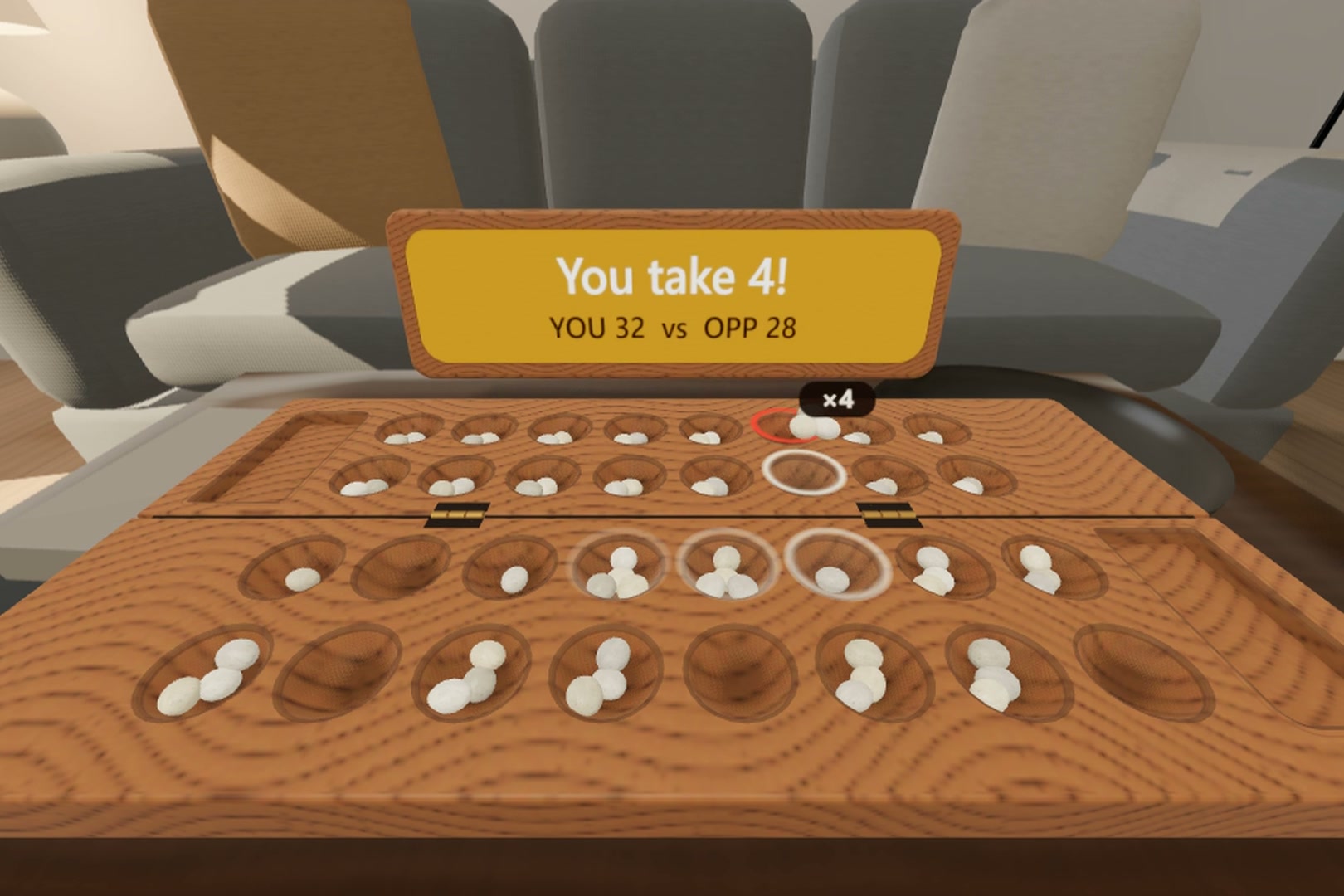
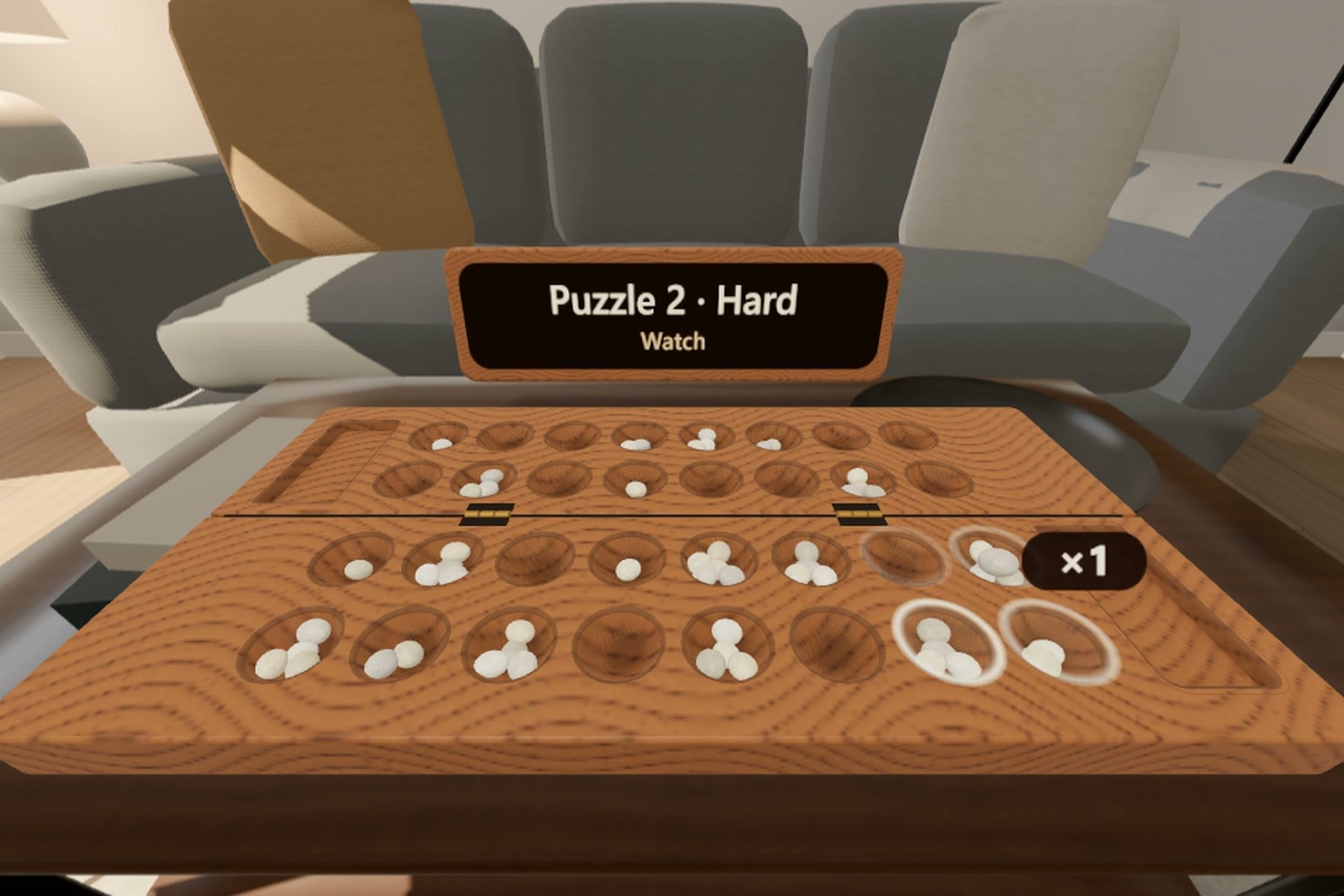
- Captures: finish in an empty hole in your front row and you capture the two holes facing it, but only if their front hole has seeds.
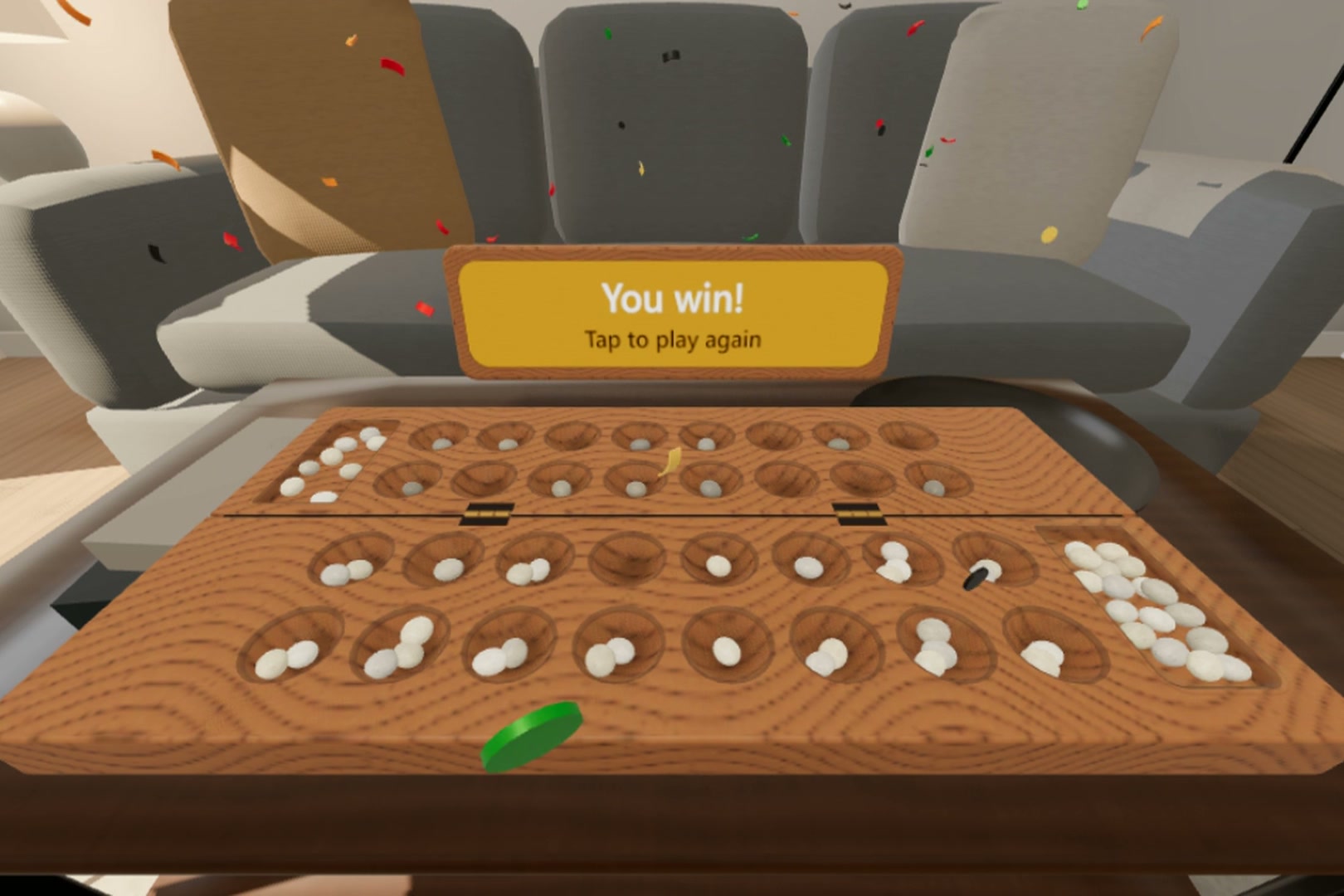
- Winning: leave your opponent with only single seeds, so they can't move, and you win. Their side goes grey.
- An opponent: Easy, Medium and Hard.
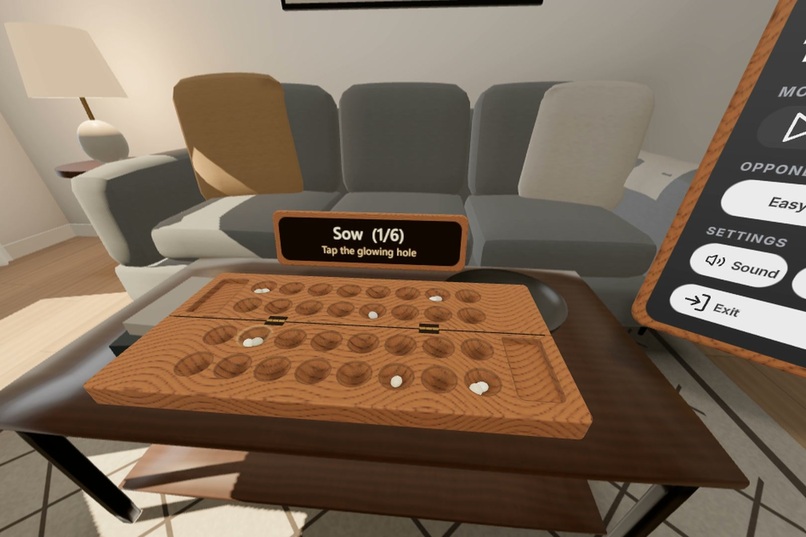
- Learn: six short lessons with a guided move and a friendly voice cover every rule.
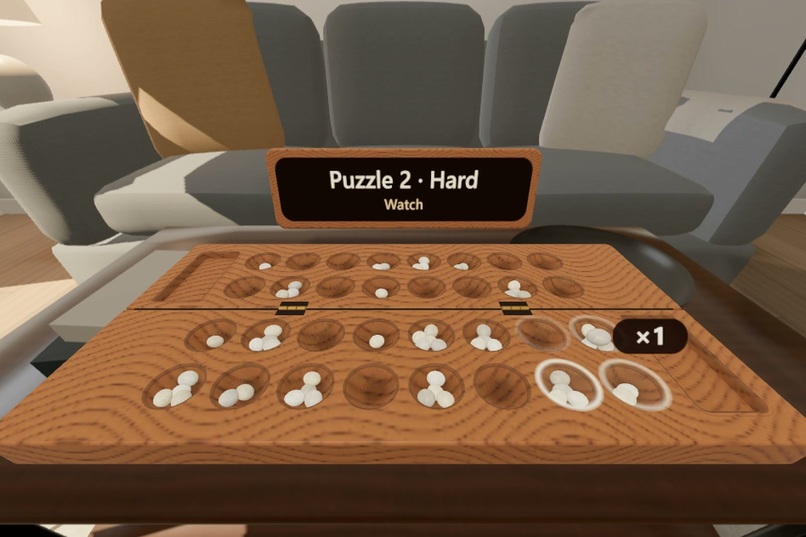
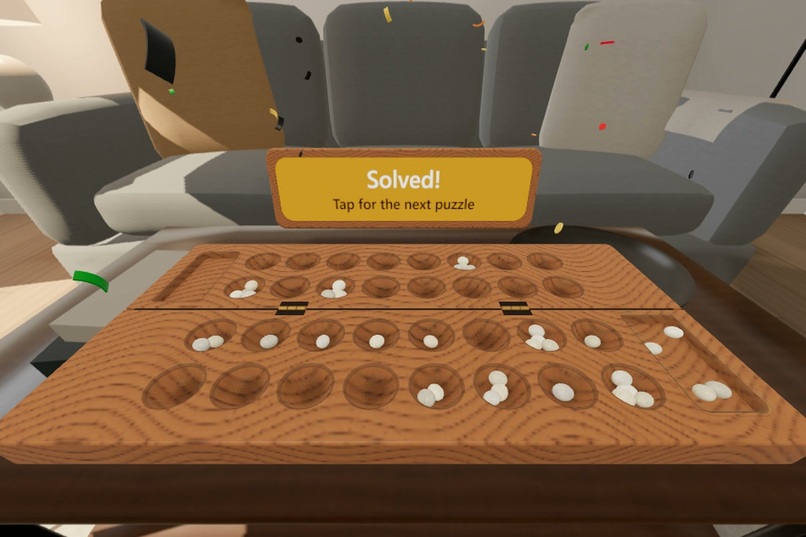
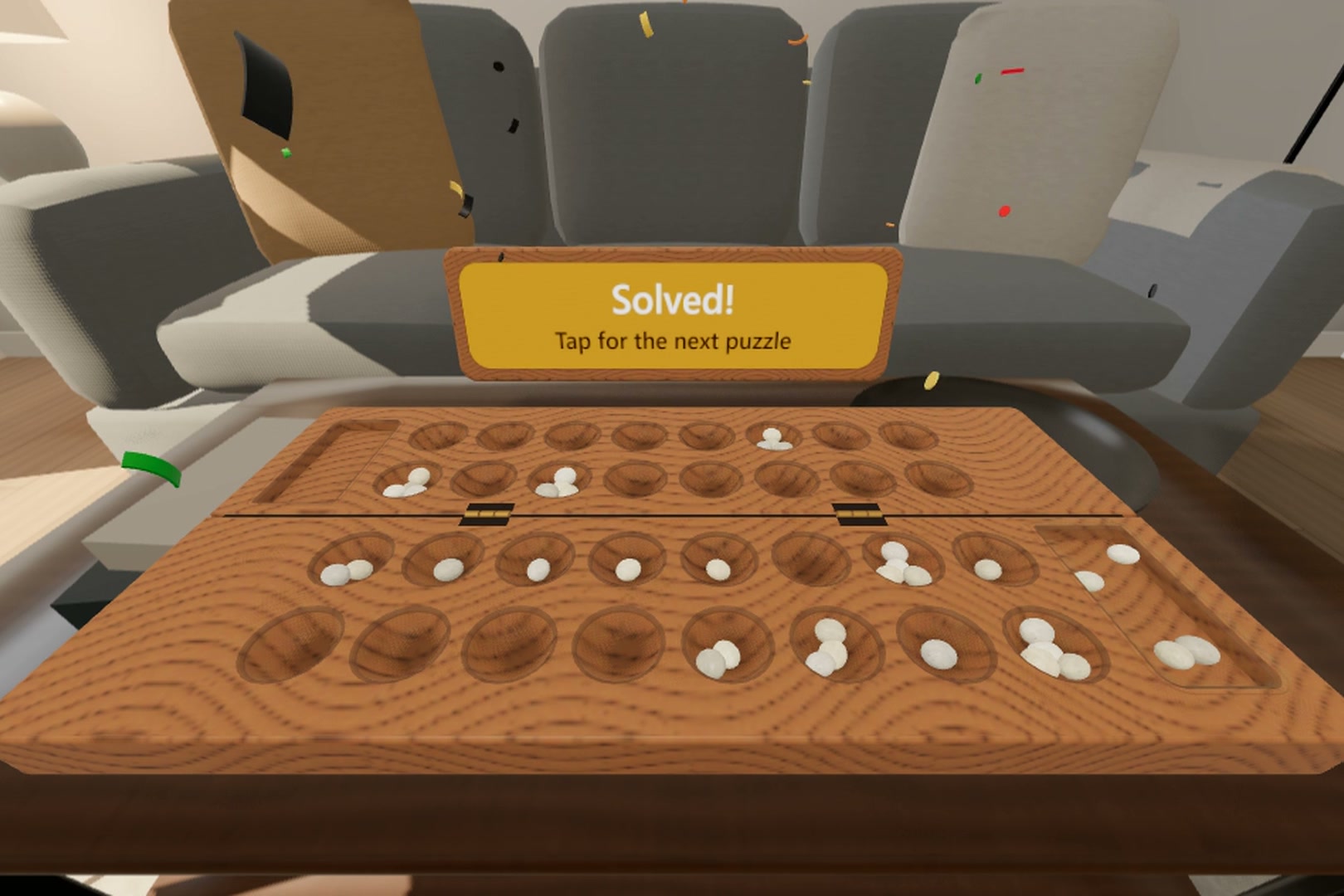
- Puzzles: you get a position and gold target holes to capture in one move. Each difficulty has its own ladder, and on Medium and Hard the guides switch off.
- Details:
- stone-on-wood sounds for every seed and kalimba music;
- 3D confetti in the colours of the Zambian flag;
- haptic feedback;
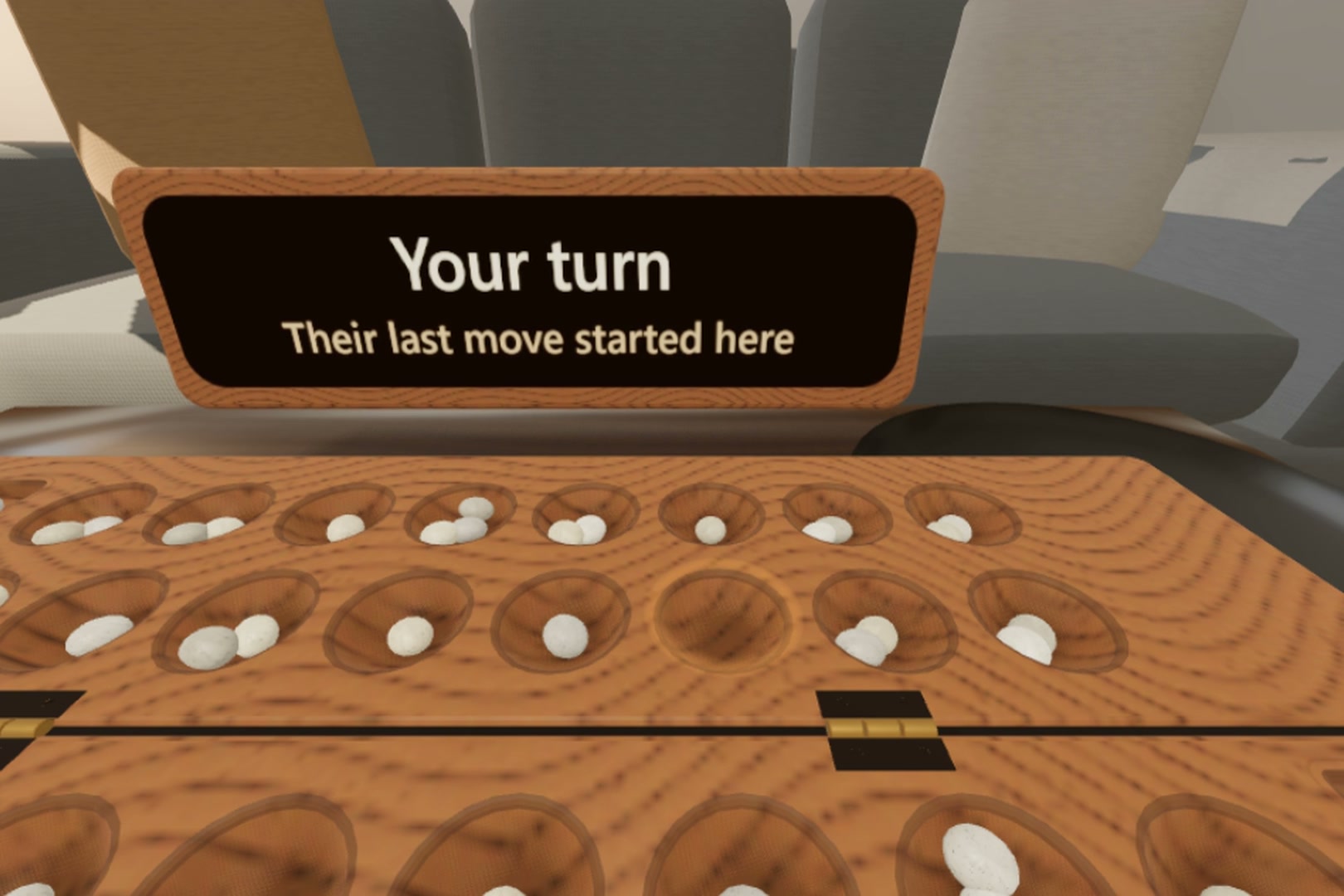
- a faint orange ring that shows where your opponent's last move started.
Play it: nsolo.vercel.app
How I built it
Nsolo is built with Meta's Immersive Web SDK (IWSDK) on WebXR, using Three.js, TypeScript and Vite. It runs straight from a link in the Quest browser, with nothing to install.
- Rules engine: a pure TypeScript module with tests. A move returns the new state plus a step-by-step list of events (lift, sow, capture, store), and the 3D board animates exactly those steps, so what you see always matches the rules.
- The opponent: it searches ahead in a Web Worker, so the game stays smooth while it thinks. With relay sowing, a single move can chain around the whole board, which makes the number of positions grow fast. Each player has \( 16 \) holes, so looking \( d \) moves ahead means checking up to \( 16^d \) positions, and each of those moves can chain through many sowings. Pruning and move ordering are what make Hard both strong and fast.
- The board: the board, holes, hinges, seeds and the engraved name are all procedural geometry, built in code. The game loads quickly and stays light on the headset.
- Sound: I used recorded stone-on-wood samples from Freesound, with different variants for a seed falling into an empty hole, landing on a pile, and being picked up. The music is generated kalimba, and it restarts with every new game.
- The lesson voice: the open-source Kokoro text-to-speech model.
- Testing: I don't own a headset, so I tested everything in IWER, the IWSDK's XR emulator, including the hands and a mixed-reality living room.
- Hosting: the game is deployed on Vercel.
Challenges I ran into
- Getting the rules right. Nsolo has regional variations, and my first version had some details wrong. I rebuilt the engine around the rules as I know them:
- relay sowing;
- captures only from your front row, and only when their front hole has seeds;
- you need \( 2 \) or more seeds in a hole to move;
- a player with no hole of \( 2 \) or more seeds loses at once.
- Making a crowded board readable. There are \( 32 \) holes and \( 64 \) seeds at arm's length. I added:
- clear outlines around the holes;
- seeds that pop up when you point at a hole;
- a preview of what a move will take;
- stores that glow when seeds go into them.
- Sound that feels like wood. My first synthesized sounds were too sharp; one sounded like a gunshot. Recorded samples, with a separate sound for each kind of seed action, finally felt right.
- Building for a headset without a headset. Every interaction had to be checked in the emulator, including hand poses, pinches and taps.
What I learned
- Hand-only play needs constant feedback: hover, pop, preview, sound and haptics. Without it, people don't trust their own hands.
- Teaching the game matters as much as the game. The lessons and puzzles are what turn "a strange board" into something you want to play again.
- Keeping the rules in a pure, tested module made every later feature easier. That includes the opponent, the lessons, the puzzles, and the animations.
What's next
- Playing against friends online.
- Options for regional rule variations.
- More languages for the lessons.
Built With
- ffmpeg
- freesound
- github
- hand-tracking
- iwsdk
- javascript
- kokoro-tts
- meta-quest
- mixed-reality
- node.js
- three.js
- typescript
- vercel
- vite
- vitest
- web-audio-api
- web-workers
- webxr
