-
-
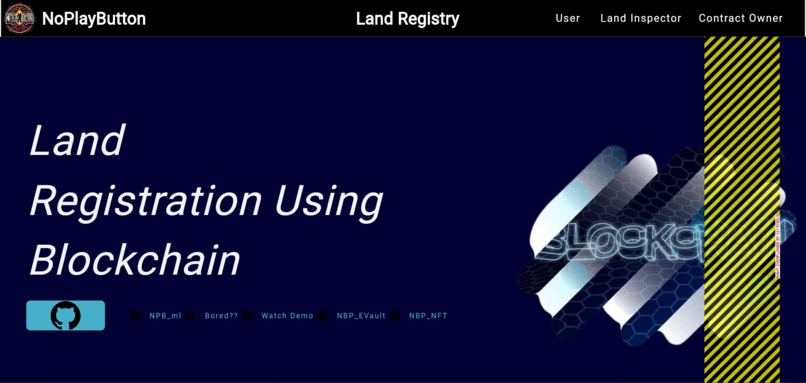
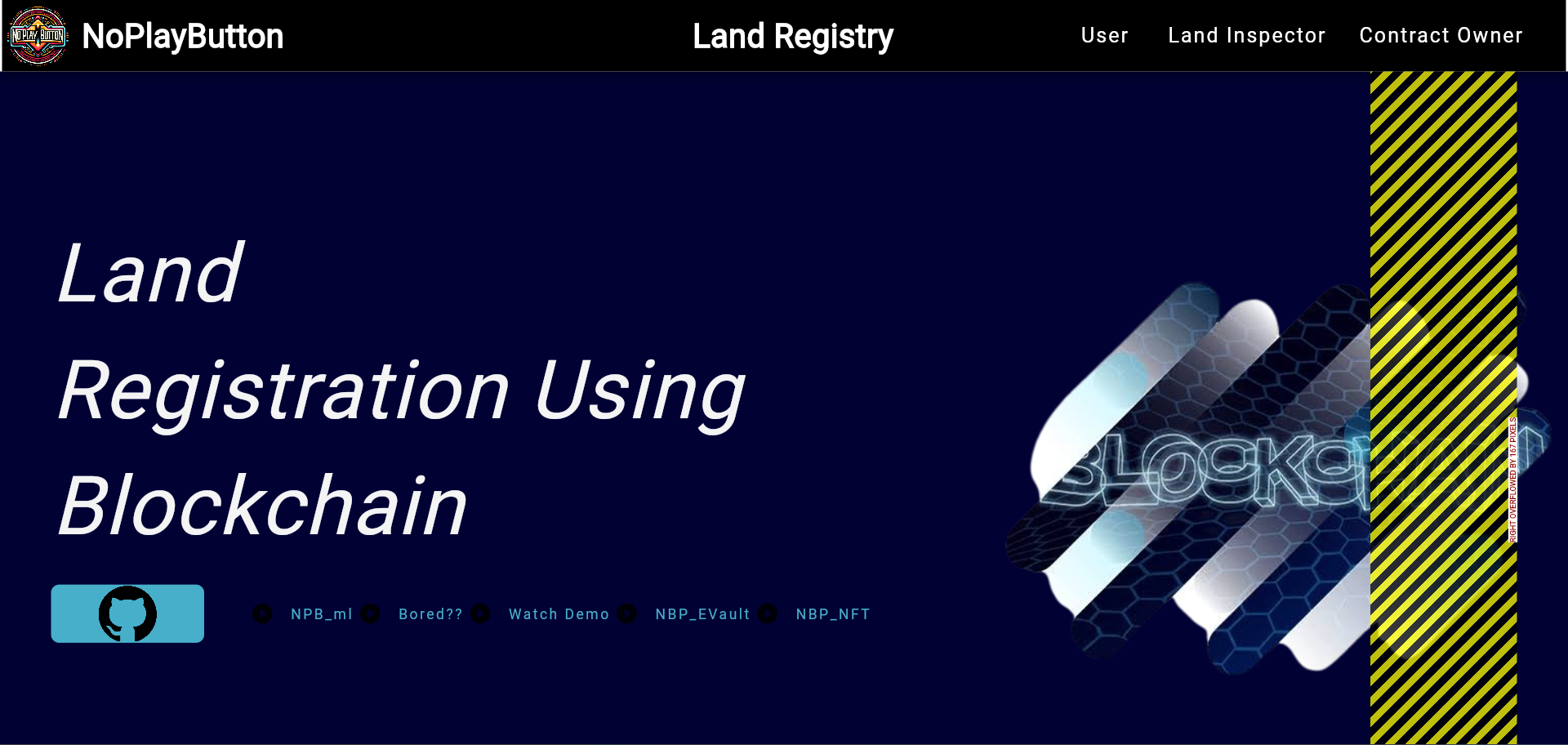
Homepage
-
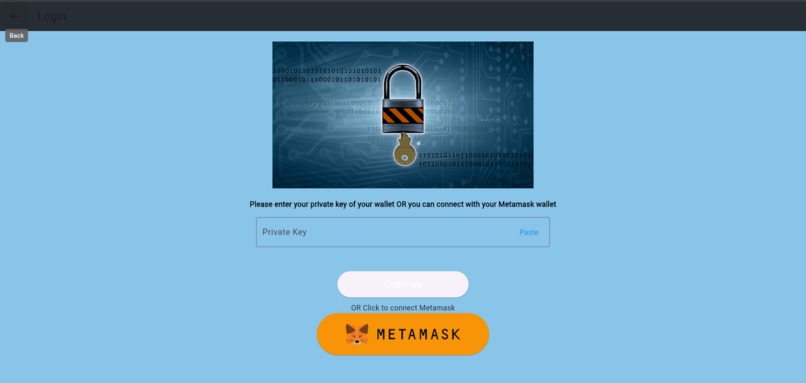
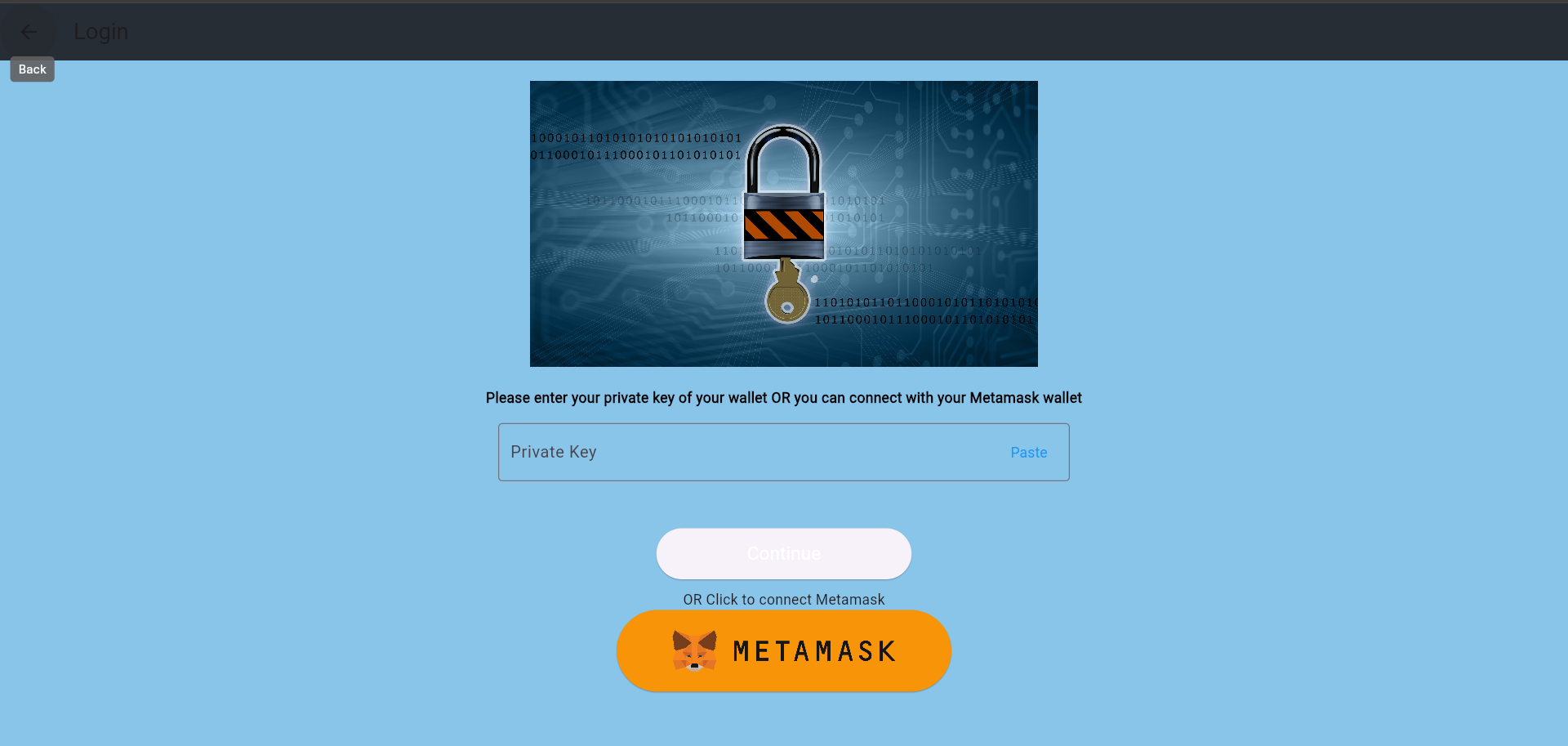
Login Page
-
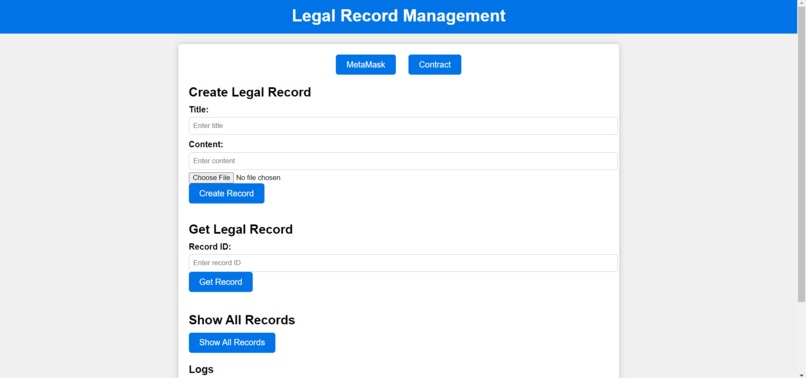
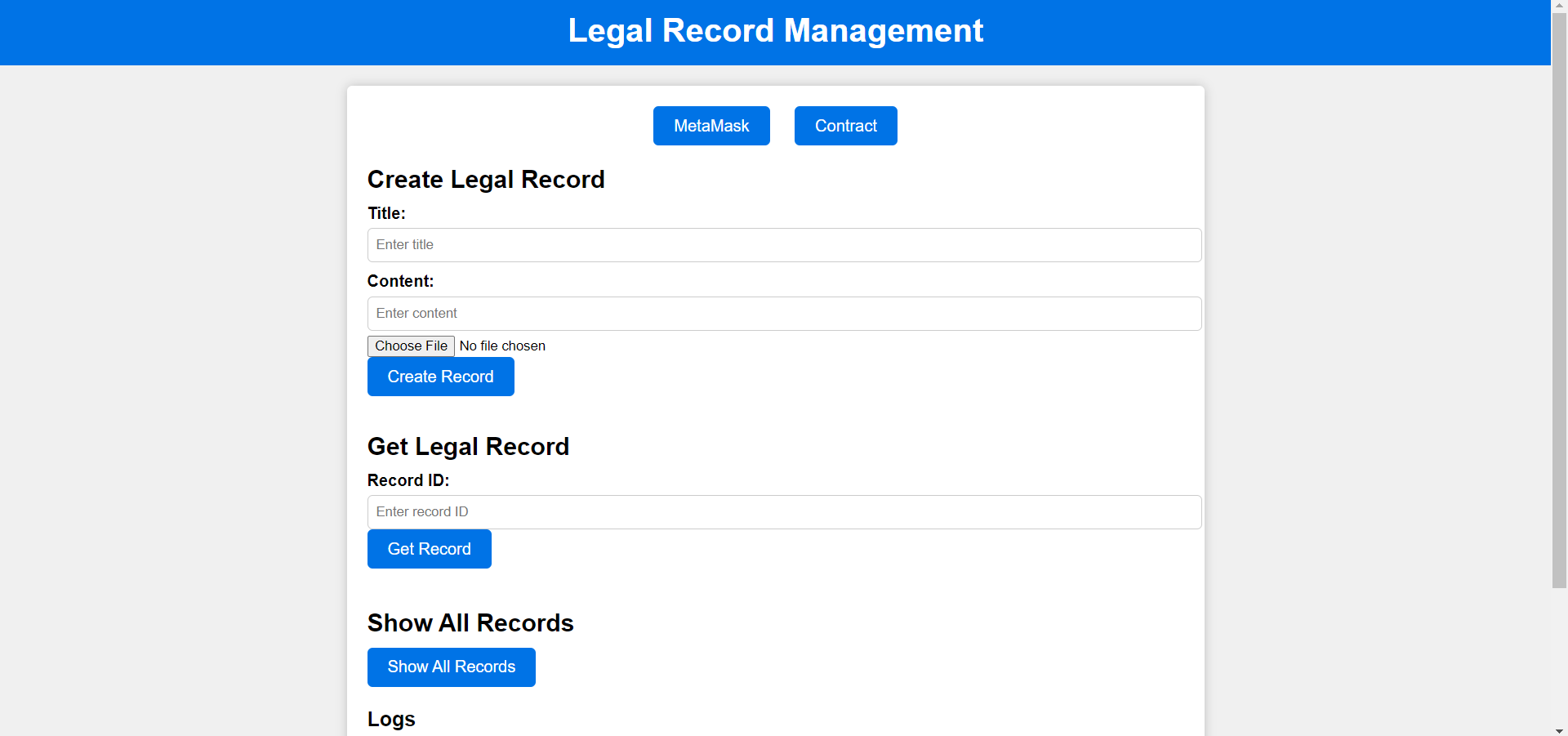
E-Vault
-
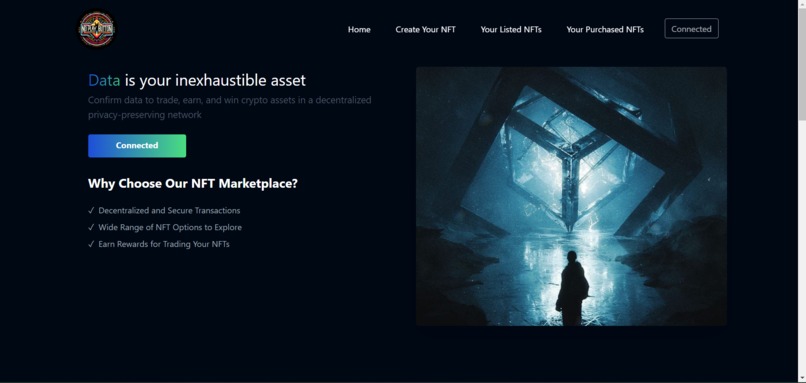
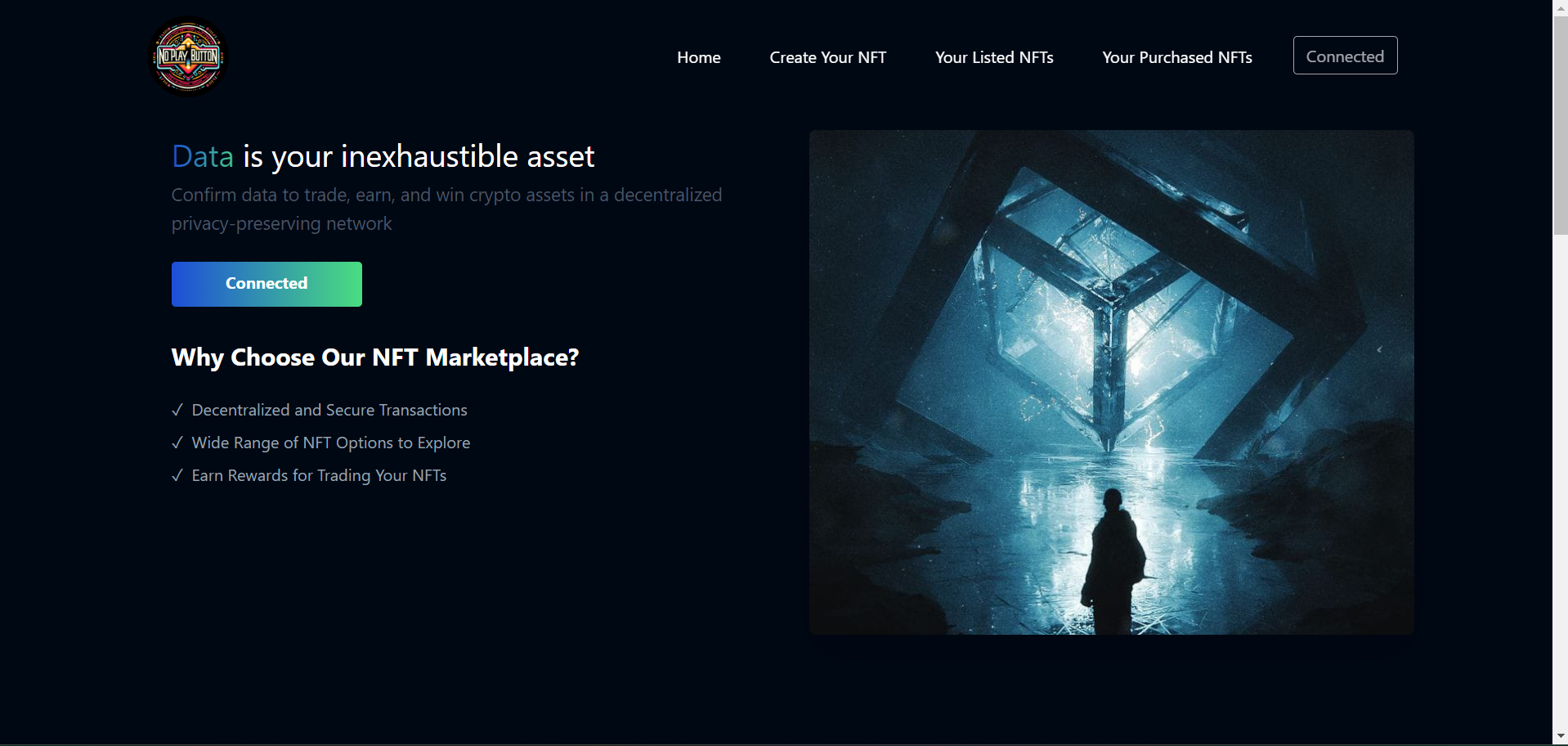
NFT Reward System
-
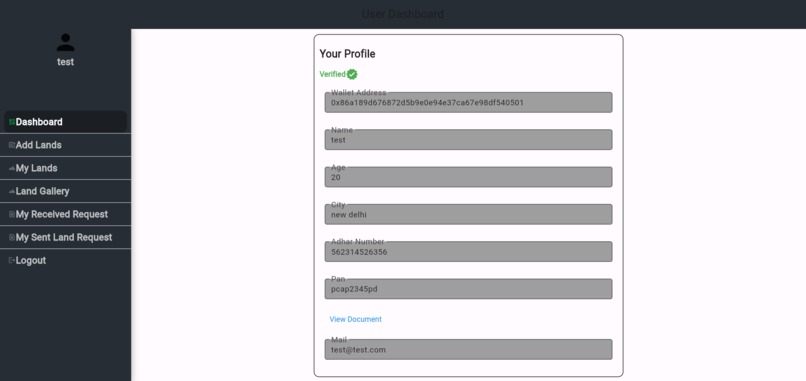
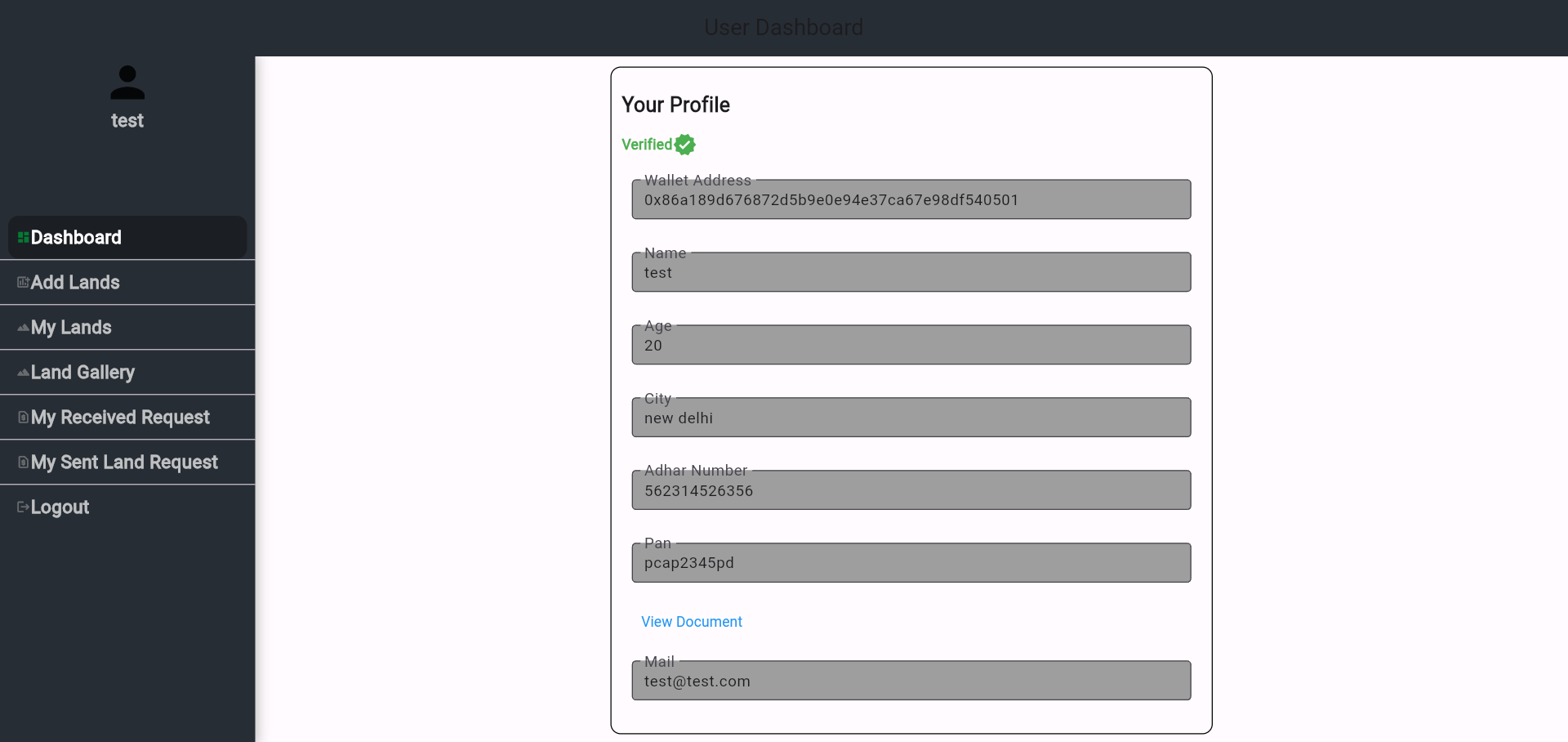
User Dashboard
-
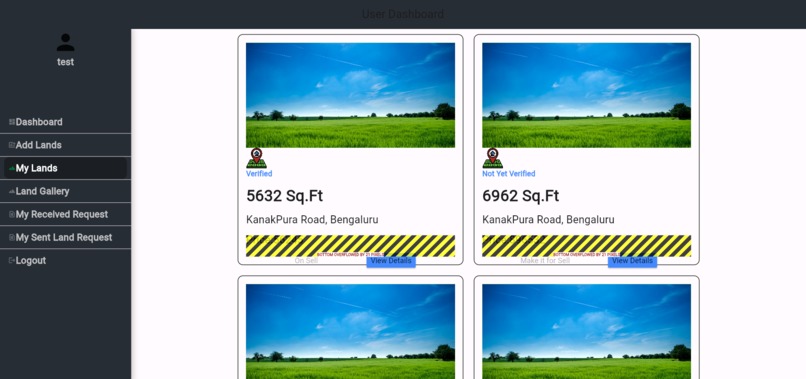
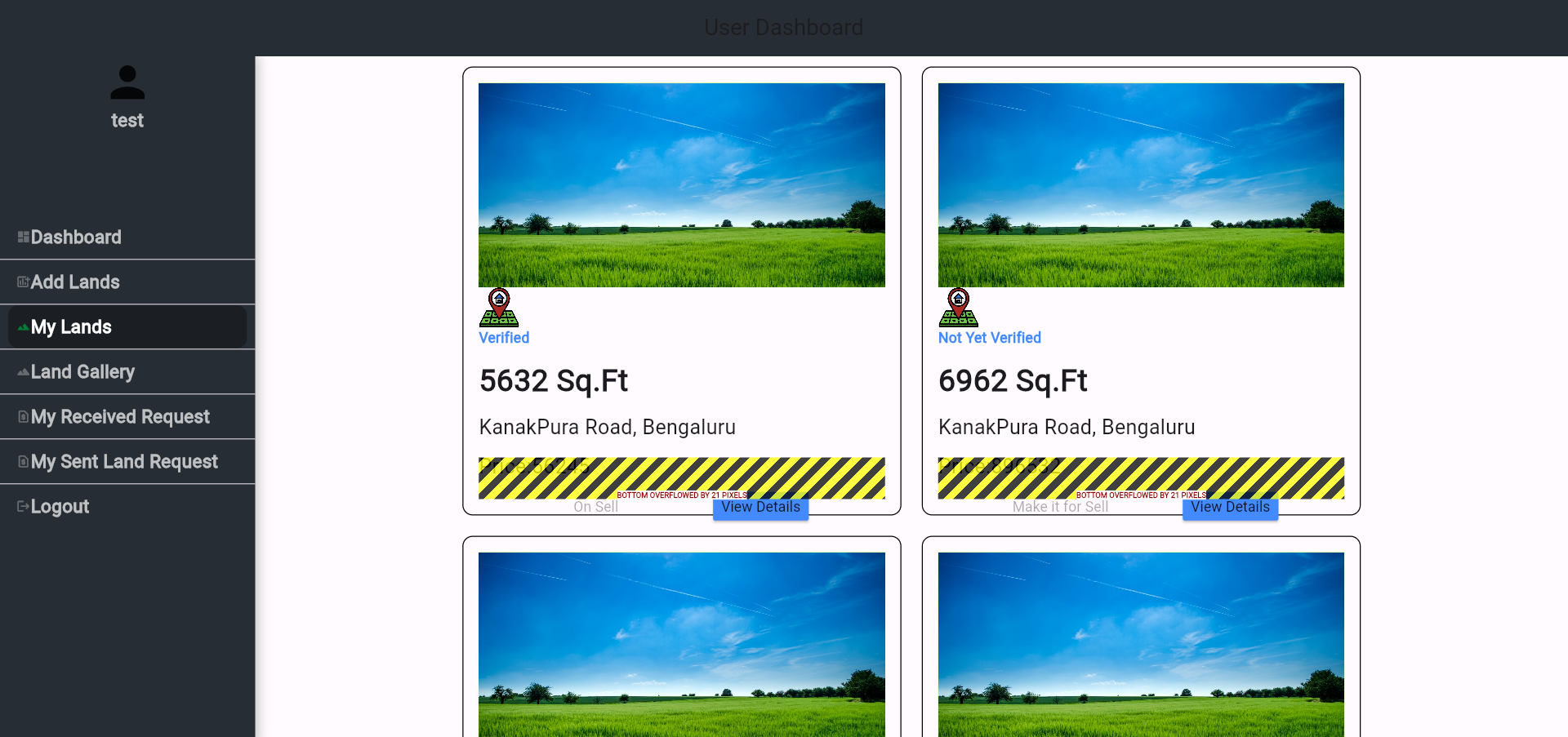
Land Gallery
-
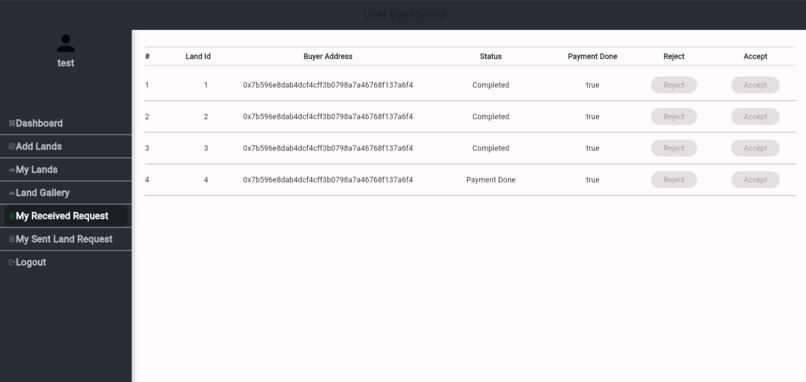
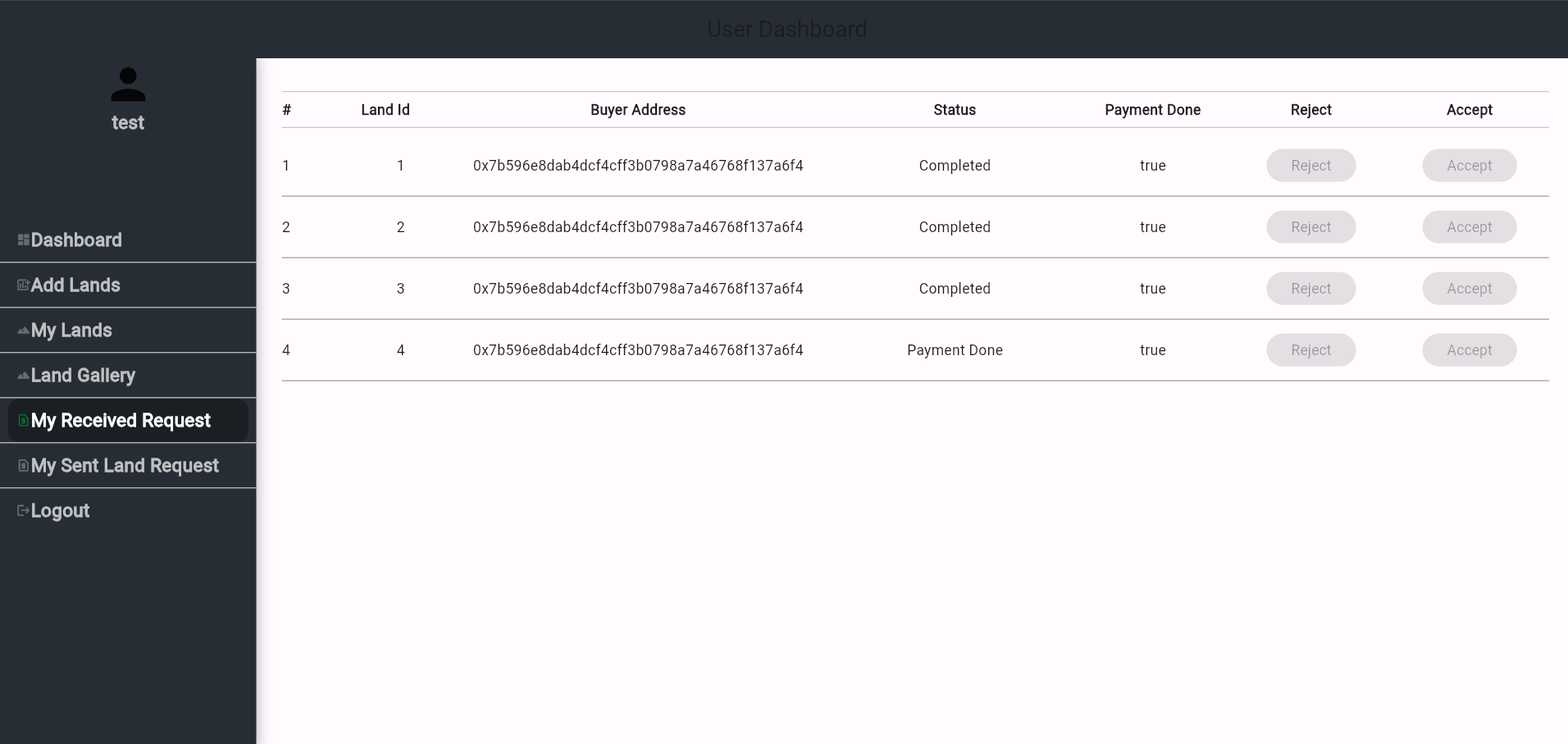
Offers
-
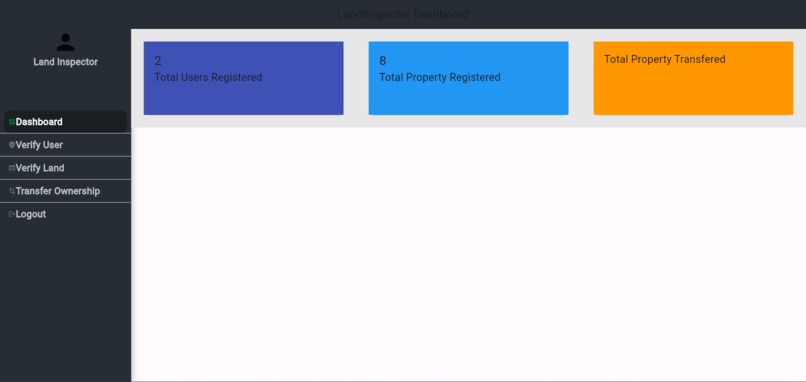
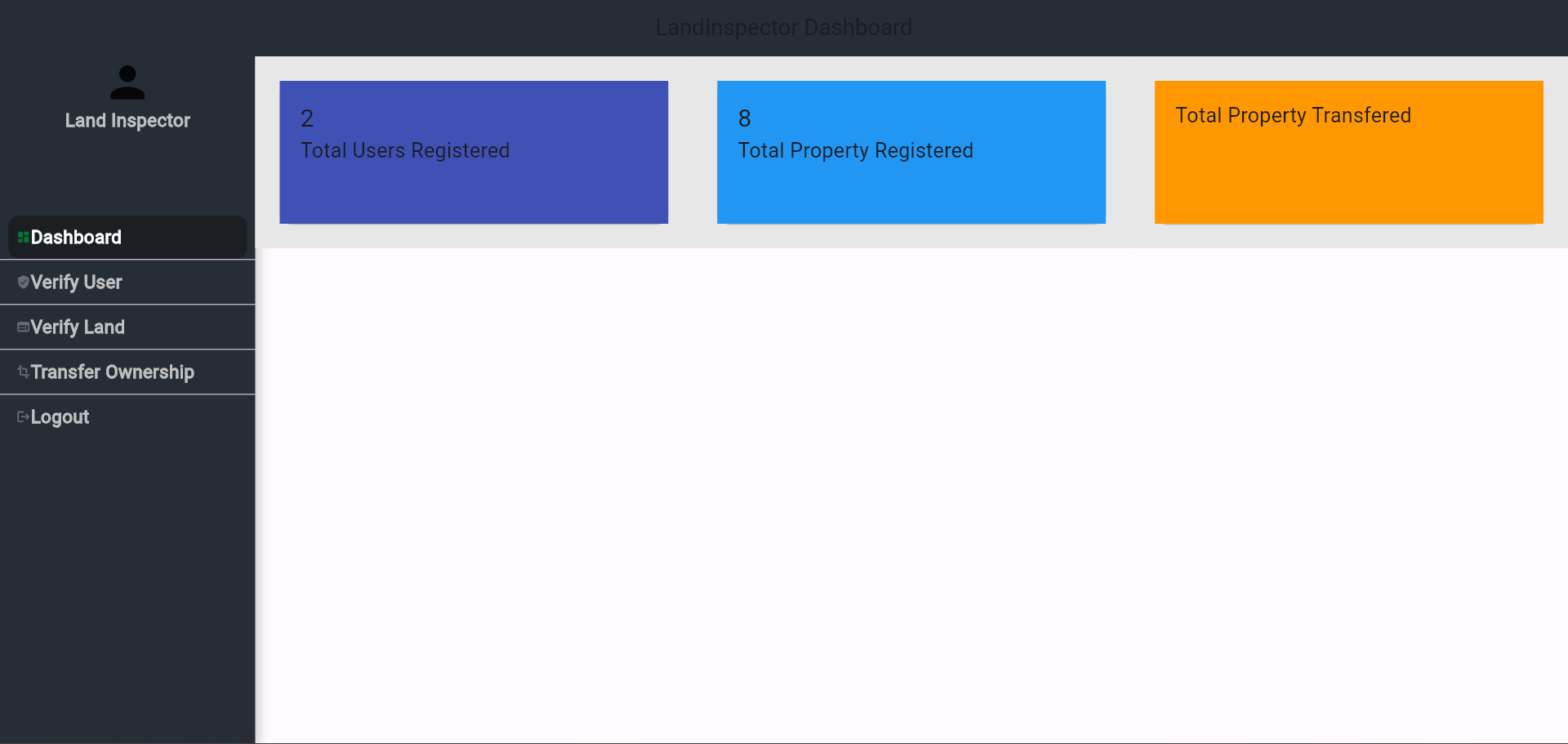
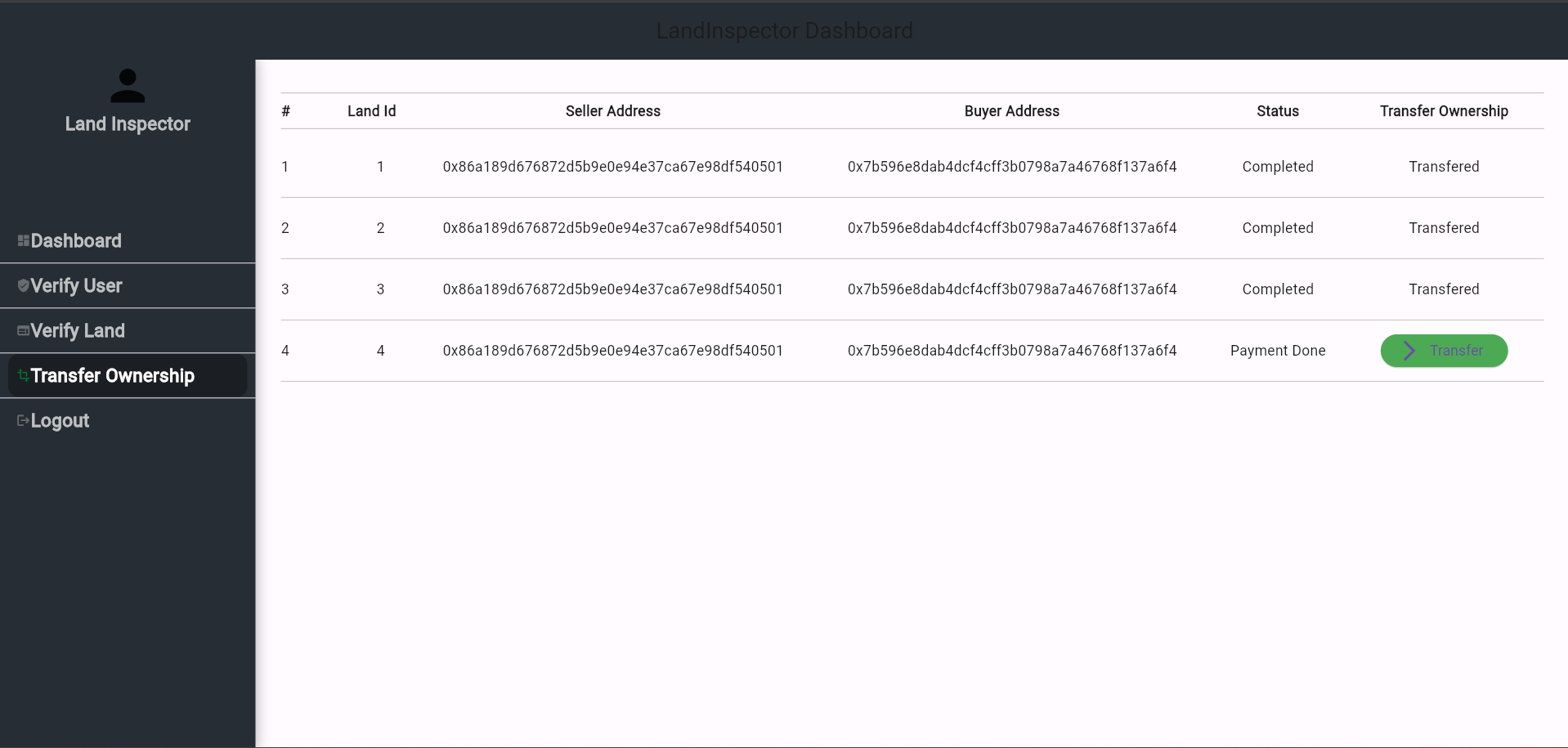
Verifier Dashboard
-
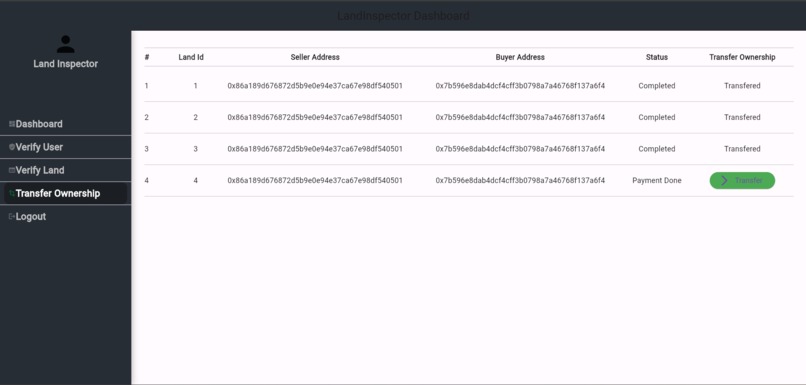
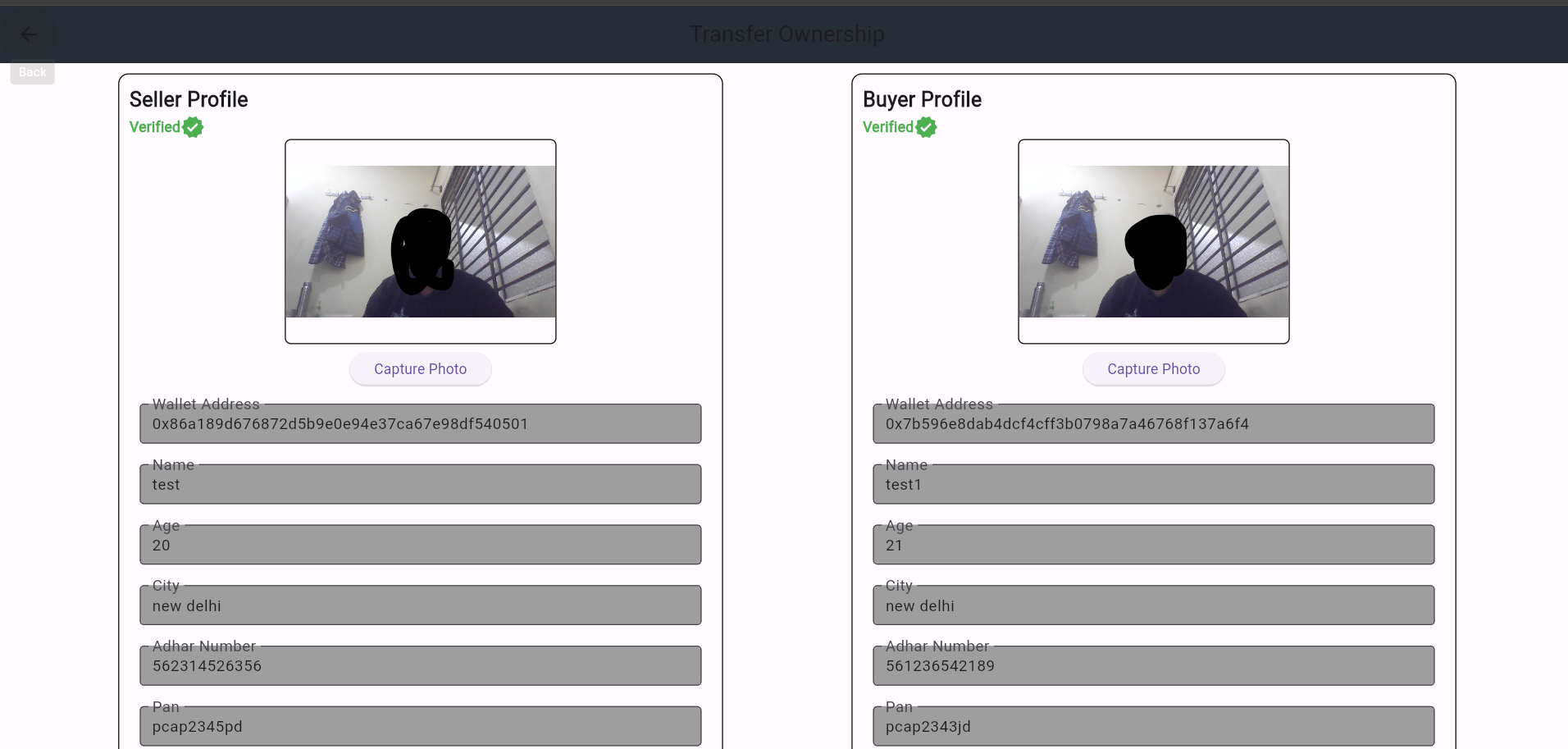
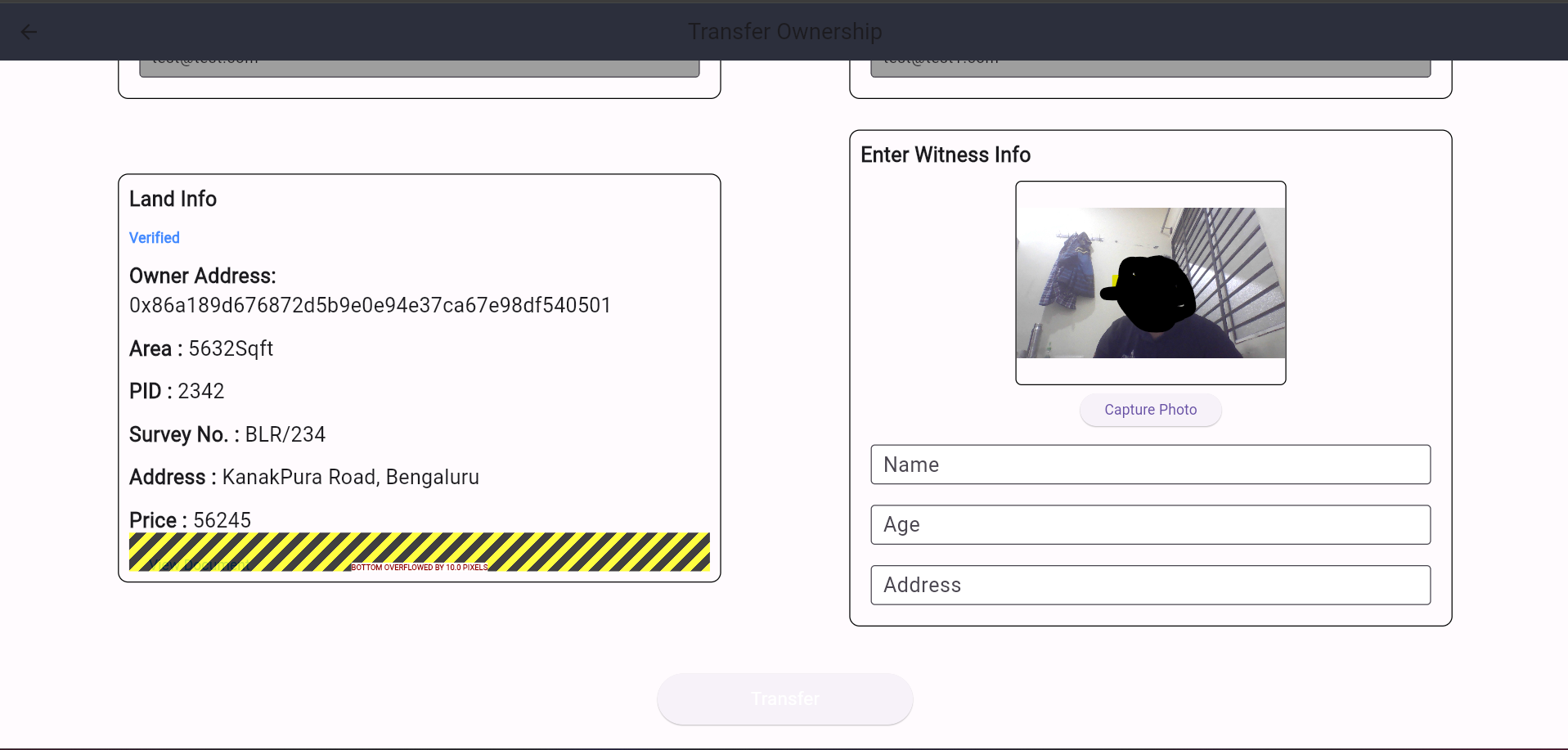
Ownership Transfer
-
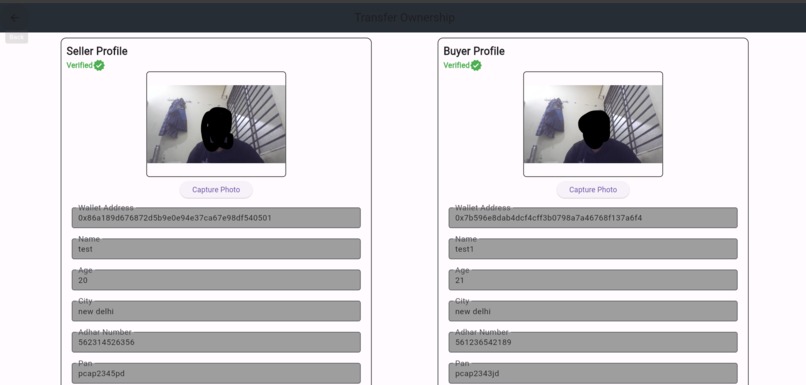
Deed
-
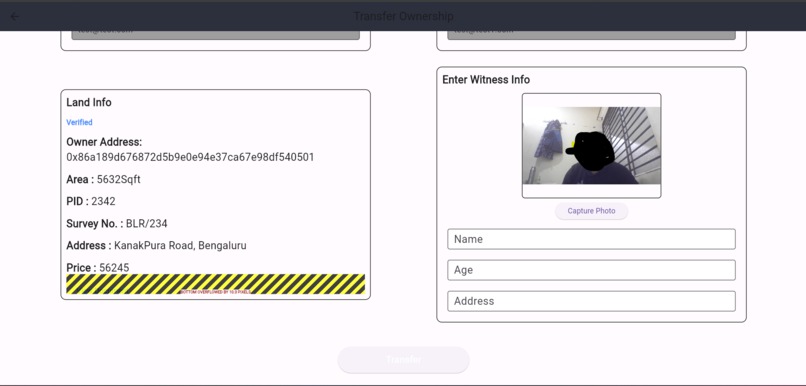
Witness
-
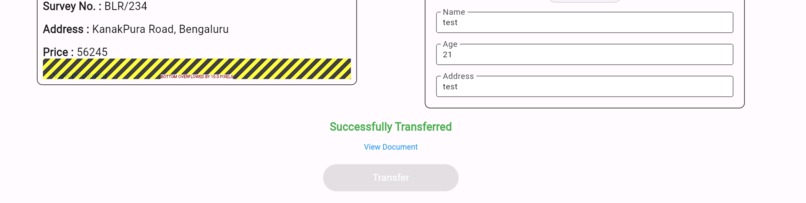
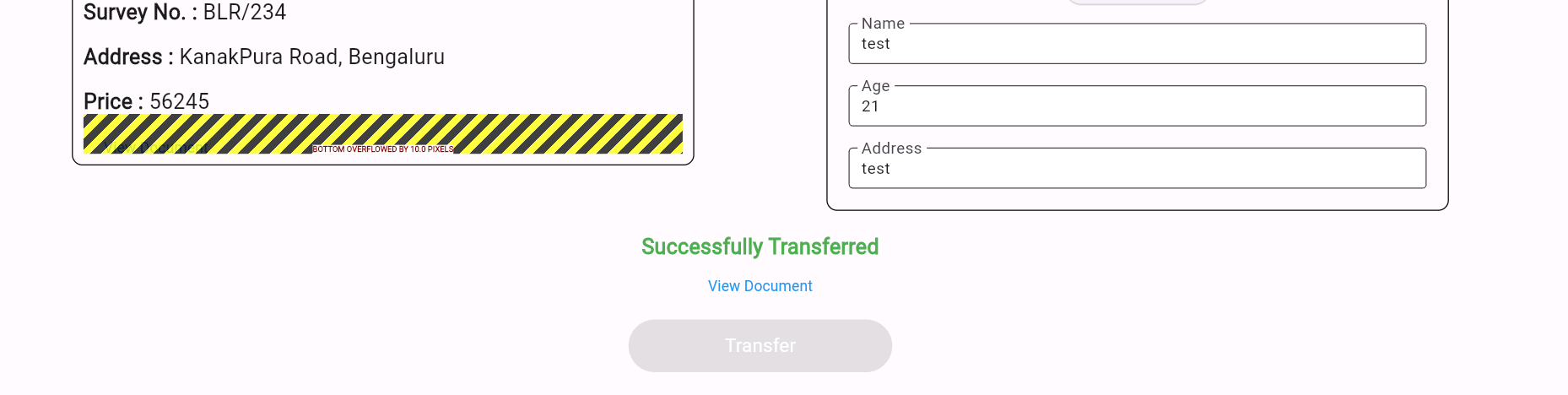
Successfully Transferred
Inspiration
The idea was sparked by my father's experiences as a real estate broker, where he encountered numerous property-related frauds. After learning about blockchain technology, I realized the potential for creating a decentralized, secure, and safer system. Unlike centralized systems that are vulnerable to tampering, blockchain may also face risks, but it ensures that any record changes are public, offering a significant improvement in transparency and security.
What it does
This project aims to modernize land registration by making the whole process smooth very transparent, tamper-proof, and secure. It seeks to eliminate intermediaries, reduce costs, prevent fraud, and simplify registration. It employs tamper-resistant ledger technology for secure property ownership records and uses IPFS to safeguard vital documents from loss or tampering. These elements emphasize the project's commitment to user satisfaction, efficiency, transparency, security, and data integrity.
Key Features: Online transactions, AI/ML for price analysis, E-Vault for document safety, Reward system and a Bored button.
Revenue Model: Transaction fees, API access, consulting, training, partnerships, data licensing, ads, and government contracts for the blockchain land registry project.
How we built it
Leveraging the Ethereum Blockchain for its security and widespread adoption, we incorporated a Machine Learning model to forecast Ethereum and rupee prices, maximizing profitability. Mapbox integration offers users a visual understanding of the land they're buying or selling. We employed IPFS (NFT.STORAGE) for secure storage of deeds and government records. Metamask facilitates seamless login and transaction processes. Our backend framework utilizes Node.js and Hardhat Node. For local project testing before deployment on the mainnet, we utilized Ganache and Truffle. The frontend is developed using Flutter and React. The project is over 85% complete, focusing on user interface and experience.
Challenges we ran into
The Metamask integration currently exhibits some issues and requires further optimization and testing to ensure smooth operation. As we are relatively new to Flutter, modifying and working on the complex UI presents challenges for us. Additionally, our Machine Learning model is not yet fully operational; it needs more training to be effective. Finally, the e-vault designated for document storage requires improvements in the document retrieval process.
Accomplishments that we're proud of
Middlemen Removal for Cost Savings: Eliminates intermediaries, reducing transaction costs. Ensures transparency, preventing deception. Streamlines processes, saving time for property transactions. Decentralized Tamper-Proof Ledger to Prevent Ownership Fraud: Utilizes immutable records to prevent fraud. Enhances security through cryptographic techniques. Enables easy ownership verification for buyers. Secure Storage of Property Registration Documents Using IPFS: Employs decentralized IPFS for secure document storage. Implements access control for authorized parties. Ensures resilience, even in the face of network disruptions. These advantages highlight how blockchain and NFTs offer cost-efficient, fraud-resistant, and secure solutions for land registry management.
What we learned
This project, encompassing a comprehensive real estate platform using blockchain and other technologies, has offered multifaceted learning experiences. Central to its functionality is the Ethereum Blockchain, chosen for its robust security and popularity, which underlines a deeper understanding of blockchain technology, particularly in practical, real-world applications. A significant challenge was faced in integrating Metamask, highlighting the importance of patience and a calm approach in resolving technical issues, especially when dealing with new or intricate technologies.
Further, the project involved developing a Machine Learning model to predict prices in Ethereum and rupees, emphasizing the iterative nature of AI and the necessity for continuous refinement. This aspect of the project underscored the challenges and complexities inherent in machine learning, particularly in financial forecasting.
The use of Flutter for the UI, despite its complexity and the team's inexperience, reflects a willingness to engage with and learn from new technologies. The difficulties encountered in modifying the UI stress the importance of adaptability and resilience in the face of technical challenges.
The incorporation of IPFS (NFT.STORAGE) for secure document storage, although innovative, revealed challenges in document retrieval, indicating a need for further development in decentralized storage solutions. This aspect of the project demonstrates the ongoing evolution and learning in the field of secure document management.
Overall, the project was a rich learning ground, combining a range of technologies and frameworks (Ethereum, Machine Learning, Mapbox, IPFS, Metamask, Node.js, Hardhat Node, Ganache, Truffle, Flutter, React). It offered insights into the complexities of modern software projects and the importance of comprehensive integration and rigorous testing in software development.
What's next for NPB_Land Registry
1) Concluding the development of our platform, we are now moving into the beta testing phase and actively pursuing collaborations with governmental bodies to ensure legal legitimacy. To enhance optimization and introduce greater flexibility, we are considering transitioning to an NFT-based model, which will be augmented with additional security measures.
2) Adding support of different WEB3 wallets or providers
3) Enhancing the ML Model
4) Adding AI to detect fraud documents and users

Log in or sign up for Devpost to join the conversation.