-
-
App icon, 1024×1024.
-
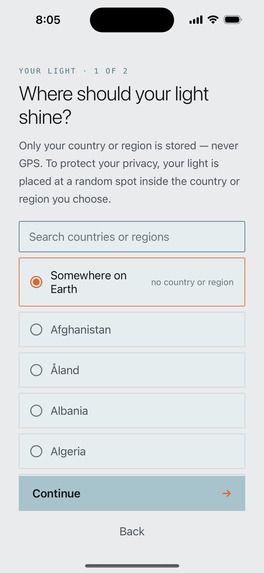
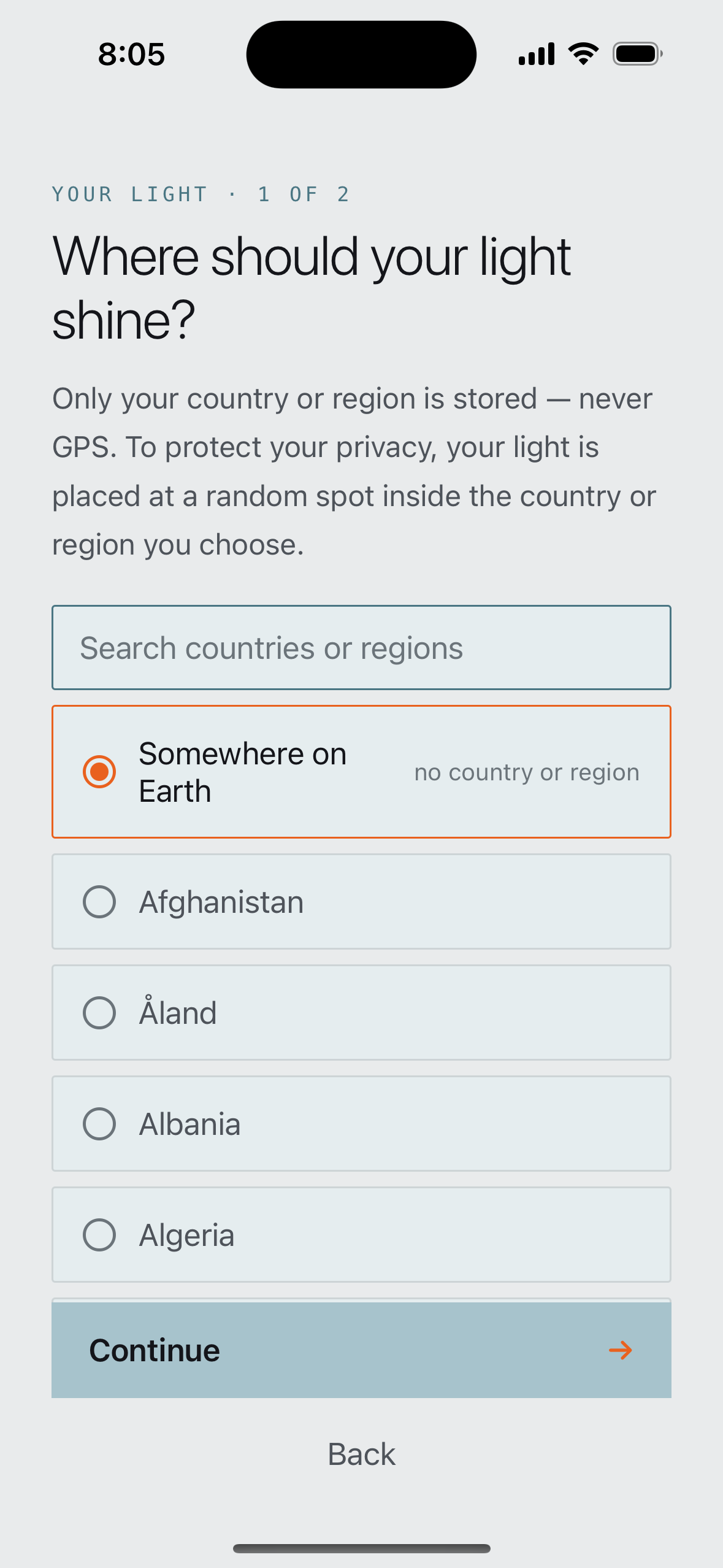
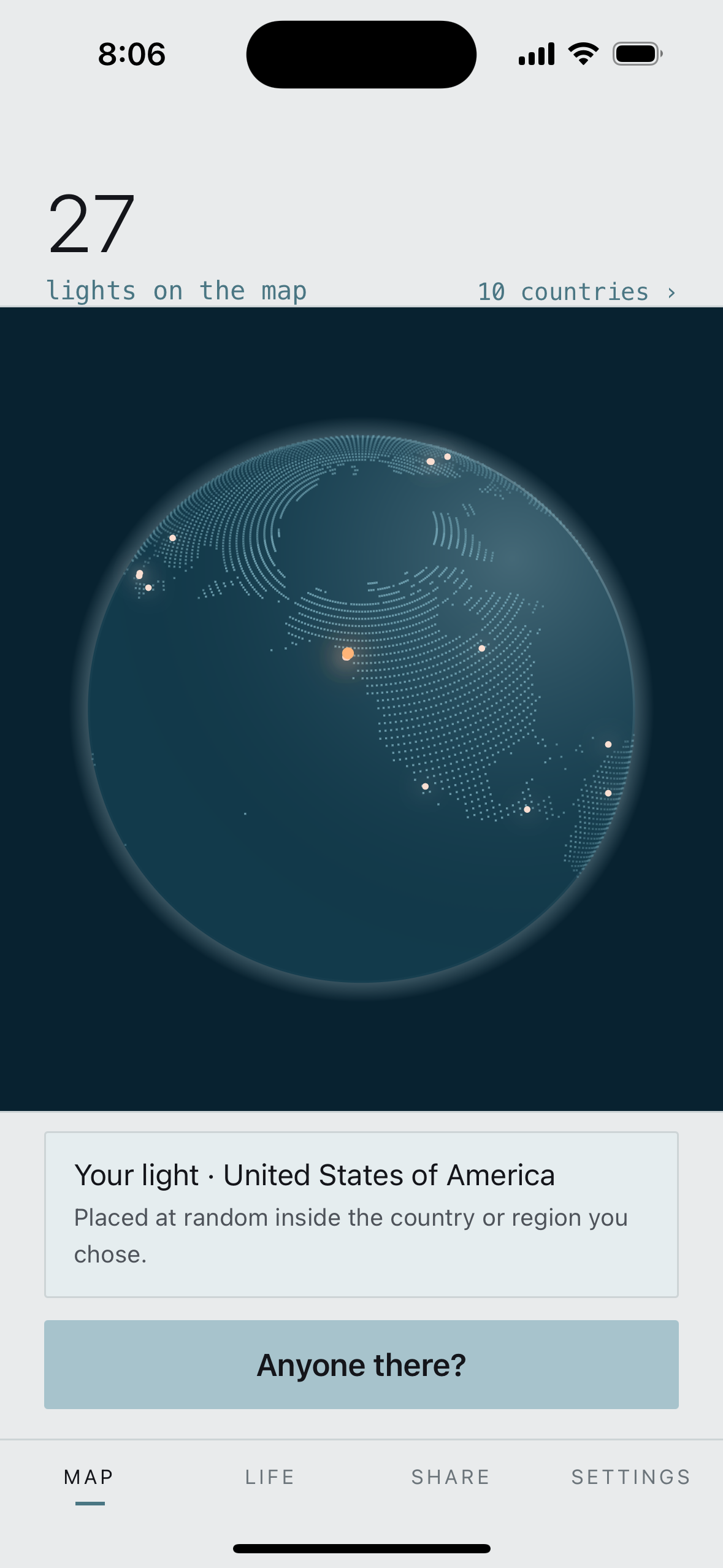
You pick a country. Never GPS. Your light lands at a random point inside it.
-
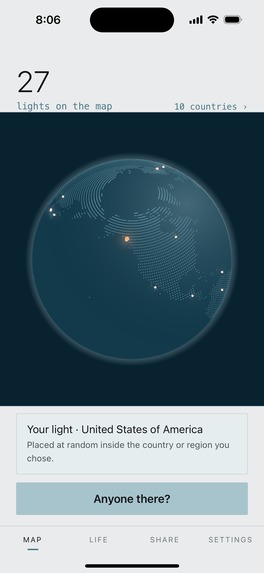
Every light is one person who opened the app. The number is the real count, and it started at zero.
-
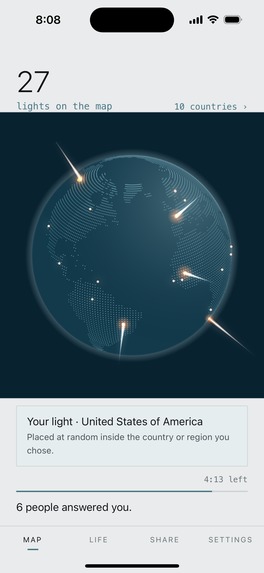
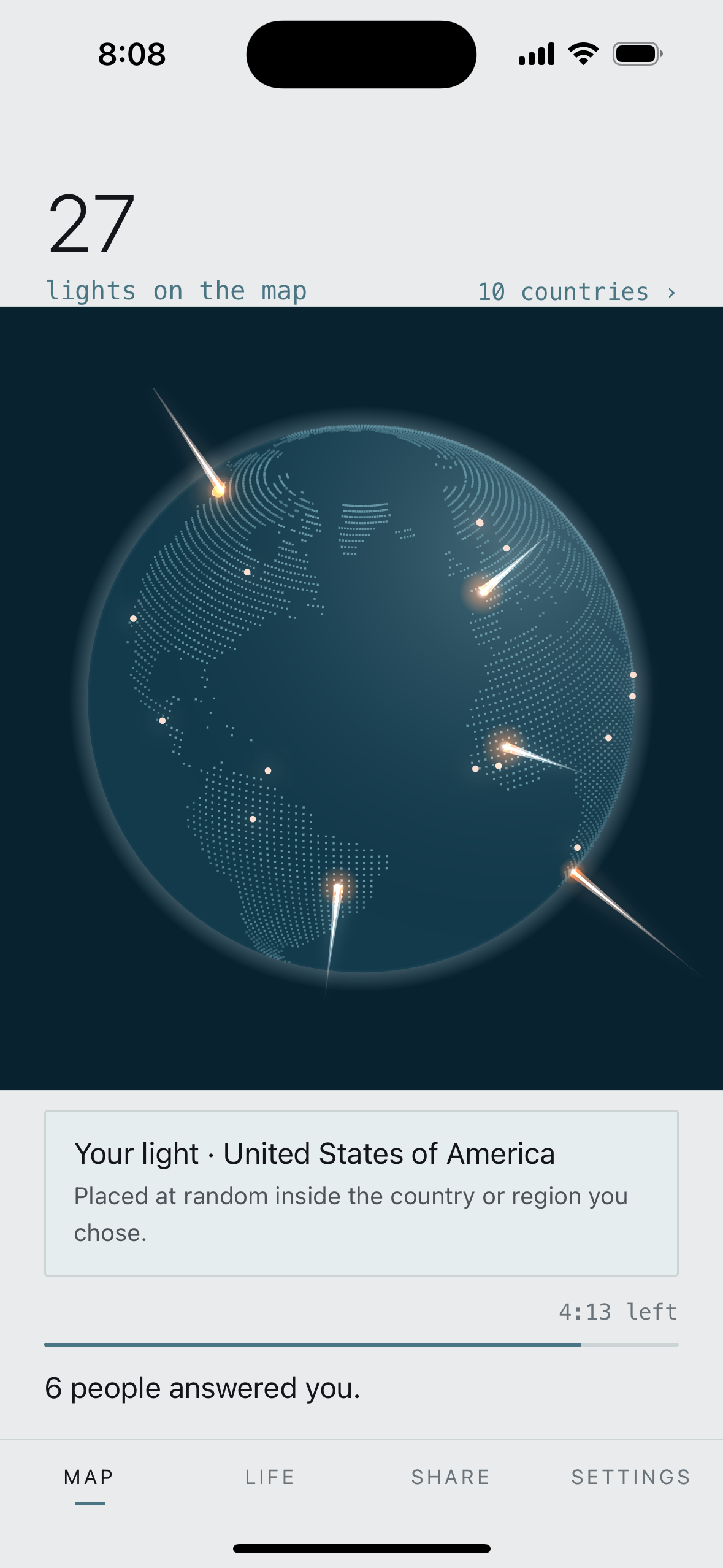
Someone answered. The light shoots up from somewhere inside their country, and that is all you learn about them.
-
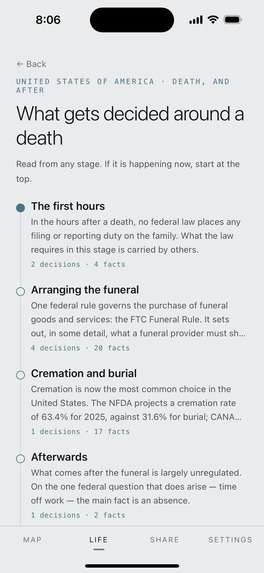
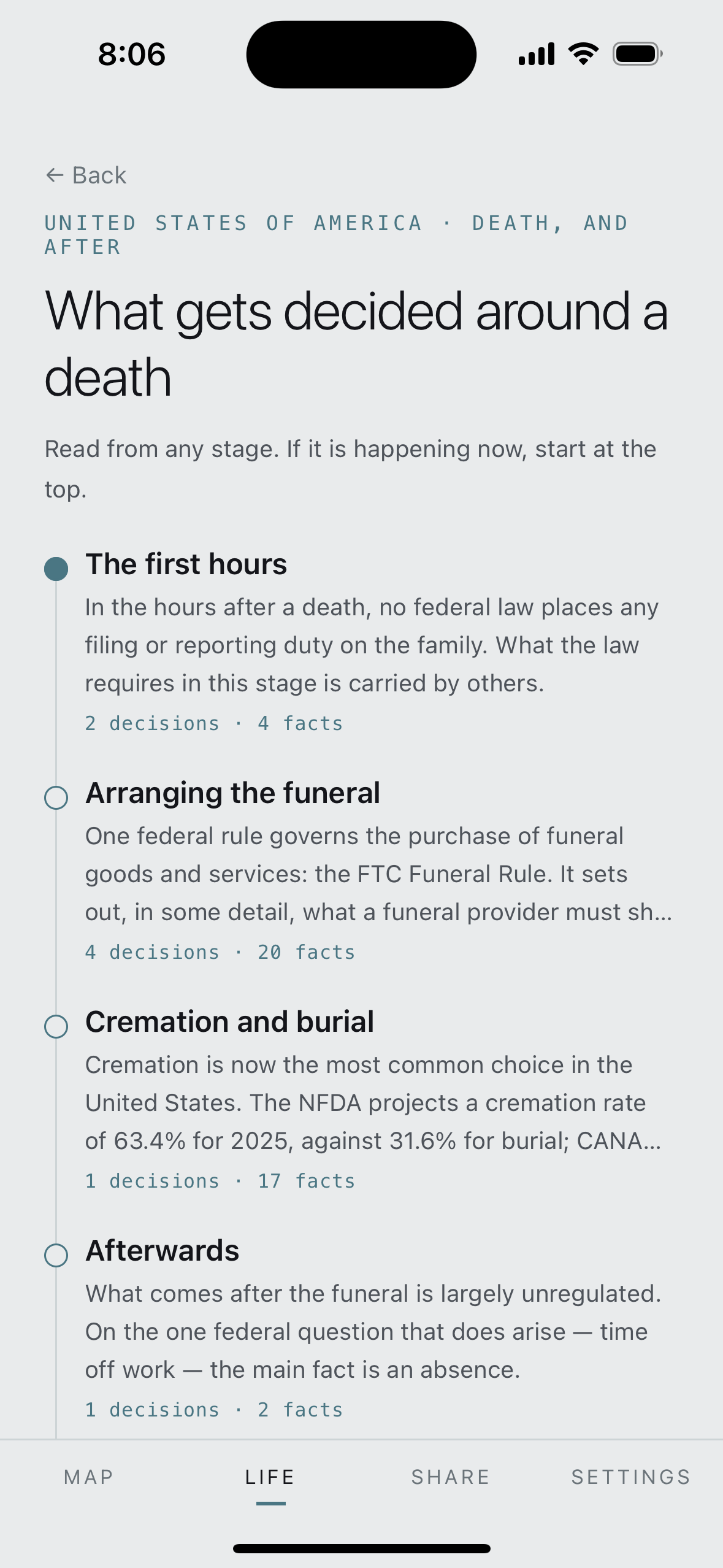
The Map of Life: what to do after a death, for people with no priest and no script.
-
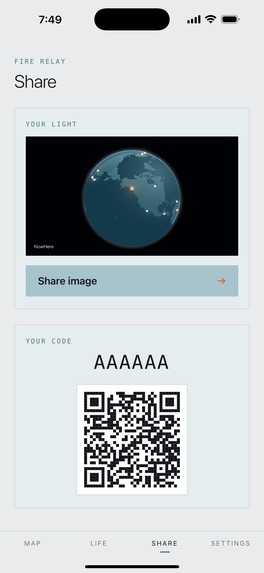
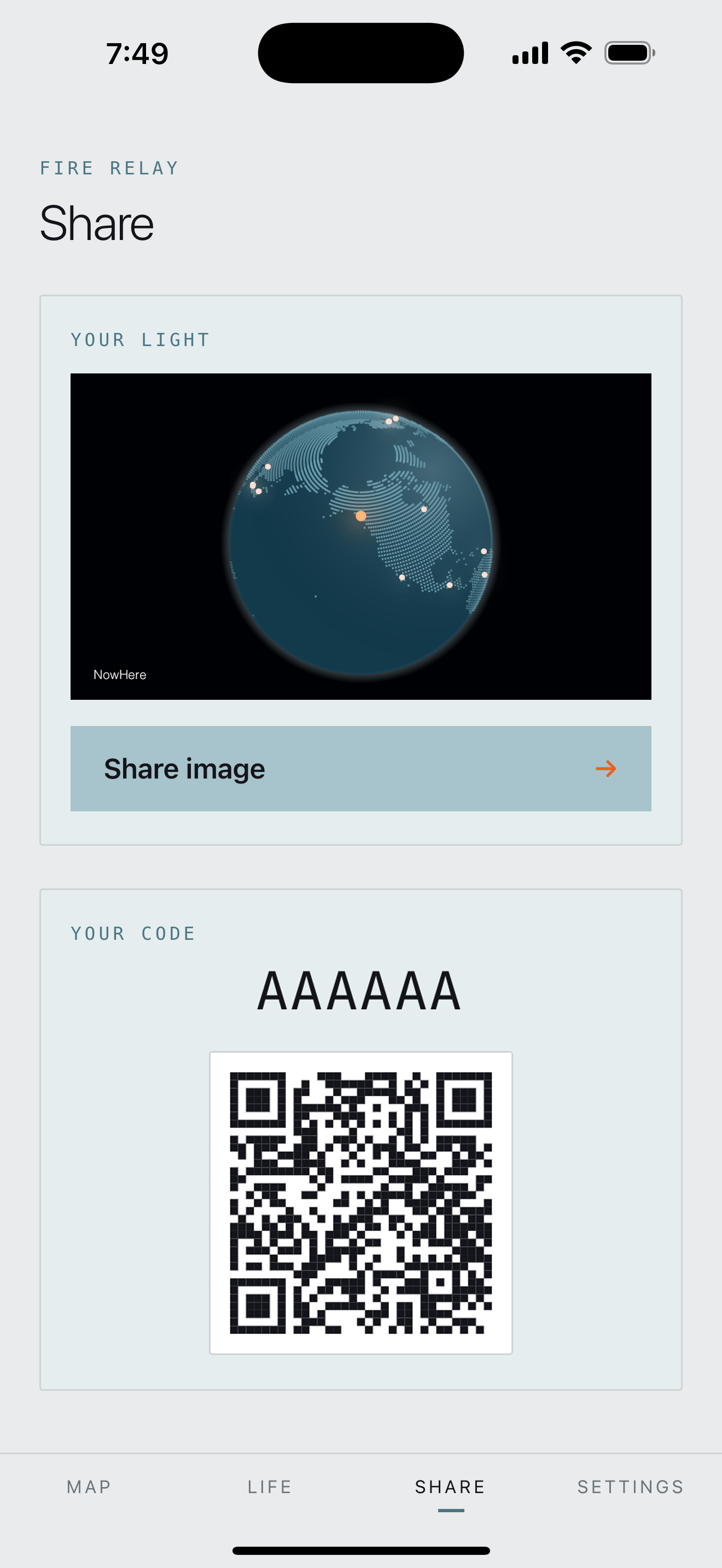
Invitations: pass along a code or a QR and see how many people you brought in. Only you can see it.
Inspiration
About 1.9 billion people report no religion — the majority where I live, in Japan. Religion carried two structures: it told you that you belonged, and it told you what to do when life did something to you. When people leave, the beliefs go first and those two structures go with them. Nothing replaces them. NowHere is not an argument against faith. It is the other side: building the replacement.
What it does
A night Earth. You pick a country — never GPS — and one light appears at a random point inside it. That light is you; the others are people who did the same. The number on the map is exactly how many people have opened the app. It started at zero on launch day.
Since v3 the app also carries the Map of Life: an offline, sourced guide to getting through a death without a priest, a temple, or a script. Japan, the United States, France, and England & Wales. It works with the phone in airplane mode, because the day you need it is not a day for searching the web.
Since v6 the map has a button called "Anyone there?". Tap it and for five minutes everyone in the world sees an "I'm here" button. Each time someone answers, a light shoots straight up from somewhere in their country. There is no conversation. No chat, no profile, no way to reply. You just learn that someone was there.
How we built it
Expo (React Native) + TypeScript on iOS. Backend on Cloudflare Workers + D1. Tips are powered by the RevenueCat SDK (three consumable products that unlock nothing). Built solo, AI-assisted end to end, on Windows — no Mac, with EAS Build doing the iOS work.
The Map of Life is not written as prose. Each jurisdiction is an ontology in YAML — events, decisions, constraints, costs, sources — and the guide text is generated from it, in three languages, with every claim carrying its source. The whole bundle ships inside the app, so it works offline.
Challenges we ran into
Shipping iOS without a Mac. And the harder one: refusing to seed the count. Starting at zero means the first visitors see a small number — but the count being real is the only thing this app is actually selling.
Then the guide. Writing what to do when someone dies means being right about deadlines, forms, and money in four jurisdictions, in three languages. Getting one number wrong is worse than not shipping it. That is why it is generated from a checked ontology instead of written by hand.
Accomplishments that we're proud of
Eight releases shipped inside the Shipaton window, from v1 on August 1 to v8 on September 30, every one approved on the first review pass. And we launched with an empty map, on purpose.
What we learned
Deciding what not to build is harder than building. Accounts, GPS, seeded numbers, rankings, rewards — each would lift the metrics. Writing down the reason to leave each one out is what shaped the product.
Building in public taught the same lesson from the outside. The account got quietly filtered by X for weeks, which removed the easy channel and forced the work onto places where you have to actually say something worth reading.
What's next for NowHere: Wellbeing
v8 gives the map a second face: inscriptions. Every light, every ask, every answer leaves one line on the globe, a date and a country, and it stays. Next: more jurisdictions for the Map of Life, and an Android version now heading into closed testing.
Built With
- claude
- cloudflare-d1
- cloudflare-workers
- eas-build
- expo.io
- ios
- react-native
- revenuecat
- typescript

