-
-
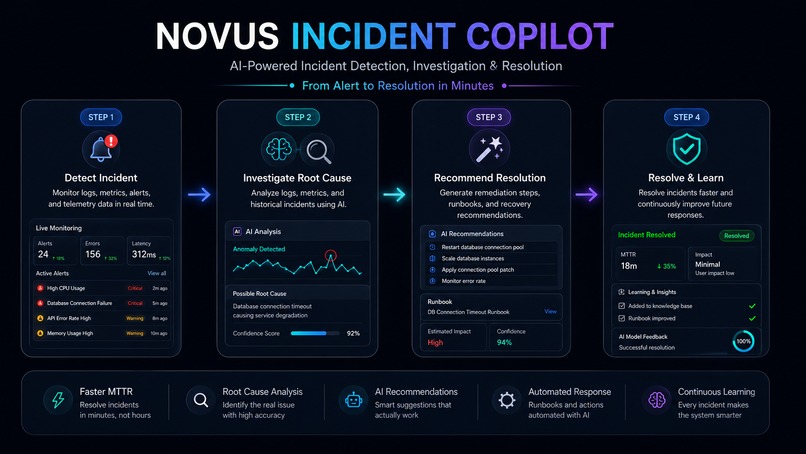
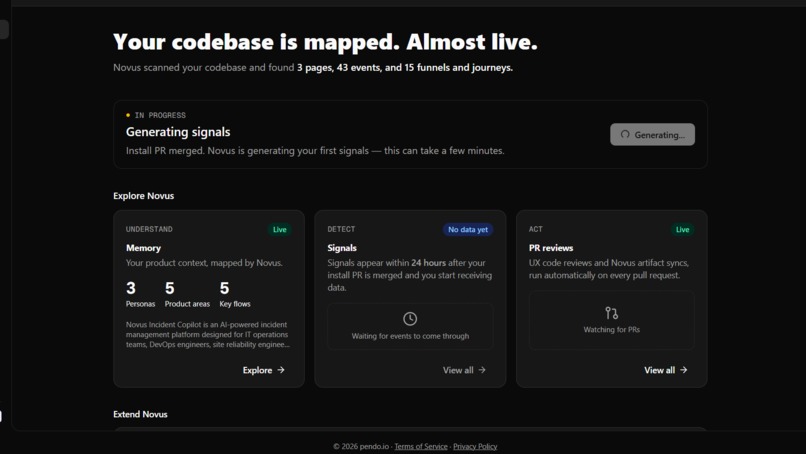
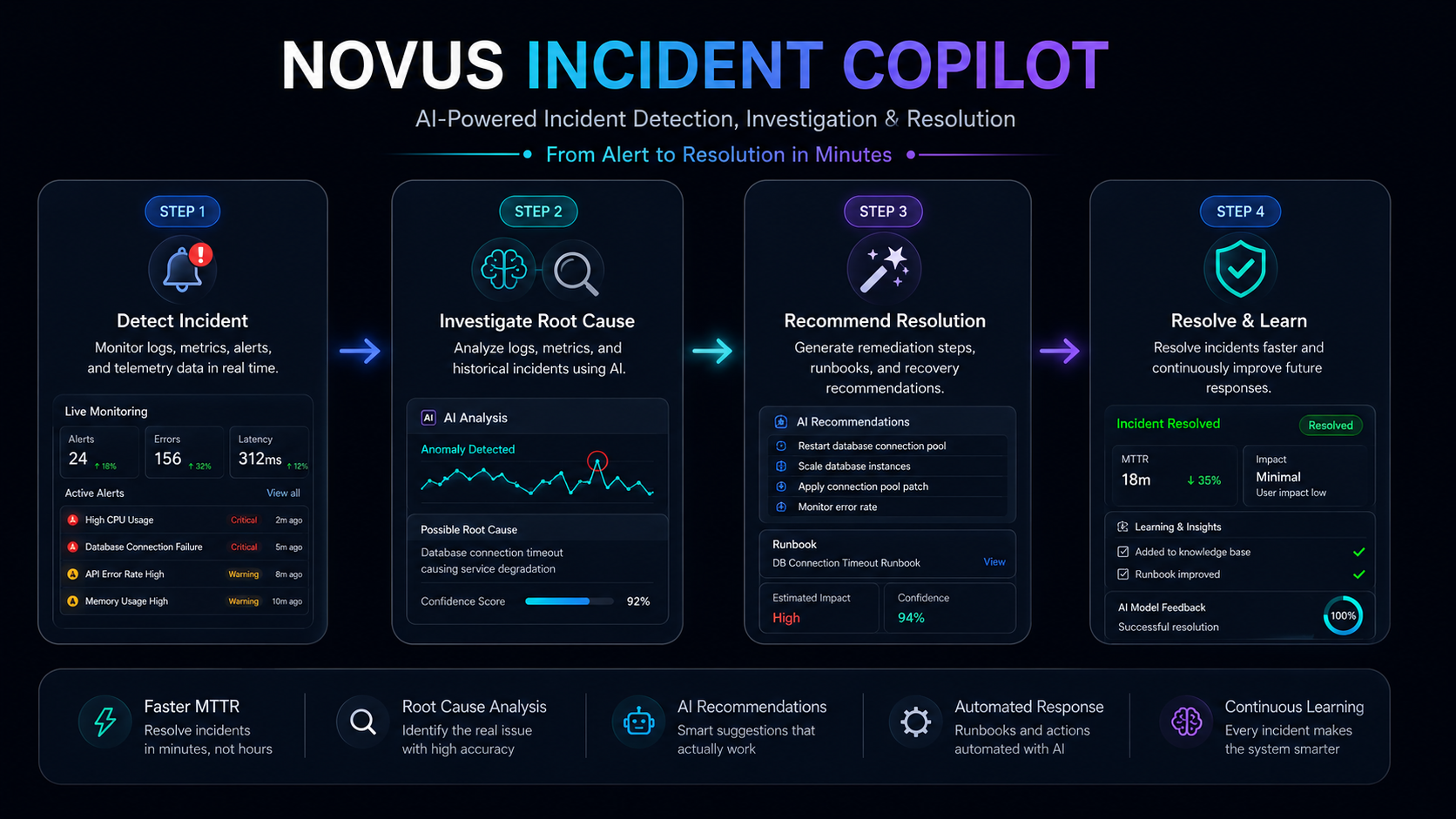
Novus Incident Copilot – How It Works: 5 autonomous steps from detection to resolution
-
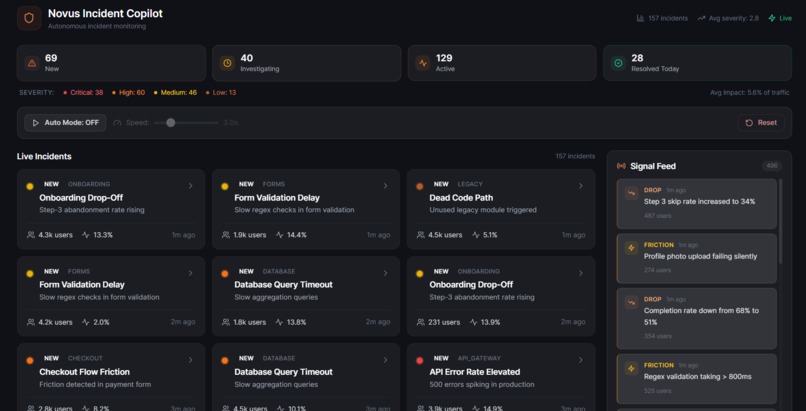
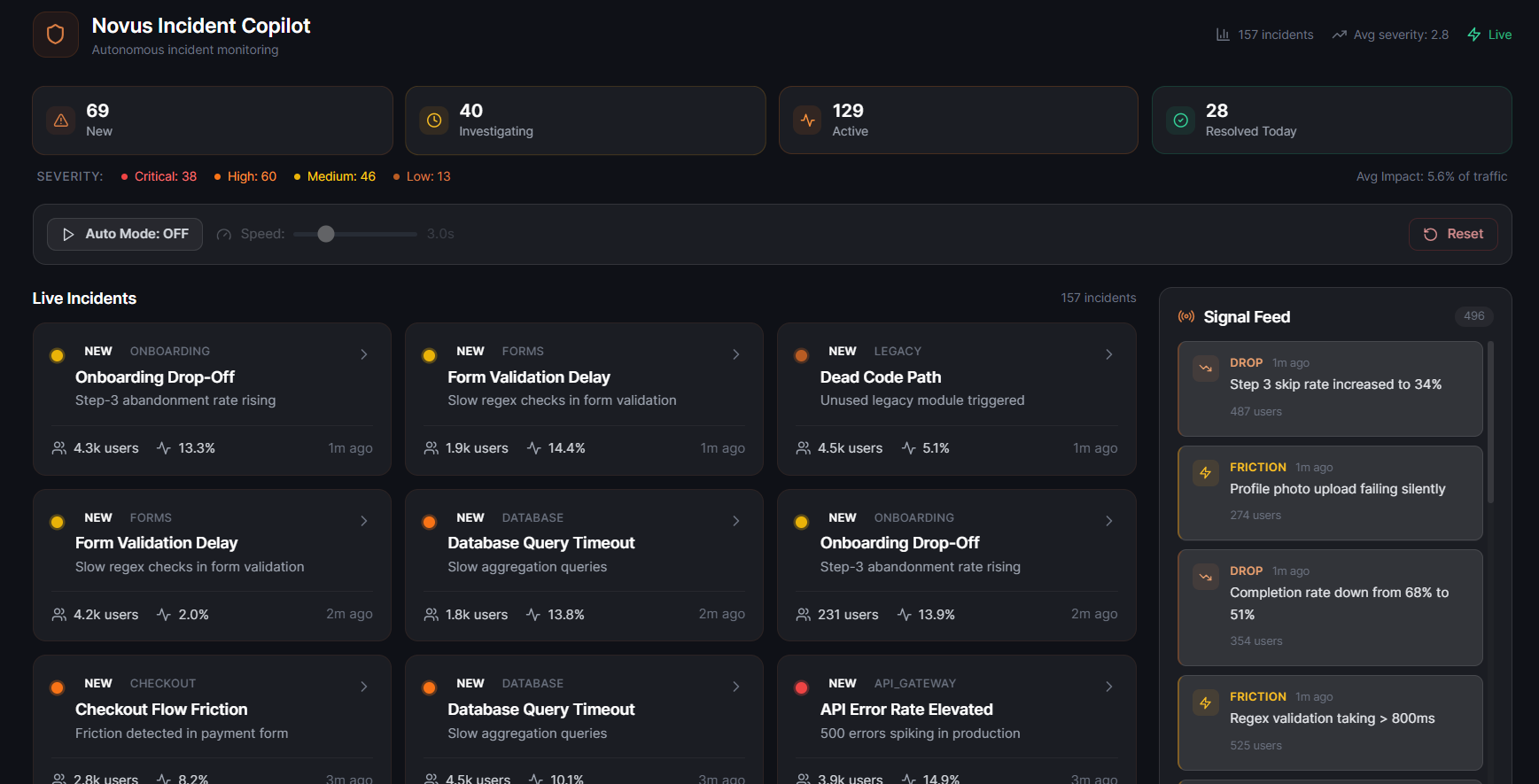
Live Incident Dashboard – Incidents tracked in real time with severity classification
-
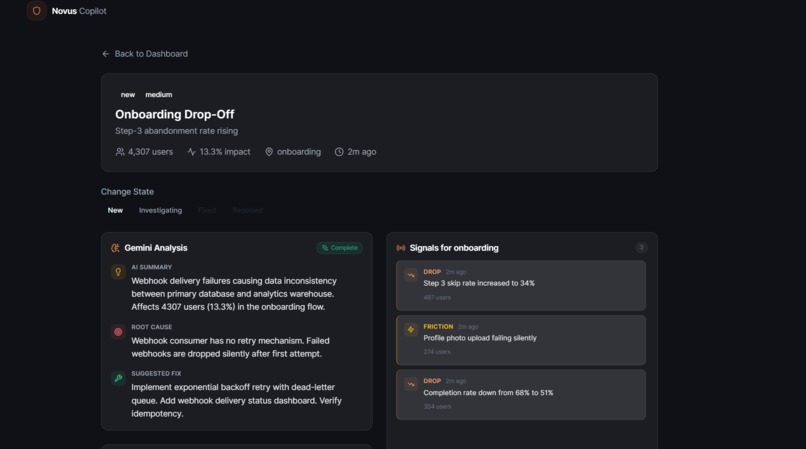
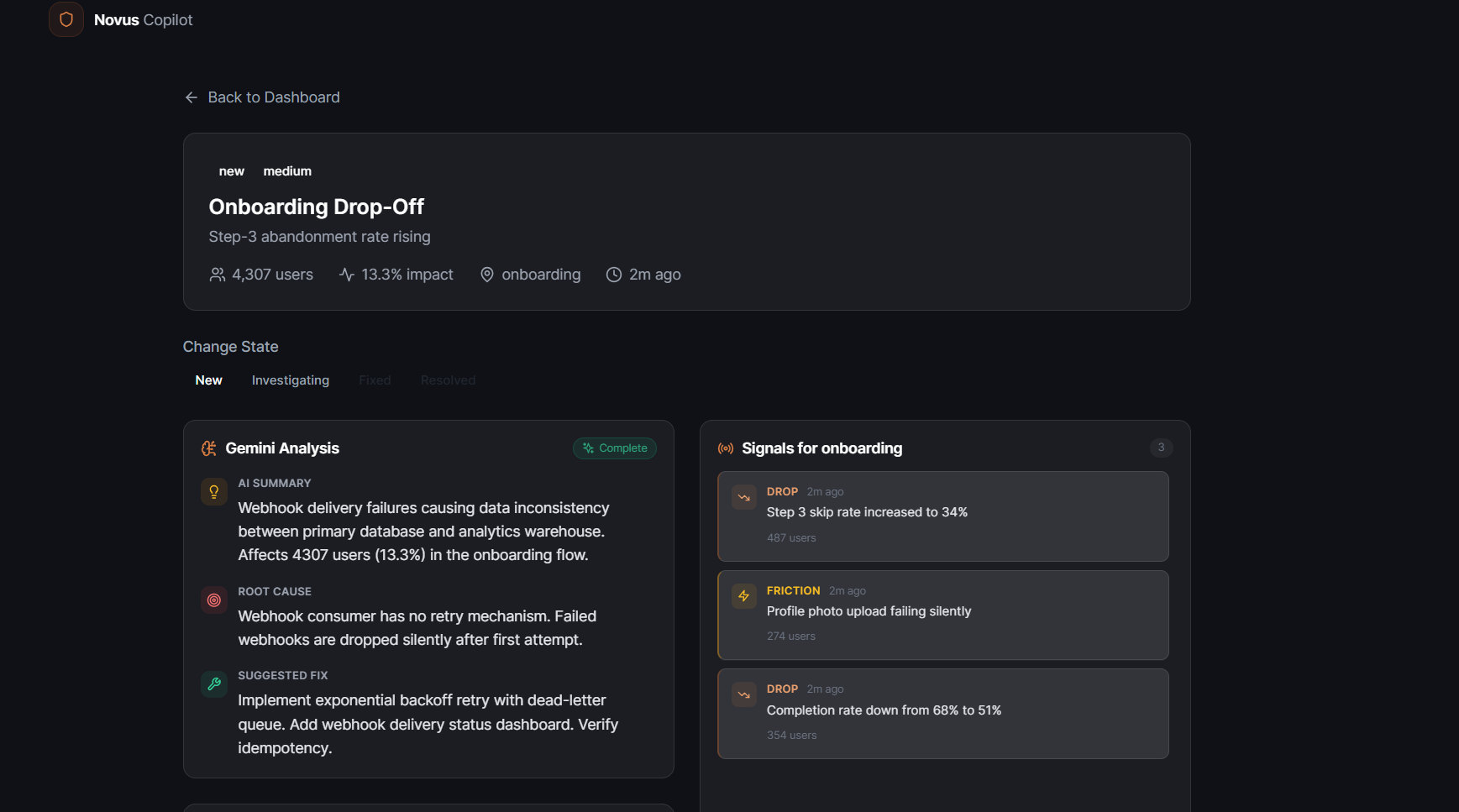
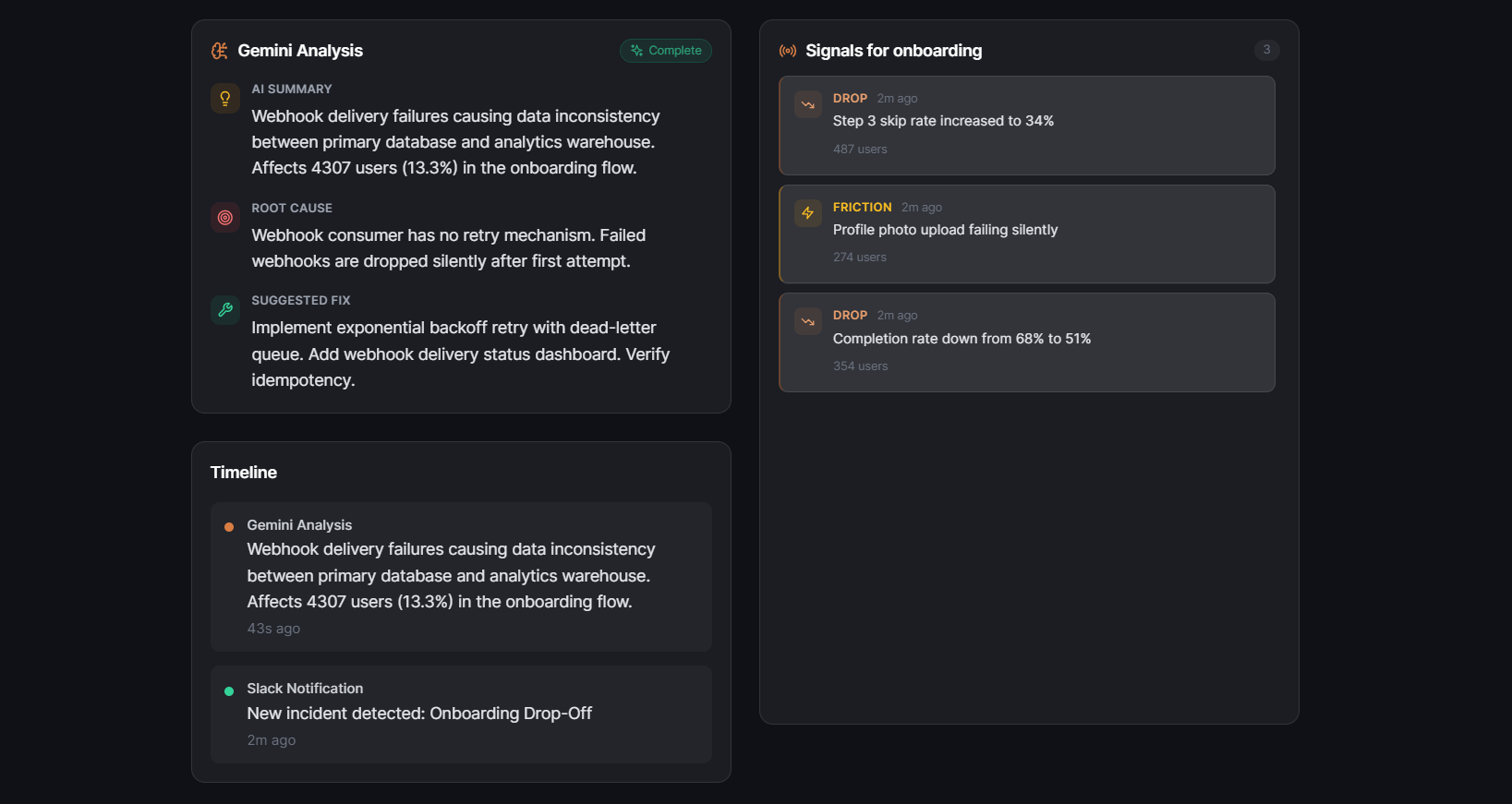
Gemini AI Analysis – Root cause, AI summary, and suggested fix generated automatically
-
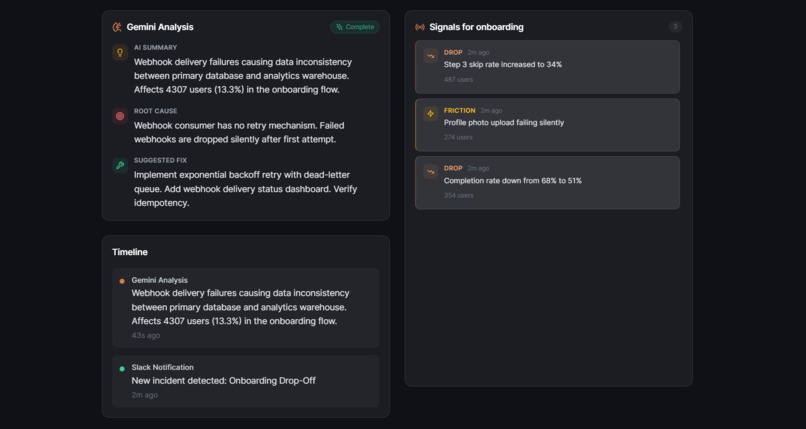
Real-time Signal Feed and Timeline– DROP, FRICTION, and SPIKE signals streamed live from Novus.ai
-
Live Incident Dashboard – Incidents tracked in real time with severity classification
-
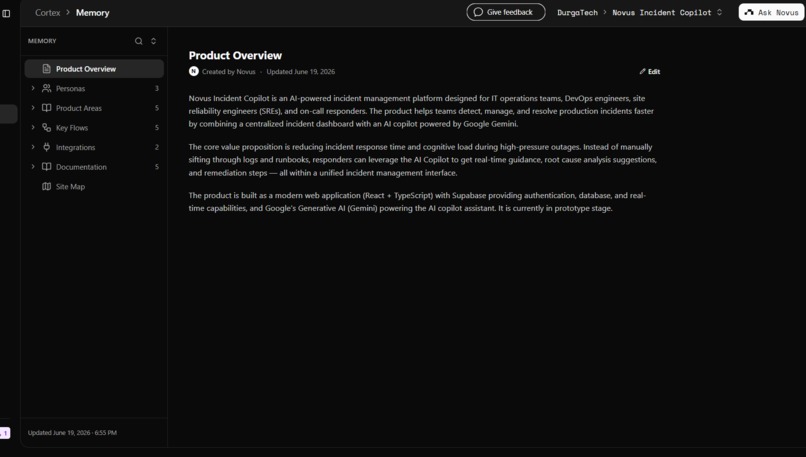
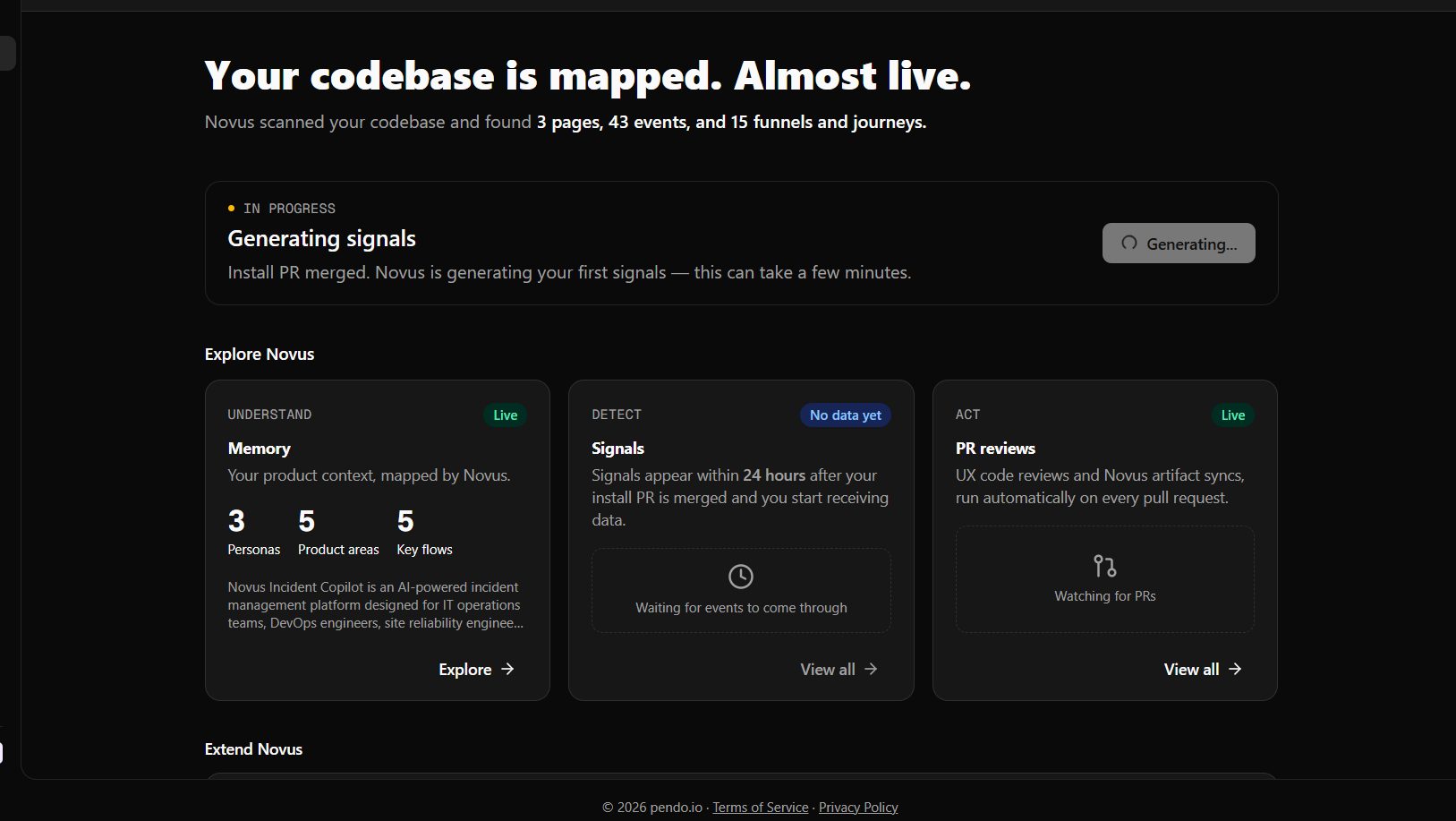
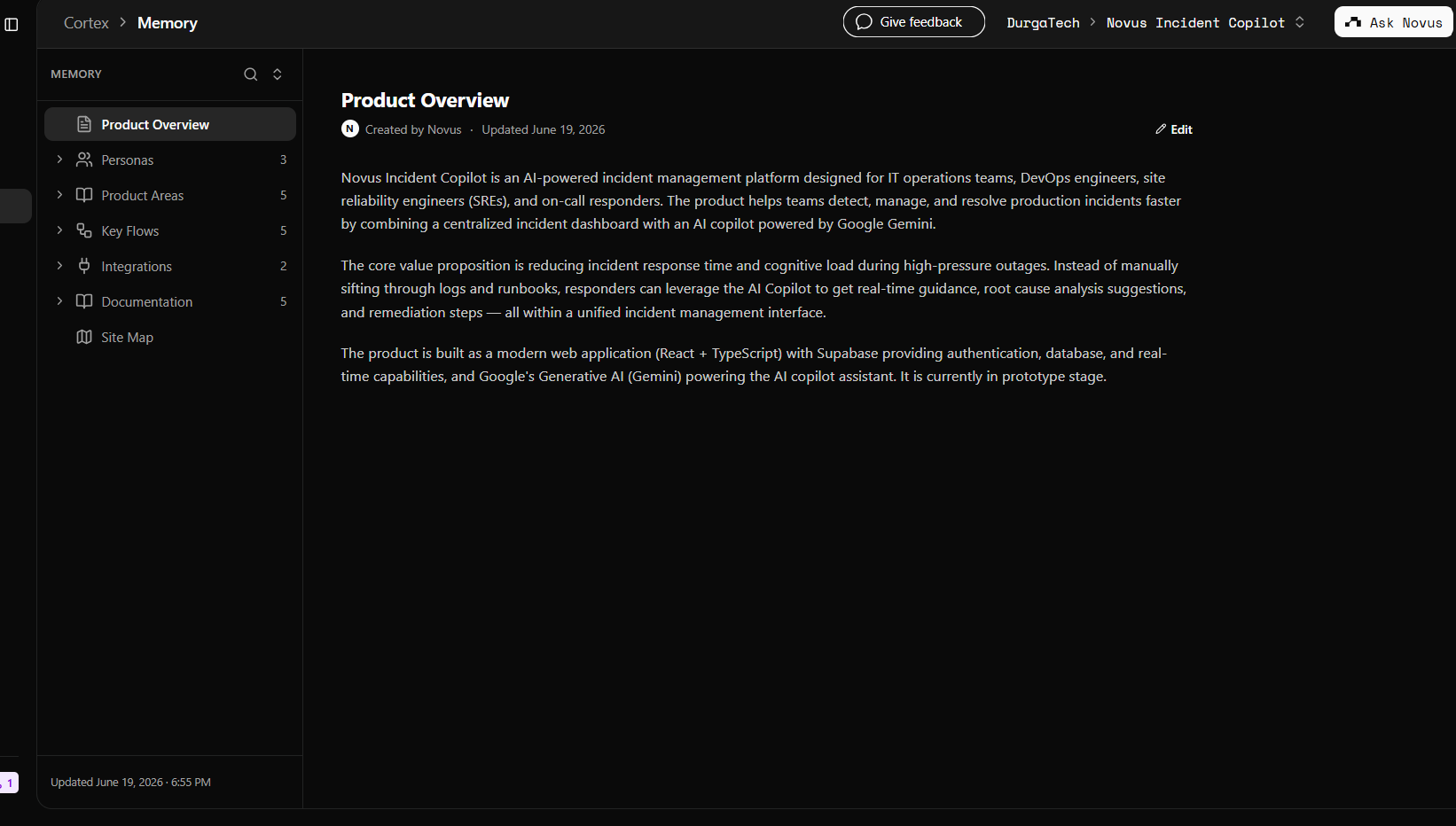
Novus Memory – Product context mapped: 3 Personas, 5 Product Areas, 5 Key Flows
Inspiration
We watched product teams waste hours every week in monitoring dashboards — manually correlating metrics, guessing root causes, and by the time they understood an issue, users had already churned. Traditional incident management tools are reactive dashboards, not proactive intelligence systems.
What it does
Novus Incident Copilot is the answer. It's an intelligent incident management system that: Detects real-time signals (friction, errors, drops, dead flows) Clusters correlated signals into prioritized incidents Analyzes root causes using Google Gemini 1.5 Flash AI Advances incidents through resolution workflows autonomously Notifies teams instantly via Slack/email Suggests AI-powered fixes for fast resolution
How we built it
Frontend: React 19 + Vite + Tailwind CSS 4 (glasmorphic dark UI) Real-time: TanStack Query with 3-second polling AI: Google Gemini 1.5 Flash API (root cause analysis) State Management: React hooks + TanStack Query cache Design System: Glasmorphic cards, glow effects, smooth animations (0.2–0.4s) Responsive: 3-column desktop, 2-column tablet, 1-column mobile
Challenges we ran into
Live Incident Dashboard
Real-time incident grid (state badges: new/investigating/fixed/resolved) Signal timeline showing related anomalies Impact metrics (users affected, % of traffic) State selector (change incident status with one click) Metrics bar (total, by severity, average impact)
AI-Powered Analysis
One-click "Analyze" button triggers Gemini API Auto-generated summaries: root cause + suggested fix Typewriter animation (2–3 sec) for engaging UX Loading states with helpful feedback Graceful error handling with fallbacks
Autonomous Demo Engine (The Magic)
Auto Mode toggle: turn on, demo runs forever Speed slider: 1–10 second intervals (default 3s) Every 2–5 seconds (random delay): 35% chance: Gemini AI analysis 30% chance: State advancement (new → investigating → fixed → resolved) 35% chance: New incident creation
Toast notifications announce all actions Reset button wipes + re-seeds 10 incidents + 7 signals
What we learned
- Speed builds trust: Investors instantly "get it" when they see autonomous updates happening
- Design matters: Glasmorphic UI + glow effects make AI feel approachable, not scary
- Demo mode is a superpower: Let the product speak for itself (no slides needed)
- TanStack Query is incredible: Polling + optimistic updates = responsive UX without WebSockets
- Animations tell stories: Typewriter effect makes 2–3 sec wait feel intentional + engaging
- Component reusability: 70% of Bolt code transfers directly to Claude Code full-stack rebuild
What's next for Novus Incident Copilot
Phase 1 (Weeks 1-4): Build production backend with PostgreSQL, Express 5, and real-time Supabase.
Phase 2 (Weeks 5-8): Add Slack integration and Jira ticket automation.
Phase 3 (Months 2-3): Launch beta SaaS, pitch to investors.
Phase 4 (Months 3+): Enterprise features (SAML auth, RBAC, audit logs).
By Q3 2026, we'll have a fully functional SaaS platform ready for teams to resolve incidents 50% faster.
Built With
- framer
- gemini
- lucide
- node.js
- react
- tailwind
- typescript


Log in or sign up for Devpost to join the conversation.